The Flash Secrets: “Legends of Today”

FlashesFromManyUniverses

Better, Faster, Stronger

Was that Daft Punk’s “Harder, Better, Faster, Stronger” playing on the radio? Why yes it was. Barry even utters the same adjectives while he’s on the cosmic treadmill (there’s no official word on whether that’s the cosmic treadmill or not), but is Barry referencing Daft Punk or The Six Million Dollar Man. I guess the latter would make more sense than the former, considering what Barry was doing when he said the phrase, but I liked both references.

SSTithonus

S. S. Tithonus

Whenever you see a name on a ship on either Arrow or Flash there’s usually some reason for the ship’s name, and S. S. Tithonus is no different. Vandal Savage disembarked the S.S. Tithonus, and the name Tithonus is a more recent comic book reference. In Justice League Dark, the villain Felix Faust is searching for the book of Tithonus, which he believes holds the answer to immortality. Tithonus is an interesting name for the ship holding Vandal Savage, since he is immortal.
VandalSavage

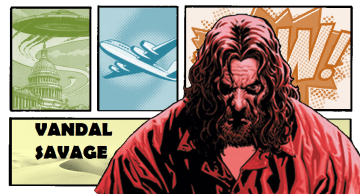
Vandal Savage

As far as we know, there are no ties between Vandal Savage and Houdini in the comics, and he doesn’t have a relationship with Robin of Loxley either. The TV show made those up or those are such small details about Savage’s character that no one mentions them.

Savage is actually older in the comics (50,000 years old) than he is the TV show (4,000 years). He was given powers by radiation from a meteor storm, while living as a caveman. Incidentally, the comics color Savage as the inspiration for the biblical Cain story.

At any rate, he’s been around a long time and pulled the strings of some of history’s most powerful and worst men, not the least of which could be George R. R. Martin: Savage rocks the dothraki look. Savage also has an uneasy kinship with fellow immortal Ra’s al Ghul.

Highlander1986

Highlander

Cisco is on the nose with calling Savage a “Highlander.” The fantasy series he references is about an immortal warrior with magic elements and a very special weapon.

VandalSavageHawkgirlArrowFlashCrossover

Chay-Ara

We’ve seen Hawkgirl (Kendra Saunders) many times on Flash this season, but “Legends of Today” marked the first time we’ve heard Chay-Ara, an important name in the Hawkgirl legacy. In the comics, Chay-Ara and her lover Prince Khufu were killed and that began a thousand year cycle of death and rebirth, where the two souls always found each other. This episode portrayed this somewhat but it gets real bloody in the comics.

Geoff Johns created Hawkgirl’s reincarnation origin because the two Hawks had too many origins and Johns didn’t know which one to use. He eventually said the heck with it, I’m using them all. The rest was history.

HawkmanHawkgirlArrowFlashCrossover

Hawkman

Hawkgirl may have made plenty of appearances in the Flash but “Legends of Today” marked the first time Falk Hentshchel as Prince Khufu/Carter Hall/Hawkman hit the screen. He has the same origin story as Hawkgirl, and he’s a regular member of the revolving Justice League of America lineup.

Hawkman goes toe-to-toe with Ollie often in the comics. Hawkman’s right-wing politics and brutal way of operating are at odds with the liberal Green Arrow. Those two teaming up is one of the most volatile pairings of Justice Leaguers.

StaffOfHorusFlashArrowCrossover

The Staff of Horus

Vandal Savage has been after the Staff of Horus for millennia. That may or may not track with Savage as a character but it does with Hawkman. In early Hawkman stories, Horus was misidentified as Anubis, which led to some of the many revisions of the character’s origin. In Arrow’s “Haunted,” John Constantine found an artifact called the Orb or Horus from which he took the powerful part and left the shiny stuff for Baron Reiter. Coincidentally, The Eye of Horus, an ancient Egyptian symbol of protection, showed up in the TV show Constantine.
Velocity9

Velocity 6

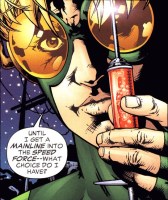
It’s actually Velocity 9 in the comics. Velocity 9 is a serum that can bestow (or in Jay’s case restore) super-speed powers. It’s funny Jay says he views the Speed Force as a sacred gift and no one should duplicate or enhance its effects when there are countless artificial ways to gain similar powers in the Flash-universe. The Speed Formula is a mathematical equation Johnny Quick and his daughter Jesse Quick—now more than ever I think Harrison Wells’ daughter Jesse is Jesse Quick—used this equation to gain super speed.

Getting back to the serum, Velocity 9 had some serious long-term health effects. The Speed Force would take its toll on people not prepared to connect to it. The most frequent user was Inertia, Impulse’s arch-enemy, who lost his powers all together. In an odd turn, Velocity 9 wasn’t created by Wells—he doesn’t exist in the comics—but by Vandal Savage, who had to start a drug empire after his distribution of Velocity 9 put him at odds with other more traditional drug pushers.

IndianaJones

Indian Jones

Cisco asked, “When did our lives become an Indiana Jones movie?” That’s a good question, and the answer is when Hawkgirl and Hawkman joined the cast. Many of the best Hawkman stories embraced Indiana Jones’ flair of searching for old and powerful artifacts.

OliverQueen'sSon

Ollie’s Son

It was during last year’s crossover with The Flash when it was revealed the ex-girlfriend Ollie had gotten pregnant almost a decade ago had moved to Central City after faking a miscarriage at the request of Moira Queen. The audience heard Ollie’s ex talk on the phone with her child and that let us know Ollie’s son existed, but now it looks as if Ollie knows.

ArrowSpeedyThea

Random Nuggets

1) The magnetic arrows are in the comics

2) ARGUS, one of many shady government agencies from the DC Universe, showed up briefly in this episode. They may be regular fixtures on Arrow but they haven’t physically shown up much this season.

3) Thea asking “Did I know we knew The Flash” was a legitimate question, but it speaks to the flowchart the writers’ room must’ve used when penning this episode.

4) Deathstroke got namedropped. Yay, Deathstroke.

5) Thea also said, “I’m not going to change my name” when Vibe tells her he could make up a better one. That’s funny since Thea didn’t like the nickname in season 1 and Roy Harper, original Speedy, went through countless name changes.

In case you missed our Flash review for “Legends of Today,” here’s a link. Thanks for reading.

The Flash Review: “Legends of Today”

FlashArrowCrossover

Jim’s Thoughts           

There was a lot to like with part one of the big Arrow/Flash crossover. The characters have definitely built a good chemistry, and it shows in their scenes together, even if the dialogue gets a little forced.

One of the big problems with these crossover events is they ask us to suspend disbelief a little more than usual. Case and point, if you followed my live tweets of the episode, I really didn’t understand why Barry wouldn’t have knocked out Damien Darhk and done team Arrow a huge favor. Instead of just pulling Oliver out of the fight, Barry could have won it for him. That’s the issue. These crossover episodes seem to invent new, temporary problems for the teams to focus on, rather than letting their respective storylines meet organically. Arrow has been dealing with Darhk, Flash with Zoom, but what we got was Vandal Savage.

Vandal Savage can be a great villain in the DC universe, but he was sprung on the audience without buildup, just to give the two teams a common enemy. The result of that is these crossovers are just holding patterns for the shows. They don’t really advance one story or the other, and my chief complaint with part one of the crossover is that it felt like a holding pattern within a holding pattern. The episode concerned itself more with squeezing as many cast members onto the screen as possible, leaving all the plot progress for tomorrow night’s follow-up.

Arrow/Flash came out as sort of a candy bar of a TV show. It didn’t do anything for me, but I enjoyed it while it was happening.

Kyle’s Take

“Legends of Today” had nothing but empty calories. I ate the candy bar, had fun while doing so, and I’m not convinced if I was eating a solo candy bar or one half of a Kit-Kat. Flash and Arrow took a break from their regularly scheduled villains, and that’s okay, but the scenarios are contrived and waste good DC characters. Okay, Rainbow Raider wasn’t that good of a villain last season, but Vandal Savage deserved better.

I’d also like to see the two shows meet organically but hey, at least we got another episode of nothing but Legends of Tomorrow build up. That’s the golden ticket in the candy bar nobody wants. You did catch the episode’s name: “Legends of Today.” At least they’re preparing for tomorrow today. Nudge-nudge. Wink-wink.

Despite these two major drawbacks, “Legends of Today” did introduce a couple of elements that could shake up both shows, and both elements came in odd places. Velocity 6, the serum Wells and Snow created, should factor into the season’s arc in some capacity, and Ollie learned he might be a baby-daddy. That last element could—and should—show up during the second half of this year’s Arrow-Flash crossover, but both shows have shown they can develop amnesia any given week. Based on “Legends of Today,” I’m not sure anything besides new side stories will come from this year’s crossover, but I’ll have fun as I watch.

Want more Flash? Head over to our Flash secrets page. Thanks for reading.

iZombie review: “The Hurt Stalker”

iZombieSeason2Banner

Kyle’s Review

I’m not sure whether iZombie wants me to root for Major and Liv or not; perhaps no show should force you to root for any couple. If that’s the case, “The Hurt Stalker” torpedoes Major and Liv’s relationship. This week’s episode takes iZombie’s trend of getting Liv on a brain just long enough to further the character and give her the push she needs in the right direction. We knew Liv would discover Major’s secret (he’s Seattle’s zombie killer) and I figured Liv would encounter a brain that would lead her there but I’m not sure if Liv knows anything definitive. What we do know is there’s trouble in paradise. Liv was on swimfan—or obsessed stalker—brains during the “The Hurt Stalker,” and that got her suspicious of Major but all she unearthed was him sleeping with another woman (presumably while they weren’t together), so his zombie killer identity could still be safe, for now, and I don’t know if that’s a good thing or not.

I’ve lost count of how many villains iZombie’s working into its second season. Major (sort of), the Barber, the head of Max Rager, and old reliable Blaine are all good choices for the big bad villain of the season, but iZombie isn’t as transparent as the other DC Comics shows (Flash and Arrow) when revealing who the season’s arch villain is and that’s enjoyable but it makes the show overloaded at the same time. I suspect Major will be outed by iZombie’s mid-season and the events during “The Hurt Stalker” could lead toward that and I’d be okay with a little clarity.

Still, iZombie fills its episodes with plenty of chuckles and surprises, so the unknown super villain fits. The most pleasant surprises this week belong to Detective Babineaux. I never realized, until “The Hurt Stalker,” how little Liv and Ravi know about Babineaux. Since he’s blamed for this week’s murder, the other two pry into his personal life. Apparently, Babineaux is A Song of Ice and Fire fan and when Ravi pondered, “I wonder what George R. R. Martin is doing right now,” Babineaux’s response—he’s a hard-boiled detective grunting about Martin’s lack of productivity—was priceless.

iZombie started with a heap of tropes but they’ve twisted these tropes into something fun, but with all the groundwork iZombie has made this year, I’d like some hint of what the payoff might be. The show has time and I trust they’ll give us another good cliffhanger by mid-season as well as the finale.

Marvel’s Agents of S.H.I.E.L.D. review: “Closure”

MarvelAgentsOfSHIELDBanner

Kyle’s Review

“Closure” began with a cinematic opening that included Rosalyn’s death, and it didn’t take long before this week’s episode of Agents of S.H.I.E.L.D. resembled the animated Transformers movie. Nothing ties up loose ends faster than offing half of the characters introduced this season. Rosalyn’s death eliminated any thoughts she was a mole. Some may have thought she was a turncoat but I never questioned her loyalty: double crossing has been overdone on this show and she hounded Coulson because she thought he and his team worked for Hydra.

The increased body count wasn’t a bad thing. Rosalyn’s death gave Coulson the impetus to go after Ward, Hydra’s two sides (Ward and Malick) have joined forces, Fitz and Simmons’ story finished integrating with the Hydra/S.H.I.E.L.D. story, and we’re headed for a showdown on the strange alien planet we met earlier this year. We even saw Daisy (Skye/Quake) form her super team, sort of. Even the folks who weren’t featured in “Closure” had some nice moments: May’s pep talk with Mack, and Hunter apologizing for his failure of not killing Ward.

All things considered, “Closure” made some huge strides. Agents of S.H.I.E.L.D. had its share of bombshells this season, but we received some nice pay off here. My only concern is that we still have another episode before the mid-season break and the last two episodes would’ve made good places to pause the series. Even though it falls way short, Agents of S.H.I.E.L.D. is giving us its best Breaking Bad impression. I hope it can keep building its characters and continue its never-ending cliffhangers—at least for one more week.

Machi Koro: Millionaire’s Row

MachiKoroMillionairesRow

You’re the mayor of Machi Koro and the city’s moving on up to the ritzy side of town. Machi Koro: Millionaire’s Row adds plenty of new twists and we’ll get to them in a bit, but let’s cover the technical stuff first.

The Fiddly Bits

Designer: Masao Suganuma
Publisher: IDW Games
Date Released: 2014
Number of Players: 2-5
Age Range: 10 and up (8 and up still works)
Setup Time: less than 5 minutes
Play Time: around 40 minutes

Game Mechanics:

Dice Rolling
Set Collection

MachiKoroMillionairesRowInJapanese

Game Flow:

We’ve covered the base Machi Koro game earlier, so we won’t go into detail about Machi Koro: Millionaire’s Row gameplay. If you missed our Machi Koro review, here’s a link.

In short, each player rolls the die (or dice) at the beginning of their turn. The die rolls, and when the numbers are rolled, affect which buildings produce money. Buildings are represented by cards and players can purchase new cards with their money but it’s the player who finishes all of their landmark cards (a group of cards each player begins the game with) first who wins the game.

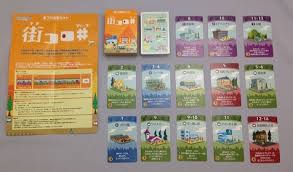
Machi Koro: Millionaire’s Row, like Machi Koro: Harbor Expansion, changes up the game. The biggest difference between the base game and Machi Koro: Millionaire’s Row is that all games which use only the Machi Koro base game begin the same way: all of the purchasable buildings cards are available at the onset. Machi Koro: Millionaire’s Row adds more building cards, and since you have extra cards to choose from, you shuffle all the building cards together and deal out ten unique buildings.

SampleMachiKoroMillionairesRowCards

Sample new cards in Millionaire’s Row

Machi Koro: Millionaire’s Row also adds remodeling tokens, allowing players to shut down their opponent’s buildings for a number of turns, as well as some other buildings, which shake things up.

Game Review:

For being named Millionaire’s Row, the Machi Koro: Millionaire’s Row expansion doesn’t introduce big bucks to the game like Machi Koro: Harbor and yet that doesn’t mean it isn’t a good expansion. I still like the random selection of cards you can choose from—I won’t bore you with my thoughts on that, since I covered this in Machi Koro: Harbor’s write up (here’s a link just in case you missed it)—and Millionaire’s Row’s new cards add some variety to game play—I like the inclusion of Loan Offices, the Renovation Company, and Demolition coins—but while you should be able to add both expansions to the base game, I wouldn’t recommend it.

GreenCardsFromMachiKoroMillionairesRow

Green cards from Millionaire’s Row

Loan Offices make building the four base landmarks easy—a fifteen minute game easy if you play your cards right—but adding in Machi Koro: Harbor’s two extra landmarks you have to construct, cause the Loan Offices you pick up to become a thorn in your side. Having to pay back a loan doesn’t hurt so much when the game’s over in less than thirty minutes, but adding both Harbor and Millionaire’s Row turns Machi Koro into an hour game or longer. Half of the gamer in me likes the additional challenge, while the other half argues Machi Koro is supposed to be a thirty minute game. Usually, the second half wins.

PurpleCardsFromSushiGoMillionairesRow

Purple cards from Millionaire’s Row

Millionaire’s Row is still a great addition to Machi Koro. I like being able to shut down my opponents’ buildings and you can when in an instant, when you don’t also play with the Harbor expansion. I also enjoy how the vineyards stack with wineries. The same could be said of Harbor and that’s where you’ll find the strength of both Machi Koro expansions: they’re more thematic than their predecessor.

MachiKoroMillionairesRowRenovationChips

Renovation Tokens

I’d avoid playing with both expansions unless you want Machi Koro to last much longer than it normally does, and if you do choose to play with only one expansion, you can’t go wrong with either Harbor or Millionaire’s Row. It comes down to how you want your gaming experience to go. If you want fish and sushi, pick Harbor. If you wine and a possible shorter game, go with Millionaire’s Row. Unfortunately for Millionaire’s Row, Machi Koro is a Japanese game and most gamers will pick Harbor on flavor alone.

Sushi Go!

SushiGo

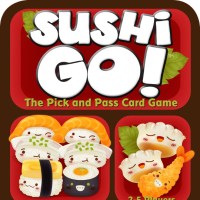
Sushi Go! puts you in a sushi chef’s apron. Can you craft a better combination of rolls than your opponents? You’ll have to think fast with the quick playing Sushi Go!. We’ll get to the game flow and review in a bit, but we have to cover some background info first.

The Fiddly Bits

Designer: Phil Walker-Harding
Publisher: Gamewright
Date Released: 2013
Number of Players: 2-5
Age Range: 8 and up (but 6 year-olds could play)
Setup Time: next to no time
Play Time: 15 minutes or less

Game Mechanics:

Card Drafting
Hand Management
Set Collection
Simultaneous Action Selection

SushiGoCards

Game Flow:

Sushi Go! is a card drafting game played in three rounds. Each round, players a dealt the same number of cards. Players will choose which cards they want from their current hand, place their chosen card face down in front of them, and then pass their cards to the next player. Once everyone has made their selection, each player reveals the card they choice from the cards in their hands. Play continues in this fashion until all the cards are played for the round.

Each card has its own scoring mechanism. Some (nigiri) give you flat points if you play them.

SushiGoEggNigiriSalmonNigiriSquidNigiri

Three types of nigiri cards

You can play wasabi cards in order to boost these cards point total.

SushiGoWasabi

Wasabi card

Others (sashimi and tempura) require you to collect a certain number of them in order to score any points. Sashimi may give you 10 points if you collect three of them, but if you’re short by even one sashimi, you don’t get any points.

SushiGoTempura  SushiGoSashimi

Tempura and Sashimi cards

Still others (maki) have players tally up how many of that card type they collected at the end of the round and the player with the most cards of that type get 6 points, while second place gets 3.

SushiGoMakiRoll

Three types of maki cards

After everyone records their score, all the cards (except for pudding cards) get shuffled into the deck and players receive another hand of cards. Play for the remaining two rounds works the same way as the first round and the player with the most points at the end of the third round wins.

SushiGoLogo

Game Review:

Sushi Go! is the fastest card drafting game I’ve reviewed so far and its speed means that it hits the table more often than not. The artwork is adorable, players whip through the rounds so quickly, you get the sense that you are a sushi chef, and with a ten dollar price tag, Sushi Go! is one of the most affordable games on the market. Christmas is around the corner, so it’s worth mentioning Sushi Go! is the right size for most stockings.

I enjoy this game. It’s one of the most common games my family and I play. Sure, I like card drafting as a game mechanism anyway—I may not be too objective when it comes to games that use card drafting—but I really like being able to play two or three games of Sushi Go! to one game of Fairy Tale, and six or seven games of Sushi Go! to one game of 7 Wonders.

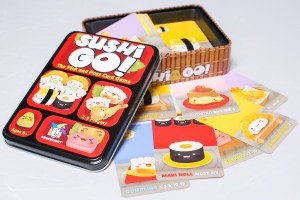
SushiGoOpenTin

Sushi Go! is a great filler game, and there usually aren’t any complaints from my family—I have some reluctant gamers at times—whenever I want to break out the box. Actually, Sushi Go! comes in a delightful tin: excellent.

Top 5 Tabletop Games that keep Game Stores in Business

This Top Five is a lot different than most Top Fives as I don’t necessarily like all the games on this list, and yet I’m thankful they exist. These games keep game stores in business by the sheer number of units they sell and by peaking folks’ interest in the hobby. You’ll see a trend early on, and it’s one tabletop games have used for several decades.

GamesKeepStores_LoveLetter_Number5

5) Love Letter

Speaking of the trend used in most top-selling tabletop games, we’ll lead off with a game that uses other intellectual properties and/or pop culture references to remain relevant. Love Letter may be the youngest game on this list, but if you’ve stepped in a game store in the past month, you’ll find a shelf—or two—dedicated to Letters to Santa, Adventure Time Love Letter, The Hobbit Love Letter, Batman Love Letter, and of course, the original Love Letter.

Love Letter is inexpensive, quick to learn, easy to play, and has an interesting deduction game mechanism to it. While the original game has players determining which player is playing a particular royal, the other spin-offs provide enthusiasts with some fan service. Not all of the intellectual properties work well with Love Letter’s gameplay but Batman Love Letter stands out as a true winner because you’re deducing who everyone is, which is similar to Batman’s role, but you’re playing as one of Batman’s rogues. How awesome is that?

GamesKeepStores_Fluxx_Number4

4) Fluxx

As the name implies Fluxx is the ever-changing card game. Fluxx changes with each passing round—heck, with each passing turn—and you’ll never know how or what will lead you to victory. Like Love Letter, Fluxx re-themes the game to match various intellectual properties and pop culture references—I told you this was a popular ploy to keep a game relevant—but Fluxx has been in production a lot longer than Love Letter, so you’ll see numerous versions.

Batman, Adventure Time, Pirate, Zombie, Cthulhu, Holiday, Regular Show, Wizard of Oz, Firefly, Stoner, Eco, and Cartoon Network versions of Fluxx (among countless others) exist, but for my money Monty Python Fluxx is the best of the pop culture re-themes, and it’s not just because I’m a Monty Python fan. Fluxx’s rules lead to some zany changes to the game and while Adventure Time and Regular Show make good use of these rules, nothing beats the off-the-wall humor of Monty Python.

I may not play Fluxx as often as I once did but when I do, I play Monty Python Fluxx.

GamesKeepStores_Monopoly_Number3

3) Monopoly

I’ve been on record as saying I’m not the biggest Monopoly fan, but you can’t deny the power of Monopoly. It’s the board game people who aren’t into the tabletop hobby think of first when they think of board games and it single-handedly keeps retail store board game sections in existence.

I don’t know how many copies of Monopoly hobby game stores move on an annual basis but the number must be high, and I don’t have to tell folks that Monopoly started the trend of re-theming itself with various pop culture references to stay relevant. I will say that despite my aversion to Monopoly, I do own a copy of the game and will play it if someone really wants to, but I usually play with alternate rules. I won’t name them all but here are two of the best ways to speed up Monopoly’s 3-24 hour game time: auction off most (or all) of the properties before the first person rolls the dice, and roll one die instead of two.

An auction mitigates some of Monopoly’s luck, adding more strategy and skill to the game. I insist on auctioning some of the properties whenever I play Monopoly, but I’d be down with only auctioning a third or so of the properties because auctions can take a while too. I also like rolling one die instead of two because turns don’t last as long, folks don’t gobble up more than one property on a turn (because they landed on multiple spaces due to two or three doubles in a row), and players will land on more properties, which speeds up the end game. I may not start with rolling only one die, but after an hour, I want someone to land on Boardwalk or Park Place and pay its owner, even if that someone’s me.

GamesKeepStores_Munchkin_Number2

2) Munchkin

Munchkin is another game I liked when it first came out but some long game sessions soured me on the title. Players spend three to four hours crapping on the leader. I’m sorry, but an hour is my limit for a simple card game, and Munchkin is a simple card game. Still, you can’t enter a game store without seeing shelves of Munchkin and its abundant re-themes. Like every other game on this list (so far), Munchkin uses pop culture references and other intellectual properties to stay relevant, but Munchkin may do this better than any other game. Despite its flaws, Munchkin helps to keep game stores in business.

I won’t go into the various themes Munchkin uses, but let’s say if you’re into anything—and I mean anything—you’ll find a version of Munchkin for you. I still own a few versions of this game and still play it on occasion. My favorite is Munchkin Cthulhu. Not only am I partial to the Cthulhu mythos, Munchkin Cthulhu has more game mechanisms to lessen the effects of players crapping on the leader, which leads to faster gameplay and a more enjoyable experience, but I can’t begrudge someone who wants to play The Good, The Bad, and The Munchkin, Munchkin Apocalypse, or any other version.

Munchkin’s artwork is quirky and each one of its titles pokes fun at the pop culture reference it appropriates. You can’t get too mad at a game that’s meant to be silly; that’s another common theme on this list.

GamesKeepStores_MagicTheGathering_Number1

1) Magic: the Gathering

Some hobby game stores only sell Magic, and they make a killing. It’s hard to fathom a game over twenty-years-old that doesn’t use the gimmick of re-theming itself every few weeks to stay on top, but Magic hasn’t changed that much and remains one of the highest grossing games every year.

Okay, Magic has shaken up its game play but it’s done so incrementally, adding new game features and ways in which to play the game over the past decade or so. Folks who remember when Magic was first released may not think of Magic as this dominant today. If you turned on ESPN in the mid-nineties, you could watch Magic tournaments. The World Series of Poker has taken Magic’s place and that should tell you something. Only a game invented in the late eighteenth to early nineteenth century could overtake Magic on the most watched sports network.

Magic may be past its glory days, but it still dominants the collectible card game market and keeps plenty of hobby game stores afloat.

Blindspot Review: “Evil Handmade Instrument”

BlindSpotBanner

Kyle’s Review

By focusing on a secondary character and hashing out some of last week’s issues, “Evil Handmade Instrument” started off like a filler episode, even though it was Blindspot’s fall finale, and then everything got turned upside down in the episode’s finale fifteen minutes. (Some spoilers are ahead; you’ve been warned.) In fact, the change was so drastic I did a double take when Jane got kidnapped. I had another one when the corrupt NSA big wig gets shot. And that’s before Jane finds out she’s the one who ordered her own mind wipe.

The above events would’ve been a lot for a full forty minutes but all this happened in the final fifteen minutes. To say “Evil Handmade Instrument” was uneven is an understatement because the prior twenty-five minutes or so dragged. Don’t get me wrong. I like the Patterson character but her backstory felt forced and I can see it as a means of approximating Jane’s past with Patterson’s, even though the two characters couldn’t be any more different. Then, you add the week’s villains, sleeper spies, and their tough luck backstories and you were forced to draw comparisons between Jane and the sleeper spies. These obvious plot devices are where “Evil Handmade Instrument” fell short. I could see the devices Blindspot were using and I wanted them to make like Monty Python and get on with it. Fortunately, they did in the final fifteen minutes.

I had the benefit of Hulu, so I could rewind. I could only imagine how lost someone would’ve been watching “Evil Handmade Instrument” in real time. Tons of live tweeters echoed “What!” at three or four instances, and those moments make Blindspot’s three month hiatus a break of beautiful speculation.

Jessica Jones Season One Review

JessicaJonesNetflix

Jim’s Review

With movies like Guardians of the Galaxy and Ant Man, Marvel has shown it can flex its muscles with even its little known characters. The first season of Jessica Jones does perhaps even more to prove that point, even if perhaps not quite as successfully as some may have hoped.

One tool Marvel has used to sell some of its lower profile characters is humor. Of course, much of their fan-base has been critical of that tactic, but I don’t think there’s much room to question that it’s made certain projects more appealing to broader audiences. There’s some humor in Jessica Jones. It’s mostly sarcasm intended to show Jessica’s acerbic personality, though, and the show really doesn’t lean on it to entertain the audience. It comes through again when certain cast members are meant to portray caricatures of archetypal nosy or sanctimonious neighbors, but even here, it doesn’t seem to be trying for laugh-out-loud moments.

As I noted in my first impressions of episode one, the show leaned heavily on hard-boiled detective clichés, and while that became less of an issue as the season progressed, it never really went away. It seemed whenever the plot needed it, Jessica could pull a classic move like pickpocketing or planting a GPS on some unsuspecting baddie.

On the subject of Jessica’s powers, I’m glad the show didn’t feel the need to weigh itself down devoting much screen time to her origin story. We get it in flashbacks as so many shows are wont to do these days, but it’s a much more efficient way to move forward. On the other side of that, I couldn’t help but furrow a brow at some of the inconsistency in her powers. As Kyle and I have both made clear, any time you deal with comics and superheroes, you have to be willing to suspend disbelief, and that’s fine, but Jessica often seemed too breakable to me. Common sense tells us that a woman who can jump ridiculously high in the air and come down uninjured must have a heightened level of durability, but we see her cut and bruised so often that I found myself forgetting that. I think she was shown as more vulnerable to add tension, and to avoid giving her too much overlap with Luke Cage, but it wasn’t until the show was in the home-stretch that Jessica reminded us that she heals faster than most, and by that time, it came off as a detail forced into the story.

Kilgrave worked well as the main villain of season one. Tennant’s performance was solid, a good mix of creepy, horrifying, and charismatic, but without giving spoilers, I wanted his undoing (that’s not a spoiler. Did you really think he was going to win?) to be a little more than it was.

Ritter did well as Jessica Jones. The snarky, disaffected personality is something we’ve seen her play before, but when we see her portray the fear and trauma Jones carries, I think Ritter gets a chance to show her chops.

All things considered, I don’t think Jessica Jones was as well done as Daredevil, but Marvel set out to expand their universe, capitalize on some of their lesser known names, and give a female hero a leading role, and they succeeded with all of that. I don’t know that I would feel compelled to rewatch season one, but season one was absolutely good enough to buy my interest in season two.

Into the Badlands Review: “Fist Like a Bullet”

IntoTheBadlands

Jim’s Review

The second episode of Into the Badlands came out a bit smoother. With a lot of the world-building out of the way in the debut, this week we got a little better impression of the characters themselves. Sunny’s disillusionment was amped up. Quinn got some news that put a definite twist on his story arc also, even if they did push his character dangerously close to the level of cartoonishly evil.

One of the intriguing elements of the show so far is that there isn’t yet a clear side to pull for. None of the Barons are obviously on the side of right, and I think keeping that as the status quo is a good way to let the characters make their mark on an individual level, rather than being swept up in a large-scale conflict.

We got a little more about MK’s pendent, and the symbol on it. There’s clearly something to that, but they’re not giving much away yet. The combat scenes continue to impress, but Sunny’s showdown with the Widow’s hired goons may have been a little too large for its own good. If the show gets into the habit of needing to outdo itself every week, that could become a drain.

We got another character questioning their loyalty this week, and with a character who hasn’t had much screen time yet, that falls a bit flat. In the sort of world they’ve created, people doing good for the sake of doing good is not an easy sell.

It’s only two episodes in, and the show is showing a few cracks in the proverbial paint, but it’s still genuinely entertaining, and unlike anything else I’m seeing on TV these days. If you haven’t checked this show out yet, you may be missing something.