Geek Out

Geekly’s Quirky Video Games: June 10, 2016

QuirkyVideoGame2

I’m not sure if last week’s quirky video game post worked or not but let’s try it again. The video games on this list may or may not be good, some might not even be “games,” but something about them is interesting.

We had some esoteric games last week, so let’s go with a more common theme this week: fantasy.

Recettear - An Item Shop's Tale

Recettear: An Item Shop’s Tale

This game puts you in the high stress life of a JRPG item shop owner. The story is at time hard to follow, trite, or non-existent, and other times it’s two out of those three, but running your own item shop is fun.

The customers behave more like non-American shoppers; the base price is a starting point, and they’ll haggle over most times. Don’t believe the in-game tutorial when it says that most consumers buy a product that’s marked at 30% above the base; it lies. You could go to wholesale warehouses to obtain your items, but the game coaxes players to venture into the larger world and discover rare, more expensive wares.

This extra gameplay wrinkle (of outfitting a friendly adventurer and exploring a dungeon) adds some much needed variety. Recettear wouldn’t be much of a game if all you did was set retail prices to products you bought wholesale, but it’s the item shop portion of the game that sets it apart.

There’s no better feeling than fleecing someone with a 50% markup, but failing to make a sale stinks—except if it’s a young girl shopper: damn cheapskates. Recettear is a great resource for learning math that doesn’t feel like a stuffy math game, and gamers can learn shop running and entrepreneur basics, just in case they wanted to start their own game store.

My only other gripe, besides the story, is something more specific about the story: the pixie landlord. I get that Recettear needs something to motivate the player and give them concrete goals, but I could’ve done without the tired, overbearing landlord who price gouges the player. Despite its flaws, Recettear is worth a quick look if you ever wanted to live a day in the shoes of a JRPG item shop owner.

Pox Nora

Pox Nora

Pox Nora is one of the many free games I’ve covered—I think I’ll start reviewing nothing but free games, sort of a free gaming summer—but you get a lot with this free game. And I don’t mean that Pox Nora is a “free to play” game; it’s a free game with a mountain of content to unpack.

I’ve played hours of Pox Nora and only scratched the surface. At its core Pox Nora is a tactical RPG, in the tradition of Final Fantasy Tactics, Tactics Ogre, and Disgaea, with strong ties to Dungeons and Dragons and gentle nod to collectible card games like Magic: The Gathering.

Players take control of a fantasy faction. Each faction has its strengths and weaknesses, but savvy gamers can play up their strengths, while downplaying their weaknesses. This is easier said than done, and it makes Pox Nora a difficult game and that’s one of its biggest selling points—besides the attractive free price tag.

It also deploys an odd tournament system. Sure, you could battle players head-to-head but Pox Nora has indirect scoring. You can play campaigns for your favorite faction and Pox Nora keeps score on how well you played the campaign. The score gets added to the community’s score—which is reset every so often—and a faction is deemed the winner when the tournament ends.

If you keep playing your favorite faction, and play them well, you can aid your chosen heroes to victory. I’m sure that head-to-head combat counts more toward the team totals, but you don’t see solo campaigns factor into community scoring at this level, and that’s intriguing.

Pox Nora’s difficulty and depth of play also presents new challenges you can overcome and that, in turn, leads to countless game hours for a free game. Did I mention it was free? Anyway, if Pox Nora has one sticky point, it’d be its non-user friendly menu and game interface. I’m not sure which buttons I need to press to start a game, and that’s intimidating. But once you crack Pox Nora’s code, you’ll find a deep and rewarding game.
LootAndLegends

Card Hunter and Loot and Legends

This is a two-for-one game. Card Hunter and Loot and Legends are the same game but for different operating systems. Card Hunter is PC-based. Loot and Legends is for mobile phones and tablets. Both versions are free to play, but one is more “free to play” than the other. We’ll get into the differences, but first, let’s cover the similarities.

Both Card Hunter and Loot and Legends borrow from D&D and collectible card games, much like Pox Nora above, but these two games have a light-hearted tone, as opposed to Pox Nora’s dark, Diablo-esque demeanor. These games are also much easier to get into and understand. The story for these games is more coherent too, but it’s about a Dungeon Master (DM) whose older brother picks on him and demands that he be a tougher DM for the player. It’s an okay story, but that’s not Card Hunter or Loot and Legends’ strongpoint. Both of these games simplify D&D and make it accessible.

I enjoy the colorful creatures and backgrounds—the graphics are similar with both games—and I guess Card Hunter has a little more going on as far as story’s concerned, but I don’t care for the story as much as I do the characters. It’s fun to play in their world.

But which one feels more “free to play”? It’s Loots and Legends. While you have some things you can unlock with Card Hunter’s in-game purchases, Loots and Legends shows you what you would’ve gotten as item drops if you had a game membership. You can only be a member for a set time (hours) before you have to renew your membership, and that’s an ugly look for a “free to play” game, but I don’t buy into Loots and Legends’ ploy and look past this obvious shake down. I prefer Loots and Legends to Card Hunter.

Card Hunter

Card Hunter has more instances of die rolling in the game—I believe Loots and Legends omitted die rolling all together but there might be some instances that I haven’t experienced that contain die rolling. I seldom like die rolling in video games because I always feel cheated with the outcomes, and Card Hunter made it too easy for me to determine that the computer was cheating.

All rolls in Card Hunter use one die. High rolls are better than low rolls and they allow you to pull off a feat of daring do, so I kept track of 50 of the game’s scenarios. I rolled a “1” or a “2” 75% of the time and a “5” or “6” less than 10% of the time. The computer’s stats were a little more spread out between the numbers but it was close to a complete flip to the likelihood of numbers I rolled. Each number should’ve shown up around 16.67% of the time for both players, but Card Hunter cheats. It unabashedly cheats.

Still, I like both games. They’re fun, and you can’t beat a free price tag.

That’s all I have for Geekly’s quirky video games. Perhaps next week will be nothing but free video games. Thanks for reading.

Geekly’s Quirky Video Games: June 3, 2016

QuirkyVideoGame

We’ve neglected video games up to this point on JK Geekly because readers might get confused between video game and tabletop game reviews or news, but I don’t see why we can’t have the occasional video game post. So let’s begin a series of posts that cover quirky video games. We read plenty of reviews or thoughts about mainstream, big budget games, so let’s explore some weird.

These quirky games are ones that have interesting mechanics, stories, or tackle seldom discussed or covered topics. Some are great, others are not so good, and there may be a few that I’ll discuss that some readers won’t even consider a “game,” but all of them are intriguing on some level. The great thing is that a fair number of these under-the-radar games have a small price tag. That’s part of the appeal—my tabletop game habit leaves me a little cash poor. Without further ado, let’s get to this week’s quirky video games.

TheStanleyParable

The Stanley Parable

This one’s not really an under-the-radar game. Video game enthusiasts often mention The Stanley Parable when discussing bizarre video games. Even though you may want to slap the smug look off of their face—and I imagine that some of you are thinking the same thing about me right now—when a video game aficionado says you should try The Stanley Parable, they aren’t wrong. You should try The Stanley Parable.

You play as the titular Stanley as he attempts to escape his drab office space and soul crushing job. A voice-over narrates his every action, and The Stanley Parable does a great job of marrying voice acting with the action on the screen. The unnerving narration functions as comedic relief one moment and bone chilling dread the next. If you download The Stanley Parable from Steam, you’ll even experience a little meta-gaming. You’ll find such achievements as don’t play The Stanley Parable for a year, play The Stanley Parable for the duration of a Tuesday, and click on office 430’s door five times, but the narrator berates you for trying to earn such an easy achievement and coaxes you into doing more tasks.

I probably said too much already. I don’t want to spoil anything else but let’s just say that The Stanley Parable is equal part slipstream and modern Aesop’s fable. It fits the bill for a quirky video game.

LifeIsStrange

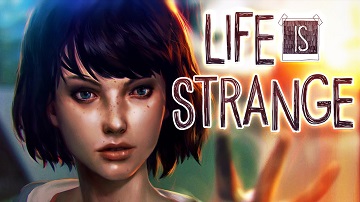
Life is Strange

It’s difficult to discuss a storytelling episodic video game without mentioning Telltale Games, because they invented the genre, but I’ll try to limit my mentioning of Telltale while covering Life is Strange.

Life is Strange may have perfected the Telltale Games episodic model. This game tweaked a single mechanic: you can reverse time. Life is Strange’s protagonist can turn back time the duration of a scene—about 5-10 minutes—so you can see what the short term effects of a decision are, but since you can’t reverse time to any moment in the game’s narrative, you won’t know the long-term ramifications of your actions.

Adding that twist could make it sound as if decision making in Life is Strange would be easier than your typical Telltale Game, but it’s the opposite. There are moments where you agonize over which course of action is the best. During an interview, one of Telltale Game’s executives said, and I paraphrase, that Telltale judges the writing of their games based on whether or not gamers will have close to a 50% split between two disparate actions in a scenario. Since you can see these percentages at the end of each episode (for both Telltale and Life is Strange), you can tell that there are three to eight decisions where Telltale episodic game series yield an even split.  Life is Strange has five to eight decisions each episode that meet those statistics. Life is Strange out does Telltale in the one statistic Telltale Games uses to gauge the effectiveness of their writing.

Okay. Let’s put a pin in Telltale talk and discuss over aspects of Life is Strange. The time reversal mechanism also yields some interesting puzzles. You control time, not space, so you can walk some place, warp back in time, and you’re elsewhere when the rest of the world catches up to you. That’s trippy, and the resulting puzzles and problem solving are fun. You also have to show how observant you are so you can convince people of your powers. Those moments presented a nice memory game. In fact, there were plenty of subplots and side games to be had with Life is Strange. The writing—for the most part—and the gameplay’s variety are strengths. You play as a teenage girl, and Life is Strange captures what it’s like to be a teenager. That could be a good or bad thing, but regardless, Life is Strange is an earnest game.

It isn’t all sunshine. The voice acting leaves a little to be desired. The lip syncing between the audio and visuals can be distracting too. I don’t mind it when voices don’t match lips—that could be an anime fan thing—but since I noticed the lips not syncing, that could be a deal breaker for some folks. Life is Strange also suffers from the inevitable time travel plot holes, and the last episode, to be polite, was shaky in the writing department, but the overall experience is top notch. If you have any interest in episodic storytelling games, you should give Life is Strange a try.

TheStaticSpeaksMyName

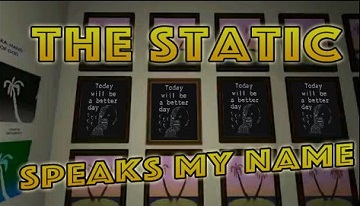
the static speaks my name

The last quirky video game for this week may be one of those “games” that aren’t really games. the static speaks my name is more of an experience that plays out in ten minutes. Seriously, you’ve spent more time reading this post than the time it’ll take to play this game. I just heard some of you groan through cyber space and appreciate you guys reading this post. Really, I do.

Anyway—the static speaks my name is dark and morbid. You play as a man who’s obsessed with a painting of twin palm trees on a small island. You learn more about him and his mental state (similar to Stanley in The Stanley Parable), and I’ll stop there so I don’t spoil it for you. the static speaks my name is a free game on Steam and you can play the “game” as quickly as I can ruin the ending.

I will say that the real psychological game comes at the very end. I know that what I’m about to say is fuzzy (if you haven’t played the game), but if you play this game, take your time during the ending. It’s disturbing, but you could discover something about yourself.

That’s all I have for Geekly’s quirky video games. Hopefully, this will be an ongoing post. Thanks for reading.

Top 12 Marvel Cinematic Universe Movies

Captain America: Civil War opens tonight and that marks the beginning of the Marvel cinematic universe’s third and final stage. I figured it was time we ranked each Marvel movie, so here we go.

MarvelMoviesNumber12_ThorDarkWorld

12) Thor: Dark World

Marvel movies are notorious for not developing their villains—this will be an ongoing theme—but Thor: Dark World went a step further with under developed villains. You could omit the movie’s villain and not miss a thing. It takes a special Marvel movie to have a meaningless villain (the dark elves, not Loki, as they were the main villain). The rest of the movie didn’t fare much better. Natalie Portman fought through a script she hated. You couldn’t tell she loathed the film from her performance but her alleged ire was the only thing that was memorable.

MarvelMoviesNumber11_IronMan2

11) Iron Man 2

The next two films could switch places, and often do on a regular basis for me, but Iron Man 2 earns the lower spot on the list, despite trying to develop its villain. It’s a mess. Tony’s alcoholism was touched, his illness took center stage after a while, and Ivan Vanko’s backstory dump through expositional dialogue was no dynamo. The movie put too many story threads into two hours and ended up flat. There was little chance the sequel could recapture the excitement of the original, but where’s the joy?

MarvelMoviesNumber10_IronMan3

10) Iron Man 3

Iron Man 3 had more humorous moments than Iron Man 2, but it also had more issues. Seriously, these last two movies could switch places. I hate revisionist history, and Iron Man 3’s villain, set up as the mastermind behind everything Iron Man through flashbacks, played like revisionist history. Renaming a well-known Marvel group like AIM to The Ten Rings was a cheat, and Marvel had one larger than life role for an Asian actor (The Mandarin) and decided to make him a punchline. Hollywood has only cast an Asian or Asian-American in 50% of their TV shows and movies in the last several years (per The Screen Actors Guild), so a buffoonish Mandarin was a terrible look. Oh, and I don’t like having a figurehead villain with a real villain pulling the strings behind the scenes, even if the figurehead villain wasn’t the Mandarin. It’s been done. It’s not clever; it’s a lazy attempt to be clever.

MarvelMoviesNumber09_IncredibleHulk

9) The Incredible Hulk

It’s a testament to how little I think of the previous three movies that The Incredible Hulk doesn’t make for a compelling lead character; he’s too overpowered. He’s great as a side character, a force of nature, or another loose end the Avengers have to tie up. Ed Norton Jr. did an adequate job as Bruce Banner, and Abomination was developed as well as a one-note villain can be, so this movie made it this high on the list despite its hokeyness.

MarvelMoviesNumber08_CaptainAmericaTheFirstAvenger

8) Captain America: The First Avenger

Ever wonder why Captain America movies always have subtitles? Those subtitles are what the movies are called overseas. That has nothing to do with the movie’s quality, I just thought it was interesting. Anyway, the first Cap movie was good. Chris Evans made a convincing Steve Rogers, the origin story went off without a hitch, and I liked Bucky and the addition of the Howling Commandos, but I’ve never seen a character portrayed by Hugo Weaving come across as flat as the Red Skull, one of Marvel’s best villains, and he was a huge, under developed yawn. There’s that term again: under developed.

MarvelMoviesNumber07_AvengersAgeOfUltron

7) Avengers: Age of Ultron

I could’ve swapped Age of Ultron and The First Avenger, but oh well. Avengers: Age of Ultron was yet another Marvel movie that didn’t develop its villain—big shock, I know—but I can’t blame it. The film stuffed as many characters as it could into one film and the bloated cast resulted in Ultron getting twenty to thirty minutes of screen time for a movie that bears his name. Age of Ultron also suffered from the law of diminished returns. We’ve seen these scenes—or similar ones—before and the movie needed more than Marvel’s tried and true CGI goodness. Hawkeye had some great moments, while the relationship between Black Widow and Hulk was a head scratcher.

MarvelMoviesNumber06_Ant-Man

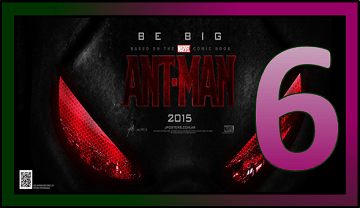
6) Ant-Man

Despite being the final movie in the Marvel cinematic universe’s second wave, Ant-Man shrank down the plot’s scope—pun intended—and delivered a film akin to earlier Marvel films. It made characters the heart of the story. The film couldn’t quite capture the same magic of the earliest Marvel movies, but it came close. The humor was welcome. It presented a fun, super-hero twist to the heist movie genre. And Paul Rudd and Michael Pena were a joy. Sure, the main villain was under-developed—like most Marvel movies—and a greater Hydra threat loomed in the background, but the focus was on family and that made the characters relatable. I’m not sure how many more character-driven movies remain in the Marvel cinematic universe, but Ant-Man was one of them.

MarvelMoviesNumber05_Thor

5) Thor

Loki has daddy issues. It’s a common trope and colors him as a character in broad strokes, but the God of Mischief has had more character development than most Marvel cinematic universe villains, and that’s a great thing. And it’s not the only thing Thor does well. I’m not a huge Thor comic book fan, but the movie does a great job setting up character relations and developing them through actions instead of expositional dialogue. Okay. There was a lot of exposition, mostly from Odin, but a lot of other movies only build their characters through dialogue, and Thor uses the snot-nosed son of Odin’s actions as the main characterization vehicle.

MarvelMoviesNumber04_Avengers

4) Avengers

This one is a spectacle. I marvel at how they balanced the character’ screen time in this one. Folks were thinking Avengers was an impossible movie to make because of the sheer number of characters needed on-screen, but Joss Whedon pulled off a miracle. I would’ve rated this movie a little higher, but viewers need context for this movie. You can’t watch Avengers without first watching at least two or three other movies—you’ll see this argument come up again real soon—and some of the scenes are a little hokey, but man, Avengers was a great popcorn flick. And I love the Hulk as comic relief.

MarvelMoviesNumber03_IronMan

3) Iron Man

I had to give the movie that kicked off the Marvel cinematic universe some respect. Iron Man also holds up really well, unlike its sequels. This is another movie where the character’s actions define who he is. Iron Man could’ve spent a lot of time having Tony ponder the meaning of life—and he does a little bit of this while he’s in captivity—but that’s not who the character is. Iron Man doesn’t tell as much as it shows who these characters are, and that’s wonderful. It also helps that Robert Downey Jr. was born to play the role and he’s a delight.

MarvelMoviesNumber02_CaptainAmericaWinterSoldier

2) Captain America: Winter Soldier

When this one was out in theaters, I couldn’t get enough of it. Winter Soldier shook the Marvel cinematic universe to its core. It developed its characters really well and took secondary characters—like Black Widow—and elevated them. Winter Soldier was also the most faithful adaptation of a comic book to the silver screen. It’s amazing. But this is where the context issue comes into play. While you could say that every Marvel movie—except for Iron Man—is a dependent film, Winter Soldier suffers the most from lack of context. I showed Winter Soldier to someone who said that they love Marvel movies. It turned out that they hadn’t watched Iron Man 2, the first Cap film, or many of the other ones on this list, and they had no idea what was going on. Winter Soldier changed the Marvel universe but it’s also dependent on the rest of the Marvel universe to make any sense. Still, it’s fantastic.

MarvelMoviesNumber01_GuardiansOfTheGalaxy

1) Guardians of the Galaxy

I really should switch these top two, but I showed Guardians of the Galaxy to the same guy who hadn’t seen Winter Soldier, and it was a much different experience. Similar to Winter Soldier, the Guardians were well developed. But while Winter Soldier leaned heavily on plot twists, Guardians of the Galaxy had more memorable moments. Each character—with the exception of the patented Marvel movie underdeveloped villain—had their own moments to shine. Guardians is also the movie that made me yearn less for a Star Wars sequel—no offense, The Force Awakens. That’s not bad for a group Stan Lee forgot was a Marvel comic.

I know that was a long post, but there’s a lot of Marvel movies. These rankings are subject to change. In fact, I may change them soon. There are so many great Marvel movies. Let’s enjoy this comic book movie renaissance. Thanks for reading.

CW Orders Flash-Arrow Spinoff DC’s Legends of Tomorrow

LegendsOfTomorrowCWFlashArrowSpinOff

Kyle’s Take

It’s official, The CW produce and air The Flash-Arrow spinoff that’s been setting the rumor mill ablaze. You didn’t have too much in the way of facts prior to now because The CW was on the fence about the series – who are they kidding, we knew they were going forward with the series – but now that CW has confirmed the series and named it Legends of Tomorrow, they’ve leaked plenty of information about the upcoming series.

The tentative tagline for the show reads When heroes alone are not enough, the world needs legends. The tagline reveals that we won’t just have heroes in this new team; some villains will grace this team. The title, Legends of Tomorrow, hints at a time-travel, but we now know that our time-jumping hero will be Rip Hunter, played by Arthur Darvill. Hunter has seen the future and will try to prevent something big from happening but he’ll need the help of The Legends to stand a chance of defeating this unstoppable threat.

And here’s our team of Legends:

ArthurDarvillRipHunterFlashArrowSpinOffCW

Arthur Darvill as Rip Hunter

Rip Hunter isn’t this time traveler’s real name because as Rip says, “As a time traveler, I can’t let anyone know what my own past is. What’s to stop my enemies from suffocating me in my crib? Or doing the same to my father?”

We may not know what Rip’s real name is but with the help of his Time-Sphere, he’s had a lot of time traveling exploits. We also know that Rip’s part of the Carter family and that Booster Gold is his father. Don’t get any ideas, dastardly villains, or our next Legend will shrink you down to size.

brandonrouthatomflasharrowspinoff

Brandon Routh as Atom

Starling City isn’t big enough for Atom and the Arrow, so Ray Palmer’s taking his talents to South—actually, I don’t know where this show will be set. If we assume that Starling is in Wisconsin (check out our DC Comics Cities Map for more details), Ray should be headed south and my best guess is that the Legends of Tomorrow could have some scenes in Pittsburgh, PA.

Rip Hunter has spent some of his formative years in the Steel City and so did the next member of The Legends.

VictorGarberAndRobbieAmellFirestormArrowFlashSpinOff

Victor Garber and Robbie Amell as Firestorm

Two heads are better than one or so this nuclear man on fire would have you believe. Well, Firestorm’s two heads do come in handy and we get some great dialogue that’s more of a monologue. Would that make it a monialogue?

Anyway, Firestorm may be the most overpowered member on The Legends. Here’s a quick breakdown of the powers he’s had over the years:

Density Control: He can manipulate the density of solids, liquids, and gases—from elements as light as hydrogen to ones as heavy as uranium (you know, because he’s a nuclear man).

Eidetic Memory: Anyone tied to the Firestorm Matrix can access the memories of anyone else (human or otherwise) who has ever been fused to the Matrix, and they can do so with moment to moment clarity. Thanks, but I’m good with not having the memory of another man’s birth.

Energy Absorption: Whether it’s solar, nuclear, petroleum, or even life-force, Firestorm and sap energy from just about any source. How does he stay so thin?

Energy Projection: Nuclear blasts, plain and simple.

Enhanced Vision: Anything you can see, Superman, I can see, too—only I have Thermal Vision.

Flight: Yeah, we know he can fly.

Molecular Reconstruction: How else could he reform his body after he implodes in a ball of nuclear fire?

Phasing: Wow, you couldn’t let Shadowcat (Kitty Pryde) from the Marvel Universe have one cool thing about her. You just had to be able to pass through solid objects, too.

Psychic Link: Eat your heart out, Grodd.

Regeneration: That’s another neat trick. He can already reconstruct his molecules, so why not?

Self-Sustenance: Firestorm can survive in space and doesn’t have to eat.

Superhuman Durability: He can survive bullets and stab wounds.

Superhuman Strength: But can he challenge Supes to an arm wrestling match?

Fortunately, The Flash weakened Firestorm or else The Legends would be playing cheerleader and we’d have no use for one of the next members on our list.

FlashArrowSpinOffDominicPurcellHeatWaveAndWentworthMilerCaptainCold

Wentworth Miller as Captain Cold and Dominic Purcell as Heat Wave

Why have one Rogue when you can get two? Miller and Purcell reprise their roles as Captain Cold and Heat Wave in The Legends. I’m not entirely sure why the team needs Heat Wave but the more the merrier. And there may be another addition to The Legends that might make some Arrow merrier.

CaityLotzBlack-CanaryFlashArrowSpinOff

Caity Lotz as Black Canary?

All we know is that Caity Lotz will be in The Legends. We don’t know if she’s only in flashbacks, portrays a different character, or if she returns as an alternate reality Sarah Lance/Black Canary or if she’s Sarah post-Lazarus Pit. We’ll have to see how The Legends plays her character but we do know the identity of the other female member of the team.

CiaraReneeHawkgirlArrowFlashSpinoff

Ciara Renee as Hawkgirl

Hawkgirl was the new hero I most wanted to see in The Legends but this may not be the hard but clean nosed heroine from the mid-80’s to 2011. This Hawkgirl’s alter ego is Kendra Saunders and she might share the New 52’s Hawkgirl origin as a reformed treasure hunter/grave robber. Either way, I can’t wait to see Hawkgirl get some air time and she’s by no means the most mysterious member of The Legends.

FranzDramehJayJackson

Franz Drameh as Jay Jackson

First thing’s first: there is no Jay Jackson in the DC Universe.

He could be a new character or his name could be used as subterfuge for the true identity of the character Drameh’s portraying. This wouldn’t be the first time that DC has introduced a new character in a TV series (Harley Quinn, anyone?) but it also wouldn’t be the first time that DC changed a character’s alter ego name so that fans would keep guessing who the character was over the course of a summer.

Action Jackson – please don’t let that be his character name if he’s a new character – could be anything from Karate Kid, to a reimagining of Kid Flash, to even Cyborg from The Titans. That last one might be interesting. TNT has a Titans TV show planned for later this year or next year but they don’t have Cyborg in the line-up. The CW could be changing Cyborg’s alter ego name (from Victor Stone) to Jay Jackson so that TNT could use Stone as Cyborg in a future season of Titans. It wouldn’t be the first time for that either but I don’t know what the CW has planned. All I know is that I’m intrigued by The Legends’ large cast.

iZombie versus Pushing Daisies

iZombieVersusPushingDaisiesPic

iZombie is essentially Pushing Daisies—with a splash of zombie—for a younger demographic. I didn’t include this comparison in my review of iZombie’s pilot (if you want to read my review, here’s a link) because I didn’t want to marry the two shows to each other. I loved Pushing Daisies, so I’m leery to compare it to iZombie. But there are some lessons iZombie can learn from Pushing Daises.

We’ll get to these lessons in a bit, but first, let’s see how these two shows stack against each other.

iZombieVersusPushingDaisies

By the numbers, iZombie resembles Pushing Daisies, but it doesn’t have the same whimsy. The zombie motif adds a dark streak. iZombie could overcome this by adding flare to the special effects and art direction. That’s not a knock on iZombie necessarily. The effects and art direction for Pushing Daisies was top-notch, Emmy worthy. But with its smaller budget, I’m not sure if iZombie can ever compete with Pushing Daisies in this regard, so they could make the subject matter even lighter and still, getting too light-hearted could be an issue.

Pushing Daisies balanced the goofy humor, mystery elements, and romance pretty well—the first season. It got a little too weird for its own good in season two and lost a lot of viewers. Likewise, iZombie’s pilot balanced its elements well. But will iZombie fall prey to the same weird just for weird’s sake? There are a couple of factors that might help.

iZombie grounds itself in police work more than Pushing Daisies ever did—that’s because Pushing Daisies was a fantasy—and you don’t have to explain a zombie as much as a magical pie maker, so that’s another obstacle averted. Then, you have a change in point of view. In Pushing Daisies, you gain distance from the dead because the pie maker brought people back to life: third person reanimated dead. In iZombie, Liv is a zombie and she experiences unliving first-hand: first person reanimated dead. I like the point of view shift. It helps to separate the two shows for me, gives a fresh perspective on the undead, and could keep the show afloat.

There’s plenty of room for both shows and for iZombie in the growing number of zombie media. We’ll have to watch tonight’s episode to find out whether or not iZombie’s elements fall out of balance and even later to see if it can match or beat Pushing Daisies’ number of twenty-two, total episodes. I’d love it if they brought back or rebooted Pushing Daisies.

Categories TV

Actor, Director and “Star Trek” Icon Leonard Nimoy Dies at Age 83

LeonardNimoy
We don’t usually write tributes to those we lost on this page, but we don’t usually lose an acting icon either. Leonard Nimoy might’ve tried to separate himself from his most famous character in his 1975 autobiography I Am Not Spock, but that was illogical as the pointy-eared, emotionless, half-human Spock, and the progressive world without prejudice of Star Trek in which Spock inhabited, shaped Nimoy of as a person.

LeonardNimoyAndWilliamShatnerStarTrek
Nimoy—who passed away on February 27, 2015 at the age of 83 from the end-stage of chronic obstructive pulmonary disease—later wrote a follow-up autobiography I Am Spock that showed him embracing his iconic character. To many Sci-Fi fans he was Spock, and he was the only Star Trek original cast member J. J. Abrams insisted on returning in his Star Trek reboot. But Nimoy was so much more than Spock.

The Boston born Nimoy started as a child actor and worked steadily on television before and after Star Trek, appearing on disparate shows such as Sea Hunt, Gunsmoke, and Mission: Impossible. In the ‘80s, he established himself as a film director, overseeing two back-to-back Star Trek installments (The Search for Spock and The Voyage Home) before directing the 1987 hit, Three Men and a Baby.

LeonardNimoyPhotographer
Once Nimoy got comfortable behind a camera, he shifted to photography, snapping pictures that hung in galleries and collecting some of his works in the book The Full Body Project, which he collected photos he shot of nude plus-sized and obese women. He later said that he wanted people to accept their bodies and show the bodies that people lived in, not the body types that fashion magazines sell.

That kind of sentiment speaks to how Nimoy’s involvement in a socially conscious series like Star Trek shaped his worldview. Through most of his work, Nimoy endeavored to shape the world into a brighter future.

DC Comics Universe Cities

DCComicsUnitedStatesColorCoded2

Arrow frequently relocates Starling City.

The first season placed Starling near Seattle because the series is filmed in Vancouver and the two cities have similar terrain. The second season flashed geographic coordinates that depicted Starling City’s airport in northern Wisconsin, somewhere north of Green Bay. Then during a Flash/Arrow crossover in the third season, they said that The Flash ran from Central City to Starling City and that Barry traveled 600 miles to do so. Even if Starling City exists in northern Wisconsin, Barry would still have had to travel more than 600 miles, so there may be a third location for Starling City. But the comics place Green Arrow in Star City and that’s in northern California.

As far as the Golden Age Flash’s home of Keystone City is concerned, it’s located across the Missouri River (in Kansas) and serves as a twin city for Central City, MO. I didn’t include it on the map because that would’ve looked crowded.

Metropolis used to be located near New York City but it got moved to Illinois. Many believe that it’s located in Chicago, and that may be, but DC Comics made a public announcement that the physical Metropolis is the official home of Superman. Perhaps I should’ve put a second Superman logo in northern Illinois to muddy up things further.

At any rate, let’s see how these locations compare in terms of population.

DCComicsCitiesAccordingToPopulation

I guess Smallville’s population is no more than a drop in the bucket when compared with Metropolis. Ba-dum-bump.

Note: Gotham City’s population refers to post-No-Man’s Land arc.