5 Great Word Board Games

Hey, hey! Kyra Kyle here. We’re going to do something a little different with this board game list. It’s not a list of starter board games of a specific type. If you want us to continue the starter board game series, let us know. It’s not a top 5 or top 10. Nope. This is a list of 5 great board games with a specific style. Today’s list is 5 Great Word Board Games.

Seeing as this isn’t a top 5 list, the games won’t be in any order. We’re also going to try and stick to different kinds of games within the same style, so this list of great word board games won’t be five different versions of Scrabble…hopefully. Without any further ado, here are the games.

Paperback

Paperback combines the idea of a traditional word board game (like Scrabble) with a deck-building game. Players must make words with the letter cards they draw (or a combination of letters on a card like “Th” or “Qu”) and they earn money with which to purchase victory point cards or more letter cards to add to their deck for future turns. Paperback balances its two elements well. A player who can slay at word games can dominate that section, but a player who has more experience and can shift their strategy to the cards present in the deck-building array (you’ll have different cards most turns) can use that to their advantage.

Paperback allows multiple paths to victory and that sets it apart from a lot of other board games centered around words.
Sixes Tabletop Game

SiXeS

We recently reviewed SiXeS. (If you want to see that review, follow this link.) So, there’s a high probability that SiXeS would make this list. If you don’t want to read the review, that’s okay. We’ll break down the gameplay. SiXeS plays a lot like Scattergories with a twist. Players alternate turns where they want to match the answers to specific questions with their opponents with turns where they want to give unique answers. Unlike other games like Scattergories, SiXeS keeps the gameplay fresh by varying its gameplay each round.

Letter Go!

Like Paperback, Letter Go! combines a word game with another game type. But Letter Go! goes in a completely different direction. It combines a word game with a pseudo-dexterity game. While Paperback’s turns can be slow and methodical, Letter Go! is a real-time race to see who can spell a word using the cards at their disposal while following a rule on their dry-erase board. Some of these rules dictate that you must use your non-dominant hand. Others may say the word’s letters need to be wavy or look like flowers. Even more say that you must repeat all consonants you use but not the vowels.

Letter Go! shakes up the common word game. Just because you can think of a word quickly doesn’t mean that you’ll be able to also obey whatever rule card you draw. Talk about leveling the playing field.

Codenames

I know. I know. Codenames was everywhere for a few years. It’s the gamer’s word game, but there’s a good reason for that. Codenames melds several elements in a fun way. It combines the lateral thinking of TriBond. As the clue-giver, a series of cards with words printed on them stand before you. You can only give a single-word clue accompanied by a number (the number of the cards that match the clue you gave). Your teammates must guess which cards they believe match the clue you gave. But beware, there’s an assassin card. If your teammates choose that card, your team automatically loses.

Codenames has a nice push-your-luck element. As the clue-giver, do you add an extra word or two and make your clue broader? As the guessers, do you continue picking words you think fit the clue or stop after getting one correct? The other team is racing against yours to guess their words. Ultimately, the choice is yours. Choose wisely.
Say Anything

Say Anything is for those who like games like Apples to Apples or Cards Against Humanity. I don’t care for Cards Against Humanity that much, and I got as much out of Apples to Apples without needing to play it any longer. Both Apples to Apples and Cards Against Humanity use pre-printed question and answer cards. There are only so many word combinations you can come up with, but what if you could fill in the blank and provide your own answers? That’s exactly what Say Anything does. You no longer need to find the perfect joke answer for a question. You can write your own joke.

When you’re tired of the same old answers or you don’t want to buy expansion decks for Cards Against Humanity, try buying one copy of Say Anything. The only downside is that you may need to be sober—or at least coherent—to answer the questions.

Say Anything wraps up our collection of great word board games. I’m sure that there are plenty of your favorites that didn’t make the list. Be sure to let us know about them in the comments. And wherever you are, I hope you’re having a great day.

My Favorite Elements: Werewolf By Night

Hey, hey! Kyra Kyle here. We’ve reached the halfway point of Scary Season. I hope you’ve enjoyed your various pumpkin flavored food and beverages. I decided to return to the My Favorite series and this week’s post will cover the Disney+ Marvel Special Werewolf by Night. JK Geekly was on hiatus when Werewolf by Night first released, but I had a few things that I really liked about the special and would like to share them, even if it’s belatedly. Wow! This special is two years old at this point. Yikes!

First, Werewolf by Night is a one-shot special. I loved it. Marvel Cinematic Universe (MCU) properties have become bogged down by the weight of its extended world-building, and Werewolf by Night gave that storytelling a shot in the arm. It said screw it, let’s get away from the four or five annual movies that require viewers to do homework (watch hours of other content before viewing) and the Disney+ television shows that function like bloated movies and do something else. I wished the MCU continued their specials. To date, the MCU has only had one other special: The Guardians of the Galaxy Holiday Special.

I don’t know if the Guardians of the Galaxy Holiday Special tanked—Disney/Marvel doesn’t share their statistics—but it couldn’t have done that well. It played like a corny Christmas Special. So many of the actors looked as if they phoned in their performances. I got strong Star Wars Christmas Special vibes.

But getting back to Werewolf by Night and the special that should’ve begotten a series of MCU specials, it’s a shame we haven’t seen a Howard the Duck special or Deathlok special or even another one of the Midnight Suns. They could’ve brought in Doctor Strange, Ghost Rider, Iron Fist, Man-Thing, or even Blade. Moon Knight could’ve benefited from being a two-part special. It didn’t have enough story to be a series but had more than enough for a couple of specials. So many of the latter MCU television shows on Disney+ would’ve done better as specials. They’d cost less and Marvel could see what viewers wanted to watch more of. This was a missed opportunity. Werewolf by Night made me excited for new Marvel content.

Second, I liked the cinematography. I stop shy of saying that I loved it. I would’ve preferred an analog recording of the show, rather than the digital one we got with a weathered effect thrown over the top. Some moments had a touch of the uncanny valley, and they were too crisp for the feel they wanted to convey. But overall, Werewolf by Night channeled the Universal movie monsters that inspired the original comic book characters. And the choice of showing it in black and white was brilliant.

I can honestly say that I’ve watched Werewolf by Night multiple times each year around this time ever since it came out two years ago. Two years ago? Where is our Elsa Bloodstone follow-up special? My goodness, Disney/Marvel could’ve released a new special in this series every year, and I would’ve gladly gobbled it up. Some Marvel characters don’t necessitate a drawn-out series, those same characters could easily headline a special.

Third, I’m going back to Werewolf by Night as a special, but I’ll go a different route. Marvel could explore stories they would never attempt on the big screen (because they aren’t financially viable) but may be great fan-service. I mentioned Howard the Duck and Deathlok. There are countless others like Squirrel Girl or even X-Statix. If enough viewers watch the special, Marvel could find their next franchise without breaking the bank.

Marvel could also follow through with certain story threads like Black Knight (at the end of The Eternals) and Hercules (at the end of Thor: Love and Thunder). They could revisit these characters in the movies later, but it’s unlikely. And movies like Blade that have been in production limbo may find a quicker time getting greenlit, produced, and finished with a special. One-shot—or even two-part—specials make too much sense for Marvel to abandon. I’m left scratching my head.

What are your favorite elements of Werewolf by Night? Which Marvel specials would you like to see? Let us know your thoughts in the comments. And wherever you are, I hope you’re having a great day.

My Favorite Game Mechanisms: Horrified

Hey, hey! Kyra Kyle here. We haven’t done a My Favorite segment for a tabletop game in a while and this month may be the best time to discuss Horrified, a cooperative board game where players try to slay, free, or contain famous monsters. By this point, Horrified has covered Universal movie monsters, American cryptids, and Greek mythological creatures. The monsters may change but the concept remains. I could choose quite a few game mechanisms as my favorite, but I may have to go with each monster’s character.

Horrified does a great job of conveying who most of these monsters are. Frankenstein’s monster and his bride need to be taught how to be human and be shown love. The elusive Big Foot wants to be left alone. And the heroes must return Cerberus to the gates of Hades. Each monster has their own flavor, their own character. And for the most part, Horrified captures the essence of these monsters.

Like many cooperative games, Horrified can unravel at times. Something spawns in an inaccessible place at the worst possible moment or the opposite occurs, and everything becomes super easy because luck favors the players. But despite the luck of the draw (literally, you draw tokens from a bag), Horrified always gives each monster their own feel. Usually, the folks at Prospero Hall (the designers who made the game), capture what makes these monsters/creatures/cryptids who they are and each monster functions as its own mini puzzle.

Horrified builds on the tradition of games like Sentinels of the Multiverse. It could’ve given players their own unique powers and kept it at that but chose to grant the antagonists their own powers. But it goes deeper than older games. Most of these monsters seem real. The aforementioned Big Foot will run away from our heroes. The Yeti only wants what’s best for their little ones. Many of these monsters are more than mindless, well, monsters. And even the ones who could be categorized as mindless have a distinct goal they wish to accomplish.

Of course, there are other great elements and how these elements weave together makes Horrified a great game for spooky season. Every round a card is drawn that will seed the board with items, potentially bring in civilians, and inform the monsters what they’ll do. It’s a simple and elegant system that requires minimal upkeep from turn to turn. And the monsters will act after each player’s turn. Whenever the deck runs out, the monsters win. The heroes win if they can satisfy each of the monster’s mini puzzles.

So good. If you have the chance this Halloween, give Horrified a try. Board game cafes are a great way to test drive a tabletop game. Many local game shops will have demo copies of games as well. And of course there’s always board game conventions.

What are your favorite elements of Horrified? Have you ever played a game without making monster noises? I haven’t, even when I play a solo game. Let us know your thoughts in the comments. And wherever you are, I hope you’re having a great day.

My Favorite Storytelling Elements of Breaking Bad

Hey, hey! Kyra Kyle here. Like I said a few weeks ago, I’ve sprinkled in new posts with the old stuff, but we’re running out of the older posts. This one’s about Breaking Bad and my favorite storytelling elements from that show may be our final older post. Yay!

There are so many places to go in terms of storytelling elements that work in Breaking Bad. The characters grow and change over time. The strong narrative stayed on point, tension increased during each show, it explored concepts of storytelling, and didn’t over stay its welcome like other popular shows during its run. Despite the show’s groundbreaking nature, one of my favorite storytelling elements of Breaking Bad is the show’s adherence to a famous storytelling precept: Chekhov’s Gun.

Essentially, Chekhov’s Gun states that every element in a story must be necessary, irrelevant elements should be removed, and no element should appear to make false promises. Everything must have a purpose. Chekhov used a gun for his analogy. If a gun is mounted on the wall during a play’s first act, it must go off in the second act. Otherwise, why have the gun?

I’m all for subverting traditional storytelling precepts, but there is a reason they exist, and storytellers should know the time and manner to subvert these practices. Readers and viewers will assign meaning to something a storyteller shows them. The more elements a storyteller shows that don’t matter, the more likely they’ll lose their audience because their audience will start assigning meaning to things that don’t matter. The best example of a Chekhov’s Gun fail is Star Wars: The Last Jedi.

The bit of dialogue in the previous Star Wars film (The Force Awakens) concerning the origin of Rey’s lightsaber dubbed it Luke Skywalker’s and his father’s before his. This suggest that Rey is part of the Skywalker bloodline. If she was Luke’s former pupil (a popular fan theory prior to The Last Jedi), the line could include Luke, but not his father. If Rey had no connection at all to the Skywalkers, then don’t mention the Skywalker name.

Okay. Let’s get back to Breaking Bad and how it uses and subverts Chekhov’s Gun.

Breaking Bad is brilliant at assigning meaning to elements it shows. Viewers may find an odd camera angle that brings an electrical outlet into the forefront. Don’t worry there’s a reason to show said electrical outlet. A bit a dialogue that feels like it should be throw away banter will make an impact later in the episode or series. Why are they beginning an episode with a crawl space? There’s a reason. Even a Roomba has purpose.

But Breaking Bad subverts Chekhov’s Gun as well. Up to this point I’ve stayed as vague as I could. I’ll try not to spoil anything with this next example, but it’s difficult not to with this type of write-up. Consider yourself warned.

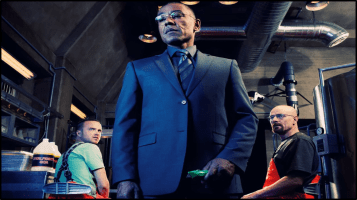
Let’s talk about the Ricin Incident of season 4. We’ll start with a rundown of what happened. Walter White plans to have Jesse give Gus a ricin-laced cigarette. Walt chooses the nerve agent ricin because it’s difficult to detect. Jesse chooses not to poison Gus because he doesn’t trust Walt at this point and has grown closer to Gus. Later, Brock (the son of Jesse’s girlfriend) falls ill from an unknown cause. Jesse finds that he had lost the ricin cigarette and blames Walt for giving the poison to Brock. Walt convinces Jesse that he couldn’t have poisoned Brock; it was Gus. Eventually, doctors find out that Brock ingested the berries of a Lily of the Valley. At the end of the episode, the camera zooms in on a Lily of the Valley in Walt’s backyard.

Phew! That’s a lot to get through. The upshot is that Walt poisoned Brock and turned Jesse against Gus. Breaking Bad uses Chekhov’s Gun the entire time, but it layers each element and nests them together like Matryoshka dolls. The lilies were mentioned in dialogue earlier while Walt and his wife Skyler discussed landscaping. It’s banter that most viewers dismissed, but there’s a reason for everything in Breaking Bad. Viewers could also dismiss the ricin cigarette as a red herring, and it was to a point, but it returns later in the series and serves in this episode (or two episodes) as character motivation. It also does a lot for character development. If there was any lingering hope for Walt’s soul, and it’s debatable, it was lost here.

Oh, man. That ricin vial got around in this series. That Roomba makes an appearance as does the electrical outlet. I won’t say how, even though I’ve spoiled quite a bit already. Oh, well. You should watch Breaking Bad.

If you’ve watched Breaking Bad, what are your favorite storytelling elements? You could pass it to me, hidden in a marzipan strawberry or you could let me know in comments. And wherever you are, I hope you’re having a great day.

My Favorite Element: Nier Automata

Uncle Geekly finished one of 2017’s best role-playing games Nier: Automata. Come to think of it 2017 was a great year for Japanese Role-Playing Games with Persona 5 also becoming available worldwide six months after its initial release. But we’re going to discuss Nier: Automata in this writeup and how it takes a novel approach to storytelling that I haven’t seen too many video games attempt.

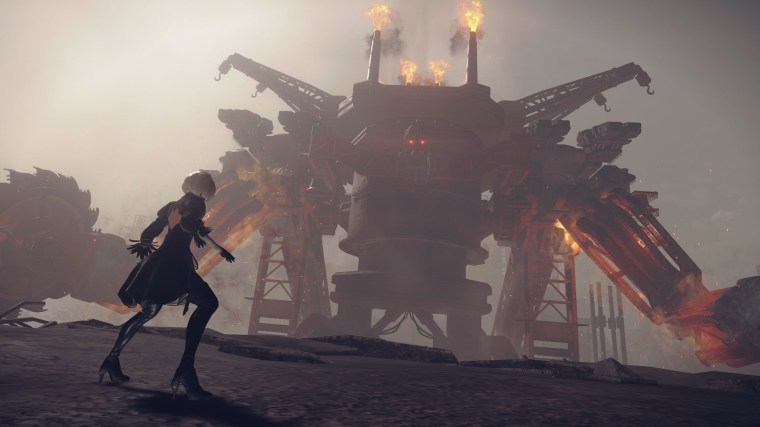
To say Nier: Automata is off kilter would be an understatement. I enjoy that every weapon has its own unique backstory that players can dip their toes into. Weapon Stories are a recurring element in the Nier and Drakengard series as are multiple plays of the game revealing new potential endings. Nier: Automata takes the latter element and makes it work—alternate endings don’t always pan out that well in Nier and the Drakengard series—by showing the game through the eyes of its two protagonists.

NieRAutomata01.jpg

Nier: Automata is broken into two parts and two main characters: 2B and 9S. There are moments through the first playthrough where 9S disappears for long periods of time. He explains most of his absences but showing what 9S goes through offers a lot to the overall experience. As soon as I saw that I’d play as 9S during a second playthrough I shuddered. There are moments that I’d rather not experience first-hand, but at the same time, I played on because I wanted to see them out of morbid curiosity.

Not every story can be enhanced by a second telling by another character, but Nier: Automata makes a great choice in showing 2B’s and 9S’s story. It’s obvious that they’re co-protagonists and it would’ve been a falsehood to not show 9S’s journey.

What are your favorite elements of Nier: Automata? Are there any other video games that do a great job of showing two protagonists’ stories. Let us know your thoughts in the comments.

My Favorite Game Mechanics: Gloomhaven and Assault on Doomrock

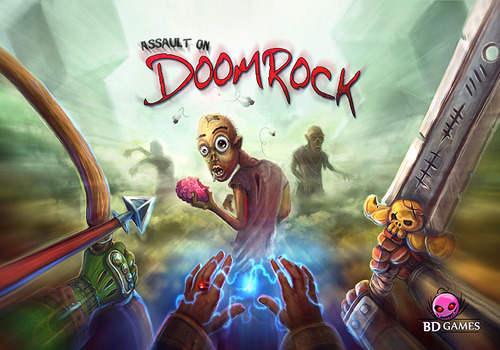
There are so many things I could pick as my favorite mechanisms for Gloomhaven and Assault on Doomrock, but I’ll try to stay on task with the one I chose for this article: artificial intelligence.

Cooperative games pit the players against the game itself so almost any cooperative game has some version of artificial intelligence. Gloomhaven and Assault on Doomrock just happen to be two of my favorites in terms of AI.

Gloomhaven01.jpg

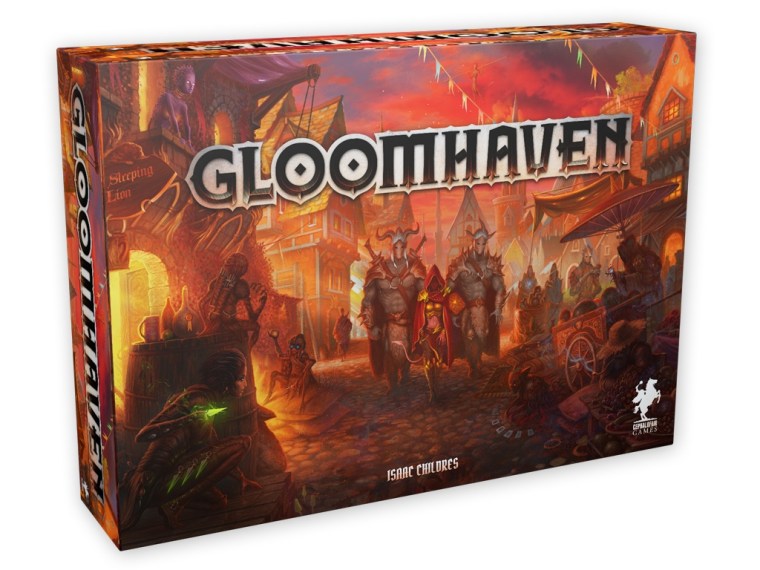
Gloomhaven has a leveled system for its creatures, so players can adjust the difficulty to match their tastes, and each creature type has its own action deck. The action cards within these decks dictate how quickly each creature moves, how or if they attack that turn, and who they target when they do. It’s a simple but elegant way of making each creature unique. Players won’t know what the creature will do from turn to turn, but if they’ve faced a similar creature, they may know its habits and that does a lot for characterization.

I also like Gloomhaven’s card-based combat. Usually I don’t like it when a player gets knocked out when they run out of cards in their deck, but this game is so balanced that it works. Okay. I promise that’s the only time I’ll get off topic—with Gloomhaven.

AssaultOnDoomrock

Assault on Doomrock has a similar system for its creatures, but it adds a threat level for each player’s character (or hero). Typically, the hero with the highest threat level will draw more monsters and that allows for a mechanism in the game that functions a lot like a tank in MMORPGs—a tank is a player with a lot of health that serves as a punching bag for monsters to attack, while their teammates wail on the distracted monsters.

There are more things that may affect a creature’s aggression in Assault on Doomrock, but the inclusion of a threat system gives the game more depth. I also like Assault on Doomrock’s addition of time as commodity. T.I.M.E. Stories has a time system too, but Assault on Doomrock’s use of time made me more concerned about wasting the time I had and that increased tension. Alright. I won’t discuss Assault on Doomrock—that much.

SentinelsOfTheMultiverse

I’d be remiss to not give a quick mention to Sentinels of the Multiverse. The villain decks behave differently, giving each character personality. Pandemic almost made this list for artificial intelligence and how the viruses behave, especially how the epidemic cards function with location cards that had been played (currently in the discard pile) go back on top of the draw deck, so diseases can get worse in cities already affected.

Like I said, most cooperative games have some form of artificial intelligence, and there are many other great examples. I could go on for another five or six games at least, but good old Uncle Geekly would like to hear from you.

What do you like most about Gloomhaven and Assault on Doomrock? Is there another game that uses AI in a great way? Error Code 220: Service ready for new user. Let us know in comments.

My Favorite Game Mechanisms: Dinosaur Island

Yes. Uncle Geekly picked up Dinosaur Island this past Christmas, and I’ve had some time to get in several plays. For the uninitiated or the ones who don’t remember what I said about Dinosaur Island in the past, it’s a tabletop game where players compete for visitors by building their own Jurassic Park. The premise is solid gold.

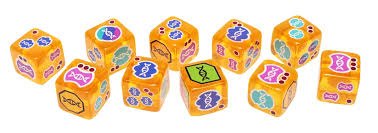
Each individual game mechanism has been seen in other games, but Dinosaur Island does a fantastic job of combining mechanisms that mimic what they’re supposed to mimic. The research and development section functions like the players exploring which dinosaurs they can recreate. Players can take a risk—increasing the dinosaur threat level—by taking a die that yields larger research results or they could take a safer route and set a foundation for gaining research points over time. It’s slower, but more reliable. The building of dinosaur pins and dinosaur husbandry—is that a thing?—functions the way one would think they would. Does one build the pins and reproduce dinos to get more visitors in one’s park before building adequate security? Players can, but is it wise?

DinosaurIsland_DinosaurFigures.jpg

The dinosaur figures don’t hurt the fun factor, but the resource management of where to place workers to get the best effect and where to place visitors so they yield the highest reward are other moments where Dinosaur Island shines. There’s just enough luck introduced so there’s a chance for players to catch a runaway winner, but Dinosaur Island is first and foremost a strategy game. A player who deploys a better strategy tends to win more often than those who don’t.

Each game mechanism—worker placement, tile placement, set collection, and an action point allowance system—behaves like its own mini game. Dinosaur Island could even be viewed as a series of mini games. But Dinosaur Island’s whole is far greater than any single part. That makes describing the game difficult or zeroing in on any specific part as a favorite tough. I like how Jonathan Gilmour and Brian Lewis combine these elements, so they make a tasty blend.

DinosaurIsland_Dice

There are plenty of other games that throw in a lot of mechanisms (First Martians comes to mind), but the individual pieces feel like a board game version of doing your taxes. Dinosaur Island doesn’t feel that way. The elements make sense for what the players are doing and the strategy, while difficult to master, is easy to see. Players will know why they won or lost and how they may be able to improve. Plenty of games offer hodgepodges of gaming mechanisms, but few of those games deliver a great experience like Dinosaur Island.

What are your favorite elements of Dinosaur Island? Have you ever played a game without humming the Jurassic Park theme? Uncle Geekly hasn’t, even when I play a solo game. Let us know your thoughts in the comments.

My Favorite Elements of Crazy Ex-Girlfriend and What I Hope Will Happen in the Series Finale

Your uncle Geekly started watching Crazy Ex-Girlfriend this past summer, so he’s getting to the show during its final season. It’s too bad the show is ending after four years because I’ve enjoyed most episodes, but sometimes the best shows end after short runs. Crazy Ex-Girlfriend is both the CW’s most over-the-top show and its most grounded. Yeah. It’s the oddest mix. Crazy Ex-Girlfriend is a musical comedy, so ridiculous dancing and singing abound, and while its main character Rebecca obsesses with love and romance, the show focuses on mental health.

The most recent episode aired a couple of Fridays ago and it had a musical number about antidepressants and how more people take these medications than one might think. Seriously, this show is about destigmatizing mental health issues and making sure folks who suffer from these ailments seek help and know that they’re not alone.  This is a far different message than what most CW shows present. The majority of CW shows devolve into who is with whom as in dating or bedhopping. Crazy Ex-Girlfriend has had its share of Rebecca bedhopping, but these acts feed into her mental health issues. Plenty of Crazy Ex-Girlfriend watchers subscribe to Team Greg or Team Nathaniel or even Team Josh. But I hope, for the sake of Rebecca’s wellbeing, that she ends up with no one.

Don’t get me wrong, I’m not against love and romance, but Crazy Ex-Girlfriend has a higher calling than shipping (as in the slang for matchmaking) the main character with a specific beau. The show would betray its serious message about mental health and undercut a lot of good it’s done. I’ve seen just as many Crazy Ex-Girlfriend fans talk openly about mental health and reach out to others in need. But Rebecca choosing any of these men would end up a poor choice.

She moved to West Covina to obsess over Josh who was dating someone else and may have a touch of Peter Pan Syndrome (that’s unhealthy behavior), rebounded with Greg who has his own demons with alcoholism (another unhealthy choice) and eventually plotted revenge with Nathaniel who suffers from abandonment issues and poor social skills (yet another unhealthy choice). It’s okay if Rebecca ends up alone. Or she could leave the door open for romance if she works on her issues first. There aren’t enough episodes remaining for Rebecca to get well enough to focus on romance.

To the show’s credit, it looks as if Rebecca will choose to work on her mental health first. Sorry, folks. We’ll probably get one more push for romance between Josh and Nathaniel, but it appears as if Rebecca may go back to her first love, theater, and that’s something else Crazy Ex-Girlfriend does so well, they suggest that love comes in many forms, not just romance. Other CW shows should take notice.

What’s your favorite element of Crazy Ex-Girlfriend? If you’re a fan, what do you hope will happen in the series finale? If you disagree with me, you can have Nathaniel order a hit on me, or you could leave a comment. I could be moving to Venus or Mars soon, so leaving a comment would probably be more effective.

My Favorite Gaming Element for Apex Legends

Your uncle Geekly has tried out the latest battle royal craze Apex Legends and I like it despite loathing the genre. I’m more of a solo experience video gamer. Give me a story and characters I can invest in and I’m happy; multiplayer games don’t usually do a lot for me. Battle royal games and the chaos they bring do even less for me, but I’m surprised by Apex Legends’ focus on teamwork.

Everything about Apex Legends screams that the players must work as a team. When players jump into the map, they do so as a team and that shows the emphasis on team play at each game’s beginning. I’ve heard on some message boards that Fortnite players dislike being forced to jump as a team, but Fortnite is every player for themselves. Sure, there is a squad (or team) option for the game, but it pales in comparison to the every person for themselves game mode. Apex Legends’ squad play outshines Fortnite’s most likely because players jump as a team.

Apex-Legends-Ping

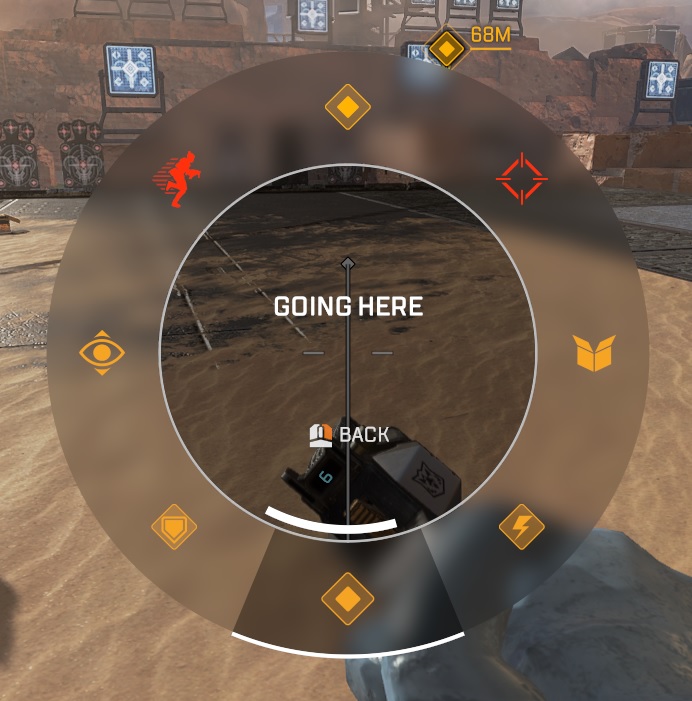
The communication system, or ping system, works like a charm. The Gears of War series may have instituted a ping system, but Apex Legends gets it right. Players don’t need to use mics if they don’t have them. Heck. Even if they do have them, they may prefer to use the ping system. If you see a shield or gun a teammate can use, ping it so the item shows up on their map. If you see an enemy on the next ridge, ping the location so it shows up on your teammates’ map and you can converge on the enemy. Players can even ping one location for their teammates and another for themselves—you go here, I’ll go here—and a team can formulate a pincer attack in near real time.

Can Apex Legends be played by oneself? Yes, but not well. I’ve had teammates drop out because of server issues—of which there have been a lot since the game’s launch—and ended up in a solo team. I’ve made it to the final three squads in several of these instances, but when the game gets tight, more firepower is needed, firepower that won’t exist if a player is by themselves. The closest I ever got to winning a game as predominately a solo squad was second place with one other combatant standing. That’s not saying that Uncle Geekly’s good at Apex Legends, in fact, I strive for mediocrity, but my point is that one can’t win the game that easily going solo.

featured-apex-legends-ping-system.jpg

More than any other battle royal game—on the market today—Apex Legends focuses on a team dynamic and if I’m going to play a multiplayer game, I prefer a team atmosphere. I could carry this team mentality further and discuss Overwatch at length and how the character selection screen breeds discontent while Apex Legends has a more relaxed feel, but let’s say that the concept of team shines through most of Apex Legends and that’s where players will find the fun. If you prefer team based multi-player games, you may enjoy Apex Legends.

Do you agree that Apex Legends is a good team battle royal game? Do you have a character that you prefer to player more than another? Let us know in the comments.

My Favorite Game Mechanics: Pit Crew

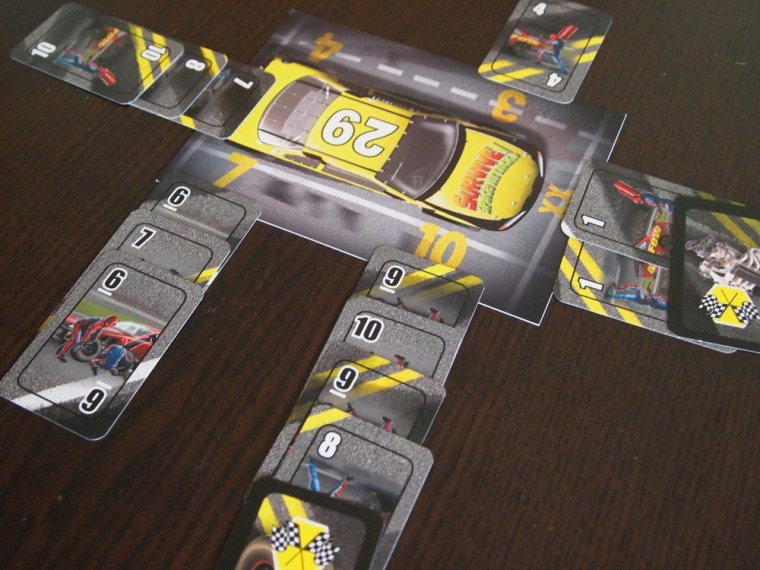
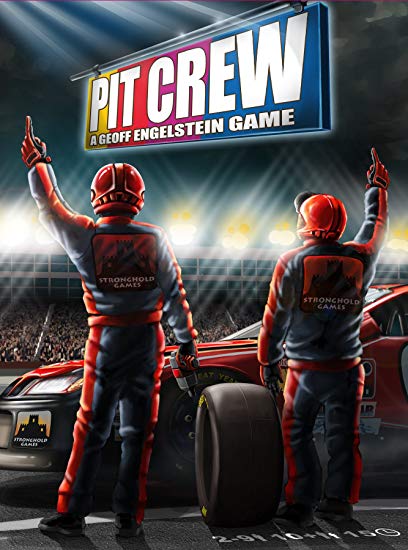
Many people won’t like Pit Crew. The real-time aspect of the game can get players flustered and dampen some of the fun, but that’s what I like about it. While most real-time games have players dashing to play cards or some other game device to a common area, Pit Crew has gamers play solitaire.

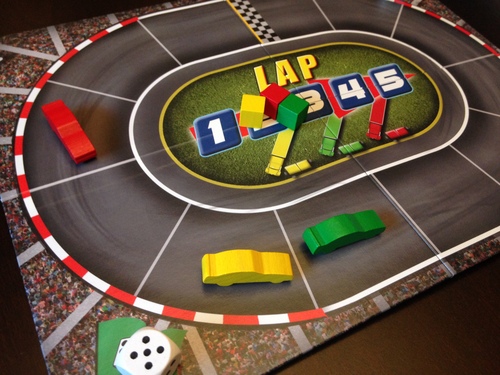
The rules are simple, but I won’t go into them in detail here. Players assume the role of a pit crew during a stock car race. They play cards numbered 1-10 in either white or black numbers (there’s a bonus if a player uses all of one color) on areas where they must place a pair of the same number, go up or down in number (with 10 and 1 being adjacent), and reach a specific sum. The first ones to do so begin rolling a die. For every 6 they roll, they move their car one space on the track—and that’s where it gets interesting.

PitCrew_BoardGame04.jpg

Geoff Engelstein has created a psychological game with his players. The impulse is to start playing your cards quickly as soon as you hear someone roll a die. But Pit Crew is more concerned with gamers playing a clean game of solitaire. Your opponents will gain more spaces with the penalties incurred by messing up a pattern, than any spaces gained on a die.

Roll. You may forget what total your on for the area that needs a specific sum. Roll. Did I play a three and then a four or a five and then a four? Roll! I don’t care if the color on the numbers match, I’m placing those two ones in a pair spot.

PitCrew_BoardGame03.jpg

What’s worse is that gamers may feel more impowered to give their opponents bonuses rather than take a penalty. This is another psychological trick Pit Crew uses. If my car went backwards on the board for every one of my mistakes, the penalty would only affect me. With all my opponents (it may be a 3-player game) gaining a benefit from my mistakes, my mistakes are multiplied, but in an odd sense, a lot of gamers would prefer giving other players a bonus instead of accepting a penalty.

PitCrew_BoardGame02.jpg

Pit Crew poses an interesting question. Is it better to be punished or rewarded?

What do you like most about Pit Crew? What are the things you don’t like about Pit Crew? Heck, is it better to be punished or rewarded in games?

It’s a good thing I’m a glutton for punishment, let me know what you really think in the comments.