
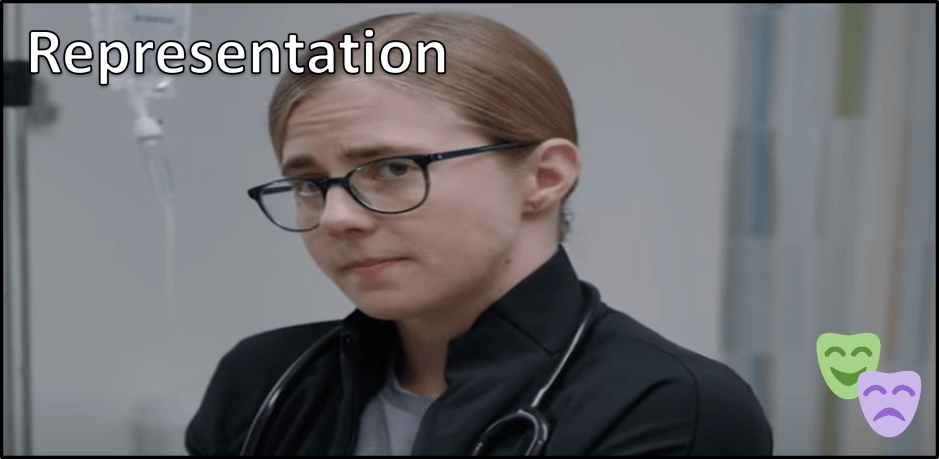
Hey, hey, Geekly Gang! Kyra Kyle here with another autism representation post. Today’s focus is on The Pitt, specifically Taylor Dearden’s portrayal of Doctor Melissa “Mel” King. The Pitt hires autism consultants, and Dearden is neurodivergent. In interviews, Dearden has shared that she portrays Mel King as a less masked version of herself. I love that. The Pitt gets a lot right about lower needs autistic people and does a great job of showing a subtler side of autism. Not all autistic people present the same way as Rain Man or Sheldon Cooper. The internet loves Taylor Dearden as Dr. King. I love Dearden’s portrayal of Dr. King. In this post, I hope to show how consulting experts and personal experience converge to make a memorable character, who happens to be on the autism spectrum. This is Geekly’s autism representation deep dive of The Pitt’s Dr. King.
Autism and Empathy, and the Double Empathy
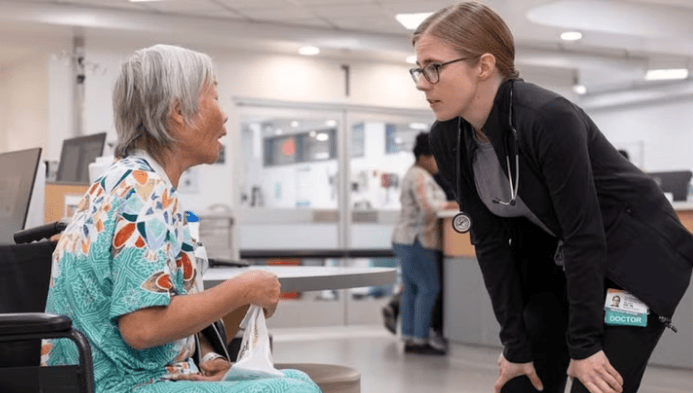
The Pitt’s Dr. King is by no means the first autistic doctor portrayed on television. Freddie Highmore portrayed Dr. Shaun Murphy on The Good Doctor for seven seasons. Note: I may reference Highmore’s Dr. Murphy on a few occasions; Highmore is a talented actor, but the character (of Dr. Murphy) doesn’t hold up well, especially when compared to Dearden’s Dr. King. While Dr. Murphy struggles to empathize with his patients, Dr. King thrives in that role. She has an amazing bedside manner. There’s a moment when Dr. Langdon (Patrick Ball) can’t connect with a patient, and after a quick search, Dr. King discovers the patient is autistic. She checks in on the patient. Taking the patient’s sensory sensitivity into account, she offers comfort by turning off the lights and closing the patient’s room. Based on personal experience (her own experience as an autistic person and taking care of her sister with higher needs), she knows what an autistic person may need.
In previous installments of this series, I’ve mentioned the double empathy problem. Briefly, the double empathy problem occurs between autistic and allistic (non-autistic) people. When allistic people are grouped together, they can understand each other well. When autistic people are grouped together, they can understand each other well. A problem arises when a group becomes a mixture of the two. It’s easier to understand the mindset of people similar to you. I shared a different study/report in previous installments, but Embrace Autism suggests there may actually be a triple empathy problem. Autistic people have a disconnect with allistic people and suffer differences from their medical providers. This quick scene between Dr. Langdon and the autistic patient, followed by Dr. King and the same patient, elegantly shows this potential gap in care.

I also love how Dr. Langdon returns this same level of comfort toward Dr. King in the second season. It’s a great character growth moment. And it’s a reminder that despite our differences, autistic and allistic people can care for each other. I have it on good authority (Mrs. Geekly is a medical professional) that The Pitt may be the most accurate medical show. Dearden’s Dr. Hill is an accurate portrayal of a high-masking (even though Dearden lowers her own mask for the character), lower needs autistic woman. Dr. King feels like a unique person.
Dr. King can offer her patients comfort. She suggests to a daughter who is the sole caregiver of her aging mother that caretaker fatigue can harm someone. King even shares (with the patient) how she took care of her twin sister with higher needs. Oh. Quick note: this post will contain spoilers; I’ll try not to spoil too much, but you’ve been warned.
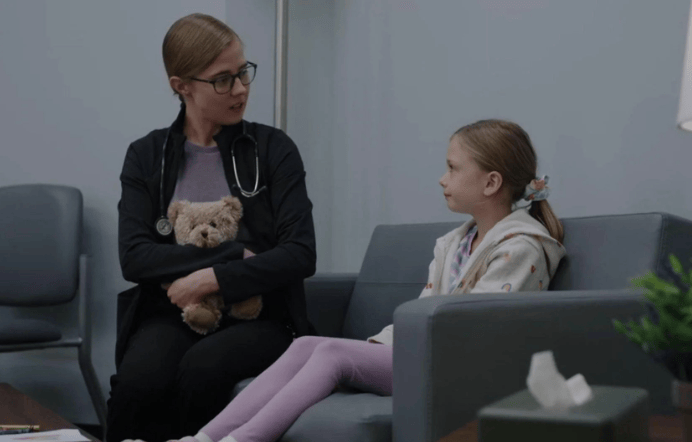
I love a moment when Dr. King is tasked with telling a six-year-old girl that her older sister, who saved her from drowning in a pool, had died. Dr. King’s emotions are plastered on her face. That’s something I’ve found with a lot of autistic people, myself included. Many autistic people struggle to hide their emotions. In that moment, I thought Dr. King would have a meltdown. If Dr. King were more like Highmore’s Dr. Murphy (The Good Doctor), she would have had a massive meltdown, but she didn’t. She runs out of the family room and returns late with a stuffed animal. The parents forbid the little sister to see her older sister after she passed, so Dr. King told the little sister to tell the stuffed animal what she wanted to tell her big sister, and then Dr. King would give the bear to the big sister to convey the message. This was such a beautiful moment. I had to pause the show every time I watched the scene. Brilliant.
I don’t mean to say that every autistic person makes a great doctor or medical professional. Some autistic people can make great medical professionals, just like some allistic people can make great medical professionals. And numerous autistic people have no business ever becoming medical professionals, and the same is true for many allistic people. Dr. King is a great representation of a competent medical professional who happens to be autistic. Mel King may be a great television doctor, but she isn’t perfect. And that makes Dearden’s portrayal endearing.
Communication Struggles
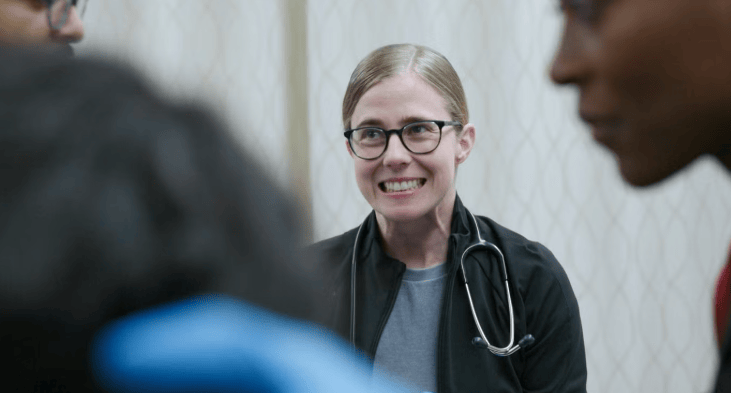
I spent the last segment showing how Dr. King cares for her patients, but she doesn’t always get it right, specifically with her communication skills. And that tracks for an autistic person. On more than one occasion, Dr. King will talk aloud all the possible issues a patient may have; some of the diagnoses can be troubling. And another doctor would have to step in and comfort the patient. I love one moment between Dr. King and Dr. Mohan (Supriya Ganesh, who happens to have a background in the medical field). Dr. Mohan doesn’t chastise Dr. King. But Dr. Mohan insists she’ll talk to the patients instead of Dr. King. Dr. Mohan didn’t admonish Dr. King. Her point was clear. Dr. King didn’t handle the social interaction well, and you can see it on Dr. King’s face.
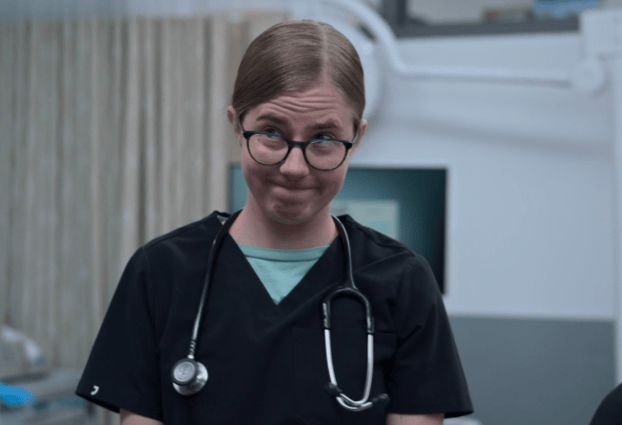
And Dr. King’s facial expressions get her into a lot of trouble. Dearden can convey a lot of information with a glance. A few patients react poorly to some of Dr. King’s expressions. During the second season, Dr. King gets distracted by her deposition (for a malpractice suit) and a side story about her twin sister with higher needs. The audience and most of the other characters know Dr. King isn’t engaged with her work. Honestly, it was great seeing Dr. King outside her element. She had to stand before a judge and convey her side of a procedure, and it didn’t go well. Of course it wouldn’t. Dr. King was a bundle of nerves for most of the second season. And I love how Dr. Santos, who had earlier rebuffed Dr. King’s attempt at friendship, takes Dr. King out for karaoke and drinks to blow off steam.
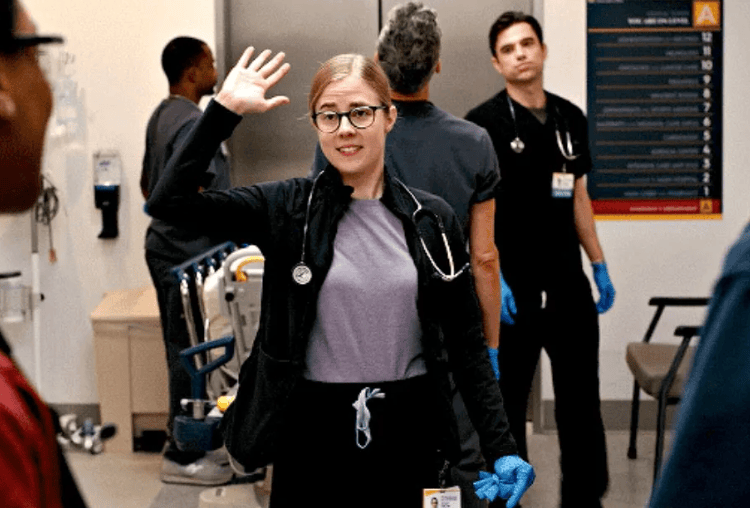
While Mel can make friends, she can be an acquired taste. Dr. Santos straight-up walked away while Dr. King was in mid-speech about how the two of them could be friends at the beginning of season one. It took a while for Dr. Santos to warm up to Dr. King. Even though we talked about autistic masking in previous installments, Dr. King does a lot of masking during The Pitt’s opening episodes. She mimics others’ behaviors and mannerisms. One of my favorites is when Dr. Langdon (who’s about six feet tall) slaps the doorjamb as he walks into a hall and Dr. King attempts to do the same. Dr. King whiffs and gives a quick glance to see if anyone else saw her miss. LOL. Dr. King forces smiles when she’s being introduced in The Pitt’s early episodes. She even repeats the same practiced introductory speech to a coworker. I know you’re Doctor King. We’ve met. Oh. All of these are examples of autistic masking.
On a sidenote, I love the UK’s resources (their psychiatry websites) for autism. The link above isn’t the first time I’ve used one of Autism.Org or AUDHD Psychiatry UK’s websites.
AUDHD Psychiatry UK even sites hiding sensory needs as another version of autistic masking. When Dr. Langdon tends to Dr. King’s sensory needs (by turning off the lights and closing a door), Dr. King denies she needs anything. She slinks by the ambulance entrance to take a breath and stim. She sneaks a peek at a lava lamp app on her phone or listens to ocean sounds to drown out the chaos occurring in the emergency room. All of these are great ways Dr. King silently stims and self-regulates. While those same resources I mentioned earlier (Autism.Org and AUDHD Psychiatry UK) list stimming and self-regulation as positive actions autistic people can take to navigate a world not built for them, I can attest (from personal experience) that Dr. King’s self-regulation and stimming ring true for a high-masking, lower needs autistic person.
I also like how Dr. King lets down her guard when Charge Nurse Dana Evans catches Dr. King stimming, and Evans doesn’t judge Dr. King for it. She encourages Dr. King to practice self-care. And that’s what stimming and self-regulation is for autistic people, self-care.
Not a Punchline
I don’t know where I heard this, but someone (either Taylor Dearden or another reviewer of The Pitt) mentioned how they liked that Dr. King isn’t just the butt of jokes, and I agree with them. Often, when autistic characters are included in stories, they’re meant to be mocked. The Pitt doesn’t do that. Sure, Dr. King has some funny moments, like when she’s talking to Dr. Santos about being friends, and Dr. Santos leaves the conversation mid-sentence, or when Dr. King whiffs with slapping a doorjamb. Both of these are funny moments. But Dr. King’s character isn’t written to be a joke or a punchline to a joke.
I even like how Dr. King can pick up on jokes. Dr. King is the only one who participates in Dr. Mehta (a neurologist) as he tells medical-themed dad jokes. Dr. King has a sense of humor. I also like how she thinks of Dr. Mehta’s jokes and puns like a game. And she’s winning. She’s so winning. “Which neurotransmitter makes the best adhesive?” Dr. King is so proud of herself when she answers, “Glutamate.” Priceless.
I know I just said Dr. King isn’t a punchline, but I do have to include the one moment that made me fall out of my chair, and of course, it involved Dr. King. While a mother is in labor, Dr. Collins asks Dr. King to check on the baby’s status. Dr. King lifts up the sheet covering the mother’s bottom half and says, “I see hair.” Everyone else in the room looks at Dr. King as if she were referring to the mother’s pubic hair. Dr. King scoffs and clarifies, “baby hair.” Classic. The funny thing is that when I first heard her say that, I thought Dr. King was referring to the baby’s head. Her facial expression said it all. But everyone looking like they ate a bad clam made me question what I heard. Wait. What? And I was on the floor. In that moment, everyone else in the room was the punchline.

It’s a Sister Thing
I mentioned before that Dr. Mel King has a twin sister (Becca) who is also autistic with higher needs. Tal Anderson is no stranger to portraying autistic characters. She’s best known as Sal from Atypical, and she is also autistic. I love The Pitt’s representation. Autism is hereditary. If one sibling has autism, there’s an increased chance of 20% that another sibling will be autistic, and the percentage goes up to 32 if two siblings have autism. Countless studies (not just ones posted on the Cleveland Clinic’s website) show a strong heredity of autism from one generation to the next (parent to child). So, Becca King’s autism diagnosis makes sense, and I love how Dr. Mel King cares for her sister. The Pitt does a great job of showing multiple variations of autism.
We don’t see much of Becca King in The Pitt’s first season, but during the second season, we find out that Becca King has a boyfriend. Yes! Everyone deserves love. And it’s heartbreaking to see Mel worry that she’s behind her sister. Mel has put so much of her identity into caring for her sister and her patients that she forgot to look for something beyond medicine and her sister’s care for herself. Yes. I mentioned earlier how Dr. King uses stims and self-regulation to care for herself, but she’s denied herself relationships. And we get back to Dr. Santos singing karaoke and sharing some drinks with Mel at the end of The Pitt’s second season. Mel King ends up in a happier place. She has hope for her personal future. She received support from her coworkers that the deposition, no matter how bad it went, won’t ruin her career. And her sister has found her place. It’s time for Mel to find hers. Mel has options. She’s opening up to others.

Final Thoughts
The Pitt puts a lot of care into its medical terminology by hiring medical consultants; it does the same for autism representation, and it shows. Dr. Mel King is a layered character who happens to also be autistic. Her competence as medical professional doesn’t come from the magic power of being autistic. I’m thinking of The Good Doctor with Highmore’s Dr. Murphy owning a built-in MRI in his eyes and brain to scan his patient. Seriously, that’s a thin The Good Doctor portrayed. Right. All autistic doctors have built-in MRIs. The Pitt’s Dr. King works hard. She makes mistakes. She learns from those mistakes. And above all, she has her patients’ best interests at heart. And she shows heart and compassion.
The Pitt avoids numerous pitfalls other shows (that feature autistic characters) have made in the past. I won’t name any names, besides The Good Doctor. And I will say that Freddie Highmore’s performance as Dr. Murphy also has some moments of truth. But it doesn’t hold a candle to Dr. King in The Pitt. I can’t wait to watch season three in a couple of months. Those are my thoughts on The Pitt’s autism representation. What are your thoughts on Dr. King? Let us know in the comments. Thank you for reading, and wherever you are, I hope you’re having a great day.

