
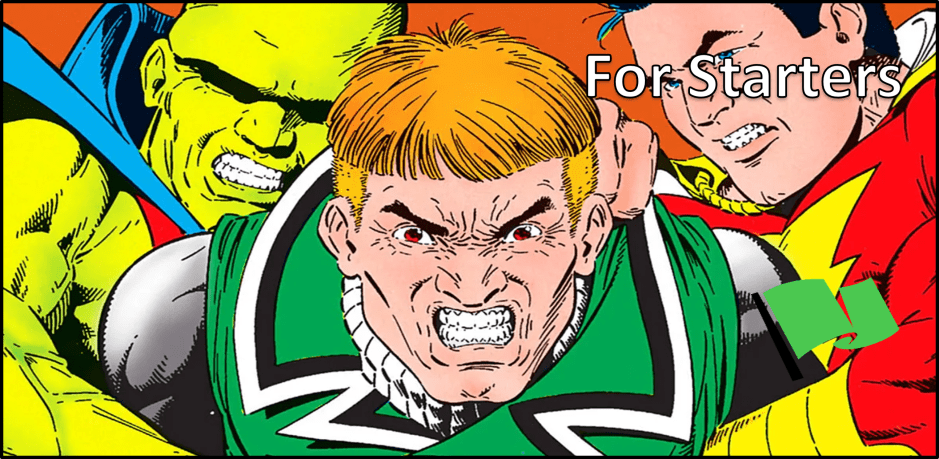
Hey, hey, Geekly Gang! Kyra Kyle here. I’m continuing to write far in advance. Who knows if Lanterns is still releasing new episodes? I’m writing so far in advance that Lanterns’ schedule hasn’t yet been released. Even though we don’t know Lanterns’ schedule, let alone which stories the show pulls from, that doesn’t prevent us from discussing Guy Gardner starter stories.
Guy Gardner has a crazy history in the DC Comics universe. Gardner may be the one Lantern who’s represented more shades of the emotional spectrum than any other Lantern. Gardner’s varied past means we’ll have plenty of single-issue comics and longer storylines from multiple eras of comic book history. Guy Gardner’s past is not for the faint of heart. Buckle up.
Single Issues
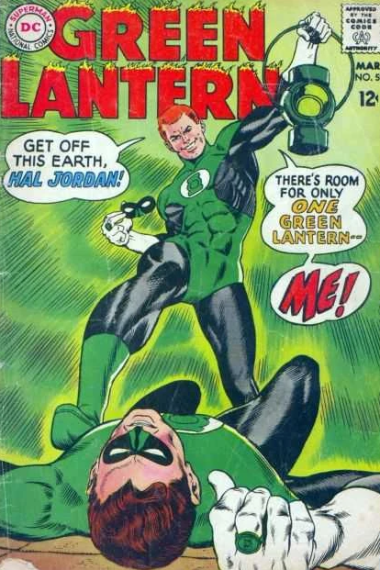
“Earth’s Other Green Lantern!” (Green Lantern Vol 2 #59; written by John Broome/art by Gil Kane; March 1968)
Hal Jordan was one of several people Abin Sur’s ring could’ve bestowed its power. The power ring chose Hal because he was geographically the closest to Abin Sur. In “Earth’s Other Green Lantern!” Hal Jordan uses a machine named the Memory Machine to watch one of these alternate worlds. In this world, a man named Guy Gardner became Earth’s Green Lantern.
We gain some insight into why Guy Gardner is typically angry. A few issues later, Guy suffered a head trauma that led to a drastic change in demeanor fans saw after he woke up. In his prime, Guy’s a friendly teacher and occasionally worked as a prison counselor. This story shows how much the Green Lanterns and the Guardians torpedoed Guy’s life. They stole his future to make him a backup for one of the Lantern Corps’ least reliable members.
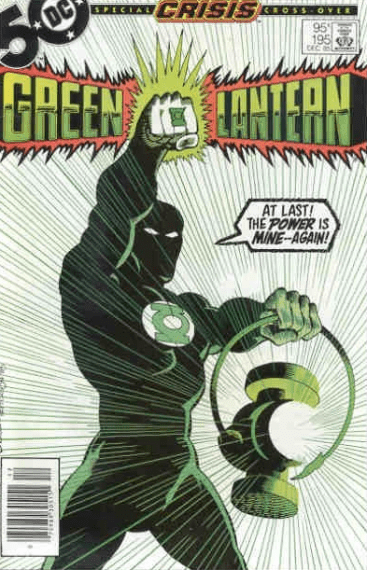
“4” (Green Lantern Vol 2 #195; written by Steve Englehart/art by Joe Staton; December 1985)
The events of Crisis on Infinite Earths made John Stewart disposed, fighting alongside the Monitor across the universe. Guy Gardner is selected as John’s replacement on Earth. During this event, in “4,” Guy is selected to join the Guardians’ newer, smaller Green Lantern Corps. “4” elevates Guy to official Green Lantern status, bringing the number of official Sector 2814 (which includes Earth) Green Lanterns up to three.
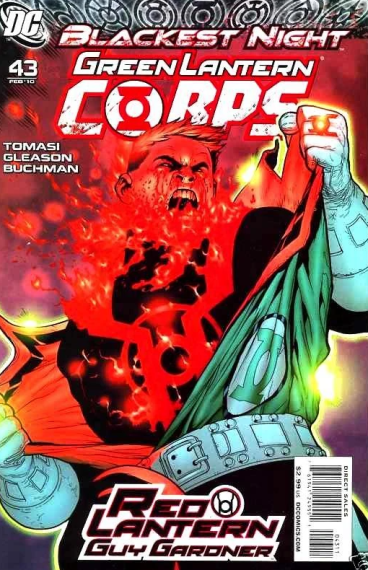
“Red Badge of Rage” (Green Lantern Corps Vol 2 #43; written by Peter Tomasi/art by Patrick Gleason; February 2010)
At least one issue of the massive Blackest Night crossover made each of the Green Lantern starter story lists. Long-dead superheroes sprang from their graves, powered by Black Lantern rings. Heroes from every color in DC’s emotional spectrum united to push back the dead. “Red Badge of Rage” was the first time Guy dabbled with another color in the emotional spectrum. He became pure rage.
After Kyle Rayner fell to the Black Lanterns, Guy tapped into his anger. Instead of expressing grief, Guy’s bravado transformed his sadness into rage, making him a potent Red Lantern. Guy punched his way through dozens of Black Lanterns, smashing them into bits, and then he vomited energy-blood over the rest. Guy became a one-man army. He finished the Black Lantern Corps, teasing Guy’s tenure with the Red Lantern Corps.
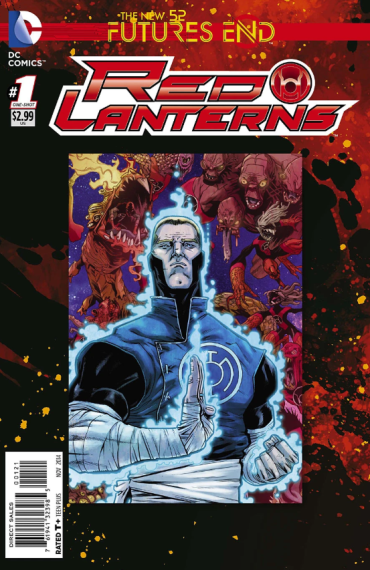
“Blood Debts” (Red Lanterns: Futures End Vol 1 #1; written by Charles Soule/art by Jim Calafiore; November 2014)
“Blood Debts” does a great job of showing Guy Gardner’s heroic journey. Red Lanterns gives Guy a new purpose as Earth’s primary Red Lantern, but Red Lanterns: Futures End shows a far future Guy who turned his rage into a Blue Lantern for Hope. Guy kept a huge secret from his ally, Bleez. As the pair dispatch the last Red Lantern from the universe, Bleez asks how Guy’s blue ring can be so powerful, as blue rings need proximity to green rings to create constructs. Guy reveals a string of rings around his neck. He had mastered the entire emotional spectrum.
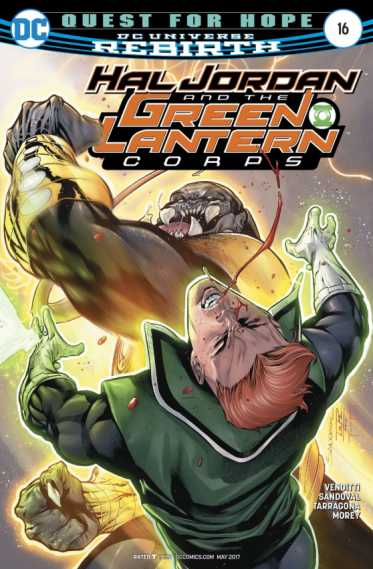
“High Noon” (Hal Jordan and the Green Lantern Corps Vol 1 #16; written by Robert Venditti/art by Rafa Sandoval; May 2017)
“High Noon” is a window into an odd era of Green Lantern history. After Hal Jordan seemingly sacrificed himself to stop Sinestro, the Sinestro Corps fell under the leadership of Sinestro’s daughter, Soranik Natu. Soranik took the Sinestro Corps in a different direction. She turned away from fear and proposed a Sinestro Corps alliance with the Green Lanterns. Many people on both sides weren’t happy with the alliance, especially Guy Gardner.
Guy Gardner challenges the massive alien Yellow Lantern Arkillo to a fistfight with no power rings. Guy holds his own, and after the fight, Arkillo and Guy become the closest allies between the two Corps of Lanterns.
Storylines
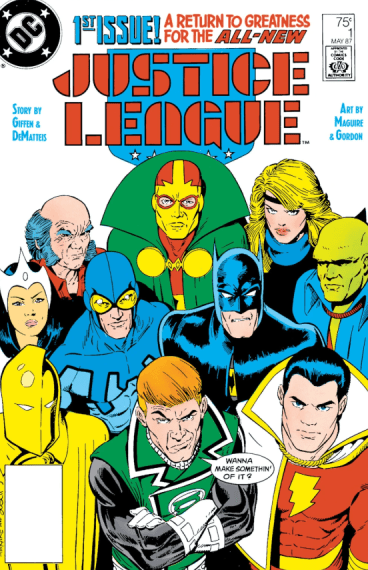
“Justice League International” (Justice League Vol 1 #1-6) written by Keith Giffen and J.M. DeMatteis; art by Kevin Maguire; 1987)
Whenever I think of Guy Gardner, I think of the iconic punch Batman gives Guy in the kisser. Justice League Vol 1 #5 holds that iconic scene (turned meme).
Guy isn’t always a great teammate, which makes him the perfect addition for the Justice League International (subsequent series after the Justice League mini-series), led by Maxwell Lord and sometimes Batman. Justice League International showcases how annoying and powerful Guy Gardner can be. Batman’s iconic punch earned a smile from Martian Manhunter and cheers from Blue Beetle and Black Canary, but what folks tend to forget is how wildly Guy’s mood swung after getting punched.
Nathan Fillion’s Guy Gardner borrows the most from the Guy Gardner we see in Justice League International. The team (The Justice Gang in Superman) is even funded by Maxwell Lord. I’d love to see a live-action version of this iconic moment.
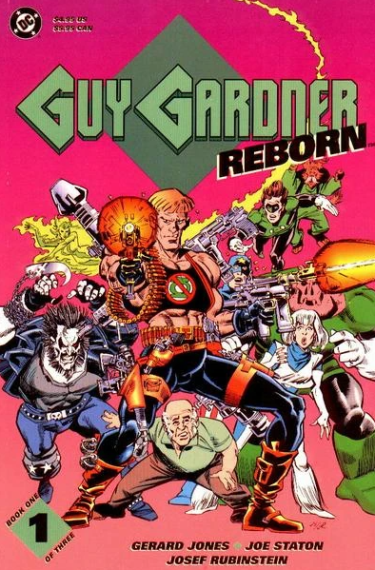
“Guy Gardner Reborn” (Guy Gardner Reborn Vol 1 #1-3) written by Gerard Jones; art by Joe Staton; June 1992)
Guy Gardner Reborn occurs immediately after Hal Jordan fought Guy for his ring. Guy contemplates his choice to honorably resolve his dispute with Hal for two days before he decides to escape toward Qward and steal Sinestro’s yellow ring. The resulting space opera shows how mean Guy Gardner can get. Add in the Main Man (Lobo), and Guy Gardner Reborn becomes a buddy-cop story fueled by mutual disrespect and vengeance. Guy Gardner Reborn heralded one of Guy Gardner’s best eras.
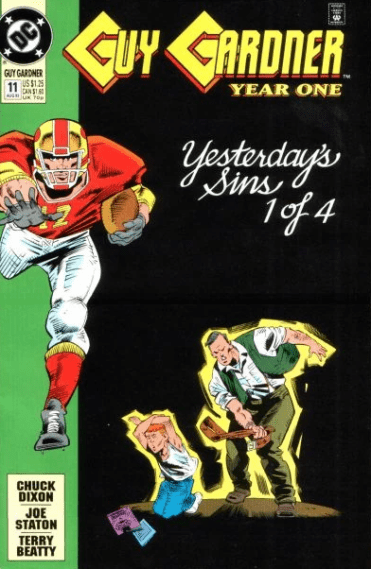
“Guy Gardner: Year One” (Guy Gardner Vol 1 #11-14; written by Chuck Dixon; art by Joe Staton; 1993)
Through the power of an odd suction-cup creature named the Xanoglpyh, Guy Gardner is forced to relive his traumatic past. Guy always had a deep-seated need for approval. This same need drove him to find a yellow power ring. Ringless Green Lanterns treat Guy like a brute. By the end of this arc, the other Lanterns offer to help Guy retrieve his yellow ring, despite knowing Guy shouldn’t have the ring. The short-lived series gives a lot of Guy Gardner’s heroic past some much-needed context.
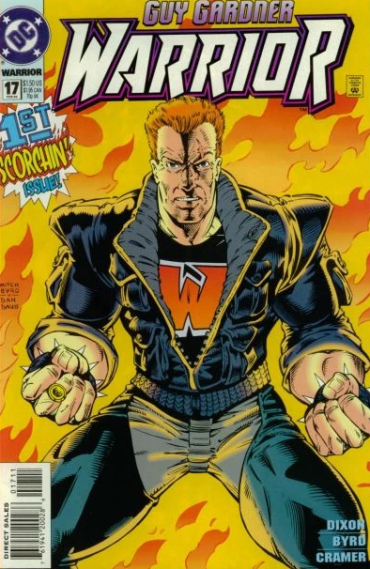
“Guy Gardner: Warrior” (Guy Gardner: Warrior #17-44; written by Chuck Dixon and Beau Smith/art by Mitch Byrd, Brad Gorby, Phil Jimenez, Howard Porter, Mike Parobeck, Jackson Guice, J.H. Williams III, Rick Mays, Dan Jurgens, Joyce Chin, Mike Wieringo, Marc Campos, Tom Grindberg, Aaron Lopresti, and Joe Staton; February 1994-July 1996)
Who needs a power ring? Everyone’s least favorite Green Lantern goes through another space odyssey in the wild ride that is Guy Gardner: Warrior. Guy used a yellow Qwardian power ring until Hal Jordan became Parallax and destroyed it. Ordinarily, this would mean Guy Gardner wouldn’t have powers. But Guy Gardner: Warrior reveals Guy’s Vuldarian heritage. His new alien powers allow him to construct weapons and armor from his body, no power ring required.
Guy turns into his wackiest best self with powers similar to but distinctly different from the Lanterns. During this series, Guy battles a clone of himself, goes to hell, and learns his importance to the War of Light.
Those are the Guy Gardner Green Lantern stories that made our list. We covered Hal Jordan and John Stewart starter stories the past two months. Are there any Guy Gardner Green Lantern stories you would add to this list? Let us know in the comments, Geekly Gang. Thank you for reading, and wherever you are, I hope you’re having a great day.
 jkgeekly.com