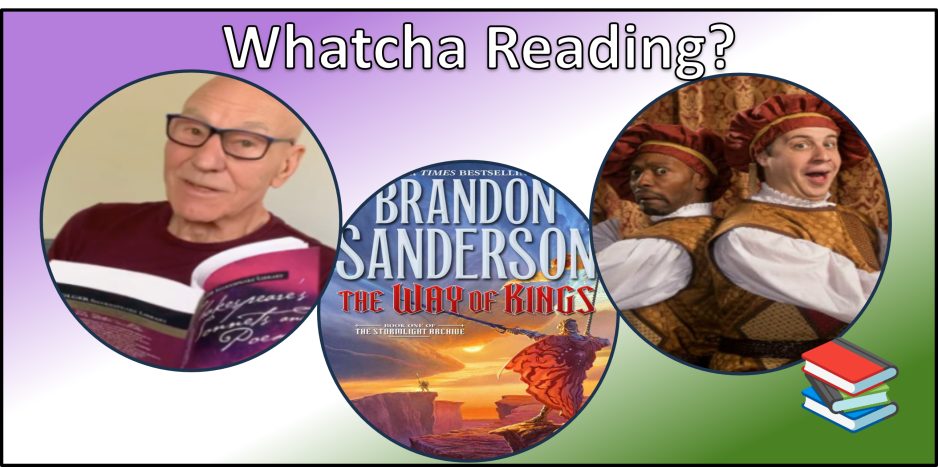
Happy Wednesday, Geekly Gang! Kyra Kyle here. During today’s post, our writers share what they’ve been reading over the past month. Feel free to share what you’ve been reading, too. We’re all part of the Geekly Gang. I’ll kick things off with what I’ve been reading over this past month.
Kyra’s Reads
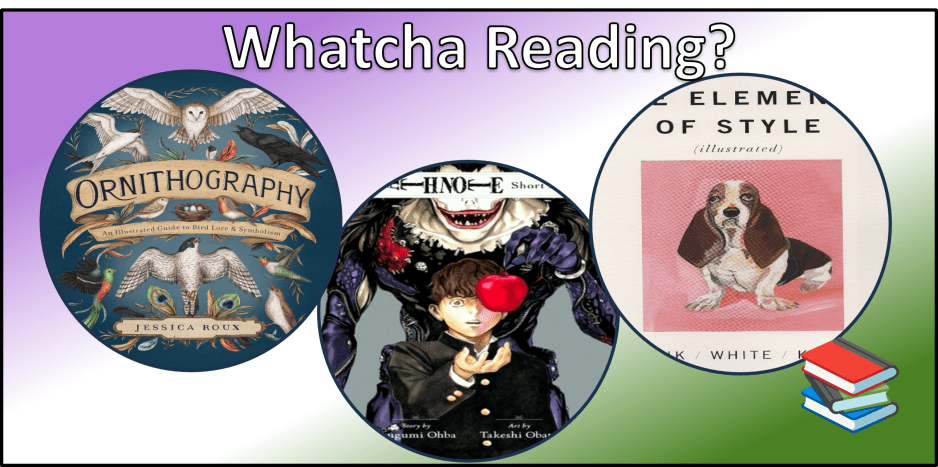
It’s the holidays. Naturally, I was out shopping for others, but that doesn’t mean I can’t pick up something relatively cheap for myself. I picked up Ornithography for under $5. Bird lore and symbolism sounded interesting, and Ornithography hasn’t disappointed. Each bird entry includes an illustration of the bird, its scientific name, and a brief legend about it. To say Ornithography is a quick read is an understatement. Just look at this sample page.
I figured Orinithography would yield some writing ideas, and it has shaken some things loose there. The only issue I’ve found is that the bird write-ups can contradict each other. One culture may view a bird as lucky and another unlucky. But that’s part of the fun.
Keeping my trend of quick to read and illustrated alive, my next entry is Strunk and White’s The Elements of Style. At one point, I read The Elements of Style once a year. It’s a writing style handbook and well worth the read. We can’t depend on AI to catch every mistake. This past month marks the first time I’ve read The Elements of Style in over two years. Yikes! I may need to get back into the habit of reading this must-read for any writer.
Yes. Style has changed somewhat, but most of what Strunk and White (and that’s E.B. White, the author of Charlotte’s Web) holds up today. And I love the gentle humor the two manage to give the subject. Writing style books can be a chore to get through. Strunk and White make it enjoyable.
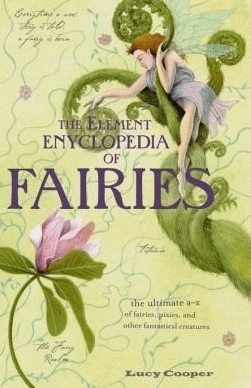
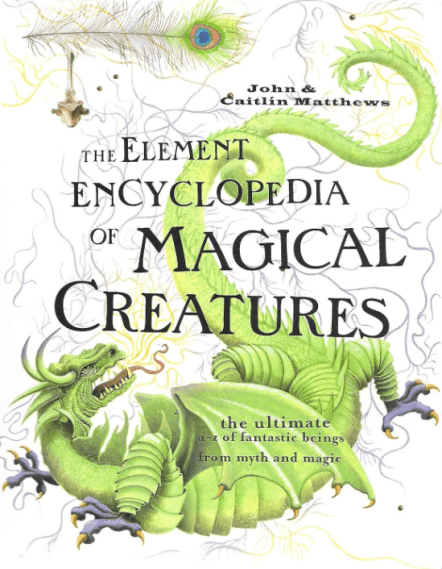
The Element Encyclopedia of Magical Creatures makes one of these lists again. I won’t go into too much detail. As the title suggests, this encyclopedia chronicles magical and mythical creatures. Entries in this book mirror Ornithography’s. I had a book type this month.
That’s all I have for this month’s Watcha Reading. Let’s see what Season’s been reading.
Season’s Read
I participated in the Black Friday/Cyber Monday boycott this year, only purchasing essentials. This boycott also extended to streaming services. I rewatched my DVD box set of Death Note on my computer with a USB disc reader and remembered I’d picked up a copy of Death Note Short Stories. Death Note Short Stories is a collection written by the author of the main Death Note series (with the same artist), so I consider all of these stories canon.
I’m not a fan of the Taro Kagami story since it includes a “death eraser,” which brings people back to life if they haven’t been cremated. In Japan, there isn’t enough land mass to bury the dead, so people are cremated, with their crematory bits kept separate from their memorial site. I’d assume the same logic would apply to someone whose body is in pieces. That’d make for a weird zombie.
The first story was interesting. It’s set nine years after the end of Death Note, and features Donald Trump buying the “power of Kira (Death Note)” from a mysterious seller in Japan (Minoru Tanaka). Death Note is a fantastical series, but this is the most realistic story in the franchise. No notes.
The last couple of stories feature background information on L, such as his upbringing and daily life. This man tumbles in a human-sized washing machine every day as his “shower” because physically taking a shower is too bothersome. I mean, I don’t always want to shower, but a washing machine? That’s definitely a choice.
Hey, hey! Kyra Kyle here again. That’s all we have for Whatcha Reading this week. Let us know what you’ve been reading in the comments. Thank you for reading, and wherever you are, I hope you’re having a great day.
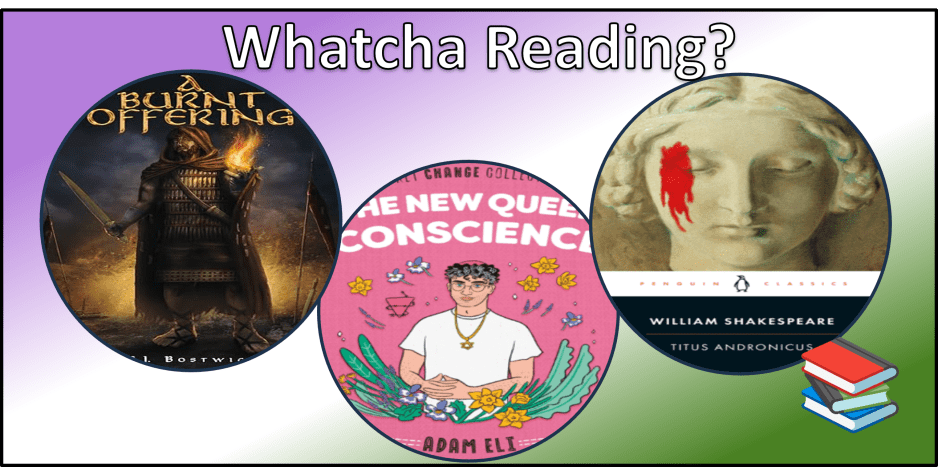
Happy Wednesday, Geekly Gang! Today, our writers share what they’ve been reading over the past month. Feel free to share what you’ve been reading, because you’re part of the Geekly Gang, too. I’ll start our monthly reading post.
Kyra’s Comics
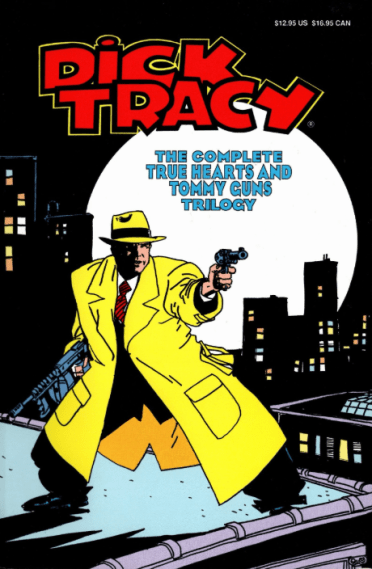
I reread a favorite graphic novel this past month, Dick Tracy: The Complete True Hearts and Tommy Guns Trilogy. Dick Tracy is a classic 90s graphic novel. The 1990 Dick Tracy film could’ve been so much better had Warren Beatty decided to start with the first of these three stories. Yes. Dick Tracy: The Complete True Hearts and Tommy Guns Trilogy concludes with what we now know as the 1990 Dick Tracy movie. Movie audiences lost so much by only getting the third installment. The Dick Tracy screenwriters planned on Dick Tracy being a trilogy, beginning with the first installment in this collection. Fortunately, those same writers decided to release the whole trilogy as a graphic novel.
After reading a Variety article about how 1990’s Dick Tracy served as a cautionary tale for comic book movies (specifically MCU films), I was enticed to reread Dick Tracy: The Complete True Hearts and Tommy Guns Trilogy. Needless to say, the Variety article got it wrong. The article’s writer suggests that Dick Tracy failed despite having every advantage (money, a heap of stars, etc.). One must have a great story. The sad thing is 1990’s Dick Tracy had a great story. The creative team had pulled a DCEU. (Think Batman V Superman; we’re behind the MCU, so let’s make the second DCEU movie feature Batman, Superman, Wonder Woman, Lex Luthor, and even Doomsday with some Darkseid and gang thrown in for funsies.) Back to Dick Tracy. TMNT and Batman had recently been released, so Dick Tracy skipped the first two parts of this great story to show the climactic end where everyone’s story converges.
If you read Dick Tracy: The Complete True Hearts and Tommy Guns Trilogy in its entirety, you’ll cheer as Big Boy puts Lips in the bath. Without the context of the previous two stories, viewers are left wondering who Lips is. A bad man. Lips abused Big Boy. We spend two movie-length stories watching Big Boy claw his way to the top with his buddy, Flattop. Breathless Mahoney’s background gets fleshed out. BB Eyes and Pruneface actually have personalities. Even Dick Tracy and Tess Trueheart’s relationship gets explored, so there’s more weight to them adopting The Kid. I highly recommend reading Dick Tracy: The Complete True Hearts and Tommy Guns Trilogy before watching–or rewatching–the 1990 film Dick Tracy. You’ll find a greater appreciation for what this film could’ve been.
Kyra’s Nonfiction
The Alcoholic Republic: An American Tradition is eye-opening. Prior to Prohibition, drinking was pervasive in the United States. Reading The Alcoholic Republic recontextualizes Prohibition. 1) Prohibition had to happen. Citizens of the United States drank far too much. We’re talking about a six-pack a day was considered extremely light. President Lincoln was assassinated because his guard was wasted. Vice President Johnson was spared because his would-be assassin had downed five bottles of whisky in one night. 2) Prohibition wasn’t a complete failure. I had been taught Prohibition failed on most–if not every–levels, but that may not be accurate. After Prohibition, most of the nation curtailed its drinking.
The Alcoholic Republic even explores gender roles. Men needed to work because if a man didn’t work, he’d drink himself stupid. This idea persisted decades after Prohibition. Even Ed Gein’s father was a drunken layabout. While I can’t say I “enjoyed” reading The Alcoholic Republic, I appreciated the history it told.
I’ve reread a handful of things–besides Dick Tracy: The Complete True Hearts and Tommy Guns Trilogy–over the past month, but let’s check in with Skye and see what she’s been reading.
Skye’s Fiction
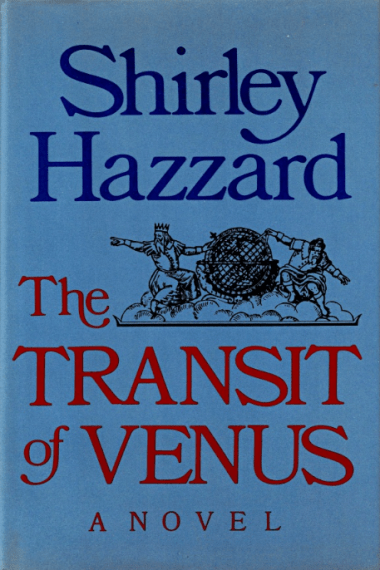
I came across The Transit of Venus in Barnes & Noble a few months ago, but only now got around to reading it. So far, it’s proven to be a heavily layered story, which I love. The Transit of Venus follows the lives of two orphan sisters from Australia and the adventures they get into as they travel around the world. Considering the subject matter, The Transit of Venus can be depressing, but I keep reading in hopes that they overcome their struggles. After all, that’s what the title implies: all moments are fleeting, and time keeps ticking forward.
The Holy Bible
TL;DR: I was morbidly curious.
I’m intrigued by how each of the Bible’s stories fits together, since I’ve heard them referenced several times throughout my life but never read them. The biggest thing that stands out to me is the sheer number of names the Bible drops. For real, I’m only halfway through Genesis, and 50+ people have been named while only about 10 of them have done anything. Am I cramming for a test? I feel like God’s gonna give me a pop quiz at some point about who begets whom, and I’m gonna fail. I’m still reading.
No offense to God, but He should tighten His prose. There’s very little investment in these stories; they’re just dry. Surely the creation of man was more interesting.
Oh.
Kyra Kyle here again. I don’t know how to follow that. Lol
I’ve read the Bible multiple times growing up (my family was religious–pseudo Southern Baptist, as in they called themselves something else but behaved similarly to Southern Baptist), but I’ve never considered the Bible from a writing perspective. That piques my interest. 👀
Season is skipping Whatcha Reading this month. I’m sure she’ll return next month. Thank you for reading, and wherever you are, I hope you’re having a great day.
Happy Wednesday, Geekly Gang! Kyra Kyle here. Today, our writers will share what they’ve been reading over the past month. Feel free to share what you’ve been reading, because we’re all part of the Geekly Gang. I’ll kick off this post.
Kyra’s Reads
Kyra’s Comics
Returning to Saga was like reuniting with an old friend. For context, I read Saga in trades (graphic novel format), so I can go at least three months between reading volumes. I seldom need to reread previous volumes, even when Brian K. Vaughn and Fiona Staples took more than a year hiatus from the series, and that’s a testament to Saga’s excellence.
And there happens to be time hops between volumes. That helps. Hazel, Alana, and Squire continue their interstellar circus/casino odyssey. The two children (Hazel and Squire) have hit puberty, and this volume explores the difficulties of being a teen while also on the run from numerous entities. I love Saga and highly recommend it. There’s a reason it’s been nominated and won numerous Hugo Awards. But beware of the ninth volume, the one just before Saga’s extended hiatus. Volume Nine ends with what may be one of Sci-Fi’s greatest gut punches.
That last statement wasn’t even close to hyperbole.
Kyra’s Fiction
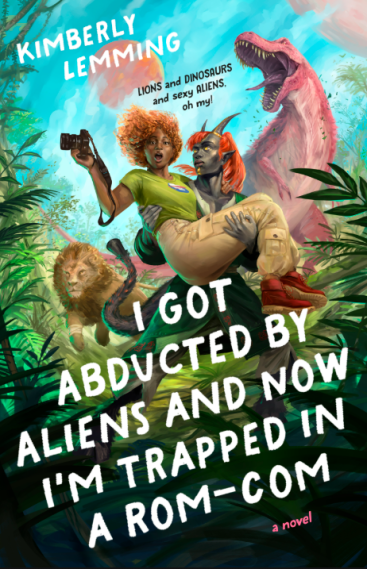
Kimberly Lemming’s I Got Abducted by Aliens and Now I’m Trapped in a Rom-Com is the first monster romance I’ve read. Heck, it’s the first romantasy I’ve read. While I may not be I Got Abducted by Aliens and Now I’m Trapped in a Rom-Com’s target audience, I can see why novels like this are swoon-worthy. I wish I could write scenes as steamy as the ones you can find in I Got Abducted by Aliens and Now I’m Trapped in a Rom-Com.
The book’s title says all you need to know about the novel’s premise. The tagline elaborates further. (Talking) Lions and Dinosaurs and sexy Aliens, oh my! Outside the scenes that led to cold showers, Lemming has a knack for comedic timing. I Got Abducted by Aliens and Now I’m Trapped in a Rom-Com delivers.
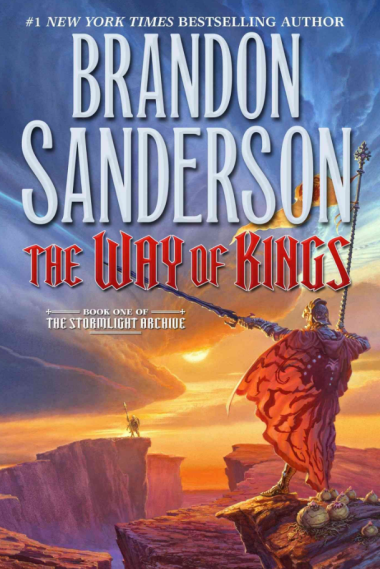
I’m listening to Brandon Sanderson’s The Way of Kings in audiobook format. I find audiobooks a great way of reading an extra book or two. My two favorite streaming (does it count as streaming?) sites are Libby and Hoopla. All you need is a library card (from a participating library) for both, and you can check out audiobooks, e-books, and other digital content.
Audiobooks totally count for read books for the month. I’m counting The Way of Kings. Audiobooks make for more interesting walks. It only takes almost getting run over twice while reading a physical book and walking at the same time to get you to switch to audiobooks. Anyway, I love how Sanderson introduces the hard magic system in The Stormlight Archive. Sanderson dips just enough information about how magic works for the reader to follow along, while avoiding massive walls of expository text. The Way of Kings is a fun read. And you should check out Libby and Hoopla.
Those are all the books I’ve read over the past month, and it looks as if I’m the only one of our writers with entries. Season began a new job and hasn’t read much beyond instruction booklets. Skye’s rereading a handful of books. Perhaps she’ll share some of those next month.
In the comments, let us know what you’ve been reading this past month and if you count audiobooks as books you’ve read. Thank you for reading, and wherever you are, I hope you’re having a great day.
Happy Wednesday, Geekly Gang! Today’s post is Whatcha Reading, where our writers share what they’ve been reading over the past month. Feel free to share what you’ve been reading, too, because we’re all part of the Geekly Gang.
Kyra’s Reads
Kyra’s Fiction
I heard about Dungeon Crawler Carl years ago and hadn’t had a chance to start the series. It’s fun. Short and sweet, Dungeon Crawler Carl is pure fun. Earth belongs to an intergalactic trade federation. It’s time to pay up with our natural resources, so aliens slurp the marrow from our planet, causing all buildings and cars to sink beneath the surface, instantly killing any beings inside the buildings and cars. Donning a jacket, boxers, and ill-fitting pink Crocs, our “hero” Carl survives because he’s retrieving his ex-girlfriend’s cat (Princess Donut Queen Anne the Chonk–Princess Donut for short) from a tree in the middle of winter. Dungeon Crawler Carl gets its title because the aliens play Dungeon Master for a Dungeon Crawl Carl must navigate.
If this sounds at all interesting, I suggest reading Dungeon Crawler Carl. It may not win any book of the year awards, but it’s a phenomenal premise for a television series. And hey, a Dungeon Crawler Carl television series was announced last week. Now may be the perfect time to read Dungeon Crawler Carl before it makes a splash on the small screen.
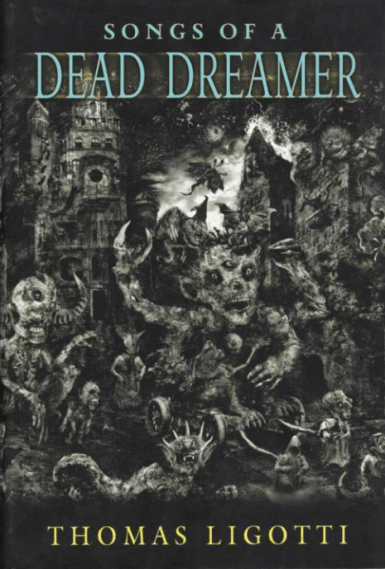
Thomas Ligotti produces modern cosmic horror classics. Songs of a Dead Dreamer is one of those cosmic horror classics. Ligotti takes Lovecraftian horror to new heights. Sometimes, Ligotti’s work leans into realism like Songs of a Dead Dreamer’s opening story, “The Frolic.” Other times, it fully embraces established tropes like “The Troubles of Dr. Thoss.” And I love Ligotti’s experimental “Notes on the Writing of Horror: A Story.” No matter which flavor of existential dread you prefer, Songs of a Dead Dreamer has you covered. If you like stories like Bird Box or anything by H.P. Lovecraft, you owe it to yourself to check out Songs of a Dead Dreamer.
Kyra’s Non-Fiction
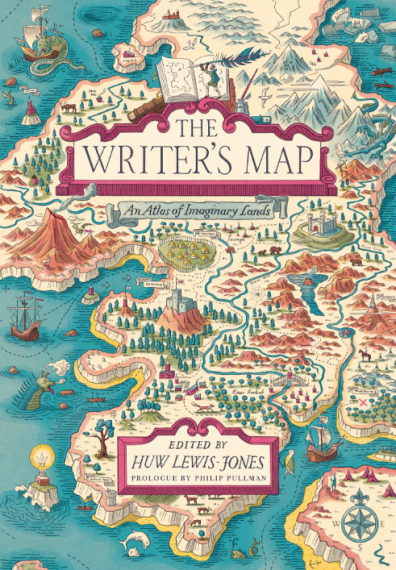
The Writer’s Map: An Atlas of Imaginary Lands compiles maps–many hand-drawn by the original creators–of fantasy and science fiction worlds. From a writing perspective, there may not be much to glean from these maps, but it’s fun leafing through the pages of literary history. I never knew Neverland had a map. Fun.
That’s all I have for Whatcha Reading this month. Let’s see what Skye’s been reading.
Skye’s Reads
Skye’s Fiction
While it may seem like a self-help book, How to Walk Away is far from it. How to Walk Away is a novel focused on mental health. The main character, Maggie, survives a plane accident with her pilot fiancé, Chip. Sure, the story is mainly about Maggie’s hospital recovery afterward, but what keeps me reading is the mental battle taking place. Chip can’t forgive himself, and their future relationship is thrown into question. How to Walk Away is not about what happened. It’s about moving on.
Skye’s Non-Fiction
I’ve been dying to read a book like Black AF History. Thank you, Michael Harriot, for giving us an alternative perspective on American history. I found Black AF History at my local library. Support your local libraries. Anyway, Black AF History is the history I was never taught in school but always wanted to know. My favorite aspect of Black AF History is how it’s explained from the perspective of the people who’ve been subjugated by this country since the beginning. Michael Harriot is clear that no teaching of history will be completely unbiased. This is just the history White people never wanted to hear.
Hey, hey! Kyra Kyle again. That’s everything our writers have read over the past month. Thank you for reading, and wherever you are, I hope you’re having a great day.
Hey, hey, Geekly Gang! Kyra Kyle here. It’s Wednesday again, so we have another post from the Whatcha Reading series. Today, we’ll have our writers share what they’ve been reading over the past month. Feel free to share what you’ve been reading in the comments, because we’re all part of the Geekly Gang.
Kyra’s Reads
Kyra’s Comics
I picked up a handful of comic books and graphic novels at the recent Comic Con Nebraska. FairSquare Graphics’ stand stood out to me. Founded in 2019 by Fabrice Sapolsky (co-creator of Spider-Man Noir), Kristal Adams Sapolsky (consulting producer for various Hulu and Netflix shows), and Ethan Sapolsky, FairSquare’s mission is to produce comics for underrepresented groups. And they sure do deliver.
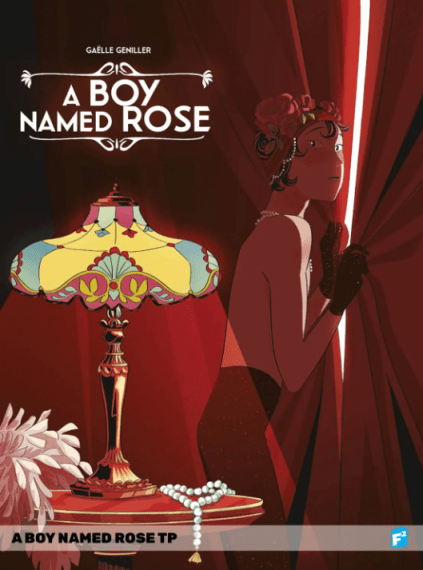
I love FairSquare Graphics’ production value. Each book (even the comic books) has a sturdy, soft finish. The art is stunning. But the stories. It’s all about the stories. 2024’s A Boy Named Rose was a finalist for an Eisner Award. I’m happy to see queer stories like A Boy Named Rose in comic books (or rather, a trade, graphic novel). There needs to be more, and that’s part of FairSquare’s mission. Set in 1920, A Boy Named Rose exists in an era where it was difficult for someone to express their gender and love freely. The title character, Rose, grew up in Le Jardin (The Garden) and has lived a life of greater self-expression. Rose has blossomed within Le Jardin’s protective walls. Rose’s coming-of-age gender fluid story touches numerous people who are stuck within the confines of a world not yet ready to accept them. A Boy Named Rose offers hope. And if you might be struggling with your identity or know someone who does, maybe even a hug.
Gaelle Geniller’s art elevates A Boy Named Rose’s narrative. I can’t imagine one without the other. I enjoyed all the gorgeous dance scenes. They were liberating. And as a gender non-confirming person who’s been interviewed, I felt every moment of Rose answering the reporter’s questions. I loved how the reporter’s cigarette smoke obscured what Rose was saying. That’s so relatable.
I love Black Girl Magik’s banter. It makes sense Black Girl Magik would sport excellent banter. Writer (and FairSquare Graphics’ cofounder) Kristal Adams Sapolsky is also a stand-up comedian. You can catch her on Season 2 of Laugh After Dark on Amazon Prime Video. Black Girl Magik has a hilarious premise. “Incel Whisperer,” Moriyah Pleasant, is helping one of her clients to score a date, when her client’s would-be date winds up being an Alchemist from another dimensional. Magical shenanigans ensue after the Alchemist passes, and her mystical and sentient tool (usually in the shape of a hammer) chooses Moriyah as its new Alchemist.
Holy Beyoncé, Black Girl Magik is a fun ride. I’m glad I picked up the first two issues (the only two available at the time of writing this post) and had the chance for Kirstal Adams Sapolsky to sign them. I highly recommend A Boy Named Rose and Black Girl Magik, and I’ll be checking out more of FairSquare Graphics’ titles. If you’re interested in FairSquare Graphics, check out their website.
Kyra’s Poetry
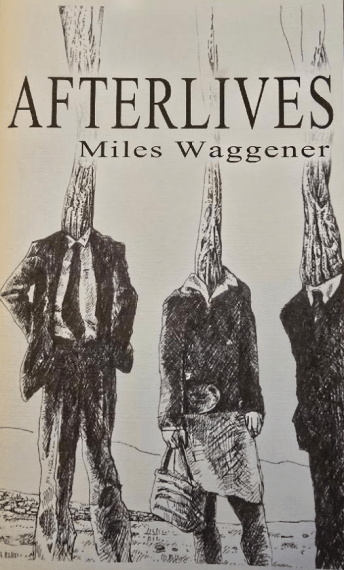
I often revisit poetry collections. You never know what you’ll find during a subsequent read after several years. I first read Miles Waggener’s Afterlives almost a decade ago; it’s time for a reread. Waggener has amazing command over diction and enjambment. Afterlives offers vivid imagery and poems that change gears, both metaphorically and with speed. These poems flow. I love it. The pictures Waggener paints vacillate from brutal to gorgeous, but they always feel lived in and human.
I’ll share I quick snippet of “Grooming” from Afterlives.
Well into the hairdresser’s nervous breakdown, she snapped the smock around my neck, and in locks and curls, the hair, more hair than I have grown in many lifetimes, fell onto the tiles, and I grew thin in the oily hum of the clippers, in the perfume of tattooed Carlotta.
I love how you can read the above in its entirety and gain one message, and then read each line as a separate entity. The language used here reflects what you may find in Afterlives. If you can find a copy of Afterlives, you should give it a try. Phoenix Suites and Sky Harbor by Miles Waggener may be easier to find, and also well worth the read.
Kyra’s Non-Fiction
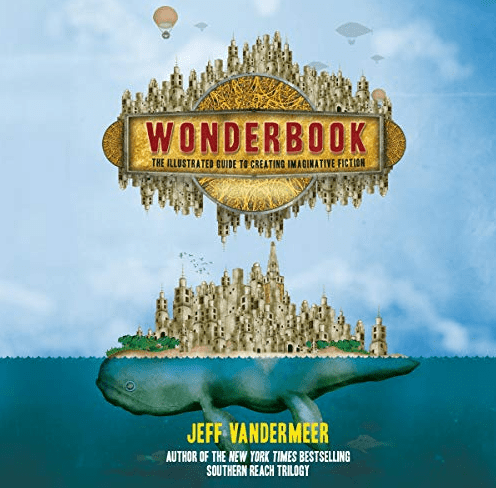
Ah, Jeff Vandermeer’s Wonderbook is an excellent resource for anyone wanting to write a science fiction or fantasy novel. Wonderbook provides thought-provoking images and writing prompts/exercises, while giving the reader numerous ways of looking at the writing craft. Wonderbook gives me the vibe of a writer’s companion for the Codex Seraphinianus, only you’re supposed to understand what you’re reading. Lol
Loaded with graphs/charts, art, and writing advice from dozens of popular speculative fiction authors, Wonderbook offers a little bit of everything. No matter how you learn, Wonderbook has you covered. And Wonderbook is a living document. Vandermeer and company update Wonderbook’s online companion page. If you’ve ever wanted to write speculative fiction, you should check out Wonderbook.
That’s all I have for this month’s Whatcha Reading. Let’s see what Season’s been reading.
Season’s Reads
season’s comics
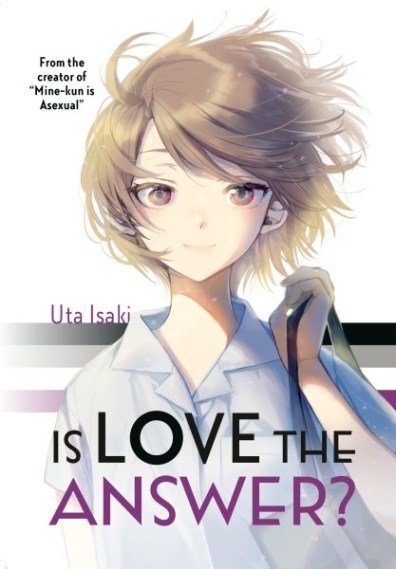
I decided to switch things up this month. Normally, I’m down for a good romance story. Is Love the Answer? scratched that itch differently. Chika is asexual, and all of her friends go on dates. But she doesn’t want to go on dates. She thinks there’s something wrong with her, so she studies psychology to figure out why she doesn’t want to be involved with anyone romantically. She discovers much about herself, but none of it is clear-cut.
Is Love the Answer? felt realistic. I appreciated the ambiguity of how Chika expresses herself. She didn’t know who she was, which is relatable to most audiences.
Hey, hey! Kyra Kyle here again. That’s all our writers have for Whatcha Reading this month. Let us know what you’ve been reading. Thank you for reading, and wherever you are, I hope you’re having a great day.
Happy Wednesday, Geekly Gang! For this week’s Whatcha series, our writers will share which books they’ve been reading over the past month. Yes. It’s Whatcha Reading, Geekly? for July 2025. Wait. I checked with Season and Skye, and they don’t have any selections for this month. Uh oh! Looks like I’m flying solo this week. I’m sure our other writers will have plenty to share in August. Let’s get to our list.
Kyra’s Non-Fiction Books
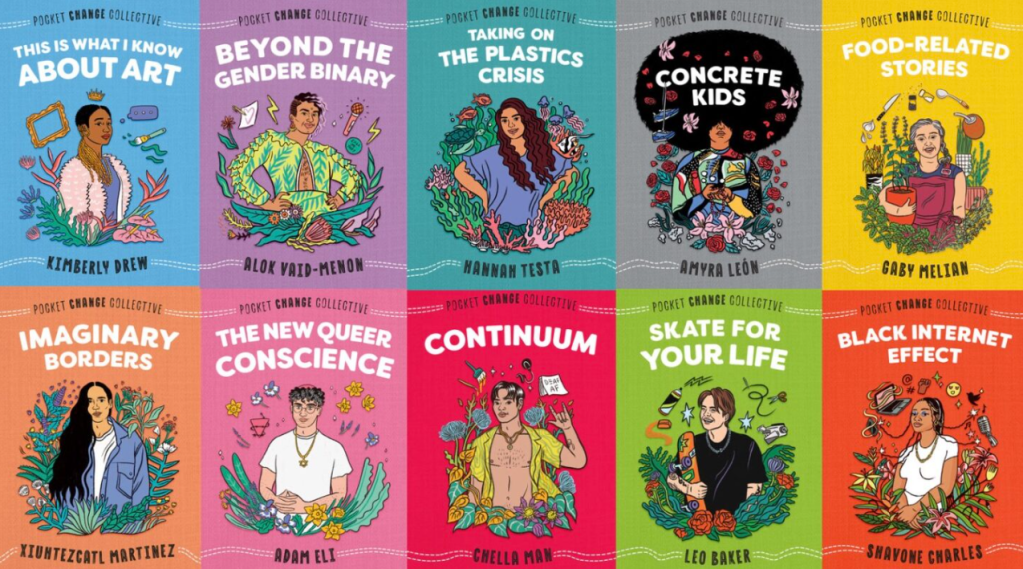
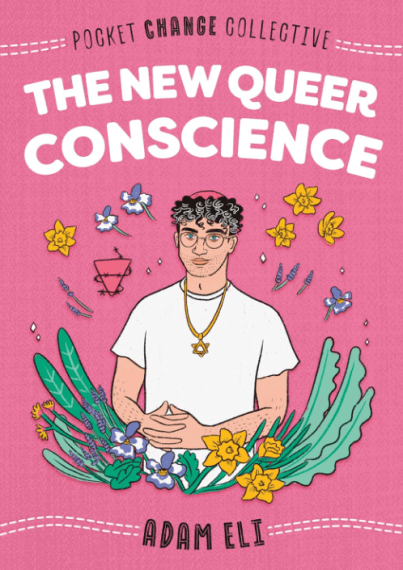
Beyond the Gender Binary is a reread for me this past month, but I’m still counting it as a book I read. I attended Alok Vaid-Menon’s Omaha show (June 24, 2025) during their Hairy Situation Tour, and they signed my well-worn copy of Beyond the Gender Binary. Yay! This book is a short read, like a really short read, at about 50 pages. Beyond the Gender Binary is small enough to fit inside your pocket; this is the hook of every book within the Pocket Change Collective.
Alok fills the pages of this book with a new perspective on the gender binary and what lies beyond it. Beyond the Gender Binary is a hug for anyone questioning their gender identity. Their personal stories speak to me. I’ve loaned my copy of Beyond the Gender Binary to many people who wanted to learn more about individuals who identify as non-binary, gender queer, and/or gender fluid. I may need to purchase a second copy after Alok signed my current copy of Beyond the Gender Binary. No book–no matter how big or small–can capture every aspect of gender non-conforming people, but despite its small size, Beyond the Gender Binary serves as a fantastic introduction.
I love the Pocket Change Collective. I’ve read at least half of the books pictured above, and I may have to hunt for the ones I have yet to read. I highly recommend this book series. It’s easy to read in one sitting, and each one in the series may broaden your perspective.
Speaking of broadening one’s perspective, I’ve been reading The Element Encyclopedia of Magical Creatures, making note of mythical creatures that interest me and ones I’d like to research further. I like the magical creatures that haven’t been done to death (in fantasy stories), and love the ones from cultures I know less about. What started as research on fantasy creatures has morphed into a cultural study. What’s not to love?
Kyra’s Poetry
A writer’s history shouldn’t factor into their work, but Arthur Rimbaud may be one of the few exceptions. He rose to prominence quickly. Illuminations, Rimbaud’s poetry collection I read this past month, was his last major poetic work, written when he was twenty years old. After he finished–or rather abandoned–this poetry collection, Rimbaud traveled the world, taking odd jobs, and never wrote again. Over the years, Rimbaud deserted his Dutch military post in Java (Indonesia) and sneaked back to France, ultimately spending the majority of his remaining days in Ethiopia. He died at 37 of bone cancer. Illuminations was published in 1886 without Rimbaud’s knowledge. The publishers referred to him as the late, great Rimbaud, even though he hadn’t yet died.
Illuminations has inspired many artists (Jim Morrison of The Doors, Bob Dylan, and Patty Smith, to name a few) as well as artistic movements like Dadaism and Surrealism. We don’t know which order these dozens of prose poems are supposed to have gone in because Rimbaud had abandoned the project before their publication. The poems range in topic. They’re a window into Rimbaud’s struggles to find steady employment in the United Kingdom and later Germany, while living with Paul Verlaine. The couple often fought. Their breakup may have prompted Rimbaud to travel the world.
As a result of these influences, Illuminations mingles gorgeous images with dread and the unknown. Check out this paragraph from “Mystical”: The flowery sweetness of stars and sky and the rest descends opposite the embankment, like a basket, against our face, and creates the flowering and blue abyss down there.
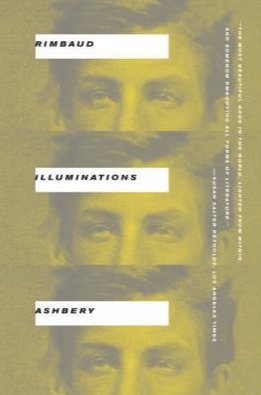
Illuminations will follow up an awe-inspiring pastoral scene with a garotte around your neck. It’s a mind-bending, singular work of poetry deserving of its cult-like following. Illuminations is one of those poetry collections you could read and reread dozens of times and find something new and exciting. I read the John Ashbery translation (pictured above this segment). It stays faithful to the original text and even provides the original French beside its English translation.
Kyra’s Fiction Books
Eric Raglin is yet another queer author to make my reading list this past month. It’s like June was Pride month or something. Kidding aside, I had to include a local (Nebraska) writer in this month’s mix. Raglin’s Nightmare Yearnings is a phenomenal horror short story collection with only a few hints of queerness thrown in for good measure, and I love the variety in this collection. While each story is bizarre and tackles some darker truth of the human condition, the stories serve as a horror anthology like The Twilight Zone or Black Mirror.
I love how “Under the Roof, Upon the Horns” explores toxic masculinity. This story boils down to a son attempting to please his father and shows how men are the only ones who care how masculine other men behave. Masculinity is a trap. Resist! Nightmare Yearnings also includes goofy stories like “Top 5 Ghosts Caught on Camera” to prevent it from getting too preachy. But one of my favorite stories in this collection is “My Better Half.” It’s a body horror short story where a woman splits her bisexual man lover into two halves: the gay and the straight side. The gay half ends up in the closet. Ugh! This is such a good story, and it speaks to me as someone who’s pansexual. I could discuss more of Nightmare Yearnings’ offerings–there are plenty of fantastic stories in this collection–but I’ll leave the rest for you to discover.
Nightmare Yearnings includes author notes. These notes provide a little insight into what Eric Raglin was thinking while writing each short story. This is also a great way to pick and choose stories. It’s a preview of what to expect or a little peek behind the veil after you’ve read a story. I wish more short story collections included author notes by the author.
That’s all I have for this month’s Whatcha Reading. What did you read this past month? Let us know in the comments. Thank you for reading, and wherever you are, I hope you’re having a great day.
June is in full swing, and it’s time for another Whatcha post. Hey, hey, Geekly Gang! Kyra Kyle here. Today, our writers will share what they read from the previous month. As always, feel free to share what you’ve been reading over the past month. You’re part of the Geekly Gang, too.
Kyra’s Reads
Kyra’s Fiction Reads
A Psalm for the Wild-Built is the first part of Becky Chambers’s Monk and Robot duology, and it’s a joy. I recommend A Psalm for the Wild-Built to anyone struggling to find their place in the world. Chambers’s novella reminds us to give ourselves time to find ourselves, and how you thought your life would go might not be where your journey will take you. A Psalm for the Wild-Built offers a deep cleansing breath.
Humans have ripped away the Earth’s natural resources, but A Psalm for the Wild-Built offers an optimistic spin on this post-apocalyptic world. Robots reject their human masters. The split between the two parties is amicable, with humans sticking to cities (and their surrounding suburbs) and robots claiming the open area outside cities. Without humans mucking up most of the world, Earth has a chance to heal. Humans and robots adapt to this new reality, and the story takes flight when a tea monk leaves human territory and stumbles on a wild-built robot.
I won’t spoil any more of A Psalm for the Wild-Built. It’s a must-read solarpunk novella. If you don’t know what solarpunk is, you’re in good company. I didn’t know what solarpunk was before reading A Psalm for the Wild-Built. Solarpunk is a relatively new fiction subgenre that offers optimistic outlooks on dystopias. Many of Hayao Miyazaki’s films have been retroactively called solarpunk. If you like stories like Spirited Away, A Psalm for the Wild-Built (and other solarpunk fiction) might be worth a read.
I finally finished Robert W. Chambers’s The King in Yellow. No. Robert Chambers isn’t related to Becky Chambers. I just happened to read two authors with the surname Chambers. Lol. The version of The King in Yellow I read only includes four stories: “The Repairer of Reputations,” “The Mask,” “In the Court of the Dragon,” and “The Yellow Sign.” Older editions of The King in Yellow may contain more stories, but the four in this collection are excellent.
I love “The Repairer of Reputations” use of an unreliable narrator. Hildred describes his diadem as being made of “heavy beaten gold,” and immediately after this description, his friend Louis calls it a “brass crown.” “The Repairer of Reputations” is a story of egotism. It feeds into the idea of The King in Yellow and serves as a phenomenal opening story. The titular King in Yellow is a play, and it’s not what the play has within its written pages but what those pages do to the people who read them. If this sounds like H.P. Lovecraft’s Necronomicon, it’s because The King in Yellow inspired the Cthulhu Mythos.
The other three stories in this most recent collection of The King in Yellow are stellar. “The Mask” is a trippy love triangle with a mystical element. A possessed organist chases a panicked victim in “In the Court of the Dragon.” And “The Yellow Sign” offers some great psychological horror. The King in Yellow paved the way for cosmic horror.
Kyra’s Poetry Reads
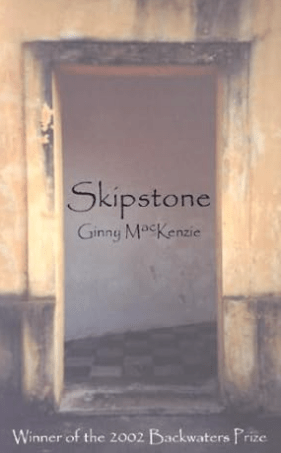
I read Ginny MacKenzie’s Skipstone a decade ago and decided to read it again this past month. I find poetry easy to reread after several years because I can find different things with each reading. MacKenzie does an excellent job of taking an object, like an artist painting the history of his house, or some other element, like a vacation in Maine, and allowing the speaker to reflect on the element until it becomes confessional. These elements are lenses with which to view life.
Skipstone, like Cat Dixon’s collection last month, What Happens in Nebraska, feature plenty of smaller, seemingly quiet moments. But these quiet moments can be loud, and moments that seem small grow to epic proportions. Some of Skipstone’s poems have tight stanzas with lengthy enjambment that move so fast one must catch their breath, while other poems stretch out with plenty of asides from the speaker that you feel like you’re in their head.
Skipstone tackles good and bad memories. Often, good and bad memories appear within the same poem. Memory works in mysterious ways. While one’s life experience may differ, Skipstone offers enough universal truths.
I read a few more books over the past month, but I may save those for the next entry in our Whatcha Reading series. Let’s see what Season and Skye have been reading.
Season’s Reads
season’s fiction reads
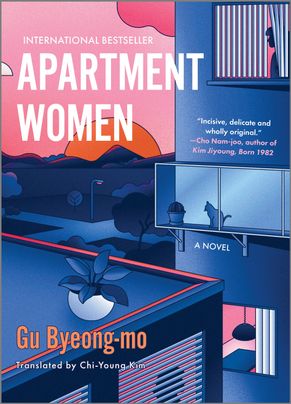
I haven’t gotten too far into Gu Byeong-mo’s Apartment Women, but from what I’ve read, I’m loving it. Apartment Women is set in the future on the outskirts of Seoul. There are four families living in an apartment complex, each with its own struggles. The newest resident, Yojin, must have two more kids with her husband over a decade if she wants to continue living there. The novel highlights the struggles of the women living in this apartment complex, which is interesting to me.
There’s a moment in the beginning with one of the husbands explaining his wife’s not being there because “she’s always busy.” Yojin sits on this for a minute, questioning the tone of his reply. This is the level of intimacy with the characters throughout the novel. I enjoy stories about women making the best out of their situation, and have been more interested in foreign novels lately. Geekly Gang, if any of you have recommendations, I’m always down to read something new. What’ve you been reading, Skye?
Skye’s Reads
Skye’s Nonfiction Reads
I bought 1001 Movies You Must See Before You Die a while ago, but only now started reading. Since I’m always looking to expand my watch-list, I thought I could peruse 1001Movies to get some ideas. My favorite thing about this book is the range of films it contains. Starting from the early days of film in the 1910s all the way to the present day, 1001 Movies You Must See Before You Die has defined my watchlist for a while. I don’t plan on dying any time soon, so I should have time to catch up on all these movies. 😉
Skye’s Fiction Reads
Octavia Butler’s Parable of the Sower is a new addition; I’m excited about this one. Other books I’ve gotten into lately have been more experimental. Since I have no prior knowledge about them, I haven’t had any expectations. For this one, I’m already familiar with the author, and the fact that I found it in the “Banned Books” section of my local Barnes & Noble is enticing.
After reading the first chapter (and the Foreword by LeVar Burton), it only strengthened my resolve to keep reading. How Burton tells it, I’m in for a poignant, dark, yet heartfelt and hopeful experience. Since Butler wrote Parable of the Sower in 1993 (and the novel takes place in 2024), I have a feeling that she wrote some eerily accurate predictions about where our society was headed. Hopefully, she included an instruction manual on how to survive the next four years. Fingers crossed.
Hey, hey! Kyra Kyle again. That’s all we have for our monthly reads. Make sure you let us know what you’ve been reading, Geekly Gang. Thank you for reading, and wherever you are, I hope you’re having a great day.
We’re switching things around a little bit this month with our Whatcha Wednesday series. Today marks our second Whatcha Reading post. Hey, hey! Kyra Kyle here. The Geekly Gang may not have as many books to cover this month as we did last month (it’s only been two weeks since our last Whatcha Reading). Whatcha Reading can include novels, poetry, short stories, essays, comic books, and anything in between. As always, feel free to share what you’ve read recently. We’re all part of the Geekly Gang.
Kyra’s Reads
I mentioned The King in Yellow in last month’s Whatcha Reading, but I put it on hold for the moment. A new Barnes & Noble opened up, and I’ve picked up several new titles. One of my favorite aspects of Barnes & Noble is that your local store will carry books by local authors, and one of the poetry books I read last month is What Happens In Nebraska by Cat Dixon.
What Happens In Nebraska by Cat Dixon
Dixon’s What Happens In Nebraska doesn’t pull any punches. Each poem is raw, a wound that refuses to heal. But that doesn’t stop Dixon from playing with her poetry. “Keep Your Options Open” may be the first Choose Your Own Poem I’ve ever seen. It shows that a poet can explore pain while maintaining a sense of whimsy. I also love it when a writer gets specific, and I enjoyed the details in “Missed Connection.” It’s uniquely Omaha. It gives the poem authenticity and the universal theme of loss. What Happens In Nebraska has a lot of highlights; too many to list here, but I’ll share one more. “Horror Movie” begins with a new romance before it descends into the horror of a modern relationship. There’s a reason rom-coms end when the couple gets married.
Letters to a Young Poet by Rainer Maria Rilke
I also picked up Rainer Maria Rilke’s Letters to a Young Poet during my recent trip to Barnes & Noble. I haven’t yet finished Letters to a Young Poet, but what I have read makes it a great companion piece to What Happens In Nebraska. Letters to a Young Poet compiles a series of letters Rainer Maria Rilke wrote to a young officer cadet (Franz Xaver Kappus), advising him on writing, love, suffering, and the nature of advice. Rilke’s dense and poetic letters can inspire any artist.
I love Barnes & Noble’s selection of local authors, and they have a great selection of tabletop games. Super Boss Monster, which just shipped to Kickstarter backers, is already available at Barnes & Noble. Usually, tabletop games that go to Kickstarter take a handful of months to reach stores. Barnes & Noble gets many titles early. Be sure to check out your local Barnes & Noble.
Let’s see what Skye has been reading. Take it away, Skye.
Skye’s Reads
Anathema by Keri Lake
After a recent trip to the library, I found some interesting literature. Among them is Anathema. While I’m not far into it, some elements stand out. I like how the author pointed out that this was her first experience with gothic fantasy. Thank you, author, for telling us up front. Trying out new genres and getting outside our comfort zones can only lead to self-improvement.
While I have progressed too far in the novel, he author clearly knows how to start a story. The first sentence of the first chapter: “The forest hadn’t eaten in a while.” That’s one of those sentences that ignites the imagination. And it makes me want to keep reading.
Three Dark Crowns by Kendare Blake
Another suggestion from my local librarian. Thanks for the recommendation! Also, support your local library. Like Anathema, Three Dark Crowns falls firmly in the fantasy genre. Considering these stories were released after The Lord of the Rings, both have Tolkien-esque qualities. Bonus points to Three Dark Crowns for not starting off with worldbuilding that feels like homework.
What sets this story apart from Anathema is its premise. Three Dark Crowns focuses on royalty (shocker), but in the context of three princesses who are sisters. One will become queen. Only one. She’ll do so by killing her two sisters. This concept has been done before, but it immediately hooked me. From the introduction onward, tension builds. I look forward to exploring it more alongside Anathema.
Kyra Kyle again. Season doesn’t have an entry this week. She’s preparing to graduate from college. Woo hoo! I’m sure she’ll return soon. Thank you for reading, and wherever you are, I hope you’re having a great day.
Today’s post marks the end of our first month of the Whatcha Wednesday series. Let’s finish strong with Whatcha Reading, Geekly. Hey, hey! Kyra Kyle here. Today’s theme is reading. This can include novels, poetry, short stories, essays, comic books, and anything in-between. As always, feel free to share what you read this past month. We’re all part of the Geekly Gang.
Kyra’s Reads
Edgar Allan Poe
The Geekly Gang went to the Edgar Allan Poe Speakeasy last month. This event featured actors interpreting Poe’s short stories and poems and cocktails based on the tales. My favorite cocktail of the bunch was the Cat’s Meow. And I started reading my collection of Edgar Allan Poe short stories. This may have also influenced my binging of true crime shows. Watching someone perform “The Tell-Tale Heart” and another actor portray “The Black Cat” got me wondering if Poe had homicidal tendencies. JK But I do think Poe’s work informed my choice of television shows.
Batman: Arkham, Catwoman
Staying on the subject of black cats, I also read the Batman: Arkham, Catwoman collection. I enjoy reading classic DC Comics stories, and the Batman: Arkham series is good for catching up with a villain’s history. Catwoman’s been around since the 1940s. Early stories are products of their time. Then, the stories jump to being cheesy and using a heap of cat puns. It’s difficult to read. Late Eighties comics that feature Catwoman were influenced by Frank Miller’s The Dark Knight Returns, so they leaned into Catwoman’s updated origin as a former prostitute. Despite this, I liked Mindy Newell’s “Downtown Babylon.” Newell may have been forced to use this backstory for Catwoman, but she makes it her own. My only gripe is that “Downtown Babylon” was the second issue of a four-issue miniseries, and that’s Batman: Arkham’s biggest issue. Often, readers will get a random issue plucked from an ongoing story.
I may track down Newell’s 1989 Catwoman mini-series. What I read of it got me invested. The other standout in this volume was Ed Brubaker’s “Joy Ride.” This story is contained within a single issue and does a great job of showing Catwoman. She’s an anti-hero with a checkered past and a mischievous streak. Batman: Arkham, Catwoman is a good jumping-off point for further reading about the character. And that’s what I like best about this series.
I, Robot
It may be sacrilege, but Asimov’s I, Robot made the DNF (did not finish) pile this month. The prose was more archaic than another book I started shortly afterwards, The King in Yellow, which was written fifty years prior. All is not lost. I’ll give I, Robot another go in another month or two. I’m also open to reading suggestions. I finished Becky Chambers’ A Psalm for the Wild-Built a month prior and fell in love with how “human” Chambers made Mosscap. I picked up the follow-up, A Prayer for the Crown-Shy, so spoiler alert for next month.
That’s all I have for this month. Thank you for reading, and let’s see what Season and Skye have been reading.
Season’s Reads
Fledgling
I’m finishing out my final semester in college, and Octavia Butler’s Fledgling is a novel we read in class. We read the first half one week and the second half the next week. I got so enamored with the story that I almost read the entire thing in a day. Fledgling follows Shori (pictured on the cover) as she discovers who she is and finds her purpose. She’s also a vampire called an Ina. Ina and humans live symbiotically with one another. I’ve never seen a story explore a mutual symbiosis with humans and a humanoid creature before. I highly recommend Fledgling for those who are interested in vampires, societal issues, and journeys of self-discovery.
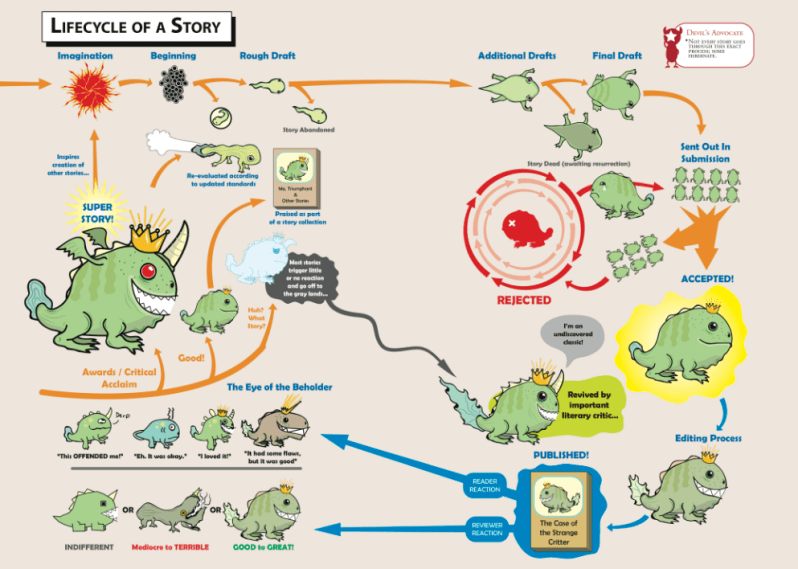
There were talks back in 2022 of turning Fledgling into an HBO series. There isn’t much information on a release date or if the project was canceled. Personally, I’d love to see one of my new favorite books on screen.
The Nose
I read a collection of Russian short stories. “The Nose” by Nikolai Gogol stood out to me. It’s literally about a guy whose nose jumps off his face. The nose has a life of its own and even tries to leave the country by stagecoach, passport, and everything. There isn’t a clear main character within the story, but it’s about perception and how people handle the information provided to them. In classic Russian fashion, many characters have more than one name, so it can be difficult to follow at times. If you’re looking for something unique and wacky, I’d recommend “The Nose.”
Skye, what have you been reading?
Skye’s Reads
Yes, I also read on occasion. Here are the books I’ve been tackling lately.
The Crystal Witch
This should give you a crystal-clear idea of who I am. See what I did there? I practice New Age Spirituality. What draws me to it is its “a la carte” approach to faith. There’s no “right” way to practice it, and my preferred method is through rituals, tarot cards, manifestation, and crystals. That leads me to The Crystal Witch.
For folks like me who want a clearer picture of symbolism, spiritual power, and how to get started practicing New Age, The Crystal Witch has it all. So far, I’ve learned a lot about sacred altars, the importance of colors in practice, and descriptions of the most common crystals. I can’t wait ‘til I can categorize each of the crystals in my collection and start using them in everyday spiritual practice.
Revolutionary Witchcraft
Honestly, I’m unsure how I feel about the term witchcraft. While I’m empowered to be a part of a community, the term carries negativity. New Age is primarily built on positivity and the connection of humans to the rest of the universe. When words like “witch” are thrown around, it’s distracting. Although I’ll admit that New Age does have roots in the Occult, Paganism, and Wicca.
What does that have to do with Revolutionary Witchcraft? Well, Revolutionary Witchcraft teaches “witches” such as me how to use our beliefs to create positive change in our communities. I don’t know about y’all, but I always hear the latest news headlines and shudder. Because of that, I want to give back to my community, my country, my species, and my planet by properly directing my beliefs. Maybe we can finally see some good news, so here’s hoping.
The Filmmaker’s Handbook (5th edition)
Even in a segment about books, I still managed to circle back around to movies. That’s just what I do. I love visual art forms. I even like to make my own films. Eventually. Not now of course. Do you have $300 million? ‘Cause I don’t.
I’m reading The Filmmaker’s Handbook to give me an idea of where to start. What kind of shots work best to create a specific mood? When should you use live-action and animation? What are the basic building blocks of cinematic storytelling? How do you become an independent filmmaker? All that and more in The Filmmaker’s Handbook.
Also, I’m giving myself an excuse to judge films more harshly. I’m a critic at heart. What’re you gonna do?
Jesus’ Son
I’ve been putting a lot of emphasis on non-fiction books, so I asked my sister if she could recommend any fiction for me. She led me to Jesus’ Son. Thanks, Sis! I haven’t gotten very far into it, but so far, I have a lot of thoughts. Jesus’ Son is a collection of short stories with thought-provoking themes. Considering the first story is titled “Car Crash While Hitchhiking,” that’s a fair assessment.
Even though I haven’t read much, I feel like I could read the whole thing in one night. Unfortunately, I can’t. I’ve got stuff to do. Life be like that sometimes. The themes and emotions that arose after reading the first story were difficult to describe, but deeply intriguing. Because of that, I feel the need to re-read, re-re-read, and re-re-re-read to gain a deeper understanding. These are my favorite kinds of stories, stories that Shrek would compare to onions. These are some exciting layers.
Hey, hey! Kyra Kyle again. That’s all we have for you this month. Let us know what you’re reading in the comments, Geekly Gang. Thank you for reading, and wherever you are, I hope you’re having a great day.