Gacha Game Review: Persona 5: The Phantom X

Hi, Geekly Gang! Season here. I mentioned in a previous “Whatcha” that I’d started playing Persona 5: The Phantom X. I’ve gotten a good feel for the game and have decided to pit it against our Gacha game review system. Let’s see how Persona 5: The Phantom X scores.

Before we begin, it’s impossible not to compare Persona 5: The Phantom X with Persona 5 and Persona 5: Royal.

Mechanisms

Mechanisms: 6/10

Maybe I should have rated this lower since the mechanisms are similar to Persona 5 and Persona 5 Royal. Since the mechanisms in Persona 5: The Phantom X stay true to the original Persona 5, they’re baseline good. Enemies maintain their weaknesses, and the game is more upfront about what enemies are weak to, instead of players having to guess. The main character (Wonder) can alternate between up to three different personas for different enemies. This cuts the score a bit since the main character from Persona 5 (Joker) can alternate between up to ten different personas.
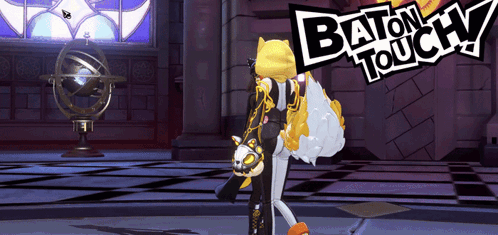
The baton pass in Persona 5: The Phantom X is a step up from Persona 5. When prompted to perform a baton pass (baton touch in this case), any character who has an element that any of the enemies they’re facing is weak to will have “Weak!” pop up next to their picture. The downside is that players still have to remember which enemies are weak to which elements, because a character possessing an enemy weakness may target one that’s already been incapacitated.

Gameplay Loop

Gameplay Loop: 5/10

I’ll start with the positives. Players can go back to cleared Palaces. Unlike the original Persona 5, there’s no pressure to collect everything before the Palace collapses. Due to small map sections, the overworld is easy to navigate. Event-wise, story-related events (the Palaces from Persona 5) remain as permanent events. Smaller events with limited rewards get phased out after a certain period of time. This makes events easier to navigate for new players, and for players who’ve never played Persona 5.

Mementos differs slightly between Persona 5: The Phantom X and Persona 5 Royal (Persona 5 doesn’t include this). In Persona 5 Royal players collect stamps and flowers in Mementos to collect rewards. In Persona 5: The Phantom X, players collect train tickets to exchange for items and unlock different areas of Mementos.

I’m going to level with you, Geekly Gang. This is my biggest gripe with Persona 5: The Phantom X’s gameplay loop, and it’s not something I’ve ever complained about in a game this much. Persona 5: The Phantom X has fifteen different currencies. Fifteen. Why? I don’t even pay attention to most of them because many of them are zone-specific. The two important currencies are the Yen and Meta Jewels. Yen allows you to purchase anything in the overworld, and Meta Jewels lets you pull for characters and weapons. If you’re short on anything required for a specific task/character level, the game will prompt you to go collect it.

Respectful of a Player's Time

Respecting Time: 8/10

Persona 5: The Phantom X allows me to complete my dailies in under ten minutes. There’s no auto-clear for farming, but after a player completes a farming-related battle, they can spin a dodecahedron (a 12-sided die) up to six times and gain that much in resources. Seriously. I can complete my farming after two auto-battles.

Battle Pass: 4/10

The battle pass is nothing special. It’s similar to Genshin Impact, Honkai: Star Rail, and Wuthering Waves, but with an extra ten levels tacked onto it. I’m not sure why, since these ten levels offer the same rewards with every level.

Video Game's True Cost

True Cost: 7/10

Unfortunately, Persona 5: The Phantom X falls into the same weapon banner pattern as Genshin Impact. Players select two five star weapons they want to include on the banner in addition to the featured one, and there’s a 1/3 chance they’ll get that weapon after eighty pulls. However, pulling (opening packs to gain new units or weapons) is cheaper in Persona 5: The Phantom X than the other gachas we’ve covered. Weapons cost one-hundred Meta Jewels per pull, and characters cost 150 per pull.

Story or Narrative

Narrative: 2/10

The only upside to Persona 5: The Phantom X’s narrative is it’s easy-to-follow—especially if you’ve played Persona 5. It doesn’t build on Persona 5 or Persona 5 Royal, but reskins it with characters and Palaces that mirror the original. The group of teenagers fights to get their desire back, which doesn’t make much sense for rag-tag teenagers. They haven’t survived high school and have minimal life experience. This would hit harder if the characters were much older, by, like, thirty years.

The “time” in the game doesn’t flow well, either. In Persona 5, there were days of the week, holidays, and deadlines. Players had to plan their time well to get the most out of their time. In Persona 5: The Phantom X, “time” is only relevant for overworld tasks and when confidants are available to hang out. Instead of using specific dates, day progression is denoted by today, tomorrow, and yesterday.

Storytelling

Storytelling: 3/10

Since the story flows in Persona 5: The Phantom X, it gets a slightly higher rating than the narrative. However, it still gets a lower score than other gachas because it’s mimicking Persona 5 in every way. Come on, guys.

Also, how long are Wonder’s parents going to be on vacation? They’ve been on vacation since the game began. I think they went out to buy milk and cigarettes.
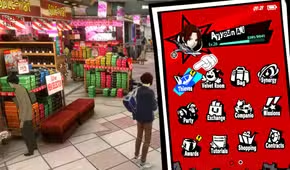
Credit: GameRant

Presentation; User Interface: 5/10

The UI has a similar setup to Honkai: Star Rail, which isn’t too difficult to navigate. There are too many subcategories. Why are there two different categories for shopping? Combining them would eliminate one of the subcategories.
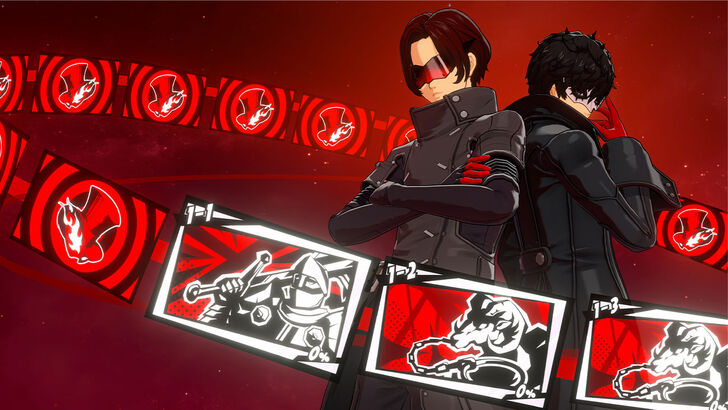
Credit: Game8

Presentation; Graphics and Audio: 4/10

The audio quality is fine. It’s average. The graphics, on the other hand, are slightly better than the original Persona 5, which is almost a decade old at the time of writing. There shouldn’t be minuscule graphics differences between two games that are ten years apart.

Aggregated Score: 4.89

I tried to raise the score for Persona 5: The Phantom X as much as I could, but this is the best score I could give it. There are definitely some sections that could’ve earned harsher scores. If you’re looking for Persona 5, Persona 5: The Phantom X has that to a degree. I recommend playing Persona 5 (or any other Persona game, for that matter) over Persona 5: The Phantom X. Since it’s around the holidays at the time of writing, Persona 5 and Persona 5 Royal are likely on sale somewhere. If not, they’ll probably be on sale at the end of the year. Steam normally has a huge end-of-year sale. I’ve also seen PlayStation have sales on Persona 5 and Persona 5 Royal in the past.

What do you think, Geekly Gang? Was our final score too low, too high, or just right? Let us know in the comments. Thank you for reading and have an amazing rest of your day.

Video Game Review: Onirim

Another week and another video game review of a game I’ve played a lot. It’ll be difficult to remain objective while discussing Onirim, but I’ll do my best. Usually, I delete Solitaire from my mobile devices and replace it with Onirim. You can find me in line playing a few games of Onirim. Like I said, I play Onirim a ton.

Hey, hey! Kyra Kyle here. At its core, Onirim is a solitaire game, which is why I replace Solitaire with this title. While this video game is a fun twist on classic Solitaire, Onirim remains a solitaire game, a tabletop card game converted to an app. How will it fare with our review criteria? Let’s find out.

Mechanisms

Mechanisms: 10/10

Be honest. You saw this coming. Like I said, Onirim is an interesting twist on classic solitaire. The deck has four suits, each suit has four card types, here’s where the theme comes into play. The player is traveling the dream world (hence the name Onirim, a take on oneiric) and needs to safely escape the land of dreams by opening three doors in each suit. If you draw into a suit’s door and have a matching key, you may open the door. If you don’t have a matching key when you draw a suit’s door, you draw another card and shuffle the door back into the deck. This is where the digital version of Onirim trumps the physical version: shuffling.

During a game of Onirim, you’ll often shuffle the deck. Nightmare cards (which don’t belong to any of the four suits) may be drawn. Bad things will happen when a nightmare appears (it’ll be up to the player what happens exactly), and if the player draws extra nightmares in a turn, any nightmares beyond the first also get shuffled back into the deck. There’s a lot of shuffling, and the digital app does all that shuffling for you. Typically, I prefer a physical tabletop game over a digital version of that same game, but Onirim enhances this already stellar game.

Since the player has choices when a nightmare card gets drawn, Onirim provides player agency and adds a layer of strategy. The remaining two card types (in the base game; there are expansions that we won’t discuss here) are suns and moon cards in all four suits. Suns are the most common card type. Moons are less common. And the rest of the game is playing three cards of the same suit but with different symbols, in the top play area. When that happens, the player searches for a door card in that suit, and then reshuffles the deck. Yes. More shuffling. I love playing the Onirim video game.

Gameplay Loop

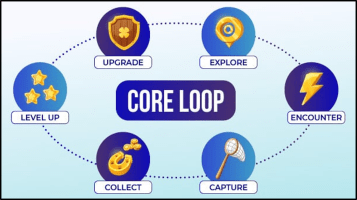
Above Image from GameDesigning.Org

Gameplay Loop: 10/10

Onirim games play fast, and each game is unique. The simple premise, the colorful twist on solitaire, and the options a player has once a nightmare card is drawn grant Onirim a high gameplay loop score. I don’t mind waiting in line while playing Onirim. And like I said, I replace Solitaire with Onirim. Obviously, this game’s gameplay loop is fantastic.

Story or Narrative

Narrative and Storytelling : 3/10

We’re combining narrative and storytelling for Onirim because Solitaire doesn’t have any story. Onirim has an intriguing premise. The nightmare cards and doors needed to escape the dream world, hint at a greater story, but I can’t give Onirim top marks in either of these categories. This is partly why I combined the two. But Onirim does just enough to not get below a three.

User Interface: 8/10

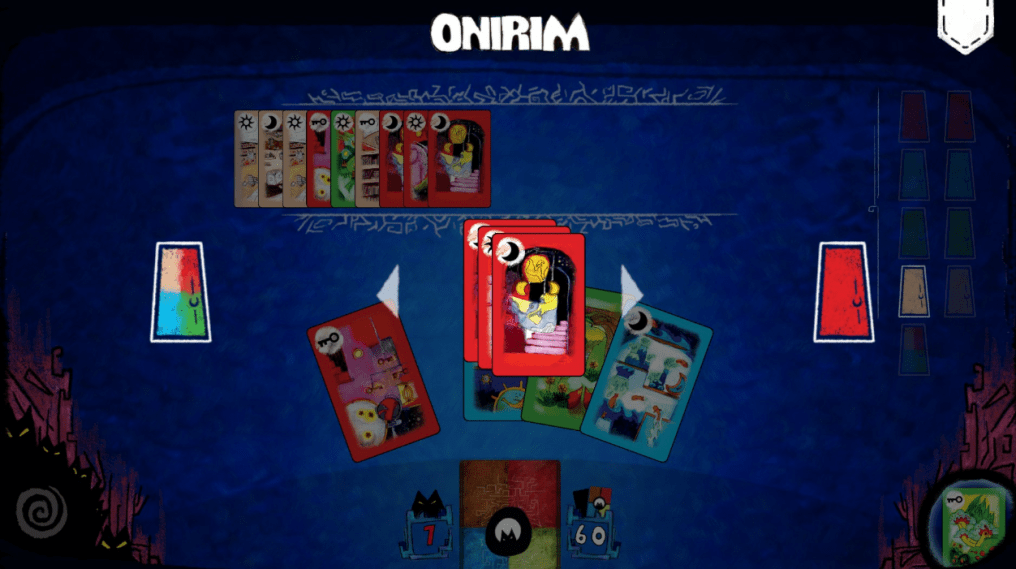
Onirim has a clean look. The play area up top is easy to see (the image above includes an expansion, so there’s a card type, the whirlpool, that I haven’t mentioned). Your hand is visible below the play area. Beneath your hand, you’ll find how many nightmare cards remain (the black demon with the red number on the left, and how many cards remain in the deck; you lose if you run out of cards before opening all twelve doors). The filled-in cards let you know which doors have been opened, and the top right corner is where you can access the main menu. Clean. Easy to read.

I lowered Onirim just a hair for the User Interface because of how difficult it can be to navigate all-time statistics. This isn’t a big deal for a lot of players, but if one becomes invested and explores that rabbit hole, one would want an easier set of menus.

Graphics: 6/10

Onirim has amazing graphics for a solitaire game. But it’s still a solitaire game. Onirim does what it can within the confines of a card game, but no matter how good the cards look, they’re still cards. That said, Onirim may be the prettiest card game I’ve seen. It has to get an above-average score.

Audio: 5/10

Onirim is another game I play with the sound off. The soundtrack is atmospheric, but kind of blends into the background. The sound effects could–and probably should–boost this score even more. But I’m going to stay as objective as I can. While the shuffling effect can be satisfying, you’ll hear it a lot, and it can also detract from the experience. There’s so much shuffling.

Replay Factor: 10/10

Since Onirim is Solitaire with a twist, you’ll find it difficult to play only one game. The app keeps track of your all-time stats, so I end up trying to beat my all-time best, and if that happens, I’ll try raising my overall win percentage or how quickly I typically beat the game. Solitaire with stats. That’s a rabbit hole. It also gives Onirim high marks in replay value.

Aggregated Score: 7.5

Quirky Video Game Review: Papers, Please

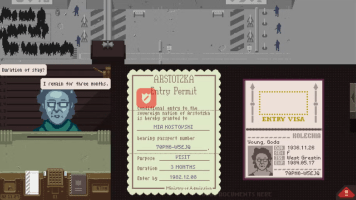
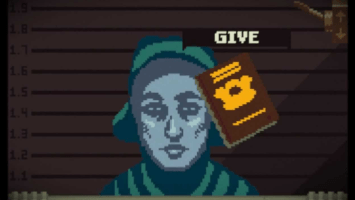
Papers, Please by indie game developer Lucas Pope has received widespread acclaim. Who knew that working as an immigration officer in a fictional Eastern Bloc country named Arstotzka would strike a chord with so many people? I’m not sure if any empathy game (a type of role-playing game that asks players to inhabit someone else’s emotional world) has ever received this much attention.

Hey, hey! Kyra Kyle here. Today’s post returns to a much older review I did for a now-defunct website. Unlike most of the video games I cover on Geekly, Papers, Please is a paid game. You can get a good deal on the game through sites like Steam or GOG (Good Old Games). Usually, Papers, Please sells for around $10, even without a sale. I’m reuploading my almost six-year-old review of Papers, Please to Geekly with a few tweaks to tighten the review and match our criteria. Six years is a long time. Let’s see how well Papers, Please stands the test of time.

Mechanisms

Mechanisms: 10/10

I have never seen a game as immersive and nerve-racking than Papers, Please. It wasn’t just Papers, Please’s ethical choices. There were plenty of those that made me nervous. The frenetic pace of checking people and their documentation as they crossed Arstotzka’s border took a lot out of a person.

If one divorces its setting (good luck with that), players gain an appreciation for the long lines one may encounter at an airport or the DMV. Papers, Please functions as an “empathy game,” or as Papers, Please’s designer Lucas Pope would say, an “other people simulator.” There aren’t too many games that ask players to inhabit another person’s life.

Papers, Please is one of those games. There’s a reason why Papers, Please is cited as a video game that suggests that the medium be treated as an art form.

(Note: Geekly posted a “3 Lists of 3” for Video Games as Art, check out that post with this link.)

Gameplay Loop

Above Image from GameDesigning.Org

Gameplay Loop: 8/10

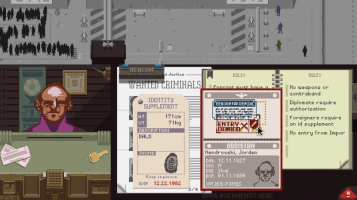
It doesn’t matter how well Papers, Please embodies government paperwork, it’s gameplay centers around government paperwork. “I wish someone would make DMV: The Video Game,” said no one ever. You know, I might just play DMV: The Video Game. Don’t @ me. The tedium of checking passports and other supporting documents is mind-numbing at times. Fortunately, there’s the threat of death and supporting one’s family to spice up the act of checking IDs.

The choices the player makes between each day are a large part (if not the largest part) of Papers, Please’s narrative, and by extension its gameplay. The inspector may be given choices like adopting his niece, but his family goes without food or heat for one day. Do you help EZIC and risk being found out by the government? Do you do what you’re told and uphold Arstotzkian law? Glory to Arstotzka! But these are overarching choices, Papers, Please also gives the player plenty of choices and moral dilemmas within their job and daily routine.

An immigrant could ask to be let into the country so they can reunite with their children, but any violation of protocol results in a citation. Too many citations and the player character could be charged fines and possibly thrown in jail—or even executed. The choice to grant leniency to someone could negatively impact the player or the player’s family and that creates plenty of tension with which choices the player makes.

Story or Narrative

Narrative: 8/10

Whew. There’s a lot going on with Papers, Please’s gameplay and I may have covered some narrative structure in the previous section because gameplay and narrative are so intrinsically linked in Papers, Please. But narrative is where this game shines like an eagle, or some other mixed, cliched metaphor.

Papers, Please paints its narrative in the game’s blank space. Sure, there’s the tedium of checking government documents (and much of the game is centered around that), but the story of the inspector and his family comes in between the inspector’s daily chores. Do you uncheck the expenses for “food” or “heat” to purchase something else, knowing that your family will suffer? Do you confiscate passports, accruing warnings, or even financial penalties, so that you can doctor those passports for your family and escape? Do you keep your head down out of fear of being caught? All of these are valid choices. All these choices, or illusion of choices, puts the player in the role of the inspector.

Much like the gameplay, I can’t tell where the “story” for Papers, Please ends and the storytelling begins. It’s difficult to separate the two and that’s a wonderful thing. So many games we cover on Geekly are easy enough to separately grade a game’s narrative and storytelling. I’m still going to try to separate the two.

Papers, Please has a compelling story because its premise is compelling. But the game’s storytelling is where it truly shines.

Storytelling

Storytelling: 10/10

I mentioned earlier about Papers, Please telling its story in the game’s blank space. I’ve never seen a video game do this is such dramatic fashion. Papers, Please doesn’t just go for large moments and big decisions. It sprinkles in some nice character moments like after the first time the inspector tranquilizes a terrorist and his son hands him a drawing with the text “Arstotzka’s Hero.” Papers, Please’s character building and story come out in ways that only a video game could tell a story or build characters and that’s why it’s received several awards.

I don’t want to get too far into Papers, Please’s storylines, wading deep in spoiler waters, I may have said too much already, but Papers, Please not only challenges preconceived notions of right and wrong and what someone may or may not do if put in an untenable situation, but it also challenges video games to branch out with new forms of storytelling.

Sure, there are some moments where characters feed the player exposition and some of the world-building comes from newspaper headlines or clippings, but they aren’t used in excess. Papers, Please does a good job of showing instead of telling. It does an even better job of immersing players in its world, so much so that an indie film based on the game exists.

It’s difficult to separate Papers, Please’s narrative form from how it builds its characters, world, and story, but that may be the point. It receives high storytelling marks if only with innovation.

User Interface: 5/10

While Papers, Please takes things slowly and raises the temperature of its difficulty a little over time, it doesn’t hand-feed players. The inspection booth can be difficult to navigate at times and chat rooms and question-and-answer sites are littered with places where gamers get stuck. Papers, Please could use more of a tutorial, especially in later rounds of the game. The rulebook does point out changes to the ruleset, but it’s too easy to mess up and restart over a day or two or thirty.

Graphics: 8/10

Papers, Please mirrors the era in which its narrative is set: the early 1980s. Its 8-bit sprites add to the overall vibe of the game, but the gameplay suffers at times as a result.

Pixelated portraits can make cross-referencing passport photos, and other supporting documents, to a person a chore. On the other hand, the graphics amplify the game’s difficulty and provide a double dose of meta-gaming. Government documents often get damaged and become illegible, even for people whose job it is to deal with them, so the graphics are in keeping with the era and the simulation it’s trying to achieve.

The cruder graphics also grant Papers, Please a touch of abstraction. Sometimes players must fill in the gaps when something awful befalls a would-be immigrant. Other times the player is spared a gruesome scene. Either way, the player is actively engaged in this world and anything one creates in their imagination is worse than what a visual medium can show. Horror films have known this for decades.

Still, I must dock Papers, Please a couple of points for its graphics. That’s her face? She looks nothing like that, and I just wasted a few seconds clicking buttons and waiting for results. There are limits to the copious number of times I erroneously scanned people’s faces.

Audio: 7/10

Papers, Please doesn’t use that much music, but the music it employs drives home the point that Arstotzka is an Eastern Bloc country. The main theme, which plays at the beginning of each day, feels like the protagonist inspector is high stepping his way to work each morning.

That’s fantastic. I can, and have, listened to that song on a loop. That’s not a good sign, but at least I didn’t dance the Mamushka, “the dance of brotherly love.” Mamushka!

While the rest of the music is mostly forgettable, character voices and other sound effects come from public sources—one could download midis or wave files from sites like Soundcloud and create one’s own government document thriller—but Papers, Please’s usage of these sound clips is well done. Garbled voices conjure the idea that what immigrants or superiors or peers say to the protagonist doesn’t matter like much adult dialogue in a Peanuts television special. Heck, even what the protagonist says doesn’t matter to him. He’s going through the motions.

The main theme elevates the rest of the soundtrack, but I’m counting off a few points here. Papers, Please’s soundtrack is largely functional.

Replay Factor: 8/10

This is a difficult category to grade. On one hand, Papers, Please has plenty of replay value and even demands players to repay it at least a handful of times. But once one achieves a dozen or so of Papers, Please’s twenty possible endings, I’m not sure if there’s a lot of replay value after doing so. Lucas Pope included an endless mode once a player finished the game at least once, but the game loses something with that game mode.

With twenty endings there’s still plenty of replay value. One can finish Papers, Please in under an hour. Heck, one could deliberately fail as an inspector and end the game in less than five minutes. I put in over 20 hours for this review and still found avenues I could navigate the story.

Aggregated Score: 8

Even after reexamining Papers, Please, I ended up with the same score of eight. I wasn’t anticipating that. I said that I tweaked the scoring criteria to match our modern reviews, but I revisited the game, trying to see if I spotted anything different. Our new scoring criteria could’ve changed Papers, Please overall score, but it didn’t. Papers, Please is the best game (to date) of the ones we’ve covered on JK Geekly. Even after a decade past its original release, Papers, Please is worth your time.

3 Lists of 3 Video Game Characters

Some video game characters get all the love. Some don’t get enough. Your uncle Geekly wants to even things out a bit with this week’s three list of three. I could also use some costume ideas so don’t be surprised if you see me dressed in a primary color jump suit—or two.

Underrated Video Game Characters

Princess_Zelda.png

Zelda

Yes. A famous video game series shares her name, but how many people have you seen point to the guy dressed in a green elf costume and say Zelda? That’s Link. Link gets all the attention, but he’s also the more static of the two characters.

Zelda has been portrayed in so many ways. She even gets in on the action as her alter egos Sheik and Tetra every once and while. She’s been the leader of sages and even a goddess. Link rocks the same kind of outfit game after game, but gamers don’t know what they’re going to get with Zelda. She may even be a ghost.

Ness

Ness

Many gamers would consider EarthBound (1994) or Mother 2 in Japan as one of the best RPGs to come out for the SNES, but many more of them don’t remember who the main character of the game was. Ness is a 13-year-old boy with psychic powers.

Sure, there are other characters gained along the way in EarthBound, but Ness is the players first and strongest, and a lot of the game’s character comes from Ness.

DrRobotnik_Eggman

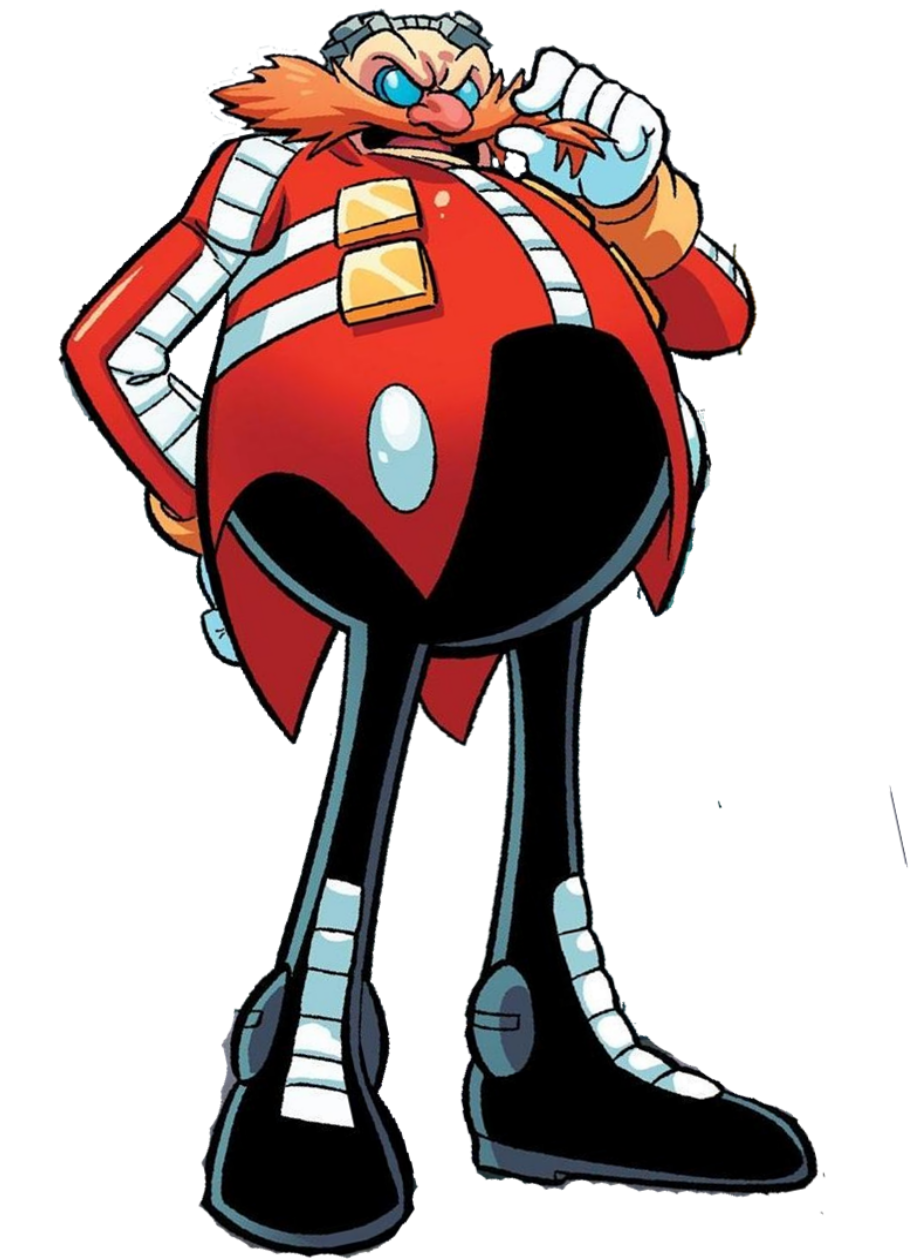
Dr. Ivo “Eggman” Robotnik

Most gamers know of Mario’s Bowzer, but Sonic’s Dr. Eggman goes unheralded. It’s a shame. He may come off as a mad scientist clone, and he is for the most part, but Eggman wants to conquer the world, so he can install his ultimate utopia, the Eggman Empire.

A lot of other mad scientist types have had a similar motivation of wanting to rule the world because they’re the best person for the job—Doctor Doom comes to mind—but that doesn’t mean it isn’t a good motivation. What’s Bowzer trying to do most of the time besides kidnapping a princess?

Overrated Video Game Characters

MasterChiefHalo

Master Chief

First off, Master Chief isn’t a Master Chief in the navy. That’s an enlisted rank (a very high enlisted rank), not an officer’s.

Second, you can take Master Chief out of Halo and no one would miss him. He may as well be Jeff Johnson or John Jeffson. My apologies to any Jeff Johnsons or John Jeffsons who may be reading this.

Halo’s multiplayer mode is what most gamers play this game for. They aren’t looking for story, and Master Chief isn’t much of a character.

HalfLife2_GordonFreeman

Gordon Freeman

The whole point of Half-Life 2’s protagonist is that he’s a blank slate, but if he’s a blank slate, only defined by the suit he wears, he isn’t much of a character. He’s kind of like Master Chief in that sense. Cool suit. Great abilities. What’s your name again?

Iron Man detractors claim that Tony Stark wouldn’t be anything without his suit, but he’d still be rich, a genius, and have plenty of personality. Gordon Freeman is none of those things.

Kratos

Kratos

2018’s God of War notwithstanding, Kratos was a bloody He-Man for the modern era. Gamers knew he’d lost his family—which was explained more in the most recent God of War—and that’s most of what they knew about him. Kratos was an excuse for a muscle-bound, over-sexed man to tear apart some Greek gods.

He received the post-hero treatment in 2018’s God of War and while it was a refreshing take on the character, it could’ve carried more weight if there was more to the character prior to that offering.

Video Game Sidekicks

GarrusMassEffect

Garrus

Yeah, this turian may take offense with being called a sidekick, but he deserves to be on this list. He’s the only squad member available to Shepard in each Mass Effect game, he survives a rocket to the face, and he and Shepard have a special bond.

Get your head out of the gutter. Hmm. They could have a “special bond” if you play the game a certain way, come to think of it. Anyway, one of the most satisfying moments in the Mass Effect series is watching the two pal around and watching their relationship grow.

Luigi_SuperMarioBros

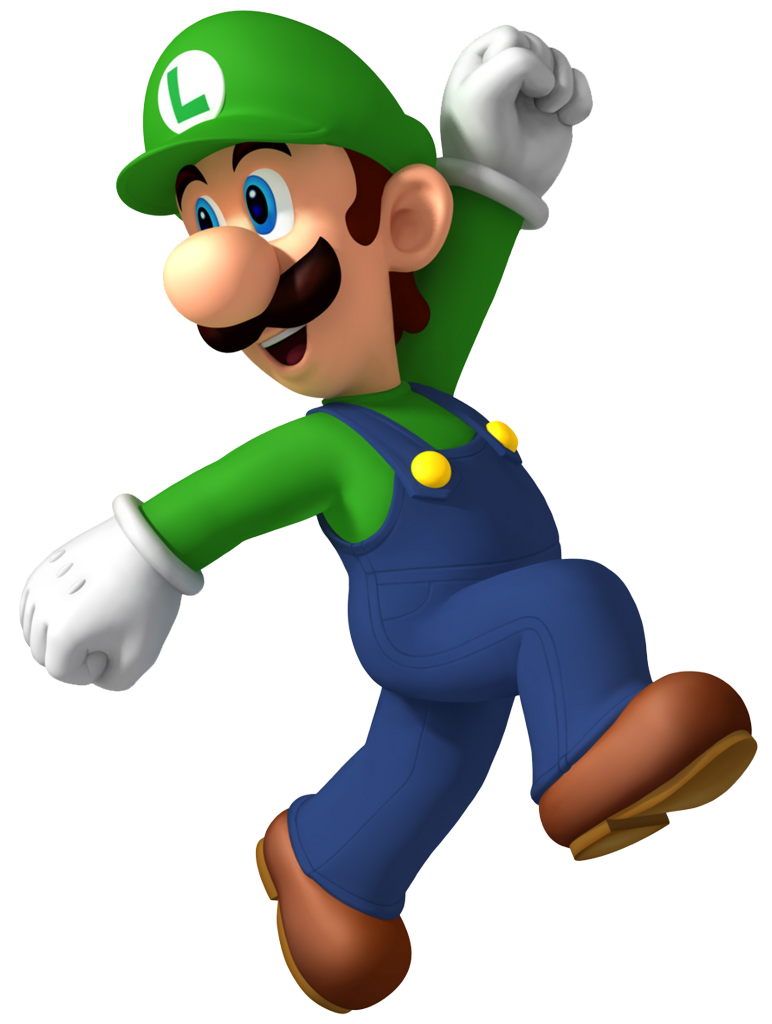
Luigi

He’s always number two to Mario’s top banana, but Luigi doesn’t complain, not even when Nintendo named him Luigi Mario. I guess that would make his brother Mario Mario. Man, that’s a terrible name.

Give him a vacuum to suck up ghosts and he can be a main character. A gamer may want to play as him in Super Mario Bros. 2, and I never minded letting my younger brother take the controller during the original Super Mario Bros., not telling him where any of the shortcuts or secrets were, and then use them after he lost a man. Ah, memories.

Sparx_SpyroTheDragon

Sparx

I had to put Sparx from Spryo the Dragon on here because so many of my family members love that game, and Sparx doesn’t get much love. I also don’t like it when games force a player to run over every little gem or coin or ring. All you’ve gotta do is get close to a gem, and Sparx picks it up for you.

Sparx also represents one of the cleverest ways to denote health in a video game. He changes color, gets dim, as you take damage and disappears when Spyro has one hit point left.

Yep. I’m sure I missed the boat on a lot of these characters. Please direct your complaints to our intern Jeff Johnson—or is it John Jeffson—or let me know which video game characters you’d choose by leaving a comment.