

Hey, hey! Kyra Kyle here. Back with another Top 5 Tabletop Games of an era and we’re also back with the second half of the 1960s (1965-1969). If you want to see our picks for the first half of the decade, you can follow this link.
We’re getting back into the swing of things, so let’s reiterate the ground rules again before we get started.
1: Cultural relevance plays as much of a factor as overall quality. A game might make a list that doesn’t hold up to others of its type, but you must admit the game is everywhere.
2: Only one game from a franchise makes the list. This will become more of an issue the closer we get to games with expansions.
3: Longevity plays a role, too. A game doesn’t have to fly off the shelves today, but it had to have some widespread appeal for a decent time.
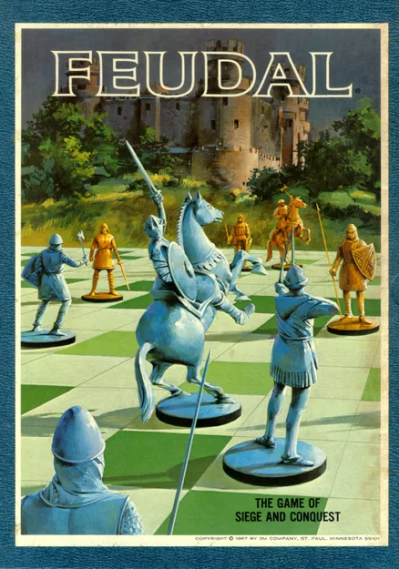
5: Feudal (1967)
The 1960s had a lot of Chess-like board games—and I do mean a lot—but none of the Chess variants reached the heights of Fred Beustchler’s Feudal. A part of the 3M Bookshelf Series (3M also produced a lot of Sid Sackson and Alex Randloph’s early work), Feudal tasks players with occupying an opponent’s castle or capturing all an opponent’s royalty. The play area consists of four plastic peg boards depicting empty, rough, and mountainous terrain.
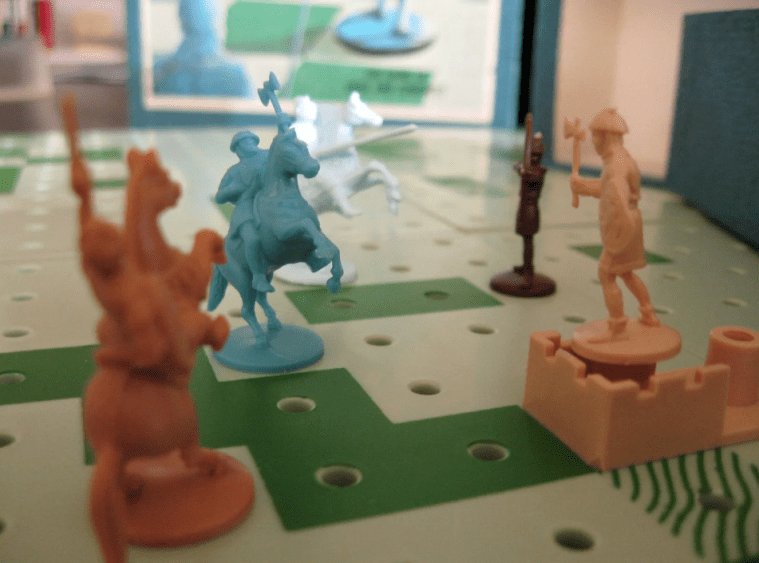
Feudal has a unique set-up. Players place their pieces on their peg boards in secret and reveal how they deployed their units simultaneously. This leads to different strategic problems each game and every game plays out differently. We had to include one Chess-like board game. Feudal is the best of the bunch.
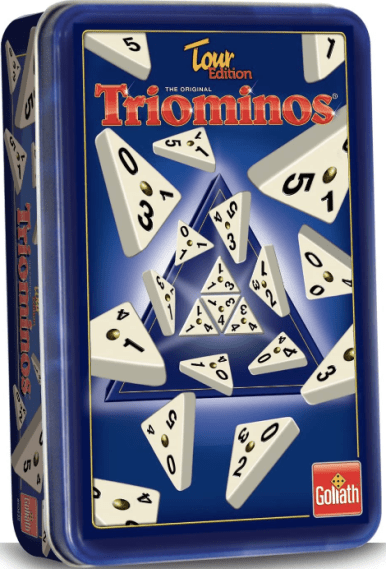
4: Triominoes (1965)
Simply put, Triominoes is a variation of dominoes that uses triangular tiles. The tiles are equilateral triangles so they fit in neatly with each other. Players can play a Triomino if they have matching numbers with the six potential values 0-5.

I’ll be honest. Triominoes intimidated me while I was growing up. So many numbers close together looked confusing. But there’s no doubt that the game has a legacy.

3: Kerplunk (1967)
Sometimes the simplest concepts make the best games. Kerplunk consists of a transparent plastic tube, plastic rods called straws (26-30 of various colors), and several dozen marbles. Players take turns removing a single straw from the tube while trying to minimize the number of marbles that fall though the web and into their trays.

Kerplunk beget several similar games in the future, specifically Jenga. This family of games has built-in tension. Remove the wrong straw and the marbles pour out.

2: Twister (1966)
The tail end of the 60s saw a lot of simple games or new twists on older games. Speaking of twists, our next game is Twister.
Each version of the game comes with a spinner. And each spinner is divided into four labeled sections: left foot, right foot, left hand, and right hand. And each of those four sections are divided further into the colors red, yellow, green, and blue. After spinning, the combination is called (right hand red) and players must move their matching hand or foot to a circle of the correct color. Last player standing wins.
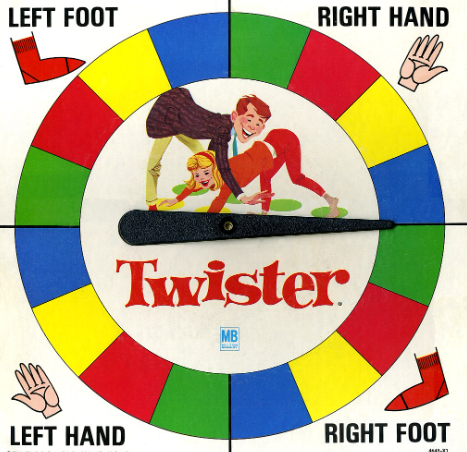
Simple enough. And we’ll see a lot of other simple designs that have stood the test of time on this list.
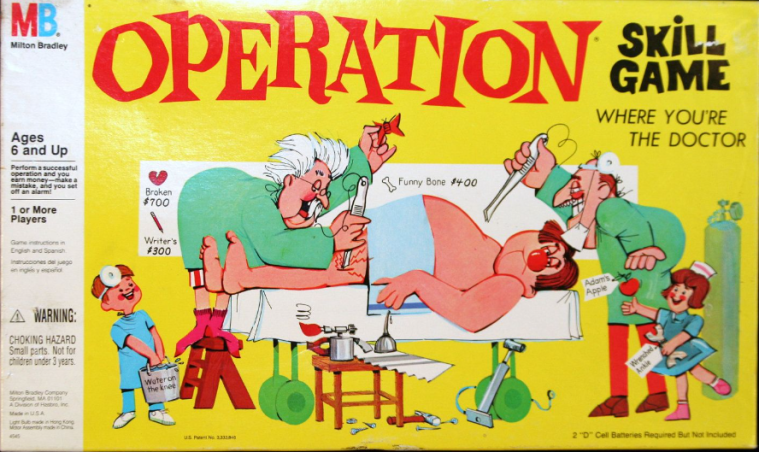
1: Operation (1965)
We go from moving one’s body in weird ways to a game featuring someone with a weird body. Operation challenges players with extracting silly body parts from a hapless patient. During the game, you acquire cards which dictate body parts you must remove. The body parts rest inside a hole and if you erroneously touch one of the hole’s metal sides, a sudden buzzer and light-up nose indicates the patient’s pain. Players want as little pain as possible in Operation. Successful extractions give the player money and the player with the most cash at the end of the game wins.
There have been countless versions of Operation. I believe my kids had a Spongebob themed one. Maybe it was Shrek. Regardless, Operation has never been out of print since its release. And I don’t see that happening in the next 60 years either.
Did we get the list right, for the most part? Let us know in the comments. And wherever you are, I hope you’re having a great day.
Check out the other lists in this series:
Top 5 Games prior to the 1930s
Top 5 Games of the 1930s
Top 5 Games of the 1940s-50s
Top 5 Games of the early 1960s
Top 5 Games of the early 1970s
Top 5 Games of the late 1970s
Top 5 Games from 1980-1981
Top 5 Games from 1982-1983
Top 5 Games from 1984-1985
Top 5 Games from 1986-1987
Top 5 Games from 1988-1989
Top 5 Games from 1990-1991
 jkgeekly.com