

Hey, hey, Geekly Gang! Kyra Kyle here with another Top 5 Tabletop Games throughout the years. 1998 saw the continued dominance of collectible card games (CCGs). Fewer CCGs were released this year, but established ones kept board game stores afloat. 1998 had a lot of great board games, but many of them didn’t have the same staying power as previous years in this series. There may be more than one forgotten gem on today’s list. We’ll get to the games in a minute, but first, let’s look at our criteria.
1: Cultural relevance plays as much of a factor as overall quality. A game might make a list that doesn’t hold up to others of its type, but you must admit the game is everywhere.
2: Only one game from a franchise makes the list. This will become more of an issue the closer we get to games with expansions.
3: Longevity plays a role, too. A game doesn’t have to fly off the shelves today, but it had to have some widespread appeal for a decent time.
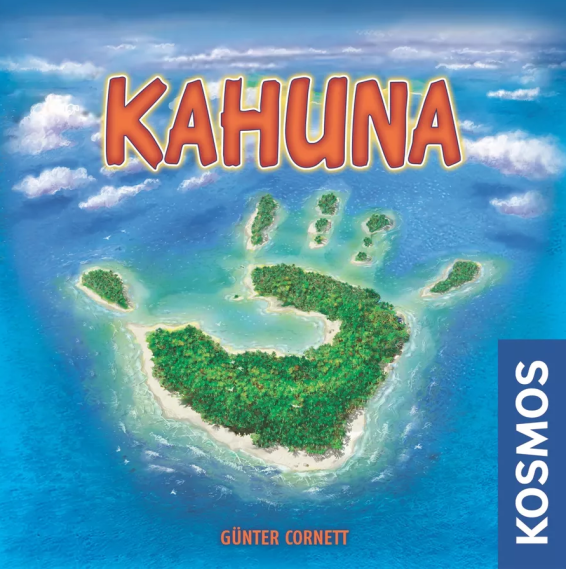
5: Kahuna (1998)
Kahuna fits the bill of a forgotten gem. This two-player game has players assume the role of ancient sorcerers of the Pacific. You compete for dominance of an archipelago consisting of twelve small islands. Players use cards to place bridges between islands and remove opponent’s bridges. If you get the majority of bridges around an island, place one of your marker stones on it and remove any of your opponent’s bridges to that island. This could, in turn, cause your opponent to lose a bridge majority on an adjacent island.
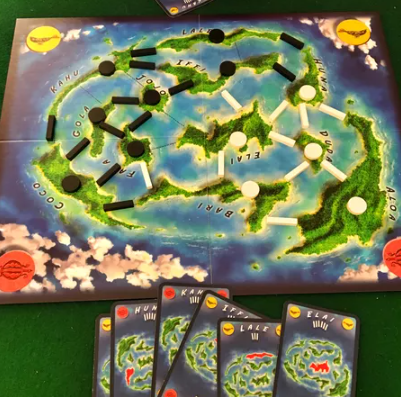
Kahuna plays in three rounds. A round ends when all cards from the face-down deck and the three face-up cards have been used. Kahuna is a fast-paced area control/majority game. It’s one of the better two-player games from this era, but Kahuna’s status as a two-player only game may have prevented it from seeing wider gameplay. Still, Kahuna was a finalist for the Spiel des Jahres (the German game of the year).

4: Elfenland (1998)
We go from a Spiel des Jahre finalist to 1998’s Spiel des Jahre winner, Elfenland. Elfenland is a redesign of the original White Wind game Elfenroads. The game is set in an elvish world. Players begin in the Elf capital, draw one face down movement tile, and are dealt eight transport cards and a secret “home” city card that they must reach at the end of the fourth round or lose points for each city space away from “home” they are at the end of the game.
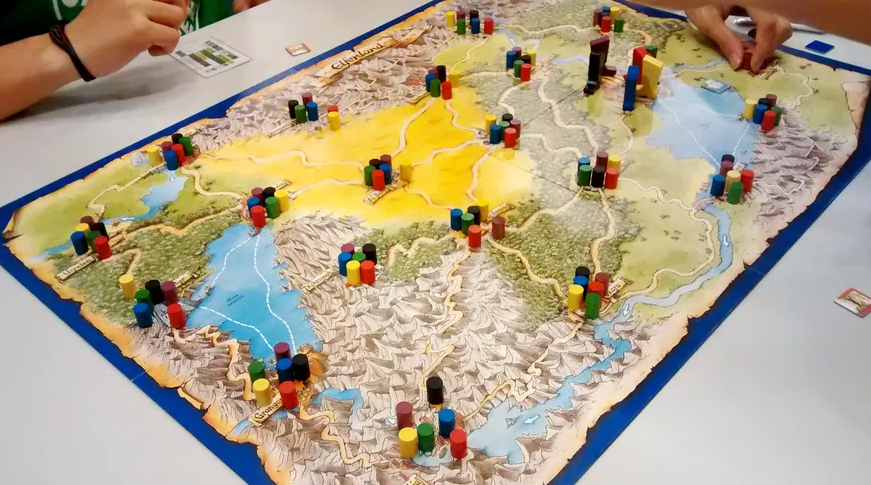
Elfenland’s designer, Alan R. Moon (Ticket to Ride), has a knack for route-building games. Elfenland marks the first time Moon has made one of these lists. I may have just spoiled the game, but this won’t be the last time we’ll see Moon on one of these lists. Elfenland shares some similarities with Moon’s more popular Ticket to Ride. Elfenland is another forgotten gem.
3: Guillotine (1998)
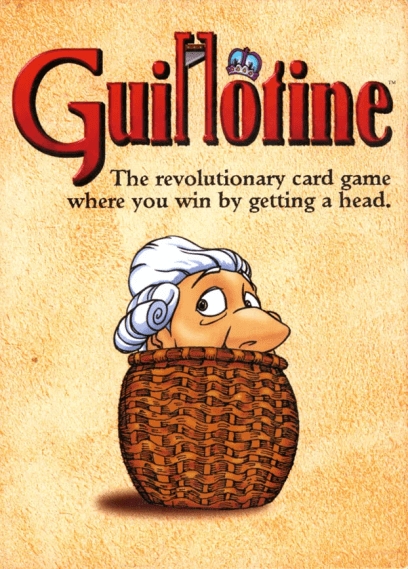
Guillotine is yet another forgotten gem, and its theme is one of the most macabre and interesting of 1998. Players take the role of executioners during the French Revolution. In Guillotine, you’re doing your best to manipulate the execution line and score as many points, claiming the lives of nobles, clergy, and former military as you can. Off with their heads!
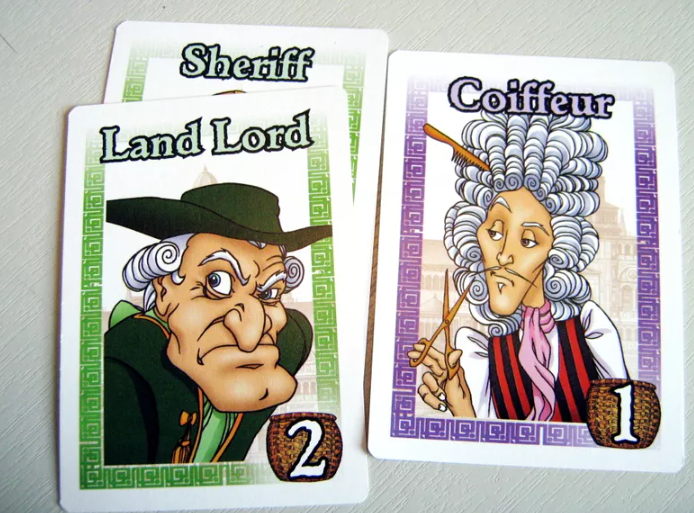
If you like Gallow’s humor, you’ll love Guillotine. I say this a lot, but this will not be the last Paul Peterson design to make one of these lists. Peterson has a knack for taking traditional card games in strange and exciting directions. Guillotine is bloody fun.
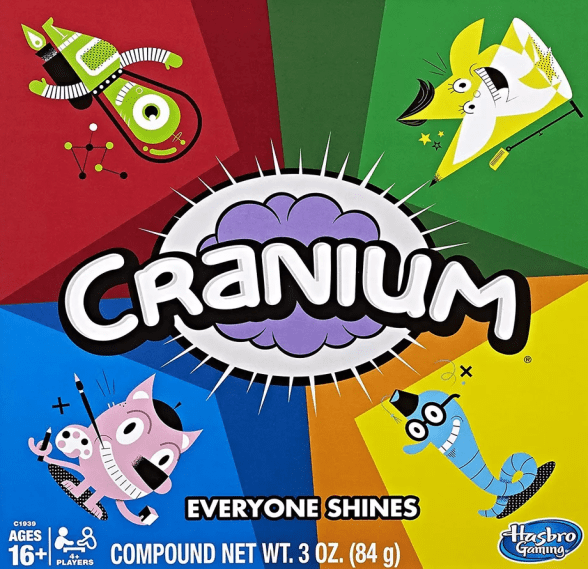
2: Cranium (1998)
Cranium marks the first mass market board game (a game one can find in department stores) to make one of these lists in several years. While it may have faded in popularity, Cranium took elements from various party games and formed what it claims is “the whole-brain” game. Cranium identifies four main party quiz game elements and gave them names: Creative Cat, Data Head, Word Worm, and Star Performer.
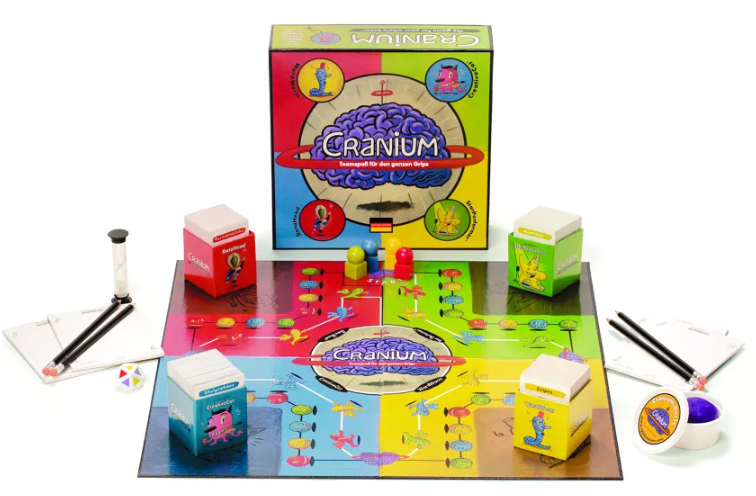
Creative Cat involves sculpting and drawing. Data Head is trivia. Word Worm has players unscrambling words, challenging them to spell a word, and guess definitions. And Star Performer includes whistling songs, impersonating a celebrity, or acting out a clue. Cranium managed to assemble as many party quiz game elements into one game as one can. In fact, I still don’t think a party quiz game has managed to include as many elements as Cranium’s into a single game design.

1: Through the Desert (1998)
Reiner Knizia takes another top spot on one of these lists with Through the Desert. Through the Desert is one of those games players remember fondly and hold in high regard. But I rarely see anyone playing Through the Desert, making it yet another forgotten gem on this list. I’d argue Cranium, despite its status as a mass market board game, is another forgotten gem. This entire list is made up of forgotten gems. Getting back to Through the Desert, it takes inspiration from the classic game of Go. Through the Desert also completes Knizia’s tile-laying trilogy of games: Tigris & Euphrates (1997), Samurai (1998), and Through the Desert (1998).

In Through the Desert, players attempt to score the most points by snaking caravan routes through the desert, trying to reach oases and blocking off sections of the desert. Two to five players control a tribe of nomads vying for control of the desert. Strategy is key in building your tribe’s caravans. There are multiple paths to gain points, but Through the Desert manages to keep its cognitive load low, meaning it’s easy to learn but difficult to master. Through the Desert is deserving of its Spiel des Jahres recommended status.
Did we get the list mostly correct? Let us know which games you’d add in the comments. Thank you for reading, and wherever you are, I hope you’re having a great day.
 jkgeekly.com