Whatcha Playing, Geekly? April 2026

Happy Wednesday, Geekly Gang. Kyra Kyle here. Today, our writers share the games (both video games and board games) they’ve been playing over the past month. Feel free to add which games you’ve been playing this past month. We’re all part of the Geekly Gang. I’ll kick off this post with the games I’ve been playing this past month.
Kyra’s Video Games

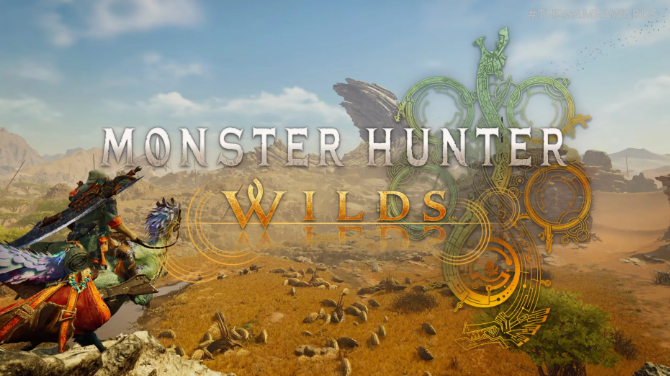
My first entry is the first of two Monster Hunter games. Woah! Monster Hunter Wilds follows in Monster Hunter World’s footsteps. Ironically, we covered the release of Monster Hunter Wilds a little over one year before I picked up a copy on the PlayStation 5. Monster Hunter Wilds gives the Monster Hunter World formula some much-needed updates. Mounts are a great addition; we saw them in Monster Hunter Rise. I like that one can harvest things on one’s mount, and the grapple comes in handy. The load times and the ability to ready up for a mission from almost anywhere are fantastic quality of life upgrades over Monster Hunter World. Objectively, Monster Hunter Wilds is the better game. But there are two things I wish Monster Hunter Wilds retained from Monster Hunter World: scale and research.

Simply put, Monster Hunter World feels larger than Monster Hunter Wilds. Having finished Monster Hunter Wilds’ main story, I found monsters segregated by size. This means monsters will fight each other for territory because they’ll be of similar size. This is a good thing. I don’t know how many times I waited for another monster to damage the monster I’m hunting, and then swoop in for the final blows. But I also liked how smaller monsters will run away from larger ones. This gave Monster Hunter World a sense of scale. A pukei-pukei high-tailing it from an anjanath made the anjanath feel bigger and more imposing. Sure, this made hunting a pukei-pukei more difficult, but I didn’t mind. It made World’s monster feel more alive. Without dissimilar-sized monsters in the same area, I lost sight of a monster’s size.

Sure, Monster Hunter Wilds has some massive monsters. I judged that from the environment. That boulder looks a lot smaller. That must be a massive monster. Still, I’d trade the occasional small monster getting away for a more cohesive biome.

And then, there’s research. I understand why Monster Hunter Wilds mostly got rid of research. It got tedious. Finding monster mucous in a biome and learning that a specific monster marked its territory with its mucous was awesome the first time I heard it. But it loses its luster after the hundredth time collecting mucous. Monster Hunter Wilds could’ve toned down the amount of research one needed to conduct. I liked the idea of my character as a field zoologist. Or would they be monstologists? Regardless of those two minor shortcomings, I enjoyed Monster Hunter Wilds.

The story wasn’t that good, but no one plays a Monster Hunter game for its story. Exploring the world is as fun as ever. I can’t wait to dive into the post-game and any new DLC. Bring it on!
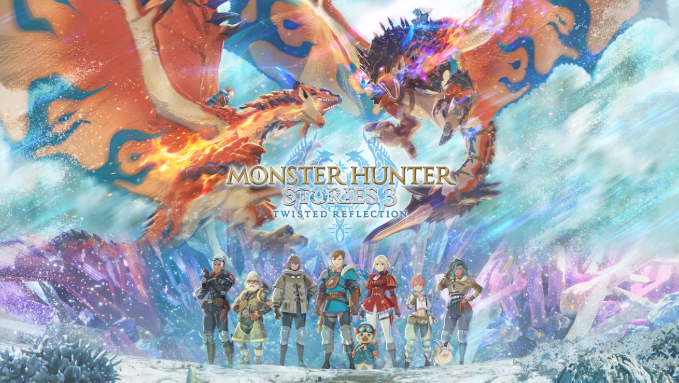
You know how I just said, no one plays a Monster Hunter game for its story? The same can be said for Monster Hunter Stories 3: Twisted Reflection. But I think I found where all Monster Hunter World’s research went. But Monster Hunter Stories may be the better title for monster research. Monster Hunter Stories 3 is the first game in the series I’ve played. From what I’ve heard from Season, Monster Hunter Stories 3 added quality of life updates just like Monster Hunter Wilds did to the mainline series. I’ll leave those points for Season; I’m sure she’ll talk about Monster Hunter Stories 3. But I’ve been enjoying Monster Hunter Stories 3: Twisted Reflection. I love restoring biomes.

Yes. Monster Hunter Stories 3 features invasive monsters, disrupting the flow of each of the game’s biomes. Players are tasked with restoring each biome to its original balance. This includes researching monsters and learning their moves. Speed, Power, and Technique Attacks play out like a Rock-Paper-Scissors style of combat. Add this to an additional layer of elemental type (which also plays out like Rock-Paper-Scissors), and Monster Hunter Stories 3 prompts players to collect ’em all. You’ll need monsters with a Fire, Water, or Lightning (and others) element and each of the three attack types. This dual-layered game of Rock-Paper-Scissors adds plenty of complexity. And it’s fun collecting eggs and watching them hatch.

Most of the popular monsters in the Monster Hunter series make an appearance in Monster Hunter Stories 3. Heck, you begin the game with a Rathalos. The story overview (first paragraph in this write-up) mentions Twin Rathalos, and I’m certain the other Rathalos factors into Monster Hunter Stories 3’s storyline. Again, I couldn’t care less about the story. The voice acting is over-the-top. Characters sport the JRPG-styled mannerisms. And the ultimate attacks (for each of the monsters) play out like a summon spell in Final Fantasy VII, but at least you can skip the animation if it’s the one millionth time you’ve seen it. I like the shake-up the Monster Hunter Stories series gives the typical Monster Hunter gameplay formula.

Did I mention you can ride your monsters? Flying on my Rathalos rules. But so does riding my Tobi-Kadachi up wall faces. Yes! I haven’t yet found (or built) a monster I can reliably ride on while they swim, but I’m working on it, and when that happens, I’m certain that’ll be a blast.
Kyra’s Board Games

I’ve talked about Super Mega Lucky Box in this series before, but I’ve played it with Skye at least twice this past month, so I had to mention Phil Walker-Harding’s take on Bingo. If you know how to play Bingo, you know more than half the rules to Super Mega Lucky Box. This board game is one of those perfect games to introduce to people who don’t play board games. And it’s fun. I could play Super Mega Lucky Box with Skye another twenty times this upcoming month. It’s that good.

I have been meaning to play Cascadia ever since it was first released in 2021. I never picked up a copy of Cascadia because I already owned Overboss, which has a similar pick-up a tile and token combo. But that’s where the similarities of the two games end. Cascadia offers varied but balanced play in every game. I didn’t catch all the ways one can score during the original rules explanation (I didn’t know that each collection of land types scored, and it wasn’t just the player who had the most of the largest type of each land), but my brain wouldn’t let me place a tile without a match. I ended up scoring way more points than I thought I would. And matching animals to the pattern they wanted made thematic sense. I was impressed.
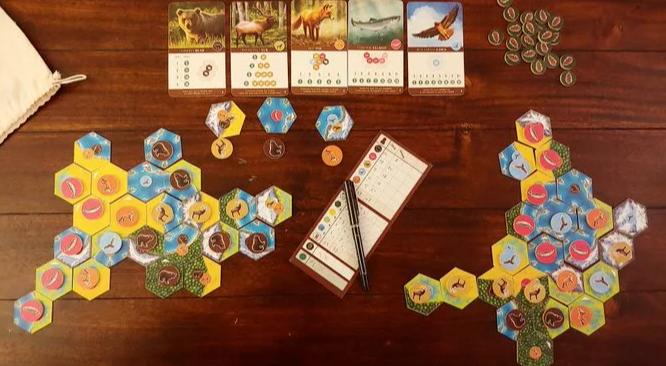
Beth Sobel’s art elevates any nature-themed game. Her art has appeared in so many games of this type. Keep it coming. And Flatout Games has a knack for designing/developing easy-to-learn but difficult to master board games. They’re the company behind the Point Salad series of games, Ten, and Calico. I knew I would like Cascadia. I can’t believe it took me this long to play a round.

Bandido may be the oddest board game on this list. It certainly generated the most laughs. Gamers take on the role of prison guards. The titular Bandido has broken out of his cell, and it’s up to the players to work together to cut off the Bandido’s exit by strategically placing flashlight cards, dead ends, and loops for the tunnel. Bandido likes to sprawl, so gamers are encouraged to stand while they draw a card from the deck and add a card to one of the tunnel’s open ends.
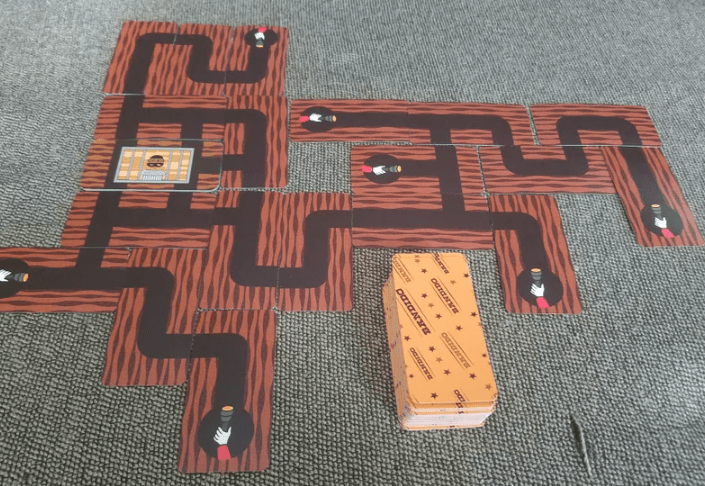
You’re not allowed to show your teammates your cards, and there’s limited table talk. But that didn’t stop us from ribbing someone for making a suboptimal play. Bandido may not work for every game group. The subject matter could rub people the wrong way. The gameplay can be a little difficult to explain at first, but with the right group, Bandido is a blast.

Those are all the games I have for this month, and it looks like I’ll be flying solo this month. We’ll have to wait on Season’s take for the two Monster Hunter games. But hey, what games have you been playing this past month, Geekly Gang? Let us know in the comments. Thank you for reading, and wherever you are, I hope you’re having a great day.

Whatcha Playing, Geekly? September 2025

Happy Wednesday, Geekly Gang! Kyra Kyle here. For this week’s Whatcha, our Geekly writers will be sharing which games they’ve been playing over the past month. Let us know what games you’ve been playing, because we’re all part of the Geekly Gang. I’ll start by sharing the games I’ve been playing.

Kyra’s Games

Kyra’s Board Games

Phil Walker-Harding is known for Bärenpark, Gizmos, and Sushi Go!, and Super Mega Lucky Box is Walker-Harding’s twist on Bingo. Like many of Walker-Harding’s games, Super Mega Lucky Box is easy to learn but may take a few play-throughs to figure out the best strategy.

A deck of cards, containing two copies of numbers 1-9, is used to determine which box players may check off one of their multiple Bingo cards. (You begin the game with three.) As soon as you fill a column or row, you immediately claim the reward (if any), shown at the end of that column or row. Lightning bolts allow you to change the number on the card, so typically, you’re not stuck with a number you can’t use. Stars grant you victory points. Super Mega Lucky Box rewards players who can manage their resources (lightning bolts and rewards) and who know when to manipulate their Bingo cards and rewards to great effect.

A Mensa 2022 Select recipient, Super Mega Lucky Box encourages creative thinking. The game’s variability ensures no two games play the same.

Wazabi spelled with a “Z,” not an “S,” is–essentially–a dice version of Uno. Players begin the game with four dice, and they attempt to rid themselves of their dice. Each die has three possible results, give a die to another player, draw a card, and a W (more sides have W than the other two), which is the currency needed to play a card from your hand. During a turn, a player rolls the dice, follows the directions on the dice, and can play one card that they can afford. Cards cost 1, 2, or 3 W.

Wazabi can be fun, but it suffers from the same shortcomings as Uno, only you’re adding dice (another variation of luck) to the mix. Games of Wazabi can–and should–end in less than ten minutes, but typically, you’ll end up with a stalemate with players trading dice and cards back and forth for about twenty to thirty minutes. Still, I can see the appeal of Wazabi. It adds a little spice to Uno’s gameplay.

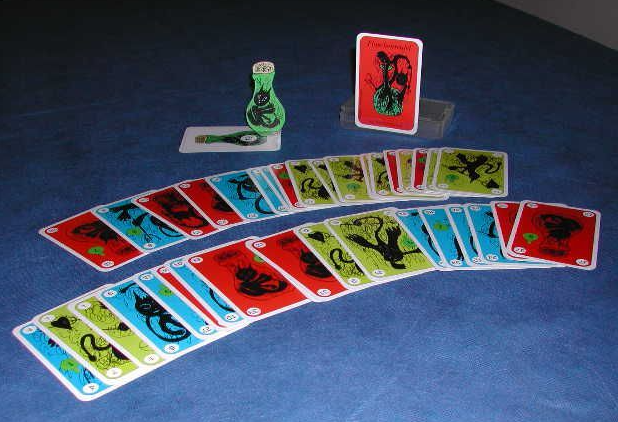
One of my game group members hates trick-taking games. He shall remain nameless. Anyway, this trick-taking game hater hasn’t shown up to meetings over the past month, so we’ve been playing a ton of trick-taking games: Little Devils, The Bottle Imp, Cat in the Box, and Squeeze.

I won’t go over all of these games, but I enjoyed each one. I like having a theme for game night. Quick. So-and-so isn’t here, let’s play games they hate playing. Each of these trick-taking games are nasty in their own way. The Bottle Imp requires the most replays to wrap your brain around what’s happening, although Cat in the Box isn’t too far off in that regard. Little Devils is the easiest to explain (we’ll have a review of that game in a couple of months), and it happens to be the meanest of the three non-traditional card games. But Squeeze (played with a traditional deck of cards) may be the most mean-spirited.

Players begin Squeeze with ten cards. The top card of the deck denotes which suit is trump for the round. The person to the dealer’s left makes their bid, and then everyone else makes a bid. When the bidding makes its way to the dealer, the dealer can only choose a number that doesn’t equal the total number of cards in hand.

For example, during the first round of a three-player game, if the first player says “3” and the second player says “4,” the dealer can say any number other than “3,” which would equal ten (3+4+3 = 10).

At least one person is guaranteed to miss their bid each round, hence the name Squeeze. “Zero” is a legal bid, so long as it wouldn’t equal the number of cards in play. Players earn ten points plus their bid if they achieve their bid, and get nothing for missing their bid. Play continues like this until a dealer deals only one card during a round. You don’t want to be the dealer during the final round. You may not have a choice of bid. Yikes!

My favorite thing about Squeeze is that you get less knowledge of what’s in players’ hands the longer you play. I may be the only one with trump for the round, but my trump cards are two and three. I’ve bid one and ended up getting a lot more tricks than one. Lol

Kyra’s Video Games

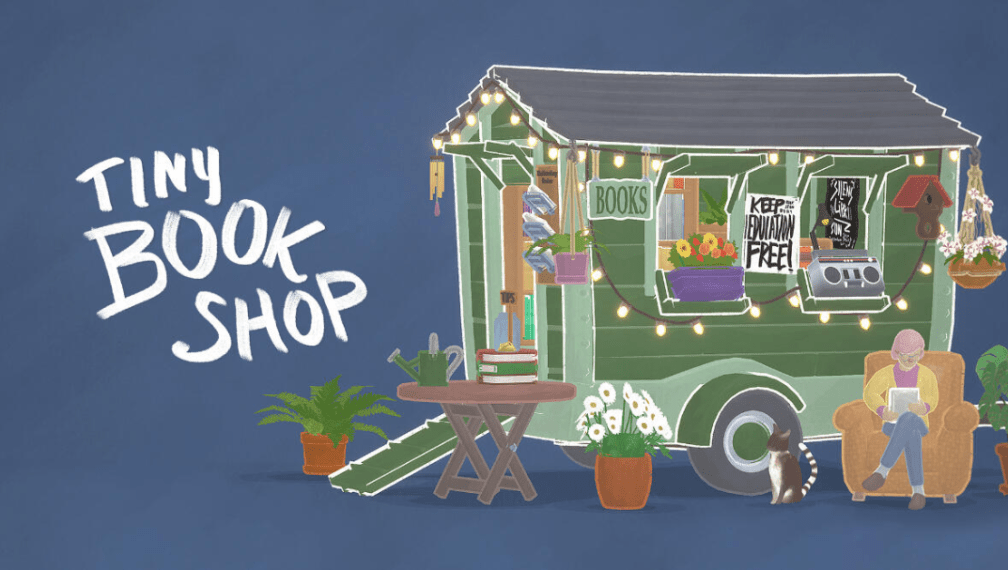
I won’t go into too much detail with Tiny Bookshop; this game will definitely make Season’s list, too. Geekly covered Tiny Bookshop during one of our Geekly News posts. In short, Tiny Bookshop is an excellent, cozy game and will probably receive a game review sometime in early 2026. I love making book suggestions for customers. Tiny Bookshop is one of the few video games that offer reading recommendations. What’s not to love?

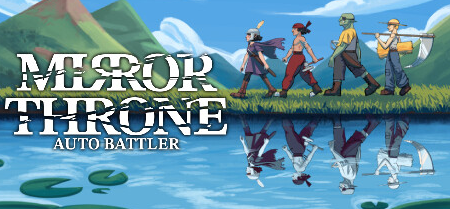
I like auto battlers. My favorite is the now-defunct Fate Arena, so I’ve been looking for a worthy replacement. I’ve put in a handful of hours with Mirror Throne, and it’s most likely not going to be my Fate Arena replacement. Mirror Throne doesn’t appear to have balanced abilities for its characters. I could be wrong. But I did run the table with one or two overly strong units during the game’s campaign. Mirror Throne only offers two factions (technically, a third that’s a mix of the other two), so gameplay styles are limited. But Mirror Throne has room for improvement.

While I’d like a more robust campaign mode, Mirror Throne needs to fix its competitive (Arena) mode. I dislike how I don’t know who I’m in a lobby with, and that I have no idea what kind of teams they’re building. That’s something Fate Arena handled beautifully. I want to know my competition. Instead, I’m given randos who may be bots.

Fate Arena also had bots, but you’d get an idea of who the bots were, and they didn’t dominate lobbies. I also wonder about leavers. Fate Arena would backfill leavers with bots; leavers were the main reason for bots in Fate Arena. Mirror Throne may suffer from leavers who only purchase one unit and duck the game. I can easily roll them.

I’ve played Mirror Throne after its first major update, and I still don’t know what’s going on during Arena mode. Hope is the currency needed to stay in the game (you begin a game with 100), and sometimes when I lose, I’ll lose 5 or 10 Hope, but other times it’s a whopping 25. What determines the amount of lost Hope? Mirror Throne is needlessly opaque.

Mirror Throne also matches me against opponents I may never see again in the lobby. I’m unable to build up a rivalry with any opponent. Mirror Throne has just been released, but it needs to iron out a lot of kinks. Fingers crossed.

That’s all I have for games this past month. Let’s see what Season and Skye have been playing.

Season’s Games

season’s board games

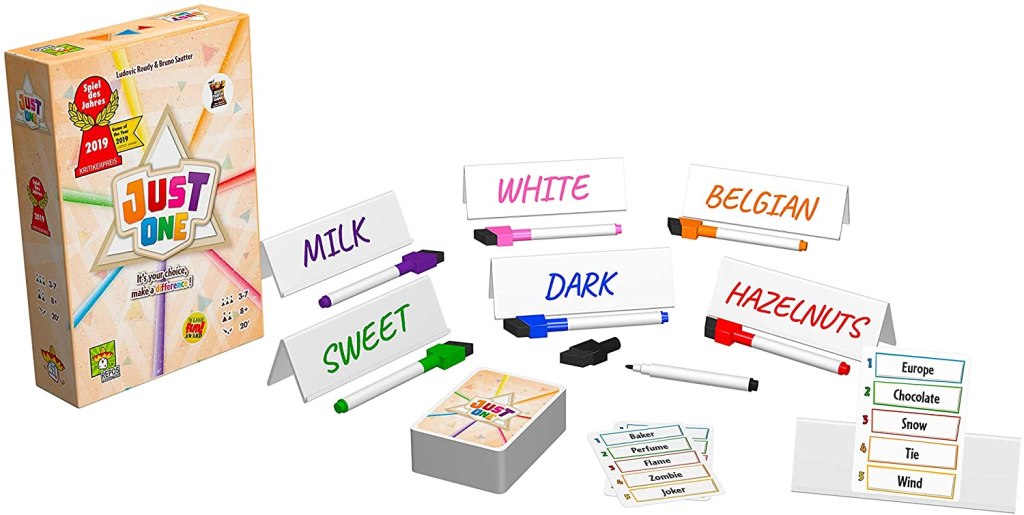
It’s been a minute since I last included a board game on this list. I originally played Just One at a going-away party with a former coworker years ago, but it’s recently hit the table again. Just One is a simple game that has the active player draw a card (without looking at the underside) and select a number (1 through 5). Each number has a word next to it. The rest of the players use their whiteboard standees to write one word that describes the word from the list the active player chose. Players reveal the descriptive words they chose to each other (without the active player looking), and if any words match, the players with matching words have to erase their whiteboards. The active player gets one chance to guess the word they picked.

I don’t remember how many rounds are supposed to be played. Whenever I play, my group plays until we burn out on guessing words.

Travel-sized Scattergories makes a comeback. We’ve covered SiXeS before, so I won’t go into too much detail. The gist of SiXeS is writing thirty-six words over six rounds in six minutes. Each round has a different category (or categories for Lightning rounds that occur every third round), which players either try to match words with each other or be unique. In rounds one and four, players are trying to match every word. In rounds two and five, players are trying to have different words. In rounds three and six, players are trying to match in six different categories with one word per category (Lightning rounds). Each round is timed for a minute, and players read their lists aloud once the timer is up.

I love games that let me flex useless knowledge. I always have a good time whenever SiXeS hits the table.

season’s video games

I’ve gone with another tabletop game in video game form with this month’s Inscryption. Inscryption is a rogue-like deck-building game that combines role-playing with escape room elements. You can get up from the table and explore the room around you for clues. Some of the puzzles offer the player cards to help them progress through the game. Not much is explained about your character (player piece) in the game, other than animals randomly start following you as you trek through the woods.

Your starting deck has three cards and a squirrel deck (which players may use as sacrifices). You collect cards and build your deck as you progress across the map. Every time you fail, you must start over with the same starting deck and build your deck from the ground up. You’ll start to notice something peculiar about one of the cards in your starting deck. I won’t go into further detail.

Inscryption incorporates an ARG (Alternate Reality Game) through some of its Easter eggs. An ARG is a code, link, or something else within a piece of content that connects the consumer to go into the real world to discover more lore. In Inscryption, several binary codes are scattered throughout the game, connecting players to external sources and providing context on fictional entities within the game. It’s fun for those who like a bit of sleuthing.

That’s all I’ve for this week. What have you been playing, Skye?

Skye’s Games

I made an important realization this month. If I get into a game, I really get into it. Case in point: Horizon: Zero Dawn. I hadn’t played Horizon: Zero Dawn before, and I was looking for another RPG. After finishing Ghost of Tsushima months ago, Horizon: Zero Dawn has filled that void. My favorite aspect of Horizon is exploration. I always love running around to the farthest reaches of an open-world game’s map and stretching the limits of what I can do. You can’t tell me what to do, game! I do what I want!

I got the random urge to play Don’t Starve again. What sets Don’t Starve apart from most other survival games is its tendency to throw random things at you without warning. You suddenly come across a new biome you’ve never seen and get killed by a subterranean tentacle. You’re barely managing to scrape by when a pack of wild dogs comes out of nowhere and mauls you to death. I still don’t have an ideal strategy, but Don’t Starve is an enigma I’m willing to spend my time. I forgot how much I love Don’t Starve.

Kyra Kyle again. Those are all the games our writers have played this past month. Let us know which games you’ve played over the past month, Geekly Gang. Thank you for reading, and wherever you are, I hope you’re having a great day.