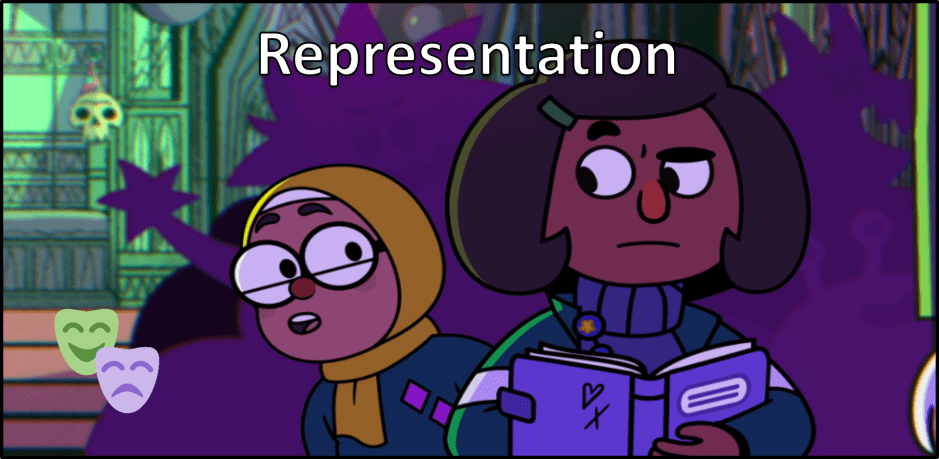
Geekly started a new deep dive series about Autism Representation in media. Our first post in that series was about Sheldon Cooper from The Big Bang Theory, and it was posted in May. Was it that long ago? Yikes! Well, Geekly’s back with another deep dive about Autism Representation. Today’s piece of media is the short-lived Netflix animated series, Dead End: Paranormal Park.
Hey, hey, Geekly Gang! Kyra Kyle here. As I mentioned in our previous Autism Representation post, I’m a late-diagnosed autistic person and ADHDer. Yes, you can have both. Ever since my diagnosis, I’ve been viewing media through a different lens, trying to see if a piece of media has good or not-so-good Autism Representation. I intended this series to be something Geekly released once a quarter. We’re getting this post right under the wire with Dead End: Paranormal Park because this series not only has an Autistic main character, but the other main character is transgender. I also happen to be trans and gender queer and intended to give Transgender Representation in media the same treatment. So today, we’re releasing two posts about Dead End: Paranormal Park.
Since Dead End: Paranormal Park only lasted two seasons (for a total of 20, 20-minute episodes), we’ll go through each pertinent episode in sequential order for both characters. Our subject for this post is Norma Khan, a 17-year-old bisexual and autistic Pakistani-American girl who gets a job at the park because of her adoration of the films made by character Pauline Phoenix. Already, I love Norma’s intersectionality. Let’s get started with Dead End: Paranormal Park’s first episode, “The Job.”

Season 1, Episode 1, “The Job”
We first meet Norma Khan in her room, decked out in Pauline Phoenix (the actress behind Phoenix, “Paranormal,” Park) paraphernalia: Pauline posters, Pauline bedsheets, and even a Pauline lamp. Norma has an episode of Dead End (one of Pauline Phoenix’s television shows) playing as she prepares for a job interview at Phoenix Park. Something tells me Norma listens to this show on repeat often. I’ve done the same. I may have audio taped cartoons (on cassette tapes) so I could play them at night to fall asleep. I’m sure Norma wouldn’t do anything like that. Wink.
Norma’s mother dotes on her. She worries more about Norma’s job interview than Norma does. She hugs and kisses Norma as Norma tries to break away. I can relate. We know little about Norma, but Dead End: Paranormal Park hints that Norma’s mother may want more affection than Norma is comfortable giving. This is in keeping with some autistic kids. This moment also suggests that Norma’s job interview may be her first time alone; it’s certainly her first step as an adult. Autistic people do tend to have a higher unemployment rate than the general population, and often, this is less about capability and more about finding the right work environment. It sounds like Phoenix (Paranormal) Park is Norma’s perfect job environment.

“The Job” sprinkles in some references to Norma’s hyper-fixations. In fact, when she believes she didn’t get the job at first, Norma flat out says, “Looks like I’ll have to find something else to hyper-fixate on for fifteen years.” Norma earns this line because she spews paragraphs of Pauline Phoenix facts while Norma and Barney are trapped in a haunted mansion. Only Norma doesn’t yet realize the two of them are trapped. She’s too busy info-dumping on Barney about her special interest. I watched this episode with one of my daughters, and she chuckled. You’re not like that at all, are you, Mapa? Yep. That happens sometimes. The train needs to reach the station before we can switch tracks.
Season 1, Episode 2, “The Tunnel”
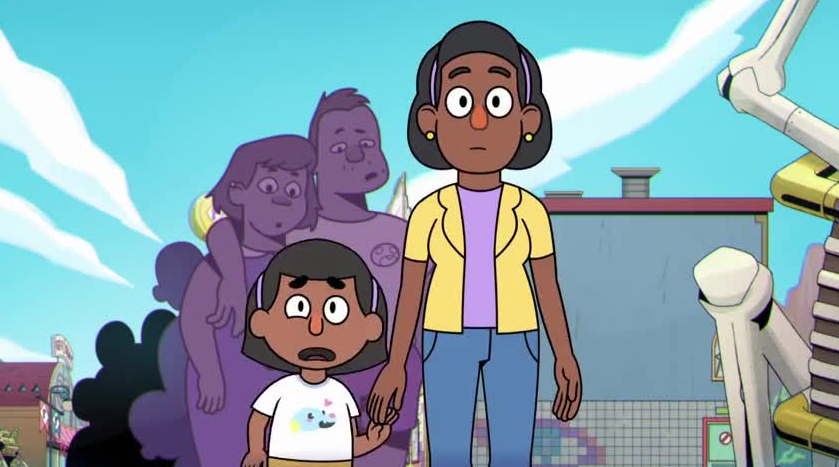
“The Tunnel” begins with a Norma flashback. She’s a child attending Phoenix Parks and in line to visit Buster Scruffs (one of the employees dressed as a mascot). Norma panics. Her feet sink into the concrete. While I’m unsure if this sequence is directly tied to an autistic shutdown (where an autistic person retreats from their surroundings) or if this scene is just a child reacting to too much stimuli (which can cause autistic shutdowns), Dead End: Paranormal Park does a fantastic job of showing Norma’s internal world.
When we shift to the present day, Norma storms into the haunted mansion. She doesn’t care that Pugsley can talk (a side effect of his former demonic possession) and is livid that Barney clocked into work before her. The group brushes past Barney, staying the night at the park, and promptly finds a gold pass. I love how she prefers to go to the park’s staff meeting when presented with the option to do anything in the park. Dead End: Paranormal Park drops another line of Norma obsessed with Pauline Phoenix, before she wishes for the three-hour version of employee orientation. I can attest that I could withstand a three-hour orientation on my special interest. This tracks for an autistic person.

What also tracks for autistic people is Norma’s odd eye contact. When Badyah Hassan (leader of the staff orientation) begins orientation, Norma info dumps and gives Badyah intense eye contact. Norma bores a hole into Badyah. That made me laugh. It’s so accurate. Many people believe that autistic people can’t make eye contact, when it’s just as likely that autistic people will make intense eye contact. In short, autism leads to odd levels of eye contact: none or too much. And of course, Norma takes over the orientation after Badyah sarcastically asks if she wants to do so. Norma puts on a performance voice (another autistic thing to do), and I felt called out. Both of my daughters recounted a similar instance with me at a board game cafe.
Season 1, Episode 3, “Trust Me”
“Trust Me” centers around a team-building exercise at the beach. Norma is reluctant to leave her mother’s car because she believes everyone at work hates her, while Norma’s mother counters with no one knows you. This is a great representation of an autistic side-effect, rejection sensitivity. Rejection sensitivity may occur when an autistic person has experienced so many instances where they said or did the wrong thing, or they just acted like themselves (and not like a neurotypical or person without autism), and got rejected, so the autistic person believes people hate them even when there’s empirical evidence to the contrary. I’ve received a pep talk from a loved one like the one Norma gets so many times, I’ve lost count. I love that Dead End: Paranormal Park touched on this subject.

Before “Trust Me’s” volta (the turn), we get a lot of Norma being literal. The team-building guru speaks in metaphors, and each flies over Norma’s head. Physical things don’t bind us. Yes, they can. The opposite of trust is fear. No, the opposite of trust is mistrust. I agree with Norma on that last one. Autistic people can be very literal. I got diagnosed with autism after my younger daughter was diagnosed (autism is hereditary), and my daughter would always answer with specific times whenever someone asked what time it was. For instance, it’s 4:18, instead of 4:15 or 4:20. We didn’t know when she was younger, but that’s an autistic trait. I still agree with Norma that the opposite of trust is definitely mistrust.
And I like how Dead End: Paranormal Park mixes up Norma’s affect. When she says, the opposite of trust is definitely mistrust, her voice is flat. Other times, she’s very expressive, overly so. Excellent! The montage of Norma screwing up every trust-building exercise is also excellent. Her forward trust fall had me in stitches.

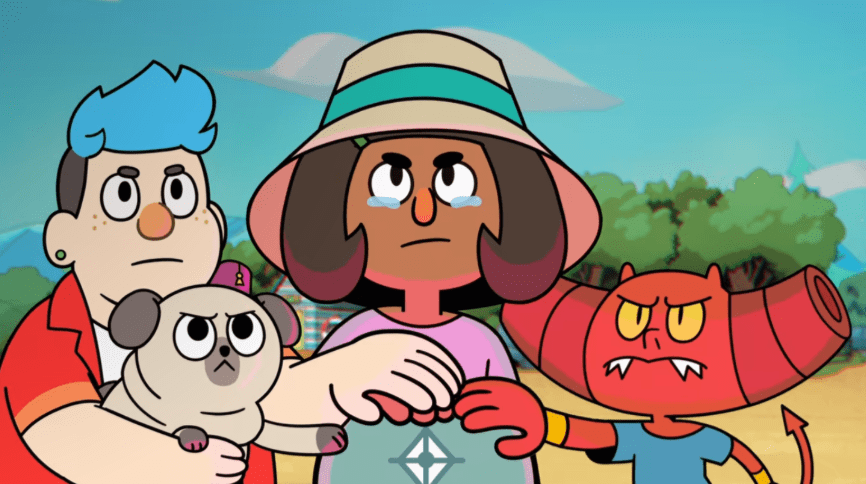
This next bit ventures into spoiler territory, but who are kidding? We’ve already shared some spoilers. The team-building guru is a fear demon in disguise, and he intends to feed on the gang’s fear. While everyone else enters a nightmare realm where their greatest fears come to life, Norma’s fear world is the real world. She worries about every interaction with people. She relives every social misstep. Eventually, Norma’s rejection sensitivity overwhelms the fear demon. I love how the animation style changes when we fully enter Norma’s perspective. It’s another subtle way Dead End: Paranormal Park portrays autism. The Norma we see in the picture above may be closer to how she views the world.
And that’s how autism works. It’s another way of viewing the world. Neurodivergent brains process things differently from neurotypical brains. This is another excellent example of autism representation. This may dovetail into Norma calling her coworkers by the attractions they monitor at the park. I like how most people take offense, but Badyah leans into her nickname death slide. Badyah’s the one who sits beside Norma on the beach and comforts her; Norma may have found a kindred spirit.

Season 1, Episode 4, “Night of the Living Kids”
“Night of the Living Kids” is more of a Barney episode. We get our first look at Patrick, Barney’s younger brother, who’s having an overnight birthday party at the park. Patrick plays Pin the Tail on the Dinosaur, and when Barney recognizes him, he takes cover. After Barney says that Patrick can’t see him, Norma doesn’t get the context and replies that he has the blindfold off now, so he can see Barney. Classic Norma.
And in classic Norma fashion, she finds the one kid at the party who’s as obsessed as she is about Pauline Phoenix. Vince even outbid Norma for Pauline memorabilia on an online auction. Norma finally has someone else she can talk to about her special interest. As Norma says, Finally, an intelligent conversation. The two’s conversation sets up the mystery of Barbora (not Barbera), Pauline’s angry and athletic stunt double. The two’s convo gets interrupted by children who lost all the sleep they ever slept, hence the episode’s name “Night of the Living Kids.”

Season 1, Episode 5, “The Nightmare Before Christmas in July”
“The Nightmare Before Christmas in July” takes a break from Barney and Norma and focuses more on their demon friend, Courtney. Courtney is stuck in the mortal realm, so Barney and Norma go on a devilish game show to snag them (Courtney) a ticket home. Note: I’ll mention this in the transgender representation companion post to this one, but the demon Courtney is non-binary/gender queer in the comics, but Netflix changed their pronouns from they/them to she/her; I’ll use Courtney’s preferred pronouns of they/them.
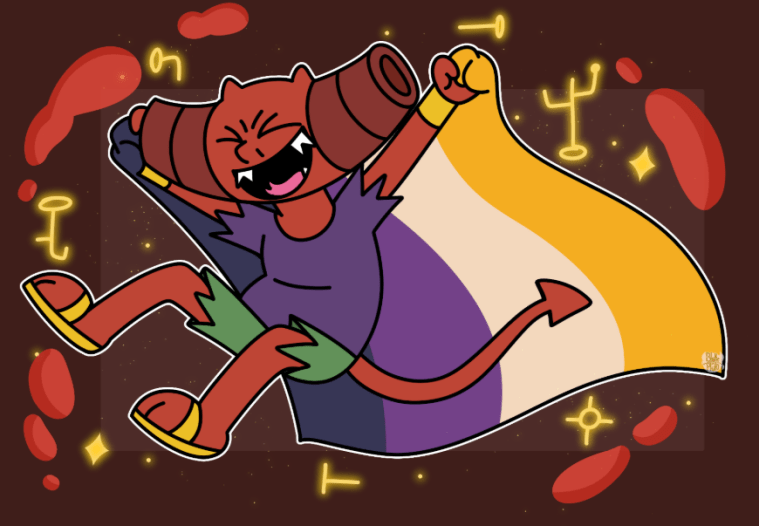
Even though “The Nightmare Before Christmas in July” is predominantly a Courtney episode, we get a classic Norma moment during the game show. When the demon host says the next leg is a “lightning round,” Norma shouts, Trivia. Nope. Not trivia, Norma. Actual lightning.

Season 1, Episode 6, “Wait Time: 22 Minutes”
“Wait Time: 22 Minutes” gets its title from the line for the newly opened Dr. Love Ride at the park. The Dr. Love Ride has been closed since before Norma was born, and naturally, she wants to experience the ride before spoilers flood her timeline. This is in keeping with everything we’ve learned about Norma. She and Barney get separated in the line because Norma takes the employee express lane, while Barney stays in the main line with Logan, who wants to make sure the wait time sign of 20 minutes is correct. Since Barney has a crush on Logan, he texts Norma incessantly.
In classic Norma fashion, she doesn’t get why Barney is freaking out, but it’s what she says that rings true for an autistic person. Barney’s in a line with Logs, so the danger seems minimal. Lol. Often, autistic people can brave large crowds if they have at least one person they know well. Norma doesn’t get Barney’s dread because she views Logan as a safe person to brave Dr. Love’s long line. Pugsley has to spell out the awkward social implications for Norma. I love this. I wouldn’t have been able to attend Pride if I hadn’t gone with some of my safe people. And I might’ve missed the social cues of Barney’s crush on Logan.

I also love Norma’s line to Barney. I’m the socially awkward one. Stop stealing my thing. The rest of the episode’s runtime, in reality, revolves around Norma, Courtney, and Pugsley possessing Barney and taking turns trying to woo Logan. Norma asks standard questions and gets frustrated when Logan answers them out of order. He needs to answer the questions in the order they were asked. I could see an autistic person getting frustrated by this, and the lesbian couple standing by Barney (possessed by Norma) bemoan that kids these days are too literal. Yeah. That tracks for an autistic person.

Throughout the body-swapping antics, Norma remains on task. What starts as helping Barney with Logan turns into saving Barney from the in-between, a place where possessed souls go. “Wait Time: 22 Minutes” ends with Norma finally getting on the Dr. Love Ride. She begins info-dumping to Logan as the ride begins, only to have the ride shut down as she’s about to enter. Awesome!

Season 1, Episode 7, “Norma Khan: Paranormal Detective”
The title “Norma Khan: Paranormal Detective” is a bit of a misnomer. At first, Norma takes the role too seriously. Norma’s covert scene with Vince (nice call back) is over-the-top, leading Badyah to say that the two of them are more suspicious than if they faced each other. Note: Norma and Vince sit on with their backs to each other, and Vince struggles to give Norma the magazine featuring Barbora that he mentioned during “Night of the Living Kids.”

Norma is blinded by her obsession with Pauline Phoenix that she ignores all the evidence that clearly paints Pauline as the one behind the missing Pauline impersonators. Tunnel vision can occur for autistic people. I’ve been blinded by my special interests. While this tracks for an autistic person, Badyah proves to be the better “paranormal detective.” I love Norma’s detailed evidence board. The picture above is a zoomed-in segment of that board. Trust me, Norma goes into excruciating detail, making her an autistic queen.
Norma refuses to view Pauline as a threat even at the end of “Norma Khan: Paranormal Detective.” It takes Pauline Phoenix’s ghost charging at Norma before she jumps into a haunted television screen. I’m sure this will end well.
Season 1, Episode 8, “The Pauline Phoenix Experience”
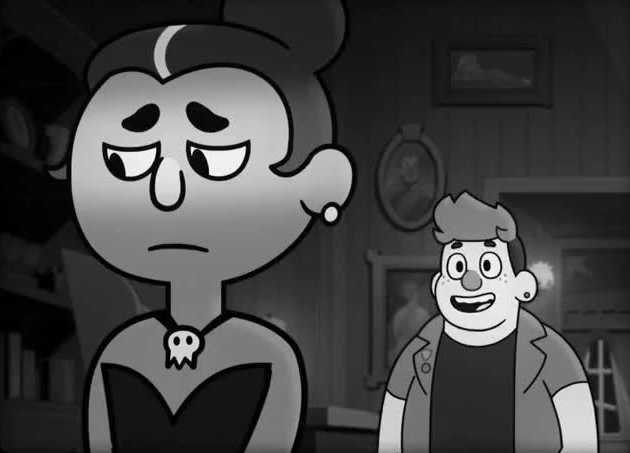
“The Pauline Phoenix Experience” casts the gang in Pauline’s former roles. That’s why we get that awesome black and white picture above. Even though this episode does a lot of heavy lifting for the Dead End: Paranormal Park’s main storyline, it does reveal the depths of Norma’s Pauline Phoenix fandom. She figures out they’re in Pauline’s movies/TV shows before Barney, but plays along because it’s her dream come true. She knows the lines. She’s probably heard them millions of times and this is her time to shine.

Norma goes as far as trying to “kill” Barney because her character tries to do so in the films. Talk about commitment. But she breaks when she comes to terms that Pauline was using her and all her fans. Autistic people tend to have strong moral compasses that can be obscured through the lens of fandom. By the end of this episode, Norma breaks down, but after she mourns the loss of her idol, she’s ready to exact change.
Season 1, Episode 9, “The Phantom of the Theme Park”
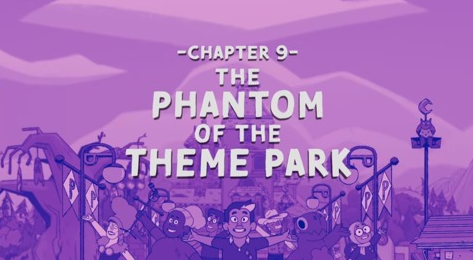
Dead End: Paranormal Park is a queer version of Scooby Doo. The park is based on a drag queen. It was only a matter of time before we got a musical episode. “The Phantom of the Theme Park” takes inspiration from several musicals, but its main influence, naturally, is The Phantom of the Opera. I love this episode. The music is spot on, and the musical does a great job of forwarding the action to season one’s conclusion. While “The Phantoms of the Theme Park” doesn’t show new aspects of Norma’s for us to discuss at length, it follows through on Norma’s strong moral compass.
She sacrifices herself to be Pauline Phoenix’s new vessel and hatches a plan to end the park’s suffering. Even though the plan doesn’t go as planned, Pauline is banished, but now we have the return of Temeluchus. Uh oh!
Season 1, Episode 10, “Into the Fire”
I’ll level with you. I can’t believe I’ve gone this far without mentioning Norma’s odd speech patterns. I grew up in the South and don’t sound like it. Sure, some of this is due to my moving away from the South, but not entirely. Even while I was living in the South, folks wondered if I had a foreign accent. Norma’s odd speech pattern is spot on.
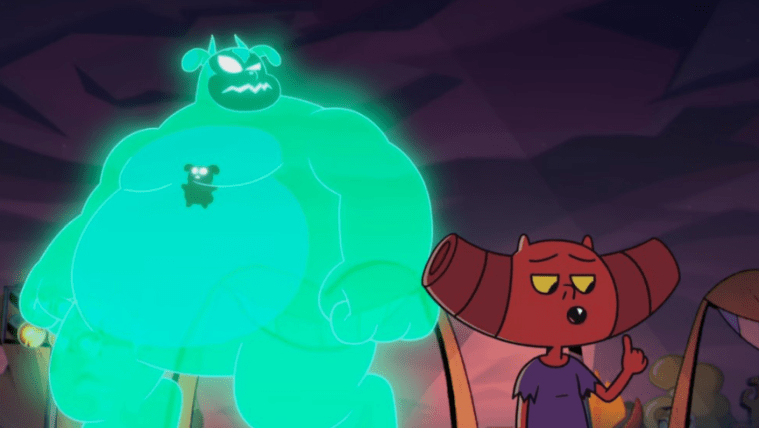
Norma takes charge during the demon invasion. She reverts to calling park employees by the attractions they monitor. Death Slide and Norma to the rescue. Demon lords Zagan and Temeluchus battle for surface world supremacy. Demonic fun ensues, but everything turns out okay in the end. The demons leave. The humans are no longer turned to stone. After Phoenix Parks returns to normal (relatively speaking), the crew discusses what to do next, unaware of someone watching them. It’s a citizen of heaven.
But that will wait until season two.

Quick Break and Thank You
Thank you for reading up to this point. You’re amazing. Since the Dead End: Paranormal Park’s first season set up its characters well, the second season explores the other planes of existence, specifically heaven, so each individual episode’s write-up should be shorter. Thanks again for reading, and let’s get back to the show.

Season 2, Episode 1, “Take the Angels Bowling”
“Take the Angels Bowling” gives us our first full look at an angel, Fingers, who is a massive hand with a face in its palm. When Fingers extends its body (a long arm stretching from heaven), it resembles Gord’s, the red-skinned demon, who looks like a worm. Coincidence?
Most of “Take the Angels Bowling” sets up the impending denizens of heaven descending on Phoenix Parks, but there are a few wonderful Norma moments. Her friend Badyah knows Norma wouldn’t want to wear used bowling shoes, so she bought her a fresh pair. That’s thoughtful. Judging from the smell and look of the loaner bowler shoes, that’s a good call by Badyah. Norma and Badyah have started a podcast about ghosts and demons. Very on brand. Norma’s more interested in setting up a podcast schedule than bowling. Also on brand. And when Badyah info dumps about the finer points of bowling, Norma asks if that’s what she sounds like to Badyah. Awesome!
Season 2, Episode 2, “Evil Twins Are People Too”
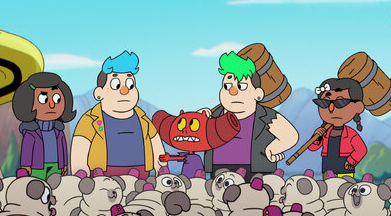
“Evil Twins Are People Too” steers into the television trope of a character having an evil twin. Barney and Norma’s twins are the worst parts of themselves, but this becomes a blessing for Norma. She fears that Badyah isn’t as into their podcast or at least as into demons as her, which is true, but after an unpleasant exchange with evil Norma, Badyah tells Norma that she does the podcast to spend time with her. Norma makes the mistake of tying her relationship (spoiler: Norma is crushing on Badyah) with Badyah’s liking or disliking her special interest. This is fantastic.
Honestly, I’ve done the same at times. Because an autistic person views their special interest as an intimate part of them, they can tie relationships (or a relationship’s depth) to these interests. I even like how long it takes Norma to realize she has feelings for Badyah. There’s a reason I often talk things out to myself. I love this inclusion.
Quick Point: Badyah mentions that Norma does all the demon sounds during their podcast. This is most likely an example of echolalia, the repetition of phrases or noises that autistic people can make. I would guess that Norma makes these noises outside the podcast.

Season 2, Episode 3, “The Trials of Barney”
“The Trials of Barney” puts Norma’s story on the back burner. Secretly, Barney joins a demonic gym and trains to become a pro wrestler in the demon league. Barney proves to be one heck of a heel, earning the respect of most demons at the arena, especially his opponent, Asmodeus. Near the end of the episode, Badyah compliments Barney and then asks if he’ll be on hers and Norma’s podcast, proving that Badyah supports Norma’s special interest (demonology) and finds some enjoyment from it. Personally, I’ve found this to be the case. One’s loved ones can’t go long hearing someone enthuse about a topic without getting invested.
Random Note: The rock song (“Fight Like a Demon Boy”) that plays during Barney’s training montage slaps.

Season 2, Episode 4, “Eat the Parents”
“Eat the Parents” features Logan meeting Barney’s parents. For this reason, Norma doesn’t feature as prominently, but we get another round of her using a hilarious, ornate voice. Maître de Norma is so over-the-top it makes Barney question what’s wrong with her. This is so on point for many autistic people. You either get zero inflection or all the inflection in the world. I also like that Norma’s dream dinner guest is what she thinks is an adorable spider skull demon. To each their own, I guess, but this shows the depths of Norma’s special interest.
And clearly, romantic comedies were an obsession for Norma at some point. She goes full army general while discussing how crucial meeting one’s parents during a Rom-Com plotline is. I love how “Get Married” goes straight to “Buy Matching Coffins” on the timeline. Norma has watched enough Rom-Coms to know that all of them end after the couple gets married.
Season 2, Episode 5, “The Ride of a Lifetime”
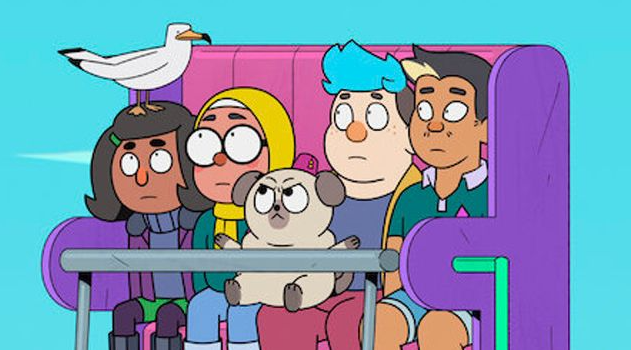
Hurt feelings and a lover’s spat abound in “The Ride of a Lifetime.” Norma plans to tell Badyah how she feels about her, and Pugsley sees the conversation is not going well. Pugsley spends the entire episode’s runtime trying to avoid calamity of all kinds, physical and emotional harm, but you can’t rewind time to execute the perfect world. While this episode focuses on Norma’s love life, it still manages a callback to Norma knowing how long the Ferris wheel ride lasts. Excellent!
Badyah thinks Norma wants to cut her from the podcast, so she tries to prevent Norma from talking. Badyah doesn’t know what to think when Norma tells her that she “like-likes her.” I love how Dead End: Paranormal Park handles this scene. Badyah says she thinks she’s straight, but she doesn’t think about it too much. The showrunners have said that Badyah could be queer, but she comes out in a different way. I could also see Badyah as aroace (aromantic and asexual, where you don’t tend to have a lot of romantic feelings or sexual attraction). I would’ve loved to see where Dead End: Paranormal Park chose to take Badyah’s character.

Season 2, Episode 6, “My Super Sweet 1600”
Norma spends most of “My Super Sweet 1600’s” runtime avoiding Badyah, and she doesn’t attempt to hide her Badyah aversion. This tracks for an autistic person. Many of us, including me, have a difficult time masking irritation. I love how even when Norma attempts to “act normal,” her eyes narrow to pinpricks, and it gives away her emotions.
Badyah tries to smooth things over (from her rejecting Norma’s romantic advances) by hooking up Norma and the Gazan, the demon/vampire, celebrating her Super Sweet 1600 birthday. Gazan and Norma strike a friendship, and their heart-to-heart talk helps Norma see what she needs: space. “My Super Sweet 1600” ends with Norma quitting her job at Phoenix Parks. Gasp!

Season 2, Episode 7, “All Dolled Up”
Dead End: Paranormal Park does a great job of showing many ways a person can come out (with their gender identity and/or sexual orientation) and the responses that may occur when one does. More on that in a minute, but we’re talking Norma’s autism representation right now. “All Dolled Up” gives us a window into Norma’s childhood. We spend more time in her childhood home, see that she’s taken down all her Pauline Phoenix paraphernalia, but her mom clings to the Norma she used to know, the Norma whose dream job is Phoenix Parks, and she quit.
Norma’s mom cooks Pauline pancakes. This was one of Norma’s safe foods, as she ate it every morning growing up. This is definitely an autistic thing. Even as an adult, I still have safe foods, foods I know I can turn to for their texture, flavor, or even lack of flavor. My daughter, whose autism diagnosis led to my late diagnosis, ate chicken tenders/nuggets for every meal she could. I chuckled when Norma switched from pancakes to chicken tenders. Excellent.
By this point, Norma’s personality is set. Her status as an autistic queen is secure. “All Dolled Up” gives us the revelation that Norma is bisexual. I’ve said it before, but I love Dead End: Paranormal Park’s intersectionality. Norma’s scene where she comes out to her mom is heartwarming. It differs from Barney’s, and that’s the point. This show does what it can to show the spectrum of outcomes of coming out to one’s parents. We even learn that confident Logan is not yet out to his parents.

Season 2, Episode 8, “The Other Side”
“The Other Side” shows what Barney and the rest were doing during Norma’s doll infestation from the previous episode. Norma shows up at the end, making amends with Badyah. The two are friends, but Norma needs space. Fair.
This episode sets up the main conflict for Dead End: Paranormal Park’s second season. We’re headed to heaven, floor four.
Season 2, Episode 9, “Going Up”
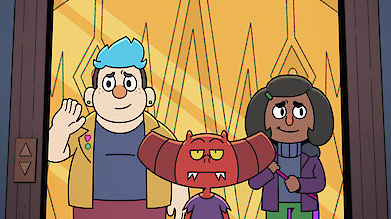
Before we get into spoilers–there’s little chance I can cover “Going Up” without revealing some plot points–let’s discuss some quick Normaisms. Norma already has hers and Badyah’s next four hangouts and topics of conversation scheduled in her diary. While I don’t plan my days in this much detail or that far in advance, I am writing this deep dive in June, and it’s scheduled for mid-September. Yikes! Maybe I do plan that far in advance. Autistic people do like a regimen. I also like Norma’s wonder at heaven when she first arrives. As she says, I’ve spent so much time studying demons; I didn’t think about what was going on up here. Again, tunnel vision. I wouldn’t have Norma any other way.
Now, we get into spoilers for a show that’s been around for three years. You’ve been warned. Courtney learns they’re a fallen angel. Their “horns” are a broken halo, and they’re doomed to prune the universe’s timeline of all “unwanted” branches. While bleak in nature, this plot point metaphorically plays into Dead End: Paranormal Park’s main characters in profound ways. Fallen angels (angels whose halos are broken) no longer fit what it means to be an angel, so Courtney has more in common with Norma than they may have first thought. As an autistic person, Norma doesn’t fit in with neurotypical people. We’ll go more into the Barney side with the trans representation post, but Courtney’s subjugation in heaven rings true for a lot of autistic people.
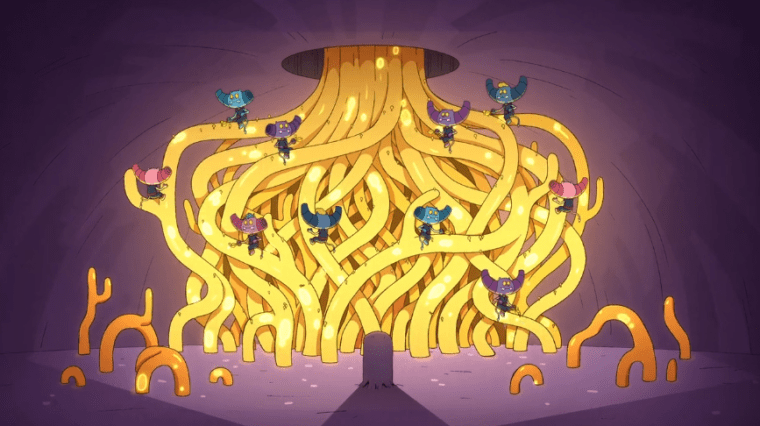
Courtney isn’t allowed to be Courtney. Their personality–or any personality–runs counter to what the heavenly society can accept. There’s a lot to unpack with heaven’s insistence that everyone must conform and follow preconceived notions. One could rewatch Dead End: Paranormal Park multiple times and find new angles. This is the mark of a great show. One final point: I love how Barney asks if he can hug Norma at the end of this episode. Barney shows Norma respect with this question; Norma doesn’t always like human contact. I’m with you, sister.
One more major spoiler: Pugsley becomes The Watcher. The Watcher is the all-powerful heavenly sorcerer who serves as watchdog for anyone who steps out of line. Pugsley loses himself behind this onion-head mask. I don’t know if this was the intent, but Pugsley is literally masking. Masking for autistic people is when one attempts to look less neurodivergent. Dead End: Paranormal Park may be geared for kids, but it has many layers.

Season 2, Episode 10, “The Watcher’s Test”
“The Watcher’s Test” does for Pugsley what “Going Up” did for Courtney. Barney and Norma’s journey can be seen through Pugsley’s. Since this is our autism representation post, we’ll focus on how Pugsley’s journey mirrors Norma’s. Again, we’ll be going through some major spoilers, but if you’ve made it this far, spoilers won’t be that big of an issue.
Heaven (not sure if the character commanding Fingers is God, but they’re certainly from heaven) commands Pugsley to become The Watcher. Heaven insists there is no other way of thinking. Any other ways of thinking are incorrect, and that’s where Pugsley’s internal battle with Fingers’ programming mirrors autism. Most of the world runs on the neurotypical’s (someone who isn’t autistic) way of thinking, hence the term, neurotypical. Pugsley doesn’t think in the same way as Fingers and their boss (or bosses). Instead of allowing Pugsley’s different way of viewing the world, heaven forcefully changes his mind.
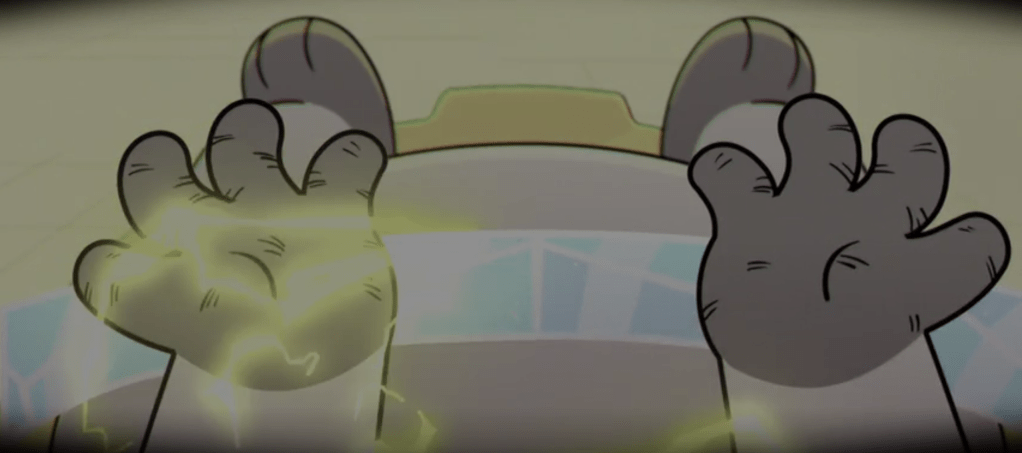
Furthermore, Applied Behavioral Analysis (ABA) therapy, a therapy often used to change autistic people’s behavior, can be compared to animal (or dog) training. I don’t know if a link with Pugsley and his heavenly training (as a metaphor for ABA therapy) was Dead End: Paranormal Park’s intention, but if it was, that’s brilliant. Even if that wasn’t the show’s intent, the world’s a better place when Pugsley’s allowed to be Pugsley, and our world could be better if accommodations were made available for autistic people instead of forcing autistic people into boxes–or onion-shaped masks.
Random Thought: The dedication to Leon Fechner (one of the show’s animators) during Dead End: Paranormal Park’s closing credits is touching. We leave season two with Pugsley wandering a plane that isn’t heaven, hell, or Earth. This pays homage to Fechner, who had slipped into a coma and died before the show was completed. Rest in peace, Leon Fechner.

Closing Thoughts
Phew! This was long. It’s even longer if you read the companion piece, Dead End: Paranormal Park’s Transgender Representation. While this show’s geared toward children, Dead End: Paranormal Park does a stellar job with autism representation. I’m not the first to cite Norma Khan as one of the best autistic characters. The show handles Norma’s autism with grace and style. I love Dead End: Paranormal Park’s intersectionality. Each character is thoughtfully layered.
If you have any other movies or television shows that depict autism that you’d like us to cover, let us know in the comments. If you’ve made it this far, you’re amazing. We all know it. Thank you for reading, and wherever you are, I hope you’re having a great day.





 jkgeekly.com