My Favorite Storytelling Elements Spider-Man “Kraven’s Last Hunt”

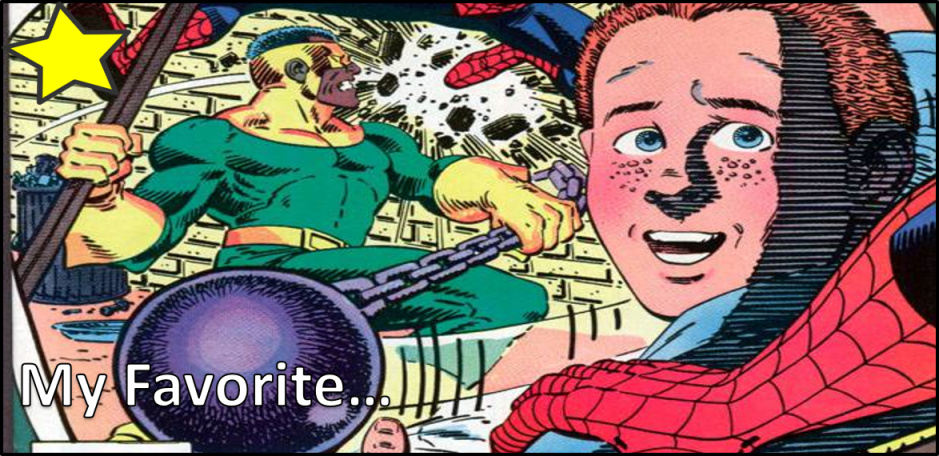
Most critics dub “Kraven’s Last Hunt” the greatest Kraven story ever told and one of the best Spider-Man stories. It features plenty of comic book action, but the character studies are what set “Kraven’s Last Hunt” from other Spidey tales.

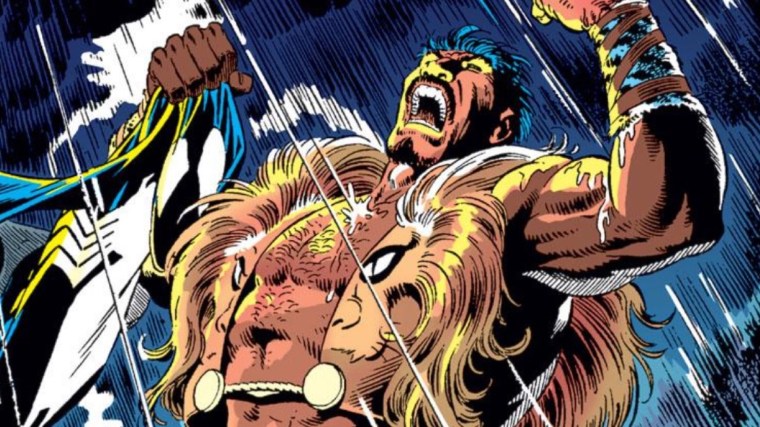
The world no longer appreciated Kraven’s physical prowess. It no longer marveled at his courage, and most animal rights activists condemned him—he was a hunter after all—and the world he lived in no longer made sense. Before he met Spider-Man he’d never known defeat or humiliation. Now Kraven has fallen ill. He knows the end is near, but before he goes, he vows to reclaim his honor and prove his superiority over Spider-Man. He went out for one last hunt.

spider-man_kraven

“Kraven’s Last Hunt” embraces Kraven’s personal struggles. It blends aspects from classic literature and recurring themes to find a deeper truth. Kraven doesn’t just want to kill Spider-Man. In fact, Kraven doesn’t kill Spidey when he has the chance. He buries Spidey alive on his complex and assumes his identity. There’s even a moment where Kraven rescued Mary Jane, Spidey’s new wife, and she can see through Kraven’s disguise. Kraven falls short of being a hero. He never was one. This is a story that questions what it means to be a hero.

Kraven also thinks he can drive Spider-Man past the point where he ceases to be a hero. A rat-like monster named Vermin stalks the streets of New York while Spidey rests six-feet under. Kraven beats the creature unconscious, brutalizes him, and takes him prisoner. After Spidey comes to, he wants revenge for the time Kraven took from him. His anger leads him to Vermin, who Kraven uses as pawn to see if Spidey is strong enough to do unto Vermin what he did. Spidey proves that he’s strong enough not to.

spider-man_kraven_in_spider-mans_suit

There are so many themes of what makes a hero and what makes a good person that it’s easy to see why “Kraven’s Last Hunt” is high on most critics lists of Spider-Man stories. It not only portrays Kraven at both the height of his powers and the lowest, it does a great job in its portrayal of Peter and Mary Jane’s young marriage.

Readers see how MJ deals with Peter’s disappearance and how she’d react if Peter ever died in action. It’s a great window into the life of someone who must stay up late, worrying if their loved one is okay. In short, “Kraven’s Last Hunt” is a triumph and a must read for any Spider-Man fan or Spidey newbie.

Is there anything about “Kraven’s Last Hunt” that you liked that I didn’t mention? If there is, message me and I’ll give you Jim’s phone number to complain to him. Or you could let us know in comments.

Thor Starter Stories

Doth mine eyes deceive me? T’would be folly to journey the path of Asgardian tales alone.

Okay. I can’t do that for more than two sentences. Hi, it’s your uncle Geekly, and if you can’t tell, this week’s starter comic book stories will feature the Avenger who sounds as if he belongs to an oafish Shakespearean acting troupe. Thor!

Many comic fans wouldn’t place Thor as one of the most important Marvel creations, but I’d argue that the Jack “The King” Kirby and Stan “The Man” Lee character did as much for Marvel’s universe as the Fantastic Four or at least his tales gave context to the Fantastic Four’s. The dysfunctional, loving family may have introduced readers to the Marvel universe’s greatest reaches due to their exploits, but Thor is a citizen of one of these far reaches. He gives readers a different perspective.

It should come as no surprise that when the Marvel Cinematic Universe needs an alien perspective, it often turns to Thor or another Asgardian. Speaking of the movies and television shows, I’ll be focusing more on Thor stories for new readers who have been introduced to the character by the MCU and that means that there will be a notable omission: Kirby and Lee’s series run.

Boo! Hiss! Uncle Geekly isn’t a true believer.

Okay, I may not include it in the main list, but I’ll give Kirby and Lee’s run an honorable mention here because it’s some of their best work and does a great job of setting up most of the series’ regulars. Thor Epic Collection: The God of Thunder is a great place to find one of the best mixes of sci-fi and mythology. It’s like Thor and the other Norse gods were meant to be reinvented by Lee and Kirby.

With that out of the way let’s get to the stories that may remind readers of the movies.

thor the mighty avenger vol 1

Thor: The Mighty Avenger Vol 1 (written by Roger Langridge/art by Chris Samnee; 2010-2011)

We’ll start with a short read. Thor: The Mighty Avenger didn’t last long enough, but it does a great job building the relationship between Thor and Jane Foster. Don’t worry. Readers can find some action, but it often takes a backseat to Thor’s personal life and that’s a major point in a lot of Thor books and a focus for the first Thor movie.

thor j michael straczynski

Thor (written by J. Michael Straczynski/art by Olivier Coipel; 2007-2011)

Thor had disappeared from the Marvel Universe for many years before Straczynski and Coipel brought him back in a big way. He and the rest of the Asgardian gods were reborn in this run. Lady Loki—you’ll see plenty of people dressed as her at Comic Con—made her first appearance in this storyline as did changing the thunder god’s base of operations west of the Mississippi (specifically Broxton, Oklahoma), which helped combine elements of the fantastic and mundane.

The Marvel Cinematic Universe may have changed where Thor landed to New Mexico, but the earthly elements in this story are the basis for the earthly ones in Thor.

avengers disassembled thor

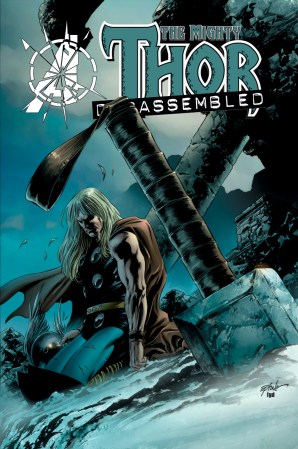
Avengers Disassembled: Thor (written by Michael Oeming/art by Andrea Di Vito; 2004)

There’s a reason Thor vanished from the Marvel universe for several years before Straczynski and Coipel brought him back, and Avengers Disassembled: Thor is it. Ragnarok has been explored in the Marvel universe before, but the basis for Thor’s part of Thor: Ragnarok comes from this section of the crossover event.

This comic felt like a movie waiting to happen, but if you’re thinking that it’ll be as light-hearted as Thor: Ragnarok, think again. This is a much somber tale.

thor god of thunder

Thor: God of Thunder (written by Jason Aaron/art by Esad Ribic; 2013-2014)

In deference to Jim I won’t include Jane Foster as Thor when I discuss Thor: God of Thunder. He may have to write an unpopular opinion or another article of that ilk explaining why he doesn’t care for different characters donning the costumes of classic superheroes in the future. But before Jane took the mantel, Thor: God of Thunder was epic.

It made Thor a rock star. It showcased the character’s raw power and with stories that explored Thor as a brazen youth, it reminds readers of the immaturity Thor sometimes displays in the movies.

the mighty thor walt simonson

The Mighty Thor (stories and art by Walter Simonson; 1983-1986)

It’s hard to find a place for Walter Simonson’s run on Thor. Many fans would dub his series run as the definitive Thor.

Simonson built on what Lee and Kirby started. The fusion of sci-fi and mythology grew. Classic battles with villains like Hela and a version of Loki similar to the movies can be found here. Even the—shudder—villain of Thor: The Dark World Malekith comes from Simonson’s run. If you want a better Malekith tale, check him out in the original comics.

Simonson is the one Thor creator who had the stones to transform the main character into a frog and make it amazing. These stories remain arguably the character’s highest point.

That’s my list for readers who are new to Thor comics. Great Jim Plath’s beard those were terrible choices. Unleash hate mail on the writer from Broxton. Or you can leave a comment. If you’d like access to the Bifrost, subscribe for new content.

Wolverine Starter Stories

Uncle Geekly may be a little rusty with getting back into the swing of things, so I’ll kick off this year’s starter list with someone who’s the best at what he does, but what he does isn’t nice.

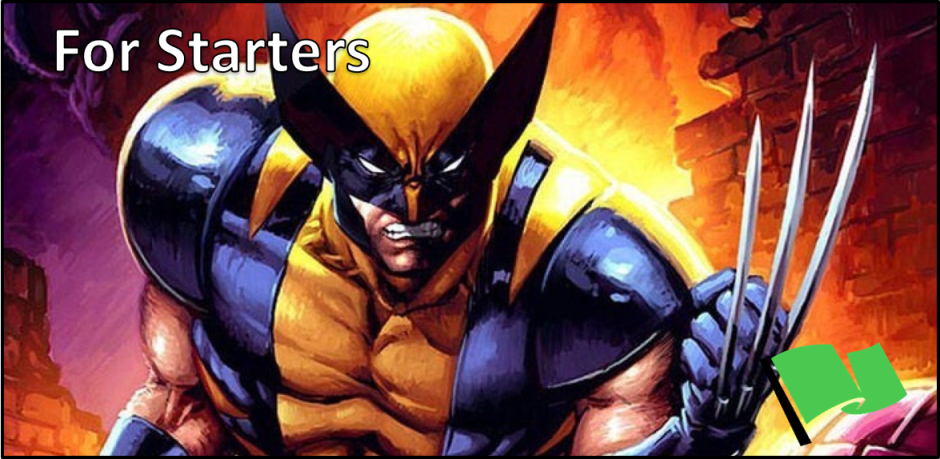
Wolverine invades the Marvel’s comic book universe. He may not have as long of a history in the comics or in films as characters like Spider-Man or even the Hulk (I’m including made-for-TV movies here), but Logan’s adventures bring droves of fans to comic book shops. It can get tricky with where new readers should start with the Canucklehead—for the newbie, that’s a fusion of the word Canuck or Canadian (Wolverine’s homeland) and knucklehead—but your uncle Geekly will set you on a good path to get to know Marvel’s number one furball.

Wolvie got his start in the Incredible Hulk #181 (1974), and he famously joined the X-Men with Giant-Size X-Men #1 in 1975, but I won’t focus too much on Logan’s X-Men stories. I’ll try and stick with his solo adventures as he’s become a comic book superstar in his own right.

I’ll also try and suggest a reading series that goes with the character’s timeline, instead of the dates in which the stories were released. This can get sticky as Marvel writers like to jump back and forth through time and space. I’ll do my best at navigating.

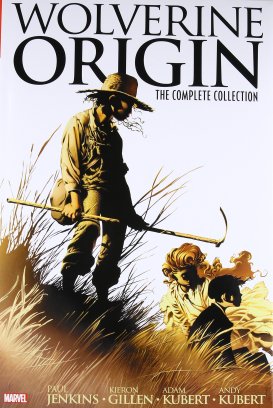
wolverineorigin

Origin #1-6 (written by Bill Jemas, Paul Jenkins, and Joe Quesada/art by Andy Kubert and Richard Isanove; 2001-2002)

For decades Marvel refused to reveal little about Logan’s past prior to the Weapon X Program, but that all changed after Hugh Jackson made Wolverine a household name in the X-Men movies. Marvel realized if they didn’t give Logan an origin, the movies might beat them to the punch. So, the mini-series Origin was born.

Origin goes back to Logan’s childhood in the 19th century. That’s right, he’s that old. I won’t go into too many details, but Origin shows most of the character’s ancient past: Wolverine’s real name, his parents, his first berserker rage, and how he became the mononymous Logan.

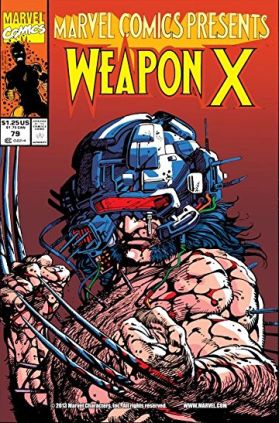
marvelcomicspresentsweaponx

Marvel Comics Presents #72-91: Weapon X (story and art by Barry Windsor-Smith; 1991)

Origin may have been Logan’s true origin story, but most of the character is defined by his time as Weapon X.

Only the prologue and part of the final chapter in this story are told from Wolverine’s perspective. The bulk of Weapon X follows three members of the Weapon X team and much of the story plays out like a slasher film, featuring the bladed berserker.

If you’ve seen the movies, but haven’t read the comics, you’ll notice references in X-Men 2 and X-Men Origins: Wolverine.

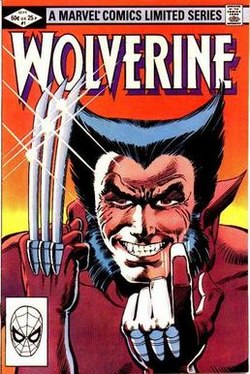
wolverinemini-series

Wolverine Original 4-Part Mini-Series (written by Chris Claremont/art by Frank Miller; 1982)

When the X-Men was revamped in 1975 Wolverine wasn’t supposed to be the series’ star—heck, he wouldn’t show up on covers for months at a time—but Chris Claremont’s portrayal of the character made him a fan favorite. 1982’s Wolverine limited series marked the first time Marvel ever made a limited series—it’s a comic book industry standard now—and it’s the first time that Claremont used the words I mentioned in the beginning of this post to describe Logan: “I’m the best there is at what I do, but what I do isn’t very nice.”

In this series Logan travels to Japan. The story plays out like a samurai redemption, and many familiar elements find there way here. Logan’s love interest Mariko will appear several times in various timelines and universes. Frank Miller included The Hand in Wolverine, and they’ve been in numerous episodes from the Marvel/Netflix series of shows. The second Wolverine film (simply titled The Wolverine) also pulled a lot from this classic.

kittyprydeandwolverine

Kitty Pryde and Wolverine #1-6 (written by Chris Claremont/art by Al Milgrom; 1984-85)

Wolverine has a thing for taking young, female members of the X-Men and becoming their mentors—in a non-creeper way, I swear. He mentored Jubilee in the comics and 1990s cartoon. He mentored Rogue in the first X-Men film. He would mentor Armor in the late 2000s. But Wolverine’s first mentee was Kitty Pryde in this mini-series.

There are several modern comic book fans who wouldn’t get why Kitty Pryde was that popular. Kitty Pryde and Wolverine brought her notoriety. Prior to this series, Kitty was little more than a spoiled, rich kid, but she grows up fast here as she’s torn down and built back up with the help of Logan. This is the moment Kitty Pryde became Shadowcat. It’s also the first time fans saw Logan’s “softer side.” Sure, he’s a killer, but he’s a killer with a heart of gold.

wolverinenotdeadyet

Wolverine: Not Dead Yet (written by Warren Ellis/art by Leinil Francis Yu; 1998)

If you can’t tell, Logan is the king of Marvel mini-series, and Wolverine: Not Dead Yet is another example. I included this one mostly because there aren’t that many good Wolverine stories where Logan has bone claws and Logan’s bone claws added a leather-toughness to the character that goes missing whenever his claws have their adamantium.

Wolverine: Not Dead Yet takes place in a time after Fatal Attractions where Magneto sucks the adamantium out of Logan. This mini-series can be a little uneven at times, but it’s one of the best bone-claw Wolverine stories, and bone-claw Wolverine always had a more animal nature that made him more susceptible to his berserker rages. It’s a Wolverine that lives more on the edge.

oldmanlogan

Old Man Logan from Wolverine #66-72 and Wolverine: Giant Size Old Man Logan #1 (written by Mark Millar/art by Steve McNiven; 2009)

Mark Millar may be one of comics most prominent creators this century, but his work is either a classic like The Ultimates and Kick-Ass, or it devolves into childish shock value. Old Man Logan can be characterized as both.

It’s set in an alternate, dystopian future where most superheroes are dead, and the United States has been conquered and divided up among the world’s supervillains. Wolvie gave up superhero work long ago, but he’s convinced by former Avenger Hawkeye to embark on a road trip and collect an item that could save humanity.

Yeah, this story can be bonkers and a mess, but it’s a great read. It also doesn’t hurt that the movie Logan borrows just enough from this story with its “road trip” and dystopian future. Old Man Logan just happens to be the current (current as of this write-up) version of Wolverine. This series is where this version of the character began.

That’s my list for readers who are new to Wolverine comics. Did I get the list right or did I pull a Canucklehead? Let me know in comments.

My Favorite Storytelling Element: Spider-Man “The Kid Who Collects Spider-Man”

Superheroes visiting terminally ill children may be a reality in the 2010s—Spider-Man: Homecoming’s Tom Holland has even visited children in the hospital—but in 1984 when “The Kid Who Collects Spider-Man” was first published (The Amazing Spider-Man #248), the Make A Wish foundation was barely three years old.

The story had some exploit of Spider-Man’s, but no one remembers what battle Spidey fought. Readers latched onto a kid named Tim who suffers from leukemia and only has a short time left. All Tim wants is to meet his hero. Spider-Man gives him his wish.

Part of what makes “The Kid Who Collects Spider-Man” great is Tim’s wish fulfillment. It’s a short human-interest story that writer Roger Stern made Will Eisneresque, and that is a fantastic element of the story, it dwarfs any battle, but I what I liked most happened after Spider-Man sees all the memorabilia the kid has collected (kinescopes of Spidey’s early TV appearances, a whole album of The Daily Bugle’s retractions, and bullets from a crime foiled by Spider-Man), and the kid asks Spidey who he is as Spider-Man’s about to leave. This kid loves him.

Spidey hesitates but figures the kid won’t tell anyone his identity, so he takes off his mask and identifies himself as Peter Parker. What Spidey didn’t expect was that by doing this it would lead to him telling the kid how he became Spider-Man. Part of him wants the kid or someone to know his secret.

He imagines the kid will hate him after he tells him how his negligence led to his uncle’s death, but it doesn’t. The kid hugs him and a reassures him. It’s okay for a hero to make mistakes. For a moment, it’s okay for Spider-Man to be Pete.

During this holiday season, I hope you know that it’s okay to make mistakes so long as you learn from them. It’s also okay to take off any mask you may wear and be yourself. Take care and be nice to each other.

Superman Starter Stories

Standard Issue Comic Book Geek Jim—that’s SICBG Jim to you—is back for another Starter Stories article. He rambled on about “truth, justice and the Geekly way,” and I told him he could commandeer the site if he didn’t preach Superman to me. Okay. Superman—the Standard Issue Comic Book Superhero—doesn’t get enough love. Shine on, you Crazy Kryptonian.

Superman is my favorite superhero. It’s hard to come up with a starters list for him, though, because so many of his best books are retellings of his origins, or Elseworlds stories that can’t be considered canon. With that in mind, here are the titles I recommend for approaching the character and better understanding where he is today.

Superman_Birthright

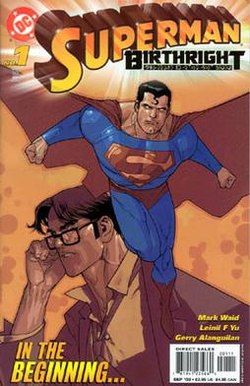
Birthright (written by Mark Waid/art by Leinil Yu; 2003-2004)

 Superman: Birthright is a good place to start with Superman. It’s a reimagining of Superman’s origin that includes a lot of what’s part of canon today. Maybe most notably, the idea that the “S” on his chest isn’t an “S,” as “Man of Steel” famously told us. Birthright sets the stage for Krypton to be used as more than a passing point of interest in Superman books. Mark Waid is always a good bet.

Superman_What's So Funny About Truth, Justice, and the American Way

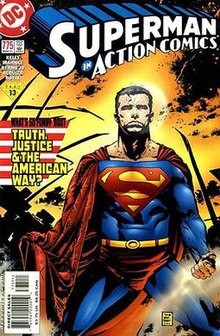
What’s So Funny About Truth, Justice, and the American Way? (written by Joe Kelly/art by Doug Mahnke and Lee Bermejo; 2001)

I love this one because it wrestles directly with so much of what people say is wrong with Superman. It’s a defense of his optimism and an example of how his real powers aren’t in his strength, speed, or invulnerability, but in what he has the power to show humanity about itself. It’s not an attempt to retrofit the character to make him more interesting to modern audiences, but an exploration of what everyone seems to overlook about him now. Lee Bermejo is also one of my favorite creators, so that doesn’t hurt.

Superman_Kingdom Come

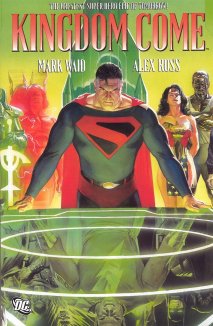
Kingdom Come (written by Mark Waid/art by Alex Ross; 1996)

This book builds on what I’ve said about our second entry. Kingdom Come contrasts Superman with a lot of the more edgy characters in recent comics and makes a case for why Superman is not only relevant, but necessary. Mark Waid does what he does, rendering a faithful depiction of the character, and Alex Ross offers some of the definitive Superman art in recent history.

Superman_Whatever Happened to the Man of Tomorrow

Whatever Happened to the Man of Tomorrow? (written by Alan Moore/art by Curt Swan; 1986)

This book is meant to put a cap on the story of Superman. It’s told by Lois Lane ten years after the supposed death of the hero. It’s gloomy, especially by the standards of Superman comics, but there’s a bittersweet quality in seeing the character’s legacy laid out on the page.

The Death of Superman

The Death of Superman (written by various/ art by various; 1992-1993)

This arc was written and drawn by various creators, as it encapsulates a pretty long arc. I’ll be honest here and say it isn’t one of my favorite stories in Superman lore, but it’s on this list because it’s iconic, and it’s too important to comics history to leave off. This is the story of how Superman died defeating Doomsday. The image of Lois cradling Superman’s broken body, Jimmy Olsen in the background pleading for him to be okay is one of comics’ great panels. Of course, this was the moment that broke death in comics, as the resurrection of Superman set a trend and lowered the stakes moving forward.

All-Star Superman

All-Star Superman (written by Grant Morrison/art by Frank Quitely; 2005-2008)

This is my personal favorite. The story that gets to the heart of what makes Superman so special, that even in the face of his own mortality, he protects the people of Metropolis. He stops to comfort a troubled teen on the verge of suicide in another of recent comics’ great panels. Quitely’s art is serene, and Grant Morrison’s affection for the character comes through without making the story saccharine.

SICBG Jim has given your uncle Geekly the honor of writing a closing statement. I hope I can live up to the great example he set. Here it goes.

Superman’s portrayal in the DC Extended Universe—and I blame the writing and directing more than Henry Cavill—leaves a lot to be desired. The DCEU may be one of the largest targets Jim thought of when he said that creators “retrofit the character (Superman) to make him more interesting to modern audiences.”

The stories above, and especially All-Star Superman, do a great job of showing that the Man of Steel is more than a super-powered Batman in gunmetal blue tights. He represents hope, and the original comic book superhero is still one of the best. Do agree with SICBG Jim’s story selections? Let us know either way. I’ll just be in the corner doing my best Mister Mxyzptlk impersonation.

3 Lists of 3 Unfortunate Comic Book Characters

There are several reasons a superhero or supervillain could be lame or unfortunate. Usually, it’s their name or their superpower. Some folks like to refer to these characters as morts; they aren’t long for this mortal coil. Someone take them out of their misery. Let’s take a walk on the sad side with this week’s three lists of three.

Poor Unfortunate Names

Doctor Hormone

Doctor Hormone

Yeah, Doctor Hormone was a short-lived 1940s comic, and it doesn’t hold up today to say the least. First, his name is Doctor Hormone. At best that’s the name of a product someone might sell on a late-night informercial. Second, he wears a pencil moustache and tends to sport a smarmy vibe. The good doctor of hormones doesn’t look like someone you’d leave your kids alone with on a sleepover.

But enough of those nasty thoughts. Hormone is the guy’s actual last name, because it’s a normal surname you’d find anywhere. I know of about three Phil Hormones from Hastings, Nebraska. The hormones this particular Mr. Hormone uses are “youth hormones.” These are the ones everyone knows about that keep someone young and that’s what happened to the good doctor. He was eighty-something, took a youth hormone, and became a twenty-something again. Like a high school senior, he always stays the same age.

Ebony White The Spirit

Ebony White

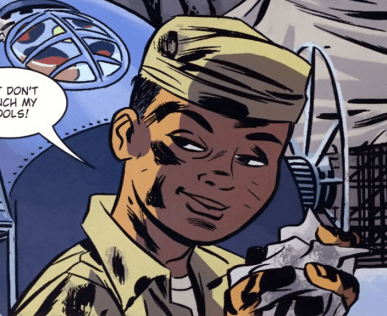
To be fair, Ebony White was also created in the 1940s. He played a major role in The Spirit comic books, but that role was as a less-than-intelligent buddy for the real hero to explain the story to. He also happened to chauffeur other characters.

His look was many stereotypes rolled into one. Dark skin and big lipped, his creator Will Eisner liked him so much that Ebony White would get his own solo storylines. Unfortunately, he became a vehicle for comedy and little else. I understand that he’s a product of his time and environment, but it’s hard to watch.

Pieface_DCComics

Pieface

Thomas Kalmaku is one of Hal Jordan’s closest friends. He knows the Green Lantern’s secret identity and keeps a journal of his deeds. When he finally receives superpowers, he improves those around him. He’s intelligent and hard working. He doesn’t deserve the nickname Pieface.

One fan theory suggests that Hal named him Pieface because he’s Inuit, and it’s a reference to Eskimo Pies. While that’s bad enough, the real reason behind the name is far worse. Pieface is a racial slur used for anyone with a round, flat face, specifically people of Asian descent and occasionally Inuits.

For decades Thomas accepts the Pieface nickname without batting an eye, and it’s only been recent incarnations of the character that have him rebel against an offensive name.

Poor Unfortunate Origins or Motives

Codpiece Comics

Codpiece

This one could be filed as lame for his powers as well as his name. It’s the whole package.

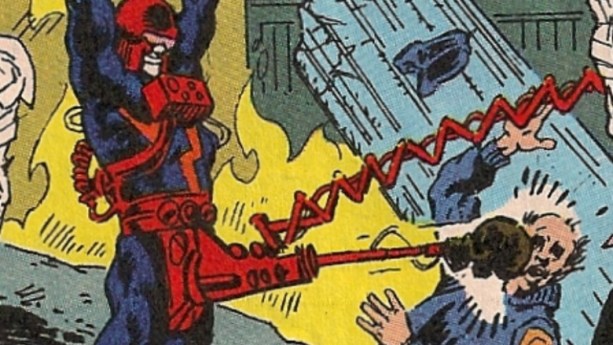
Thank goodness this guy only made one appearance in Doom Patrol #70. He lamented the size of his manhood and believed bigger was better when it came to impressing women. He never felt tall enough. It’s like Randy Newman once said, “Short people got no reason to live.”

He could’ve worn stilts and compensated for his height but apparently, he felt small in other ways and attached a codpiece outfitted with a rocket cannon (pun intended, I assume), a drill (another pun I’m sure), scissors, and a spring-loaded boxing glove (because why wouldn’t you).

His codpiece doesn’t last long (again, I assume the pun is intended) and he’s thwarted by the Doom Patrol, but let’s be honest, he was doomed from the start. One of the creators had to have been going through something. Either that or they need to share what they’re smoking.

BeardHunterDCComics

Beard Hunter

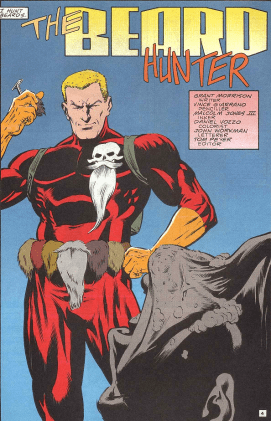
Ernest Franklin’s hatred of beards started the moment he realized that he lacked the male hormones required to grow his own beard. Again, with hormones. He began his war against beards by killing his stepdad and continued to kill other bearded men he met. He became the Beard Hunter.

Man, the writers at Doom Patrol can come up with some odd stories. The Beard Hunter is another villain, Jim and I wouldn’t want to run into. Sorry, Ernie. I don’t mean to offend you, but my hair migrated from the top of my head to my jawline.

Arm Fall Off Boy

Arm-Fall-Off-Boy

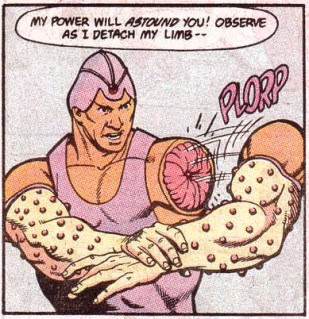
Have you ever wanted to be able to rip off your own arm, so you’d have something to bludgeon someone with? That’s idea behind Arm-Fall-Off-Boy. He can detach his arms and use them as weapons.

He makes this list because the only explanation for his power comes from Matter-Eater Lad—another “great” name—who claimed Arm-Fall-Off-Boy was careless when holding anti-gravity metal Element 152. He may have been kidding, but having your arms pop off by grabbing a strange metal makes about as much sense as any other reason your arm may have for spontaneously detaching.

Poor Unfortunate Powers

ZeitgeistMarvelComics

Zeitgeist

Zeitgeist made it into the X-Force roster in Deadpool 2 and died in a woodchipper. Oddly enough, he died quickly in another mission during the X-Statix run of X-Force, but not before he had one of the worst dates in comic history.

Zeitgeist’s power is super stomach acid; he barfs caustic acid. He discovers he has this power after he drunkenly vomits on his then-girlfriend, burning off her face. That’s one way to end a relationship.

LongneckMarvelComics

Longneck

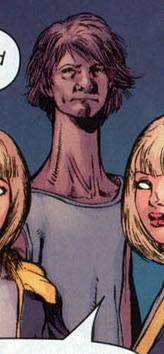
Jonah van Helsing has a 6-foot long neck and can wrap it around people and throw them. Yeah, he’s a human giraffe.

What’s worse is that Marvel’s “Decimation” event that aimed to reduce the universe’s number of mutants had Longneck lose his powers. His neck tried to revert to normal but snapped in the process. Ouch!

Goldballs_MarvelComics

Goldballs

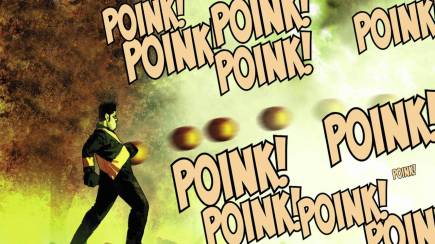
Fabio Medina is another student at Xavier’s School for the Gifted. His gift is to project gold-colored balls made of an unknown substance and of different sizes from any part of his body at high speeds.

He uses these balls as concussive weapons. He can also reabsorb the balls into his body. So. Many. Jokes.

There are plenty more unfortunate comic book characters; these nine are only the beginning. Guess what, your uncle Geekly poops cat nip. That explains the stoned cats in our neighborhood. Do you know of a hero or villain with a worse power? Let us know in the comments.

Flash Starter Stories

Let’s face it. Many new fans of The Flash were most likely introduced to the character with the CW show. Even if you weren’t, the concepts presented in the television show—at least the first two or three season—are a good place to get to know The Flash and more specifically Barry Allen.

Your uncle Geekly may have grown up leaning more Marvel than DC, but he dabbles with DC Comics. This week I hope to show you where to beginning reading The Flash comic books, starting with an emphasis on stories that may look and sound familiar for CW fans and moving toward other great tales of the Scarlet Speedster.

FlashRebirth

Flash Rebirth (written by Geoff Johns/art by Ethan Van Sciver; 2009)

Barry Allen returned to the DC Universe after years of being thought dead with Flash Rebirth. Readers are treated to an updated origin story, the history of the Speedforce, and Professor Zoom’s backstory.

It also happens to be the chief inspiration of the CW show as writer Geoff Johns is also one of the show’s producers. Rebirth is a great place to start for any new Flash reader and fantastic for The Flash TV fans.

The_Flash_The_Dastardly_Death_of_the_Rogues

Flash: The Dastardly Death of the Rogues (written by Geoff Johns/art by Various; 2010)

This entry is a little off when compared to the rest of the ones on this list. Bear with me, and I promise that it makes sense as a starter Flash story.

The Dastardly Death of the Rogues gives new readers a crash-course on the time-jumping nature of The Flash. Yes, characters often go back and forth through time to varying effect and this time it’s a future rogue warning Barry of another rogue’s plans for domination. And this is the first way the story turns odd.

Barry is also accused of killing rogues in the future and may have to answer for his future crimes—I smell a Minority Report—but it’s the focus of Barry as a CSI that has this story make the list. Previous Flash tales cast Barry Allen as a forensic scientist or cop but few capture Barry’s job aside superheroing like this one.

FlashFlashpoint

Flashpoint (written by Geoff Johns/art by Andy Kubert; 2011)

If you haven’t noticed, you’re going to see a lot of Geoff Johns’ work here because he defined The Flash of the 2000s and continues to do so with the TV show. Like the title before it on this list, Flashpoint has a character time travel. This time it’s Barry Allen going back in time to save his mother from being murdered.

The consequences are dire as the DC Universe is flipped upside down. It’d take a lot of time to explain everything that happened, but her are some highlights: Bruce Wayne dies instead of his parents and his parents become Batman and The Joker, Captain Cold is Central City’s greatest hero, the Justice League was never established, and Superman doesn’t exist. All this because Barry wanted to save his mom. Flashpoint does a great job of showing why a hero can’t be selfish. It’s also one of the watershed crossover events in recent DC Comics history and reshaped the comic giant’s status quo for the publisher’s 2011 relaunch, the New 52.

TheFlashNew52.jpg

Flash New 52 Volumes 1-3 (story and art by Francis Manapul and Brian Buccellato; 2011-2014)

The artwork here is amazing. No other artist captures the feel and look of The Flash running at top speed than Manapul. Barry Allen gets reintroduced here—so it’s another good place to get started for fans of the TV show—and most of his greatest enemies make an appearance in the first few volumes. You’ll meet plenty of the rogues and get to know Gorilla Grodd, too.

FlashCrisisOnInfiniteEarths

Crisis on Infinite Earths (written by Marv Wolfman/art by George Perez; 1985-1986)

This one’s a big one. The Flash isn’t the main character, but he factors into this crossover event and the odd thing is that Crisis on Infinite Earths was conceived to get rid of the multiverse, which is something The Flash instigated.

It’s a must read for anyone who wants to know more about Barry Allen as a character, because he makes the ultimate sacrifice. In an iconic scene, he literally runs himself to death and becomes one with the Speedforce. New readers could say spoilers were in order, but even being armed with that knowledge won’t prepare you for watching happen. This is Barry showing how and why he’s a hero.

FlashChroniclesVolume1

The Flash Chronicles Volume 1 (written by various/art by various; 1956-1959)

I’m going with a collection of older comics here because it’s nice to see where everything began. Barry Allen’s Flash harkened comic book’s Silver Age. If it wasn’t for Barry streaking across the page, DC may not have ever brought back other great heroes from its Golden Age and Marvel may have never gotten back into the superhero business. These stories had to make the list and fortunately, the first several years are collected in a single volume of The Flash Chronicles.

All these stories hold a special place in comic history, but here are some highlights:

Showcase #4 marks Barry Allen’s first appearance and the first instance of the ongoing gag where Iris complains that Barry is always late because he moves so slowly.

Flash #110 Iris’s nephew Wally West happens to be The Flash’s biggest fan, and this happens to be his first appearance.

Flash #123 is where the multiverse is first introduced when Barry inadvertently travels to a parallel Earth and teams up with his Golden Age counterpart Jay Garrick. It’s a simple team-up story here, but the multiverse is an essential part of many Flash stories.

Flash #139 showcases The Flash’s greatest foe Eobard Thawne (aka Professor Zoom/Reverse Flash). Thawne goes down quickly in this story, but he’ll be a thorn in Barry’s side for many decades.

TheFlashMarkWaidBookOne

The Flash by Mark Waid Book One (written by Mark Waid/art by Greg LaRocque; 1987)

I’ve focused primarily on Barry Allen up to this point, so it’s time to talk about Wally West as The Flash. Waid does an excellent job of showing how the two Flashes differ. Wally doesn’t take to the Speedforce like his predecessor. He’s as scared of his powers as he is the enemies he fights. This book reads like The Flash: Year One.

Readers will also see Barry as he trains his protégé—much like he does in the TV show—and catch a glimpse of one of DC’s greatest friendships.

TheFlashTheReturnOfBarryAllen.png

The Flash: The Return of Barry Allen (written by Mark Waid/art by Greg LaRocque; 1996)

Oddly enough, Waid does more to establish Wally as the Flash by having Barry Allen return from the dead. Comic book characters return from the dead more often than my dog poops on the floor—which is to say every other day—but Waid finds a way to turn this trope on its ear. I won’t explain how he does it here, but it’s well worth the read and an excellent case study on how to subvert a reader’s expectation.

TheFlashDeadHeat

The Flash: Dead Heat (written by Mark Waid/art by Oscar Jimenez; 2000)

No Flash story tackles the Speedforce, delves into the Flash’s sci-fi roots and explores the numerous characters who have ever had super speed than Dead Heat. A “God of Speed,” “Speed Ninjas” and all other manner of speedsters make their way in this story. It does a lot to set up the Flash’s mythos. It’s also a lot of fun.

Flash_Blitz

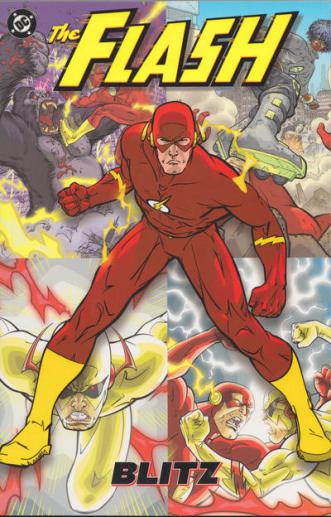
The Flash: Blitz (written by Geoff Johns/art by Scott Kolins; 2003)

Even though several of the Flash’s rogues make an appearance, Blitz is the definitive Professor Zoom story. Wally is completely outclassed, but Zoom’s speed isn’t his greatest threat. Zoom doesn’t hesitate to put Wally’s family and friends in danger to get to him. If fans of The Flash TV show liked the twisted and menacing nature of the main antagonists in seasons 1 and 2, you owe it to yourself to read Blitz.

I think that covers it for Barry and Wally as The Flash. There are other versions of the character—not the least of which is the Golden Age’s Jay Garrick—but that may have to wait for another time. If you don’t agree with any of my selections, feel free to challenge me to a race or you could leave a comment.

Iron Man Starter Stories

Iron Man doesn’t get the due that other Marvel characters receive. Heck, he’s the character who kicked off the Marvel Cinematic Universe. Show some respect, people. He’s also had a checkered past when it comes to the quality of his storytelling.

Some Iron Man moments are some of the best in the business. Others leave readers shaking their heads. It’s a rollercoaster of a ride for Iron Man readers, but fortunately, your uncle Geekly’s here to point you in the right direction of some of the better Iron Man titles that serve as great jumping off places for new Iron Man readers.

Tales_of_Suspense_Vol_1_39.jpg

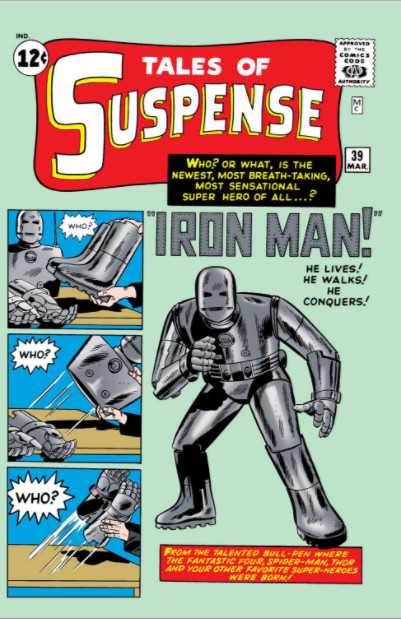
Tales of Suspense #39 “Iron Man’s Origin” (written by Stan Lee/art by Steve Ditko; 1963)

What better place to start than with Iron Man’s origin? What new readers may be surprised when they first read this story is the reflective nature toward communism that it takes—in 1963. We’re in the height of the Cold War. This is a story originally based in Vietnam that was published a year before the Vietnam War started in earnest.

It’s no wonder the Iron Man film obliquely addressed the War on Terror. Iron Man has a history of taking on current events and international conflict. You could spend thousands of dollars to get your hands on an original comic, but Uncle Geekly suggests that you pick up the anthology Essential Iron Man.

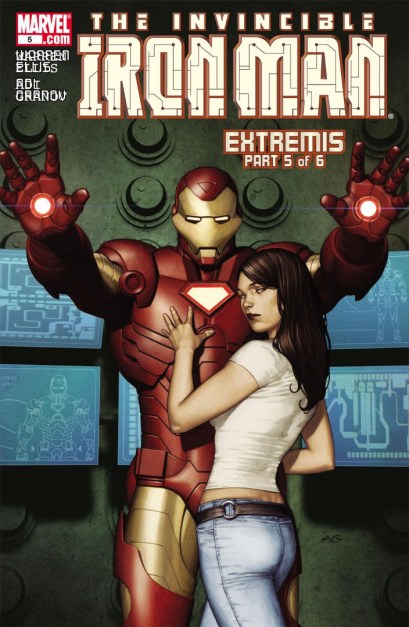
IronManExtermis

Iron Man: Extremis (written by Warren Ellis/art by Adi Granov; 2005-2006)

We’re going to jump several decades to this essential Iron Man story. Extremis updates Iron Man’s origin—something that’ll look familiar if you’ve seen the first Iron Man movie—and serves as the primary source material for Iron Man 3.

This story handles Aldrich Killian (the main antagonist in Iron Man 3) a lot differently than the movie, but the key story elements are present. It also updated Tony’s suit and his relationship with it that one can see in later Marvel Universe movies. Extremis is one of the best Iron Man stories and well worth the read.

IronManDemonInABottle04

Demon in a Bottle (written by David Michelinie and Bob Layton/art by John Romita Jr., Bob Layton, and Carmine Infantino; 1979)

Sorry, but we’re going back in time with this one. “Demon in a Bottle” introduces Tony Stark/Iron Man’s struggles with alcoholism. This addiction remains one of Tony’s defining characteristics.

The Marvel Cinematic Universe glossed over Tony’s alcoholism (there was a moment in Iron Man 2 where he got drunk at a party while wearing his armor), but any collection of Iron Man stories must include “Demon in a Bottle.”

Whether he struggles with his addiction or comforts someone else with an addiction, Tony Stark gained some needed personality and depth with this story, and this story happened almost by accident.

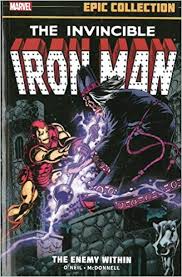
IronManTheEnemyWithin.jpg

The Enemy Within (written by John Byrne/art by John Romita Jr.; 1990)

Tony’s alcoholism continues to gnaw at him. When he’s pushed over the edge with AIM, the Serpent Squad, and Diablo while fighting a corporate takeover by Obadiah Stane (main villain of the first Iron Man movie), he turns to the bottle and after several drinks, it’s obvious that Tony is in no shape to fight.

James Rhodes fills in for Tony for the first time in this story and this leads to his transformation as War Machine. Fans of War Machine will love this story. Others will find “The Enemy Within” as a fantastic character study for Tony.

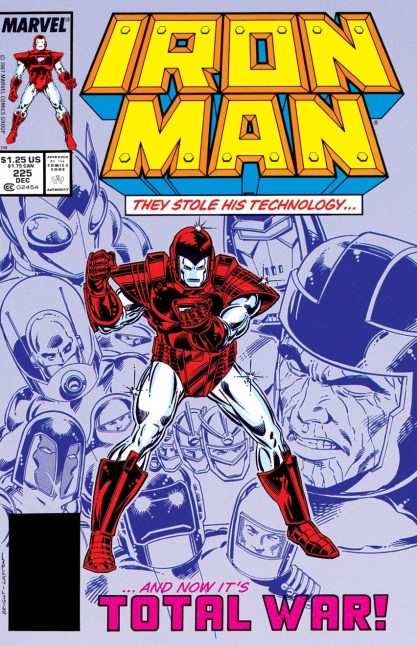
IronManArmorWars

Armor Wars (written by David Michelinie and Bob Layton/art by Mark D. Bright and Barry Windsor-Smith; 1987-1988)

Armor Wars has more action than most of the other titles on this list so far. It also features some of Iron Man’s greatest foes like Titanium Man and Crimson Dynamo. Tony travels to his Vault as he battles the government and infiltrates SHIELD.

But this story is more than just action. It shows how Tony can be careless, aggressive, and out of control with his armor. It’s a story about relationship—specifically ones Tony destroys—as well as who he beats up, and it’s well worth the read.

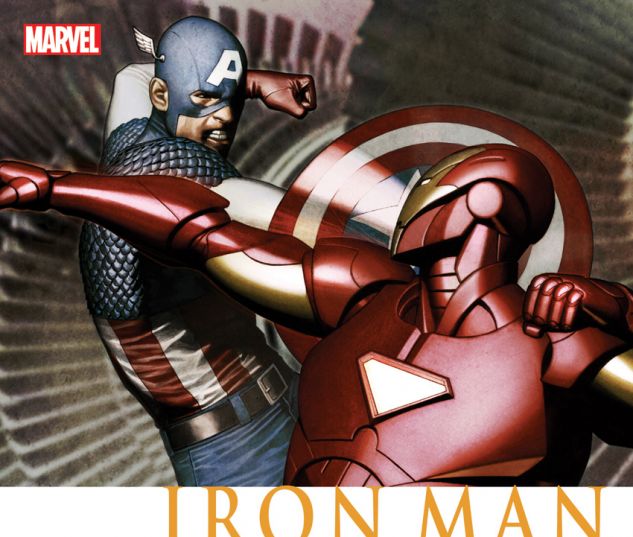
IronManCivilWar

Civil War (written by Mark Millar/art by Steve McNiven; 2006-2007)

This one is by no means a great Iron Man story (I have plenty of issues with it), but it’s a massive tale for the greater Marvel Universe and Tony is in the middle of it.

Like the movie Captain America: Civil War, Tony fights for power registration in his attempt to make the world safer for civilians—or normies. Oddly enough, the movie does a somewhat better job of making the story a little more even keel, but the comic book Civil War is biased in Cap’s favor and that mostly comes from the fact that Tony would never want power registration.

Still, there was a movie that uses Civil War as its source material and this event is one of Marvel’s largest. Just make sure to read the stories centered on Iron Man.

IronManWorldsMostWanted

World’s Most Wanted (written by Matt Fraction/art by Salvador Larroca; 2009)

I couldn’t end this list with Civil War, so I added one extra story. World’s Most Wanted picks up the pieces of the events after Civil War—sort of.

It was a tall order to return Iron Man to his former glory after he betrayed his friends, but Fraction was up to the task and softly reboots the character. Norman Osborne has taken over HAMMER (which movie fans will remember as a huge player in Iron Man 2), and Osborne wants Tony’s knowledge of the superhero community. Tony erases his memories, so he can’t betray his friends.

This returns Tony to person we know even if he had to lobotomize himself to do it.

That’s my list for beginning Iron Man readers. I’m sure there are some omissions. You can let me know what you’d pick by message raven or just leave a comment.
Underrated or Underused X-Men Villains

While we can, and probably will, make lists for underused or underrated characters in other superhero and superhero team books, the X-Men have so many characters in its stable that it’s easy to make a list of them. Old uncle Geekly likes easy tasks, so here’s a list of X-Men villains who are underrated or underused in the comics. I’m sure Jim will spank me with a paddle if I’m wrong.

X-MenChildrenOfTheVault

Children of the Vault (First appearance: September 2006)
You know you have a horrifying supervillain team when they turn Sabretooth’s fur white. Seriously, if you look closely in one of the panels, you can see if Sabretooth poops in the woods. He does by the way.

These superpowered villains don’t fall neatly into a human or mutant category. They’re beings that evolved from a baseline human genome over 6,000 years or so. Think of them as an off-shoot humanoid like a Neanderthal that developed over millennia with the help of the Weapon Plus Program that also produced Wolverine. That, and they want to end humans and mutants. They’re equal opportunity murderers with Spanish codenames like Sangre, Fuego, and Cadena.

Even though they’ve been around for over a decade, the Children of the Vault and their approximately 3,000 members (X-Men #193) haven’t been used enough and that’s why they make this list.

GraydonCreed.jpg

Graydon Creed (First Appearance: April 1993)

We go from a group trying to kill Sabretooth to Sabretooth’s estranged, human son.

Creed factors into so many X-Men characters backstories that I couldn’t possibly list them all here, but I will mention that he formed a group called the Friends of Humanity, and they’ve been a thorn in the X-Men’s side for a long time.

This entry may be a tad misleading. Creed was assassinated in 2010 by Mystique during his presidential campaign. He’s since been resurrected as a human-sentinel. In classic X-Men fashion, it’s more complicated than that, but classic Graydon Creed made a great foil for the X-Men. Plenty of X-Men the Animated Series may remember him fondly as well.

He hasn’t shown up that often since his transformation, but nothing says a trip back in time couldn’t return Creed to his original form. Make it happen, Marvel.

X-MenMastermind

Mastermind (First Appearance: March 1964)

This is the guy who set the Dark Phoenix Saga in motion, and it often gets overlooked and viewed as an also ran. Sure, the original Mastermind perished in 1993, but he doesn’t get the credit he deserves as a pivotal member of the Hellfire Club.

Heck, the Hellfire Club asked him to turn Jean Grey as his initiation into their Inner Circle. When that turned into the Dark Phoenix Saga, his application was rejected, and he was forced out of the group.

But that didn’t stop Mastermind. He remained a thorn in the side of Cyclops and Wolverine—tearing apart future romances. He even went toe to toe with Rachel Summers, the second host of the Phoenix force. He may have died of the Legacy Virus, but he won’t be forgotten by this fan.

Mastermind is a classic X-Men villain who doesn’t get the same recognition as his Brotherhood of Evil Mutants and Hellfire Club teammates. It’s a shame.

X-MenSugarMan

Sugar Man (First Appearance: April 1995)
Sugar Man hasn’t made too many appearances because he’s tied to the Age of Apocalypse storyline, but that reality gave birth to Blink, and she’s made plenty of appearances since the 90s. Sugar Man must have the most unique look of any X-Men villain: four arms, a mouth full of razor teeth, a long strong tongue, and a head for a body.

He’s a cross between a troll and a mutant and he isn’t used enough in the X-Men universe. Give us some Sugar Man.

X-MenVargas

Vargas (First Appearance: July 2001)

Yeah, Vargas takes the humans hating mutants angle and adds a Captain America bend to it. He gave himself powers, so humans can compete with homo-superiors. He had a short but interesting run where Rogue may or may not have killed him. To be fair, it was revealed some years later that she spared his life and someone else took it.

While it makes sense that Vargas hasn’t made another appearance, you’d think more humans would take the Cap route to keep up with mutants. Maybe they have, and I missed it. If so, feel free to wag your finger at me.

I could’ve added more than these five, but your uncle Geekly wants to hear your thoughts. Are there any X-Men villains you’d like to see more of or who don’t get the due they deserve? I’ll accept picket signs with your answers on them, or you could take the easy route and comment. Your uncle Geekly won’t judge.

My Favorite Storytelling Element: Iron Man “Demon in a Bottle”

I’m not sure if I can say it any better than several other critics “’Demon in a Bottle’ is THE quintessential Iron Man story.”

Tony Stark/Iron Man’s alcoholism is one of his key characteristics, and “Demon in a Bottle” introduces this. Does “Demon in a Bottle” do as well of a job tackling this issue as other, more modern stories (in comics and other media)? Not necessarily. It’s a 1979 comic book story arc after all. Does writer David Michelinie speed through what occurs during recovery? Yes. It’s almost comical. But he does an excellent job with loss and the struggles Tony deals with, and it’s easy to see why “Demon in a Bottle” remains one of the best Iron Man stories.

Prior to “Demon in a Bottle” Iron Man was a relatively flat character. Many of the stories weren’t engaging. I like how the “Demon in a Bottle” begins as usual Iron Man fare at the beginning of the arc. The storyline ran from The Invincible Iron Man #120-128 (March-November 1979), but it wasn’t until issue 124 or so that alcohol really came into play.

demon-in-a-bottle-2.jpg

It’s odd watching modern critics address this story. They’ll say things like they wished Iron Man started with Tony’s alcoholism sooner and expand on it. Do I wish, in hind-sight, that “Demon in a Bottle” did more to address alcoholism or do so sooner in the arc? Yes. A serious subject like alcoholism deserves as much space as needed.
Other storylines in the 1970s dedicated plenty of issues to drugs. Roy Harper (the original Speedy) was revealed to be a heroin addict in Green Lantern vol. 2 #85 (1971), and Spider-Man fought drugs that same year (The Amazing Spider-Man #96-98), but those two storylines showed third-person accounts of addiction. Speedy wasn’t the main character in Green Lantern. Spidey fought crime, but drugs were kept at arms’ length, in third-person. Tony is Iron Man. “Demon in a Bottle” is a first-person account of how someone slowly descends—but perhaps not slow enough of a descent—into alcoholism.

Furthermore, Spider-Man and Green Lantern knew they were making a statement with their stories. “Demon in a Bottle” came out of nowhere. The issue of alcoholism grew organically, and that tends to be the insidious thing about addiction.

The first several issues Tony started drinking occasionally. As events unfolded—I won’t spoil much here, but many people would consider what happens in the early going of this story side battles and tragedies—he drank a little more each day until his addiction consumed him.

Comic book characters change a lot through the years and decades, but one thing has remained the same for Tony Stark/Iron Man since 1979. He battles with alcoholism. For a story that had little to no intention of making a statement, “Demon in a Bottle” makes a huge one. For a character who was just another guy in a flying suit, he gains one of his most defining characteristics.

IronManDemonInABottle03.jpg

Tony’s alcoholism has been revisited in later Iron Man storylines. He may offer advice to someone else suffering with addiction or he may hit the bottle again. Alcoholism is one of the things that makes Tony Stark relatable, human.

You can even see the impact “Demon in a Bottle” had in the film Iron Man 2. Tony gets drunk during a party in his armor and mayhem ensues. Director Jon Favreau may not have wanted to delve too deeply into Tony’s addiction—Disney/Marvel wanted to keep things light—but he wanted to homage to the most important Iron Man story.

I’m not sure what else there is to say. Perhaps one of you is more eloquent than me or has more insight into this groundbreaking comic book story. If you do, please share in the comments.