

Happy Wednesday, Geekly Gang! Kyra Kyle here. Today, our writers share what they’ve been listening to over the past month. Feel free what you’ve been listening to, because we’re all part of the Geekly Gang. I’ll get the post started with what I’ve been listening to over the past month. It’s time for Geekly Tunes.
Kyra’s Tunes
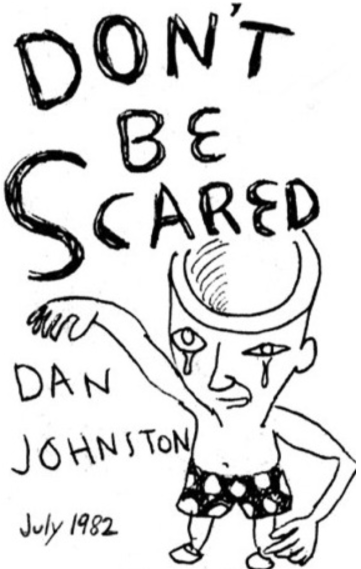
I watched the Daniel Johnston documentary this past month (The Devil and Daniel Johnston); it’s a great watch. If you’re interested in learning more about Daniel Johnston, you should watch The Devil and Daniel Johnston on YouTube. After watching the documentary, I had to listen to Johnston’s music. His music won’t be for everyone. It’s an acquired taste, but if you get into Johnston’s music, you can really get into it. For most of his career, Johnston would self-record his music. This leads to echoes, odd sounds, and bizarre tones. Johnston’s fragile voice sings over the top of the music. The result is unfettered vulnerability and honesty.
Johnston would also draw the pictures found on his album covers (like the one above). Kurt Cobain made Johnston’s Hi, How Are You: The Unfinished Album (1983) famous by wearing a t-shirt of that album’s cover for a year, during the height of Nirvana Mania. While I enjoy a lot of tracks from Hi, How Are You, specifically “I Am Walking the Cow,” I prefer Don’t Be Scared (1982). Don’t Be Scared’s title track is fantastic, and it also happened to be featured on an episode of Only Murders in the Building, but “The Story of An Artist” remains one of Johnston’s greatest tracks. “The Story of An Artist” hits differently each time you listen to it. One time, it may be haunting. Others, heartbreaking.
Johnston’s honesty lends itself to heartbreak. 1990 is another great Johnston album. It contains a lot of Johnston’s best-known songs: “Devil Town,” “True Love Will Find You in the End,” and “Somethings Last a Long Time.” If “The Story of An Artist” doesn’t strike a chord, “Somethings Last a Long Time” will. Simple, haunting, and honest lyrics. “You’re picture’s still on my wall.” Johnston recounts losing a loved one. Make sure you have tissues at the ready.

Whale’s “Hobo Humpin Slobo Babe” has seen rotation in my music carousel. This Swedish band never took itself too seriously. Slobo rhymes with hobo. You don’t know what “slobo” means? Sad. Ironically, Whale’s first studio album was titled We Care, and “Hobo Humpin Slobo Babe” was the debut single. The album (and song) blend elements of Funk and Trip Hop to create a wall of sound. I dare you to listen to this song and not bob your head or tap your feet. It’s a bop. “Hobo Humpin Slobo Babe” caught fire with its inclusion on the Beavis and Butthead Show in the mid Nineties. Beavis was mesmerized by the lead singer’s facial expressions and braces. Same, Beavis. Same.
I also spent time exploring the late 1990s and early 2000s Butt Rock origin. The original Butt Rock found popularity in the 1970s and 1980s and served as the macho, hyper-sexualized cousin of Glam Rock. 1990s and 2000s Butt Rock was forged in the ashes of Grunge. Some people refer to 90s and 00s Butt Rock as Post-Grunge. It depends on who you ask as to what constitutes 90s and 00s Butt Rock or if they use the Post-Grunge or Butt Rock label. Ahem. Butt Rock is a pejorative term. So, let’s call it Post-Grunge.
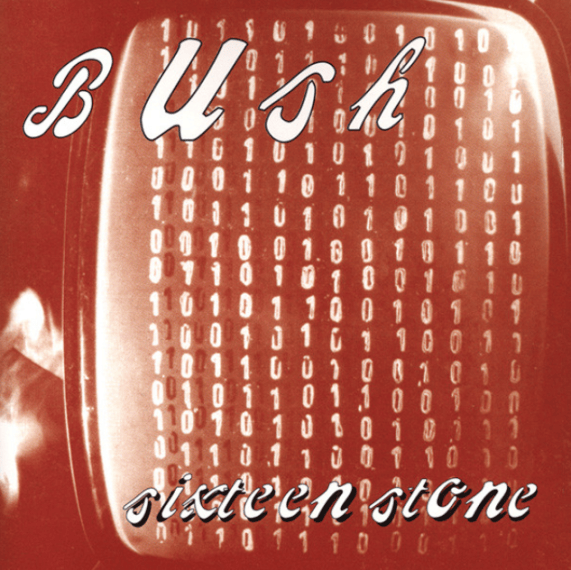
There’s nothing wrong with Post-Grunge (or Butt Rock). I like plenty of music that would be considered Post-Grunge. Bush’s Sixteen Stone was loaded with hits. I’ve been jamming out to “Machinehead,” “Glycerine,” “Comedown,” “Little Things,” and “Everything Zen,” as well as deeper cuts like “Testosterone” and “Alien.” “Alien” might just be my favorite. Gavin Rossdale’s baritone flutters above the track’s haunting guitars. So good. Sixteen Stone has plenty of musical influences: Jane’s Addiction, My Bloody Valentine, Soul Asylum, and The Pixies. Having The Pixies as a musical influence may be the biggest reason why Bush received criticism for sounding too much like Nirvana.
The Pixies influenced Nirvana as much as they would Bush, and the fact that Bush, a British band, could write “Grunge-like music” meant that a band didn’t need a Seattle area code to play Grunge-like music. This is where the animosity toward Post-Grunge begins; there is one other major factor, but we’ll discuss that later. Some bands like Everclear escaped criticism because they at least came from the Pacific Northwest (Oregon), while others like Stone Temple Pilots with their debut Core pivoted toward different sounds with future albums. Ah! I need to relisten to Purple (or 12 Gracious Melodies). According to critics, the biggest knock against Post-Grunge is that it lacks the artistic integrity of Grunge and aims to cash in on the Grunge sound. While this is true of some Post-Grunge, I wouldn’t accuse all Post-Grunge of this sin.
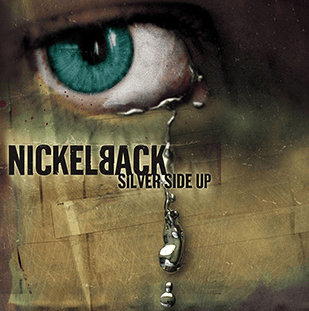
I heard some of you groan when you saw the Nickelback album cover above. “How You Remind Me” is the biggest Post-Grunge hit. It isn’t even close. That song was everywhere, and it features a lot of what defines the Post-Grunge sound: distorted guitars, the use of minor keys, and the lead singer trying his best Eddie Vedder from “Jeremy” impersonation.
Despite all the animosity, “How You Remind Me” is a well-constructed song. Maybe too well-constructed. The song’s chorus gets in your head, and Chad Kroeger tells a familiar and relatable tale about a couple arguing. The rest of the album may deserve the moniker of Butt Rock. Remember how the 1970s and 1980s version of Butt Rock was the macho, hyper-sexualized cousin of Glam Rock? Outside of “How You Remind Me,” songs from Silver Side Up explore topics of strippers, sex, prostitutes, drugs, and alcohol consumption. That sounds like 70s/80s flavored Butt Rock.
And those themes fueled the other reason why some people dislike Post-Grunge. In 2000, the United States government loosened restrictions, allowing radio stations to become monopolies. Prior to this shift, most radio stations were mostly independent. Top 40 radio stations didn’t really exist. A national radio station chain like I Heart Radio certainly didn’t exist. This change in policy led to a few radio stations that catered to a specific demographic: CIS, straight, middle-class white men. Post-Grunge became popular because it sounded like Grunge and had themes that appealed to the demographic radio stations wanted to attract. Male, middle-class, and white.
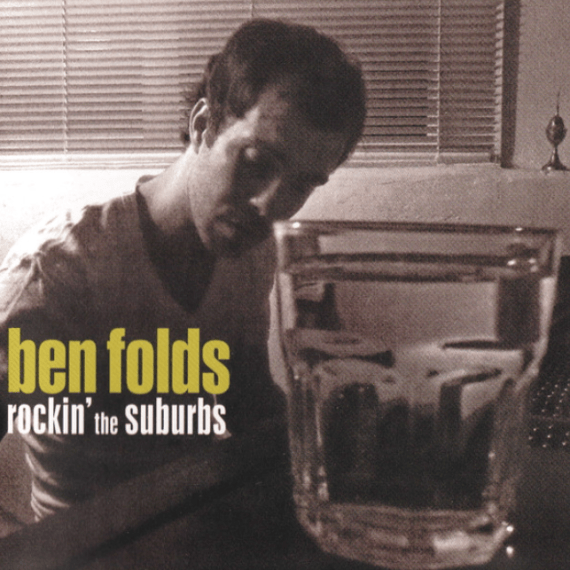
Don’t believe me? Ben Folds made light of this shift in radio with his 2001 hit “Rockin’ the Suburbs.”
“Y’all don’t know what it’s like, being male, middle-class, and white. Y’all don’t know what it’s like, being male, middle-class, and white. It make me real pissed off, and it makes me wanna say. It make me real pissed off, and it makes me wanna say. It make me real pissed off, and it makes me wanna say. F@#%!”
I love how Ben Folds censored himself in the song. And yes, I’ve had Ben Folds and Ben Folds Five on my music carousel. If you haven’t seen the music video for “One Angry Dwarf and 200 Solemn Faces,” you should. Ah! Another banger.
Anyway, Post-Grunge is due for a resurgence. What was popular twenty to twenty-five years ago gains nostalgia. The Barbie Movie may have helped Post-Grunge’s repopularization with its use of Matchbox 20’s “Push,” which is a Post-Grunge hit. Armed with Post-Grunge’s history, I may need to rewatch The Barbie Movie. “Push” may have been the perfect song choice on multiple levels.
That’s all I have for Geekly Tunes this month, and it looks like I’m on my own this month. Hopefully, Season and Skye are back for next month’s Geekly Tunes. What’ve you been listening to, Geekly Gang? Let us know in the comments. Thank you for reading, and wherever you are, I hope you’re having a great day.

