Top 5 Cooperative Games

Designers used to create cooperative games just for children because you can’t have Johnny and Suzie fighting about who has the most money or the most dudes, and any day that doesn’t include, “I’m not playing with you—you cheat” is a win. Cooperative games eliminate the need for cheating. I guess you could cheat, but at least when you do cheat, you cheat as a team.

I won’t include the litany of older children’s games that use the cooperative mechanism, but the last decade has seen a lot of stellar cooperative games that adults — and sometimes kids – can enjoy. These games dominate the board game market, but the following is our list of the best games of this genre.

Before we get started, we have a public service announcement. You’ll find two notable exclusions from this list: Fury of Dracula and Battlestar Galactica. Both of these games are fantastic, but they go back and forth from getting labeled games that use the cooperative and partnership mechanisms, so we took them out of the running. Sorry, FoD and BSG fans.

Hanabi

5) Hanabi

We lead off with a game unlike any other on this list. Hanabi is a small cooperative card game that plays in twenty minutes or less.

I included Hanabi on this list because you always need a filler game, a game that you play while you wait for the rest of your gaming group to finish eating or using the restroom. It’s also easy to teach, learn, and play.

Hanabi is Japanese for firework, and you work together to create the greatest fireworks display. You can’t start with the biggest explosions first – you have to build up to them – so you’re given four colors of bursts, numbered 1-5. You have to form four separate piles of cards (based on explosion color) that begin with one and progress in numerical order to five. The only catch is that you can’t see your cards.  You and your teammates hold your cards away from yourselves. Your teammates have to give you clues as to which cards you have in your hand.

Hanabi04

Hanabi burst into gaming stores a couple of years back, earning game designer Antoine Bauza his first Spiel des Jahres.
ForbiddenDesert01

4) Forbidden Desert

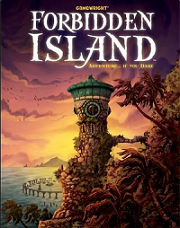
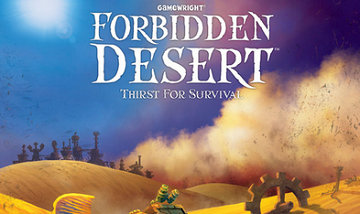
Next we have a game by a designer, Matt Leacock, who specializes in cooperative games. I’m sure we’ll see more from Leacock further down this list. Forbidden Desert may be the sequel to Leacock’s Forbidden Island, which in turn, borrows a lot from Leacock’s own Pandemic, but Forbidden Desert adds enough gaming elements that you can’t say it mimics the other two games.

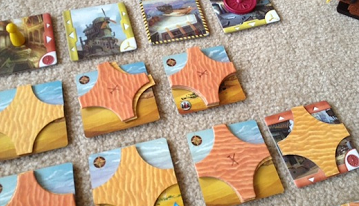
But the shifting desert tiles of Forbidden Desert do mimic getting lost in a desert with little hope of making it out alive. Players start the game stranded in the middle of a desert that’s prone to massive sand storms, and everyone has their own unique ability with which they have to use in order to escape.
ForbiddenDesert04

Forbidden Desert allows you to adjust the difficulty level, so if you have someone new to the game or if you’re playing with younger gamers, you can make the game more accessible. But the game already gets you going in a jiff. You’ll be halfway to constructing your own Jules Verne flying device in no time.

GhostStories01

3) Ghost Stories

Here’s another offering from Antoine Bauza. Ghost Stories also marks the only entry of a horror game in this list. Now, horror games tend to use the cooperative game mechanism, but despite how popular and plentiful these games are, many horror games fall flat. That’s not the case with Ghost Stories.

I wouldn’t say that I was ever scared while playing Ghost Stories. Sure, players explore a haunted mansion, where ghastly specters crowd every hall, but each player takes on the role of a martial arts master. You never fear for your character’s safety because your character could kick your butt in five seconds.

GhostStoriesCloseUp

If your characters can’t defeat the ghosts, no one can. And usually, you can’t take on all the ghosts. Most games start with the players roundhouse kicking their way to victory, but then, the ghosts keep coming and you can’t keep up. I love Ghost Stories, but it has to be one of the toughest – if not the toughest – game on this list. Still, if you haven’t played it, you should.

ShadowsOverCamelot01

2) Shadows over Camelot

Bruno Cathala is the most accomplished designer on this list, and no list of the best cooperative games would be complete without his Shadows over Camelot. Okay, Shadows over Camelot was a cooperative effort between Cathala and designer Serge Laget, but we’re splitting hairs.

Shadows over Camelot marked the beginning of the modern, cooperative game renaissance. Each player controls one knight of the Round Table, and they must team up in order to accomplish various quests like defeating the Black Knight or finding the Holy Grail, but the best part of Shadows over Camelot is the inclusion of a possible traitor.
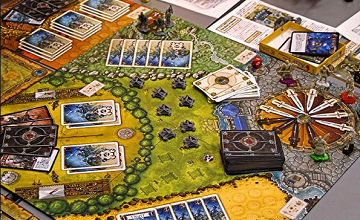
ShadowsOverCamelotOverview

I mentioned Battlestar Galactica before getting to this list, and BSG takes a lot from Shadows over Camelot, but you’re guaranteed a cylon or two. Shadows over Camelot makes no such promises. Some of the best games don’t even have a traitor. Players spend the entire game accusing other players of being the traitor – thwarting their comrades along the way – only to find that it was all in their heads. The name fits, and I challenge you to play one game without making a Monty Python and the Holy Grail reference. You can’t do it, can you?

Pandemic01

1) Pandemic

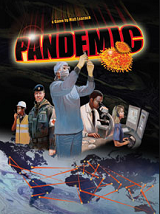
I promised another Matt Leacock game and here it is: Pandemic. The reason Pandemic beats out Shadows over Camelot is because while Shadows over Camelot marked the beginning of the cooperative game renaissance, Pandemic popularized cooperative games, causing them to fly off shelves.

Players assume roles like scientist, medic, and researcher in order to stop four deadly viruses from spreading and becoming a global pandemic. There are many ways to lose but only one way to win. You have to cure all four diseases.

PandemicCloseUp

The game elements and mechanisms are simple and elegant, the premise topical, and no two games of Pandemic play the same way. Like other Leacock games, you can scale the difficulty which is perfect for new and/or young players. And while the diseases don’t have names, I’ve never played a game where players don’t name each of the four diseases. You can feel the tension rise with each epidemic.

Best of all, Pandemic attracts people who aren’t typical gamers. It earns our top spot because of this crossover quality.

Did we get our list right? Let us know and give us more ideas for future Top Fives.
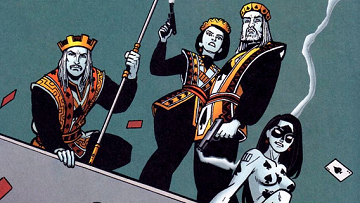
The Flash Secrets: January 30, 2015

RoyalFlushGang

The Royal Flush Gang’s plans went down the tubes

That motorcycle gang should look familiar. We’ve seen The Royal Flush Gang on Arrow, and now, they’ve made their appearance on The Flash. They used to have four members, but Ollie killed one, during a failed bank robbery. The Royal Flush Gang has appeared in DC Comics with and without superpowers for years. They got their start in the pages of Justice League of America #43 in 1966.

TheFlashPiedPiper

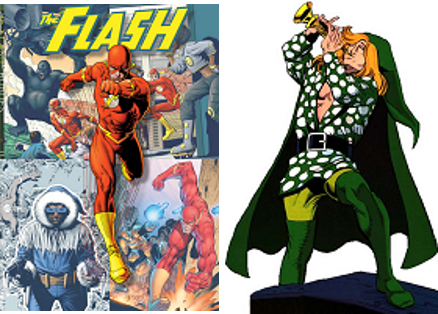
Wait. No Sonic Flute?

Hartley Rathaway, AKA the Pied Piper, often uses a sonic flute to commit his crimes. I don’t think you could ever make that look cool, so I’m down with the gloves. But we do know that Rathaway worked with Wells prior to the particle accelerator exploding, so he may know about Gorilla Grodd. The Pied Piper may be the link between Captain Cold and Grodd that we need. The above picture is of The Flash: Rogues cover. In its pages, we catch the Pied Piper in action with a lot of The Flash’s other villains.

Should Mason Bridge’s name sound familiar?

Iris’s Pulitzer-prize winning journalist mentor may be more than a writer. We saw Barry’s choice in reading material last week: Space Ghost. Now we get another classic DC hero, The Clipper. Well, sort of. The Clipper’s alter ego was Mason Trollbridge. I don’t know if Team Flash thought that was too hokey and changed it or if it was a happy accident. I’d go with the former.

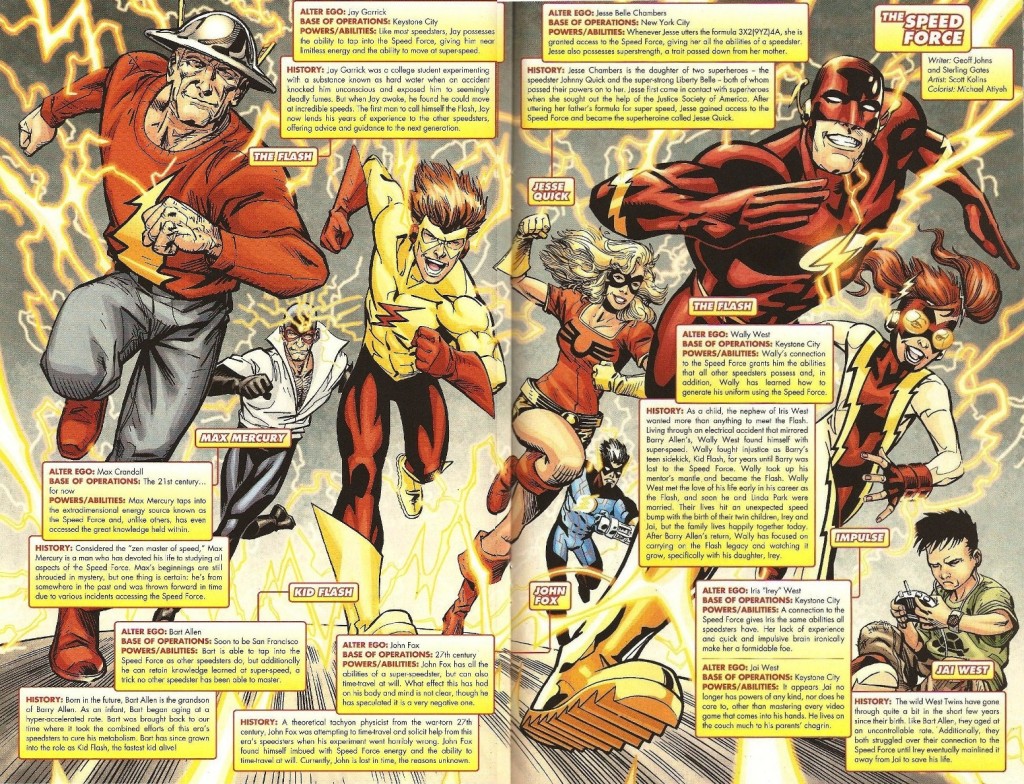
TheSpeedForceTheFlashImpulseKidFlashJohnFoxJesseQuickMaxMercuryJaiWest

What’s the Speed Force?

Jim mentioned it in his review, and for DC Comics fans, it’s a biggie. The Speed Force is the energy field at the far end of the universe that gives speedsters like Barry and Dr. Wells their power. We’ll see what happens.

Arrow Secrets: January 30, 2015

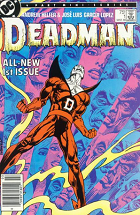
Deadman

Is Nanda Parbat supposed to be Nanga Parbat?

Nanda Parbat is not a typo. DC Comics combined the fictional city of Shangri-La and the real-life mountain Nanga Parbat in Pakistan to make Nanda Parbat. Maseo mentions the city in this week’s episode, but Arrow has name-dropped Nanda Parbat for a while. Merlyn and Sara received training here by none other than Ra’s al Ghul himself, but Nanda Parbat wasn’t originally created for Green Arrow. It’s the home of Deadman. I don’t know if we’ll see an appearance by Deadman. He’s a part of Justice League Dark, the team that also includes John Constantine, and Constantine is on a different network.

BlackCanarySaraAndLaurel

Hey, that’s not Sara’s costume.

Sara Lance’s Black Canary costume resembled the classic Black Canary’s, but Laurel’s tips its hat to the New 52 Black Canary’s design. Which one do you prefer?

Geekly TV: January 30, 2015

Arrow02

Arrow

Jim’s Review

Laurel. Laurel is what was wrong with this episode. Watch any scene. Was Laurel in it? Then it was bad. Her telling Diggle she thought he’d understand her need to be part of the fight because he lost his brother? No, Laurel. Diggle was sad, but Diggle was a sad Green Beret. You’re a sad sorority girl. Having Diggle on the radio so you can go out and play ninja was stupid on every conceivable level. She feels responsible because she failed and someone was killed in front of her? Good. She was responsible. That was not a moment where I sympathized with the character, it was a reminder of why I can’t stand her. Ollie’s flashback material was pretty good, and it did serve to demonstrate why his old Hong Kong partner would risk so much to save him, and why Tatsu would help him. That part of the episode was effective.

Kyle’s Take

I watched part of this week’s episode with my wife. She doesn’t follow Arrow and after one minute she asks me, who’s the whiny girl? I told her Laurel, and unfortunately, she has the same middle name as our daughter. But beyond the shoddy acting rests some terrible writing. Laurel’s a pod person. She has to know her father will find out her sister Sara’s dead, and no good can come from her hiding the truth from him—and she’s piling on the nasty by pretending to be her sister. Furthermore, Captain Lance’s heart condition serves as a plot device. The writers love secrets, so they superimposed a reason for Laurel to keep Sara’s death a secret. Bad on you, writers.

I liked the flashbacks, too, but part of what Arrow has lacked this season is the braided effect of telling two stories: one in the present and one in the past. I hope I’m missing something, but this season’s flashbacks serve only to justify what’s happening in the present. They don’t build up to anything else. I hope they’re building up to something big. Perhaps ARGUS. But ARGUS is so far on the backburner that we’ve only seen them twice in the present—and one of those times was during the Flash/Arrow crossover and no one cared about ARGUS.

Verdict:

Arrow continues to flounder, and the creative team’s solution is more Laurel. That’s like asking for more cow bell during Beethoven’s Fifth.

Not enough Arrow? Check out our Arrow Spoilers Page, but there will be spoilers.

TheFlash

The Flash

Jim’s Review

This was another villain of the week episode, but I think it did a lot to work in ongoing threads. The introduction of sound as a weapon paves the way for Cisco to become Vibe in the future, if they decide to go that way, and I really like the development with Dr. Wells. His collapse after using his powers shows that his use of a wheelchair may not actually be a complete ruse, and I’m really glad they introduced the concept of the speed force. Finally, I am really excited about the budding confrontation between Detective West and Dr. Wells. It’s a conflict that has potential to really complicate the show in an interesting way, and give fodder for two of the strongest actors on the cast.

Kyle’s Take

Pied Piper tied into Team Flash’s past very well. He came off as a villain of the week, but I see him as a factor in future episodes, and that’s saying something given Pied Piper’s status as a secondary or even tertiary villain. I also liked that Dr. Wells has limitations as the Reverse-Flash. Given his collapse, he couldn’t possibly be behind the current Reverse-Flash’s exploits. Or could he? I’m not sure if the creative team plans to give Reverse-Flash a time-traveling ability, so Dr. Wells could be reformed with someone new inside the yellow jumpsuit. I think that – on some level – Wells is sincere with wanting to guide Barry, so it could be another running a red streak.

And I love that the father-figures in Barry’s life serve as internal monologues. A miniature devil and angel on your shoulders is cliché, but while Detective West and Dr. Wells function in that way, they do so with a twist. Nothing as mundane as good versus evil for the battle of Barry’s soul. Throw in the occasional Henry Allen – Barry’s bio-dad – and you get another level of internal struggle. While West and Wells could face off directly, I don’t think the show needs it. And then we go full circle to Pied Piper. He’s an example of what happens when Wells attempted a father-son relationship.

Verdict:

Another strong episode that flashes past its CW-DC Universe big brother (Arrow) by using a slow build in relation to Wells/Reverse-Flash, while throwing in a new villain.

Do you want more of The Flash? Dash to our The Flash secrets page, but beware, there are spoilers.

MarvelAgentCarter

Agent Carter

Jim’s Review

Have I mentioned I think Hayley Atwell is hot? I think Hayley Atwell is hot. This week’s episode of Peggy Carter, however, was not particularly satisfying. Once again, I like the characters here (not just Hot Atwell, I mean Hayley Atwell), but they need to be given more to do, and even more to say. What I thought I was getting into with this show was an exploration of the earliest days of SHIELD, but what I’ve been given is a lot of over-cooked 1940s clichés, heavy handed lectures about chauvinism, and forced references to Captain America.

Kyle’s Take

If you want to hear more of Jim’s Peggy Carter dreamin’, you can find him on fanfiction under the penname Hotwell.

JK

Long showers aside, I agree with Jim. The writers do a fine job with the characters not in the SSR, but these characters sit around and do little above putting out small fires. I’m hoping that changes next week, after seeing a preview of the Howling Commandos and Carter in Russia. I don’t know how they get there, but that’ll be a fun ride. (Fingers crossed.) I also get that the show is based in the 1940s, so some references are needed, but Agent Carter suffers from a cliché mountain which detracts from the show. I liken it to the first thirty minutes of Titanic. There are 53 references of the ship’s unsinkableness. That’s about fifty-two references too many.

Verdict:

Fun enough of an episode, but Agent Carter needs to leap away from Cliché Mountain.

Top 5 Game Designers

Some tabletop game designers sparked a revolution or created a game mechanism that everyone wants to copy. Others try to tell an engaging story or immerse us in a gaming. Still, others morph from one game type to the next, making it impossible to pin them down to a specific game type. But which game designers are the best out there right now?

I’ll try to answer this difficult question in a minute, but let me start by saying that tabletop game designers ebb and flow, so a top game designer today may not be a top game designer in five to ten years. Heck, they may lose their spot in one or two years.

With that said, there are some designers that paved the way for some of the guys on our list and other designers who haven’t done enough yet for inclusion. I’ll recognize them now, but even this addendum to the list isn’t a complete list of fantastic game designers.

Matt Leacock (Pandemic) just misses our list because he’s predominantly a cooperative game designer. If he chooses to expand his range, he’d be a sure fire top five. Vlaada Chvatil (Space Alert) is still new and could make a future list should we make one. I commend Alan R. Moon for not sticking with expansions for his mega hit Ticket to Ride, but he still hasn’t made enough recent games for our list. Reiner Knizia (Keltis, Wer War’s, and Lord of the Rings) has had more misfires than hits lately, but those earlier hits were Spiel des Jahres worthy.

And now for the game designers who did make the list.

RichardBorgBattleloreAndMemoir44

5) Richard Borg

Truth time. I went back and forth with including Richard Borg. He hasn’t produced as many recent games as other designers on this list – or even the four designers I mentioned that I left off the list – but his tabletop games almost single-handedly keep war game companies in business.

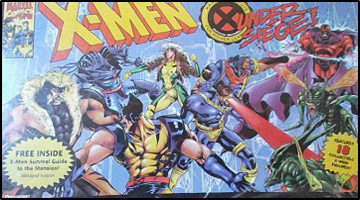
It doesn’t matter if you like the American Civil War, World War II, samurai Japan, ancient Greece, or sci-fi/fantasy, you’ll find a game of Borg’s that’ll float your boat—er, battleship. He’s even the designer of one of my favorite games as a youth X-Men: Under Siege. So with full disclosure, I added him because I like him as a designer.

But Borg has kept himself busy this decade, and I always pay attention when he has a new game on the horizon.

X-Men04

Notable Richard Borg Games:

1987: Liar’s Dice (Spiel des Jahres Winner)
1993: Mutant Chronicles: Siege of the Citadel
2000: Battle Cry (based on the American Civil War)
2004: Memoir ’44 (based on World War II)
2006: Commands & Colors: Ancients
2006: BattleLore
2010: Commands & Colors: Napoleonics

EricMLangXCom

4) Eric M. Lang

Unlike Borg, Eric M. Lang has kept himself hopping in the last few years. He has one of the largest catalogs of recent games of any designer on this list, and many of them are picture-perfect.

Lang would be higher on our list, but he tends to switch from dice mechanic games to living card games—Arcadia Quest is one of the few odd ducks and boy, it’s one fantastic duck. There’s nothing wrong with specializing in two game types. Most of his titles have undeniable quality, and like Borg, I’m always on the lookout for the next game by Lang.

The greatest testament to Lang’s abilities is that you breathe a sigh of relief when he announces that he’s making a game of your favorite intellectual property. You know he’ll nail every aspect that makes your favorite novel/movie/TV show/comic book/video game that makes it great.

Quarriors04

Notable Eric M. Lang games:

2008: Call of Cthulhu: The Card Game
2008: A Game of Thrones: The Card Game
2009: Chaos in the Old World
2011: Quarriors!
2012: Star Wars: The Card Game
2014: Arcadia Quest
2014: Kaosball: The Fantasy Sport of Total Domination
2014: Marvel Dice Masters: Avengers vs. X-Men
2014: Warhammer 40,000: Conquest
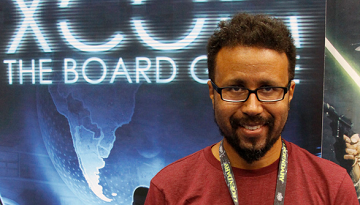
2015: XCOM: The Board Game
2015: Blood Rage
2015: Dungeons & Dragons Dice Masters

AntoineBauza7WondersAndGhostStories

3) Antoine Bauza

Now we get to the top three. I could put all three of these designers in any order, and it wouldn’t bother me. Everyone on this list is a great designer, but I’m pre-ordering the top three designers’ games at my local game store as soon as they announce a new release. Antoine Bauza leads off our big three. He’s the youngest, so he could climb the ranks, and he’s also the most recent Spiel des Jahres winner.

The best thing about Bauza is that when I take my kids and their friends to our local board game café (Spielbound) and tell them to pick out a game, someone always picks up a game by Bauza. These kids don’t read the name on the box. They just pick up a game that speaks to them (and most of them of vastly different tastes), and someone always brings me one of his games. Once, I had six kids with me and four out of the six kids picked a different Bauza game.

Takenoko05

In short, no two Bauza games look the same, play the same, or feel the same.

Notable Antoine Bauza games:

2008: Trains & Stations
2008: Ghost Stories
2009: Pocket Rockets
2010: Hanabi (Spiel des Jahres winner)
2010: Mystery Express (with Serge Laget)
2011: 7 Wonders (Kennerspiel {Connoisseur-gamer} Spiel des Jahres winner)
2011: Takenoko
2011: Dr. Shark (with Bruno Cathala)
2012: Tokaido
2013: Rampage

RichardGarfieldMagic

2) Richard Garfield

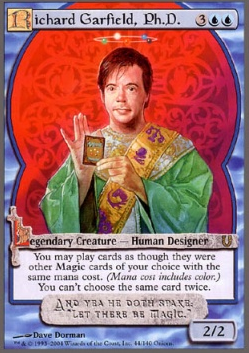
Richard Garfield has the most gaps in his resume of any other designer on this list, but whenever he comes out with a new game, it’s always big news. His Magic: The Gathering revolutionized the card game industry over twenty years ago, and it enjoys more popularity today than it did then. In fact, Magic is sometimes the only thing that keeps game stores open.

But Garfield has caught fire these last few years. King of Tokyo is a cross-over sensation that brings new gamers into the hobby. Folks clamber for his Android: Netrunner living card game, and King of New York, the follow-up to King of Tokyo, gives gamers a more in-depth King of Tokyo.

KingTokyo01

Notable Richard Garfield games:

1993: Magic: The Gathering
1994: RoboRally
1994: Vampire: The Eternal Struggle
2002: Star Wars Trading Card Game
2006: Rocketville
2011: King of Tokyo
2012: Android: Netrunner
2014: King of New York

BrunoCathalaAbyss

1) Bruno Cathala

Bruno Cathala has the versatility of Bauza but he also has the benefit of a longer career. If I was stranded on a desert island and I could only play the games of one designer, that designer would be Cathala.

He collaborates with a lot of other designers, but not many of the designers Cathala works with have done much on their own. Cathala carries a game. Whether he revitalizes the deduction mechanism, or combines the play of Mancala with worker placement, Cathala adds new wrinkles to gameplay, and most of what he touches turns to gold.

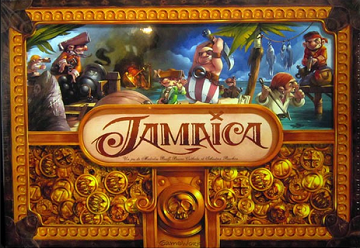
Jamaica

Notable Bruno Cathala games:

2003: The Queen’s Necklace (with Bruno Faidutti)
2005: Mission: Red Planet (with Bruno Faidutti)
2005: Shadows over Camelot (with Serge Laget)
2006: Mr. Jack (with Ludovic Maublanc)
2006: Cleopatra and the Society of Architects (with Ludovic Maublanc)
2007: Jamaica (with Sebastien Pauchon)
2008: Senji (with Serge Laget)
2008: Mow
2009: Dice Town (with Ludovic Maublanc)
2011: Dr. Shark (with Antoine Bauza)
2012: Niya (a.k.a. Okiya)
2014: Abyss (with Charles Chevallier)
2014: Five Tribes

Did we get the list right? Let us know how we did and feel free to give us more ideas for future Top Fives.
Battleship

Designer: Clifford Von Wickler
Publisher: Milton Bradley
Date Released: 1931

Number of Players: 2
Age Range: 8 and up
Setup Time: About 5 minutes
Play Time: Around 30 minutes

Game Mechanics:
Dice Rolling
Secret Unit Deployment

Game flow:
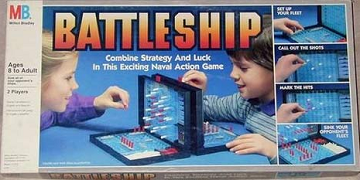
Originally a pencil and paper game known by various names, Battleship became the renowned game we know today in 1967 when Milton Bradley traded pencil and paper grid for plastic grids with holes where players could place pegs to record their guesses.

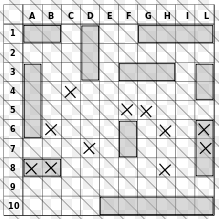
Battleship01A game of Battleship begins with each player deploying their ships (which vary in lengths of 2 to 5 squares) secretly on a square grid. Once their ships are deployed, players take turns shooting at the other player’s grid by calling out a location. The defending responds with whether or not the turn player “Hit” or “Missed” one of their ships.

Players deduce where their enemy’s ships are through deductive reasoning and previous shots. The first player to sink all of their opponent’s ships wins.

Review:
Battleship is a classic modern tabletop game that’s seen its share of rule changes and promotional tie-ins. It even had an action movie, starring Rihanna, based on it in 2012.

Battleship02The core gameplay is solid – I’ve even played some of the pencil and paper variants of the game – and it has inspired numerous games that have come after it. The how many did I get right versus how many did I get wrong mechanic gets a twist in games like Mastermind of the 1970s. Battleship even popularized the secret unit deployment game mechanic which was used with great success in 1947’s Stratego. Further still, a game’s duration doesn’t take long which was odd for games of the time. See Monopoly.

Battleship03But Battleship has limited strategy. You don’t have to thing a whole lot to play it. There are surefire ways to locate another player’s ships (like going in a checkboard pattern on the grid), and you can only hide your ships for so long. A lot of the gameplay comes down to luck, too. If you take down a couple of the smaller ships by dumb luck, you’ll have a much easier time locating the larger ships.

Battleship04Some of the modern variants have – that have done things like adding islands to the grid, increasing ship placement strategy – have reduced game times further, but even with the shortcoming of a lack of strategy, Battleship remains a classic tabletop game. It deserves its status.

Verdict: A classic tabletop game light on strategy and critical thinking, but strong with two player fun and introduced the world to some game mechanics that are still used today.

Timeline: Cooperative Tabletop Games

Many games pit players against each other, but let’s focus on the ones that have you teaming up for the greater good. Can you name these games in the order in which they were released?

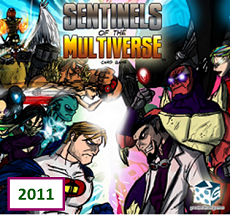
Sentinels01  Pandemic01  ShadowsOverCamelot01

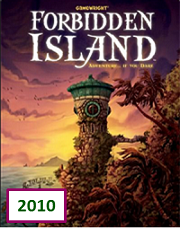
Samurai01  SpaceAlert01  ForbiddenIsland01

GeeklyAnswers

Quiz Answers: Cooperative Tabletop Games Timeline

ShadowsOverCamelot02  Pandemic02  SpaceAlert02

ForbiddenIsland02  Sentinels02  Samurai02

These games are just a handful of cooperative games, but you can get a strong taste of teammate with them.Let’s see how we did.

All 6 correct) You survived an onslaught of hostile space fighters. Good job, Captain.

4-5 correct) You stopped the villain with only one rogue monorail taking out a few hundred civilians.

2-3 correct) The disease took out half the world’s population, but you have enough people for humanity to survive.

0-1 correct) You may have died during the raid, but you died with honor.

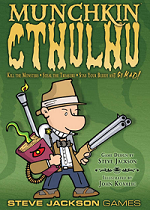
Munchkin: Cthulhu

Designer: J.H.G. Hendriks and Steve Jackson
Publisher: Steve Jackson Games
Date Released: 2007

Number of Players: 3-6
Age Range: 10 and up
Setup Time: minimal
Play Time: Around 90 minutes

Game Mechanics:
Dice Rolling
Trading
Variable Player Powers

Game flow:
Munchkin: Cthulhu is a full spin-off game from the game Munchkin. I won’t bother with a full review of the game flow here, but if you missed our review of the original Munchkin, you can read our review of it here.

Review:
The twist Munchkin: Cthulhu makes with the Munchkin franchise is a refreshing one. There’s a reason it has the most expansions of any Munchkin spin-off. It does the rare thing of improving on the original.

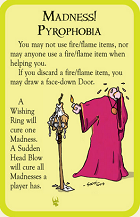
MunchkinCthulhu03Munchkin: Cthulhu adds madness cards to the mix, and these cards act as double-edged swords. Kleptomania forces a player to attempt to steal another player’s item at the beginning of their turn, and if you fail to steal an item, you suffer the consequences. Other madnesses alter the gameplay in humorous and intriguing ways, but Munchkin: Cthulhu throws in a lot more odd game mechanics.

MunchkinCthulhu02Even the classes get a facelift with the cultist. You could be trying to convert everyone or get bonuses for the number of characters who are cultists. There’s just enough weird to Munchkin: Cthulhu that it shines on a crazy diamond.

MunchkinCthulhu04Verdict: A bizarre and delightful entry for the Munchkin family.

Geekly TV: January 26, 2015

Grimm

Grimm

Kyle’s Review

Usually, I try not to reveal too many spoilers – creating a secrets page that you can opt to click on – but I can’t avoid spoilers with this particular episode of Grimm. You’ve been forewarned. Continue at your own risk.

Grimm turned the corner with this episode. This entire season has teetered between good and not-so-good, but “Tribunal” accomplished a lot: the gang’s back together in a most exciting way, Wu continues to shine as his character gains depth, and Juliette finally gets the attention she deserves.

Let’s start with the gang getting back together. Team Nick rescues Monroe from the Wesenrein – or Nazi Wesen – just before they plan to stake him. It’s always a good sign when Nick uses his detective and police skills. It’s even better when he has to shift gears to his Grimm duties. And boy does he ever get Grimm on those Nazi Wesen’s hind quarters.
Nick has help of course. The two least likely sources are Wu and Juliette. We’ll get to Juliette in a bit, but first, we’ll tackle Wu. I still like how Wu isn’t as quick to accept the Wesen world as Hank. Oddly enough, I thought – based on how the characters behave – that Wu would be more receptive of another world than Hank, but I’m glad to see a distinction between these two. Even though Wu struggles with this knowledge, he holds his own both in combat and the interrogation room. I just wish he retained some of the comedic value he had in previous seasons, but I don’t begrudge him growing.

Then we get to the most pleasant surprise in Grimm this season: Juliette. I haven’t cared for Juliette as a character the last three seasons, and I’ve cared even less about Nick’s and Juliette’s relationship, but Juliette’s transformation into a Hexenbiest has me tuned in. We get clues that a “made” Hexenbiest isn’t too uncommon, so this occurrence tracks with the Grimm lore set in seasons past. And it’s no small thing that Juliette gains her powers as an adult. Most Wesen are raised to fear others and hide who they are. They even understand their abilities, so it’s nice to see a character struggle, trying to play catch-up in the Wesen world. Her relationship with Nick has to suffer, too, and I can’t wait to see how this happens.

Verdict: “Tribunal” is quite possibly the turning point Grimm needed for a great season—both for its main storyline of rescuing Monroe and for the development of two characters.

Constantine

Constantine

Kyle’s Review

This episode of Constantine had a lot in it. I liked that Chas drove this story. I wondered how he gained his immortality, and “Quip Pro Quo” did a great job of delving into his backstory.

But backstory means a lot of flashbacks. Most of these flashbacks worked, but I didn’t buy Chas’s wife Rene resenting Chas for not being around. Sure, his aiding of John Constantine mimics a police officer saving lives, and relationships don’t always end well for people in this line of work, but Chas died and came back to life. This miracle makes Rene come off as ungrateful.

Chas on the other hand becomes a more likeable character than he already was. We find out that his desire to help people has deeper meaning than just helping out John Constantine. He feels guilty about how he obtained his 47 lives (more on this in our secrets page), and it’s this focus on Chas that makes this week’s episode of Constantine great.

Constantine throws in some other geeky goodness into the mix. I enjoyed Felix Faust as the antagonist. Maybe his inclusion in this episode means that he’ll return to the comics.

Verdict: Constantine may have fell short in its second part to its midseason cliffhanger, but it finds solid ground with this Chas-driven, heart-felt episode.

Dig deeper into the netherworld with our Constantine secrets. But we warn you; they contain spoilers.

Bobs

Bob’s Burgers

Kyle’s Review

Logan, Louise’s arch enemy who only appeared in the first episode of season three, returned in this weeks’ Bob’s Burgers, so this week focused on Louise.

I like Louise, but I don’t dig Logan. He’s too much of an entitled creep to stomach. His mother Cynthia is just as bad, and she played a major role in this episode, too. And to make matters worse, the put-upon Bob has to give up his second calling of gardening to remove Logan and his mother from the situation.

We have a quip pro quo situation. Bob gets a garden box at the community garden, while Logan gets to work at Bob’s Burgers and his mother can write an essay about the horrible things Logan doesn’t have to do at the restaurant. See what I mean? Entitled. Soon, Linda’s at Cynthia’s throat and Louise is at Logan’s. Throw in some of Tina trying to get the skinny on the boy’s locker room, and you get an episode that retreads old jokes and is a little light on laughs.

But Gene had a few shining moments. He makes a statement early on about Logan joining the crew, “Finally, another sausage at this party.” It was crude, but he tried to bond with Logan for the rest of the episode, desperate to have another male figure, and that drew my attention to the fact that Gene doesn’t have a lot of male friends. I know Gene loves his sisters, and he’s comfortable around girls, but I hope they don’t abandon Gene’s search for a friend.

Verdict: If you can get past Linda’s and Louise’s cattiness, you might find a deeper story with Gene.