Heroes Reborn Review: “Brave New World/Odessa”

HeroesRebornBanner

Kyle’s Review

I don’t know who – if anyone – asked for a Heroes reboot, and still, NBC has given us Heroes Reborn. There was no way the new miniseries could live up to the spectacle that was Heroes’ first season, but the first two episodes (they aired on the same night) weren’t as bad as the woeful third and fourth seasons. After Heroes “saved the cheerleader, saved the world” – that’s a play on the first season’s tagline – its quality deteriorated with each subsequent season. So you could rate Heroes Reborn by how it falls on the Heroes grading scale: it’s better than the second season and therefore watchable.

I have a confession to make. I stopped watching Heroes after the first few episodes of season three, but once the show made it to Netflix, I binged on the remaining episodes. Even though the fourth season was lacking in many areas, it was interesting and I liked how the final show ended: Claire exposed the existence of supers to the world. Those final two minutes of Heroes made me a little curious about what would – or could – happen next. Heroes Reborn fast forwards the story to a world fully aware of evolved humans.

“Brave New World” and “Odessa,” the two episodes of Heroes Reborn that debuted on the September 24th, introduced us to a heap of characters. Both episodes felt rushed when compared to the original series’ first season. That could be because many characters in the first series were related to one another and they had a lot of scenes together. As far as I can tell through the first two episodes, most of Heroes Reborn’s characters don’t have the same connective tissue, so we’re left with several disparate story threads.

I can’t remember when we were first introduced to the tagline, “Save the cheerleader, save the world,” but it felt like that line was uttered within the first four episodes of Heroes’ first season. Granted, we aren’t to the fourth episode of Heroes Reborn but Heroes’ first season lasted for 20 episodes, while Heroes Reborn is a 13 episode miniseries and we only caught a glimpse of the over-arching threat that should bind the heroes together. I won’t spoil it – because I don’t know enough about it to spoil it – but the big threat looks like the eye of Sauron.

In fact, we saw so little of this threat and the hero protecting the world from it that when I saw a promo picture of the cast, I didn’t recognize the blonde girl. It took me a minute to remember that she’s the one keeping an eye on the eye of Sauron. Speaking of the cast, the new cast works well enough. Heroes Reborn didn’t include too many members of the original cast – Jack Coleman as Noah Bennet and Jimmy Jean-Louis as The Haitian are the only main cast member we saw in the first two episodes – but they rehashed many of the same character types. Tommy is the new Claire. Miko is the new Hiro. Molly returns but with a new actress, Francesca Eastwood, portraying her. The only characters I found new were the two grieving parents/bounty hunters Luke and Joanne Collins, played by Zachary Levi and Judith Shekoni, and the Mexican superhero who wears a luchador mask.

The first two episodes of Heroes Reborn were good but they didn’t blow me away like the first season of Heroes. But then again, I didn’t expect Heroes Reborn to be as good as the first season of Heroes. I’m concerned that we don’t know enough about the main narrative with only 11 episodes remaining. Heroes Reborn better hit the gas on bringing these characters together soon. A catchy slogan wouldn’t hurt either.

Verdict:

The first two episodes of Heroes Reborn weren’t the first two episodes of the original Heroes, but “Brave New World” and “Odessa” weren’t as bad as Heroes seasons 2-4 either. There’s enough to the first two episodes to keep me watching for a while.
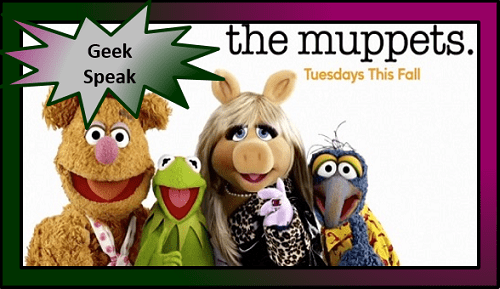
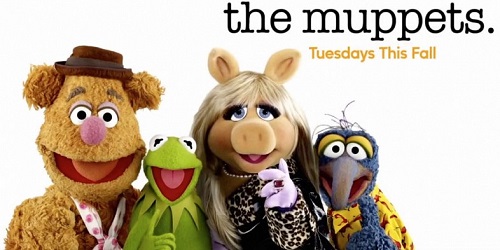
The Muppets Review: “Pig Girls Don’t Cry”

TheMuppetsBanner

Kyle’s Review

Rejoice! The Muppets have returned. The creative team behind the new Muppets packed plenty of material into 20 minutes. Love or hate the separate cameras for each character approach – which apes Modern Family – you have to admit that the Muppets were made to break the fourth wall. Heck, they had the two curmudgeons in the audience from the original show.

As you would expect, we got a healthy dose of Kermit, Miss Piggy, and Fozzie. The first episode, “Pig Girls Don’t Cry,” revolved around Kermit and Piggy’s break up and Fozzie meeting his human girlfriend’s parents. Even if you don’t know who these characters are, The Muppets gave us some nice background. We saw their history play out—and the Muppets have a lot of history. The fourth wall breaks worked for the most part. Gonzo actually had a chance to poke fun at Modern Family’s storytelling device of individual cameras for each character. Fozzie had as many one liners and puns with his girlfriend’s parents than he did during his standup. And while I didn’t know whether or not I’d like Kermit moving on from Miss Piggy when I first heard of this series, their breakup made sense and we could see those two getting back together at some point. Kermit does have a type.

A variety show, like the Muppet’s former show within their show, doesn’t translate in today’s market, and the switch to Miss Piggy fronting a late night show in The Muppets is a good compromise. Like the original Muppet Show, we had guest stars Elizabeth Banks and Tom Bergeron, and musical guests Imagine Dragons. If you’re not a huge Imagine Dragons fan, that’s okay. They played with Dr. Teeth and The Electric Mayhem as the credits rolled. I thought that was a nice touch.

If you’re expecting sketch comedy like the original, don’t. The Muppets all but abandon their original format. They’re still the characters you love but this show’s gone in a different direction, and as if there was any doubt, I’ll keep watching.

Verdict:

The Muppets tip their hat to their original Muppet Show but it isn’t a complete retread. As a result, it’ll turn away some viewers but it’s a good show in its own right.

Blindspot Review: “Series Premiere”

BlindspotTVShow

Kyle’s Review

We open on Time’s Square. An NYPD officer spots a duffle bag, large enough to hold a human, with a tag that reads, Call the FBI. We jump cut to a bomb disposal unit approaching the mysterious bag and the oddest thing up to this point is seeing an empty Time’s Square. If you’ve caught any of Blindspot’s previews, you’ll know that a woman, played by Jaimie Alexander (Thor’s Lady Sif), is inside the duffle bag. She’s naked and covered head to toe in tattoos that could lead the feds to a killer.

We’ve seen, or heard, a lot about this opening sequence, but it does its job: it thrusts the viewer into the action, in medias res. I’m a fan of beginning a story in the middle of narrative, so long as we get enough of the story’s background (i.e. the original Star Wars trilogy). Blindspot chose to jump from NYC to Kentucky and the effect jarred me. I wondered what made the Kentucky agent Kurt Weller so important and then I saw Weller’s name tattooed on the unknown woman’s back.

The rest of the show played out like a hyper-stylized mix of mystery, thriller, and police procedural. I connected more with Alexander’s Jane Doe – and I think that’s the point – but Kurt Weller (Sullivan Stapleton) kept Jane Doe and the audience at arm’s length. In fact, most of the cast comes off as wooden and the dialogue is clipped, stilted and Alexander carries Blindspot.

Despite her strong performance, Alexander’s Jane Doe flies a little close to Sif (Thor), but there may be enough of a Black Widow vibe to counterbalance any similarities and Blindspot weaves enough webs that more than one season will be needed to trace them all. I’m sure that the person(s) behind Doe’s tattoos and mind wipe has the prerequisite twists and turns needed to fuel Blindspot’s narrative, but at this point, Blindspot doesn’t spend as much time developing any character besides Jane Doe and that’s only because she has a mysterious past and her tats reveal the weekly and series’ puzzle.

I may watch for a while longer but Blindspot will need to branch out from Jane Doe.

Verdict:

Jaimie Alexander gives a great performance but the rest of the cast, and the writers room, need to step up to make Blindspot something sustainable. It needs to be something more than an excuse for a half-naked Alexander.

Minority Report Review: “Pilot”

MinorityReportTVShow

Kyle’s Review

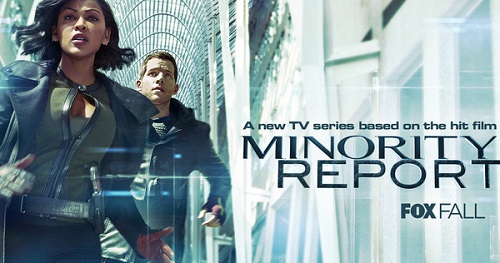
I didn’t know what to expect with Minority Report: a TV series set after the events of the movie of the same name, based on a Phillip K. Dick short story. For those of you who aren’t familiar with the short story or movie, I’ll give you the cliff notes version here. Disregard the next paragraph if you’re already familiar with the story.

Children, born of junkies of a future drug, are given therapy and it turns out that the chemical cocktail running through their veins gives the kids precognition. This precognition is limited to future murders within a 100 mile radius of the children’s location and thus Precrime is born. Precrime would bust murders before they killed and everything worked well until one man was setup for a murder and the director of Precrime was revealed as a fraud. Precrime was disbanded and the children, now adults, were sent to live out their days on a farm in the middle of nowhere.

One of the precogs (one of the three children, now adults, who have precognition) can’t take solitude anymore. The precog Dash returns to Washington DC to use his abilities to stop crime before it begins. Unfortunately, Dash is one of the twin precogs, so he only possesses half the precognitive powers: Dash sees what happens, while his twin Arthur knows the names. That’s the setup for the Minority Report TV series and it’s a pretty interesting one. But I find it convenient that the one twin who can see the crimes, but not the names, is the one swinging into action. Arthur, Dash’s twin who can pull names, has turned sleazy and adds a twist to the precog dynamic, and Agatha, the strongest of the precogs and the focus of the movie, would’ve had too many powers and the episodes would’ve wrapped up without a hitch. Like I said, it’s convenient.

Minority Report’s visuals are phenomenal. The special and practical effects capture the feel of the film, but the acting and goofy dialogue exchanges leave a lot to be desired. Minority Report did have some ah moments. I wondered what Wilmer Valderama (Fez from That 70s Show) was up to. At one point, Dash was watching an advertisement for The Simpsons’ 75th anniversary. Lord, I hope The Simpsons doesn’t last that long; the original cast couldn’t still be on the show 50 years in the future. Anyway, Minority Report has plenty of Easter Eggs. I just wished it had more substance. Before the show premiered, I wondered if there was any more story left to tell. It appears as if the Minority Report TV show is scrapping the little it can.

Perhaps it’s because I watched Blindspot on the same night, but I can’t help but compare Minority Report to Blindspot. Both shows suffer some of the same flaws (flat writing and acting), but Jaimie Alexander’s performance in Blindspot places her show ahead of Minority Report.

Verdict:

Minority Report is visually stunning and it has as many Easter Eggs as a Marvel movie, but I may not be watching it for long. It needs to show that there’s more to it than a heavy dose of nostalgia.

The Awesomes Review: “Awesomes for Hire”

TheAwesomesBannerSeason3

Kyle’s Review

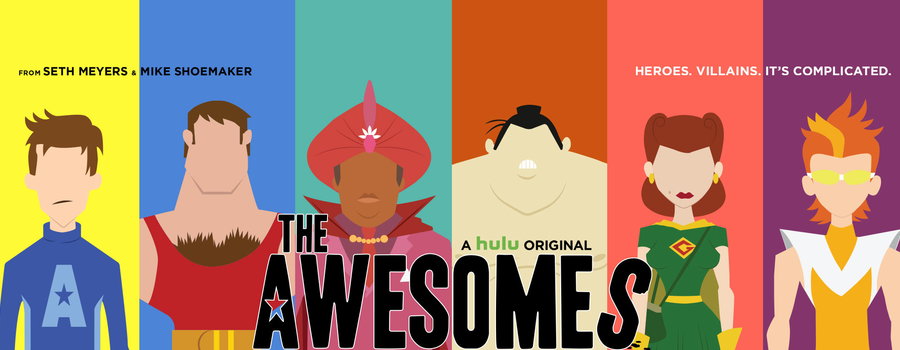
Mr. Awesome pulled the trigger on his evil plan and The Awesomes got kicked into high gear this week. That was until government bureaucracy got in the way, which is often the case. We’ll get back to the episode’s review in a bit – and there’s plenty of tasty bits in “Awesomes for Hire” – but I have to share a couple of things that tickled my funny bone within the first three minutes of air time.

Jokes of the week: “A surprise earthquake ruined Jenga-Con.” “I never heard so many people scream ‘Jenga’ at once. It was deafening.” I love Jenga-Con and Muscleman’s subscription to Unicorn Detective: a cop show featuring a unicorn that solves murders in the My Little Pony universe. Those two jokes in “Awesomes for Hire” got me chuckling early and often.

Prock’s dad, Mr. Awesome, got the team kicked out of Awesome Mountain, so Prock runs to his momma with his tail between his legs—looks like Impresario isn’t the only one with Mother issues. Prock’s mom is a best-selling author of the 1970s book Super Dummies. It’s safe to say that she doesn’t approve of Prock’s super hero profession.

The rest of the episode bounced between Mr. Awesome trying to disband the government’s Superhero Agency, Mr. Awesome assembling a new Awesomes team and Perfectman regretting that Prock’s team left headquarters, and Prock’s mother trying to understand her son’s desire to fight crime (or play superhero) with the help of her psychiatrist, second husband. In short, plenty of new threads were introduced in “Awesomes for Hire,” enough to fuel The Awesomes until the end, when everything gets tied together.

Other great nuggets from this week’s episode:

  • Gadget Gal is outed as a hoarder
  • After realizing she has a problem, Gadget Gal sells her junk and gets rick
  • Prock’s mom is a little too involved in Prock and Livewire’s relationship
  • Don’t overlook the small crimes: supervillains may be behind your kid’s stolen bike
  • Beware the Super Bike; cyclists are tired of sharing the road

Verdict:

“Awesomes for Hire” is another great addition to The Awesome’s third season. This season’s main story arc is more cohesive and we aren’t inundated with too many new characters.


Super Tooth

Gather your herd of plant-eating dinosaurs while avoiding those pesky carnivores.

Super Tooth is an easy to learn set collection game, geared towards a younger audience. This light and fast game can introduce kids to gaming and to new dinosaurs.

We’ll get to the game flow and review in a bit but we have to cover the technical stuff first.

Designer: Neil J. Opitz
Publisher: Farm Fresh Games and Gamewright
Date Released: 2014
Number of Players: 2-4
Age Range: 5 and up
Setup Time: 5-10 minutes
Play Time: 45-60 minutes (less for a family game)
Game Mechanics:
Press Your Luck
Set Collection

SuperToothBanner

Game Flow:

The object of Super Tooth is to collect three teeth – or super teeth – before any other player. You earn teeth by collecting sets of herbivores. We’ll talk more about collecting herbivores in a short while but let’s set up the game first.

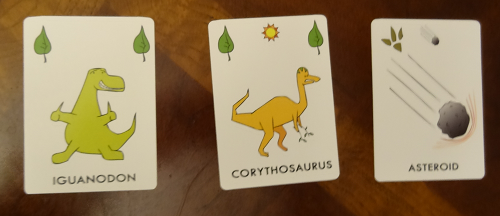
You begin the game by shuffling the Super Tooth deck, and at the beginning of each player’s turn, including the first player’s first turn, you place cards from the draw pile face up until there are three face up cards in the landscape (central playing area).

SuperToothSampleCards

Example of the central playing area

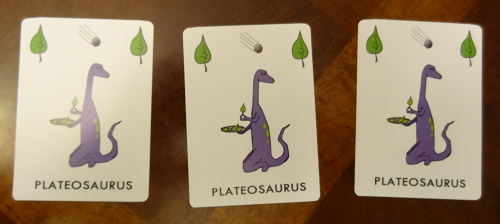
On your turn, you may add all the face-up herbivores of the same type to your hand. Let’s say that three iguanodons wander into the landscape on your first turn. You lucked out and can grab them for a set and one super tooth, but most of the time, you’ll only be able to add one plant-eating dino card at a time to your hand. Thankfully, you have no hand size. Collect to your heart’s content.

SuperToothSetOfThreePlateosaurus

A set of three plateosaurus

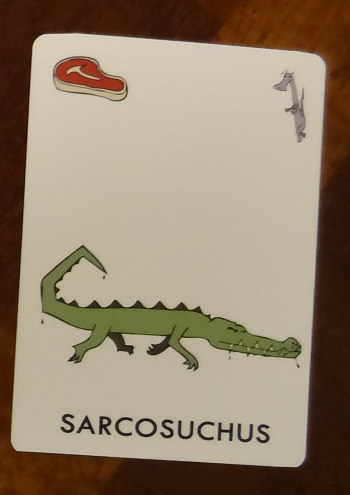
Carnivores aren’t as nice as herbivores. If they show up in the landscape, they prevent you from collecting a plant-eater on your turn unless you deal with them. Each carnivore has their favorite type of herbivore that they like to eat. You can discard an herbivore of the type that carnivore likes from the landscape if it’s in play or you can discard that carnivore’s favorite herbivore snack from your hand.

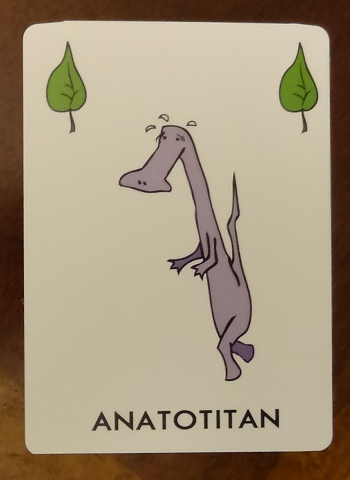
SuperToothSarcosuchus  SuperToothAnatotitan

The meat-eater sarcosuchus likes to eat the anatotitan (the meal preference of all dinos is located in the top right-hand corner of the cards)

If you don’t have the carnivore’s dinner handy, you can also use the triceratops to chase them away. While you can collect three or more triceratops for a set, just like any other herbivore, you’ll want to keep them on hand just in case you run across any meat-eaters because if you don’t appease or scare off the carnivore, you’re not collecting an herbivore.

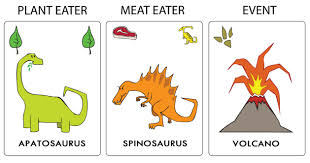
There’s a third type of card: events. These cards can be good, bad, or indifferent. I won’t go into detail about what each event does but keep in mind that each one has a global effect of some kind.

SuperToothSampleCards

At the end of your turn, you may exchange sets of herbivore cards from your hand for teeth. Three of a kind gets you a tooth, four of a kind earns you a tooth and an extra plant-eater from the landscape, you get two teeth for five of a kind, and if you collect and turn in six plant-eaters of the same type, you win with an automatic three teeth.

Game Review:

Super Tooth is easy to learn and quick to play, which is perfect for a filler game (a short game you play in between, or as a warm up to, longer games), but I don’t know if it has a lot of appeal outside of the younger demographic Gamewright has targeted.

SuperToothGameWright

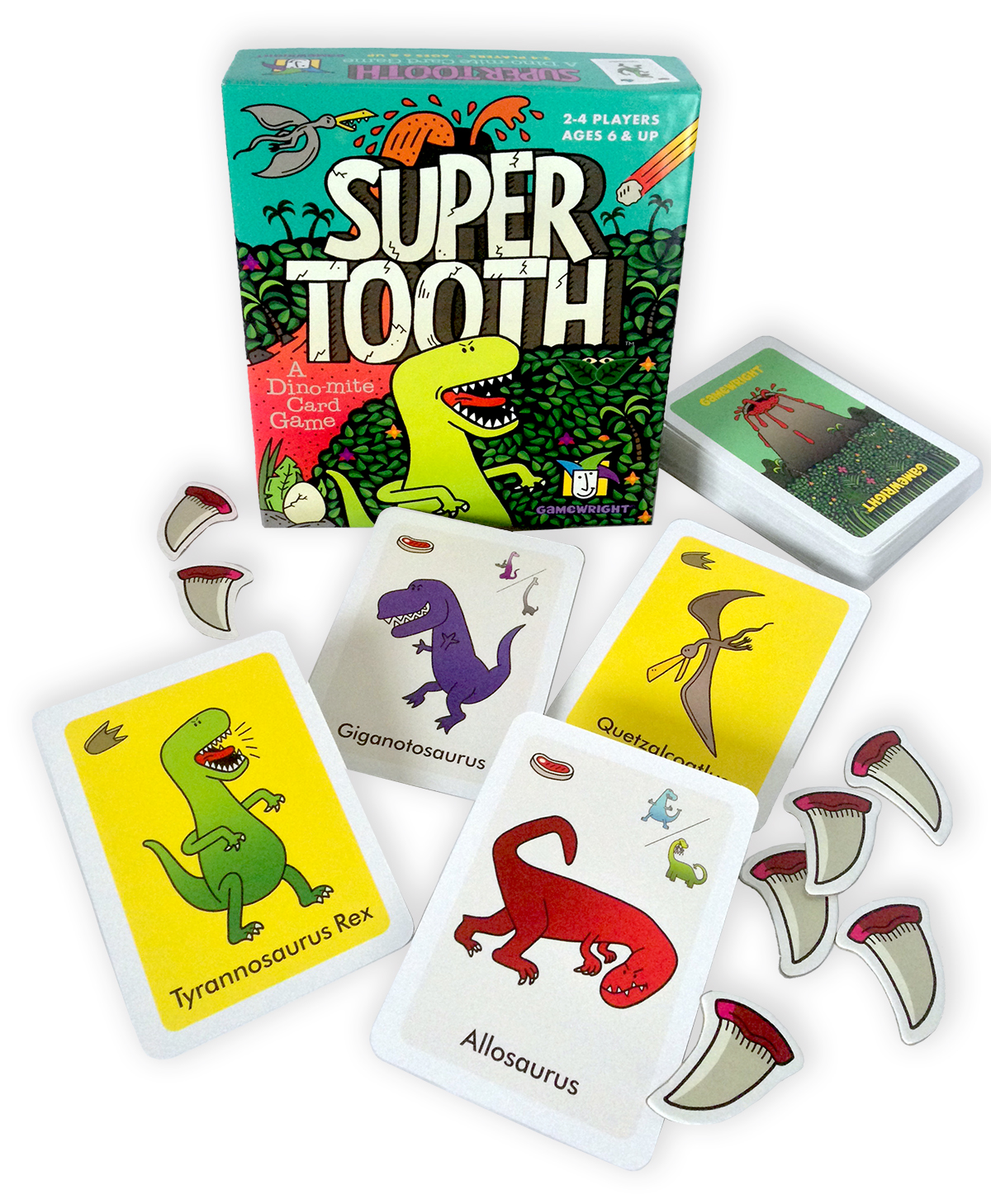
What comes in the Gamewright version of the game

Luck plays too large of a role for me to suggest Super Tooth for older gamers. Did you see how I ended the game flow with a whopping six of a kind winning you the game? Yeah, that’s not happening. Super Tooth devolves into a simple flip the card over and react to it game, and the best way to win is by collecting three plant-eaters and then turning them in as soon as you get them. Repeat this process until you have three teeth.

Most of the events are neutral and some are even interesting. One event adds another card to the landscape, so you have four cards in which to choose. Another event, the meteor, resets all other rules and benefits gained from other events and discards all the cards in the landscape. But there is one event that forces players to turn in their hands to a communal pot, shuffle all the cards, and then redistribute the cards evenly to all the players at the table. What’s the point of me collecting cards when the game takes those cards away from me?

Okay, I see why that one hand stealing event’s in the deck. This mechanism levels the playing field so adults can’t gang up on kids, and this illustrates how Super Tooth is geared toward young children of about five to eight years old.

Verdict:

Super Tooth is fun for the younger crowd (5-8 years old) but older gamers might want to look elsewhere like Dominant Species for their dinosaur card game adventure.


The Awesomes Review: “Les Miserawesomes”

TheAwesomesBannerSeason3

Kyle’s Review

It was inevitable that The Awesomes would roll out a musical episode – I don’t know of too many comedies that don’t try at least one episode of that ilk – and “Les Miserawesomes” worked within the confines of current story arc. Paris was left in ruins, so Mr. Perfect and Impresario hopped the pond for clean-up detail.

We still have Mr. Awesome pulling the strings (not much happened with his story but that’s to be expected this early in the season) and he uses The Belgian Waffler as this week’s instrument. I can’t say that I cared for the singing; some of the cast don’t own the voices to pull off a “Les Mis” parody. But I guess a good voice isn’t a prerequisite for a musical spoof and it was nice to watch a musical episode tone down Gadget Gal: she gets on my nerves at times. She still sneaked in a couple of jabs at French frogs.

I also liked how Madame Hunchback played into this episode. She may play a larger role as the season progresses and that’s fine with me. Anything that either complicates Impresario’s relationship with his mother or shifts his narrative away from his unhealthy mother/son relationship is fine by me. The Awesomes’ third season is going off without a hitch. My only concern is that Sumo has been missing from these first three episodes. Hopefully, The Awesomes will bring him into the fold soon.

Verdict:

“Les Miserawesomes” was an inevitable musical spoof but The Awesomes pulled it off well enough. This week’s episode was another solid one.

Quiz Answers: Manga Timeline

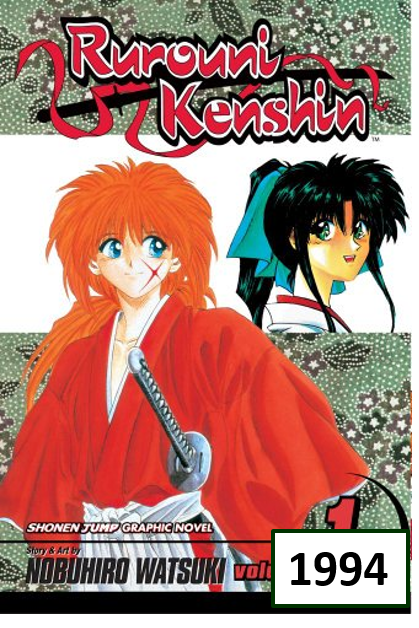
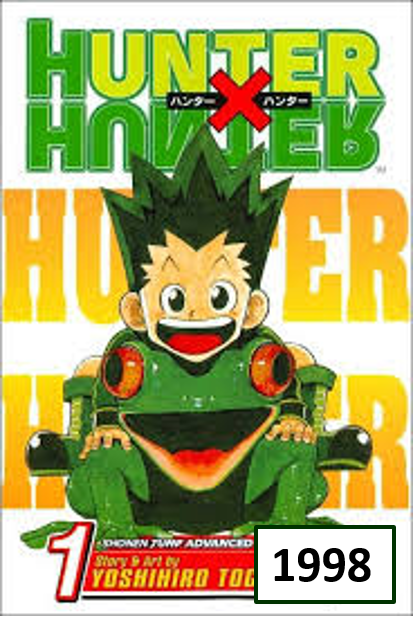
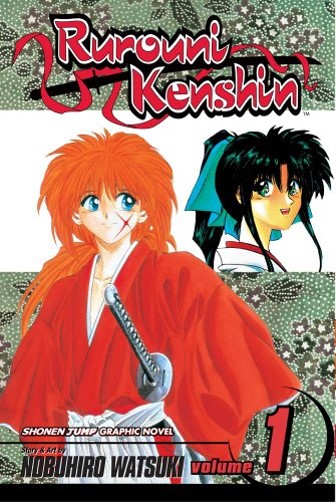
RanmaOneHalfWithYear  RurouniKenshinWithYear  HunterXHunterWithYear

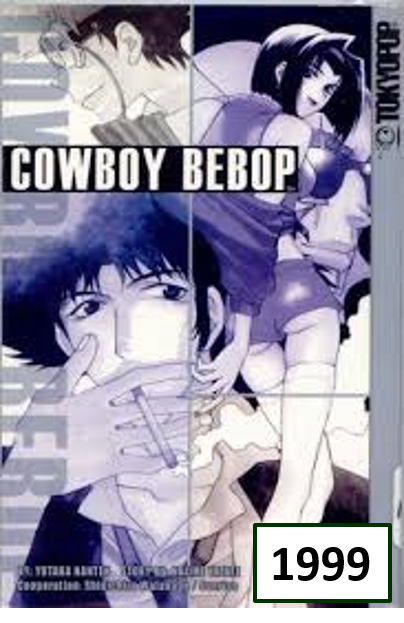
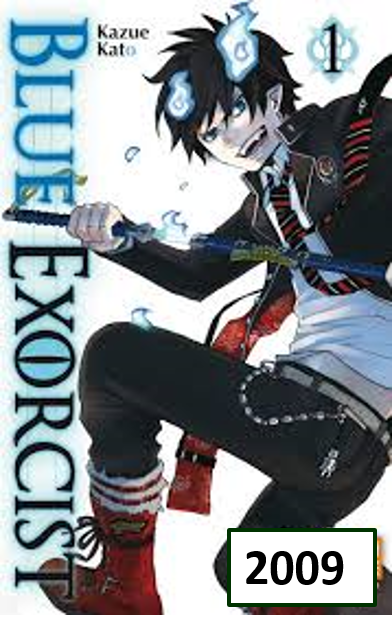
CowboyBebopWithYear  OuranHighSchoolHostClubAnswer  BlueExorcistWithYear

Let’s see how you did.

All 6 correct) See you later, Space Cowboy. Mission accomplished.

4-5 correct) You reverted to the manslayer for a bit before barely winning the battle.

2-3 correct) You tried to impress the ladies and messed up somewhere in the middle.

0-1 correct) Did you accidentally fall in Nyannichuan?

Timeline: Manga Series

Think you know your manga? Let’s test your knowledge with a timeline quiz but keep in mind that many of the following manga series started as single chapter specials before they became a full-fledged series. We’re looking for the date the series began. Put these manga series in chronological order by their original publication dates.

RurouniKenshin  OuranHighSchoolHostClub  HunterXHunter

CowboyBebop  RanmaOneHalf  BlueExorcist

GeeklyAnswers

Pandemic: Contagion

You are the disease that will end humanity and there is no cure. Can your disease net the largest kill count?

We’ll get to Pandemic: Contagion’s infectious fun but let’s wash our hands with some game details first.

The Fiddly Bits
Designer: Carey Grayson
Publisher: Asmodee and Z-Man Games
Date Released: 2014
Number of Players: 2-5 (best with 5)
Age Range: 13 and up
Setup Time: minimal
Play Time: about 30 minutes
Game Mechanisms:
Area Control/Area Influence
Hand Management

Game Flow:

PandemicContagionBanner

Each player has their own Petri dish, player board, score marker, and disease cubes in their color.

The player boards have rankings for three things: Incubation, Infection, and Resistance. These rankings are your mutation levels. Place one of your disease cubes on the Level 1 position of each mutation on your board. The rest of the cubes go in your Petri dish for safe keeping.

PandemicContagionHandOfContagionCards

Hand of Contagion cards and Player Board

Shuffle and deal 4 Contagion cards to each player and set the remaining cards aside as a draw pile. There are only six types of Contagion cards, representing the regions you can infect.

Then you shuffle and, according to how many players are in the game, deal a number of City cards faceup in the middle of the table. Set the remaining City cards aside—they won’t be needed.
PandemicContagion-Cities

City Cards

Starting with the last player (players determine play order in some fashion) and moving counter-clockwise, each player places 1 of their disease cubes in a city of their choice.

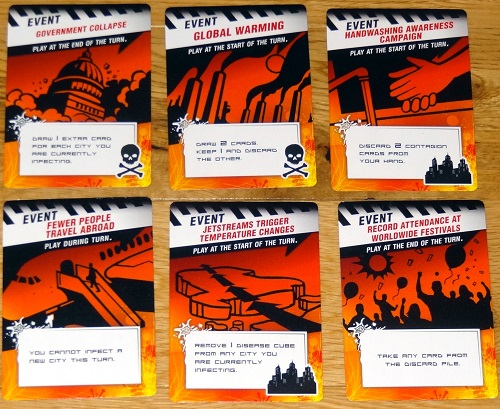
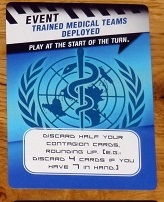
Then you shuffle the Event and WHO (World Health Organization) cards separately and, without looking, remove 3 of each type from the game. With the remaining cards, build the Event deck (from the bottom up):  1 WHO card, 3 Event cards, 1 WHO card, 3 Event cards, 1 WHO card, and 3 Event cards, for a total of 12 cards. This is the graphic Contagion gives in its rulebook.

PandemicContagion-Event

Event Cards

At the start of each round, reveal the top card from the Event deck (Event cards usually have positive effects, while WHO cards are trying to stop you, the disease) and read the text aloud for everyone. Sometimes you’ll resolve the event at the beginning of the round (the card will tell you how) but most of the time, you’ll resolve the event during each player’s turn. Starting with the first player, resolve the event and take two actions. When that player’s finished, play continues clockwise.

PandemicContagion-WHO

WHO Cards

You have 3 available actions on your turn and you can take them in any order: draw cards, infect a city, and mutate your disease. You can draw as many cards from the Contagion draw pile as your Incubation mutation allows, so long as you don’t exceed the maximum hand size of 9. Infecting a city allows you to place a number of cubes on a city, up to your Infection level, by discarding Contagion cards of the same region as the city you wish to infect. You can also discard Contagion cards to mutate your disease, making your disease stronger.

Each city card has a population number (in millions of people) in the top right-hand corner; every disease cube counts as one million infected souls. Once there are disease cubes equal to a city’s population, stop playing disease cubes (there’s no one left to infect). Discard the city—everyone living there is dead—and tally up the points of that city. The disease with the most cubes scores the top number, the one with the second most gets the second number on the city, and third place gets the bottom number.

PandemicContagionNewYorkCloseUp

Close Up of New York

When the last WHO card is revealed or when there are only two cities left on the table, complete the round and end the game. The player with the highest kill count wins.

Game Review:

Contagion is the only Pandemic spinoff or expansion not designed by Matt Leacock, and it shows. It’s the only game in the series that’s competitive—and that’s okay—but it isn’t as fine-tuned as the other games and the puzzle the game presents can be a little easy to solve.

There are few cards that will hurt your disease and if you play your cards right, they’ll have little to no effect. The WHO cards can slow you down but there are only three of them in the Event deck, and you have three rounds with which to prepare for them.

Each WHO card does one of three things: you discard Contagion cards, you remove Infection blocks from a city, or you weaken your disease. Players who manage their hands won’t have to worry about discarding Contagion cards; they’ll either have few or no Contagion cards when a WHO card comes around. If you manage to kill off the cities with a lot of your infection blocks, you won’t lose too many of those either. All the while, you can lower your Resistance level and ignore the effects of one card, and you start off with one level of Resistance.

PandemicContagionCloseUpOfAWHOCard

Close Up of a WHO Card

Still, the WHO cards’ lack of venom is a nice departure from the usual Pandemic fare. Pandemic games stack the deck against its players. Contagion’s strategy elements lie in the interaction between players. You have a little bit of luck, drawing into the right Contagion cards, but once you build up your engine, Contagion gets easy.

Don’t get me wrong, Contagion is a load of fun. It’s also a great change of pace for the Pandemic brand: it’s competitive and you play as the disease. But once you figure out how to properly manage your hand and resources, Contagion proves to be a light-weight in the Pandemic family. I’m not saying I win all the time but I don’t tend to finish in last place either.

Verdict:

Pandemic: Contagion isn’t as heady as the other members of the Pandemic family but it’s a nice addition. If you love Pandemic or the idea of being a disease trying to wipe out humanity, you should give Contagion a try.