
Geek Out

Geekly’s Free Video Game Summer: July 18, 2016

FreeVideoGame4

Sorry I’m late with this week’s post. My head was in the clouds and as a result, we’re headed to the stars with this week’s Geekly Free Video Game Summer. Let’s get to some games that are out of this world.
Star Wars Galaxy of Heroes

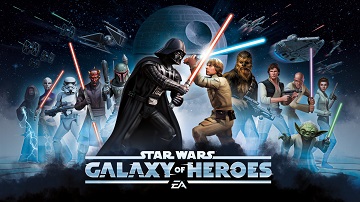
Star Wars: Galaxy of Heroes

I have to admit that I spent more time with Star Wars: Galaxy of Heroes than I did with the other games on this week’s list—I’m a bit of a Star Wars geek. There’s also a lot going on in this game.

Players accrue two forms of energy and countless forms of in-game currency. If you’ve read our “6 Things to be careful of in free-to-play games” (here’s a link in case you missed it), you’ll know that more than three currency types in a free-to-play game denotes a cash grab. Star Wars: Galaxy of Heroes is a cash grab, but it’s enjoyable none-the-less.

Intellectual properties owned by Disney have a history of fun, free-to-play, cash cow video games—I’m looking at you Marvel: Contest of Champions—and that’s not a bad thing, so long as you know what the game is tempting you to do. Star Wars: Galaxy of Heroes’ main campaigns—yes, there’s more than one—are scaled, with regard to difficulty, in a satisfying way. I could see some players getting frustrated and buying boosts to shave time off of developing their characters for the main quest lines, but the Galaxy of Heroes’ main source of frustration rests with the Galaxy War and Battle Arena game modes.

Both the Galaxy War and Battle Arena are player versus player game modes. It makes sense that PvP game modes would be more difficult than most of the other game modes, but the Battle Arena is where Galaxy of Heroes separates the players who pay for boosts from the ones who don’t. I’m sure you could earn enough experience to do well in the Battle Arena and it’s not vital that you place in the top 50 players, but it helps if you place high in these game modes and it’s obvious that you won’t unless you spend real world dollars. Don’t worry. There are other ways to develop your characters and get stronger. If you resign yourself to the fact that you won’t be a world beater in the Battle Arena, you’ll find that finishing in the top 1000 isn’t bad for power ups.

Did I mention that this game has a mountain of game modes? Well, it does. I’m almost level 50 and I still haven’t unlocked all this game has to offer. There might be too much going on for my liking but Galaxy of Heroes eases players into new game modes, so learning any new game modes is easy enough, and the inclusion of extra game modes serves to bridge the divide of paying and non-paying customers to some extent.

The last game mode I’ll mention is guilds. Guilds are popular in free-to-play games and I should probably write an article on what makes a good guild or guild mode at some point, but let’s stick with Galaxy of Heroes for the moment. Star Wars: Galaxy of Heroes doesn’t have the worst guild set-up, but I wouldn’t mind a little more feedback for guild activities and there’s something cheap with the guild gold introduced when you join a guild.

For the most part participation in your guild doesn’t feel any different from playing on your own. There are raids that you can assist with—if one of your guild leaders starts a raid—but the chief way to contribute to your guild is to perform menial tasks like using energy fighting in Cantina Fights. Well, if you log in during the day, you’re going to use energy fighting in Cantina Fights whether you’re in a guild or not. Sure, a daily task for your guild might dictate which game mode you’ll play more of that day, but I prefer guild modes in other games that make guilds use the same currency players use for their own progression. It makes for fewer forms of in-game currency and guild members talk more about how they’ll contribute credits toward group goals; they have to balance personal and group success.

Despite a few flaws, Star Wars: Galaxy of Heroes is fun and I recommend it. Just be mindful of how the game is trying to coax players into spending real world money. It’s okay if you want to spend real money on a free-to-play game, just be careful. You could spend a heap of money on in-game purchases.
Star Trek Timelines

Star Trek: Timelines

Star Trek: Timelines is disappointing. It could easily be the one game that’s head and shoulders above the rest on this list, but crashes and load times make it difficult to navigate.

Perhaps you’ll have better luck than me—I’m playing Star Trek: Timelines on iOS—but I have to wait at least thirty seconds any time I want to load a new area, the game logs me out at pivotal moments, and often the game doesn’t save my progress and I have to retrace my steps. Technical difficulties aside, Star Trek: Timelines is a deep and engaging game that most Star Trek fans will enjoy.

All of the Star Trek iterations jumble to form a timeline mess, and you are in charge of various Star Trek crew members who have the skills to correct the timeline. Unlike several free-to-play games I’ve played this summer, Star Trek: Timelines has a story and that story’s pretty engaging. From what I was able to play, it felt as if my choices mattered. One of the first battles you’ll encounter is with the Klingon Federation. At one point you can help Worf’s son Alexander, but there are multiple ways you can choose to help. I’ve not seen this in too many free-to-play games, and it irks me that Timelines kept crashing. Timelines also employs John de Lancie to reprise his role as Q from The Next Generation and that’s exciting. Oh, man. I wish I could’ve played more of this game.

Star Trek characters excel at various tasks, and missions in Star Trek: Timelines require crew members who have medical expertise, scientific knowledge, engineering know-how, combat experience, leadership qualities, and/or negotiation skills. Usually, there’s more than one way to solve a problem, and that’s wonderful.

What’s not-so-wonderful is dilithium crystals. There had to be one currency or form of energy that goads players into using real-world dollars, and dilithium crystals’ iconic make them a good choice, but Timelines could’ve made dilithium crystals attainable through weekly log-ins. You don’t need dilithium crystals, you can use other, easier to obtain currencies (or the passage of time because dilithium crystals are used to rush production and missions) to get most of the items you can purchase with dilithium crystals, but there’s a difference between not having enough dilithium crystals to something and not having any because you refuse to pay.

I hope Star Trek: Timelines gets an update that will stabilize the game on iOS. It’s a great free-to-play game that’s marred by technical difficulties.
Pixel Starships

Pixel Starships

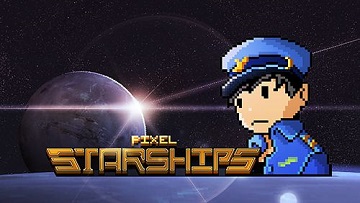
Pixel Starships takes the concept of Star Trek and applies cute, pixelated characters and starships. It’s a neat game with a large community—you’ll find a guild or two or fifteen you join and pal around with—but like Star Trek: Timelines and even Star Wars: Galaxy of Heroes above it on this list, Pixel Starships suffers from technical difficulties, and it proves difficult to succeed without spending real world money.

You’ll have to spend time—lots and lots of time—to upgrade rooms on your ship so you’ll have the means with which to raid other starships, or you could spend cash to speed up the process. Pixel Starships starts off well enough but the wait times mount fast. Not only do you wait for upgrades, you have to wait to battle CPU opponents. You could also launch a player versus player match, but you end up with the same issue as Star Wars: Galaxy of Heroes: players who pay win more often than players who don’t. Unlike Galaxy of Heroes, there aren’t too many ways to bridge this gap.

If that wasn’t bad enough, I had issues upgrading my starship. I’d click a room to upgrade in my ship, the computer would take my resources, and then the game wouldn’t apply the upgrades. Pixel Starship experiences rolling game crashes. They don’t happen all the time but they do happen in bunches.

Pixel Starships doesn’t stack up to the other games on this list as well as I would like. The divide between paying and non-paying gamers is too great, and technical difficulties slow down an otherwise good concept. The crew and ship are customizable and the game has character. I can see how gamers could enjoy this game. If exploring the galaxy in a cute pixelated starship appeals to you, Pixel Starships has depth of play. For me, Pixel Starships gets a half-hearted endorsement.

That’s another week of free-to-play games. I hope you enjoyed it, and until next we meet, thanks for reading.

Geekly’s Free Video Game Summer: July 8, 2016

FreeVideoGame5

This week’s free video game summer was preempted by the Fourth of July—Happy Fourth of July, guys—so I played a lot of simple free games this week. Without further ado, let’s get to it.

SquaredanceAppIcon

Squaredance

Puzzle games aren’t for everyone and Squaredance is tough even by puzzle game standards, but when you solve one of its puzzles, it’s a rewarding experience. Like most good puzzle games, the game play is simple to learn but difficult to master.

This is a typical level in Squaredance. The top graphic is how the puzzle looks at the beginning of the level.

Squaredance Video Game App

You merge like color balls stuck inside containers of various shapes and sizes by shaking the containers (swiping left, right, up, or down). If you can merge all like color balls together, you clear the level. Simple, right? It’s not as easy as it sounds. Squaredance plays like a sliding tile puzzle game, except that you can get the puzzle into an unwinnable state and that’s what breeds frustration.

Sliding tile puzzle games allow you to play your way out of bad situations, while Squaredance stops you dead in your tracks. Fortunately, the game lets you know when you’ve played yourself into a corner. Unfortunately, this happens more often than not. I enjoyed Squaredance in small doses. I’m not sure if it’s worthy of non-stop play, but hey, if you like puzzle games (sliding tile puzzle games in particular), Squaredance is solid.

Give-It-Up-2

Give It Up! 2

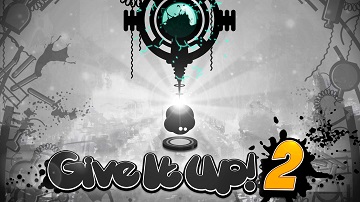
Give It Up! 2 is another simple concept game with an addictive quality. You play as an inkblot bouncing on a series of trampolines, avoiding obstacles. Your inkblot will jump from one trampoline to the next without you doing anything, but you need to tap your screen at the right time if you want it to make a bigger leap over spikes or up an incline. Like I said, it’s a simple concept but like Squaredance, it’s not easy.

I don’t know if my reaction time wasn’t good enough or you have to slap your screen (I missed several jumps when I could see the obstacles far in advance), but Give It Up! 2 has some issues with its controls. It doesn’t screw up often but it’s enough for me to mention it; some controls will be wonky. It deploys endless play, which is fine, but checkpoints can be difficult to reach and most games, as you try to find the right timing, you’ll find yourself starting at the beginning of the same track, so the game play can get repetitive fast. If you stick with it long enough and learn the timing, Give It Up! 2 gets interesting and it’s well worth it.

I enjoyed Give It Up! 2. It reminds me of a bare bones Patapon. I’m not sure if it stays in my collection, but it’s good for a quick play.

SoccerHitApp

Soccer Hit

I like soccer. I played soccer when I was younger. Heck, I’m named after a former United States national soccer team player: Kyle Rote Jr.. I wanted to like Soccer Hit, but it’s not soccer, not even on a cursory level.

Your only strategy—yes, only strategy—is to avoid controlling the ball. You want your opponent to have the ball and slide tackle them. Players don’t get up after you slide tackle them, so you have a clear path to the goal if you manage to slide tackle everyone on the opposing team. Perhaps I’m biased, but it’s insulting to the athletes who play the game to make a video game that insinuates that soccer players never get up after they get hit. Sure, soccer players have a reputation of being floppers but it’s a difficult game and the players are tough.

Okay. My rant’s over. Let’s get to Soccer Hit’s gameplay. In a word it’s unintuitive. Dribbling is either impossible or too difficult; yet another reason to not control the ball. You can’t position your players, or at least not well, when you have ball control. Instead, you pass or shoot the ball by sliding your finger in the opposite direction of where you want to kick. Like I said, unintuitive.

Half the time my shots or passes fly the opposite way I want them to go. Even when you can commit the controls to memory—and that’s hard to train your brain to think that way—you’re still playing hot potato with the ball because slide tackles always take down a player.

Soccer Hit is borderline unplayable. I won almost all the games I played (once I figured out the controls) but those victories were hollow. The only thing positive I can say about Soccer Hit is that the name’s spot on. You’re playing a soccer-inspired game and you hit people. For me this game’s a hard pass.

Tennis Bits

Tennis Bits

I’m not as into tennis as I am soccer, but it’s Wimbledon time and it makes sense to review Tennis Bits. It’s an easy to learn, casual tennis game. If you’re looking for an in-depth tennis simulator (there are plenty of them out there), look elsewhere. But for what it is Tennis Bits is surprisingly strong.

Yes. It has the trappings of a free-to-play game. You earn in-game currency to purchase character upgrades, new players, and apparel. But Tennis Bits is fun and oddly rewarding when you finish a long rally: win or lose. Unlike Soccer Hit, Tennis Bits boils down what makes tennis a sport and turns it into something accessible for a wider audience.

The cute characters don’t hurt either. I chuckled when I unlocked a headband and played this game a lot longer than I care to admit. The controls are solid, but I had a few issues figuring out how to return a serve and volley. Positioning accounts for a lot in tennis and Tennis Bits doesn’t have the best tutorial. Still, it’s an easy game to pick up with some skills you can master to take your game to a higher level and it’s a lot of fun.

I’m not sure if Tennis Bits will remain in my permanent collection but it earns some play time if you’re a tennis fan who wants to play a quick match or if you have a Wimbledon itch that needs scratching.

That’s another week of free video games. I hope you enjoyed it, and until next we meet, thanks for reading.

6 Things to be careful of in free-to-play games

I’ve downloaded a lot of free-to-play games this past week and started tapping my way through them. Free-to-play games can be a minefield with how they coax players into paying for content or bonuses, so let’s set some guidelines of what to be careful of when picking a free-to-play game.

1) Two or three forms of in-game currency

Any more than three forms of in-game currency usually means that players will get nickeled and dimed with micro-transactions. If you have five or six forms of currency, you’ll always be short with at least half of these currencies and you’ll be goaded into using real-world money to purchase virtual money.

Of course not all currency is created the same. Last week’s AdVenture Capialist has far more than three forms of in-game currency, but realistically, there’s only one form of currency that matters: bucks. If you can ignore—or mostly ignore—all but one or two forms of in-game currency, you’ll do fine.

2) Few videos

Watching videos for power ups is okay, so long as you spend more time playing the game than watching videos. If you’ve played free-to-play games, you’re used to seeing in-game ads for other games, products, or services. This should be optional. Videos shouldn’t interrupt the game flow, rendering the game unplayable.

3) Continues without spending in-game currency

Energy that you gain over time doesn’t count when I say continuing without spending in-game currency. There are some games that make you pay for power-ups, boosts, and continues with the same currency, and most of them have an in-game store that allows you to buy this virtual currency with your real-world cash.

4) A fair and balanced reward system

There are free-to-play games that award moderate rewards for success, while doling out brutal punishment for failure. You’ll never get ahead unless you spend money, and that defeats the purpose of a free-to-play game—from a consumer’s standpoint.

5) Competitive without spending

You don’t have to win every match—what’s the challenge in that—but you should be competitive without having to spend money in a game. There are a lot of free-to-play games that insist you spend money just to win a match, and that’s unnecessary.

6) Spend time not money

This guideline plays off of guidelines three through five, and it’s really the golden rule for free-to-play games. You should always have the option to spend time away from the game rather than spend money when accomplishing something.

I get that developers want—or need—to get paid but they should tempt players with bonuses that they want rather than force them to buy bonuses they need in order to play the game. Time instead of money is usually a good route. Impatient gamers may spend the occasional dollar, but you don’t penalize patience.

Thanks for your patience. With that out of the way, let’s get to some game reviews.

Geekly’s Free Video Game Summer: July 1, 2016

FreeVideoGame4

This edition of Geekly’s Free Video Game Summer includes nothing but free-to-play games. (If you missed our “6 Things to be careful of in free-to-play games,” here’s a link.) We’ve got a lot of games to cover, so let’s get cracking.

RodeoStampede

Rodeo Stampede

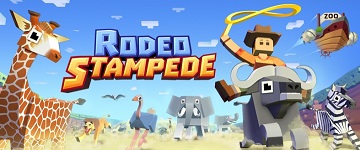
This game is a lot of fun. Players rustle up new zoo animals by lassoing and taming them. Rodeo Stampede’s game play is simple but elegant. You hold your finger on your touch screen to stay on your animal buddy and slide you finger left and right to avoid obstacles. You can switch animals by lining up a new animal in front of you, removing your finger from the screen, and placing it back on the screen once the new animal is highlighted.

You’ll want to catch new animals but eventually, the animal buddy you’re riding will grow tired of you and buck, kick you off, or in the case of ostriches, run so fast you can’t see what’s on the horizon. Zoo upgrades are fair. The game play is easy to learn but difficult to master and filled with variety. Rodeo Stampede will stay in my rotation. It earns a strong recommendation.

NinjAwesome

Ninjawesome

I liked Ninjawesome well enough but it was off in a few places. The theme was appealing—Ninjawesome’s classic Ninja Gaiden vibe was a great touch—but the controls were difficult to nail down. I’d forget which tap or swipe did what or that I even possessed a particular ability. The character’s constant movement didn’t help either. Ninjawesome plays like a side-scrolling Temple Run. That’s fine, but you don’t have as many options in Temple Run as you do in Ninjawesome, and yet Ninjawesome’s worst offense is treasure chest management.

Each mission takes twenty seconds to a couple of minutes. You earn a treasure chest with each successful mission, and you have four slots for treasure chests in your inventory. That’s fine too, until you factor in that you have to wait ten to fifteen minutes to open a chest. Either you wait to open up a chest—and not play the game because no matter how long you wait only allows you to open one chest at a time—or you can spend in-game gems to open chests early. You earn gems at a decent rate but you won’t earn them as quickly as spending them in order to open chests—and of course there’s the option of purchasing gems with real world money.

Despite these flaws, Ninjawesome is still a fun and solid game. I can see how some folks could love it, but it won’t stay in my collection. The treasure chest scam is a deal breaker.

Re Dungeon

Re Dungeon

Re Dungeon is a top-down, platforming dungeon crawl. Players have to avoid the various traps and enemies the dungeon has to offer. It’s a simple concept and Re Dungeon executes it well. I enjoyed the mazes and how the pieces fit together. The game has plenty of variety, and unlockable adventures you can add to your party lead to greater depth of play. Re Dungeon’s classic game play leave me wanting more. It’s not an easy game. The perils build on each other and it takes cunning to make it through a level. I could play Re Dungeon for hours and would highly recommend it if it wasn’t for one thing: videos.

Re Dungeon crams so many promotional videos down its players’ throats that you’ll forget that you’re playing a game. If you don’t mind a heap of videos, Re Dungeon can be a rewarding experience. I hope the developers tone down this issue, but until then I’m on the fence with whether or not I can overlook Re Dungeon’s video mountain.

AdventureCompany

Adventure Company

I’ll go on record as saying that I don’t care for touch screen mobile games that try to mimic 3D console game controls; the controls get buggy or cause game glitches. Knowing this might clue you in on the following review. Adventure Company does an above average job of porting 3D console game controls to a touch screen device and still, the controls are a bit clunky. It doesn’t help that enemies often come from the bottom left of the screen and that’s where the game wants you to place your finger to move your characters. More about this in a bit but let’s cover Adventure Company’s story or lack thereof.

The theme is uninspired: adventures seek fortune in a bland fantasy land. The enemies are generic: goblin #241695. The previous games on this list didn’t have a lot of story either but at least they had character. Adventure Company has decent graphics but limited appeal. I’ve seen this type of game before and it was better constructed.

There are three forms of in-game currency—right on the cusp of too many—but one currency concerns me the most: stars. You only get stars if you complete a mission with accomplishing the bonus goal, and the bonus goal is typically one where you’re not supposed to take any damage. That’s where we get back to Adventure Company’s controls. Most levels have archers or some ranged units, and the bulk of your enemies are coming from the left of the screen. Your characters can’t move quickly in first place but with how the enemies are placed, you could get hit with a phantom arrow because your finger’s in the way. This breeds nothing but frustration.

Is it necessary to get stars? No but it’d be nice to get one every once and a while. I guess I could overlook this if I cared for this type of touch screen controls. If you do, Adventure Company could be worth a look. But the game’s banality forces me to pass on it.

We’re just getting started with our run of free-to-play games. I hope you enjoyed these reviews, and until next we meet, thanks for reading.
Free Video Game Summer: June 24, 2016

FreeVideoGameSummer2

Our game guy Kyle is still short on cash, so we’re continuing JK Geekly’s Free Video Game Summer. Last week’s games didn’t have too much in the way of story, but this week’s games will make up for that shortcoming. Let’s get to it.

BarkleyShutUpAndJamGaiden

Barkley, Shut Up and Jam: Gaiden
(Chapter 1 of the Hoopz Barkley Saga)

Um. It took me a week to figure out what I downloaded with this game. I have to give it to Tales of Game’s Studios (that’s their spelling, not mine), they went with an unlikely hero and a bizarre story.

The year is 2053, 12 years after the Great B-Ball Purge, also known as “B-Ballnaught,” and the world is still out of sorts after the first Chaos Dunk, a jam so powerful its mere existence threatens the balance of chaos and order, when it suffers a second Chaos Dunk. You play as one of the last basketball greats, Charles Barkley, who fights for basketball freedom. Yeah, the story’s that silly, and I love the warning that pops up on the screen when you first start a game. “Warning: this game is canon.” What?

Barkley, Shut Up and Jam: Gaiden plays like a classic Super Nintendo JRPG, from its graphic style, game play, and even its broken English. The story is so weird, engaging, and set in a post-apocalyptic world, where folks may not speak or write correctly, that I can forgive a lot of the poor grammar. The story itself may be nonsensical, but Tales of Game’s put a lot of work into it, and it shows. They’ve built one of the most unique gaming worlds you’ll find.

The game play is also surprisingly deep. Barkley Gaiden—I’ll just call this game Barkley Gaiden for now—does a great job of aping Chrono Trigger and JRPGs of that ilk. You can see potential enemies, and sometimes they may run at the player and attack if the player moves into their line of sight. Once combat’s initiated, each player has special attacks or abilities they can use. Many of these actions require timed button presses, like the Mario RPG series, and some are accuracy-based, gaining more power for better accuracy, similar to Legend of Dragoon. From a game play aspect, Barkley Gaiden is a hodge-podge of JRPG goodness.

BarkleyShutUpAndJamGaiden_Vinceborg

Getting back to the story, Barkley Gaiden makes little to no sense and the characters’ dialogue is so over-the-top gritty that it reads like an angst-ridden teen wrote it, but you can’t beat a cybernetic Vince Carter: Vinceborg. Barkley, Shut Up and Jam: Gaiden is the game a foul mouthed Mel Brooks might make if he wanted to parody a JRPG and basketball. If that odd premise appeals to you, or if you love classic JRPG play, Barkley, Shut Up and Jam: Gaiden is worth a look. Just be prepared for zany things like a heartless, post-apocalyptic Barkley to sing, “get a job” to a homeless man.

You can’t find Barkley Gaiden on Steam, Origin, or any app store. Here’s a link to the game’s page:

http://www.talesofgames.com/related_game/barkley-shut-up-jam-gaiden/

Remember, “if you can’t slam with the best, jam with the rest.” Oh, man, that’s cornier than Nebraskan summers.

TheWayOfLife

The Way of Life: Free Edition

I was interested in The Way of Life when I downloaded it off of Steam. The premise intrigued me. You play groupings of three mini-games with the same character as a child, adult, and elder. Unfortunately, the game’s execution leaves a lot to be desired.

Even with overlooking the poor English translation, bugs and glitches, and the fact that I played the free (limited) edition as opposed to the definitive (paid and expanded) edition, you’re left with The Way of Life pigeon holing you into playing the game a certain way and using clichéd life experiences.

The child games were okay and varied—as varied as much as The Way of Life gets—but the adult games were The Way of Life preaching what’s wrong with the world (living to make money instead of living your life for your loved ones), while the elder games depicted an old guy afraid of death. I like video games that send a clear message but I don’t like playing a sermon, so the adult games left me miffed. I’ve also met plenty of elders who had made their peace with death, so the elder games don’t ring true.

TheWayOfLifeThreePhasesOfLife

I can forgive a lot in a video game—I can even forgive most of what I’ve mentioned so far—but The Way of Life’s worst offense rests with basic game design. You need to know four things in a game: who you are, what you’re doing, why you’re doing what you’re doing, and how do you win? The Way of Life fails to provide feedback on all four accounts.

There was a moment, in one of the child games, when a game bug sent me through a building, and I didn’t care enough about the character or what I was doing to be frustrated. It was an “oh, well” moment. That’s not a good sign, and The Way of Life is my first hard pass.

SuperCrateBox

Super Crate Box

Super Crate Box is another game that doesn’t give every shred of information about its scenario as you play, but it doesn’t matter as much. Monsters are falling from the sky. I don’t know if they’re demons, aliens, or failed government experiments, but you’re a dude fighting for his life, picking up every box of weaponry you can find, and ripping the monsters a new one. This is a gun totting, adrenaline pumping, platform game. Think the original Mario Brothers meets Contra. Yeah, this game provides some dumb fun.

I stink at Super Crate Box, but I like the game. Each weapon behaves differently. Shotguns spray rounds. Revolvers fire single, powerful shots. Bazookas take time to charge and explode on impact. Disc guns ricochet once and can kill you or your enemies if the munition hits on the bounce. The mini-gun fires copious amounts of bullets, but it yields kickback. And so on and so forth. The trick is that you don’t know which weapon you’ll get with each box and picking up a new box can be deadly if you get accustomed to using a specific weapon. Before you think that you’ll stick with your favorite weapon the entire time, think again. You only progress in level after you collect enough crates, so you have to collect as many super crate boxes as you can. Did I mention that Super Crate Box is tough?

SuperCrateBoxMini-Gun

The monsters also gain speed and strength with each box you collect, and that makes the gameplay even more difficult, but what makes Super Crate Box stand out is the game’s intuitive nature. You can trick the game into thinking you’re a novice by dying several times in quick succession. Super Crate Box will ease up and that’s how you can progress to the next level. But something tells me you won’t have to intentionally die. Super Crate Box is so difficult that you’ll die whether you want to or not. I don’t know how many times I dodged a monster just to fall into a fire pit. If you like old school platforming games with punishing difficulty, you should give Super Crate Box a try.

That’s all I have for this week of JK Geekly’s Free Video Game Summer. I may have some more gaming to do in the next week, so until we meet again, thanks for reading.
JK Geekly’s Free Video Game Summer: June 17, 2016

FreeVideoGameSummer

Today marks the first day of JK Geekly’s Free Video Game Summer. Okay. It’s not summer yet, and no, we’re not handing out free video games. Our game guy Kyle is short on cash, so he’s playing free to play or free video games this summer and sharing his thoughts on the games he’s playing.

Some of these games might not be very good—we are talking free here, and you often get what you pay for—but you’d be surprised how many good video games are out there that don’t cost a penny.

AdVentureCapitalist

AdVenture Capitalist

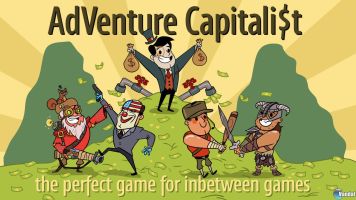
AdVenture Capitalist was the first game that came up when I searched Steam for “free games,” so I’m covering it first. It’s a time waster. I know that the term “time waster” turns some people off to a game but there is a time and place for time wasters, and AdVenture Capitalist has an interesting change up to the typical formula of sowing something and waiting for it to mature before reaping the benefits—but you can pay real life money to speed up the process. Yeah, all of that’s in AdVenture Capitalist, but you can hire managers to run your startup businesses for you while you’re offline.

The inclusion of a manager gaming element makes for a game that you sink two or three hours into early on, setting up your businesses, and that time shifts to two or three, five to ten minute, daily check-ins. I downloaded AdVenture Capitalist earlier in the week, played the special event a little bit (I didn’t understand the benefits of the event to care about finishing it or maxing out my profits), and it’s still become the first game I open when I fire up Steam.

It’s good for a lark. Several of the aforementioned managers are a pun on a Breaking Bad character. And there’s something mesmerizing about numbers rising at a steady pace. You can be a quadrillionaire. The only negative for AdVenture Capitalist—besides the obligatory shake downs for money—would be the utter lack of a story. But do you really need a story in a time waster game? Most stories in time waster games don’t make sense or are cliched.

AdVenture Capitalist keeps it simple. It knows what it is; it’s the game you play between games. I wouldn’t spend any money on AdVenture Capitalist, but if you’re looking for a time waster on Steam, you could do a lot worse.

ChronicleRuneScapeLegends

Chronicle: RuneScape Legends

When I saw Chronicle: RuneScape Legends, I thought it’d be a Hearthstone clone. Hey, Hearthstone would be another great free video game to cover. I’ll add it to the list. Getting back to Chronicle, it may be a collectible card game (CCG), but it’s more than a Hearthstone clone.

Chronicle borrows the art style of World of Warcraft, the basis for Hearthstone, and uses a lot of the same user interface found in the Hearthstone app, but instead of players fighting each other directly, they create obstacle courses for themselves and fight their opponents indirectly. This is fascinating.

Few CCGs have players fight each other indirectly, and I don’t know of any other CCG that has players building an obstacle course for themselves. Players play cards in front of themselves. Most cards are enemy cards. You defeat enemy cards and as a reward, you gain money (to pay for cards that boost your stats, which is another card type), heal your hero, earn more attack or defense power, or you deal damage to your opponent who traverses their obstacle course at the same time as you. If both characters are standing at the end of five rounds, they fight each other. This obstacle course game mechanism makes it possible for you to kill yourself. Your opponent strikes you from afar just as you face a big, bad enemy that you played to get a large bonus delivers the fatal blow.

I like this game mechanism a lot, but Chronicle does have all the trappings of an online CCG. It has a leaderboard, also pulled directly from Hearthstone, and some folks get upset when they lose statusYou don’t have to spend any money to make a deck, but it urges you to spend money to obtain more rare cards. And for the second time in this write up, there isn’t a story to be found, but that might be a good thing. Magic has tried to make players care about their characters and story, and the novels fall flat. Case and point, one Magic novel was published without its final two or three chapters, and no one noticed.

If you like CCGs, Chronicle: RuneScape Legends is a nice addition. The obstacle course mechanism adds a fun twist on the familiar formula.

Hearthstone

Hearthstone: Heroes of Warcraft

As promised, I’m covering Hearthstone. It’s a great free to play video game, so great that Chronicle aped its look and feel. But Hearthstone borrowed a lot from another great game: Magic.

Hearthstone is based off of the popular World of Warcraft CCG. The major difference between Magic and the WoW CCG is that players take control of a general. The generals would be a key figure in the Warcraft canon—or at least someone fans would recognize—and instead of players dealing damage to a faceless mage (like they do in Magic), they would battle these generals, and the general they played would grant them unique abilities.

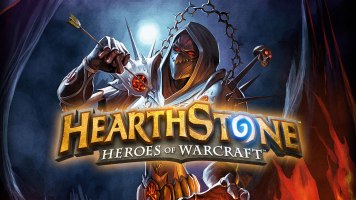
Hearthstone is a wonderful adaptation of the WoW CCG. I may enjoy it more than the Magic video game, and I like the Magic video game a lot. Hearthstone is also one of the few video games I’ll play of this nature that I don’t turn down the volume. Most of the voice acting is straight from WoW or the original Warcraft series, and the sound effects and music get your blood pumping.

Sadly, this is another game without a story. Looks like we’ll have to wait another week for a game with a great story—or any story—but also like the other games on this list, Hearthstone doesn’t really need one. Let Warcraft and World of Warcraft shoulder the storyline. Hearthstone does a great job of transferring the WoW CCG to mobile devices, and it’s exhibit A for why tabletop gamers don’t see too many new, physical CCGs. Why waste the time and resources printing cards, when an app can look good and function as well as Hearthstone?

That’s all I have for the first week of JK Geekly’s Free Video Game Summer. I’ve got more gaming to do in the next week, but until we meet again, thanks for reading.
Geekly’s Quirky Video Games: June 10, 2016

QuirkyVideoGame2

I’m not sure if last week’s quirky video game post worked or not but let’s try it again. The video games on this list may or may not be good, some might not even be “games,” but something about them is interesting.

We had some esoteric games last week, so let’s go with a more common theme this week: fantasy.

Recettear - An Item Shop's Tale

Recettear: An Item Shop’s Tale

This game puts you in the high stress life of a JRPG item shop owner. The story is at time hard to follow, trite, or non-existent, and other times it’s two out of those three, but running your own item shop is fun.

The customers behave more like non-American shoppers; the base price is a starting point, and they’ll haggle over most times. Don’t believe the in-game tutorial when it says that most consumers buy a product that’s marked at 30% above the base; it lies. You could go to wholesale warehouses to obtain your items, but the game coaxes players to venture into the larger world and discover rare, more expensive wares.

This extra gameplay wrinkle (of outfitting a friendly adventurer and exploring a dungeon) adds some much needed variety. Recettear wouldn’t be much of a game if all you did was set retail prices to products you bought wholesale, but it’s the item shop portion of the game that sets it apart.

There’s no better feeling than fleecing someone with a 50% markup, but failing to make a sale stinks—except if it’s a young girl shopper: damn cheapskates. Recettear is a great resource for learning math that doesn’t feel like a stuffy math game, and gamers can learn shop running and entrepreneur basics, just in case they wanted to start their own game store.

My only other gripe, besides the story, is something more specific about the story: the pixie landlord. I get that Recettear needs something to motivate the player and give them concrete goals, but I could’ve done without the tired, overbearing landlord who price gouges the player. Despite its flaws, Recettear is worth a quick look if you ever wanted to live a day in the shoes of a JRPG item shop owner.

Pox Nora

Pox Nora

Pox Nora is one of the many free games I’ve covered—I think I’ll start reviewing nothing but free games, sort of a free gaming summer—but you get a lot with this free game. And I don’t mean that Pox Nora is a “free to play” game; it’s a free game with a mountain of content to unpack.

I’ve played hours of Pox Nora and only scratched the surface. At its core Pox Nora is a tactical RPG, in the tradition of Final Fantasy Tactics, Tactics Ogre, and Disgaea, with strong ties to Dungeons and Dragons and gentle nod to collectible card games like Magic: The Gathering.

Players take control of a fantasy faction. Each faction has its strengths and weaknesses, but savvy gamers can play up their strengths, while downplaying their weaknesses. This is easier said than done, and it makes Pox Nora a difficult game and that’s one of its biggest selling points—besides the attractive free price tag.

It also deploys an odd tournament system. Sure, you could battle players head-to-head but Pox Nora has indirect scoring. You can play campaigns for your favorite faction and Pox Nora keeps score on how well you played the campaign. The score gets added to the community’s score—which is reset every so often—and a faction is deemed the winner when the tournament ends.

If you keep playing your favorite faction, and play them well, you can aid your chosen heroes to victory. I’m sure that head-to-head combat counts more toward the team totals, but you don’t see solo campaigns factor into community scoring at this level, and that’s intriguing.

Pox Nora’s difficulty and depth of play also presents new challenges you can overcome and that, in turn, leads to countless game hours for a free game. Did I mention it was free? Anyway, if Pox Nora has one sticky point, it’d be its non-user friendly menu and game interface. I’m not sure which buttons I need to press to start a game, and that’s intimidating. But once you crack Pox Nora’s code, you’ll find a deep and rewarding game.

LootAndLegends

Card Hunter and Loot and Legends

This is a two-for-one game. Card Hunter and Loot and Legends are the same game but for different operating systems. Card Hunter is PC-based. Loot and Legends is for mobile phones and tablets. Both versions are free to play, but one is more “free to play” than the other. We’ll get into the differences, but first, let’s cover the similarities.

Both Card Hunter and Loot and Legends borrow from D&D and collectible card games, much like Pox Nora above, but these two games have a light-hearted tone, as opposed to Pox Nora’s dark, Diablo-esque demeanor. These games are also much easier to get into and understand. The story for these games is more coherent too, but it’s about a Dungeon Master (DM) whose older brother picks on him and demands that he be a tougher DM for the player. It’s an okay story, but that’s not Card Hunter or Loot and Legends’ strongpoint. Both of these games simplify D&D and make it accessible.

I enjoy the colorful creatures and backgrounds—the graphics are similar with both games—and I guess Card Hunter has a little more going on as far as story’s concerned, but I don’t care for the story as much as I do the characters. It’s fun to play in their world.

But which one feels more “free to play”? It’s Loots and Legends. While you have some things you can unlock with Card Hunter’s in-game purchases, Loots and Legends shows you what you would’ve gotten as item drops if you had a game membership. You can only be a member for a set time (hours) before you have to renew your membership, and that’s an ugly look for a “free to play” game, but I don’t buy into Loots and Legends’ ploy and look past this obvious shake down. I prefer Loots and Legends to Card Hunter.

Card Hunter

Card Hunter has more instances of die rolling in the game—I believe Loots and Legends omitted die rolling all together but there might be some instances that I haven’t experienced that contain die rolling. I seldom like die rolling in video games because I always feel cheated with the outcomes, and Card Hunter made it too easy for me to determine that the computer was cheating.

All rolls in Card Hunter use one die. High rolls are better than low rolls and they allow you to pull off a feat of daring do, so I kept track of 50 of the game’s scenarios. I rolled a “1” or a “2” 75% of the time and a “5” or “6” less than 10% of the time. The computer’s stats were a little more spread out between the numbers but it was close to a complete flip to the likelihood of numbers I rolled. Each number should’ve shown up around 16.67% of the time for both players, but Card Hunter cheats. It unabashedly cheats.

Still, I like both games. They’re fun, and you can’t beat a free price tag.

That’s all I have for Geekly’s quirky video games. Perhaps next week will be nothing but free video games. Thanks for reading.
Geekly’s Quirky Video Games: June 3, 2016

QuirkyVideoGame

We’ve neglected video games up to this point on JK Geekly because readers might get confused between video game and tabletop game reviews or news, but I don’t see why we can’t have the occasional video game post. So let’s begin a series of posts that cover quirky video games. We read plenty of reviews or thoughts about mainstream, big budget games, so let’s explore some weird.

These quirky games are ones that have interesting mechanics, stories, or tackle seldom discussed or covered topics. Some are great, others are not so good, and there may be a few that I’ll discuss that some readers won’t even consider a “game,” but all of them are intriguing on some level. The great thing is that a fair number of these under-the-radar games have a small price tag. That’s part of the appeal—my tabletop game habit leaves me a little cash poor. Without further ado, let’s get to this week’s quirky video games.

TheStanleyParable

The Stanley Parable

This one’s not really an under-the-radar game. Video game enthusiasts often mention The Stanley Parable when discussing bizarre video games. Even though you may want to slap the smug look off of their face—and I imagine that some of you are thinking the same thing about me right now—when a video game aficionado says you should try The Stanley Parable, they aren’t wrong. You should try The Stanley Parable.

You play as the titular Stanley as he attempts to escape his drab office space and soul crushing job. A voice-over narrates his every action, and The Stanley Parable does a great job of marrying voice acting with the action on the screen. The unnerving narration functions as comedic relief one moment and bone chilling dread the next. If you download The Stanley Parable from Steam, you’ll even experience a little meta-gaming. You’ll find such achievements as don’t play The Stanley Parable for a year, play The Stanley Parable for the duration of a Tuesday, and click on office 430’s door five times, but the narrator berates you for trying to earn such an easy achievement and coaxes you into doing more tasks.

I probably said too much already. I don’t want to spoil anything else but let’s just say that The Stanley Parable is equal part slipstream and modern Aesop’s fable. It fits the bill for a quirky video game.

LifeIsStrange

Life is Strange

It’s difficult to discuss a storytelling episodic video game without mentioning Telltale Games, because they invented the genre, but I’ll try to limit my mentioning of Telltale while covering Life is Strange.

Life is Strange may have perfected the Telltale Games episodic model. This game tweaked a single mechanic: you can reverse time. Life is Strange’s protagonist can turn back time the duration of a scene—about 5-10 minutes—so you can see what the short term effects of a decision are, but since you can’t reverse time to any moment in the game’s narrative, you won’t know the long-term ramifications of your actions.

Adding that twist could make it sound as if decision making in Life is Strange would be easier than your typical Telltale Game, but it’s the opposite. There are moments where you agonize over which course of action is the best. During an interview, one of Telltale Game’s executives said, and I paraphrase, that Telltale judges the writing of their games based on whether or not gamers will have close to a 50% split between two disparate actions in a scenario. Since you can see these percentages at the end of each episode (for both Telltale and Life is Strange), you can tell that there are three to eight decisions where Telltale episodic game series yield an even split.  Life is Strange has five to eight decisions each episode that meet those statistics. Life is Strange out does Telltale in the one statistic Telltale Games uses to gauge the effectiveness of their writing.

Okay. Let’s put a pin in Telltale talk and discuss over aspects of Life is Strange. The time reversal mechanism also yields some interesting puzzles. You control time, not space, so you can walk some place, warp back in time, and you’re elsewhere when the rest of the world catches up to you. That’s trippy, and the resulting puzzles and problem solving are fun. You also have to show how observant you are so you can convince people of your powers. Those moments presented a nice memory game. In fact, there were plenty of subplots and side games to be had with Life is Strange. The writing—for the most part—and the gameplay’s variety are strengths. You play as a teenage girl, and Life is Strange captures what it’s like to be a teenager. That could be a good or bad thing, but regardless, Life is Strange is an earnest game.

It isn’t all sunshine. The voice acting leaves a little to be desired. The lip syncing between the audio and visuals can be distracting too. I don’t mind it when voices don’t match lips—that could be an anime fan thing—but since I noticed the lips not syncing, that could be a deal breaker for some folks. Life is Strange also suffers from the inevitable time travel plot holes, and the last episode, to be polite, was shaky in the writing department, but the overall experience is top notch. If you have any interest in episodic storytelling games, you should give Life is Strange a try.

TheStaticSpeaksMyName

the static speaks my name

The last quirky video game for this week may be one of those “games” that aren’t really games. the static speaks my name is more of an experience that plays out in ten minutes. Seriously, you’ve spent more time reading this post than the time it’ll take to play this game. I just heard some of you groan through cyber space and appreciate you guys reading this post. Really, I do.

Anyway—the static speaks my name is dark and morbid. You play as a man who’s obsessed with a painting of twin palm trees on a small island. You learn more about him and his mental state (similar to Stanley in The Stanley Parable), and I’ll stop there so I don’t spoil it for you. the static speaks my name is a free game on Steam and you can play the “game” as quickly as I can ruin the ending.

I will say that the real psychological game comes at the very end. I know that what I’m about to say is fuzzy (if you haven’t played the game), but if you play this game, take your time during the ending. It’s disturbing, but you could discover something about yourself.

That’s all I have for Geekly’s quirky video games. Hopefully, this will be an ongoing post. Thanks for reading.

Top 12 Marvel Cinematic Universe Movies

Captain America: Civil War opens tonight and that marks the beginning of the Marvel cinematic universe’s third and final stage. I figured it was time we ranked each Marvel movie, so here we go.

MarvelMoviesNumber12_ThorDarkWorld

12) Thor: Dark World

Marvel movies are notorious for not developing their villains—this will be an ongoing theme—but Thor: Dark World went a step further with under developed villains. You could omit the movie’s villain and not miss a thing. It takes a special Marvel movie to have a meaningless villain (the dark elves, not Loki, as they were the main villain). The rest of the movie didn’t fare much better. Natalie Portman fought through a script she hated. You couldn’t tell she loathed the film from her performance but her alleged ire was the only thing that was memorable.
MarvelMoviesNumber11_IronMan2

11) Iron Man 2

The next two films could switch places, and often do on a regular basis for me, but Iron Man 2 earns the lower spot on the list, despite trying to develop its villain. It’s a mess. Tony’s alcoholism was touched, his illness took center stage after a while, and Ivan Vanko’s backstory dump through expositional dialogue was no dynamo. The movie put too many story threads into two hours and ended up flat. There was little chance the sequel could recapture the excitement of the original, but where’s the joy?

MarvelMoviesNumber10_IronMan3

10) Iron Man 3

Iron Man 3 had more humorous moments than Iron Man 2, but it also had more issues. Seriously, these last two movies could switch places. I hate revisionist history, and Iron Man 3’s villain, set up as the mastermind behind everything Iron Man through flashbacks, played like revisionist history. Renaming a well-known Marvel group like AIM to The Ten Rings was a cheat, and Marvel had one larger than life role for an Asian actor (The Mandarin) and decided to make him a punchline. Hollywood has only cast an Asian or Asian-American in 50% of their TV shows and movies in the last several years (per The Screen Actors Guild), so a buffoonish Mandarin was a terrible look. Oh, and I don’t like having a figurehead villain with a real villain pulling the strings behind the scenes, even if the figurehead villain wasn’t the Mandarin. It’s been done. It’s not clever; it’s a lazy attempt to be clever.

MarvelMoviesNumber09_IncredibleHulk

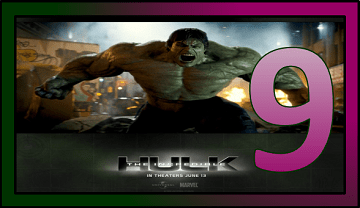
9) The Incredible Hulk

It’s a testament to how little I think of the previous three movies that The Incredible Hulk doesn’t make for a compelling lead character; he’s too overpowered. He’s great as a side character, a force of nature, or another loose end the Avengers have to tie up. Ed Norton Jr. did an adequate job as Bruce Banner, and Abomination was developed as well as a one-note villain can be, so this movie made it this high on the list despite its hokeyness.

MarvelMoviesNumber08_CaptainAmericaTheFirstAvenger

8) Captain America: The First Avenger

Ever wonder why Captain America movies always have subtitles? Those subtitles are what the movies are called overseas. That has nothing to do with the movie’s quality, I just thought it was interesting. Anyway, the first Cap movie was good. Chris Evans made a convincing Steve Rogers, the origin story went off without a hitch, and I liked Bucky and the addition of the Howling Commandos, but I’ve never seen a character portrayed by Hugo Weaving come across as flat as the Red Skull, one of Marvel’s best villains, and he was a huge, under developed yawn. There’s that term again: under developed.

MarvelMoviesNumber07_AvengersAgeOfUltron

7) Avengers: Age of Ultron

I could’ve swapped Age of Ultron and The First Avenger, but oh well. Avengers: Age of Ultron was yet another Marvel movie that didn’t develop its villain—big shock, I know—but I can’t blame it. The film stuffed as many characters as it could into one film and the bloated cast resulted in Ultron getting twenty to thirty minutes of screen time for a movie that bears his name. Age of Ultron also suffered from the law of diminished returns. We’ve seen these scenes—or similar ones—before and the movie needed more than Marvel’s tried and true CGI goodness. Hawkeye had some great moments, while the relationship between Black Widow and Hulk was a head scratcher.

MarvelMoviesNumber06_Ant-Man

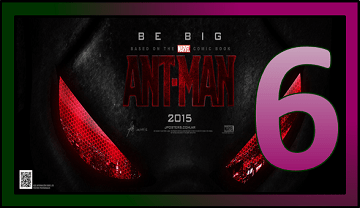
6) Ant-Man

Despite being the final movie in the Marvel cinematic universe’s second wave, Ant-Man shrank down the plot’s scope—pun intended—and delivered a film akin to earlier Marvel films. It made characters the heart of the story. The film couldn’t quite capture the same magic of the earliest Marvel movies, but it came close. The humor was welcome. It presented a fun, super-hero twist to the heist movie genre. And Paul Rudd and Michael Pena were a joy. Sure, the main villain was under-developed—like most Marvel movies—and a greater Hydra threat loomed in the background, but the focus was on family and that made the characters relatable. I’m not sure how many more character-driven movies remain in the Marvel cinematic universe, but Ant-Man was one of them.

MarvelMoviesNumber05_Thor

5) Thor

Loki has daddy issues. It’s a common trope and colors him as a character in broad strokes, but the God of Mischief has had more character development than most Marvel cinematic universe villains, and that’s a great thing. And it’s not the only thing Thor does well. I’m not a huge Thor comic book fan, but the movie does a great job setting up character relations and developing them through actions instead of expositional dialogue. Okay. There was a lot of exposition, mostly from Odin, but a lot of other movies only build their characters through dialogue, and Thor uses the snot-nosed son of Odin’s actions as the main characterization vehicle.
MarvelMoviesNumber04_Avengers

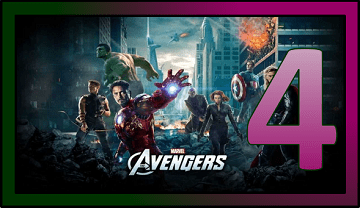
4) Avengers

This one is a spectacle. I marvel at how they balanced the character’ screen time in this one. Folks were thinking Avengers was an impossible movie to make because of the sheer number of characters needed on-screen, but Joss Whedon pulled off a miracle. I would’ve rated this movie a little higher, but viewers need context for this movie. You can’t watch Avengers without first watching at least two or three other movies—you’ll see this argument come up again real soon—and some of the scenes are a little hokey, but man, Avengers was a great popcorn flick. And I love the Hulk as comic relief.

MarvelMoviesNumber03_IronMan

3) Iron Man

I had to give the movie that kicked off the Marvel cinematic universe some respect. Iron Man also holds up really well, unlike its sequels. This is another movie where the character’s actions define who he is. Iron Man could’ve spent a lot of time having Tony ponder the meaning of life—and he does a little bit of this while he’s in captivity—but that’s not who the character is. Iron Man doesn’t tell as much as it shows who these characters are, and that’s wonderful. It also helps that Robert Downey Jr. was born to play the role and he’s a delight.

MarvelMoviesNumber02_CaptainAmericaWinterSoldier

2) Captain America: Winter Soldier

When this one was out in theaters, I couldn’t get enough of it. Winter Soldier shook the Marvel cinematic universe to its core. It developed its characters really well and took secondary characters—like Black Widow—and elevated them. Winter Soldier was also the most faithful adaptation of a comic book to the silver screen. It’s amazing. But this is where the context issue comes into play. While you could say that every Marvel movie—except for Iron Man—is a dependent film, Winter Soldier suffers the most from lack of context. I showed Winter Soldier to someone who said that they love Marvel movies. It turned out that they hadn’t watched Iron Man 2, the first Cap film, or many of the other ones on this list, and they had no idea what was going on. Winter Soldier changed the Marvel universe but it’s also dependent on the rest of the Marvel universe to make any sense. Still, it’s fantastic.

MarvelMoviesNumber01_GuardiansOfTheGalaxy

1) Guardians of the Galaxy

I really should switch these top two, but I showed Guardians of the Galaxy to the same guy who hadn’t seen Winter Soldier, and it was a much different experience. Similar to Winter Soldier, the Guardians were well developed. But while Winter Soldier leaned heavily on plot twists, Guardians of the Galaxy had more memorable moments. Each character—with the exception of the patented Marvel movie underdeveloped villain—had their own moments to shine. Guardians is also the movie that made me yearn less for a Star Wars sequel—no offense, The Force Awakens. That’s not bad for a group Stan Lee forgot was a Marvel comic.

I know that was a long post, but there’s a lot of Marvel movies. These rankings are subject to change. In fact, I may change them soon. There are so many great Marvel movies. Let’s enjoy this comic book movie renaissance. Thanks for reading.