
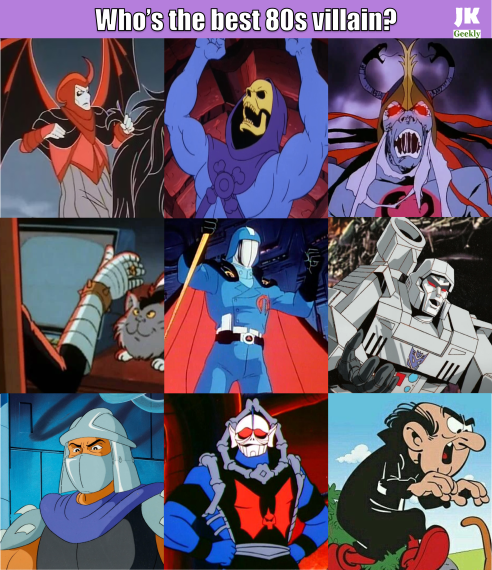
Who’s the Best Villain?
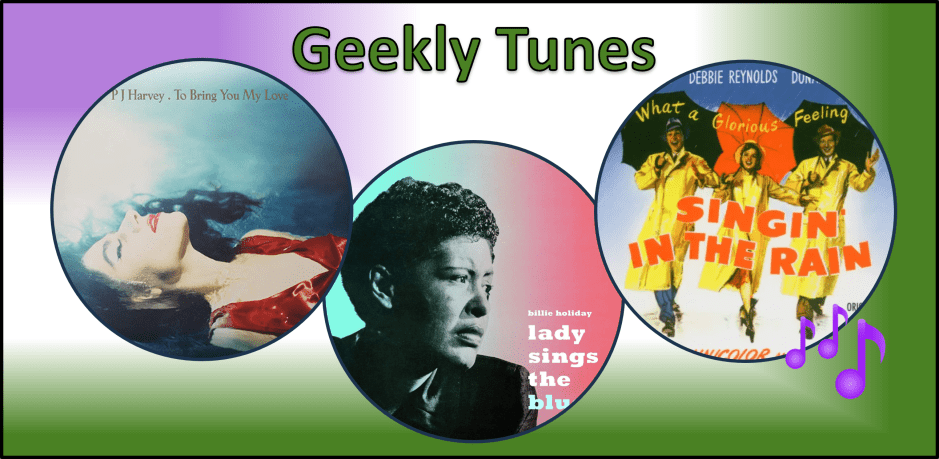
Happy Wednesday, Geekly Gang! Kyra Kyle here. This week’s Whatcha post is Geekly Tunes. Our writers will be sharing what they’ve been listening to over the past month. Feel free to share the music you’ve been listening to as well, because we’re all part of the Geekly Gang. I’ll get us started.

Last month, I listened to the latest Wet Leg album, Moisturizer. I’m still listening to that album on occasion. But I mentioned in the write-up for Moisturizer that PJ Harvey was one of their influences, which led me to To Bring You My Love. I owned a cassette of PJ Harvey’s To Bring You My Love and listened to it on repeat in my first car, a jade Dodge Neon. At the time when I purchased To Bring You My Love, I didn’t know what to expect from PJ Harvey. Folks described her as grunge. The label didn’t fit. Harvey’s music occupies a space between punk, rock, blues, and folk. One can’t pin it down to one genre. And To Bring You My Love is one of her best albums. It earned countless perfect ratings from multiple music critics and continues to inspire.

I first caught Chappell Roan’s “The Subway” during a live performance stream. No offense to any of Roan’s other tracks, but “The Subway” was excellent. It was easily her best song in the set. There was no way Roan’s best song wasn’t on her album The Rise and Fall of a Midwest Princess. Yeah. “The Subway” was kept off Roan’s album because she wanted it to be a live performance-only song. I get it. “The Subway” brings down the rafters when Roan performs it live. Pirating led to “The Subway” being released as a single this past month. I got to rediscover this song all over again, and I love it.
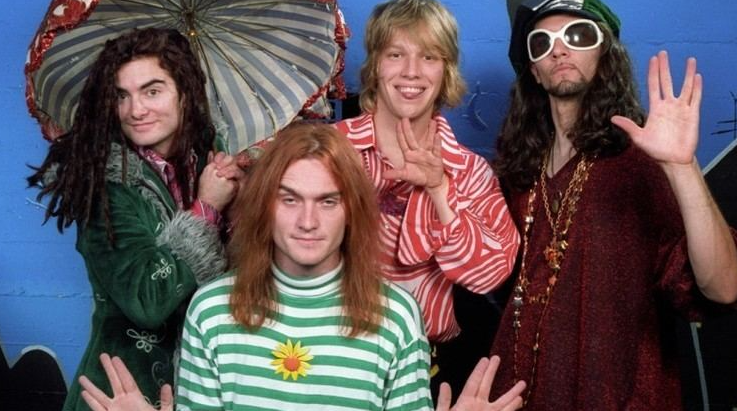
We go from a couple of acts that hit the big time (Chappell is the current Queen of Pop) to another that didn’t quite make it, Jellyfish. This Nineties band is one of the internet’s favorite what-ifs. Jellyfish would’ve fared much better in a decade that wasn’t dominated by torn jeans, flannel shirts, and grunge. During that decade, no one wanted a fusion of Beach Boy harmonies over thought-provoking–and sometimes esoteric and bizarre–lyrics. Jellyfish doesn’t shy away from eclectic instruments in the service of finding the perfect blend of Wonderland-Core. While “New Mistake” was the closest this power pop four-piece got to a hit, I really like “Ghost at Number One” and “The King is Half Undressed.” The latter is a great example of lead singer Andy Sturmer at his Mad Hatter best.
I omitted some other bands I’ve been listening to lately, but I may save them for another month. It’s time to hear what Season and Skye have been listening to this past month.
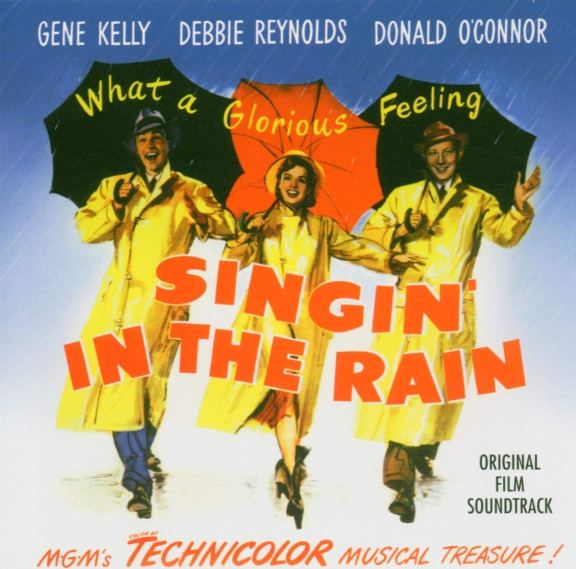
I’m back with another soundtrack. I can’t seem to get away from them. This month’s soundtrack is from Singin’ in the Rain. I’ve only watched the movie once, but it was so memorable that I can picture every dance number while listening, especially “Make ‘Em Laugh.” Even though he was bedridden after the shoot, Donald O’Connor nailed that performance. Respect.

Continuing with ’50s nostalgia, I discovered Elliot James Reay last week. The song I listened to, “Boy In Love,” blends 1950s rock ‘n’ roll with blues set in today’s world. Reay said in an interview that he wrote this song with his girlfriend, and some of the lyrics are things she’s said to him. It’s sweet, and Reay does a great job of blending nostalgia with a modern setting. Seriously. The music video had a handful of people on their smartphones in the background.

I put my vinyl collection on shuffle this past month. I like The Who, but I don’t listen to their music often. After popping The Story of The Who back on my turntable, I felt guilty. I forgot how good The Who was. Even as I write this, several tracks are cycling through my head, including “Substitute,” “Boris the Spider,” “Magic Bus,” and “Baba O’Reilly.” Well, I knew I bought this album for a reason. Thanks, Past Me!

I couldn’t resist. I know American Idiot is a cliché album for my collection, but…come on. How could I not own American Idiot? Green Day is the kind of music I’m proud to say I grew up with. Before owning American Idiot, I had never heard every track on the album. After listening to American Idiot the way the band intended, I feel like I understand it much better. That and I’m listening to American Idiot as an adult as opposed to an oblivious child, an oblivious child who also didn’t understand swear words.

I have similar feelings about Billie Holiday as I do about Nina Simone. Both are great to listen to when I need something to wind down. As Simone’s predecessor, it’s easy to see the influence Holiday’s work had on artists like Simone. What feels especially comfy about Holiday’s music is the quality and tone. It qualifies more as “lounge music” than Simone’s, and the recording quality for each song on Lady Sings the Blues has a classic feel. That’s part of why I started collecting vinyl: albums like Lady Sings the Blues make me feel cozy.

It’s about time I talked about Queen. Don’t worry, I knew this rock band was coming sooner or later. As another band (and album) I grew up with, I have a strong personal connection with Queen: Greatest Hits. This album introduced me to amazing songs like “Bohemian Rhapsody,” “Don’t Stop Me Now,” “Another One Bites the Dust,” “Killer Queen,” “You’re My Best Friend,” and many more. I don’t say this often, but I’m so glad my parents are as cultured as they are. Because of them, I dare say: I was classically trained. I’m sorry.
Hey, hey! Kyra Kyle here again. That’s the music our writers have been listening to over the past month. Feel free to share yours in the comments, Geekly Gang. Thank you for reading, and wherever you are, I hope you’re having a great day.
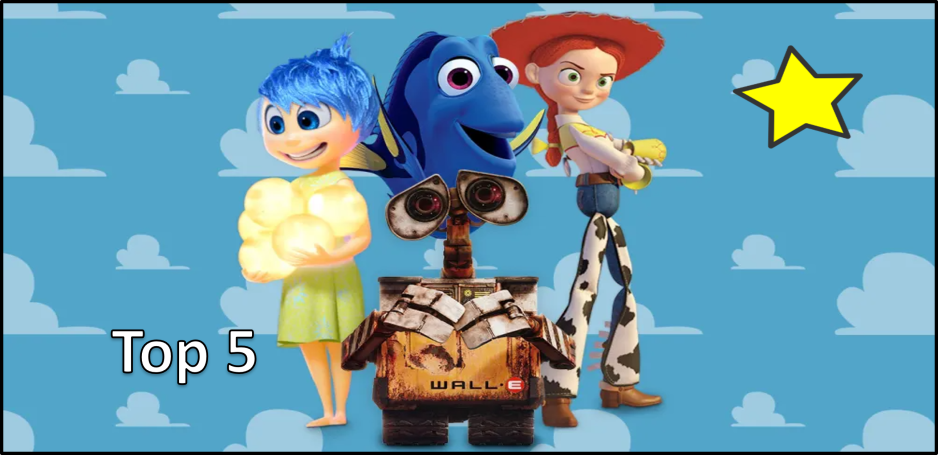
Happy August, Geekly Gang! My bi-monthly movie posts are usually based on a holiday or awareness event. With August, I have no clue what would work, so I decided to make August a wildcard. Instead of holiday or “Month of Honor” movies, I’d like to take this time to talk about one of my most beloved animation studios, Pixar.
I’ve mentioned my preference for Pixar films over Disney films on my movie blog (TGIMovies), just not with the Geekly Gang. I still enjoy classic Disney, but if I had to choose which studio has more personal, relatable, and adult themes in their films, it’d be Pixar. To this day, many of Pixar’s films are household names and have raised a generation of film lovers. Me included. I’d like to honor my favorites in the post. I hope you enjoy!

It’s hard not to include a Toy Story film. While I enjoyed Toy Story 2 and Toy Story 3, the original has always been my favorite. Despite the now-outdated (yet charming) animation, the magic of childhood is what keeps me coming back to the first Toy Story. When I first saw Toy Story as a kid, it ignited my love for toys and my imagination. The filmmakers knew what it felt like to have a friend you could hold in your hand. Not only that, but the first Toy Story encouraged me to analyze films for deeper meanings.
After countless viewings in my childhood, I started thinking about why I enjoyed Toy Story so much. I broke down the situations, how effective Sid was as an antagonist, and how the toys are really a reflection of their owners. I started doing this with Toy Story at the age of 10. I couldn’t help but include Toy Story on this list. And Pixar wouldn’t be what it is today without Toy Story. Toy Story easily claims the fifth spot, but over time, I’ve grown to love other Pixar films a bit more.
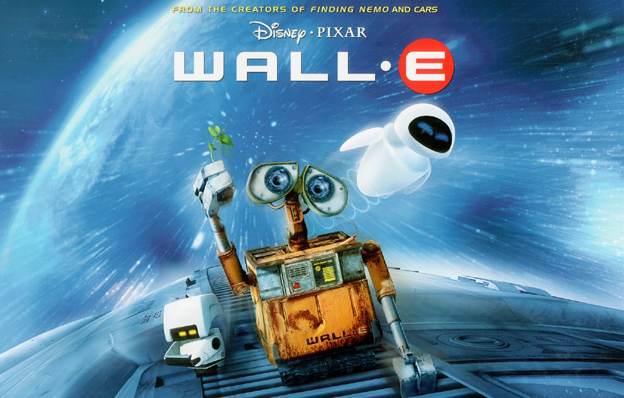
I adore WALL-E. The idea, the execution, the visuals, and the experience are unlike anything else in Pixar’s library. Given the lack of dialogue, the characters’ actions and the visuals tell the story. I respect WALL-E for its dedication to visual storytelling while still being a mainstream, big-budget children’s movie. This shows the filmmakers have deep respect for children by letting them draw their own conclusions.
As an adult, my favorite aspect of WALL-E is its message. WALL-E is unequivocally an environmental movie, but it’s unlike any other environmental film. Most others look at the issue from a pessimistic perspective, but WALL-E is (as far as I know) the only optimistic one I’ve seen. WALL-E addresses the issue realistically while urging us to make a change and focusing on the good we can do if we just try. I’ve already reviewed WALL-E at length on my blog; you can check it out here if you’d like to see my more detailed thoughts.
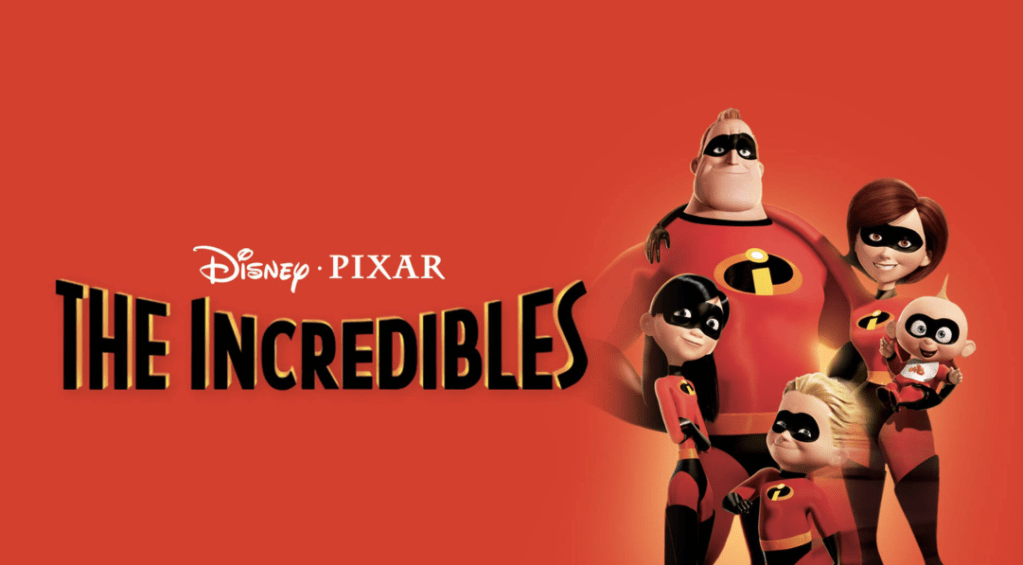
The Incredibles is a movie that pops into my head without warning. I remember watching The Incredibles as a kid, getting engaged in the action, drawing comparisons between the Parrs and my own family, and loving the comedic beats. What sets The Incredibles apart from other superhero films is how it wasn’t based on a comic, and it preceded the comic-book film boom of today. Part of me can’t help but wonder if the success of The Incredibles paved the way for the reintroduction of superhero movies.
Much like other classic Pixar films, The Incredibles is chock-full of things that went over my head as a child. It still appeals to my inner child, but it challenges me in my adulthood by discussing mature topics. I never noticed it before, but The Incredibles deals with concepts like suicide, targeted legal/government actions, civil rights, big business, socio-economic divides, and cultural genocide. When I was young, all I remembered was “No capes,” but now I know what a difficult place the world is. Thanks, Incredibles.
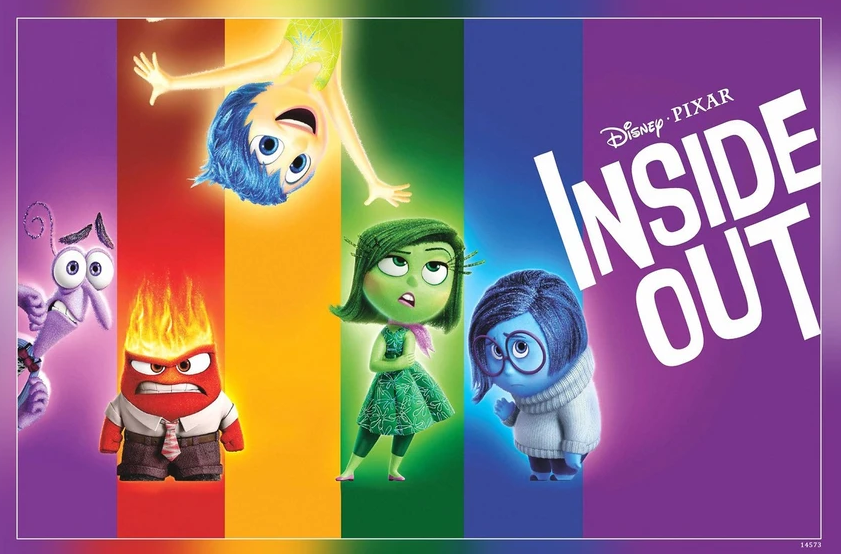
Inside Out has a simplistic premise of emotions controlling your actions. I first saw Inside Out when I was approaching my teenage years, and Inside Out managed to put life in perspective. Inside Out’s greatest strength is its realistic depiction of emotions, but my favorite aspect is how it manages to be both one and two stories at the same time. Inside Out is technically a movie about emotions inside the head of Riley Andersen, but it’s really about Riley herself.
We see what Riley’s emotions go through to keep her on track, and the effects of those actions on Riley in the real world. In the process, Inside Out paints a nearly perfect picture of what it feels like as a real-life girl going through a crisis. When I first saw Inside Out, I saw myself in Riley. I felt her inner turmoil. As I’ve gotten older, Inside Out continues to help me work through difficult past experiences while trying to be the best person I can. What a movie.

A major part of why Finding Nemo claims the top spot is its story and characters. The characters endeared themselves to me, and the situation they found themselves in was engaging. Each character’s distinct personality, relatable goals, and identifiable flaws make them real. I’ve always preferred Marlin’s story over Nemo’s. In fact, Finding Nemo is the movie that taught me how my own parents are more complex than I first thought.
Before I saw Finding Nemo, I thought my parents were benevolent beings who mercifully gave me life and could do no wrong. I was kinda dumb. Finding Nemo showed me how difficult a parent’s life could be. My parents were more like me, and they have significantly more problems. Granted, a not insignificant part of me wanted to put myself in danger so they could “prove” that to me, so I may have originally misunderstood that point in Finding Nemo. This movie holds a special place in my heart. Finding Nemo features fabulous animation, spot-on pacing, timeless characters, and its story is unforgettable. Without a doubt, Finding Nemo is my favorite Pixar movie.
There are plenty of Pixar films that didn’t make this list. This list was difficult to make because there are so many great Pixar films to choose from. Maybe this post can help y’all decide your favorite Pixar films. Do you agree with my picks? What would you change? Are there any Pixar movies you’re excited about? Feel free to leave a comment; we always love hearing from y’all. Also, why not give your parents a hug? I’m sure they miss you. Take care and keep watching movies!


Happy Sunday, Geekly Gang! Kyra Kyle here with another week of Geek News. We don’t have much in the way of major headlines this week, but as usual, we’ll break down the board game and video game new releases. Let’s start with board games.
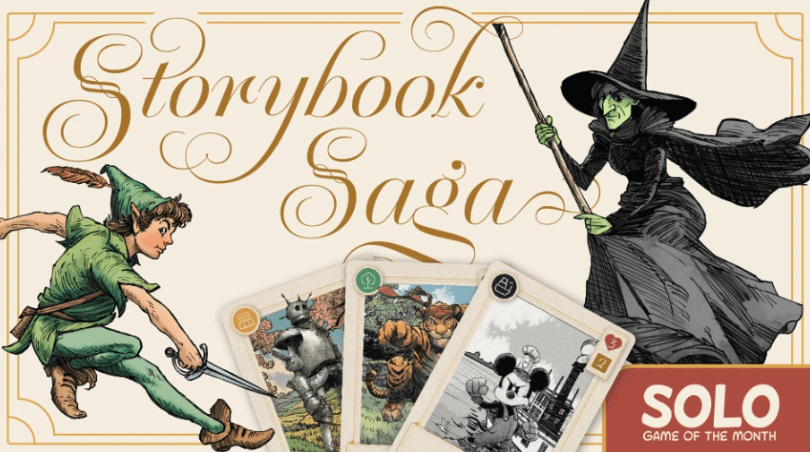
We’ve been covering every Solo Game of the Month release on GameFound ever since January of this year, because these games, even if they don’t look like ones I’d be interested in, are designed by established board game designers, and this company never fails to deliver. This month’s game, Storybook Saga, continues this tradition. Per usual (for GameFound), we don’t have an idea of pledge costs or Storybook Saga’s game mechanisms. But it looks amazing.
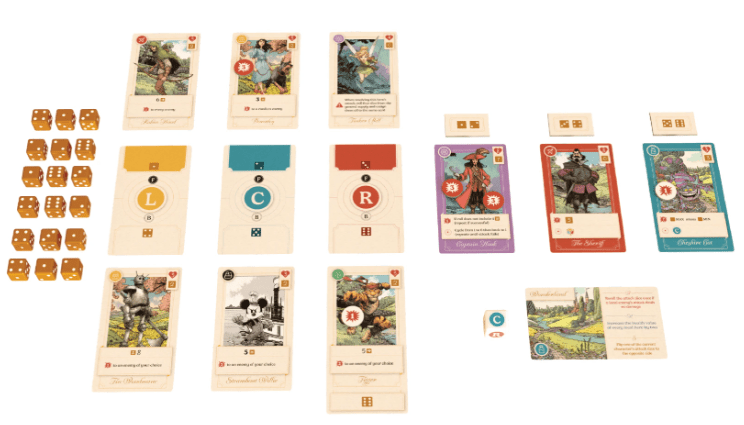
Players assemble a team of classic storybook characters and attempt to survive scenarios. Each card will be tarot-sized–you don’t see much of that. the art looks stunning. Storybook Saga is yet another Solo Game of the Month title that uses top-notch components. And even though we don’t know how the game is played, you know Storybook Saga will be a solo game, and the pledge should land in a reasonable price range. My guess would be $20-35. If you’re interested in Storybook Saga, check out its GameFound page.

As Hanami’s subtitle says, Hanami is an update to the Reiner Knizia classic board game Samurai, and when I say Samurai is a classic board game, believe it. The game still holds an impressive 7.5 rating BoardGameGeek. Yeah. 7.5 on BGG means the game is great.

Hanami celebrates a different side of Japanese culture, but one that’s still steeped in Samurai tradition. Who doesn’t love sakura blossoms? Hanami offers a lot of free add-ons for a standard pledge of $40. If you’re interested in Hanami, check out its KickStarter page.
Restless Spirits puts players in the role of a spirit guide, trying to collect magical totems and release spirits. Restless Spirits’ rules are easy to pick up. Choose a spirit guide, attract spirits to your board, find and play matching totems, use spirit abilities to gain an advantage, and release the most spirits. This game gets really combo-tastic.
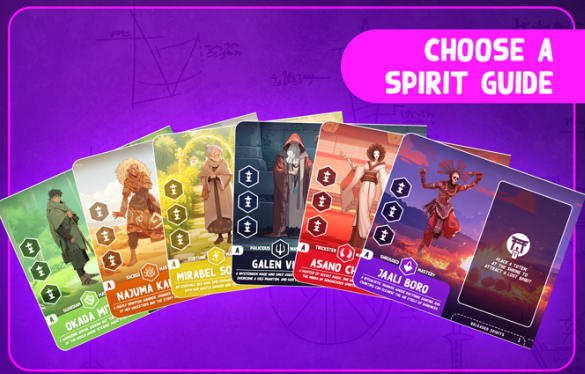
Restless Spirits is another game that features tarot-sized cards. I’m always down for that. The art looks amazing, but my favorite feature for Restless Spirits is its story mode. Tales of the Spirit Realm is a collection of 12 short folktales about the Spirits in the game. Before playing, draw a Tale card (either at random or in order), turn to the associated page in the Tales booklet, and read the story. Each Tale has an accompanying gameplay modifier, so you get to learn more about the specific spirit you’re playing, which comes with a fun gameplay twist.
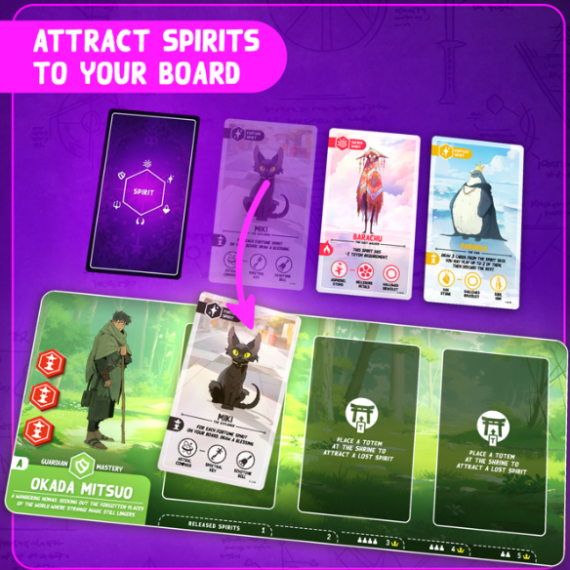
Restless Spirits offers a couple of pledge levels. The standard edition costs about $47 (the prices are in Pounds), while the deluxe version that adds some extra swag runs about $74. If you’re interested in Restless Spirits, check out its KickStarter page.
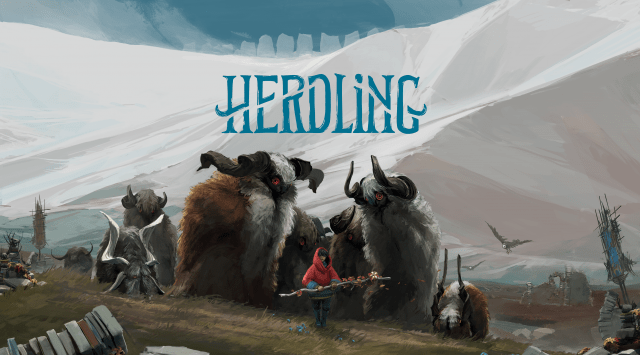
This past week was a big one for indie video game releases. Herdling is a brand new adventure from Okomotive, who also created the atmospheric and acclaimed FAR games and Firewatch.

Herdling looks stunning. If it follows previous Okomotive releases, Herdling should have more of a focus on immersing gamers in the world it’s crafting. I never thought herding livestock would appeal to me, but Herdling has me second-guessing that opinion. Herdling released on PC, Nintendo Switch, Playstation5, Xbox.
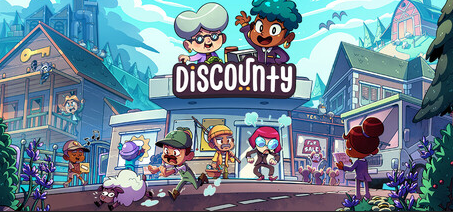
Newcomer developer Crinkle Cut Games released its first video game, Discounty, on Steam. Discounty takes some concepts of games like Stardew Valley and applies them to a discount supermarket. You’ll be managing a local supermarket and getting caught up in small-town drama. Organize and plan your shop’s layout and strike lucrative trade deals as you expand your business empire.

Discounty scratches that resource management itch that I often get. The quirky town looks fun and inviting. And at the time of writing this post, there’s a bundle for Tiny Book Shop (which we covered in a previous Geekly News post and is an amazing video game) and Discounty. If you’re interested in Discounty, check out its Steam store page.
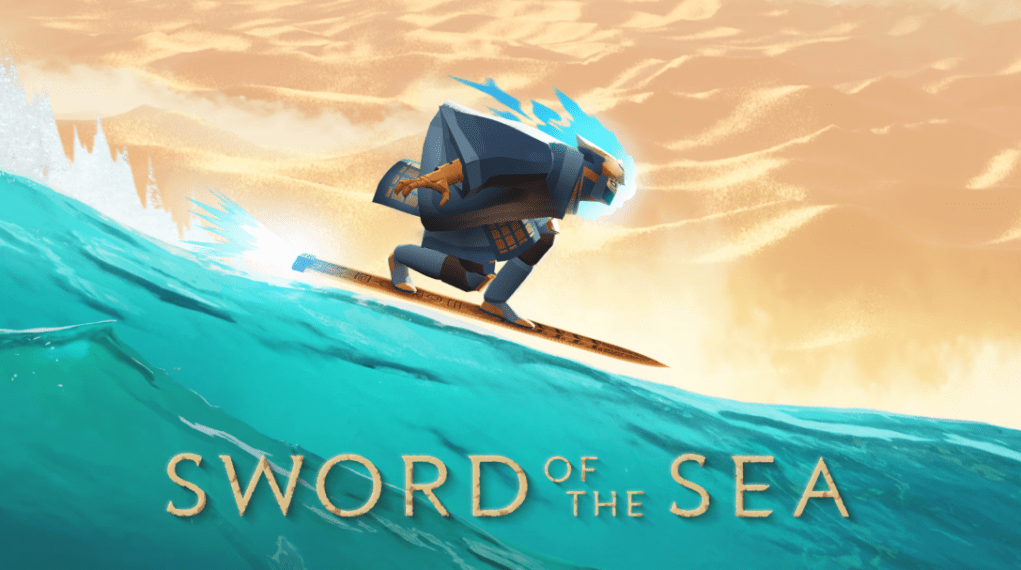
Sword of the Sea Sails onto Systems
I’ve always liked developer Giant Squid’s aesthetic. Giant Squid are the ones behind Abzû and The Pathless, but their art director also worked on Journey and Flower. You can see those influences in Sword of the Sea. Players control a Wraith, who explores abandoned and desolate worlds, hoping to bring life back to them. The Wraith explores the world with a hoversword, which is part snowboard, skateboard, and hoverboard. Needless to say, this world is stunning.

Sword of the Sea plays like an eco-fantasy. In a world as desolate as the one made by the Once-ler in The Lorax, Sword of the Sea has players soar through barren lands, seeding them with life in an art style reminiscent of Journey or Flower. Sword of the Sea’s premise has me intrigued. Giant Squid delivers the graphics we know them for, and that makes for a title on my short list of 2025 video games that I need to try. Sword of the Sea is available on PC and Playstation5.
That’s all the geek news we have for this week. Thank you for reading, and wherever you are, I hope you’re having a great day.

1996 was a weaker year for board games than the past handful of years, but a banner year for collectible card games. As a result, we’re lifting the CCG embargo for the 1996 list. There will be more than one CCG entry for the top 5 tabletop games from 1996, and it’s a doozy of a collectible card game. Woo hoo!
Hey, hey! Kyra Kyle here. We’re back with another Top 5 Tabletop Games. We’ll talk about 1996’s board game list soon, but let’s recap the ground rules for which games make these lists before we start.
1: Cultural relevance plays as much of a factor as overall quality. A game might make a list that doesn’t hold up to others of its type, but you must admit the game is everywhere.
2: Only one game from a franchise makes the list. This will become more of an issue the closer we get to games with expansions.
3: Longevity plays a role, too. A game doesn’t have to fly off the shelves today, but it had to have some widespread appeal for a decent time.

We begin this list with an interesting collectible card game, Mythos. Based on the Cthulhu Mythos stories of horror author H.P. Lovecraft, Mythos is also an adaptation of the Call of Cthulhu role-playing game. Mythos combines elements of some traditional card games like Rummy and borrows other concepts from previous CCGs. While the game is playable by two players, the intent is for Mythos to be played by a larger number of players. The main objective of Mythos is to collect points by completing adventures. Adventures are cards that include keywords derived from different card names and types. Once the required cards are in the player’s story deck or on the table, the player can play the adventure and receive its points.
Mythos differs from many collectible card games because of its lack of a combat focus. This is a CCG that attempts to tell a story. Unfortunately, Mythos faltered after its initial release. Later expansions, most notably the non-collectible Standard Game Set, confused consumers and forced the publisher Chaosium to discontinue Mythos only one year after the game’s original release. Still, Mythos shows what collectible card games can achieve. It earned its distinction as one of Pyramid magazine’s The Millennium’s Best Card Games.
Lately, we haven’t included too many mass-market board games in these lists. Mad Gab bucks this trend. It does so, not just because 1996 was a weaker year for board games like I mentioned, but because it was a cultural cornerstone. Mad Gab uses puzzles known as mondegreens (misheard words that could mean something else) and contain small words that, when put together, make a word or a phrase. For example, “These If Hill Wore” when pronounced quickly sounds like “The Civil War.” Mad Gab had two levels, easy and hard. The faster players solve the puzzles, the more points they score.
Mad Gab uses phonetics. It tests players’ ability to process sounds based on simpler English-written sounds into a meaningful word or phrase. Players must read the words aloud. Reading the phrases silently won’t allow someone to decode the puzzles’ meaning because the sounds need to be decoded.

We covered Mystery of the Abbey on our last week, and that game revamped Cluedo (or Clue for the United States). Kill Doctor Lucky flips the idea of Clue on its head. Kill Doctor Lucky features a sprawling mansion filled with a variety of dangerous weapons. Cluedo begins after the murder has been committed, and players compete to solve it; Kill Doctor Lucky ends with the murder, and players attempt to kill the titular character, Doctor Lucky.
Players must find a secluded room before slaying Doctor Lucky. You can even gain extra points if you pair a weapon with a specific room. For example, if you kill Doctor Lucky in the wine cellar with a trowel, you’ll gain extra points, alluding to Poe’s short story “The Cask of Amontillado.” As soon as I heard that Clue: The Movie could receive a remake, I wondered why Hollywood didn’t choose to go with a Kill Doctor Lucky movie. Why not lean into the silliness?

We have yet another Richard Garfield collectible card games that make one of these lists. Garfield has a knack for stretching the boundaries of collectible card games. That makes sense. He did create this form of game. Like Mythos, Netrunner doesn’t have a focus on combat. It takes place in the Cyberpunk 2020 role-playing game universe (which is also the basis for Cyberpunk 2077) and pits players against each other in asymmetric roles. One player assumes the role of a runner, who tries to break through and steal hidden plans (hacking) of the mega-corporations (the Corp) that run the world. The other player assumes the role of the Corp and attempts to catch the runner.
Beyond its focus on non-combat, Netrunner was unique because most collectible card games are framed as a battle between peers. Netrunner has two very different sides facing off against each other. While the collectible card game only ran for a few years, in 2012, Fantasy Flight Games adapted Netrunner into Android: Netrunner, which is a living card game that ran until 2019. Netrunner has a long and storied history. Its fans are fierce. But it doesn’t claim our top spot on this list. A different collectible card game has that honor.
Pokémon had to claim the top spot for 1996. It’s the second-longest-running collectible card game in history. When Pokémon first released, it sold out so fast that all the trading card manufacturers in the world postponed their other orders (like baseball, football, and basketball cards) to fill the demand for new Pokémon cards. Releasing later the same year as Pokémon Red, Blue, and Yellow (the original Pokémon video games on the Game Boy) helped catapult Pokémon to legendary status.
Play alternates between players who take several actions during their turn, including playing Basic Pokémon, evolving Pokémon, attaching an Energy card, playing Trainer cards, and using Pokémon abilities and attacks. The first Pokémon Trading Card Game sets played like simplified Magic: The Gathering decks. This helped Pokémon and built a pipeline for Magic. Wizards of the Coast, the producer of Magic: The Gathering, didn’t mind because the Pokémon Company licensed the Pokémon Trading Card Game to Wizards of the Coast, who published eight expansion sets between 1998 and 2003, after which the licensing transferred back to The Pokémon Company. The Pokémon Trading Card Game is one of the few games of this type from the original trading card boom that has stayed in continuous production. I haven’t played Pokémon in years, but I have fond memories. This game’s legacy demands that it takes our top spot.
Did we get the list mostly correct? Let us know which games you’d add in the comments. Thank you for reading, and wherever you are, I hope you’re having a great day.
Check out the other lists in this series:
Top 5 Tabletop Games Prior to the 1930s
Top 5 Tabletop Games of the 1930s
Top 5 Tabletop Games of the 1940s-50s
Top 5 Tabletop Games from the Early 1960s
Top 5 Tabletop Games from the Late 1960s
Top 5 Tabletop Games from the Early 1970s
Top 5 Tabletop Games from 1980-1981
Top 5 Tabletop Games from 1982-1983
Top 5 Tabletop Games from 1984-1985
Top 5 Tabletop Games from 1986-1987
Top 5 Tabletop Games from 1988-1989
Top 5 Tabletop Games from 1990-1991
Top 5 Tabletop Games from 1992
Top 5 Tabletop Games from 1993
Top 5 Tabletop Games from 1994
Top 5 Tabletop Games from 1995


