My Favorite Game Mechanics: Marvel Heroes

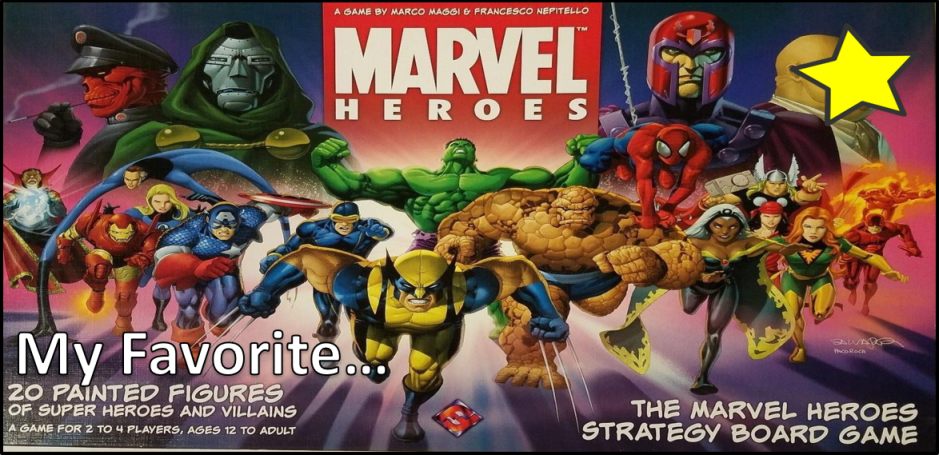
I don’t care too much for Marvel Heroes, the miniatures game published by Fantasy Flight Games in 2006. It’s a little fiddly for my taste. There’s even a system in place to prevent a runaway winner, and while it does a good job of keeping the game close, it makes players feel a little less super.

I do like the game’s combat system. Leave it to a superhero game that depicts four superhero teams (X-Men, Avengers, Fantastic Four, and Marvel Knights) and their arch-nemeses to deliver the goods for combat.

marvelheroes_overview

Hi, it’s your uncle Geekly here and if you lasted long enough to not rage close this article, I’ll let you know how Marvel Heroes made Rock, Paper, Scissors interesting and fun.

I’ve talked briefly about Marvel Heroes in the past. It plays out well enough. Villains cause trouble in various places in New York and the various players (in charge of superhero teams) send their heroes to deal with said trouble. Usually, this means combat.

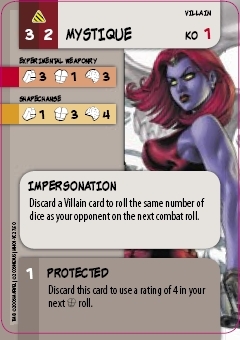
Each hero and villain have attacks—heroes always have three, but villains range from 1-3 attacks—they can make and each of these attacks has a value for attack, defense, and intelligence (intelligence equates more to initiative or speed than actual intelligence). Every attack is assigned to one of three tokens that a player can choose from and each player in the battle chooses which of their attacks they wish to use.
marvelheroes_villaincard

If you want to deal more damage, pick an attack that’s high in damage. If you’re worried about accepting damage, choose one with higher defense. Or if you don’t think you’ll get much out of a character (usually a low-level villain), pick one with a high intelligence so you can get in a quick shot before that character’s discarded.

The numbers indicated on the cards relate to the number of specialty dice you roll, so there’s always an element of luck added to the equation. It all boils down to an intriguing and layered take of rock, paper, scissors, but it’s done well. I just wish the rest of the game excited me as much as the combat. Still, with a few house rules it can be a great play.

What do you like most about the Marvel Heroes Strategy Board Game? What are the things you don’t like about Marvel Heroes? Maybe I’m a zombie to all things Marvel and just want to hate. You can chew my ear about it in the comments.

My Favorite Storytelling Elements Spider-Man “Kraven’s Last Hunt”

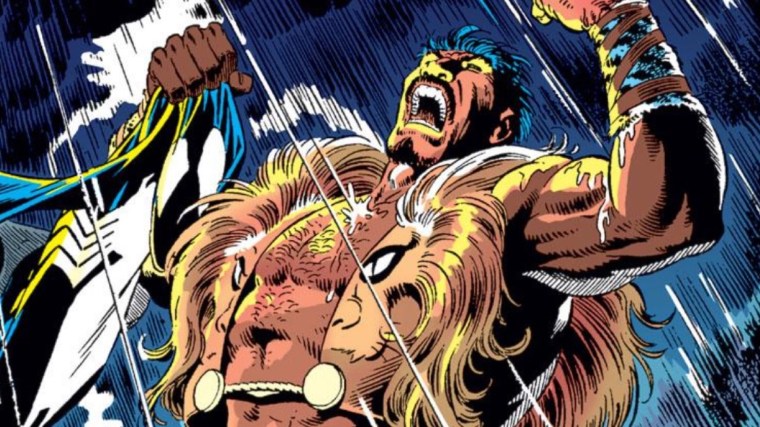
Most critics dub “Kraven’s Last Hunt” the greatest Kraven story ever told and one of the best Spider-Man stories. It features plenty of comic book action, but the character studies are what set “Kraven’s Last Hunt” from other Spidey tales.

The world no longer appreciated Kraven’s physical prowess. It no longer marveled at his courage, and most animal rights activists condemned him—he was a hunter after all—and the world he lived in no longer made sense. Before he met Spider-Man he’d never known defeat or humiliation. Now Kraven has fallen ill. He knows the end is near, but before he goes, he vows to reclaim his honor and prove his superiority over Spider-Man. He went out for one last hunt.

spider-man_kraven

“Kraven’s Last Hunt” embraces Kraven’s personal struggles. It blends aspects from classic literature and recurring themes to find a deeper truth. Kraven doesn’t just want to kill Spider-Man. In fact, Kraven doesn’t kill Spidey when he has the chance. He buries Spidey alive on his complex and assumes his identity. There’s even a moment where Kraven rescued Mary Jane, Spidey’s new wife, and she can see through Kraven’s disguise. Kraven falls short of being a hero. He never was one. This is a story that questions what it means to be a hero.

Kraven also thinks he can drive Spider-Man past the point where he ceases to be a hero. A rat-like monster named Vermin stalks the streets of New York while Spidey rests six-feet under. Kraven beats the creature unconscious, brutalizes him, and takes him prisoner. After Spidey comes to, he wants revenge for the time Kraven took from him. His anger leads him to Vermin, who Kraven uses as pawn to see if Spidey is strong enough to do unto Vermin what he did. Spidey proves that he’s strong enough not to.

spider-man_kraven_in_spider-mans_suit

There are so many themes of what makes a hero and what makes a good person that it’s easy to see why “Kraven’s Last Hunt” is high on most critics lists of Spider-Man stories. It not only portrays Kraven at both the height of his powers and the lowest, it does a great job in its portrayal of Peter and Mary Jane’s young marriage.

Readers see how MJ deals with Peter’s disappearance and how she’d react if Peter ever died in action. It’s a great window into the life of someone who must stay up late, worrying if their loved one is okay. In short, “Kraven’s Last Hunt” is a triumph and a must read for any Spider-Man fan or Spidey newbie.

Is there anything about “Kraven’s Last Hunt” that you liked that I didn’t mention? If there is, message me and I’ll give you Jim’s phone number to complain to him. Or you could let us know in comments.

My Favorite Game Mechanic: Choose Your Own Adventure: House of Danger

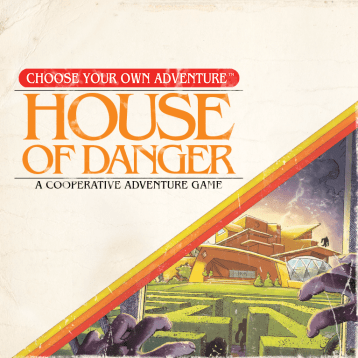
Sometimes you want a game that’s easy to learn. Sometimes you want a blast from the past. Choose Your Own Adventure: House of Danger happens to be both, and your uncle Geekly found a lot of enjoyment out of the game. So much so, that I can’t wait for the next game of the Choose Your Own Adventure series.

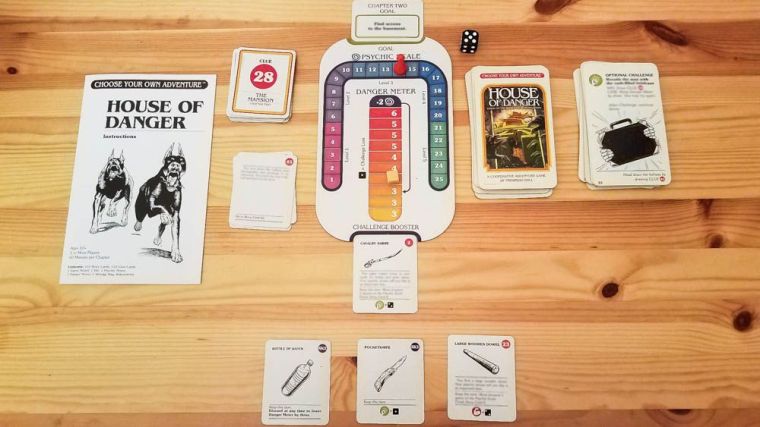
If you’ve ever read a Choose Your Own Adventure book, you’re seventy-five percent familiar with this game’s mechanisms. Seriously. House of Danger adds a simple skill check system, but the rest of the game follows the original book. Yes. R. A. Montgomery released a Choose Your Own Adventure book of the same name in 1982.

houseofdanger02

I think this game came at the right time. Many games borrow ideas from the classic Choose Your Own Adventure books (T.I.M.E. Stories and most escape room games), but House of Danger commits to recreating one. It’s simple, but it works.

Since the pages (of the novel) are split into individual cards, it’s easy to play the game as a family—and in saying you’re playing the game I really mean that a family or group of friends is reading a book together. I like how House of Danger draws the players’ attention to the Choose Your Own Adventure style of books.

houseofdanger_chooseyourownadventuregame01

There were a few moments where die rolls took over the game—I’m looking at you, braving the underground maze—but the bulk of the game when I played with my family was engaging with the written material and making choices that went well or went horribly wrong. And yes, there are moments that make someone what to say that they never did that. Their finger was on the previous page the whole time.

It can be difficult to add a new element to something or manipulate how a story is consumed, but House of Danger does a good job of capturing the feel of a Choose Your Own Adventure, while making it feel new. The added die rolls and progress tracks don’t detract from the original fun.

houseofdanger

Many gamers won’t like that House of Danger has limited replay value, but it’s cheap and like the novels, you can gift them to someone else when you’re done. Sometimes it’s nice to have a finite number of plays. Sometimes it’s nice to relive the past. It also doesn’t hurt that House of Danger is inexpensive.

If you don’t agree with me, go to page 472 or you can leave a comment.


My Favorite Game Mechanism: Super Mario Bros.

I’ve talked about this before years ago, but one of my favorite game designs is the first Super Mario Bros., specifically the game’s first stage World 1-1. It’s an example of flawless game design that has inspired many game designers since. It’s a wonderful use of intuitive game design.

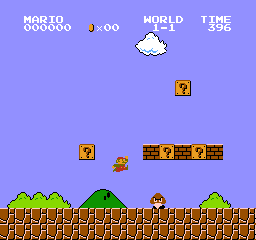
Mario begins on the screen’s far left. The player could try and move farther left, but the game won’t allow the player to do so. It’s showing the player that Mario must go right. Sure, the buttons are limited, but Mario can only move and jump, and the controls are easy to understand without ever reading the game’s manual. Soon, Mario encounters a Goomba (a mushroom-shaped enemy). Since Mario can only jump and the player gets caught in a corridor where they must interact with the Goomba, they find that Goombas can be defeated by jumping on them. This informs the player of Mario’s skillset and his enemies’ weakness.

supermariobrosstage1-1_start

A question mark box flashes ahead, begging to be pressed. When pressed, a mushroom emerges. New players won’t know if the mushroom’s good or bad, but the game’s design makes it almost impossible to miss it. The mushroom turns out to be a powerup.

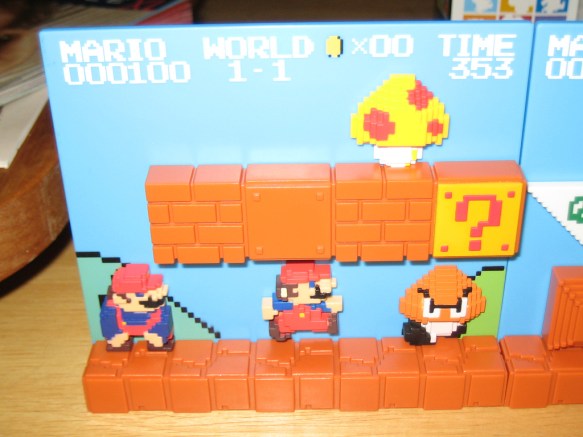
There’s even a moment where a seemingly random jump would result in finding a hidden 1UP mushroom (or extra life mushroom) and since it looks like the previous powerup mushroom, players are informed to grab it. A field study showed that most people who had never played Super Mario Bros. before found the 1UP mushroom. That’s because of its placement in the world; the first 1UP mushroom’s placement is just before a hole in the floor that players must jump over. It takes a little intuition to learn this game.

SuperMarioBrosLegos.jpg

Speaking of jumping over something, the first occurrence of a piranha plant, a polka-dot Venus flytrap enemy, is also strategically placed. With its mouth and fangs pointed up, players are informed to avoid them, but if a plant like that can go up a pipe, Mario can go down a pipe and that’s exactly what Mario can do there. It’s an excellent way of revealing a game’s secrets.

The rest of the level continues in a similar fashion, non-verbally teaching the game. When gamers say that they want intuitive game design or controls, they want something like Super Mario Bros. World 1-1. It’s still one of the best game designs.

Don’t believe me? When Hirokazu Yasuhara designed 1991’s Sonic the Hedgehog, he stated that he tried to recreate Super Mario Bros. World 1-1 with every level. That’s high praise from Nintendo’s greatest competitor at the time. What are your favorite elements of classic or modern video games? If you disagree with my choice in World 1-1, feel free to jump on my Goomba head. That might hurt. Instead, leave me an angry comment.


My Favorite Storytelling Element: Spider-Man “The Kid Who Collects Spider-Man”

Superheroes visiting terminally ill children may be a reality in the 2010s—Spider-Man: Homecoming’s Tom Holland has even visited children in the hospital—but in 1984 when “The Kid Who Collects Spider-Man” was first published (The Amazing Spider-Man #248), the Make A Wish foundation was barely three years old.

The story had some exploit of Spider-Man’s, but no one remembers what battle Spidey fought. Readers latched onto a kid named Tim who suffers from leukemia and only has a short time left. All Tim wants is to meet his hero. Spider-Man gives him his wish.

Part of what makes “The Kid Who Collects Spider-Man” great is Tim’s wish fulfillment. It’s a short human-interest story that writer Roger Stern made Will Eisneresque, and that is a fantastic element of the story, it dwarfs any battle, but I what I liked most happened after Spider-Man sees all the memorabilia the kid has collected (kinescopes of Spidey’s early TV appearances, a whole album of The Daily Bugle’s retractions, and bullets from a crime foiled by Spider-Man), and the kid asks Spidey who he is as Spider-Man’s about to leave. This kid loves him.

Spidey hesitates but figures the kid won’t tell anyone his identity, so he takes off his mask and identifies himself as Peter Parker. What Spidey didn’t expect was that by doing this it would lead to him telling the kid how he became Spider-Man. Part of him wants the kid or someone to know his secret.

He imagines the kid will hate him after he tells him how his negligence led to his uncle’s death, but it doesn’t. The kid hugs him and a reassures him. It’s okay for a hero to make mistakes. For a moment, it’s okay for Spider-Man to be Pete.

During this holiday season, I hope you know that it’s okay to make mistakes so long as you learn from them. It’s also okay to take off any mask you may wear and be yourself. Take care and be nice to each other.

My Favorite Innovative Video Games

I’m going a little off pattern with this latest favorite game mechanism in choosing several game innovations. This writeup skirts the boundaries of a list and the semi-weekly “My Favorite” series. I’m also kicking it old school with this video games as these are the first time a game style or game feature was used, so these won’t be so much modern innovative video games—I could see that as another writeup in the future—as much as it’ll be video games that shaped how they’re designed and played.

I could go on, but let’s talk about some games.

Legend of Zelda

The Legend of Zelda

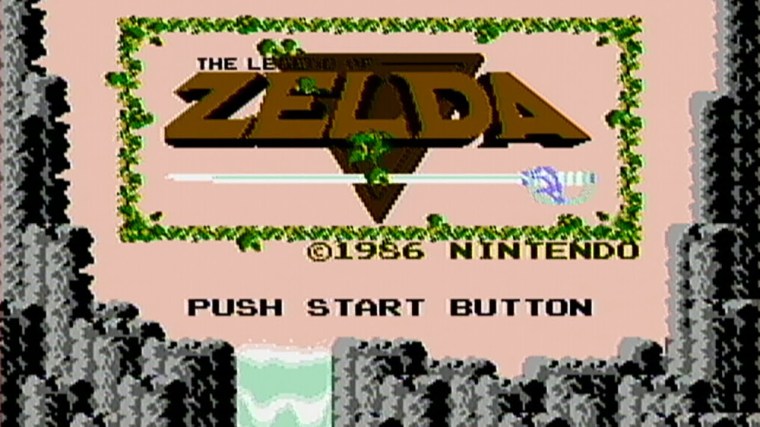
The Legend of Zelda is an easy one to include, but that doesn’t mean it hasn’t shaped modern video gaming in many ways. It’s one of the first open-world role-playing games. Without the original Legend of Zelda there would be no Bethesda as we know it. Sorry, no Fallout or Elder Scrolls. I played Morrowind a lot like I played The Legend of Zelda. I skipped the first dungeon and found one of the more difficult ones in the world and got my butt kicked. Who says I learned anything since I was a kid?

This game also created the first save file. Before The Legend of Zelda, players had to remember or write down codes to continue a game. When I first loaded the original Zelda, I wondered what a save file was. How far we’ve come.

Grand Theft Auto 3

Grand Theft Auto III

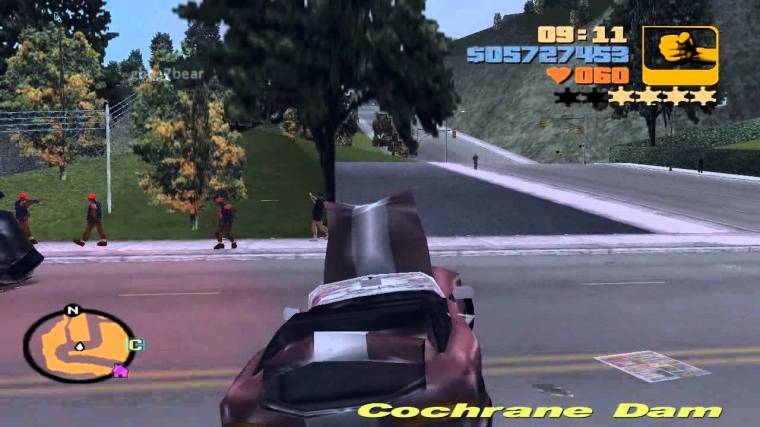
Speaking of open world gaming, no game captured the idea of “sandbox” gameplay than GTA3. Players could go anywhere and do anything. Unfortunately for your uncle Geekly, all I wanted to do was drive around town and listen to the radio. What do you mean the DJ’s name is Michael Hunt, but you can call him Mike?

Oh. That’s naughty. And players could be as naughty as they wanted to be with this title. Freedom, beautiful freedom. Now if only players could take the role of a woman like they could in the first Grand Theft Auto.

Super Mario 64

Super Mario 64

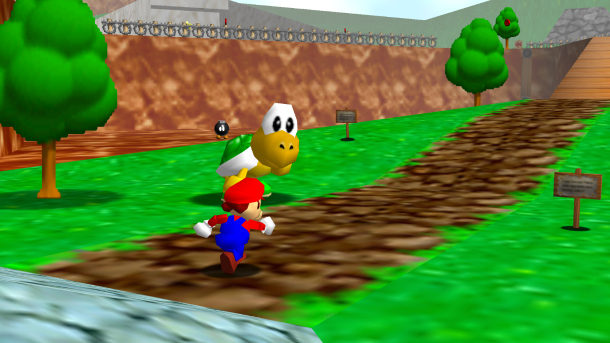
Super Mario 64 didn’t try a lot of new things in terms of a platform game. All it did was become the first game to effectively immerse gamers in a 3D world. Players could make Mario jump, flip, and run in 3-dimensional space. If they didn’t like the camera view, they could move the camera for a better angle. You know, the things gamers take for granted today.

LittleBigPlanet

LittleBigPlanet

This title took the easy way out: let users create content. Okay, with a user-friendly creation tool, LittleBigPlanet ushered in the era of “user-created content” in video games. There have been other games that have put design in players’ hands for the PC, but LittleBigPlanet made it as easy as I can remember and brought this idea to consoles. Power to the people.

TecmoBowlStefonDiggs

Super Tecmo Bowl

No. I’m not talking about the first Tecmo Bowl where players cheated by using the Raiders and Bo Jackson. I’m talking about the follow-up game Super Tecmo Bowl where the game kept track of players’ statistics for the first time—something sports gamers like—and it simulated a full season of games—another something sports gamers like. If only Super Tecmo Bowl used real names for every player.

This game gets bonus points for modders who update the classic with modern NFL rosters. J. J. Watt is in our featured image at the start of this post, and Stefon Diggs is in the one above. Those are actual screen grabs from a Super Tecmo Bowl with updated rosters. What?

Metal Gear Solid

Metal Gear Solid

Sure, I could focus on Metal Gear Solid’s stealth gameplay, which was revolutionary at the time, but I’m going to concentrate on MGS’s storytelling. The game played out like a series of short films that included some topical themes and did a lot with developing characters, even if the dialogue was wanting at times. Metal Gear Solid showed that video games could thrive as a storytelling medium.

Doom1993

Doom

Doom’s biggest contribution must be its immersion. There were first-person games before Doom, but this game was the one that immersed gamers in its world. It’s the first game that made the environments their own characters, but it didn’t stop there. Doom introduced the world to multiplayer gaming via the internet. It also popularized a “shareware model” or a “try before you buy” system that game companies still used today.

That’s my first list of innovative video games. I’m sure there are plenty more that I could make another fifty to hundred lists. If you have a problem with any of the games on this list or take issue with an omission or five, come at me with a thumb war. Or you could leave a comment.


My Favorite Game Mechanic: Castles of Mad King Ludwig

Your uncle Geekly has talked about Castles of Mad King Ludwig before, so if you want to see our review of it and Suburbia, check it out here, but this week we’ll talk about the one game mechanism I like the most from Castles of Mad King Ludwig: I cut, you choose.

I’ll try not to repeat my review of Castles, but I can’t promise to cover some familiar ground. Most games that use an I cut, you choose mechanism play out like the pizza game New York Slice. The starting player groups things together (depending on the game type) and then the player to the starting player’s left picks which group they want first and play continues to their left, meaning that the player who decided which stack of things went together gets whatever’s left over. It’s a nice little game of cat and mouse. Do I want to group things I know another player would want together, giving them points, or risk something I’m playing for? Most often, players will split the difference and hope for the best. This system gives players more agency in games. To be honest, not enough games use I cut, you choose.

CastlesOfMadKingLudwig

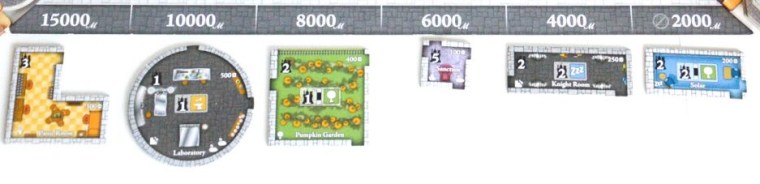
But Castles of Mad King Ludwig takes a different approach to this mechanism. Each turn there’s a different master builder and the master builder determines how expensive tiles (with which to construct player castles) cost each turn. When a player selects a tile from the supply, they pay the cost to acquire a tile to the turn’s master builder. That’s coconuts.

Not only does a master builder set the market price each turn, there’s an added level to I cut, you choose in that the master builder places an item for sale at the highest price they think another player would be willing to pay for the tile to get the most money they can get during their turn as the master builder. Flushed with master builder cash allows for more purchases and builds at the end of a turn (master builders still take their build turns at the end of the round like most other I cut, you choose games), and to date, I haven’t seen a tabletop game empower players at this level. This adds so many new strategies and questions.

MadKingLudwigSupply.jpg

Do I price the tile I want that turn as the most expensive? If I do, will other players buy enough of the cheaper tiles for me to buy the one I really want? Would another player pay top dollar for the tile I want most? Are other players even interested in the tile I want most? Can I price it lower or will someone buy it just to spite me? Even though the titular Mad King Ludwig wasn’t mad, this game can drive players mad with its number of choices.

Each game changes how players score, so a tile that mattered in a previous game might not matter as much in a future one. That gives Castles of Mad King Ludwig a lot of replay value.

I like Suburbia a lot too. It’s a similar game about building suburbs of a city by the same design team and publisher, but Castles of Mad King Ludwig’s take on the I cut, you choose mechanism makes it a much better game.

If you disagree, you can send me to the stocks or you can leave a comment. If you’d like to tell me I’m wrong every day, feel free to subscribe.

My Favorite Game Mechanics: Sentinels of the Multiverse

There isn’t just one game mechanic that I like from Sentinels of the Multiverse, there are several, but most of them center around one thing: character building.

Sentinels may not be perfect—your Uncle Geekly will have to write an in-depth analysis about it after a while—but most of the design choices in Sentinels do something to characterize the heroes, the villains, and sometimes the world in which they live. Players feel like they’re heroes. They feel super. And that doesn’t happen as much as it should in board games with superheroes.

Some games like Marvel: Legendary (perhaps a better game than Sentinels overall) puts gamers in the role of someone like Nick Fury. You’re assembling a team of superheroes to deal with a threat. Others put gamers in the role of a superhero, but there isn’t an attachment to the character or the characters are flat. You are a unique hero in Sentinels.

SotM_NightMist

While there may be some misses (in terms of character building), there are more characters like NightMist. She’s reckless. How do we know this? She’s just as likely to hurt her teammates as she is the enemy, and the mechanisms in her deck bring out that flavor. Legacy is the leader of the gang. A lot of his abilities promotes this identity. Visionary has a more hands-off approach and many cards in her deck reflect her personality.

The villains have just as much personality, and Sentinels does one of the best jobs in tabletop gaming of building antagonists. Some villains have no regard for their henchmen and prefer the heroes to squish them, others may care for their righthand man, but have no attachment to anyone else. Still others depend on no one else but themselves. These henchmen, if there are any, also tend to build on the eccentricities of the various villains. Citizen Dawn’s lackeys don’t behave like anyone else’s. Grand Warlord Voss has his own unique cronies. The Matriarch always has a murder of crows in tow.

SotM_Dreamer

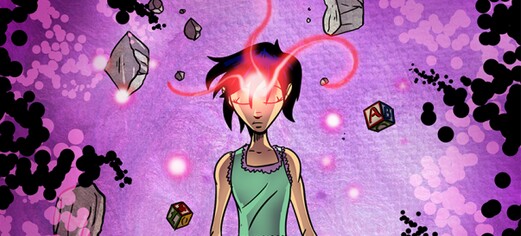
There are even some villains like Akash’Bhuta who are more forces of nature than true villains. The Dreamer who is an 8-year-old girl whose dreams come to life, but she suffers from night terrors and therefore, she’s a victim herself. And Wage Master who’s the resident Mister Mxyptlk who turns game play upside down just because it strikes his fancy. The characters in Sentinels have plenty of—well—character.

Even the environment decks (that represent the location the game takes place) have their own sense of character. Certain environments like Wagner Mars Base aren’t so good for specific characters like Bunker (kind of like Ironman) or The Wraith (a female Batman) because it randomly destroys equipment, while other environments like Rook City (a Gotham City type) hates on all heroes because even the cops are crooked. There are even a few environments that handle heroes with kid gloves. I won’t mention them here. Greater Than Games has plenty of forums for that and many of new game copies rates each environment according to difficulty.

It’s easy to fall in love with Sentinels despite any shortcomings. It has personality. And personality is something more superhero games and antagonists in cooperative games need.

What do you like most about Sentinels? Is there another game that handles character building in a fun and interesting way? Let us know in comments.

My Favorite Storytelling Element: Iron Man “Demon in a Bottle”

I’m not sure if I can say it any better than several other critics “’Demon in a Bottle’ is THE quintessential Iron Man story.”

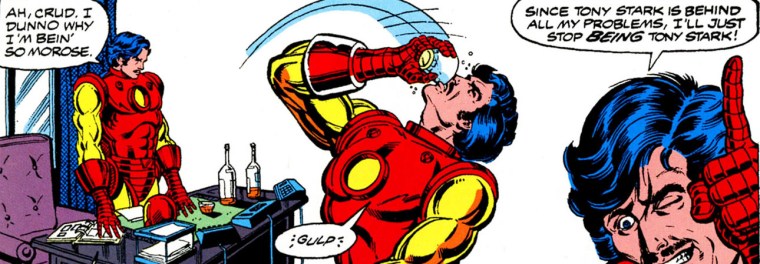
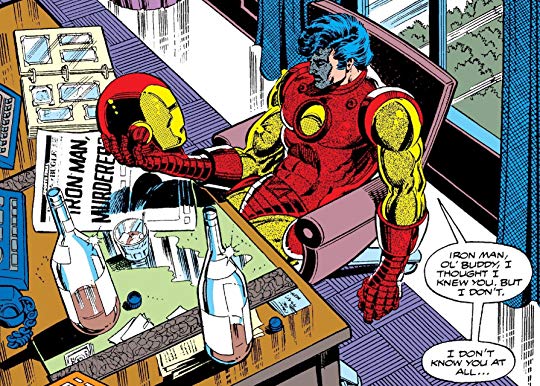
Tony Stark/Iron Man’s alcoholism is one of his key characteristics, and “Demon in a Bottle” introduces this. Does “Demon in a Bottle” do as well of a job tackling this issue as other, more modern stories (in comics and other media)? Not necessarily. It’s a 1979 comic book story arc after all. Does writer David Michelinie speed through what occurs during recovery? Yes. It’s almost comical. But he does an excellent job with loss and the struggles Tony deals with, and it’s easy to see why “Demon in a Bottle” remains one of the best Iron Man stories.

Prior to “Demon in a Bottle” Iron Man was a relatively flat character. Many of the stories weren’t engaging. I like how the “Demon in a Bottle” begins as usual Iron Man fare at the beginning of the arc. The storyline ran from The Invincible Iron Man #120-128 (March-November 1979), but it wasn’t until issue 124 or so that alcohol really came into play.

demon-in-a-bottle-2.jpg

It’s odd watching modern critics address this story. They’ll say things like they wished Iron Man started with Tony’s alcoholism sooner and expand on it. Do I wish, in hind-sight, that “Demon in a Bottle” did more to address alcoholism or do so sooner in the arc? Yes. A serious subject like alcoholism deserves as much space as needed.

Other storylines in the 1970s dedicated plenty of issues to drugs. Roy Harper (the original Speedy) was revealed to be a heroin addict in Green Lantern vol. 2 #85 (1971), and Spider-Man fought drugs that same year (The Amazing Spider-Man #96-98), but those two storylines showed third-person accounts of addiction. Speedy wasn’t the main character in Green Lantern. Spidey fought crime, but drugs were kept at arms’ length, in third-person. Tony is Iron Man. “Demon in a Bottle” is a first-person account of how someone slowly descends—but perhaps not slow enough of a descent—into alcoholism.

Furthermore, Spider-Man and Green Lantern knew they were making a statement with their stories. “Demon in a Bottle” came out of nowhere. The issue of alcoholism grew organically, and that tends to be the insidious thing about addiction.

The first several issues Tony started drinking occasionally. As events unfolded—I won’t spoil much here, but many people would consider what happens in the early going of this story side battles and tragedies—he drank a little more each day until his addiction consumed him.

Comic book characters change a lot through the years and decades, but one thing has remained the same for Tony Stark/Iron Man since 1979. He battles with alcoholism. For a story that had little to no intention of making a statement, “Demon in a Bottle” makes a huge one. For a character who was just another guy in a flying suit, he gains one of his most defining characteristics.

IronManDemonInABottle03.jpg

Tony’s alcoholism has been revisited in later Iron Man storylines. He may offer advice to someone else suffering with addiction or he may hit the bottle again. Alcoholism is one of the things that makes Tony Stark relatable, human.

You can even see the impact “Demon in a Bottle” had in the film Iron Man 2. Tony gets drunk during a party in his armor and mayhem ensues. Director Jon Favreau may not have wanted to delve too deeply into Tony’s addiction—Disney/Marvel wanted to keep things light—but he wanted to homage to the most important Iron Man story.

I’m not sure what else there is to say. Perhaps one of you is more eloquent than me or has more insight into this groundbreaking comic book story. If you do, please share in the comments.

My Favorite Game Mechanic: Mansions of Madness

Have I mentioned that the Geekly household likes cooperative games? I have? We’re a family of sore losers and think the other people at the table are cheating. I mentioned that too? Well, we’re also fans of puzzles and like the occasional Lovecraftian horror game. Ha! That’s new.

When I think of those criteria, I think of Mansions of Madness 2nd Edition, but there’s a specific mechanism that brings out the best in that game: integrating an app.

You know what they say about not being able to beat them. Many games use apps as game night assistants, but Mansions of Madness 2nd Edition uses the medium to create ambiance with mood-setting background music. It adds character to the game. Not just with the music, but with the variety in each area’s setup and whatever algorithm that tells the app that the players of this game have done specific puzzles in the past, it’s time to mix it up. It even randomizes the solution of each scenario, so someone can play the game more than once and get a different outcome.

Okay. Some of these features aren’t executed as well as they could be, but Mansions of Madness 2nd Edition harkens a new age in tabletop games. I don’t think we’ll get too many of these type games at once, but there’s enough in Mansions of Madness to make someone excited for a third edition or how other games will incorporate apps in the future.

There’s plenty more to like of Mansions of Madness besides its app integration. The exploration, discovery, and puzzle-solving are well done. The Geekly household likes to rotate who takes the role of narrator each turn so that everyone gets a turn. If there’s another gripe I’d have with Mansions of Madness’s app it’d be that they could’ve included more voice acting (as in various actors or more of it so that a player at the table wouldn’t have to roleplay)—but more roleplaying isn’t a bad thing. Ham on, Hammy.


The Mansions of Madness’s app works well overall. I’m encouraged by what I’ve seen in this game and other games like Beasts of Balance, the One Night Ultimate series, Alchemists, and World of Yo-Ho. This is a trend I don’t see going away soon and if Mansions of Madness is the start of a new wave of games, I’m okay with that as a change-up, but I still like my classic analog games.

That’s what I have as my favorite game mechanism for Mansions of Madness 2nd Edition. There are plenty more that I could include. What are some of yours? Maybe there’s another tabletop game that uses a companion app better. You can challenge me to a leg wrestle or tell me about it in comments.