Getting Started with Route or Network Building Games

We’re on a freeway of love in a pink Cadillac. We miss you, Aretha. Shine on, Queen of Soul.

Getting back to tabletop games, there are plenty of games that cast the players with setting up routes or networks or roads or even freeways of love to score points. The difficulty levels of these games vary, and route or network building games tend to have more than just that mechanism in them. That may be because building roads or a network doesn’t appeal to a lot of players, but there are some beginner games that can introduce new players to the genre.

Your uncle Geekly’s back with another Getting Started, so let’s network.
Tsuro

Tsuro

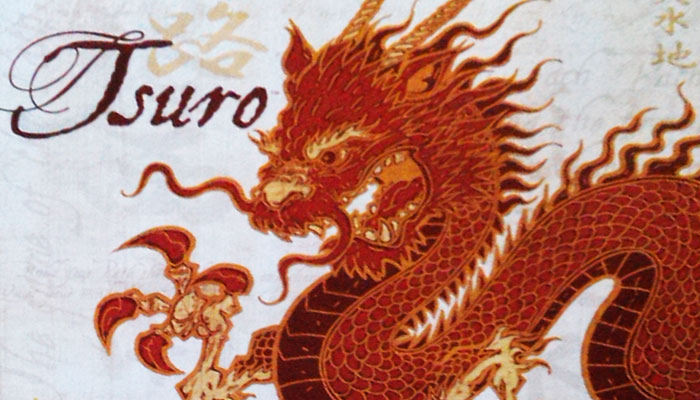
A game that’s just building a road or route. That sounds too simple. It’d be boring. Tsuro doesn’t have much more to it than that, and it’s excellent.

Players lay tiles with winding paths on them from their hand onto a 6×6 grid and move their pawns as far on those paths as they can. The last player with a pawn on the board wins. Hint: you can lead your pawn off the board or into other pawns.

It’s a simple concept, executed well, and it doesn’t hurt that the game looks gorgeous. It also doesn’t hurt that Tsuro lasts fifteen minutes at the most. Perfect for a new player.
TicketToRide

Ticket to Ride

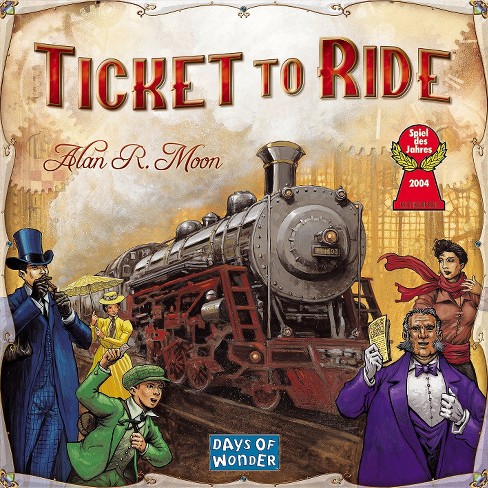
Ticket to Ride was the first game that came to my mind when thinking of starter route-network building games. It dominated the hobby when it first came out and remains popular. There are a lot of offshoots and expansions for Ticket to Ride that depict almost any region or country you could think of, but I’d start with the original United States map from 2004.

Players build railroad connections between cities, while trying to complete destination tickets that can span the length of the continent or country. Rummy-style set collection adds another layer as players collect cards with which to spend on railways between the various cities and usually, the first player to claim a route is the only one who can, so pressure builds when players decide whether to collect more cards for their hand or build a route before another player can do so. This is one of tabletop gaming’s simplest, elegant, and tense push-pulls.

Ticket to Ride may add another layer than Tsuro, but it’s still easy enough for a tabletop game newcomer to learn, and one of the best “gateway games” (easy-to-learn board game that’s great for introducing new gamers to the hobby) on the market.

Takenoko

Takenoko

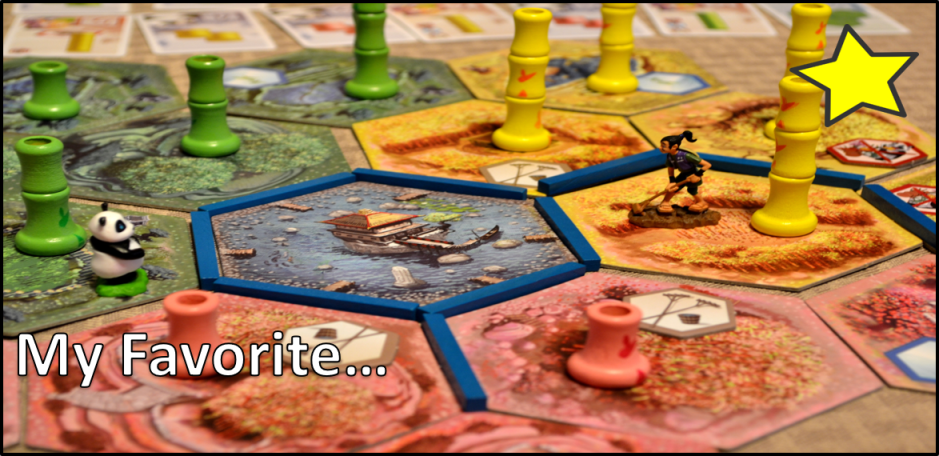
I’ve talked about Takenoko in the past. Don’t let the Chibi Panda fool you, this game has plenty of depth, but it’s still easy to teach and learn and takes a different approach to route/network building. Like Tsuro, Takenoko uses tile placement, but the network in Takenoko is in its irrigation.

The game starts with a pond tile, and in order to irrigate their bamboo players must connect tiles of various color bamboo to the starting pond tile with what the game calls an irrigation stick. I think of it as more of a trench system to get the water to where one wants it, but I may be wrong. If I am, feel free to toilet paper my house. I live in Connecticut. Yeah, totally Connecticut.

Anyway, I included Takenoko because it shows how many games will incorporate network/route building in the game, but the game won’t be about network building like the previous two entries. Yes. Players need water for irrigation, but irrigation sticks are only a fraction of what someone needs.
Saboteur.jpg

Saboteur

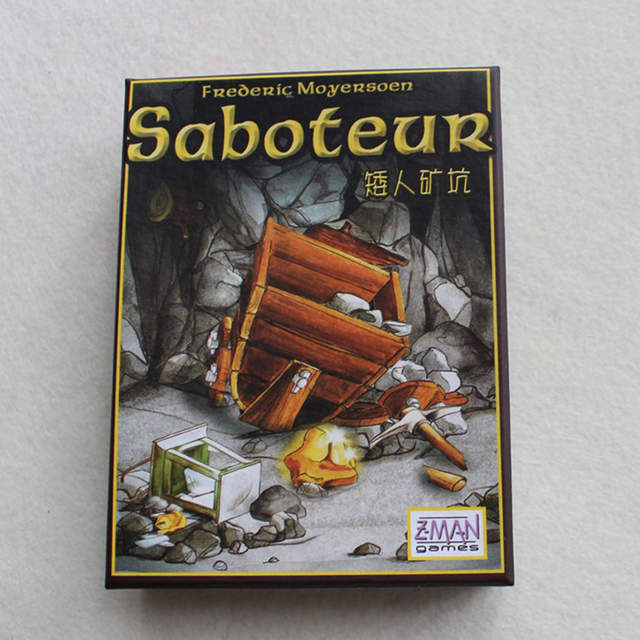
Saboteur returns this list to its classic network/route building roots, but it deviates in another direction: semi-cooperative and secret goals. The goal for the game’s mining dwarves is to build a network of caves (from hands of path cards) to reach gold. The goal for the game’s saboteurs is to prevent the mining dwarves from reaching the gold.

A good saboteur will pick the spot where they betray the team. Do they risk it and wait for the mining to team to get close to the gold and then play a U turn card? It’s very satisfying to be the saboteur, but who’s on which team is only part of the game’s hidden information. There are multiple locations for the gold to be at the beginning of the game, but no one knows where it is until they’re given a card that allows them to take a peek. Again, a good saboteur doesn’t reveal their identity because they could lead the mining team to the wrong spot.

Saboteur isn’t for everyone. There are some folks who hate traitors in cooperative games, but the runtime is so short that it had to make this list.

Final Thoughts

There are many other ways I could go with in terms of expanding this list of beginner route/network building games, but I’ll stop with these four because I miscounted them as five and if I had six I’d have to use the other hand to count.

Speaking of networking, we could use some comments about games or something else in the geek world. If you like this post, give it a like, and if you like what Geekly does, feel free to subscribe. If you subscribe, you can let your uncle Geekly know how wrong he is every day.

3 Lists of 3 Faithful and Unfaithful Comic Book and Manga Movies

Cause it takes a strong man, baby, but I’m showing you the door. Cause I gotta have faith. I gotta have faith. Or do you?

Your uncle Geekly is back with more comic book movie magic and a three list of three. This week we’ll concentrate on comic book movies that are the most and least faithful adaptations to their source material and throw in a third, fun list for kicks.

Usually, a faithful adaptation is better than one that isn’t, but that’s not always the case. 2011’s Green Lantern made the short list for faithful adaptations, and it stunk. Regardless, the following lists will let you know which ones have geek cred, and which ones don’t.

Most Faithful Comic Book or Manga Movies (so far)

IronManMovie

Iron Man (2008)

All the main points for Tony’s character are present in 2008’s Iron Man, except that he’s more of a social drinker than an alcoholic. That may be the one part that I’ve never liked about the movie version, but I get it. Marvel/Disney wants to make Iron Man more accessible for a greater audience. But alcoholism is a common problem and that’s one of the things that makes Tony accessible for people.

Oh well, like I said, the main character points are there: billionaire playboy, womanizer, purveyor of the best weapons, regrets the creation of such weapons, and needs a suit to stay alive. One must take the omission of alcoholism with stride. The cinematic Iron Man deals with his alcoholism as much as cinematic versions of Batman deal with the loss of his parents. It’s a peripheral thing.

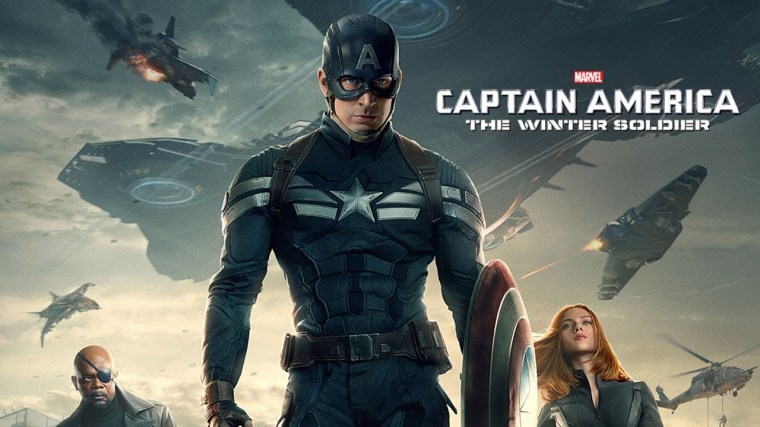
CaptainAmericaTheWinterSoldier

Captain America: The Winter Soldier (2014)

Yes. This is the second Marvel movie in a row, but it’s a good one that’s very faithful to its source material. The only things the movie Winter Soldier changes are plot points that wouldn’t fit within the confines of the Marvel Cinematic Universe (Sharon Carter wasn’t introduced until this movie, so Black Widow is part of Cap’s team) and some of the more fantastic or mystical elements (sorry, no Cosmic Cube, this version is more grounded).

Again, the main points are there. Cap’s team investigate the mysterious Winter Soldier, who turns out to be Cap’s former sidekick Bucky. At the end, Bucky sneaks away to find himself. The few deviations make sense and don’t detract from the movie capturing the characters and the feel of the comics.

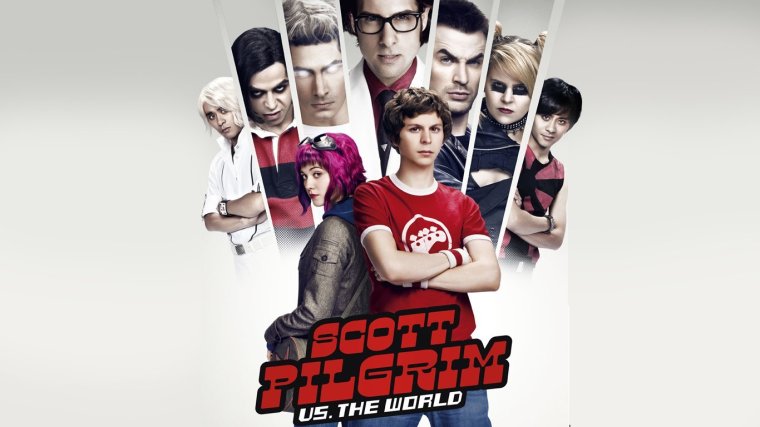
ScottPilgrimVsTheWorldMovie.jpg

Scott Pilgrim vs. The World (2010)

Some source material was cut or condensed to fit a two-hour runtime, but Scott Pilgrim vs. The World captures the original story perfectly. Over-the-top video game battles? Check. A frenetic pace? Check. Extremely expressive characters? Have you seen Michael Cera’s face? He may have eyes as large as the title character in the manga. The supporting characters are equally over-the-top and animated—but in the best possible way.
Edgar Wright did a fantastic job translating the Canadian manga into a cult classic. Unfortunately, cult classic means that it didn’t do as well as it should have in theaters.

Least Faithful Comic Book or Manga Movies (so far)

CatwomanMovie

Catwoman (2004)

Catwoman. Ugh, Catwoman! It’s so different from the source material that I wouldn’t be surprised if a film distributor other than Warner Brothers released this one. The anti-hero’s moniker and character appearance (sort of) are the only commonalities between the two entities.

Patience Philips is Catwoman’s real name instead of Selina Kyle. Patience drowns and comes back to life with the help of a magical cat instead of being a world-class cat burglar. There’s an Egyptian goddess Bastet angle that’s just awful. Who wrote this? How could the actors read the script and think this would be a good movie? Who allowed this to exist?

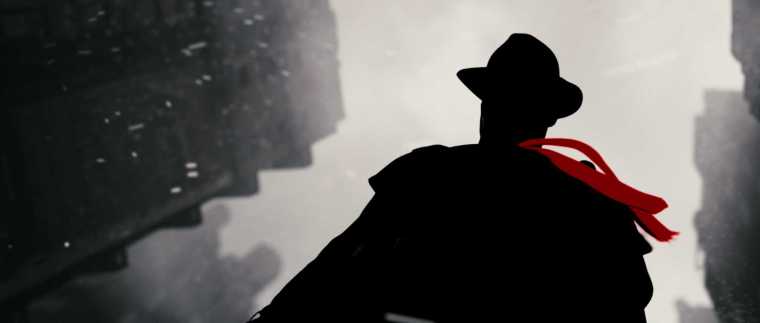
TheSpiritMovie

The Spirit (2008)

The Spirit comic may have had some issues with Ebony White (it’s a product of its age), but the story is a great blend of crime and humor with strong characterization. I like how Will Eisner portrayed The Spirit as an everyman. It made him relatable and accessible.

The movie strips the characters of their personality and clothes. Comic book fans have known for years that Frank Miller (the movie’s director) doesn’t have the most enlightened opinion of women, and it shows here. I would say that 2008’s The Spirit should only be aired on Skinamax, but soft-core porn has more story and does more with their characters. Also, The Spirit can heal like Wolverine, so that everyman quality is lost.

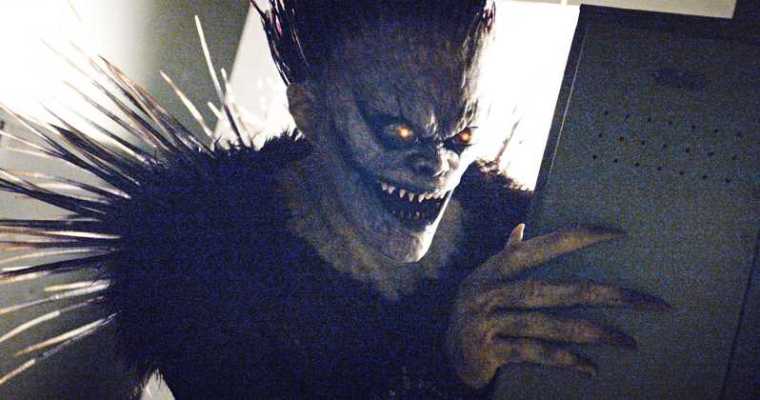
DeathNoteNetflix.jpg

Death Note (2017)

Fans didn’t like the announcement that Netflix would release a live action Death Note and set it in the United States. While I agree that changing the setting and other cosmetic alterations damaged the movie, Death Note’s biggest sin is that the characters are dumb. It’s not that they’re dumb as in they make little sense or have limited characterization, which they do make little sense and have limited characterization, but the main characters have a collected IQ of 30. That’s not ideal for a series that’s main draw is that it plays out like a high-stakes Chess match.

Instead of schemes becoming more complex throughout the movie, they get dumb and dumber and dumberer and dumberest. This movie is so stupid that I’m making up words.

Awesome Animated Comic Book Movies

AllStarSupermanMovie

All-Star Superman (2011)

It helps when the source material is excellent, but 2011’s All-Star Superman is amazing. It captures the essence of the character in a way other Superman films haven’t been able to. It shows what Superman would do if he knew he didn’t have much time left on this planet. He continues to protect the Earth and his loved ones because that’s who he is. There’s even a great Lex Luthor character moment when he sees the world as Superman does, ever the optimist. All-Star Superman is a must watch.

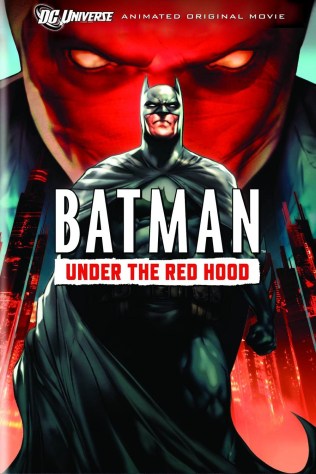
BatmanUnderTheRedHood

Batman: Under the Red Hood (2010)

Batman: Under the Red Hood was released early in DC’s animated line, but it may be the best animated Batman film ever. Jensen Ackles (Supernatural) is Jason Todd and he may own the role for some time to come. Bruce Greenwood’s Dark Knight and John DiMaggio’s Joker are almost as good as Kevin Conroy and Mark Hamill, and that’s saying a lot.

This film explores the complex relationship Batman has with killing and with the Robins who have joined him in his crusade. Yes. Under the Red Hood has the prerequisite action and crime fighting, but it’s a surprisingly deep movie.

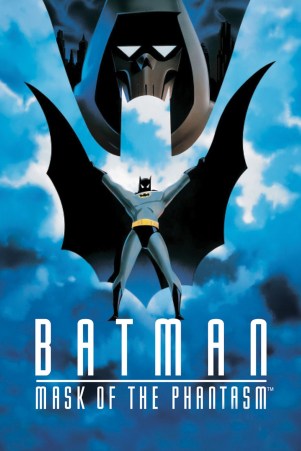
BatmanMaskOfThePhantasm

Batman: Mask of the Phantasm (1993)

I could’ve gone with a lot of other DC animated films with this final move—DC Animated movies are far better than most Marvel ones, they’re the inverse of the live action films—but I had to go with one of the first Batman: Mask of the Phantasm. To me, Kevin Conroy is Batman. Mark Hamill has given one of the most memorable performances as The Joker. There’s a reason the pair have been playing these characters for over two decades.

The original characters in this film are well done too, and Batman: Mask of the Phantasm holds the distinction of being the first Batman: The Animated Series film. Any Batman newbie should watch at least the first season of Batman: The Animated Series, followed by Mask of the Phantasm.

I can only list 9 movies in this 3 lists of 3, so I’m sure some readers will differ in their opinions. Turn on the Geek Signal and I may come running if you leave within a fifty-mile radius or leave a comment.

3 Lists of 3 Tabletop Game Designers

Uncle Geekly here. We’ve covered tabletop games more than once on 3 Lists of 3, but it may be time to discuss the people behind the games. I smell a few lists of game designers.

Think of these game designers as authors of books and many tabletop game enthusiasts follow them as if they were authors releasing their latest novel, so the following 3 lists may be a good place to start if you’re looking for a designer or two to follow. Let’s get to them.

Designers Who Seldom make the Same Game Twice

Friedemann_Friese

Friedemann Friese

504 may not have landed with fans as well as Friese had hoped, but a game system that has 504 possible combinations of games is a testament to this designer’s versatility. Funkenschlag or Power Grid is an electrifying network building game–pun intended–that may have led to the more streamlined and widespread Ticket to Ride. Friday takes the deck building genre and turns in a story-driven solo experience. I love how the cards you use in the deck can get shuffled back in and have a different effect later in the game. I don’t know how many times I’d eat something that would eventually give me diarrhea. Your uncle Geekly has a weak stomach, so that’s almost like real life.
Fauna and Terra are some of the better takes on trivia games. I don’t care for trivia games as much as I used to—Trivial Pursuit may have ruined me on the genre—but I’ll gladly play either of these two games. Fabled Fruit is a simplified worker placement, legacy game, and that’s an accomplishment. I haven’t heard of too many worker placement games one could explain in under fifteen minutes, let only one that includes a legacy component. Friese is on fire. If his hair is any indication, it’s green fire.

AntoineBauza

Antoine Bauza

We go from a German to a Frenchman. Antoine Bauza may use a similar aesthetic in his game’s artwork and their themes (strong Japanese influences), but his games have no shortage of story, mechanisms, and scope. Ghost Stories and Samurai Spirit are both cooperative games, but one pits Shaolin Monks against nightmare fuel, while the other, despite some balance issues, is a faithful recreation of Kurosawa’s Seven Samurai. If you’ve never seen the film, it doesn’t end well for the samurai. It also doesn’t usually end well for players of Samurai Spirit.

Bauza’s most celebrated works—the ones that have received the most awards—are card games: Hanabi and 7 Wonders. Hanabi is an interesting 50-card, cooperative game where players can see others’ cards, but not their own. 7 Wonders and its excellent spin-off 7 Wonders Duel popularized card drafting. I’d place Duel slightly ahead of base 7 Wonders because of its use of a pyramid set-up and speed of play, but I couldn’t deny the appeal of 7 Wonders. Grumpy Uncle Geekly wanted to dislike it but didn’t.

There are just too many game types from Bauza: Takenoko (a deceptively strategic game about a Chibi panda eating bamboo), Tokaido (a gorgeous timeline game about a Japanese vacation), and Rampage (like it’s video game namesake, players destroy a city with wooden monsters).

I could’ve gone with several other French game designers here too. Bruno Cathala and Ludovic Maublanc are not only frequent co-designers of Bauza’s, they too seldom use the same mechanism twice.

EricMLang

Eric M. Lang

If you noticed trends with Bauza’s games, you’ll see some form with Canada’s favorite game designer Eric Lang. But Lang delivers the goods and his games are eclectic. I’m a huge Lang fan-boy. I see his name on a game and I’m already interested.

Miniatures? Yeah, he’s made some of those games. Anything from Cool Mini or Not (CMON games) is a safe bet: Blood Rage (half strategy Euro, half kickass Vikings), Arcadia Quest (Chibi fantasy dungeon dive), The Godfather: Corleone’s Empire (yeah, it’s a mafia game), and Rising Sun (the second game of the Blood Rage trilogy).

Card games? Yes. He has plenty of those too: Star Wars: The Card Game (this is a great living card game update to the earlier collectible one), Warhammer: Invasion (another living card game update), A Game of Thrones: The Card Game (Same), and Call of Cthulhu: The Card Game (yeah, he does a ton of  these, but he’s great at them).

Dice games? Lang has made some of my favorite dice games. Quarriors! introduced dice to the deck building mechanism. Dice Masters added a collectible layer to Quarriors!, creating the first successful dice collection game that has since been mimicked. Yeah, I’d play a new version of Trivial Pursuit or Monopoly if it had Eric Lang’s name on it.

Designers Who Tend to make the Same Game

MattLeacock

Matt Leacock

This may be sacrilege. I can hear boos from my computer screen, but just because a designer makes a lot of similar games doesn’t mean that they’re poor game designers. I started with Matt Leacock because he’s such a great designer—one of my favorites—but he tends to make a lot of cooperative games. If there was a gaming dictionary, you’d see his face beside the word cooperative.

Pandemic, Pandemic Legacy (seasons 1 and 2), Pandemic: The Cure, Forbidden Island, Forbidden Desert, Forbidden Sky, and Thunderbirds: the Co-operative Board Game are all cooperative games. I think it’s safe to say that Leacock has a type.

UweRosenberg

Uwe Rosenberg

Rosenberg’s career is split by two games: Agricola and Patchwork. Prior to Agricola, Rosenberg experimented with various game types, but after Agricola, he made mostly worker placement games with brutal feed your workers mechanisms. What is with feeding workers? There must be some designers who went hungry one time too many.

Le Havre, and Caverna were—admittedly better—variations of Agricola. Then, Rosenberg released Patchwork (a game that added Tetris-style mechanisms to board games). A Feast for Odin combined elements of Agricola with Patchwork, and future Rosenberg games began taking Patchwork in different directions.

Rosenberg’s games are usually good to excellent, but sometimes, I have the urge to report them to the department of redundancy department.

StefanFeld

Stefan Feld

If Leacock’s picture would be next to cooperative, Stefan Feld’s picture would be next to point salad. A point salad game is one that’s heavy on strategy, there are various methods of playing and each method yields points, and the player at the end of the game who has the most points, wins. The reason it’s called a point salad is that players can—and often should—choose multiple methods of play and the resulting points to win. It’s like a big, crunchy, board game salad. You know you’re doing well when you’re eating all the game’s roughage.

Feld is the king of balance. I’m not sure if I’ve played a single game of his that wasn’t balanced and that’s fantastic, but you don’t even need to see the box or know much about the game to tell when a game is designed by Feld.

Up and Coming Designers

IsaacChildres

Isaac Childres

The designer of the current number one rated game on boardgamegeek (BGG) Gloomhaven must be on any list of newer game designers. Childres has released a handful of games prior to the dungeon crawl, but no game before or since has been as large in scope as Gloomhaven.

While I’ve heard mixed reviews surrounding Founders of Gloomhaven (a Euro strategy game based in the world of Gloomhaven), I have no doubt Childres will have plenty of other great projects in the future.

CallinFlores

Callin Flores

Callin Flores’s path to board game design is an odd one. He began as a podcast creator for Plaid Hat Games and slowly became a designer in his own right. Plaid Hat has some of the best designers in the business, so Flores had plenty of guidance for his new release Guardians. I haven’t had the chance to play Guardians, but it looks as if it’ll be another hit for the company.

LudovicRoudy

Ludovic Roudy

The only game that comes close to Gloomhaven’s scope, may be Ludovic Roudy’s 7th Continent. This game puts players in the role of shipwreck survivors, stranded on a deserted island. It’s a character and story driven game that has a unique brand of exploration. I can’t wait to see what’s next from Roudy.

Who are your favorite new game designers? Who are the best designers that have a preferred game type or choose more eclectic mechanisms? Let us know in the comments.

My Favorite Game Mechanics: Pit Crew

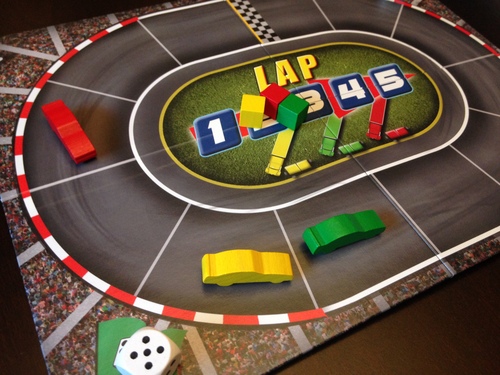
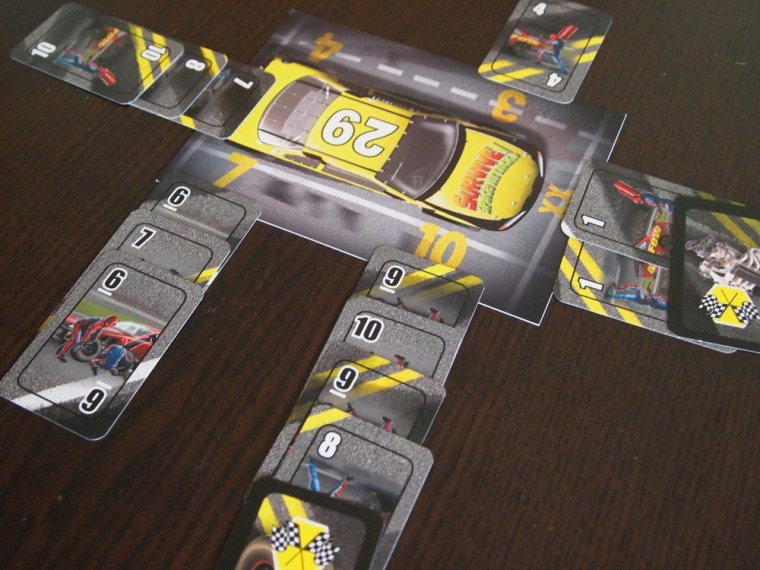
Many people won’t like Pit Crew. The real-time aspect of the game can get players flustered and dampen some of the fun, but that’s what I like about it. While most real-time games have players dashing to play cards or some other game device to a common area, Pit Crew has gamers play solitaire.

The rules are simple, but I won’t go into them in detail here. Players assume the role of a pit crew during a stock car race. They play cards numbered 1-10 in either white or black numbers (there’s a bonus if a player uses all of one color) on areas where they must place a pair of the same number, go up or down in number (with 10 and 1 being adjacent), and reach a specific sum. The first ones to do so begin rolling a die. For every 6 they roll, they move their car one space on the track—and that’s where it gets interesting.

PitCrew_BoardGame04.jpg

Geoff Engelstein has created a psychological game with his players. The impulse is to start playing your cards quickly as soon as you hear someone roll a die. But Pit Crew is more concerned with gamers playing a clean game of solitaire. Your opponents will gain more spaces with the penalties incurred by messing up a pattern, than any spaces gained on a die.

Roll. You may forget what total your on for the area that needs a specific sum. Roll. Did I play a three and then a four or a five and then a four? Roll! I don’t care if the color on the numbers match, I’m placing those two ones in a pair spot.

PitCrew_BoardGame03.jpg

What’s worse is that gamers may feel more impowered to give their opponents bonuses rather than take a penalty. This is another psychological trick Pit Crew uses. If my car went backwards on the board for every one of my mistakes, the penalty would only affect me. With all my opponents (it may be a 3-player game) gaining a benefit from my mistakes, my mistakes are multiplied, but in an odd sense, a lot of gamers would prefer giving other players a bonus instead of accepting a penalty.

PitCrew_BoardGame02.jpg

Pit Crew poses an interesting question. Is it better to be punished or rewarded?

What do you like most about Pit Crew? What are the things you don’t like about Pit Crew? Heck, is it better to be punished or rewarded in games?

It’s a good thing I’m a glutton for punishment, let me know what you really think in the comments.

Getting Started with Dice Placement Games

Your uncle Geekly covered worker placement in a previous starter game segment—those are games where players place pawns on the board to gain certain abilities—and this week we’ll discuss dice placement games which are like worker placement games except that players place dice instead of pawns, or one could say that one’s dice are their pawns.

As usual, good old Geekly has some starter games for someone interested in the gaming genre. Let’s get to some of the better and simpler games of this type and work our way up in complexity.

Kingburg01

Kingsburg

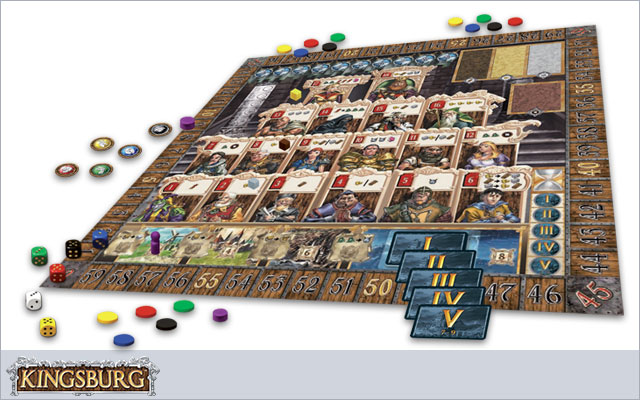
I usually try to go with more recent games in a genre, but Kingsburg is a ten-year-old game or so that deserves a mention. Players chuck dice to determine what they can do each turn. The shared board hold a king space and spaces for advisors to the king. Each one grants a different ability based on the numbers one rolls. If some rolled three 6s, they can choose the king space at 18 or a 6 and a 12. The person with the lowest roll each round picks first, and that may be the most clever way to negate a bad roll. Dice hate me. If it was possible to roll negative 18, I’d do it.

There are three phases—oh, yeah three, it’s the magic number—and each player must face an invading army on the fourth turn. The fourth phase just happens to be winter. Winter is coming.

Even though players must face something at the end of each group of four phases, it’s nice to see that a worker placement game designer isn’t obsessed with food. And Kingsburg does a good job of bad die roll mitigation. You’ll see plenty of other designs use other methods to compensate for a bad roll. Apparently, I’m not the only one dice hate.

DiceCityBoardGame.jpg

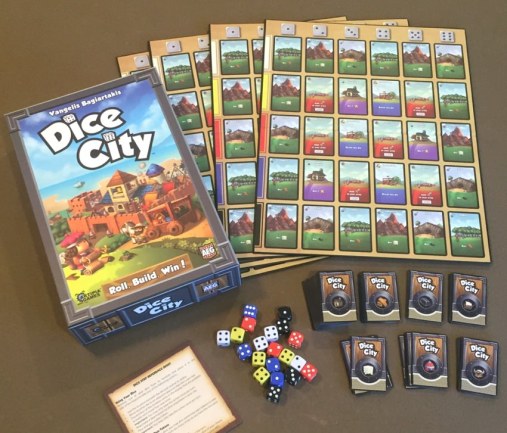
Dice City

While Kingsburg has a shared board, Dice City gives each player their own board. On each turn, players roll five six-sided dice of different colors and place those dice on their board according to a chart. The columns show numbers and players must roll that number to place their dice in that row, but the rows are one of their die’s colors. So, if one rolls a three on their yellow die, they must place their yellow die on the second row (the yellow row) and the third space from the left (the column for 3s).

On each of these spaces, which are shaped like the game’s deck of cards, is an action. Players may choose to take the action they rolled (usually to get resources) or they may choose to discard one or more of their die or dice (for that round) to move another die left or right for each die discarded. You know how I said that Kingsburg does a good job with bad die roll mitigation, Dice City’s use of discarding dice allows for even more of that. Yay!

Players can upgrade their boards by purchasing cards with the resources they use and that accomplishes two great things: each player’s board is different and further strategy over luck. Dice City may look like a game that uses a ton of luck, but it’s sneakily deep. That said, it’s a step up, or at least sideways, in complexity to Kingsburg.

Discoveries01

Discoveries

Discoveries is most likely a step up in complexity to the others on this list, but a lot is added with that smidgeon of complexity. In this game, players take on the roles of explorers tasked by Thomas Jefferson to explore the western United States.

Unlike the other games on this list, Discoveries uses unique and thematic dice to represent the players journey. Horseshoes, feet, writing, and Native American die faces replace pips of 1-6. Each player receives five of these dice in their player color. They roll their dice and may take one of two actions each turn: play dice of the same type to any space on the board or get dice back from the game board.

It’s this push-pull of gaining dice from the game board—and how one does it—versus using dice that give Discoveries its depth. I’ll discuss how to get points later, but one doesn’t necessarily grab all their used dice when they take the “rest” action or the one that allows a player to retrieve dice from the board. Many of the dice used to explore go to a communal discard area. A player has the option of taking all the dice from one of the communal discard areas or taking all their personal dice (no matter who has them or where they are). It’s a wrinkle not seen in too many other dice placement games. Players must do a good job timing when they retrieve dice. You can snake someone’s die and use it before they decide to take it back. It takes a game or two to get the timing, but it’s not that difficult to learn and that’s why Discoveries is the last game on this list.

Players earn points by exploring more areas, but to explore an area one must generate enough resources (in rivers or mountains to cross) in a single turn because players cannot bank rivers and mountains from one turn to the next.

The game ends when the deck runs out of cards, and there is a scoring method that’s simple enough to understand but would make this write-up swell even more with words, so I won’t include it here, but another one of my favorite mechanisms is Discoveries use of dual-sided cards. Players may befriend Native American tribes and if a card from that offering is used, a new card is dealt Tribe side up. Players also use cards if they explore and if a card from that offering is used, a new card is dealt Exploration side up. It’s an elegant system that forces each game to play differently than the last.

Discoveries, like the other games on this list, also has bad die roll mitigation, but it may be the cheapest of all of them: trade in one die to turn another die to the face you want. Love it. This is easily the least random result dice game on this list.

Final Thoughts

Like worker placement games, it’s difficult to come up with easy to learn dice placement games with depth. Again, I had to go with slightly more complicated games than usual, but they still have some wide appeal. There’s a little more variety in terms of subject matter too. And no food. Yay!

How many times have dice hated you? You can roll shame one of your dice or let us know your favorite dice placement games in the comments.

3 Lists of 3 Video Game Characters

Some video game characters get all the love. Some don’t get enough. Your uncle Geekly wants to even things out a bit with this week’s three list of three. I could also use some costume ideas so don’t be surprised if you see me dressed in a primary color jump suit—or two.

Underrated Video Game Characters

Princess_Zelda.png

Zelda

Yes. A famous video game series shares her name, but how many people have you seen point to the guy dressed in a green elf costume and say Zelda? That’s Link. Link gets all the attention, but he’s also the more static of the two characters.

Zelda has been portrayed in so many ways. She even gets in on the action as her alter egos Sheik and Tetra every once and while. She’s been the leader of sages and even a goddess. Link rocks the same kind of outfit game after game, but gamers don’t know what they’re going to get with Zelda. She may even be a ghost.

Ness

Ness

Many gamers would consider EarthBound (1994) or Mother 2 in Japan as one of the best RPGs to come out for the SNES, but many more of them don’t remember who the main character of the game was. Ness is a 13-year-old boy with psychic powers.

Sure, there are other characters gained along the way in EarthBound, but Ness is the players first and strongest, and a lot of the game’s character comes from Ness.

DrRobotnik_Eggman

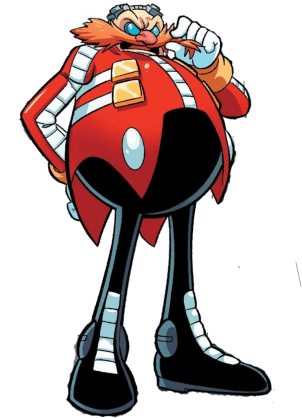
Dr. Ivo “Eggman” Robotnik

Most gamers know of Mario’s Bowzer, but Sonic’s Dr. Eggman goes unheralded. It’s a shame. He may come off as a mad scientist clone, and he is for the most part, but Eggman wants to conquer the world, so he can install his ultimate utopia, the Eggman Empire.

A lot of other mad scientist types have had a similar motivation of wanting to rule the world because they’re the best person for the job—Doctor Doom comes to mind—but that doesn’t mean it isn’t a good motivation. What’s Bowzer trying to do most of the time besides kidnapping a princess?

Overrated Video Game Characters

MasterChiefHalo

Master Chief

First off, Master Chief isn’t a Master Chief in the navy. That’s an enlisted rank (a very high enlisted rank), not an officer’s.

Second, you can take Master Chief out of Halo and no one would miss him. He may as well be Jeff Johnson or John Jeffson. My apologies to any Jeff Johnsons or John Jeffsons who may be reading this.

Halo’s multiplayer mode is what most gamers play this game for. They aren’t looking for story, and Master Chief isn’t much of a character.

HalfLife2_GordonFreeman

Gordon Freeman

The whole point of Half-Life 2’s protagonist is that he’s a blank slate, but if he’s a blank slate, only defined by the suit he wears, he isn’t much of a character. He’s kind of like Master Chief in that sense. Cool suit. Great abilities. What’s your name again?

Iron Man detractors claim that Tony Stark wouldn’t be anything without his suit, but he’d still be rich, a genius, and have plenty of personality. Gordon Freeman is none of those things.

Kratos

Kratos

2018’s God of War notwithstanding, Kratos was a bloody He-Man for the modern era. Gamers knew he’d lost his family—which was explained more in the most recent God of War—and that’s most of what they knew about him. Kratos was an excuse for a muscle-bound, over-sexed man to tear apart some Greek gods.

He received the post-hero treatment in 2018’s God of War and while it was a refreshing take on the character, it could’ve carried more weight if there was more to the character prior to that offering.

Video Game Sidekicks

GarrusMassEffect

Garrus

Yeah, this turian may take offense with being called a sidekick, but he deserves to be on this list. He’s the only squad member available to Shepard in each Mass Effect game, he survives a rocket to the face, and he and Shepard have a special bond.

Get your head out of the gutter. Hmm. They could have a “special bond” if you play the game a certain way, come to think of it. Anyway, one of the most satisfying moments in the Mass Effect series is watching the two pal around and watching their relationship grow.

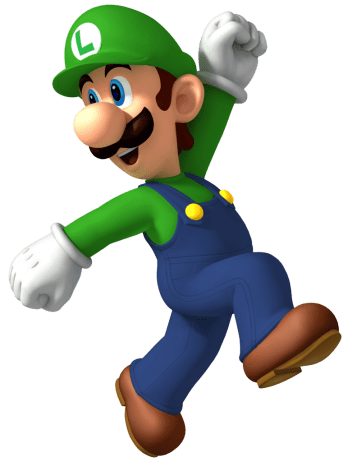
Luigi_SuperMarioBros

Luigi

He’s always number two to Mario’s top banana, but Luigi doesn’t complain, not even when Nintendo named him Luigi Mario. I guess that would make his brother Mario Mario. Man, that’s a terrible name.

Give him a vacuum to suck up ghosts and he can be a main character. A gamer may want to play as him in Super Mario Bros. 2, and I never minded letting my younger brother take the controller during the original Super Mario Bros., not telling him where any of the shortcuts or secrets were, and then use them after he lost a man. Ah, memories.

Sparx_SpyroTheDragon

Sparx

I had to put Sparx from Spryo the Dragon on here because so many of my family members love that game, and Sparx doesn’t get much love. I also don’t like it when games force a player to run over every little gem or coin or ring. All you’ve gotta do is get close to a gem, and Sparx picks it up for you.

Sparx also represents one of the cleverest ways to denote health in a video game. He changes color, gets dim, as you take damage and disappears when Spyro has one hit point left.

Yep. I’m sure I missed the boat on a lot of these characters. Please direct your complaints to our intern Jeff Johnson—or is it John Jeffson—or let me know which video game characters you’d choose by leaving a comment.

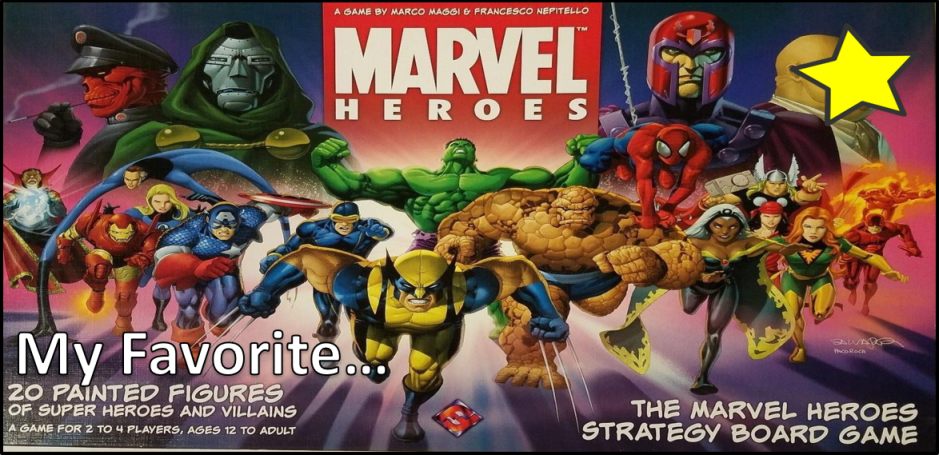
My Favorite Game Mechanics: Marvel Heroes

I don’t care too much for Marvel Heroes, the miniatures game published by Fantasy Flight Games in 2006. It’s a little fiddly for my taste. There’s even a system in place to prevent a runaway winner, and while it does a good job of keeping the game close, it makes players feel a little less super.

I do like the game’s combat system. Leave it to a superhero game that depicts four superhero teams (X-Men, Avengers, Fantastic Four, and Marvel Knights) and their arch-nemeses to deliver the goods for combat.

marvelheroes_overview

Hi, it’s your uncle Geekly here and if you lasted long enough to not rage close this article, I’ll let you know how Marvel Heroes made Rock, Paper, Scissors interesting and fun.

I’ve talked briefly about Marvel Heroes in the past. It plays out well enough. Villains cause trouble in various places in New York and the various players (in charge of superhero teams) send their heroes to deal with said trouble. Usually, this means combat.

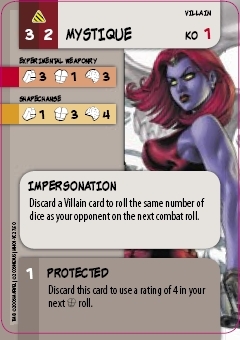
Each hero and villain have attacks—heroes always have three, but villains range from 1-3 attacks—they can make and each of these attacks has a value for attack, defense, and intelligence (intelligence equates more to initiative or speed than actual intelligence). Every attack is assigned to one of three tokens that a player can choose from and each player in the battle chooses which of their attacks they wish to use.

marvelheroes_villaincard

If you want to deal more damage, pick an attack that’s high in damage. If you’re worried about accepting damage, choose one with higher defense. Or if you don’t think you’ll get much out of a character (usually a low-level villain), pick one with a high intelligence so you can get in a quick shot before that character’s discarded.

The numbers indicated on the cards relate to the number of specialty dice you roll, so there’s always an element of luck added to the equation. It all boils down to an intriguing and layered take of rock, paper, scissors, but it’s done well. I just wish the rest of the game excited me as much as the combat. Still, with a few house rules it can be a great play.

What do you like most about the Marvel Heroes Strategy Board Game? What are the things you don’t like about Marvel Heroes? Maybe I’m a zombie to all things Marvel and just want to hate. You can chew my ear about it in the comments.

Fantastic Four Starter Stories

Fantastic Four began the Marvel Age of Comics, but that doesn’t mean that it’s had as much luck with its movies as other Marvel properties. The ugliness brought on by less-than-stellar films and the fallout from contract disputes led to the comic book getting cancelled before 2015’s Fant4stic. The FF’s omission spread to other projects like Marvel: Dice Masters. I’m still waiting for the Fantastic Four set we were supposed to get shortly after launch.

Anyway. With Disney buying out Fox that should all change. Heck, the Fantastic Four comic book was relaunched in August 2018, so positive things have already happened. This is only the beginning.

Your uncle Geekly’s sure Marvel’s first family will make its Marvel Cinematic Universe debut in the not-so-distant future, and it may be a good time to catch up with some of the stories new fans will want to read to get to know Reed, Sue, Ben, and Johnny better. These are good stories for new fans.

fantastic_four_vol_1_49

The Galactus Trilogy Fantastic Four Vol. 1 #48-50 (written by Stan Lee/art by Jack Kirby; 1966)

Uncle Geekly could’ve started with the Fantastic Four’s origin story, and that would be a good enough place to begin, but it’s been covered in film and cartoon a lot. Fantastic Four Vol. 1 #1 is as good as any of the reboots and relaunches, but I talk about origins all the time with these starter stories. Let’s start with something different. Let’s begin with the ultimate in Fantastic Four required reading: Galactus.

First, the Galactus story came out in the middle of Lee and Kirby’s collaboration, so they’re at the height of their storytelling powers. You’ll see more of this in the next entry.

Second, the peerless pair didn’t hit the brakes once after this story got started. Silver Surfer arrives. Uatu warns the family. Galactus looms large above Earth, preparing to eat it. It was loud and bombastic. This story was one of the longest comic book stories at the time. The pacing worked, and it led to comic books adopting longer story arcs.

Finally, the legend of how this story came about is telling of the pair’s storytelling technique and of Galactus. Kirby asked Lee “What if the Fantastic Four met God?” I’m not sure if this conversation ever happened, but presumably Lee responded with a “yes, and.” One would get the ball rolling and the other would always add to original idea, and the original idea of Galactus was an enemy that was above good and evil: a force of nature.

The idea of a villain that was neither good or evil was novel, and “The Galactus Trilogy” remains one of the best Fantastic Four stories.

fantastic_four_this man this monster

This Man, This Monster! Fantastic Four Vol. 1 #51 (written by Stan Lee/art by Jack Kirby; June 1966)

Just in case you missed the details of the last entry and this one, you’ll notice that Galactus was followed up immediately with “This Man, This Monster!.” Like the story it followed, “This Man, This Monster!” introduced more elements to superhero storytelling: focusing on a character’s humanity and interpersonal relationships.

The Thing’s powers are a blessing and a curse and no story by Lee and Kirby does a better job of illustrating that than this one. It’s a single-issue story that explores what happens when Ben Grimm loses his powers and culminates with him making a tragic personal sacrifice. It’s one of Lee and Kirby’s best and shows the pair’s range.

fantastic_four the trial of reed richards

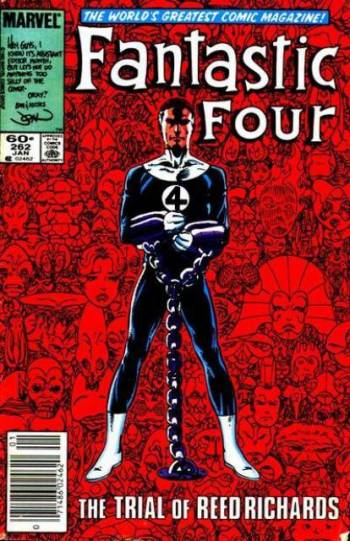
The Trial of Reed Richards Fantastic Four Vol. 1 #262 (story and art by John Byrne; June 1984)

I’m not going to sugar coat this. The 1970s weren’t a good decade for Fantastic Four stories. John Byrne did a lot to reinvent and reinvigorate the team. “The Trial of Reed Richards” represents the best Byrne had to offer.

Reed must stand trial for allowing Galactus to live and devour more planets. This single-issue tale does a great job of exploring morality, catches readers up on what Galactus was doing for the past decade, and questions what the universe would be like without a force of nature that can eat entire planets. Byrne does a great job of defending Galactus’s right to exist.

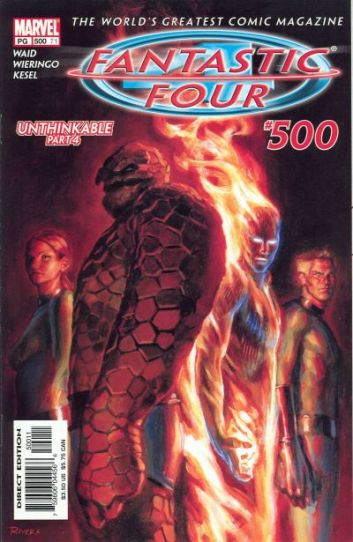
fantastic_four unthinkable

Fantastic Four: Unthinkable (written by Mark Waid/art by Mike Wieringo; 1998)

I’ve gone long enough without a Doctor Doom story, and that’s because I wanted to wait for the best Doctor Doom story “Unthinkable.”

Waid and Wieringo’s run on Fantastic Four captured the boundary pushing adventures of the FF’s past and is considered one of the best runs on the series. “Unthinkable” does a lot to solidify that claim. Unable to beat Reed as a scientist, Doom turns to the one “science” Reed was never able to comprehend: magic.

“Unthinkable” forced the Fantastic Four, and especially Reed, to stretch their capabilities. Doom reached new levels of villainy here that included dark arcane powers, a suit made of flesh. Despite Reed’s efforts, Doom still magically disfigured Reed and set him on a path that would lead to Ben’s death.

If a reader wants to know the depth of Doom’s hatred for Reed and the rest of the FF, look no further than “Unthinkable.”

fantastic_four hereafter

Fantastic Four: Hereafter (written by Mark Waid/art by Mike Wieringo; 2004)

I did it with Lee and Kirby and here I go again—sort of—with Waid and Wieringo. “Hereafter” follows “Authoritative Action” which happened because of “Unthinkable.” Let’s just say that Reed didn’t handle Ben’s death well, and it led to some ugliness in Latvaria. Reed decides to put his trust in something greater than himself in “Hereafter.” The surviving members of the Fantastic Four storm the gates of Heaven to rescue Ben. This story doesn’t question existence as much as exploring one’s consequences.

Reed, Sue, Johnny, and Ben don’t save the world in “Hereafter.” They don’t battle a huge villain or overcome a cosmic threat. This story focuses on love, friendship, and hope.

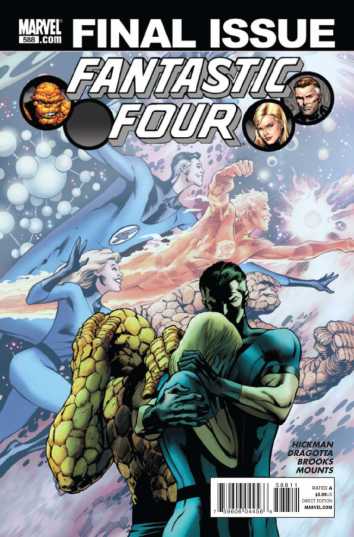
fantastic_four three

Fantastic Four: Three (written by Jonathan Hickman/art by Steve Epting; 2010-2011)

What is with the Fantastic Four and wanting to be a trio? Hickman had a great run with Fantastic Four in the 2000s, and “Three” might be the best of his stories. Annihilus—an often-overlooked FF villain—poses the threat here, but the crux of the story comes in the form of Ben losing his powers and not being able to help his best friend Johnny during an invasion from the Negative Zone.

Johnny gets overrun by the Annihilation Wave as Ben seals the portal from the outside. Ben gets his wish of being normal, but he struggles with losing Johnny. If readers want to learn more about Johnny and Ben’s unique bond, give “Three” a read.

fantastic_four 1234

Fantastic Four: 1234 (written by Grant Morrison/art by Jae Lee; 2011)

Grant Morrison likes to bend reality with his stories, so a Fantastic Four mini-series was inevitable. “1234” splits the family with four individual stories. Each member must suffer through a series of personal misfortunes and many of the team’s greatest enemies make appearances.

All the madness in “1234” leads to the team’s greatest adversary Doctor Doom. “1234” is a great showdown between two of the smartest men in the Marvel Universe. This is a battle of will, wits, and intelligence.

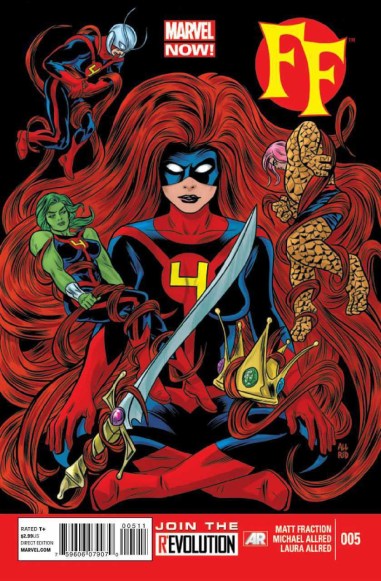
fantastic_faux

Fantastic Faux (written by Matt Fraction/art by Mike Allred; 2012-2014)

It may not look like it, but many heroes have donned the Fantastic Four uniform. The oddest group to wear Fantastic Four tights must be the team of Fantastic Faux.

Following Jonathan Hickman’s great run on Fantastic Four, Fraction took over both Fantastic Four and its sister title FF. The results were the team being sent through space and time, which left a vacancy in the Baxter Building for a substitute team to fill.

Ant-Man, Medusa, She-Hulk, and the newly introduced Ms. Thing (Johnny’s pop-star girlfriend Darla Deering who wore a mechanical Thing suit) were left in charge of the Future Foundation’s group of advanced science students. As Allred and Fraction are wont to do, they dial the sci-fi bizzarroness up to 50. A Voltron-style Doc Doom/Annihilus/Kang mash-up villain named Kang the Annihilating Conqueror, a one-eyed future Johnny, and the odd alien Foundation’s students graced this 16-issue run.

But like most great FF runs, “Fantastic Faux” challenges the idea of family. Not only are we born into a family, we have family that we choose.

That’s my list for readers who are new to Fantastic Four comics. If I didn’t get the list right, I’m sure it’s right in some alternate reality. I’ll have to ask Reed which one or you could let me know in comments.

Tabletop Games That Would Make a Good Movie

Your uncle Geekly made a list like of tabletop games that would make a good movie three or four years ago, but a lot can happen over the course of years, Uncle Geekly’s a fickle bastard, so the list would’ve changed two weeks after the first one. Hungry, Hungry Hippos? Nah, too scary. Ouija? Ach! Hollywood already made a movie about that since the last list. Maybe the following five games would make a good movie.

And yes, there have been good board game movies. Clue was one, I think. Unfortunately, they’re rebooting it. Ugh!

scythe

Scythe

At first glance, someone may think of Scythe as a war game, but it’s more of a cold war game. It’s set in an alternate sci-fi fantasy version of post-World War I Europe. The technology used to fight The Great War far exceeds our current tech. One look at a gargantuan Mech is a great cue, but despite its vast technology, this world is more of an agrarian continent destabilized by conflict.

Scythe’s story changes depending on how gamers play, but the overall concept has the makings of a political thriller with plenty of espionage. This is a cold war game after all. It’s just a cold war game with Mechs, and that’s awesome.

pandemiclegacyseason2

Pandemic: Legacy

The original Pandemic made the first list of this type, and one could argue that there’s already a Pandemic movie out there (Contagion), but Pandemic: Legacy adds what at first can be viewed as a subtle layer of storytelling that becomes so pronounced toward the middle of the game (gamers play a finite number of games, usually 24, because there is a story that unfolds like a movie or TV show) that you realize you aren’t playing base game Pandemic anymore. I won’t spoil anything here.

But the fact that I could spoil a tabletop game for someone suggests that it could make a great movie or TV show. I’m not that picky.

gloomhaven

Gloomhaven

People have seen high fantasy movies where the heroes join forces to conquer a common evil or foe. Gloomhaven shakes things up by having these “heroes” motivated by selfish endeavors and that needs to happen more in high fantasy stories. The city of Gloomhaven is down on its luck. You can kind of guess that by its name. Its “heroes” or anti-heroes don’t mirror the world in which they live.

This has the potential to be a dark movie, but in the hands of the right people, Gloomhaven could have some of the deepest fantasy characters.

deadofwinter

Dead of Winter

Dead of Winter may come off as a Walking Dead clone, but like Walking Dead, the zombies aren’t the most engaging thing about the story. The survivors take center stage. In Dead of Winter, players don’t know who the traitor is in their midst, they don’t even know if there is a traitor. This set up has the trappings of a good psychological thriller.

The setting of a zombie-apocalypse in the bitter cold adds another layer of tension. Finding out that food rations go missing or there aren’t enough being produced as before or that items like coats and firewood go missing would call into question everyone’s loyalty.

fireballisland

Fireball Island

Sometimes you just want a dumb action movie about grabbing treasure and getting the heck off an island. Hire a resident actor of weird roles like Tim Curry, Johnny Depp, Neil Patrick Harris, or Jim Carrey and add them to the formula of a huge volcano god puking fireballs, and you’ll have yourself a hit. You just need a volcano god puking fireballs.

These five games can’t be the only ones good for a movie adaptation. Slap me upside the head with a VHS tape—those are ancient movie viewing devices for younger readers—or let me know about it in comments. If you like what we do, subscribe to our page to get updates and then you can let me know how wrong I am as soon as possible.

My Favorite Storytelling Elements Spider-Man “Kraven’s Last Hunt”

Most critics dub “Kraven’s Last Hunt” the greatest Kraven story ever told and one of the best Spider-Man stories. It features plenty of comic book action, but the character studies are what set “Kraven’s Last Hunt” from other Spidey tales.

The world no longer appreciated Kraven’s physical prowess. It no longer marveled at his courage, and most animal rights activists condemned him—he was a hunter after all—and the world he lived in no longer made sense. Before he met Spider-Man he’d never known defeat or humiliation. Now Kraven has fallen ill. He knows the end is near, but before he goes, he vows to reclaim his honor and prove his superiority over Spider-Man. He went out for one last hunt.

spider-man_kraven

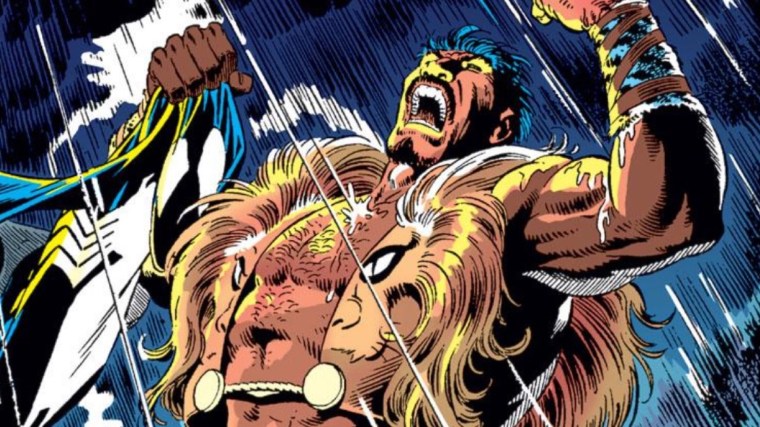
“Kraven’s Last Hunt” embraces Kraven’s personal struggles. It blends aspects from classic literature and recurring themes to find a deeper truth. Kraven doesn’t just want to kill Spider-Man. In fact, Kraven doesn’t kill Spidey when he has the chance. He buries Spidey alive on his complex and assumes his identity. There’s even a moment where Kraven rescued Mary Jane, Spidey’s new wife, and she can see through Kraven’s disguise. Kraven falls short of being a hero. He never was one. This is a story that questions what it means to be a hero.

Kraven also thinks he can drive Spider-Man past the point where he ceases to be a hero. A rat-like monster named Vermin stalks the streets of New York while Spidey rests six-feet under. Kraven beats the creature unconscious, brutalizes him, and takes him prisoner. After Spidey comes to, he wants revenge for the time Kraven took from him. His anger leads him to Vermin, who Kraven uses as pawn to see if Spidey is strong enough to do unto Vermin what he did. Spidey proves that he’s strong enough not to.

spider-man_kraven_in_spider-mans_suit

There are so many themes of what makes a hero and what makes a good person that it’s easy to see why “Kraven’s Last Hunt” is high on most critics lists of Spider-Man stories. It not only portrays Kraven at both the height of his powers and the lowest, it does a great job in its portrayal of Peter and Mary Jane’s young marriage.

Readers see how MJ deals with Peter’s disappearance and how she’d react if Peter ever died in action. It’s a great window into the life of someone who must stay up late, worrying if their loved one is okay. In short, “Kraven’s Last Hunt” is a triumph and a must read for any Spider-Man fan or Spidey newbie.

Is there anything about “Kraven’s Last Hunt” that you liked that I didn’t mention? If there is, message me and I’ll give you Jim’s phone number to complain to him. Or you could let us know in comments.