
Daredevil: Born Again is one of Geekly’s most anticipated Marvel releases this year. Heck. Most people couldn’t wait for season one of Daredevil: Born Again to release. I’ve even said that Daredevil: Born Again must succeed. So, how did the show measure up to this anticip-ation?
Hey, hey! Kyra Kyle here. I’m a little late with Geekly’s review of Daredevil: Born Again’s first two episodes but that’s because the first two episodes didn’t hit as well at first for me as it has with most people. Daredevil: Born Again’s first two episodes rate highly on Rotten Tomatoes, IMDB, and several other media outlets, so I’m in the minority. I watched these two episodes twice to find out why they didn’t land as well for me. I’ll start with the first episode, “Heaven’s Half Hour.” Hint: the second episode “Optics” showed promise and has me pumped for the third episode. Sigh of relief. Daredevil: Born Again is a great series.
But Daredevil: Born Again isn’t a great continuation of the original Netflix Daredevil. Full disclosure: after learning that Marvel wanted to continue where the original Daredevil left off, I watched the third season last week to prepare. Daredevil: Born Again doesn’t completely pick up where the previous show left off. It weaves in elements of the previous series. The two are different enough and Daredevil: Born Again takes some liberties.
I love that Marvel brought back Charlie Cox (Daredevil) and Vincent D’Onofrio (Kingpin). Those two actors embody those two characters. I’m never going to say no to Cox and D’Onofrio in a Daredevil project. I also love that Daredevil: Born Again brings back most of the original cast, even if it’s for a moment. Daredevil: Born Again does a fine job of capturing the original show’s veneer.
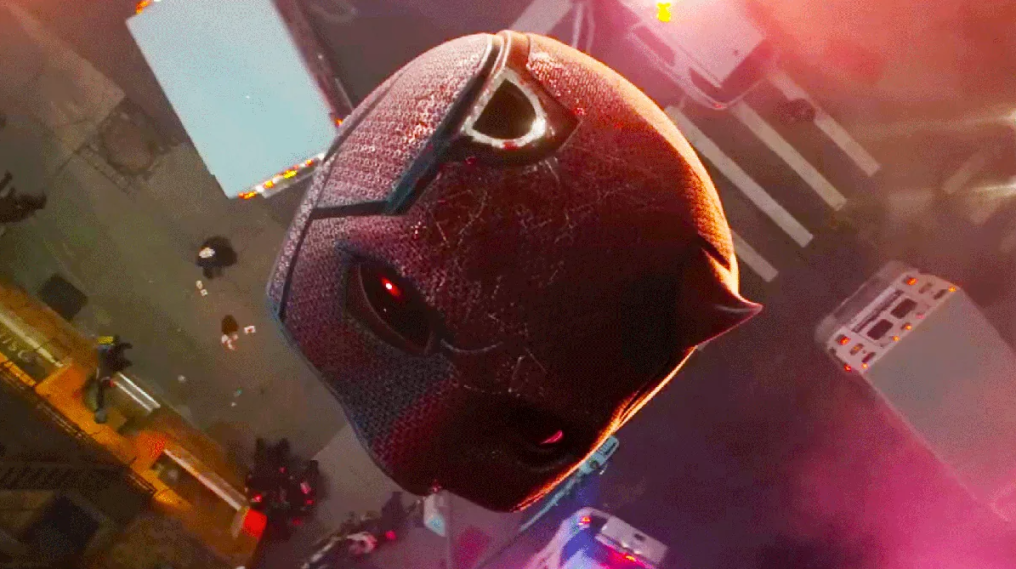
I say veneer instead of aesthetic because the external look of Daredevil: Born Again matches the original series, but the finer points differ–at least for the first episode. Several things felt off, but the most jarring change comes from Daredevil: Born Again’s camera work. A vlogger reports on the state of New York City. While this does an adequate job of letting the audience know the passage of time and the state of the city, it feels more at home in a Spider-Man project. Honestly, I expected to see someone play an acoustic guitar and sing about Spider-Man.
The non-vlogging camera work on “Heaven’s Half Hour” has more zoomed-out scenes. It felt out-of-place. In particular, the fight scene between Daredevil and Dex (who finally wears Bullseye garb, even if it’s just his gloves) feels different because the audience gets a bird’s eye view of the fight. The original series prided itself on up close and personal fights. One could feel each punch and kick.
The real kicker was how Daredevil: Born Again treated the former show’s cast. We’re getting into spoiler territory here. You’ve been warned. Foggy’s death (in the first ten minutes) gave the scene weight. That’s good and in keeping with the original show. Daredevil never shied away from killing off popular characters. Dex needed to pay for his crimes and for killing Foggy. Daredevil: Born Again suggests why Dex changed targets from Karen to Foggy, but it felt rushed.
Daredevil’s third season shows Karen staying in New York despite how bad things got, with people she cared about dying around her, and at the risk of her life. Karen’s actions felt off. While I could buy her leaving the city over grief (this could echo her leaving her family) Karen’s absence played more like Daredevil: Born Again wanting to start a new law office for Matt Murdock by any means necessary. And again, this development felt rushed.
“Heaven’s Half Hour” bogs down because it pulls double duty. It sheds the previous Daredevil series while trying to set up a new series. Like I said, I wouldn’t watch the original series right before watching Daredevil: Born Again. It colored my enjoyment of the show. Daredevil: Born Again is excellent separated from the original series. It’s easily one of Marvel’s best.

That brings me back to more praise for Daredevil: Born Again. While at first jarring, the camera work is deliberate. “Heaven’s Half Hour” zooms out from the action to give the audience detachment. Sure, this marks the end of the original Daredevil and the beginning of a new show, but it also mirrors Matt Murdock’s mental and emotional state. He becomes detached. The audience won’t see those in-your-face fights until the end of the second episode “Optics.” Disney+ released the first two episodes on the same night because they wanted the audience to see Matt Murdock’s change.
If I had only seen “Heaven’s Half Hour” this week, I may have been disappointed. Watched together, the first two episodes make for an interesting character study for Matt Murdock, and that was a big strength of the original series. So, perhaps the two shows aren’t that far apart. Thank you for reading. We’ll be back in an hour or so with our take on Daredevil: Born Again’s second episode “Optics.”
 jkgeekly.com
One thought on “Daredevil: Born Again, Heaven’s Half Hour”