Getting Into Comics: Doctor Strange Starter Stories

Doctor Strange stories venture into the weird and psychedelic. It’s difficult to know where to begin reading Doctor Strange comics. Fortunately, Geekly has you covered.

Hey, hey! Kyra Kyle here. Marvel Comics had its renaissance in the Sixties. No other character screams the Sixties than Stephen Strange. During this decade, mysticism enjoyed a comeback. I’m sure fans attempted some of the spells depicted in Doctor Strange comics. Safety notice: don’t try the spells you find in Doctor Strange comics at home. Artists like Steve Ditko and Barry Windsor-Smith elevated Doctor Strange to another level. Within Doctor Strange, you’ll find some of the most vibrant art in Marvel.

But we’re talking about stories today, and Doctor Strange has had some of the best writers in the business write for him. Like we’ve been doing for the past few entries in this series, we’ll split these stories into single issues and story arcs. This week, we’ll begin with single comic book issues. Enjoy!

Single Issues
“Face to Face with the Magic of Baron Mordo!” (Strange Tales #111; written by Stan Lee/art by Steve Ditko; 1963)

The follow-up to Strange’s debut in Strange Tales #110, “Face to Face with the Magic of Baron Mordo” pits Doctor Strange against one of his most iconic enemies: Baron Mordo. Mordo is a fellow student of the Ancient One and plans to murder his master and gain the ultimate power. Doctor Strange learns of Mordo’s plan and stops him. Strange and Mordo share a sibling-like rivalry. “Face to Face with the Magic of Baron Mordo” establishes Doctor Strange, the Ancient One, and Mordo as characters. I can’t wait to see what the Marvel Cinematic Universe plans to do with Baron Mordo, portrayed by Chiwetel Ejiofor. Mordo is too good of a character not to see in Doctor Strange’s future.

“The Origin of Doctor Strange” (Strange Tales #115; written by Stan Lee/art by Steve Ditko; 1963)

Doctor Strange’s origin story isn’t the first one on this list because we’ve been listing these starter stories in the order in which they were released. Stan Lee and Steve Ditko “forgot to supply a Doctor Strange origin,” which was Lee’s note at the beginning of this issue. “The Origin of Doctor Strange” marks the first time Marvel retroactively published a backstory. Nice!

The story itself is iconic at this point and a must-read for anyone who wants to get into Doctor Strange comics. Steve Ditko is still finding his groove, but Strange Tales #115 remains a Doctor Strange and Marvel Comics classic. You can see similarities between Doctor Strange and Ditko’s other famous comic book creation, Spider-Man. Both start as selfish and turn selfless after a tragedy.

“To Steal the Sorcerer’s Soul” (Marvel Fanfare #5; written by Chris Claremont/art by Marshall Rogers and P. Craig Russell; 1982)

Chris Claremont avoids Doctor Strange’s psychedelia. Instead, Claremont is at his melodramatic best with “To Steal the Sorcerer’s Soul.” Even though Strange’s romance with sorceress Clea is in full swing, Nicodemus West is the source of drama. After Strange’s accident, West was the colleague who performed the surgery on Strange’s hands. Filled with guilt, Nicodemus tails Strange around the world, where he would obtain magical powers for medical use. “To Steal the Sorcerer’s Soul” shows Nicodemus’s descent into villainhood.

Story Arcs

The Eternity Saga (Strange Tales #130-146; written by Stan Lee/art by Steve Ditko 1965-1966)

While a seventeen-issue comic book story is normal for comics today, The Eternity Saga was one-of-a-kind for its time. Stan Lee may have penned the dialogue, but Steve Ditko’s artwork drives this sprawling epic. The Eternity Saga may appear later in this list, but it may be THE quintessential Doctor Doom story. Strange must battle Baron Mordo and Dormammu before being stripped of his power, rendered blind, and forced to search for the being named Eternity.

Steve Ditko cut his teeth with Spider-Man but kept his most ground-breaking art for Doctor Strange. The Eternity Saga solidifies Doctor Strange’s look, his archenemies, and his mythos. If you’re a fan of Doctor Strange movies, you should read The Eternity Saga. Doctor Strange films borrow from this storyline and there are a few surprises the MCU hasn’t yet introduced. The Eternity Saga is required Doctor Strange reading.

The Shuma-Gorath Saga (Marvel Premiere #3-10; written by Stan Lee and Barry Windsor-Smith/art by Barry Windsor-Smith 1972)

We had to include part of Barry Windsor-Smith’s run on Doctor Strange. After Steve Ditko left, the comic was in good hands. As the name suggests, The Shuma-Gorath Saga borrows a lot from H.P. Lovecraft and his Cthulhu myth. The title character, Shuma-Gorath, is an Elder God who has enthralled a woman Doctor Strange intends to save. Shuma-Gorath sends their minions to stop Doctor Strange, leading to an epic battle.

The Shuma-Gorath Saga is unique because Doctor Strange seldom uses his magic. Instead, he battles Shuma-Gorath with various melee weapons to include a crucifix. If you’ve seen Doctor Strange in the Multiverse of Madness, you may believe that Shuma-Gorath has made their MCU debut when a tentacle beast interrupted a wedding, but that’s not the case. Marvel doesn’t own the rights for Shuma-Gorath. That deal is in the works. There’s no way Shuma-Gorath would only get a cameo.
A Separate Reality (Marvel Premiere #9-10 & 12-14 and Doctor Strange #1-2 & 4-5; written by Steve Englehart/art by Frank Brunner 1972-1973)

Steve Englehart is another creative who left an indelible mark on Doctor Strange. A Separate Reality redefined Doctor Strange’s rogues from the 1960s. Dormammu and Nightmare make appearances in A Separate Reality. They challenge Strange while he attempts to save the Marvel Universe from other realms.

A Separate Reality also introduces the sorcerer Clea (played by Charlize Theron at the end of Doctor Strange in the Multiverse of Madness). Clea and Doctor Strange become lovers, which I’m sure will play a role in the Marvel movies, and the journey to save all realities leads to new heights of mind-bending moments. That’s saying something for Doctor Strange.
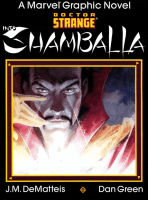
Into Shamballa (written by J.M. DeMatteis and Dan Green/art by Dan Green 1986)

Into Shamballa rids itself of superhero and villain tropes. J.M. DeMatteis and Dan Green wrote Into Shamballa as an introspective story. Doctor Strange returns to The Ancient One’s Himalayan home. Once there, the doctor finds a portal into the Shamballa dimension. Strange is tasked with bringing about an apocalypse that will allow humankind to grow to perfection. Into Shamballa is Doctor Strange at his abstract storytelling best.

Released the same month as Alan Moore and Dave Gibbons’ Watchmen, Into Shamballa asks several of the same ethical questions. But while Moore’s story ends in moral compromise, Into Shamballa finds spiritual enlightenment. If you’ve read Watchmen, you should try Into Shamballa.

Doctor Strange and Doctor Doom: Triumph and Torment (written by Roger Stern/art by Mike Mignola 1989)

Hellboy creator Mike Mignola’s art makes this unlikely pairing work. You heard that right. Doctor Strange and Doctor Doom team up to rescue the soul of Doom’s mother. Triumph and Torment is more of a Doctor Doom story. I almost didn’t include it in this list. But Triumph and Torment is an iconic mini-series and well worth reading.
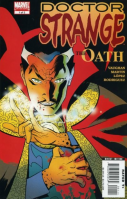
The Oath (Doctor Strange The Oath #1-5; written by Brian K. Vaughan/art by Marcos Martin; 2006-2007)

Brian K. Vaughan (Saga) pens one of the best Doctor Strange stories of the 21st century with The Oath. The miniseries showcases Strange’s patented arrogance, while his brother in Wong grounds him. The Oath is the basis for Wong and Doctor Strange’s relationship in the Marvel movies. The story itself is a mystery with a hint of the mystical.

In The Oath’s story, Wong has cancer. Aided by new love interest Night Nurse (who played a role in the Netflix Daredevil series), Strange follows a trail of clues to save his friend. The Oath has the hallmarks of some of Vaughan’s best work: nonlinear plots, nuanced characters, and thrilling twists. The Oath does a lot to modernize Doctor Strange.

We could’ve included a few other Doctor Strange stories. Let us know which Doctor Strange stories you’d add to this list in the comments. And wherever you are, I hope you’re having a great day.
Wolverine Starter Stories

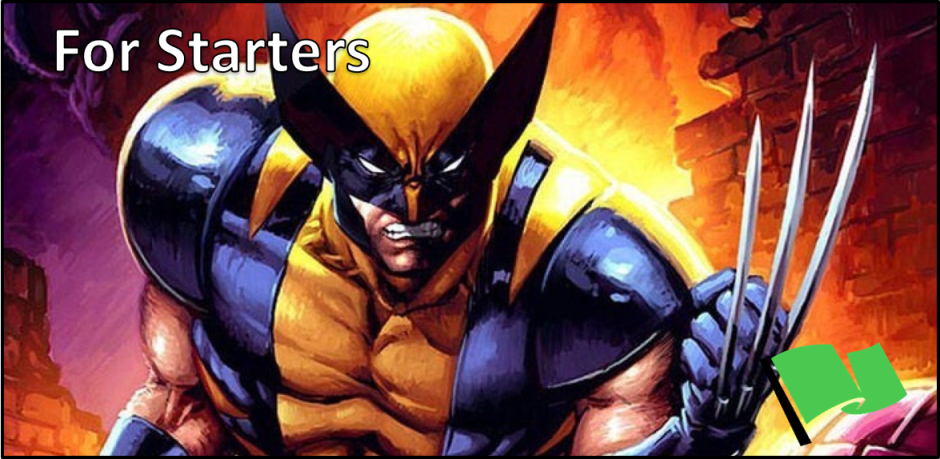
Uncle Geekly may be a little rusty with getting back into the swing of things, so I’ll kick off this year’s starter list with someone who’s the best at what he does, but what he does isn’t nice.

Wolverine invades the Marvel’s comic book universe. He may not have as long of a history in the comics or in films as characters like Spider-Man or even the Hulk (I’m including made-for-TV movies here), but Logan’s adventures bring droves of fans to comic book shops. It can get tricky with where new readers should start with the Canucklehead—for the newbie, that’s a fusion of the word Canuck or Canadian (Wolverine’s homeland) and knucklehead—but your uncle Geekly will set you on a good path to get to know Marvel’s number one furball.

Wolvie got his start in the Incredible Hulk #181 (1974), and he famously joined the X-Men with Giant-Size X-Men #1 in 1975, but I won’t focus too much on Logan’s X-Men stories. I’ll try and stick with his solo adventures as he’s become a comic book superstar in his own right.

I’ll also try and suggest a reading series that goes with the character’s timeline, instead of the dates in which the stories were released. This can get sticky as Marvel writers like to jump back and forth through time and space. I’ll do my best at navigating.

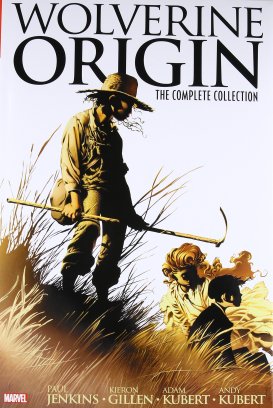
wolverineorigin

Origin #1-6 (written by Bill Jemas, Paul Jenkins, and Joe Quesada/art by Andy Kubert and Richard Isanove; 2001-2002)

For decades Marvel refused to reveal little about Logan’s past prior to the Weapon X Program, but that all changed after Hugh Jackson made Wolverine a household name in the X-Men movies. Marvel realized if they didn’t give Logan an origin, the movies might beat them to the punch. So, the mini-series Origin was born.

Origin goes back to Logan’s childhood in the 19th century. That’s right, he’s that old. I won’t go into too many details, but Origin shows most of the character’s ancient past: Wolverine’s real name, his parents, his first berserker rage, and how he became the mononymous Logan.

marvelcomicspresentsweaponx

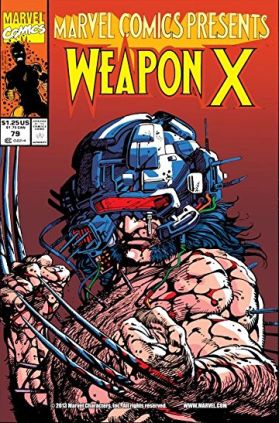
Marvel Comics Presents #72-91: Weapon X (story and art by Barry Windsor-Smith; 1991)

Origin may have been Logan’s true origin story, but most of the character is defined by his time as Weapon X.

Only the prologue and part of the final chapter in this story are told from Wolverine’s perspective. The bulk of Weapon X follows three members of the Weapon X team and much of the story plays out like a slasher film, featuring the bladed berserker.

If you’ve seen the movies, but haven’t read the comics, you’ll notice references in X-Men 2 and X-Men Origins: Wolverine.

wolverinemini-series

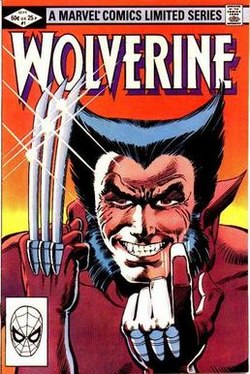
Wolverine Original 4-Part Mini-Series (written by Chris Claremont/art by Frank Miller; 1982)

When the X-Men was revamped in 1975 Wolverine wasn’t supposed to be the series’ star—heck, he wouldn’t show up on covers for months at a time—but Chris Claremont’s portrayal of the character made him a fan favorite. 1982’s Wolverine limited series marked the first time Marvel ever made a limited series—it’s a comic book industry standard now—and it’s the first time that Claremont used the words I mentioned in the beginning of this post to describe Logan: “I’m the best there is at what I do, but what I do isn’t very nice.”

In this series Logan travels to Japan. The story plays out like a samurai redemption, and many familiar elements find there way here. Logan’s love interest Mariko will appear several times in various timelines and universes. Frank Miller included The Hand in Wolverine, and they’ve been in numerous episodes from the Marvel/Netflix series of shows. The second Wolverine film (simply titled The Wolverine) also pulled a lot from this classic.

kittyprydeandwolverine

Kitty Pryde and Wolverine #1-6 (written by Chris Claremont/art by Al Milgrom; 1984-85)

Wolverine has a thing for taking young, female members of the X-Men and becoming their mentors—in a non-creeper way, I swear. He mentored Jubilee in the comics and 1990s cartoon. He mentored Rogue in the first X-Men film. He would mentor Armor in the late 2000s. But Wolverine’s first mentee was Kitty Pryde in this mini-series.

There are several modern comic book fans who wouldn’t get why Kitty Pryde was that popular. Kitty Pryde and Wolverine brought her notoriety. Prior to this series, Kitty was little more than a spoiled, rich kid, but she grows up fast here as she’s torn down and built back up with the help of Logan. This is the moment Kitty Pryde became Shadowcat. It’s also the first time fans saw Logan’s “softer side.” Sure, he’s a killer, but he’s a killer with a heart of gold.

wolverinenotdeadyet

Wolverine: Not Dead Yet (written by Warren Ellis/art by Leinil Francis Yu; 1998)

If you can’t tell, Logan is the king of Marvel mini-series, and Wolverine: Not Dead Yet is another example. I included this one mostly because there aren’t that many good Wolverine stories where Logan has bone claws and Logan’s bone claws added a leather-toughness to the character that goes missing whenever his claws have their adamantium.

Wolverine: Not Dead Yet takes place in a time after Fatal Attractions where Magneto sucks the adamantium out of Logan. This mini-series can be a little uneven at times, but it’s one of the best bone-claw Wolverine stories, and bone-claw Wolverine always had a more animal nature that made him more susceptible to his berserker rages. It’s a Wolverine that lives more on the edge.

oldmanlogan

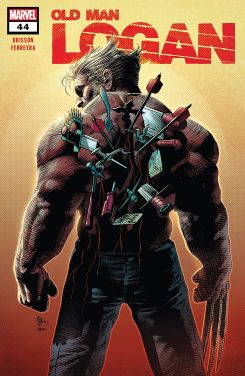
Old Man Logan from Wolverine #66-72 and Wolverine: Giant Size Old Man Logan #1 (written by Mark Millar/art by Steve McNiven; 2009)

Mark Millar may be one of comics most prominent creators this century, but his work is either a classic like The Ultimates and Kick-Ass, or it devolves into childish shock value. Old Man Logan can be characterized as both.

It’s set in an alternate, dystopian future where most superheroes are dead, and the United States has been conquered and divided up among the world’s supervillains. Wolvie gave up superhero work long ago, but he’s convinced by former Avenger Hawkeye to embark on a road trip and collect an item that could save humanity.

Yeah, this story can be bonkers and a mess, but it’s a great read. It also doesn’t hurt that the movie Logan borrows just enough from this story with its “road trip” and dystopian future. Old Man Logan just happens to be the current (current as of this write-up) version of Wolverine. This series is where this version of the character began.

That’s my list for readers who are new to Wolverine comics. Did I get the list right or did I pull a Canucklehead? Let me know in comments.

Iron Man Starter Stories

Iron Man doesn’t get the due that other Marvel characters receive. Heck, he’s the character who kicked off the Marvel Cinematic Universe. Show some respect, people. He’s also had a checkered past when it comes to the quality of his storytelling.

Some Iron Man moments are some of the best in the business. Others leave readers shaking their heads. It’s a rollercoaster of a ride for Iron Man readers, but fortunately, your uncle Geekly’s here to point you in the right direction of some of the better Iron Man titles that serve as great jumping off places for new Iron Man readers.

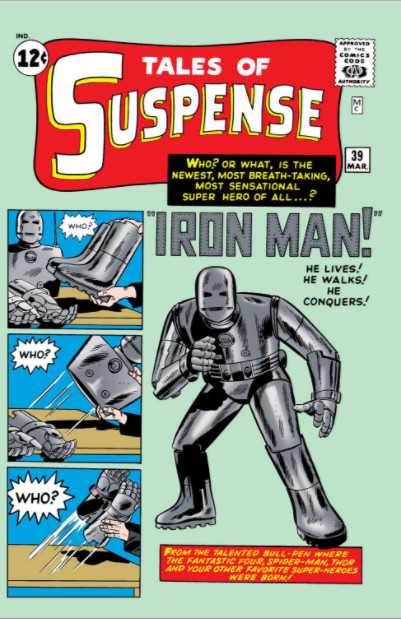
Tales_of_Suspense_Vol_1_39.jpg

Tales of Suspense #39 “Iron Man’s Origin” (written by Stan Lee/art by Steve Ditko; 1963)

What better place to start than with Iron Man’s origin? What new readers may be surprised when they first read this story is the reflective nature toward communism that it takes—in 1963. We’re in the height of the Cold War. This is a story originally based in Vietnam that was published a year before the Vietnam War started in earnest.

It’s no wonder the Iron Man film obliquely addressed the War on Terror. Iron Man has a history of taking on current events and international conflict. You could spend thousands of dollars to get your hands on an original comic, but Uncle Geekly suggests that you pick up the anthology Essential Iron Man.

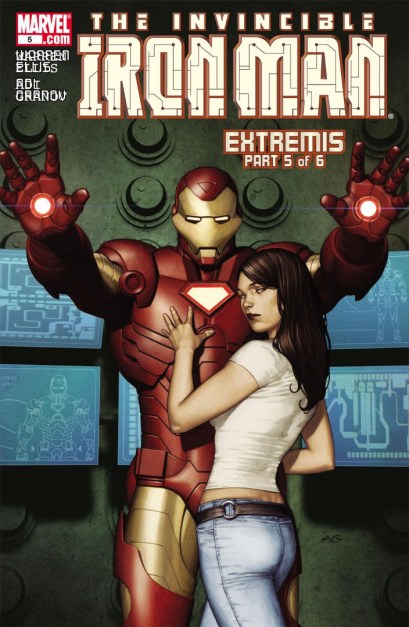
IronManExtermis

Iron Man: Extremis (written by Warren Ellis/art by Adi Granov; 2005-2006)

We’re going to jump several decades to this essential Iron Man story. Extremis updates Iron Man’s origin—something that’ll look familiar if you’ve seen the first Iron Man movie—and serves as the primary source material for Iron Man 3.

This story handles Aldrich Killian (the main antagonist in Iron Man 3) a lot differently than the movie, but the key story elements are present. It also updated Tony’s suit and his relationship with it that one can see in later Marvel Universe movies. Extremis is one of the best Iron Man stories and well worth the read.

IronManDemonInABottle04

Demon in a Bottle (written by David Michelinie and Bob Layton/art by John Romita Jr., Bob Layton, and Carmine Infantino; 1979)

Sorry, but we’re going back in time with this one. “Demon in a Bottle” introduces Tony Stark/Iron Man’s struggles with alcoholism. This addiction remains one of Tony’s defining characteristics.

The Marvel Cinematic Universe glossed over Tony’s alcoholism (there was a moment in Iron Man 2 where he got drunk at a party while wearing his armor), but any collection of Iron Man stories must include “Demon in a Bottle.”

Whether he struggles with his addiction or comforts someone else with an addiction, Tony Stark gained some needed personality and depth with this story, and this story happened almost by accident.

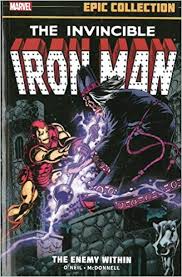
IronManTheEnemyWithin.jpg

The Enemy Within (written by John Byrne/art by John Romita Jr.; 1990)

Tony’s alcoholism continues to gnaw at him. When he’s pushed over the edge with AIM, the Serpent Squad, and Diablo while fighting a corporate takeover by Obadiah Stane (main villain of the first Iron Man movie), he turns to the bottle and after several drinks, it’s obvious that Tony is in no shape to fight.

James Rhodes fills in for Tony for the first time in this story and this leads to his transformation as War Machine. Fans of War Machine will love this story. Others will find “The Enemy Within” as a fantastic character study for Tony.

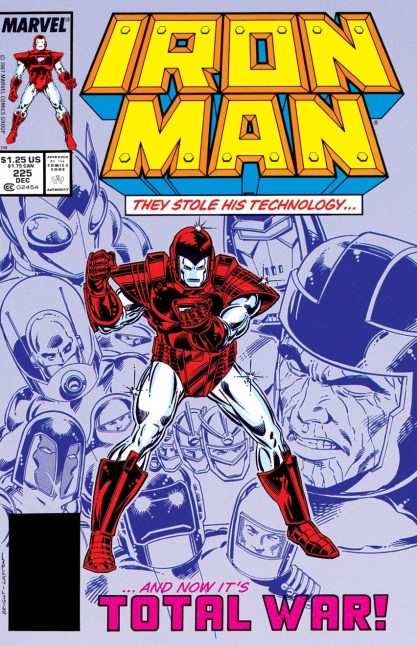
IronManArmorWars

Armor Wars (written by David Michelinie and Bob Layton/art by Mark D. Bright and Barry Windsor-Smith; 1987-1988)

Armor Wars has more action than most of the other titles on this list so far. It also features some of Iron Man’s greatest foes like Titanium Man and Crimson Dynamo. Tony travels to his Vault as he battles the government and infiltrates SHIELD.

But this story is more than just action. It shows how Tony can be careless, aggressive, and out of control with his armor. It’s a story about relationship—specifically ones Tony destroys—as well as who he beats up, and it’s well worth the read.

IronManCivilWar

Civil War (written by Mark Millar/art by Steve McNiven; 2006-2007)

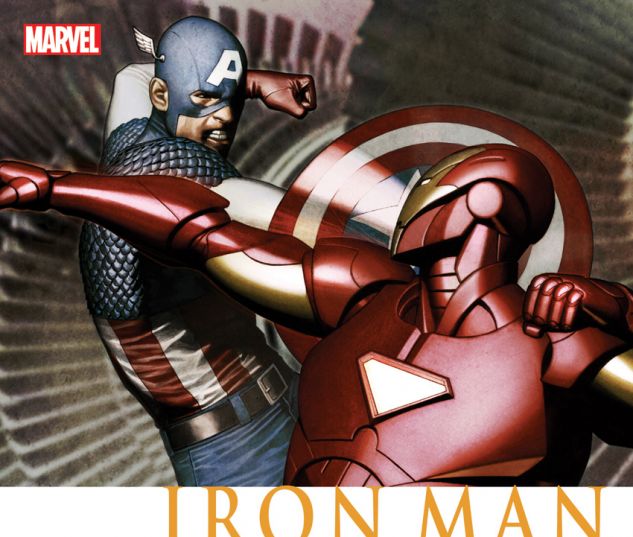
This one is by no means a great Iron Man story (I have plenty of issues with it), but it’s a massive tale for the greater Marvel Universe and Tony is in the middle of it.

Like the movie Captain America: Civil War, Tony fights for power registration in his attempt to make the world safer for civilians—or normies. Oddly enough, the movie does a somewhat better job of making the story a little more even keel, but the comic book Civil War is biased in Cap’s favor and that mostly comes from the fact that Tony would never want power registration.

Still, there was a movie that uses Civil War as its source material and this event is one of Marvel’s largest. Just make sure to read the stories centered on Iron Man.

IronManWorldsMostWanted

World’s Most Wanted (written by Matt Fraction/art by Salvador Larroca; 2009)

I couldn’t end this list with Civil War, so I added one extra story. World’s Most Wanted picks up the pieces of the events after Civil War—sort of.

It was a tall order to return Iron Man to his former glory after he betrayed his friends, but Fraction was up to the task and softly reboots the character. Norman Osborne has taken over HAMMER (which movie fans will remember as a huge player in Iron Man 2), and Osborne wants Tony’s knowledge of the superhero community. Tony erases his memories, so he can’t betray his friends.

This returns Tony to person we know even if he had to lobotomize himself to do it.

That’s my list for beginning Iron Man readers. I’m sure there are some omissions. You can let me know what you’d pick by message raven or just leave a comment.