






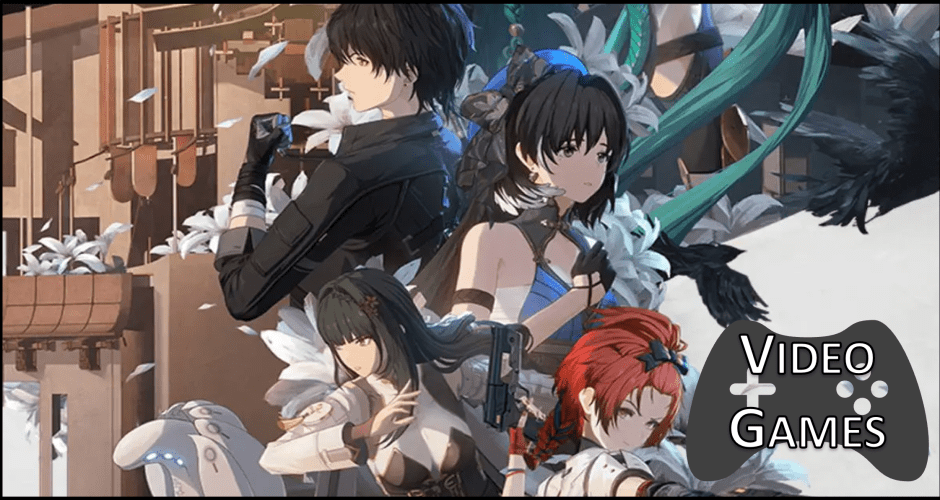
Hey, hey! Kyra Kyle here. I’m breaking away from Hoyoverse games with this week’s Gacha game review. Wuthering Waves (WuWa) by Kuro Games is a worthy challenger to Genshin Impact. But how does it stack up against our updated Gacha game review system? If you want to see how came up with the Gacha game review criteria, check out this older post (link here). Let’s see how WuWa fairs.
Unlike what Genshin Impact did with Zelda: Breath of the Wild, Wuthering Waves does more than just copy Genshin’s mechanisms. Sure, the core gameplay works similarly. A Genshin player won’t be confused moving around WuWa’s world. But movement may be the first improvement Wuthering Waves makes to Genshin’s formula.
Wuthering Waves adds two elements to its movement: a grappling hook and speed running up mountain faces. Genshin Impact has the occasional character that has a grappling hook ability, and Sumeru and the newly added Natlan have the occasional grappling areas. But WuWa gives each player access to a grappling hook. This may not seem like much, but it makes navigating the world a lot easier. And speed running up mountain faces is a blast. Naturally, you run out of stamina faster by running up mountain faces, but I don’t mind. Nothing beats Naruto running up a mountain.
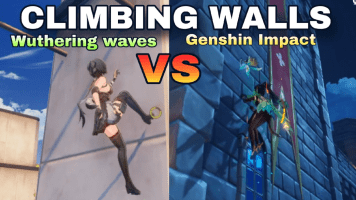
Wuthering Waves even speeds up the glider. I’d like it if the glider were even faster but the fact that Kuro Games, Wuthering Waves’ publisher, listened to fans during their beta test phase and increased the glider’s speed from what it was is a step in the right direction.
Kuro Games has a knack for spicing up combat. Early reviews dubbed Wuthering Waves “Genshin Impact meets Dark Souls,” and that’s a bit much. Wuthering Waves has intricate combat, but it’s nowhere near as punishing as Dark Souls. The upper-level content does get close to Dark Souls level. One false move and you lose. Wuthering Waves certainly takes more skill to play than Genshin Impact. The big combat addition Kuro Games makes is intro and outro skills. Each character has one, so team synergy matters.

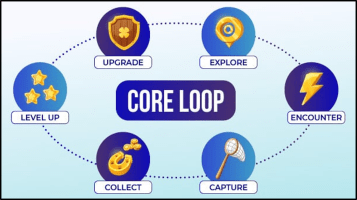
I’m saving the best for last. Instead of your standard equipment, Wuthering Waves uses an Echo system. Echoes are in-world creatures/entities you can hunt, absorb their essence, and then use them to power up your characters. The Echo system acts like a cross between Pokémon and Final Fantasy VIII’s Guardian Forces. Gotta catch ‘em all.
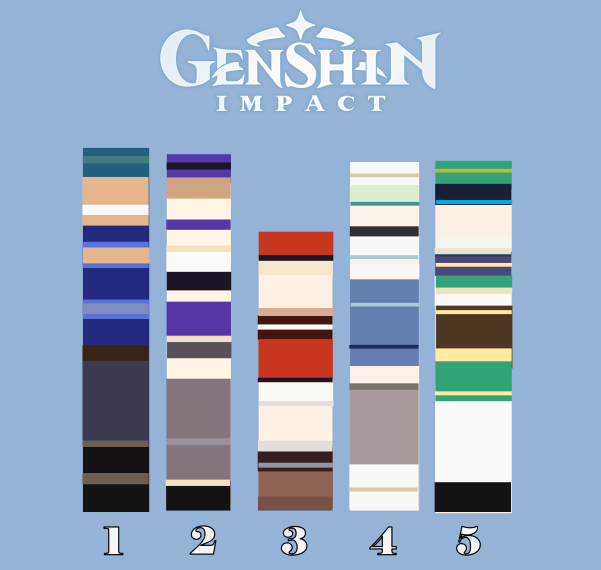
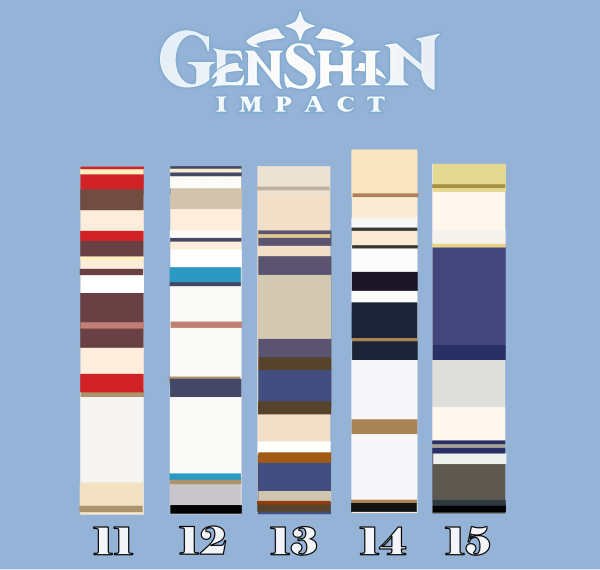
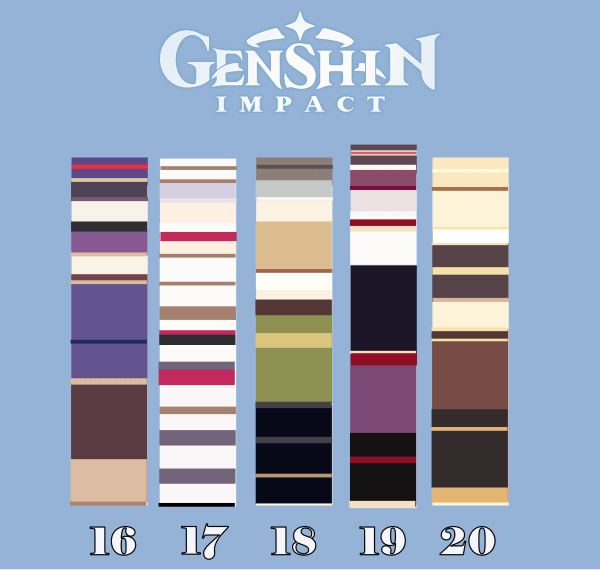
Above Image from GameDesigning.Org
The gameplay loop that makes Genshin Impact fun also makes Wuthering Waves fun. It doesn’t hurt that you can play WuWa longer each day than you can Genshin. But I mentioned what makes Wuthering Waves’ gameplay loop better in the previous segment: Gotta catch ‘em all. Echoes are fun to capture. At some point, they do become repetitive. WuWa hasn’t been released very long, so there aren’t as many Echoes to catch as I would like. But as soon as a patch drops, the addictiveness of collecting Pokémon transfers to Wuthering Wave and elevates its baseline gameplay loop.
This simple addition can sometimes make me forget about the grind needed to farm the Echo with the stats and substats I need. And if I get bored, I can hunt for shiny Echoes. Yes. WuWa has shiny Echoes that can spawn occasionally. I want—no need—all the shinies.

The other shoe has dropped. Wuthering Waves improved on some of Genshin’s shortcomings as it pertains to wasting time, but it doesn’t do enough. In other words, WuWa may be too close to Genshin Impact in this category.
The improvements: players auto collect all treasure and loot and faster movement. But players still need to fight domains to use their daily energy and collect leveling materials. Wuthering Waves has no auto-finish capability. The game assumes a similar stance to Genshin Impact. They created a beautiful world and tasked the player with busy work that could’ve been a click of a button. But, hey, the world looks gorgeous. But I don’t want to fight the same low-level enemy fifty times to gain character upgrades.

Furthermore, some upgrade materials only be obtained by fighting overworld enemies. This becomes tedious. Fast. I also don’t like tracking an enemy to collect those five extra rings I need to ascend Calcharo’s abilities.
Can I include continued slow load times in this category? I will. Wuthering Waves’ launch was mired with crashes and slow load times. Kuro Games has improved WuWa since its launch, but it’s far from perfect. I can still do all my dailies for Honkai: Star Rail while I wait for Wuthering Waves to load its first screen. I’ve tried WuWa on my iPad recently, and I can say that the game still has crashing issues on mobile platforms. Good luck trying to play Wuthering Waves on anything but a PC. Granted, I do believe WuWa plays best on a PC, but I’d like the option.
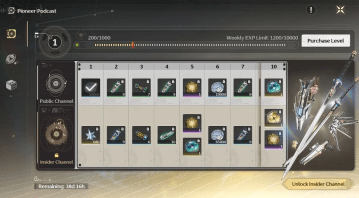
Most Gacha games have awful battle passes. Sure, you can get some useful items, even some level items that could take you hours to collect in the overworld, but nothing stands out. The battle pass weapons are okay. I have the broadsword equipped to Calcharo. I even like the idea of bonus Echoes. But players get nothing unique from the Wuthering Waves’ battle pass.
Correction: you receive a specialty nameplate the first time you purchase the battle pass. Yeah, that’s not enough. I like getting more stuff, but most of WuWa’s battle pass gives you a reprieve from playing the tedious parts of the game. I’d like it more if Wuthering Waves eliminated more tedious gameplay and added more unique rewards for finishing a battle pass. This would be a great place to add alternate skins. Why don’t any of these AAA Gacha games include skins in their battle passes?
Furthermore, Wuthering Waves’ battle pass inherited Honkai: Star Rail’s battle pass issue. The last dozen or so levels offer the same rewards. Similarly, this makes finishing the battle pass less stressful. I don’t feel like I’m missing out if I don’t finish the final handful of battle pass levels. But it feels worse when you complete WuWa’s battle pass. You’re left with asking, Is that all there is?

Wuthering Waves’ Gacha system uses a similar structure to Hoyoverse’s Gacha system. 160 in-game currency gets a player 1 turn of the Gacha crank. But WuWa lowers the turns needed to get a guaranteed 5-Star from 100 to 80. This is a game-changer because Wuthering Waves has a similar flow of in-game currency as a Hoyoverse game, and Kuro Games hands out several free Gacha turns each patch. They’ve even given players a free 5-star, Xiangli Yao.
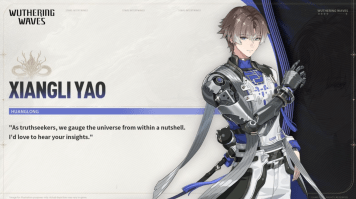
Furthermore, Wuthering Waves’ weapon banner guarantees the featured weapon on the banner. No more 50-50 chances. Not even a 75-25 chance like Honkai: Star Rail. There’s no need to cross your fingers that you’ll get the weapon on a banner. If you use enough Gacha crank turns (no more than 80), you WILL get the weapon pictured on the banner. WuWa continues this trend with the standard weapon banner. Players choose which weapon they want on the standard banner whenever they get a 5-Star. I’ve used this banner to round out the weapons I have in my inventory, because again, Kuro Games hands out a lot of Gacha turns. Some of these turns can be used for the featured banner, but some can only be used for the standard banners. I’ll use these standard banner turns on the weapons. No question.

No one plays Wuthering Waves for its story. That said, WuWa’s story has improved since the first chapter. That first chapter was brutal. The second chapter, which was also released at launch, elevated Wuthering Waves’ story to about a 3 or 4. Kuro Games has improved the story with each patch, raising the score to average. If things continue this way, WuWa could reach Hoyoverse narrative levels and hopefully beyond.
But that first chapter. I won’t sugarcoat it. You won’t be able to finish it fast enough.

Wuthering Waves doesn’t struggle as much as Genshin Impact does with telling their story, but Honkai: Star Rail has a much better setup for a serialized story. WuWa marks time far too long before the story gets off the ground. I had to dock the storytelling quite a bit. The pacing leaves a lot to be desired. I believe there is a skip function; you may want to use that a lot in the early going.
While the story picks up as you get deeper into the narrative, Wuthering Waves hasn’t found its balance between providing beats that progress the story forward, character backstory, and reintroducing characters. I feel like I’m always meeting Chixia, Yangyang, and Baizhi for the first time, and not in a good way. Every time WuWa reintroduces a character, it plays out like an anime recap. Skip!

You could skip a story beat, but you may not know if you’ll miss something important. I tend not to skip, and I shouldn’t have to skip. Wuthering Waves needs to drop their recaps. I also worry that Abby, the potential WuWa mascot, could turn into another Paimon. I like Abby more than Paimon. That’s not hard to do. But I still worry that Wuthering Waves will push a somewhat obnoxious character. We were doing so well without one of these in the game. Note: Abby was introduced in the most recent chapter.

Wuthering Waves continues the trend of good but could be improved user interfaces in Gacha games. It even has a quick radial menu like Honkai: Star Rail’s for its gadgets. It’s too bad WuWa doesn’t continue this with the rest of its menus like HSR does for theirs. I still gave Wuthering Waves an 8 for User Interface because it does a better job than Genshin Impact. The menus have fewer sub-subcategories than Genshin. That’s a huge plus. I’d like to see even fewer sub-subcategories.
I can’t imagine playing Wuthering Waves on a small screen. While the character portraits in the top right-hand corner work, they can get lost in a busy screen. PC players don’t have too much issue with this, and my iPad does well enough. A phone would be impossible—at least for me. I already keep the sound on so I can hear the chime that lets me know my other characters have their intro skills ready.
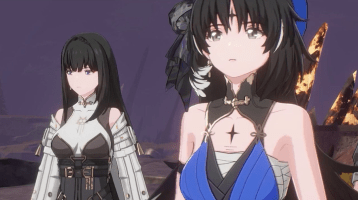
Speaking of sound, that brings us to the audio and graphics. Wuthering Waves has superior graphics to Honkai: Star Rail, let alone Genshin Impact. But it scores lower because of its audio. While WuWa’s main theme does get stuck in my head, the rest of the music is mostly forgettable. The music is good, don’t get me wrong. But Kuro Games hasn’t reached the same level with their music storytelling as Hoyoverse either. I don’t think any Gacha game company will reach Hoyoverse’s music storytelling unless that company invests millions of dollars in the music alone. That could be the case for Kuro Games’ next release because Wuthering Waves has made a lot of money.

As I said, Wuthering Waves has superior graphics to Honkai: Star Rail. But the graphics alone don’t make up for Hoyoverse’s audio. And I’m a little weirded out by WuWa’s giggle physics. I get that giggling breasts act as fan service, but some character models like Zhezhi and Baizhi have breasts that never stop moving. What is this, Perpetual Motion Boobs? I can’t stop laughing at the absurdity. Every player obtains Baizhi. I challenge you to click on her character profile as if you were going to upgrade her abilities and start a stopwatch to see how long her breasts move. She’s not even moving. Perpetual Motion Boobs. PMB, y’all.

Wuthering Waves is a worthy challenge to Genshin Impact. I call it the superior game, but I also get that Genshin has a loyal fanbase of several years. I don’t believe WuWa will ever reach Genshin levels of popularity. But it doesn’t need to. It can cater to the fans who like the flow of Genshin Impact but want more of a challenge.
Kuro Games has proven that they want to give their gamers the best experience they can. Wuthering Waves had a disastrous launch, and Kuro Games did everything they could to improve the game and listen to fans. You can tell Kuro Games cares about Wuthering Waves. And that’s refreshing. I can’t wait to see what Kuro Games plans to do in the future.

Hey, hey! Kyra Kyle here. I return with another Gacha game review. This week’s review will cover Hoyoverse’s Honkai: Star Rail (HSR).
HSR improves upon Genshin Impact’s graphics (if you want to read our review on Genshin Impact, follow this link) and merges elements of older Gacha games with the improved production quality found in modern Gacha games. How does Honkai: Star Rail hold up against our updated video game criteria? (If you’d like to see the Gacha game review criteria, you can follow this link.) Let’s see how Honkai: Star Rail fairs.
Honkai: Star Rail is a turn-based JRPG (Japanese Role-Playing Game) at its core. It doesn’t deviate too much from the formula set by games like classic Final Fantasy titles, Dragon Quest, Octopath Traveler, and the Pokemon series. Turn-based JRPGs inspired many of the first Gacha game titles, so again, HSR doesn’t stray too far from its roots, but it does a couple of things that elevate its Mechanisms score beyond an average five.
Like Pokemon, all enemies have an elemental Weakness. Using a character with an element that matches an enemy’s weakness will result in extra damage. Nothing out of the ordinary yet. Honkai: Star Rail shakes this up just a bit by adding a Weakness bar to each enemy. If a player lowers the Weakness bar (which functions like a second health bar), the enemy becomes vulnerable and won’t attack for at least one round.

Honkai: Star Rail characters not only have an element, but they also have a path they follow. These paths aid players in building teams. Abundance path characters heal. Preservation characters shield themselves/teammates. Path of Harmony characters buff teammates, while Nihility characters debuff enemies. The remaining three paths (Destruction, The Hunt, and Erudition) feature HSR’s main damage dealers. Honkai: Star Rail explores what each one of these paths means, so it gets more convoluted than this. Overall, the path system works.
Image from GameDesigning.Org
Honkai: Star Rail’s region-based map (as opposed to an open-world map) does mean that players can run out of things to do faster than in Genshin Impact. But I appreciate that. I’ll go more into that in the next segment. Getting back to HSR’s gameplay loop, it uses a lot of the same tricks as classic turn-based JRPGs. You’ll need to grind, but the grinding gets time-gated, meaning that you can only do so much grinding each day. Honkai: Star Rail includes an auto-battle system, which improves the grinding experience even more. Again, I’ll discuss that in “Respecting Time.”

I enjoy the events and timed content in Honkai: Star Rail more than Genshin Impact or even Wuthering Waves. HSR reduces the element of FOMO (fear of missing out) by allowing players to play older and major timed events. You can even play an event, not finish it, and return to it months later. This is a game-changer. I can duck out from Honkai: Star Rail and return to it not feeling like I missed too much. Some older Gacha games included a catalog of older events. I don’t know why Gachas like Genshin Impact and Wuthering Waves insist that their player base will play every event or suffer the consequences.
In this first group of Gacha games I covered, Honkai: Star Rail does the most to respect a player’s time. The auto-battle system I mentioned before is a godsend. I can set up a battle and let the game play itself. There’s little to no need for me to do actual grinding. This system reminds me of auto-battling in the original Final Fantasy Tactics. I let my Playstation run overnight and ended up with a powerful team the next morning. Honkai: Star Rail’s system doesn’t allow for that, but it’s close enough.
I like the auto-battle system a lot, but I would prefer a system more like Punishing: Gray Raven’s (part of the second set of Gachas I’ll cover), which allows players to clear a domain once and then auto-clear the domain again, multiple times in seconds. But an auto-battle system is better than forcing gamers to play the same domain over and over like Genshin or Wuthering Waves. I’ll take it. But the lack of an auto-clear function lowers Honkai: Star Rail’s “Respecting Time” score.

Honkai: Star Rail also has a better character-build suggestion system than Genshin Impact or even Wuthering Waves. Gamers can see suggestions for the equipment they should use for each character at a glance. Genshin added this function years later, but HSR included this system at launch and HSR’s system is more robust. Again, I’d like to see HSR adopt another Punishing: Gray Raven function, which allows gamers to see which team compositions other players use. This wouldn’t stop me from looking up guides online, but it would immediately after picking up a new character. I like having a brief roadmap.
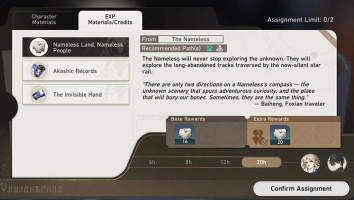
Then, there are a few smaller things that add up. Honkai: Star Rail uses an assignment system like Genshin. The assignment system has gamers sending their characters out on expeditions once daily. After the time elapses, gamers receive the items the characters went out on assignment for. Unlike, Genshin, gamers receive more items they’ll want Honkai. Things like character upgrade materials. Items from chests, breakable items, and enemies are automatically collected by the gamer. No need to run around a mountain face collecting treasure. Players can set their playable character as sprinting, so they will run faster consistently, instead of sprinting for a second and forcing the player to constantly press sprint.
While there is at least one other Gacha that respects its player’s time more, Honkai: Star Rail does a great job at minimizing the tedium. HSR deserves a high “Respecting Time” rating.
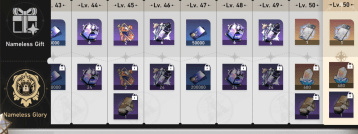
Hoyoverse, Honkai: Star Rail’s publisher, doesn’t do the best with battle passes. I gave Genshin Impact an identical score. I could’ve given HSR a five instead because they did include self-modeling resin (which allows players to craft equipment with specific main stats), but the battle pass weapons (light cones in this case) leave a lot to be desired, and Hoyoverse hasn’t changed Honkai: Star Rail’s battle pass since its launch a little over a year ago. I hold little hope that Hoyoverse will improve HSR’s battle pass.

That said, it’s far more difficult to complete HSR’s battle pass than it is Genshin’s. That’s because Genshin’s BP can be completed in a couple of weeks. Another element that lowers Honkai: Star Rail’s battle pass score is that gamers receive the same reward for the last twenty or so levels of the battle pass. Wuthering Waves does a similar thing. This does make finishing the battle pass less stressful. I don’t feel like I’m missing out if I don’t finish the battle pass because I’m just getting the same thing. But it does feel worse when you complete HSR’s battle pass. There must be a good middle ground.
While not as generous as other games (I’m looking at you, Wuthering Waves), Honkai: Star Rail does a great job of keeping the Gacha costs lower. HSR beats the pants off Genshin. That’s not saying much. The character banner stays mostly unchanged from Genshin to Honkai: Star Rail. I never had too much of a problem with Genshin’s character banner. A 50-50 chance of getting a banner character followed by a guaranteed banner character after failing to win the 50-50 is fair. The game needs to make money.
Genshin’s issue stems from its weapon banner. Honkai: Star Rail reduces the number of times a gamer needs to lose the featured light cone from twice to once. Furthermore, HSR increases the likelihood of gaining a featured light cone from the banner from 50-50 to 75-25. Players are almost guaranteed the banner weapon the first time. Again, Wuthering Waves ups the ante by making it a guarantee, but we’ll get to our Wuthering Waves review. I promise.

Honkai: Star Rail also provides enough stellar jade (the currency needed for Gacha turns) to get at least one five-star character or light cone. The five-star may not be the one featured on the banner, but each player is almost guaranteed one five-star each patch. Genshin players sport less. Couple the fact that Honkai: Star Rail gave away Dr. Ratio, a stellar five-star damage unit, and the rumor that they intend to do something similar on HSR’s next anniversary and can’t deny that HSR is above average for “True Cost.”
Keeping the needed Gacha turns to guarantee a five-star on a banner at 100 prevents Honkai: Star Rail from getting an even better score. I don’t see this changing. Hoyoverse is married to 100 Gacha turns.
I like the Genshin storyline slightly more than the Honkai: Star Rail story. That doesn’t mean that HSR’s story is horrible. It’s quite good. I may also need to play more of the story. Genshin has a few more years of storytelling on Honkai: Star Rail. What exists in the story is great. It even facilitates the flow of a Gacha better than Genshin.
In Genshin, gamers search for their missing sibling. The sibling story gets lost when exploring new regions. In HSR, the player’s character gets a mysterious object named a Stellaron placed inside their body. Stellarons function like planetary cancers. Each planet the player visits will have a Stellaron wreaking havoc on it, so each planet links the player character’s story with what’s happening during that specific planet’s story. Gachas release their stories slowly and over time, almost like serial storytelling. Honkai: Star Rail’s premise works better with a serial story.
That said, Hoyoverse doesn’t deliver the best stories in gaming. I may grade HSR harsher because it follows a turn-based JRPG lineage. Turn-base JRPGs are known for better stories.
I mentioned this in the previous segment: Honkai: Star Rail has a better setup for serialized storytelling. Hoyoverse still manages the story, and Hoyoverse exhibits horrible storytelling tendencies. Honkai: Star Rail doesn’t have a single character as annoying as Paimon. A few over-the-top characters like March 7th, Bailu, and Yunli do pick up the annoying slack. And you still can’t skip any of the dialogue.
Also like Genshin, HSR does a great job with character stories. I get more out of individual characters than I do from the main storyline. And the storytelling tends to get chopped into pieces and thrown around. But not as much as Genshin’s. I can keep up with the story by watching HSR’s official YouTube channel. That’s a huge plus. Still, I’d like to have gotten more of Acheron and Black Swan’s meeting in Honkai: Star Rail’s gameplay. There are fewer places to search for HSR’s story. But I shouldn’t have to search for Honkai: Star Rail’s story.

The most recent couple of patches (2.4 and 2.5 as of me writing this) concern me in terms of HSR’s storytelling going forward. One patch started a filler storyline of a villain escaping their jail cell. Our main cast is stuck in prison with this villain at the prison’s entrance, and the story stops. To be continued flashed across the screen. I don’t like that. It took me out of the story as I could play these characters outside of the prison. There’s no way a story chopped up like that can keep gamers immersed.
The funny thing is that I don’t recall the main storyline having that hard of a break from one patch to the next. Honkai: Star Rail did a good enough job of leaving the main party in a precarious spot, keeping me wanting more, but also giving me an out for continued play until the next patch release. Why do something like this for a filler patch’s story?

Honkai: Star Rail continues the example set by Genshin Impact. HSR has a clean interface that’s easy to read and comprehend. It still has a few too many sub-subcategories, but not as many Genshin Impact. HSR does a good job of showing the most pertinent information. The quick-select menu is where Honkai: Star Rail puts in the most innovation.
Full disclosure: I play HSR primarily on PlayStation 5. The quick-select menu may work a bit differently on another platform, but Honkai: Star Rail allows me to hold down one button and rotate a joystick around to select what I want from a circular menu. Genshin tries this but I prefer moving a cursor as opposed to pressing two buttons at once. With Genshin’s quick select menu, I must read what each button does. HSR’s quick select menu is far more intuitive.

Honkai: Star Rail’s graphics improve upon Genshin’s graphics. But graphics aren’t the reason why HSR receives a perfect score. The audio can’t be beat. Honkai: Star Rail’s soundtrack does double duty. It’s memorable but also adds to HSR’s storytelling. I struggled with adding HSR’s soundtrack to its storytelling score. Music theory YouTuber Jonathan Barouch does a great job of breaking down what makes Jarilo VI’s soundtrack so amazing. You should check out his deep dive with this link. So good!
Spoiler alert for Jonathan’s video: he shows the viewer how Honkai: Star Rail music reflects the story’s characters. No fooling. So much thought and care went into the making of HSR’s music. This won’t be the last time you’ll hear from me that Hoyoverse invests a lot into their audio production. Also, make sure you check out Jonathan Barouch’s channel. Hoyoverse soundtracks feature a lot in his work, but he covers more than Hoyoverse games. I like his videos about the NieR series, too.

Honkai: Star Rail suffers from many of the same shortcomings as Genshin. Storytelling and battle pass issues persist. But HSR takes several steps in the right direction (not wasting as much time) to make me think that future Hoyoverse projects can and will get better. HSR even manages to improve upon one of Genshin’s strengths, the user interface.
Hoyoverse tends to shift its assets and focus to newer projects, but Honkai: Star Rail is new enough that it’ll take some time before it begins to suffer from brain drain. I’ll enjoy the ride while HSR continues delivering the goods.
Hey, hey! Kyra Kyle here. I’m kicking off these gacha critiques with Genshin Impact. I have two logins (one for PC and the other Playstation), so I’ve spent plenty of time in Teyvat (the world Genshin is set in). But I’ve only recently revisited the game. The new continent Natlan brought me back. So, what does Genshin look like in over a year? The graphics are dated but not as bad as I would’ve thought. The oversaturated colors bugged me. They’re loud. So loud that I almost grabbed a pair of sunglasses to shield myself from the glare. The music was always great, almost iconic. But these are surface-level viewpoints. How does Genshin Impact hold up to some of these new or updated video game criteria that we talked about in yesterday’s post? As it turns out, not too well.
Genshin conducted a massive copy paste to Zelda: Breath of the Wild’s mechanisms, so you won’t find too many innovative game mechanisms. The mechanisms that are here work well, even if they are dated, but more on that in the following segment. Is there anything left to say than Genshin’s mechanisms whimper banal?
Above Image from GameDesigning.Org
It worked in Breath of the Wild, and it works here. The core gameplay loop can keep players engaged for countless hours. That can be a good and bad thing. Elemental reactions play a huge role in Genshin’s combat, so players will often switch characters. Breath of the Wild only has Link. The physical swapping of characters goes a long way to hold a player’s attention, and it doesn’t hurt that players need to build more than one character and that each of these characters have different interactions.
Genshin does little to respect a player’s time. It’s an older game, four-years old at this point, and it shows its age. As I mentioned previously, Genshin borrows most if not all of its gameplay from Zelda: Breath of the Wild and that includes the glacially slow glider and snailing up mountain faces. And there are so many mountain faces. But it goes deeper than that. Repetitive storylines and dialogue with no way of skipping said dialogue can make me want to rage quit. The game time gates upgrade materials. One can only farm materials on certain days of the week. I forgot about this in my year off. Why can I only farm skill scrolls on specific days? It makes no sense.
And speaking of these upgrade materials and skill scrolls, one can’t skip the domains these items can be found. You must defeat the same bosses or mid-level bosses every day. Every. Day. I miss older gachas. They knew they were mobile/timewaster games and allowed players to skip. I’ve beaten this level with a five-star rating before, so I can spend my energy and auto-clear this domain. The trend of disabling auto-clear in gachas began with Genshin. Hoyoverse assumed the attitude of “I created a robust world with better graphics and demand you see this world as much as possible, even if it’s repetitive.” Ugh!
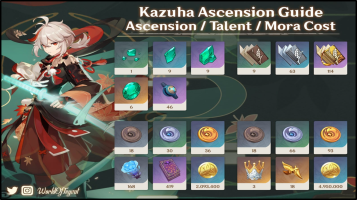
It takes one-two minutes to defeat these domains. That’s not that long but considering you could clear about eight to twelve a day, that’s a good ten-twenty minutes. It’s half that if you use condensed resin (which acts like finishing the domain twice in one go), but you also need to farm the items with which to make condensed resin, and we’re doing the time warp again. And not in the fun Rocky Horror way. These domains don’t sound like they take long, but time adds up fast. Genshin also offers daily tasks which don’t take that long, but they’re daily tasks and they can last up to five minutes. It’s a lot of busy work with not enough pay off.
And it goes even further with minor time wasting inconveniences. Items burst out of things. I don’t know how many times I’m on a mountain face, open a chest, and the treasure spills down the mountain. Really? Auto-collect the treasure. And I can’t interact with things like a waypoint for the first time if an enemy spots me. I don’t have to see the enemy. Half the time I’m scratching my head wondering where the enemy is. Genshin invents new ways to waste time. But it’s super easy to finish the battle pass. That’s a huge plus.
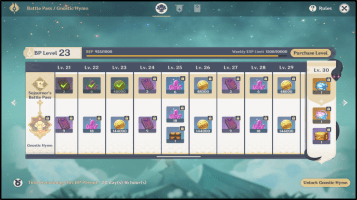
Genshin doesn’t really require a player to purchase its battle pass. I advise purchasing the battle pass once annually because some extra goodies can go a long way, but one can get by without it. And if that was all that mattered, I would’ve given Genshin top marks.

Unfortunately, Genshin has seen few upgrades to its battle pass in four years. There has been one major inclusion: artifact experience items. Genshin Impact is playing with a player’s ability to build their own artifacts with these experience items and that could ease the pain of farming artifacts. I didn’t mention this in the Respecting Time segment, but Genshin’s artifacts are the most time consuming of all items one must farm.
That said, I still can’t give Genshin high marks in Battle Pass because the BP weapons are okay at best, and the ability for players to build their own artifacts is getting tested in this patch. We don’t know if Genshin intends to keep this function, even though it’s been in Honkai: Star Rail from the beginning. Fingers crossed that it stays.
Genshin is below average in terms of True Cost, but I struggled with how far down it should fall. It originally received an average score years ago, but I have more context with which to stratify Genshin Impact. The release of Wuthering Waves (WuWa) and how much Kuro Games gifts their players with free five-stars and upgrades and convenes (those are WuWa’s version of a gacha turn) leaves Genshin in the dust.
Even so, I can’t crater this score. One doesn’t need that much in terms of primogems (the in-game currency players can buy with real-world money) and only a few characters are needed, specifically anyone who can facilitate hyper bloom. But it’s fun to get new characters and Hoyoverse’s other game Honkai: Star Rail (HSR) is far more generous. Both HSR and WuWa provide more in-game currency for exploration and completing events.
Sure, Genshin has given their playerbase more primogems and free gacha turns in this patch (5.0) than most other patches, but someone smarter (and more dedicated toward number crunching) than me kept track of how many gacha turns a person can make with freemogems and gifts in Genshin versus HSR. Over the years, Genshin has given players 80 turns per patch. To date, HSR gives players at least 100 turns per patch with just finishing in-game content. That means that HSR players are guaranteed a five-star character each patch, while Genshin players must pay for 20 turns of the gacha crank or not get a five-star. Or they need to get lucky. Just be lucky. Simple.
And it doesn’t stop there. Genshin Impact changes for the worse with its weapon banner. You must lose the 33% chance twice before getting a guaranteed weapon. If you miss both times and go to hard pity every time, you could spend hundreds of real-world dollars. Yikes! Genshin’s weapon banner is abysmal. What’s worse is that the current banner is an improvement. I saw a video years ago of someone spending thousands of dollars and never getting the banner weapon.
I gave Genshin an 8/10 for this category years ago. I would’ve given it 9/10 if I only gauged its story and not the storytelling. Genshin Impact has an engaging story; Hoyoverse stinks at telling stories.
This will be a problem with most gacha games. Gachas tend to dice up a story, toss the segments into the air, and let them fall wherever they will. As a result, I can seldom follow what’s going on in Genshin’s story. I need YouTube creators like Ashikai to compile Genshin’s story from various mediums, to include mangas, short animations, one shots, forums, and even some events that I may have missed because I was AFK. Quick plug, you should check out Ashikai’s YouTube channel; they do amazing work.
Once you know the plot points, Genshin Impact has a great story. The idea that this could be a post-apocalyptic world, and the sky is fake fascinates me. I won’t spoil the whole thing here. You should check out Ashikai’s playlist on World Structure Theory. Great stuff. The narrative itself rocks. I just wish Hoyoverse would elevate their storytelling.
Ugh! Genshin hardly makes sense half the time and the times when it does make sense, Paimon repeats what a character just said.
Random NPC: I think the wolf headed east.
Paimon: It sounds like (random NPC) thinks the wolf headed east.
Skip. Skip! Skip!!! I already know that. Why don’t you give me a skip function? Why does Paimon repeat everything? Why doesn’t Paimon recap the parts of the story that I could’ve missed in timed events or the manga or some other media I haven’t seen? Hoyoverse’s team must’ve heard that no one can follow their plot, but they didn’t get the memo that their tossed salad method of storytelling could be the issue. It must be that the player wasn’t paying attention. Let’s repeat the same dialogue five times because the following happens way too often:

Random NPC: That’s right, Paimon! I believe the wolf headed east.
Paimon: Oh! (Random NPC) believes the wolf headed east.
Random NPC: That’s right, Paimon. You should head east in order to find the wolf. Paimon: Paimon thinks that Paimon and the traveler should head east in order to… Stop! Skip! Why?
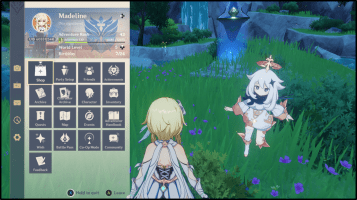
Genshin Impact streamlined a lot. So many gachas have cluttered interfaces. Tower of Fantasy (ToF), which was released after Genshin, is a good example of a cluttered interface. I can’t follow half of what ToF is trying to show me. It has too many sub-sub-sub-sub categories. Send a search party.
Genshin does a good job of showing the most pertinent information. But it can be better. I can do with even fewer sub, subcategories. Even so, Genshin has done such a good job at minimizing clutter that Wuthering Waves copied Genshin Impact’s interface as much as Genshin Impact copied Breath of the Wild. That tends to happen when a game does something right. If something works, copy the homework.
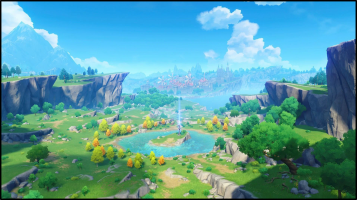
Like I said, the graphics look good but they’re dated, and I could do without Genshin’s oversaturated color palette. But the music catapults this score. Hoyoverse sunk a ton of money into making each region and even specific locations within a region unique. It says something when you can close your eyes, listen to a track, and know exactly where the piece plays.
A high music score will be a common trend for Hoyoverse games. Hoyoverse knows the value of good music. They honed their skills in Honkai Impact 3rd. “Nightglow,” anyone?

These new scoring metrics lowered Genshin Impact’s overall score. I still have a little hope that Hoyoverse will improve Genshin Impact, but several of the game’s improvements were first tested in Honkai: Star Rail, and it took over a year for those improvements to make their way from HSR to Genshin Impact. It’s the same company.

Hoyoverse has shifted assets and focus to HSR, Honkai Impact 3rd: Part 2, and Zenless Zone Zero. As I said in my review years ago, Hoyoverse may cut their losses and not give Genshin Impact the overhaul it needs. They don’t improve their profit margins if they upgrade the current Genshin Impact. It’s only a matter of time until Hoyoverse releases Genshin Impact 2nd: Give Us More Money. That’s all I have for now. Let me know your thoughts on Genshin Impact. And wherever you are, I hope you’re having a great day.

Hey, hey! Kyra Kyle here. I haven’t shared a video game review in quite a while. I started by covering a bunch of Gacha games and intended on including them all in this post, but I pared that down to one gacha Genshin Impact, which will post tomorrow. I found that most video game reviews aren’t effective when discussing free-to-play video games. So, let’s give video game reviews the enema it needs.
Video game reviews often cover things that are easy to spot. Visuals? You can see screenshots: unnecessary. Audio? I guess that’s helpful, but again there are video shorts, and one can get the feel of a game’s audio before purchasing. Gameplay might be the most useful and some sites will even include a video game’s replayability. But we’re living in a free-to-play video game world, and there are video game review categories that get overlooked.
Respecting a player’s time may be the biggest omission. Replayability is fine and all, but video gamers are getting older. So many of us are parents and grandparents and even the ones who don’t have kids have other real-world obligations.
Respecting a player’s time has become more important than replayability. I said it. Whenever I see a game boast that it has 100s of hours of replayability, I lose interest. I don’t need another part-time job playing a video game for certain unlockables or item upgrades. That’s good for someone whose job is video games or someone still in grade school. The rest of us have other things we could be doing or other things we need to do.
True cost. Free-to-play games need a true cost category. Can players effectively play a game without buying the battle pass every patch? Yes. Battle passes should also have their own category, because most free-to-play games include one. Heck! Several paid games include a battle pass in today’s climate.
But Gacha games, which have gained popularity in recent years because of their monetization system, find ways to price-gouge players with drop rates for characters and items. But Kyra, you could play 40 hours a week to—see respecting a player’s time. I guess this one could also be called respecting a player’s money.
I’d take it further with splitting gameplay into mechanisms and gameplay loop. Mechanisms are what you’re mechanically doing in a game, but what one does in a game only matters if the game mechanisms are unique. And gameplay loop is how satisfying and engaging the mechanisms work together as a whole.
Gameplay combines the two ideas. I guess the combo works, but separate categories may attract different gamers. Some like playing a unique game even if the combination of elements gets clunky. Other gamers look for a cohesive whole.
I’d do a similar thing with story or narrative. Storytelling and a story are not the same thing. John Updike’s A&P has a simple premise, but Updike’s storytelling elevates the story into a classic. On the flip side, Genshin Impact has a great story if you can follow it, but Hoyoverse has done a piss pour job at storytelling. Oops! That may have spoiled the Genshin Impact review.
With all of that said, let’s see if we can pin down a good set of video game review criteria before covering the first of a few larger gacha games. But before we do that, we’ll need to discuss what makes a gacha game for the folks who may not know. For those of you who know what a gacha game is, feel free to scroll past this next section. I’ll try and keep it short.

Gacha games have been around for decades. One of the first, MapleStory released in 2003. Yikes! It has been decades. But the polish and larger budget and success of 2020’s Genshin Impact launched gacha games into mainstream popularity.
Gachas have always been popular, especially in eastern Asia, but Genshin’s blend of Zelda: Breath of the Wild’s gameplay and the gacha monetization system brought in new fans. Let’s be real. Genshin is a Breath of the Wild clone. So, the only new thing Genshin really introduced to that formula was the gacha system. So, let’s discuss what makes a Gacha game.
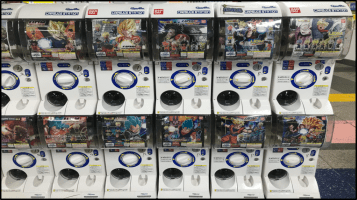
Gachas work like collectible card games or like the gacha machines the game type borrows the word. Gacha machines are the machines one can find at the front of a grocery store. Insert a coin (quarter) into the machine, turn the crank, and a plastic ball with a toy inside spits out from a spout. Gacha originates in Japan. The Japanese call it that because they believe that’s the sound a gacha machine makes as one turns the crank. Gacha. Gacha! Gacha!!!
In gacha games, players wish or warp or convene—each game has its own word for what you’re doing, so let’s come up with a universal term “turn”—or takes a turn on a banner. Each banner will feature a character.

Usually, but not always, players take a certain number of turns on the banner before they can receive the featured character (usually about 80-100 turns). I say “can receive” because gachas typically employ a percentage chance of gaining the featured character or item. Often, one needs to lose their percentage chance of gaining a featured item before receiving a guaranteed character/item.
As you can guess, this monetization system is how gacha games make most of their money. And they make a LOT of money. Despite most gacha games using a free-to-play model, one will often find gacha games at the top of the most money earned over any given month. This fact is also why gachas became popular. Video game companies like money.
With those new ways of earning—or syphoning—money from customers, we may need new video game review criteria. So, let’s pin down some free-to-play/gacha video game categories.
This will be a category for the folks who like interesting mechanisms in their game. Games that push what can be done with video games from a technical gameplay standpoint will earn good scores.
Above image from GameDesigning.org
This is how the mechanisms work together to make a cohesive product. A formulaic game can score a high Gameplay Loop score, but that doesn’t mean that it doesn’t anything unique.
This applies more to free-to-play games, but I’ve seen plenty of other games waste a players time. Games that don’t waste a player’s time with busy work will score high in this category.
If a game has a battle pass, it will receive a score in this category. Who are we kidding? Most, if not every, gacha game has a battle pass. Even some paid games boast battle passes. I’ll split this score between the necessity of buying the pass and what one gets for completing it, giving difference to the latter.
How much does the game actually cost? Again, this is more a question for free-to-play games, but players can be asked to purchase add-ons. How much does everything cost?
I mentioned this prior. This is the story, not the storytelling. Gachas have a nasty habit of chopping up their narratives and tossing them into the wind. I’ll be leaning on YouTubers and other people to help me piecemeal these stories together.
Again, this I mentioned this prior. How well does the game tell its story? These are two very different concepts, especially for gacha games.
Gachas are also notorious for having difficult to manage menus. This wouldn’t be that big of an issue for most video games, but free-to-play games have a knack for hiding things within sub-sub-sub-sub menus so gamers can’t find them.
Yes. It’s obvious but still a necessary category. I’ll use this as a catch all for graphics and audio, giving an internal score for both within the segment.
And with that, I think we have a good set of parameters. I’ll see you tomorrow. And wherever you are, I hope you’re having a nice day.
 jkgeekly.com