
Marvel Rivals takes the Overwatch experience and gives it a Marvel coat of paint. Sure, the developers make a few changes, most notably to the battle pass, but the game remains largely the same. It’s a fun experience. It’s a familiar experience. That’s not always a bad thing. I’m just wondering if Marvel Rivals will get sued by Blizzard.
Hey, hey! Kyra Kyle here. We haven’t done a video game review in some time. We’re taking a break from gacha games and reviewing the 6-player hero shooter Marvel Rivals. A Marvel video game is on-brand for Geekly. It takes a while to play enough of a free-to-play game to get an accurate depiction of how much time it takes to finish a ubiquitous battle pass. Marvel Rivals is no different. Unlike the gachas we’ve covered, Marvel Rivals has little to no story, so we’ll be replacing our two story segments (Narrative and Storytelling) with Connectivity and Online Experience. Here we go.

Mechanisms: 0/10
Originally, I gave Marvel Rivals a four and then a three. Who am I kidding? Marvel Rivals mimics Overwatch in almost every way. Our Mechanisms score measures how much a game pushes the boundaries of a game’s playstyle. In short, have we seen this gameplay before? Yes. Marvel Rivals copies Overwatch’s homework. I settled on a mechanisms score of zero. Even with this poor score, the game’s team-up mechanism single-handedly raises this score. If you choose a character like Thor, Thor can supercharge Captain America’s abilities, and Thor’s powers can also amplify Storm’s. Team-up abilities are not without their drawbacks (more on that in our Online Experience section) but the various team-ups add enough spice to return to Marvel Rivals every so often. It’ll take a long time to play each one. Each character has multiple possible team-up powers.

Marvel Rivals is the first hero shooter to include team-up powers. Many games of this type have synergies between characters but not a direct power. Marvel Rivals adds multiple abilities to each character. I can see this getting overwhelming with a larger roster of characters, but for now, team-up powers are a welcome addition. The rest of the mechanisms are almost exactly like Overwatch.
Hulk—technically named Bruce Banner—plays so similar to D.Va that I already know how to play him. Star-Lord is Soldier 76. Black Widow is Widowmaker; they almost have the same name anyway. Even the hero classifications are the same: Damage (Duelists), Tanks (Vanguards), and Support (Strategists). A well-constructed team will have an even number of all three. I do believe that Overwatch 2 also suggests this team comp, but Marvel Rivals has a higher level of consistency of character roles. Every Support (Strategist) will have the ability to heal. Or at least each Marvel Rivals Strategist has a reliable heal that makes the role easier to play.
Gameplay Loop: 8/10
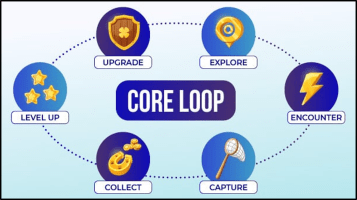
Above Image from GameDesigning.Org
Overwatch always had a fun gameplay loop; Marvel Rivals is no different. Drop in and play a few matches. You could try various game modes—I did for the purpose of this review—but you can play several rounds of quick play and then call it a day. Most casual players will most likely only play quick play.
And it’s this catering to casual players that raises this score. I’ve seldom played with a pre-constructed team, and the game can still be enjoyable. There are some issues with doing this that I’ll discuss more in the Online Experience section. I can see people who are disengaged with Overwatch (because of its change in monetization and Blizzard’s about-face with canning Overwatch’s story) switching to the new kid Marvel Rivals, but Marvel Rivals uses a similar monetization scheme as Overwatch 2, and I doubt Marvel Rivals will add a story mode. I do like Marvel Rivals’ references to the Marvel comic characters. The game has more references to comics than the MCU. That’s why I don’t think the game will add a story. You can just read the comics.
Marvel Rivals’ arcade modes mirror Overwatch’s. I don’t know how much mileage Marvel Rivals’ competitive scene will get. The team-up abilities can screw up the game’s balance, and Marvel Rivals’ initial thirty-three characters (yeah, there are a ton of launch characters) are—for the most part—balanced for now, but what will happen when Marvel Rivals adds a character ability not already featured in Overwatch? Seriously, Marvel Rivals may have one or two Overwatch character abilities that it hasn’t yet “borrowed.” The devs knew the character abilities were balanced because the characters’ abilities already existed. We’ll have to see what happens in the future.
The Gameplay Loop’s score depends on how satisfying a game is. Overwatch has an addictive gameplay loop, and so does Marvel Rivals. Eight may be a little low.

Respecting Time: 8/10
Marvel Rivals gets right into the fun. Click play, load into a game in less than five seconds, choose your character, and jump into the action. It’s addictive. From the sound of it, Marvel Rivals should get a ten out of ten for Respecting Time. Marvel Rivals just misses a perfect score for one reason: you can’t choose your map or gameplay type in its quick-play mode. This point dovetails into our next section (Battle Pass) but some of the Battle Pass missions require players to defeat enemies as a specific character on a particular map. Ugh!
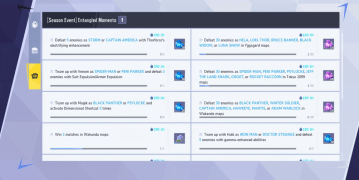
From a game design and development perspective, I understand why choosing a map or game mode in quick-play isn’t an option. It’ll thin the player pool and make load times longer. But why force me to defeat enemies on a specific map? I had one such mission for Wakanda, and I didn’t get a game based in Wakanda for twenty games. Yikes!
Technically, I didn’t need to complete the mission, but one earns in-game currency for beating Battle Pass missions. This currency allows you to unlock things in the Battle Pass and purchase certain bundles if you don’t choose to buy the Battle Pass. Who doesn’t want to unlock things in a game? And if I see a “mission,” something to work toward, I’m going to try and complete the mission. I believe a lot of gamers are the same way. Either eliminate the stipulation of a specific map for these missions or allow players to choose a map. Choosing maps may make load times slightly longer, but I’d accept a few extra seconds.
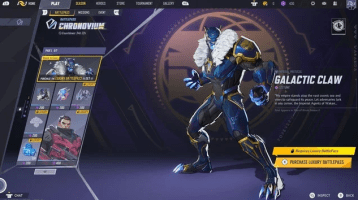
Battle Pass: 5/10
I mentioned before that Marvel Rivals doles out Battle Pass currency and after obtaining this currency, players can purchase rewards within the Battle Pass. This in-game currency is called Chrono Tokens. Chrono Tokens—I’ll interchange this term with “purple stuff” because Chrono Tokens are purple coins—can be earned by completing Battle Pass missions. I mentioned this earlier in the Respecting Time segment. As of Season One, the purple stuff will not carry over from one battle pass to the next. It will reset.
Marvel Rivals’ Battle Pass is set up like a comic book. Very thematic. You unlock the ability to purchase from the next page of the Battle Pass by earning enough of the purple stuff—er, Chrono Tokens. You don’t need to spend any of the purple stuff to unlock each page. This gives Marvel Rivals’ Battle Pass a unique, non-linear path for unlocking Battle Pass rewards. Most Battle Passes divvy out a predetermined reward at each level. Marvel Rivals empowers its players by allowing them to pick and choose which rewards they want. There is one huge caveat. Before unlocking the comic book page’s featured skin, you must unlock every other comic book panel’s reward.
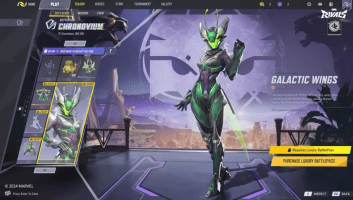
Marvel Rivals saw me, and undoubtedly countless other gamers, coming. I intended to unlock the in-game currency and the skin of each page and skip things like sprays, nameplates, and emotes. But most gamers would choose a skin and in-game currency over sprays, nameplates, and the like. Marvel Rivals put the kibosh on that. That’s a bummer. Even so, Marvel Rivals themes each Battle Pass page. The initial Battle Pass’s first page features the Punisher. I don’t play The Punisher that much, so I can skip that page and go to the next one. You can do this with each page that doesn’t strike your fancy. This is a huge plus.
The only reason why I rate Marvel Rivals’ Battle Pass a seven is that I don’t think the battle pass has enough juice. The rewards are lackluster. But that may just be me. Sprays don’t do much for me. You don’t permanently change the landscape. Who cares? Emotes don’t work in this game. If you use them, you don’t intend to play (you’re throwing the game). Victory poses might work better.
Season One doubled the rewards and duration of Season Zero’s battle pass while increasing the purple stuff needed to unlock pages by a small percentage. I was able to complete all pages of Season Zero in four gameplay hours a week. For Season One this may be increased to five hours a week. But with no carryover for the purple stuff from one season to the next, there’s no reason to play more than five hours or so a week. Marvel Rivals is aiming at that casual audience.

True Cost: 7/10
I waffled with this score, but Marvel Rivals deserves a high True Cost. I mentioned two other currencies: Lattice and Units. Lattice is the only in-game Marvel Rivals currency that you can buy with real-world money.
The Battle Pass costs 1000 Lattice (100 Lattice costs $1, so that equates to $10). You can earn 600 Lattice (which is the “gold stuff”) per Battle Pass, so if you don’t spend Lattice on any other in-game purchases, you could buy a Battle Pass with the gold stuff you’ve earned but that’s a little better than every other Battle Pass being free. I don’t care for that. I like the idea of buying one’s first Battle Pass and having the option of unlocking your next one for free if you unlock everything and don’t spend the purchasable currency. That’s a ding to Marvel Rivals’ True Cost score.
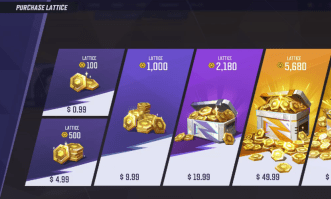
A bigger ding comes from Marvel Rivals’ other in-game currency, Units (or the “blue stuff.”) Players can exchange Lattice for Units at a one-to-one rate. This is where Marvel Rivals makes its money. The game offers plenty of bundles but most of them cost around 2000 Units. You could “earn” the blue stuff but a player’s ability to earn the blue stuff is even worse than a player’s ability to earn the purple stuff; you could be waiting several months to build up enough for 2000 Units. As of this write-up, I have just over 1000, and I unlocked everything that granted Units. That’d be months of waiting for a single bundle. This forces players who want to get a limited-time bundle to invest in the gold stuff. So, you could drop $20 on each of these bundles, and this is Marvel, so there are a ton of bundles.
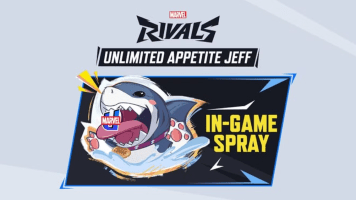
Fortunately, I don’t see much in the way of pay-to-win skins in Marvel Rivals. You can ignore Units or the Lattice to Units conversion, but many players won’t. Children may be the most susceptible. Be careful. Don’t fall down the rabbit hole of “I ‘NEED’ that specialty Spider-Man skin and the Wolverine one and the Hulk one…and the.”
Still, Marvel Rivals receives an above-average True Cost score because you don’t need to buy any cosmetics to be competitive. You don’t even need to purchase any heroes or villains, and that’s rare for a hero shooter. Marvel Rivals may be the only hero shooter to have all its thirty-three launch characters (and two newly released characters, Mr. Fantastic and the Invisible Woman) available to anyone who logs in the first time. That could be why most of the skins are $20; Marvel Rivals doesn’t charge for unlocking characters.

Connectivity: 7/10
I didn’t experience too many issues logging into and staying logged into Marvel Rivals. I don’t know if it matters, but I played primarily on Playstation5. Note: I appreciate the ability to checkmark if I want to be loaded in with PC players or not and I believe the option exists on the other side for PC players not pairing with console players. But even if I didn’t have connectivity issues, I noticed that many of my teammates did. Every third or fourth game, I’d see a notification that a player lost connectivity. So, this is a known issue with Marvel Rivals, even if I didn’t personally experience it. Every third or fourth game is common enough to lower Marvel Rivals’ Connectivity score a tad.

Online Experience: 2/10
Marvel Rivals’ online experience will also mirror Overwatch’s. You’ll have quitters (most people refuse to leave the game because they’ll get penalized, but they stand there doing nothing, so you’re one player short). You’ll have people who insist on playing Wolverine because they just bought a $20 skin for him and refuse to switch characters, even though we already have four other Duelists on the squad, and I can’t play a tank and a healer at the same time. And then if you’re like me and you tend to play support of some persuasion, you’ll get yelled at because you aren’t healing people fast enough and they’ll call you trash if you remind them that healing would go a lot faster with a second healer. So, Marvel Rivals becomes the usual online multiplayer game cesspool.
Marvel Rivals is your usual online multiplayer shooter. These games breed toxic players, and yet the Marvel Rivals devs have learned nothing from previous games. There’s no means (yet) of reporting toxic players. There isn’t an ignore list either, meaning you could block yourself from playing with a certain player in the future. And the devs put way too much trust in their AI. That inactivity that I mentioned (where players will, for the most part stand there) gets tracked by AI. It doesn’t take long for a player to stand perfectly still before receiving a warning and get booted. I received a warning when I grabbed a soda in between rounds once. It’s that fast. But technically, all you must do is move your character a little bit. Players figure this out quickly. AI doesn’t work. There needs to be a reporting system. Nothing beats flesh-and-blood monitoring.
But wait, there’s more. Remember those team-up abilities I mentioned earlier? Yeah. They’re fun in concept but not in practice. Your teammates will demand you play a specific character, even if you’re unfamiliar with the one character they want you to play with from the thirty-three launch characters because they picked another specific character. I don’t know how many times I would pick someone like Mantis, and then someone would yell at me because I picked the wrong healer. Idiot! You should pick Cloak and Dagger as a healer because they have a special ability with Moon Knight, who I picked. I’ll tell them that I’m unfamiliar with Cloak and Dagger’s play style. Then, they refuse to change who they’re playing to match Mantis. I must change. They’re the main character. Yeah, Marvel Rivals can get an extra layer of toxicity.
User Interface: 5/10
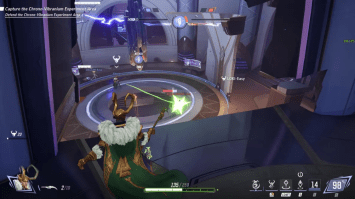
Marvel Rivals’ user interface works well enough in-game. It looks like Overwatch’s. I know I say that a lot, but it’s true. I can’t stress enough that Marvel Rivals is Overwatch with a Marvel coat of paint. I dock Marvel Rivals a few points in the user interface score because the out-of-game menus are difficult to navigate.

Again, like Overwatch, Marvel Rivals has a robust statistics page. These pages are more difficult to find, and the information is more convoluted to parse than Overwatch’s. There’s also a lot going on with the game menus. Because Marvel Rivals “borrows” so much from Overwatch, it integrates a lot of the systems that were developed over what’s almost a decade ago and then adds enough tweaks to throw off anyone who would know Overwatch’s menu system. Players unfamiliar with Overwatch’s menu may need a tutorial of Marvel Rivals’ menus.
Graphics and Audio: 4/10
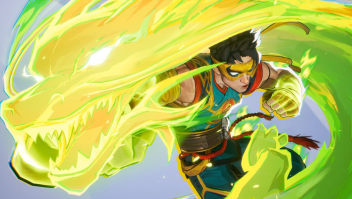
I feel like I’ve been here before. Many of Marvel Rivals’ maps are eerily similar to Overwatch’s. I know. I know. You’ve made a game out of how many times I’ve mentioned Overwatch by now. I lost count. I didn’t know where to mention the maps, so I added them here. Graphics and Audio works because I believe some of the set pieces look identical to Overwatch. At least with some of the other game elements, you may see the occasional difference. The map layouts feel the same.
A Graphics and Audio score isn’t going to fare well when you—let’s say it together—take Overwatch and add a Marvel coat of paint. Overwatch is an eight-year-old game. While nice enough to look at, Marvel Rivals uses an art style that’s eight years old. The graphics get an average score at best.
And the announcer’s voice (Galacta) is the three-way lovechild of nails on a chalkboard, a yelp, and a yodel. I don’t care for escorting the payload matches in Overwatch, but Galacta wailing, “Better stop that vehicle” makes me want to jam a number two pencil in my ears. The rest of the voice actors work well enough, so this score ends up being average.
Aggregated Score: 5.11
Despite its obvious inspiration—ahem, Overwatch, ahem (got another mention in there)—Marvel Rivals does a lot for the progression of Battle Passes. I like how you can pick and choose which rewards you want from its Battle Pass instead of a Battle Pass’s usual linear progression. The game’s use of the comic history over the MCU is another nice touch. The team-up abilities, while overblown and could lead to future balancing issues, work well and shake up the Overwatch formula.
Marvel Rivals doesn’t force players to buy characters. So much of a hero shooter’s commerce comes from buying characters. Instead, Marvel Rivals milks players if they want a cool skin. And they offer an avalanche of cool skins.
 jkgeekly.com