Geekly TV: October 10, 2014

TheFlashThe Flash

Kyle’s Review

The Flash gives us the best series premiere this fall TV season—so far—but that shouldn’t come as a surprise, since the creative team of Arrow shares a lot of pieces with The Flash’s creative team. This doesn’t mean that the show doesn’t have issues.

The biggest problems with The Flash are expository dialogue and a flat supporting cast. I don’t need every character telling me their life story when I meet them. Some cast members have few lines outside why they’re doing what they’ve done or what they’re currently doing. This makes for awkward storytelling and character development, but fortunately, Gustin as the affable goof Barry Allen drives the show.

With Allen at the show’s center The Flash has a different feel than Arrow—of course we get a cameo from the Arrow, and the way they include the Arrow is an example of good storytelling. Speaking of Arrow, a lot of people know that Oliver Queen is Green Arrow, and judging from The Flash’s pilot, they want to play catch up. The only problem with this is that Arrow has had two seasons to develop these characters, while The Flash comes out of the gate with almost as many people knowing his secret.

The creative team has plenty of their own secrets. Some of character names are changed from the comics to the TV series in order to obfuscate who plays which character. There’s one main character whose name has been changed, and it’s difficult to get into depth with him without giving away some spoilers, so spoiler alert: Harrison Wells, played by Tom Cavanagh, time travels. We get a nice Easter egg at the end of the episode—if you read the comics, you’ll be pleasantly surprised—that reveals Wells’s time traveling exploits.

And now I’ll speculate on the two characters I think Cavanagh might be portraying. Keep in mind that they have to have some link with time traveling. Reverse Flash factors into Barry Allen’s origin, but there have been countless versions of the character. Given Cavanagh’s performance, if he were the Reverse Flash, he would have to be the one who fancies himself as the man grooming The Flash into superherodom. Then, we have rumors from The Flash producers that they plan to include Booster Gold in the series. Geoff Johns wrote a few Booster Gold stories in the past, so it isn’t too farfetched to see Cavanagh sporting the blue and gold. Of course there’s another character who could don the booster Gold uniform, too.

The Flash intrigues me with its solid pilot. It does in forty minutes what the 1990s Flash TV show took almost two hours to do: introduce the likeable Barry Allen. And speaking of the Nineties’ Flash, I had a smile on my face when I saw John Wesley Shipp playing Barry Allen’s father Henry Allen. Shipp played the titular character in the Nineties, and he gives a nice performance here.

Verdict: Great pilot, even though it has flaws

Jim’s Take

As a fan of Arrow, I had high hopes for The Flash, and I was not disappointed. There was a lot of clunky exposition, and I’m a little concerned about how many people already know Barry Allen’s secret, but the show manages to bring a lot of the meta-human aspects of the DC Universe to the screen in a convincing and satisfying way. While I’m not quite sold on much of the supporting cast yet, Grant Gustin’s portrayal of Barry Allen is engaging and the character is instantly likeable.

ArrowArrow

Jim’s Review

Well, Arrow titled this episode, “The Calm,” and that was definitely a bit of misdirection. There was no easing us into season three, and while I’m happy for the quick start, I think the problem with this premiere may have been that it moved a little too fast.

I’m going to get into spoiler territory here, so be warned. The relationship between Oliver and Felicity is something the show’s been developing since the first season. While we got some really tender scenes with them together, it felt to me like they went from start to finish a little too quickly, especially since the realization that a normal romance would be out of reach for Oliver was something already explored. In other words, if they were going to have Oliver arrive at a conclusion he’d already reached before, they needed to let it breathe, let us consider that he may have been wrong for a bit. We didn’t really get that chance.

It was good seeing Roy take more fully to his role as Arsenal. It’s a storyline that has been brewing for a while now, so I’m glad they didn’t depend on it for a huge moment in the episode. There’s still some development required to sell him in that role, but I’m confident we’ll get it.

Brandon Routh as Dr. Palmer/The Atom is also off to a good start. Routh brings a certain charm to the role, and I like that there’s some ambiguity in the character for those members of the audience who are unfamiliar with the comics.

Paul Blackthorne as Quentin Lance continues to be a strong point of the show, but this episode may have pushed his post-heart-attack frailty a little too far. I’m excited to see his role change now following his promotion, and the decision to recognize The Arrow, and change Oliver’s relationship with the Police Department is an exciting development for me.

The general theme of the episode, having Oliver struggle with his relationships with his team, and how much risk he is willing to expose them to was stretched a bit thin. Yes, there was a close call this week, but it’s not a first for any of them. It’s not even a third for any of them. Having Oliver all of sudden decide to draw the line is a bit unsatisfying.

The show’s big cliffhanger ending is a tricky one, but I’ll address it saying as little to give it away as possible. There is an apparent death at the close of this episode, and it’s not a minor character. The setup for it felt a bit awkward, even contrived, but it is somewhat of a game changer for the direction of the show. We all know that death in a comic book universe is often a temporary state, and there’s always the possibility for this to be sleight of hand work, but at the very least, the writers have shown us they are not holding back.

Verdict: Season three is off to a solid start.

Kyle’s Take

The episode name is a bait and switch, but I guess it works in the sense that it may refer to the “calm before the storm.” And there definitely is a storm brewing at episode’s end (see Jim’s comment about the show’s big cliffhanger above). I’d be shocked if the character in question doesn’t show up again in one form or another. I did like the addition of Routh/Dr. Palmer. He slides in with the current cast, and his character gives a tip of the hat to another of Star City’s heroes. But Oliver’s motivations are at best forced and at worst disingenuous.

BobsBurgersBob’s Burgers

Kyle’s Review

This season’s premiere serves as a perfect jumping off point if you’ve never seen an episode of Bob’s Burgers. You learn all you need to know about who these characters are through their antics in this show. Gene puts on a one man musical with the frantic comedy that comes with it, Tina obsesses over Jimmy Junior’s butt and makes all decisions based on said posterior, Louise devises madcap schemes that result in a massive blowup, and Linda goes over the top because two of her children are in competing musicals. Even minor child characters make triumphant returns. But this episode skimps on the titular character and most of the adult extras. When was the last time the family spent a day in the restaurant? I have to admit that Linda and the children are a lot more entertaining than Bob—it’s an odd choice to have H. Jon Benjamin as the straight man. Hopefully, we’ll see more of the characters we’ve grown to love over the last four seasons.

Verdict: Solid show

AgentsOfShield01Agents of S.H.I.E.L.D.
Jim’s Review
It’s hard to talk about this week’s episode without getting into spoiler territory. I’ll do my best, but be warned that some specific details of the episode will be addressed.

There was a little bit of plot development this week. We get a sense of the tug-of-war between S.H.I.E.L.D. and Hydra, but at some point, I feel like we need more than a recruiting battle. What is ultimately at stake here? I expect Marvel to be reluctant to reveal Hydra’s master plan on a TV show as opposed to a feature film, but that’s becoming just a little too apparent.
We’re finally told what took Simmons away from the team, but I find the answer unsatisfying. She’s joined Hydra as a sleeper spy for Coulson, but what little character development she’s had has shown Simmons to be a horrible liar, and that makes the decision to use her in that role seem completely unbelievable, even with the limited personnel to choose from. The show addresses this in a weak attempt to poke fun at the character, and possibly even acknowledge its logical shortcoming, but I don’t think it’s enough.

I’ve always been down on the Skye character, so it probably won’t shock anyone to know I’m struggling to accept her new-found competence as a field operative. I also didn’t think the confrontation between Ward and Fitz paid off like it was meant to. I don’t know if they’re trying to earn sympathy for Ward, or trying to give Fitz credibility as a more assertive character, but the exchange seemed to come too easily.

I’m also a little concerned about the introduction of mind-control. In a show where unearned moments pepper the narrative, I feel like that particular device can be used to shift allegiances and explain out-of-character behavior too easily.

Verdict: Bit of a stumble this week.
Gotham01Gotham

Kyle’s Review

This episode fared better than the two that preceded it, but I wonder if that’s a function of a few things: no Gordon-Bruce scenes, Alfred acted more like he knew Bruce and cared for him, and Catwoman actually did something Catwoman-like. Throw in some good scenes between Gordon and Bullock and get rid of the Penguin references, and this episode improved on a lot of the things that bogged down the others, while building on what worked in the first two.

I can’t say I buy the relationship between Barbara and Montoya. It’s tacked on and borderline pandering, but I’ll give it a chance. We get a different kind of vigilante, and this slant of vigilantism is heavy-handed in terms of how it relates to the once and future Batman. Yes. We get it. Batman differs from this vigilante in a very key way that I won’t reveal here because of potential spoilers. Let’s say the creative team telegraphs their punches, and they keep tugging at a thread with no hope of follow through.

I still can’t stand Fish’s accent, we don’t get a fleshed out opinion of the vigilante by another Gotham policeman besides Jim Gordon, and subtlety continues to elude Gotham. But the show continues to improve. The Penguin’s transformation is interesting, but I’m not sure how far they’ll take it without any hope of Batman’s presence. Perhaps the best thing this episode does is give us a sense of Gotham City as its own character.

Verdict: Watchable and improving
Comic Book Reviews for the Week of 10/8/2014

Batman #35

B35

DC Comics

Snyder/Capullo


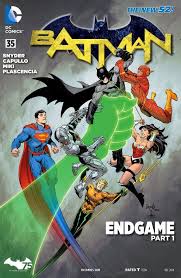
I was really excited for this book. After Zero Year, and Forever Evil, I feel like it’s been too long since Batman has been able to return to telling good, self-contained stories within the confines of present-day Gotham City. As the cover implies, we get a visit from The Justice League in this issue, and that made me nervous that we’d be going right back into another crossover event that would take Batman back out of Gotham, but that’s not really what happens here.

Without getting too deep into spoiler territory, we begin with something of a calm to open the story, but it’s interrupted by an attack on Bruce by the Justice League itself. My fear then became that we were getting into the already traveled grounds of a Justice League: War type of story, but Snyder is careful to show us that the members of the League are not themselves. The action sequences are well-executed, the visuals are impressive, and the twist revelation at the end makes this book well worth the increased price.

Verdict: Solid read


Amazing Spider-man #7

ASM7

Marvel Comics

Slot/Gage/Camuncoli


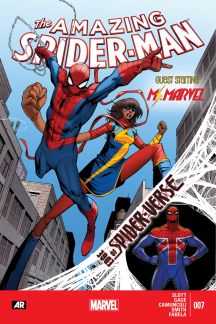
This issue continues the pairing of Peter and Silk. We get a little more of their primal attraction, which I feel is getting to the point where it’s been farmed enough, and continuing on with it without developing it, or explaining it is becoming detrimental to the narrative. Anna Maria serves to explore the Peter Parker side of Spidey’s problems, that’s to say his fledgling business venture, but the real draw for this issue is the Ms. Marvel team-up. There are some genuinely fun moments here, and the exchange between the two characters is well-done.

The Edge of the Spider-verse segment of the book didn’t draw me in so much, but then that whole story-line isn’t much of a draw for me. There’s nothing particularly wrong with it, but I feel it does little for the arc beyond providing a bit of a focus on Spider-UK.

Verdict: Worth a look


AXIS #1

A1

Marvel Comics

Remender/Kubert


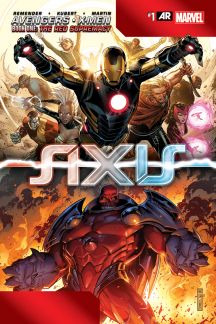
I’ll keep this one short. This is not a book for anyone who hasn’t been reading Uncanny Avengers and X-Men for the last year or so. As usual, Marvel’s editorial tries to bring the uninitiated up to speed with a couple pages of background, but it’s nowhere near enough to fill readers in on such an enormous cast of characters.

Even within the pages themselves, once the story gets going, Remender is trying to do too much too soon. The number of panels per page, and the dialogue-heavy sequences drag down the pace and make it difficult for anyone trying to jump on board at this point. The long and the short of it is if you’ve been following the individual titles, AXIS will probably have a huge payoff for you, but this book has no business calling itself a #1.

Verdict: Skip it (unless you’re a faithful reader of the individual titles)


Wytches

W1

Image Comics

Snyder/Jock


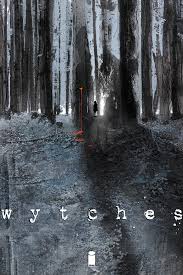
Scott Snyder’s other big release this week is the debut of Wytches. There’s not a whole lot of setup needed for this one, and what’s there is done well. The narrative takes a bit of a wide focus, meaning we don’t get to know quite as much about any one character as we’d like to, but there’s enough here to give us an idea of what we can expect. I’d also have liked a bit more setting. The flashback sequence in the opening pages makes full use of its historical setting, but I’d like to have had a bit more of that concept in the present-day narrative. But for a single line of dialogue, I’m not sure we’d know at all where this is taking place, but I have confidence Snyder will get us there.

As for the rest of the book, it gives us enough to have some idea of what’s at stake. There is a genuinely horrifying moment toward the end where we’re shown a confrontation with a bully. The triumph of Snyder’s work here is that he goes so very far beyond the expectations of such a scene, and he makes it sequence that sticks and disturbs. The artwork is as good as you’d expect, and works brilliantly to underscore the darker tones of the book while still seeming to fit the characters. The writing is clearly Snyder in his horror element.

Verdict: Excellent read.

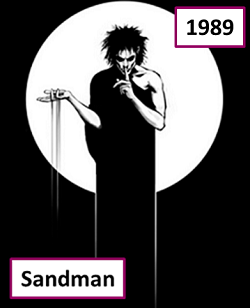
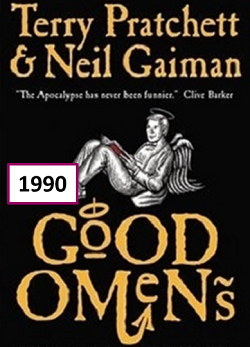
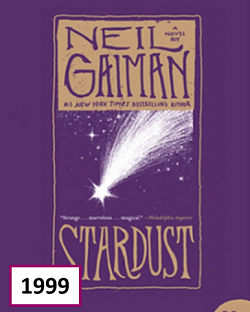
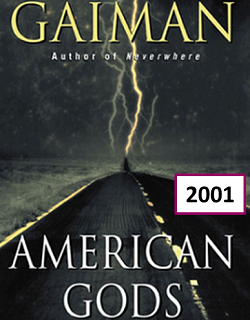
Quiz Answers: Neil Gaiman Timeline

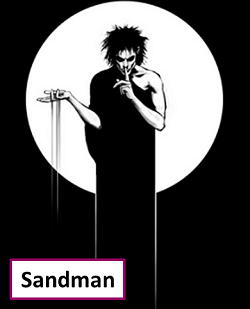
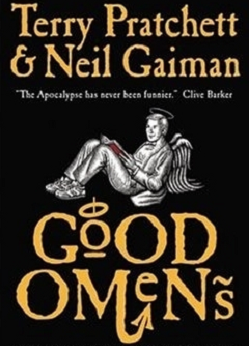
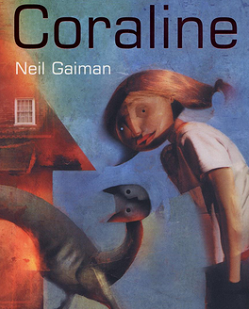
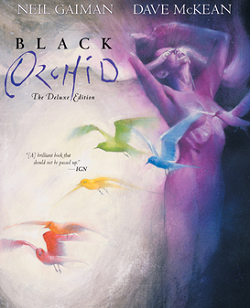
BlackOrchid02   Sandman02   GoodOmens02

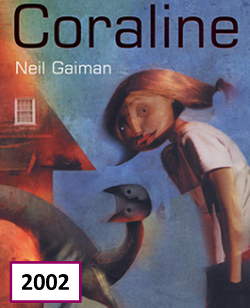
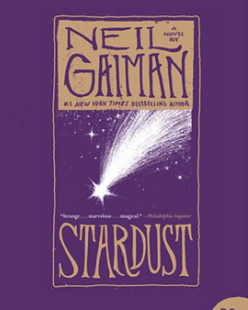
Stardust02   AmericanGods02   Coraline02

Let’s see how we did.

All 6 correct) You asked Morpheus for everlasting life and granted it. Wait! That was a dream.

4-5 correct) Even though you read the mouse’s “Don’t go through the door” sign, you went through it anyway. Life is better in the Other World isn’t it?

2-3 correct) Did you get lost in the House on the Rock? If you’re not back in three hours, we’ll just wait longer.

0-1 correct) The end is nigh. Or is it? You know the person to your left is the antichrist. Don’t make them choose between good or evil. Challenge them to a leg wrestling match instead.

Bang!

Designer: Emiliano Sciarra
Publisher: ABACUSSPIELE
Date Released: 2002

Number of Players: 4-7
Age Range: 11 and up (8 and up on the box)
Setup Time: 5 minutes or less
Play Time: 30-45 minutes

Game Mechanics:
Hand Management
Partnerships
Player Elimination
Variable Player Powers

Game Flow and Review:
Take a social game like Villagers and Werewolves, add a card element to it, and you get this fun old-fashioned spaghetti western shootout.

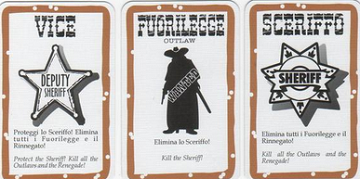
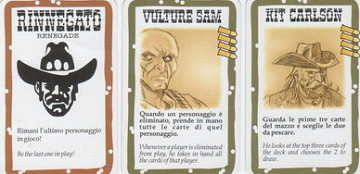
Each player randomly receives a character card that will determine their special ability and a secret role card to determine what it’ll take for them to win the game. There are four roles: Sheriff, Deputy, Outlaw, and Renegade. The Sheriff needs to kill all the Outlaws and the Renegade, while the Deputy—whose life isn’t as important as the Sheriff—protects the Sheriff and kills any Outlaws. Outlaws need to kill the Sheriff—plain and simple. Renegades have to be the last person standing.

Bang03

With the exception of the Sheriff, these roles are secret, so you won’t know who has which role until the player does something to reveal who they are. Since the Sheriff is known to everyone at the table, if someone attacks him on their turn, you can guess that the person who attacks the Sheriff is an Outlaw or Renegade—unless they’re the world’s worst Deputy.

Then, there’s the social game element of players throwing off other players as to who they are. The Renegade has the largest mountain to climb for victory, but he or she can pretend to be anyone but the Sheriff as they have to eliminate all of the players at the table. There are moments when a Sheriff can off all of his/her Deputies and have to face the Outlaws and the Renegade alone.

Bang02

All of the deck cards have Italian names as a tip of the hat to the great Italian directors who popularized spaghetti westerns, and each one has interesting abilities. The most common cards are Bang and Missed. You can only attack another player with a Bang card, and as you can probably surmise, Missed cards are played in defense and cause your opponent to miss.

Bang07

Usually you can only fire once, but the Volcanic weapon card allows you to fire as many times as you have Bang cards. A player’s hand is determined by how many bullets (or life points) the player has, so you want to stay as healthy as you can—Sheriffs gain an additional bullet, since they’ll be the target of a lot of players. Other cards can send one of your opponents to jail, give you a barrel to hide behind, or even a mustang to ride away from danger.

Bang05

I played in a large and a small game of Bang!, and I must say that a larger game beats the chaps off of a smaller game. If you have fewer players, your games will devolve into a cutthroat game of everyone trying to kill everyone else without the benefit of figuring out who is playing which role.

Verdict:
The core game mechanics of Bang! are simple hand management, hit point and player elimination, but it’s the added element of a social game that makes it shine. As such, you should only play Bang! if you intend to play it in larger groups.

Boss Monster: The Dungeon Building Card Game

Designer: Johnny O’Neal and Chris O’Neal
Publisher: Brotherwise Games
Date Released: 2013

Number of Players: 2-4
Age Range: 8 and up
Setup Time: Less than 5 minutes
Play Time: 15 minutes or less

Game Mechanics:
Auction/Bidding
Hand Management

Game Flow and Review:
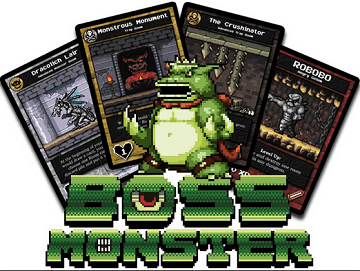
You are the Boss Monster at the end of an 8-pixel video game dungeon. You compete with other Boss Monsters to gain the souls of dead adventurers, while avoiding these heroes’ attack.

I have to be honest. This game tugs at my heart strings. The 8-pixel art and inside video game jokes are priceless. A card by the name of Cheat Codes had arrows in the background with the old Konami game cheat—that’s up, up, down, down, left, right, left, right, B, A, start for younger video gamers—and as the Cheat Code card attests, Boss Monster respects classic video game tropes.

BossMonster03

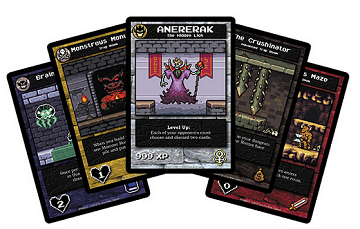
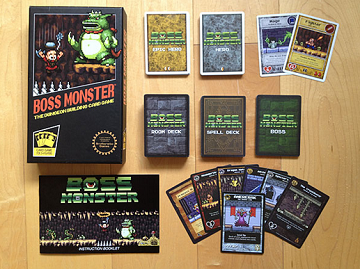
The gameplay is easy to pick up and fast to play. You balance constructing the best possible dungeon with attracting heroes to your dungeon. There are four basic card types: Boss, Room, Spell, and Hero. You pick your boss at the start of the game. Then, you’re dealt five room cards and two spell cards, discarding two cards of either type from your hand.

Each Boss has an XP value, which is important since it’s used for tie-breaker purposes, an effect text when they level up (you need to build five rooms to level up), and a treasure type which lures a certain kind of hero to your dungeon. Room cards have damage values in the lower left-hand corner, a treasure type (which also lures heroes to your dungeon), and effect text. Spell cards have icons showing when they can be played in the lower left-hand corner and have effect text. Then, you have heroes, who only have health and a hero type.

BossMonster04

During a round, heroes enter play in town. The heroes chill in town until players build their rooms for the round. Players place their room cards facedown to the left of their Boss. This promotes strategy as you won’t know what kind of treasure the rooms your opponents’ are playing have, so you have to guess in order to attract the resident heroes. And of course you play these rooms to the left of your Boss because this is a side scrolling, dungeon after all. Players reveal their rooms at the same time. Then, you lure the heroes to who has the highest value of the hero’s favorite treasure. If you have a tie or no one has the hero’s treasure type, the hero kicks back another ale and stays in town.

Once all the heroes have made their moves, you start the adventure stage. When a hero enters your dungeon, they move from left to right, taking damage from your rooms. Hopefully, you’ll take them out before they reach your Boss, and you take their soul, but if they do survive your dungeon and reach your Boss, they deal damage to you. The first player to reach ten souls wins. But you lose the game after receiving your fifth wound.

BossMonster01

The gameplay can be unforgiving. Some of the cards are overpowered and unbalanced. There’s a basic room card that deals three damage. You can’t upgrade this room, but why would you want to. And many of the spell cards turn the tide of the game in a blink of an eye. Fortunately, you have more room card draw than spell card draw, but you can generate spell card draw through Boss abilities, making these bosses more desirable.

And speaking of desirable, during the game’s opening stages; you’ll want to attract fewer heroes as your dungeon won’t be that strong. This makes a two player game brutal. Picking a monster that shares a treasure icon similar with the only heroes on the board will have you scrambling to improve your fledgling dungeon.

Verdict:
Boss Monster is a great—even though it’s unbalanced—8-pixel romp. While you can play this game with two players, it works best with three or four players; otherwise you end up with the same player attracting the most heroes every time. Again, this is a balancing issue with the core game play as well as the cards themselves.

Timeline: Neil Gaiman

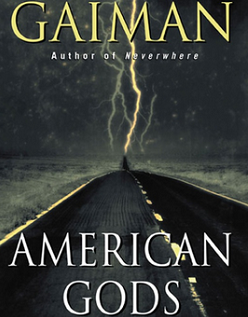
Halloween is later this month. Get your spook on with today’s Neil Gaiman timeline. Can you name the following Gaiman works in the order they were released?

Stardust01   Sandman01   GoodOmens01

Coraline01   BlackOrchid01   AmericanGods01

GeeklyAnswers

Krash Karts

Designer: Sean Dallas McDonald
Publisher: Self-published
Date Released: 2014

Number of Players: 2-6
Age Range: 8 and up
Setup Time: About 5 minutes
Play Time: About 20 minutes

Game Mechanics:
Grid Movement
Pattern Recognition
Tile Placement
Variable Player Powers

Game Flow and Review:

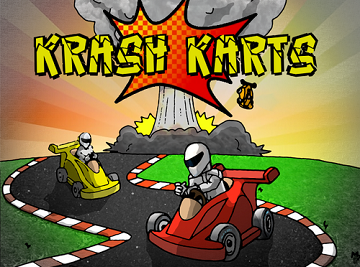
Krash Karts is Mario Kart in tabletop form. Racers dash to the finish line, pummeling each other with quirky attacks, and the whimsical characters have their own abilities that will give them an edge on the track. When you try to mimic something like Mario Kart, you have to keep things simple, fast and fun. Krash Karts accomplishes this.

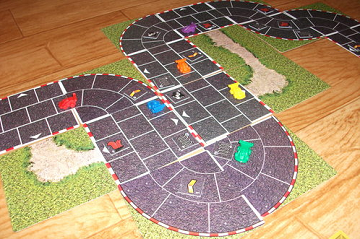
Players get handed a certain number of track tiles (determined by how many players are in the game), and on each turn, they have three actions at their disposal. Five things constitute an action: moving one space (each tile has smaller movement squares printed on them), drawing an item, using an offensive item (more on this later), discarding an item (either offensive or defensive) so you can lay down more track ahead of you, and moving your cart from its side to right-side up because some yahoo oil slicked you.
KrashKarts02

You can use any combination of these five things to make up your three actions for the turn. Want to turn on the afterburners? Use three straight actions for movement. Want to load up on items? Take a couple of items (you can only have two items equipped at a time: one offensive, one defensive) from the draw pile. How you play the game is up to you. But players win the game when they run out of track tiles, and they cross the last bit of track before their competitors.

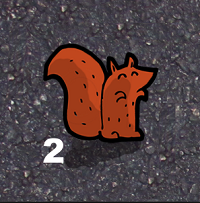
Movement is self-explanatory (you move from one adjacent space to the next, using an action with each space), so let’s get into items and knocking people silly. When you choose to draw an item, the pile you choose from corresponds with which position you currently hold. Like Mario Kart, if you’re in last place, you have a better chance of using an item that will derail everyone in front of you, or if you’re in first place, you most likely will get items like an oil slick that will slow down your pursuers.

KrashKarts04

If an item has a shield, it can be used as a defensive item, warding off an offensive item. You can stash an offensive item as a defensive item, but it won’t do you any good unless it has a shield in the upper right-hand corner of the tile. Some items have no business in your defensive position. The bomb goes off if someone hits you with something else, so it’s never a good idea to have the bomb on defense.
Then, there’s discarding items to lay down track ahead of you. Some items have a discard number in their lower left-hand corner. When you discard items, add the value of these numbers to determine how much track you can lay down. You can use these track tiles for several purposes. If an opponent is about to cross the finish line, you can add another tile of track to extend the game. You can use shortcut tiles to make the track shorter for you (but you have to have enough points from your discarded items to facilitate the construction of the entire shortcut). Or you could build a lot of your track tiles in advance, so all you have to do is cross the finish line. You have many ways to win the game, and the addition of Krash Karts’ colorful characters adds to your options.

KrashKarts01

The characters of Krash Karts come from other Kickstarter projects. If you aided another Kickstarter in the past, you may see one of the characters you helped produce in this game. The abilities are silly and over-the-top. But what Mario Kart inspired tabletop game wouldn’t have silly and over-the-top abilities for their characters?

Verdict:
Krash Karts is a fun game to pass the time if you have only a few minutes and plenty of table space. If you enjoy Mario Kart and always wished someone would come up with a tabletop version, then Krash Karts should be on your Christmas list.

Samurai Spirit

Designer: Antoine Bauza
Publisher: Funforge
Date Released: 2014

Number of Players: 1-7
Age Range: 10 and up (9 and up on the box)
Setup Time: About 10 minutes
Play Time: About 30 minutes

Game Mechanics:
Cooperative Play
Partnerships
Variable Player Powers

Game Flow and Review:
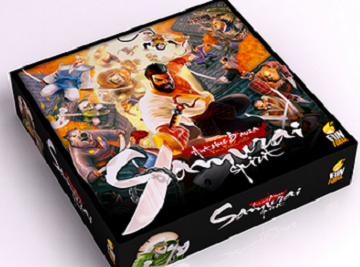
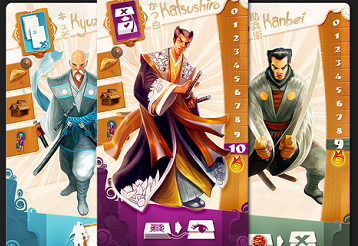
Great news: Samurai Spirit converts Seven Samurai into board game form. Not-so-great news: Samurai Spirit converts Seven Samurai into board game form. If you’ve ever watched the Kurosawa classic, you know that things don’t end well for the seven samurai in question.

Yes. This game is difficult—heck, there are three ways to lose the game (more on that later) and only one way to win—but each time you play it, you get a little more addicted to seeing how far your party can get—or how badly you’ll crash and burn this time. And if you happen to beat the game, you experience a sense of accomplishment and a touch of euphoria.

SamuraiSpirit05

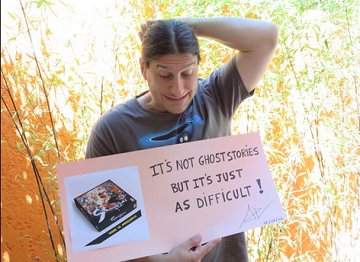
That would be a picture of the game’s creator, Antoine Bauza, holding up an early review of his game. Believe me. This game is worth the trials it puts you through.

Each player takes on the role of a samurai sworn to defend a village. The village consists of three family members, six shelters, and barricades. You lose the game as soon as all family members die, or if you lose all the shelters (barricades help to defend those), or if any one of the samurai perish. You are a team after all. You win if you and your team, at least one family member, and one shelter survive three days of attacks by marauders.

SamuraiSpirit04

You have four options on your turn: fight a barbarian, use your innate ability (only some innate abilities take up your action for the turn), share your innate ability with a teammate (by handing them your ability token) or pass—which usually isn’t an option I’d recommend since you’re a samurai and samurai wouldn’t leave a fight.

If you choose to fight a barbarian, flip a barbarian card from the draw deck, and once revealed, you may choose to fight the barbarian and accept the damage he deals, placing him on the right of your samurai, or you may add him to the left of your samurai to prove that you defended your village that day.

SamuraiSpirit02

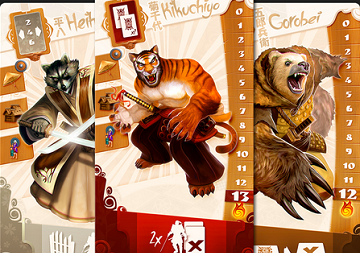
Let’s say you want to fight the barbarian you drew. Your samurai will have a specific amount of damage they can take before they either get knocked out or they unlock their Kiai power. If you assume your samurai’s max damage exactly, they perform their Kiai power which greatly shifts the tide of battle. Examples of kiai powers are healing your teammate’s damage, discarding cards from the draw pile (so you don’t have to fight those barbarians), and manipulating the draw pile so you know which barbarians are in the deck. If you take more than your max damage, your samurai gets knocked out and can no longer help in the fight for that round or day. A day ends when you get through the entire barbarian deck.

Now let’s say that you want to add the barbarian card to the left-hand side of your samurai. There are three symbols, a hat, shelter and a family member, to the bottom left of your samurai’s picture. You can only put one of each of these symbols on your samurai, so if there’s already a card sharing the symbol of your current barbarian card to the left of your samurai, you can’t put another one there.

SamuraiSpirit03

Various things happen if you don’t collect a particular symbol. No hat? You receive one wound, and you only get four before you’re samurai dies. No shelter? A shelter in the village burns to the ground. No family member? One of the family members dies. And the effects of not having the shelter and family member symbols add up with each player who doesn’t have the symbol, so it’s possible that you can die on the first day.

Then, there are innate powers. Some innate powers take up your action for one turn. Examples of these kinds of powers are ones that allow you to pass a barbarian card to one of your neighbors. Other powers allow you to ignore the ability of certain barbarians. There’s even one that loves fighting so much that they can choose to battle two barbarians in one turn. Keep in mind that sharing your innate power always takes up your action for your turn.

Finally, we come to the samurais’ spirit animals. If your samurai assumes a second wound, your samurai flips over and becomes their spirit animal. This trumps up your samurai’s kiai power and gives them more damage they can take. Be careful as two more wounds will kill your samurai.

Verdict:
Bauza doesn’t miss with his games, and this is no exception. His competitive games leave gamers satisfied because he gives you plenty of ways to win, while his cooperative games also satisfy because you have plenty of ways to lose. Besides, what would a faithful rendition of Kurosawa’s Seven Samurai be without hopeless odds?

Pattern Recognition

Markers, usually with a color or pattern, are placed or added on different random or predetermined locations relative to a board or the markers themselves. As the markers move during play the player has to recognize a known pattern created by the markers to gain goods, points or win.

Betrayal at House on the Hill has three tiles (the entryway, the attic and the basement) placed at the beginning of the game, and players add tiles to each of these three original tiles, while Forbidden Desert’s tiles shift and players have to judge how the tiles will shift so they can best gain the items they need to win the game.

Catch Phrase: Week of October 6, 2014

They may not say them as much anymore, but comic book characters had catch phrases they’d say almost every issue. Can you match the following characters with their catch phrase?

Catch Phrase:

1) I am the law!

2) This ends now!

3) Must investigate further.

4) Imperius Rex!

5) Bite me, fanboy.

6) Blue Blazes!

Character:

A) Namor

B) Lobo

C) Batman

D) Nova

E) Rorschach

F) Judge Dredd

GeeklyAnswers