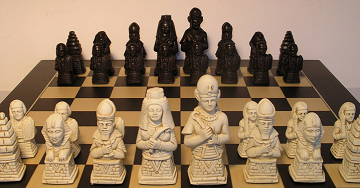
Comics for the Week of 1/7/2015

New year, new comics, folks. I’m sorry to say, although the holiday comics lull has passed, this was still something of a light week, but not necessarily a bad one.

Maybe it’s a case of “event fatigue,” the result of being beaten over the head–by DC and Marvel–with several intertwining narratives, but I tuned out during Superman’s “Doomed” run. That’s bad news for Pak’s current work on Action Comics, because the current story arc is relying somewhat on that event. With that said, there’s enough context here to fill in the gaps, and seeing Superman placed inside the realm of the horror genre is interesting and well done. I feel #38 gets a little dialogue-heavy, and that slows down the read, but it’s not bad dialogue, and the art works wonders here. I wish the overall narrative moved forward a little bit more in the end, but it does give us a fair idea of what’s ahead. Superman has improved since Johns took over, but if you’re looking for the best read for the character, I think it’s Pak’s work on Action Comics right now.

Detective Comics has also been a title on the rise ever since Manapul and Buccellato have taken it over. Their Icarus storyline gave a nice, self-contained story within Batman’s familiar stomping grounds, and that scratched an itch that Snyder and Capullo’s Zero Year was just not in a position for. Here again, Detective Comics has Manapul and Buccellato back after a brief pause, and their new storyline is hitting a lot of the familiar notes. #38 manages to make the Anarky character interesting. That’s not really been done for me before, and they’re giving us just enough of the Mad Hatter’s story to let us know he figures into the bigger picture somehow. It’s well paced, and Manapul’s artwork is exceptional. I don’t know if I’m enjoying Detective Comics as much as I am the Batman title these days, but it’s a lot closer decision than it has been since the New 52 came around.

If you know me, or if you at least read my thoughts on comics, you probably know I’m a Brubaker fan. Velvet has been one of my top books lately, but this week The Fade Out #4 dropped, and it’s proving to be another hit for me. As he does with Velvet, Brubaker captures the feel of the era he’s working with, and the art from Phillips is terrific in that capacity as well. If there’s a knock on the title, it’s that the golden age of Hollywood tropes are definitely there. In many ways, this is your typical story about the seedy underbelly of glamorous Hollywood, but the characters are engaging, and the obligatory murder mystery is well-presented. If you’re the type who likes to watch classic black and white movies to feel nostalgia for a time you never even lived through, I think The Fade Out can give you that.

Timeline: Heroes of Comic’s Bronze Age

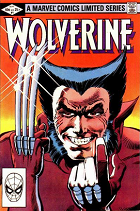
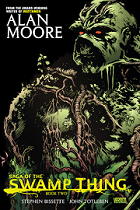
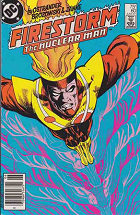
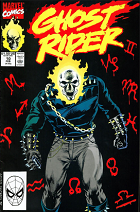
We’ve covered the heroes of comic’s golden and silver age. Now we’ll tackle the bronze age. Many folks consider the bronze age to span from the seventies to the early eighties. Think you know your comic bronze age heroes? Name these heroes in the order in which they first appeared.

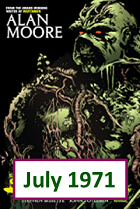
Wolverine01  SwampThing01  Punisher01

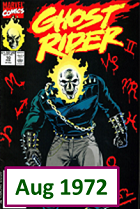
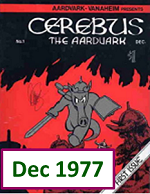
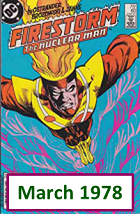
Firestorm01  Cerebus01 GhostRider01

GeeklyAnswers

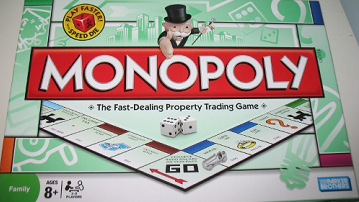
Monopoly

Designer: Charles Darrow
Publisher: Parker Brothers
Date Released: 1933

Number of Players: 2-8
Age Range: 8 and up
Setup Time: 10-15 minutes
Play Time: Up to 180 minutes (if you’re lucky)

Game Mechanics:
Auction/Bidding
Player Elimination
Roll/Spin and Move
Set Collection
Stock Holding
Trading

Game flow:
Players take on the role of land owners, buying and then developing land. Each player earns income from other players visiting their properties.

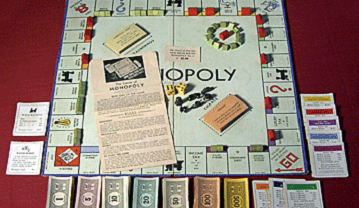
Monopoly01On their turn, a player rolls two six-sided dice and moves that number of spaces around the board. If the player lands on an unowned property, they have the opportunity to buy the property and add it to their portfolio or allow the bank to auction the property to the highest bidder. If a player owns all the spaces within a color group, they may then build houses and hotels on these properties, generating even more income from opponents who land there. If a player lands on a property owned by another player, they must pay that player rent according to the value of the land and any buildings on it.

Monopoly06If a player can’t pay rent for a property, they can mortgage a property they own to broker money. If a player can’t pay rent or mortgage a property to pay rent, they’re eliminated. The last player standing wins.

Review:
Let’s face it. If Monopoly was released today, it wouldn’t do well.

Monopoly04Roll/Spin and Move mechanics don’t fare well in today’s tabletop game market. Player Elimination is too austere, potentially wiping out hours of game time, when most games engage all players for the duration of the gaming session. It also takes a long time to play. Sure. Professional Monopoly players – yes, there are professional Monopoly players – can end a game in next to no time, but most of us will use three hours or so to finish a game.

Monopoly05But even so, Monopoly holds a special place in cultural history. It harkened the modern board game, and it’s unusual in that most people don’t learn how to play the game by reading the official rules as much as learning from other players. This leads to the cultivation of house rules. The best of these house rules reduce the playing time, and you earn money from landing on “Free Parking.”

Monopoly02Most people don’t even play the traditional version of the game because there are countless Monopoly tie-ins. You’re bound to find an entire shelf of licensed Monopoly or Monopolyeque games at a store. And some of these versions – like Star Wars Monopoly – have become popular in their own right.

Verdict: While deserving of its evergreen status, Monopoly wouldn’t be as popular today if it was first released in the modern tabletop game market.

Quiz Answers: Heroes of Comic’s Bronze Age

SwampThing02  GhostRider02  Punisher02

Wolverine02  Cerebus02 Firestorm02

The bronze age of comics might not be as gilded as the two eras of comics that came before it, but it gave us some stellar heroes. Let’s see how we did.

All 6 correct) You’re the best at what you do.

4-5 correct) If you were any hotter, your hair would be on fire.

2-3 correct) You have a lot of guns but no bullets.

0-1 correct) You might want to take a nice mud bath and regenerate.

Small World

Designer: Philippe Keyaerts
Publisher: Days of Wonder
Date Released: 2009

Number of Players: 2-5
Age Range: 8 and up
Setup Time: 5-10 minutes
Play Time: About 60 minutes

Game Mechanics:
Area Control/Area Influence
Area Movement
Dice Rolling
Variable Player Powers

Game flow:
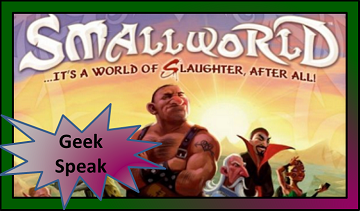
Designer Philippe Keyaerts developed Small World as the fantasy follow-up to his award-winning Vinci. Players take turns controlling fantasy creatures with various powers to gain control of the world. The only problem is that the world isn’t very big, and there’s constant war.

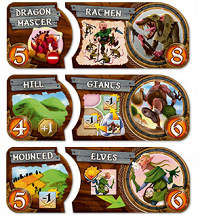
Smallworld01You begin the game by revealing – in a column – five of the 14 different species of fantasy creatures. Each creature has its own tile, and next to each creature tile is one of 20 special power tiles. The creatures showing should have powers next to them, and then the remaining tiles (both creatures and powers) are kept in a shuffled pile. All the creatures have their own innate powers. For example, magicians gain extra victory points (or coins) for occupying zones with crystals, while Dwarves do the same with zones containing mines. But the accompanying special power tiles increase these creatures’ abilities as in the “Flying” power that allows a creature to overtake land that isn’t adjacent to land you already own. On their first turn, players pick the race they want to play.

Smallworld03On each turn, you either use the multiple tiles of your creatures to conquer land, or you give up your race – and the rest of your turn – to send it “into decline.” A race’s “in decline” side is the black-and-white side of the tile. Most games will have you send at least one race into decline because you will extend yourself too far on the board, so you’ll have to choose the most opportune time to do this because as you can guess, a race in decline isn’t usually as strong as an active race.

At the end of each of your turns, you score one victory point (or coin) for each territory your races occupy. You can control one active race and one in decline race (you do gain points for this race, too) unless a special ability says otherwise. The player with the most coins after the final round wins.

Review:
Small World was released with a ton of fanfare and expectations, and it lived up to them for the most part. But one thing separates Small World from its predecessor Vinci: the whimsical artwork and setting cause some people to not want to give up the race they’re playing.

Smallworld04This flaw leads to some poor to no strategy by some players. As I mentioned in the game flow, you have to place at least one race into decline because you will overextend your race. So people who fall in love with their Elves with Flying and don’t want to get rid of them, have already lost the game. This in turn leads to hard feelings.

Smallworld02These hard feelings are magnified when paired with the small game world – hence the name Small World – and each player encounter a battle each turn. I haven’t found that constant battle is as big an issue as the not wanting to get rid of a race, but it can be a turn off to some gaming groups.

There are some gameplay balance issues, too. Some special powers a lot better than others as are some of the innate abilities for the different races. If you get the perfect special power to go with an overpowered race, you can browbeat your opponents for a round or two and then coast to victory.

But despite these issues, Small World offers enough strategy and varied gameplay to prove Days of Wonder’s tabletop giant status.

Verdict: Whimsical characters – perhaps too whimsical – help make this a great area control game.

Know Your Roles: Suicide Squad

DC Comics announced the cast for their upcoming Suicide Squad movie. The name Suicide Squad should sound familiar to both comic fans and Arrow fans. This Dirty Dozen of the DC Comics Universe pits wild and crazy villains on suicide missions with slim chances at survival. It should be an adrenaline pumper, but do you know who made the cast?

Match the following actors with the roles they’ll be playing.

Actors:

WillSmith TomHardy MargotRobbie

JaiCourtney CaraDelevingne JaredLeto

Roles:

RickFlagg TheJoker HarleyQuinn

Deadshot Boomerang Enchantress

GeeklyAnswers

Top 5 Tabletop Games Prior to the 1930s

We’re continuing our top tabletop games through the years with the next list of Common Era games that first saw publication before the 1930s. There may be some debate as to when these games first hit shelves, but these games definitely fit the bill of a Common Era game that predates the modern board game era—we think.

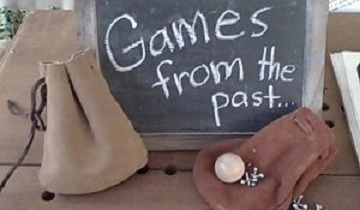
PastGames01As with our Tabletop Games from Before Common Era list, let’s set some ground rules.

1: Cultural relevance plays as much of a factor as overall quality. A game might make the list that doesn’t hold up to others of its type, but the game in question is everywhere, and you can’t ignore it.

2: Only one game from a franchise makes the list. We’re still too early in history for this to be a big issue, but we don’t want to have lists of nothing but Risk, Monopoly and Clue tie-ins.

3: Longevity plays a role, too. A game doesn’t have to fly off the shelves today, but it had to have some widespread appeal for a decent time period.

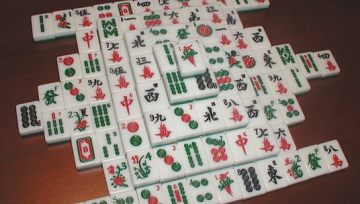
5) Mahjong (Early Ming Dynasty: 14th or 15th Century)
People can’t agree who created Mahjong, when it first hit game tables, or even how to play the game, but you can’t deny the appeal of these colorful tiles.

Traditional Mahjong functions similar to Rummy where players keep their tiles on trays and try to complete sets. In fact, Rummy may owe its existence to this tile game. Many other folks play Mahjong by shuffling the tiles and placing them in playful patterns and then they make matches, getting rid of tiles from the patterns and freeing new tiles as they go.

Mahjong02Mahjong had a gambling aspect to it and that led the Chinese government to ban the playing of the game for many years. Coincidentally, the West was first introduced to Mahjong in the 1920s, but the game didn’t gain popularity until the 1940s which was when the Chinese ban was implemented. So while westerns learned the joy of Mahjong, the country of the game’s origin wasn’t able to play.

Mahjong01China lifted the ban in the 1980s and it’s as popular now as it was in centuries past. Mahjong is also the most played tabletop game in Japan.

4) The Game of Life (1860)
This one’s a sneaky addition for this list. Sure, The Game of Life first hit shelves in 1860, but Milton Bradley called it The Checkered Game of Life and it had a sinister side. The Milton Bradley Company reissued a modern, lighthearted version of the game for its hundred year anniversary in 1960, and that’s the version we all know today.

GameOfLife01But I stand by The Game of Life’s inclusion on this list as it’s the only major board game created by Milton Bradley himself. Bradley only made the game as a means to recoup money he lost after a failed lithograph business. He had sold numerous copies of a little-known Republican presidential nominee Abraham Lincoln, but Bradley had taken the pictures of Lincoln before he grew his trademark beard, and folks demanded their money back because they were sure the picture wasn’t of Lincoln as Lincoln had grown his beard for the presidential race.

GameOfLife02This failure drove Bradley to create The Checkered Game of Life that deviated from previous new world games that promoted moral virtue to a game that focused on material gain. While The Checkered Game of Life saw its share of success, the modern Game of Life flew off shelves, receiving a lot of publicity from Art Linkletter, so I guess you could say “Kids Play the Darndest Things.” But games like Monopoly owe a lot to The Game of Life and that’s why it makes our list.

3) Snakes and Ladders (16th Century)
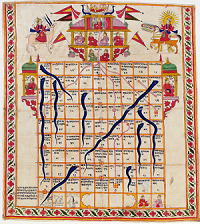
Snakes and Ladders takes the moral high ground. Unlike The Game of Life, Snakes and Ladders has its roots in morality lessons. Players make progress on the board that mimics a life journey. Ladders denote virtues, while snakes represent vices. The original ancient Indian game board showcased what can happen when you fall from the moral path and what you can gain if you stay virtuous and true.

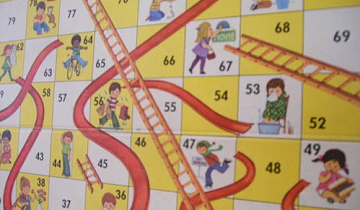
SnakesAndLadders01Originally called Moksha Patam in India, the game became popular in England at the turn of the 20th century as Snakes and Ladders. Americans were first introduced to the game in 1943 by means of the Milton Bradley Company, but the game experienced another name change: Chutes and Ladders. Apparently, Americans get squeamish around snakes.

ChutesAndLadders01Regardless of what you call it, Snakes and Ladders has influenced countless games that came after it.

2) Parcheesi or Pachisi (500)
We have back-to-back Indian board games on this list. This time it’s the Royal Game of India: Pachisi.

Pachisi is called the Royal Game of India because India’s royalty would dress up their servants to use them as human-sized game pieces on large outdoor boards. Talk about deluxe size.

Parcheesi02We had to include Pachisi to this list as it introduced the gaming world to the roll (or spin) and move mechanic that has been used in so many games – like Monopoly, Clue, and The Game of Life – that came after it. Pachisi has had plenty of copycats as well. But perhaps the most famous Pachisi copycat (Sorry!) comes from Parker Brothers the manufacturer that introduced Americans to the game of Pachisi as Parcheesi.

Parcheesi01I guess you can’t have enough of a good thing.

1) Chess (1475)
Chess is played by hundreds of millions of people worldwide in homes, parks, clubs, online, and in tournaments. It’s even become a part of some school curricula. Is it any wonder why it tops our list?

Chess02Chess also happens to be the third consecutive Indian board game on our list—sort of. Many historians believe it originated in Eastern India around 280-550CE in the Gupta Empire as the game Chaturanga (literally four divisions {of the military}: infantry, cavalry, elephants, and chariotry). The game went through several evolutions – most of which occurred in Eastern Europe – before settling on the modern units and rules which first appeared in 1475.

Numerous people have written literature on Chess. The game spawned the first group of professional board game leagues, and when computers were first programmed to play games with people, Chess was one of the first games that made the cut.

Chess01It doesn’t matter if you’re a noble during the Renaissance, Bobby Fischer, Deep Blue, or a kid in the fifth grade, you’ve probably played at least one game of Chess. That’s why it gets our top spot.

Did we get the list right? Let us know which games you’d include in this Top Five or suggest ideas for new Top Fives.

Check out the other lists from this series:
Top 5 Games from the 1930s
Top 5 Games from the 1940s-50s
Top 5 Games from the early 1960s
Top 5 Games from the late 1960s
Top 5 Games from the early 1970s
Top 5 Games from the late 1970s
Top 5 Games from 1980-1981
Top 5 Games from 1982-1983
Top 5 Games from 1984-1985
Top 5 Games from 1986-1987
Top 5 Games from 1988-1989
Top 5 Games from 1990-1991


Top 5 Tabletop Games from Before Current Era

Tabletop games have been around for millennia, but which games are the best of all time? JK Geekly will try to narrow down this powder keg of topic by era. We’ll start with the games that predate gun powder with this list: The Top 5 Tabletop Games from Before Current Era (BCE).
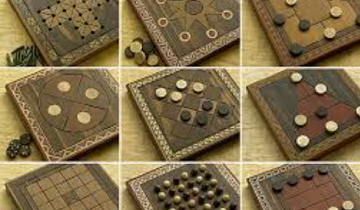
AncientGames01We’ll get to the games in a bit, but let’s set some ground rules.

1: Cultural relevance plays as much of a factor as overall quality. This could mean that a game makes the list that isn’t as good as some others of its type, but the game in question was omnipresent, and you can’t ignore it.

2: Only one game from a franchise makes the list. That won’t matter so much in the early-going of these lists, but you can imagine a Top Five Shades of Monopoly.

3: Longevity plays a role, too. A game doesn’t have to fly off the shelves today, but it had to have some widespread appeal for a decent time period.

4: This last one’s more of a note of caution. There’s plenty of speculation as to when some of these games were created, but we’ll stick to ones that have multiple sources linking the game to this time period.

5) Liu Bo (1st Millennium BCE)
Folks can’t agree on how Liu Bo’s played or when it first adorned people’s tables. It’s one of those games last in history. But we do know that it had a beautiful board, it was one of the few things that would survive in ancient Chinese tombs, and it inspired several games that came after it.
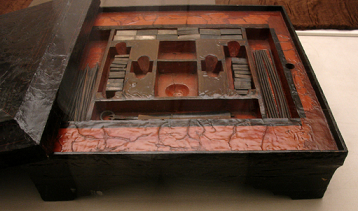
Liu Bo01How do we know that? The game of Liu Bo was described in the mid-3rd century BCE “Summons of the Soul” in the Songs of Chu:

Then with bamboo dice and ivory pieces the game of Liu Bo is begun;
Sides are taken; they advance together; keenly they threaten each other.
Pieces are kinged and the scoring doubled. Shouts of “five white!” arise

Could these game pieces be the first playing pieces? Are these the first dice included in a game? When you say a piece is kinged, that reminds me of Checkers.
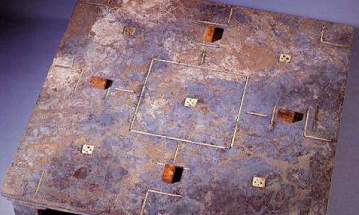
LiuBo02We may never know everything we’d like to know about this game, but we do know that it was such an important possession that people took it with them in the afterlife.

4) Jacks, Fivestones, or Knucklebones (At least by 500 BCE)
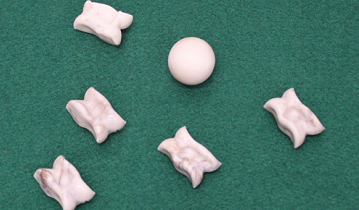
Knucklebones01No one knows when this game first originated – people can’t even decide on a single name –, but Sophocles attributes the invention of Knucklebones to Palamedes (the prince who led the Nauplians in the Trojan War). Both the Iliad and the Odyssey allude to games similar to Knucklebones. That places this game of bouncing or throwing a small object and then snatching as many smaller objects strewn on the ground as you can firmly with the Ancient Greeks.

Jacks01The modern game of Jacks replaced the ankle bone of a sheep (or astragalus) for a rubber ball and added five more small objects for you to catch to bring the total up to ten. Sure, most folks don’t play Jacks on a table, but you could and you can’t deny the game’s cultural relevance and longevity. People have been “riding the elephant,” throwing “peas in the pod” or “horses in the stable” for centuries. They’ll continue for centuries to come whether they play Astragaloi, Dibs, Chuckstones, Onesies, Kugelach, or Snobs.

3) Tic-Tac-Toe or Noughts and Crosses (At least by 100 BCE)
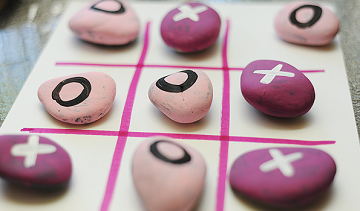
We know the ancient Romans played Tic-Tac-Toe or as they liked to call it Terni Lapilli – you can find ancient chalk grids of three by three in Rome – but Tic-Tac-Toe may predate the Romans. Evidence presented by Claudia Zaslavsky in her book Tic Tac Toe: And Other Three-In-A-Row Games from Ancient Egypt to the Modern Computer places the game’s origin to Ancient Egypt. Regardless, Tic-Tac-Toe is a very old game. It’s gone by many names, too, but the Brits named it Nought and Crosses, and that name stuck for centuries. The U.S. renamed the game Tic-Tac-Toe in the 20th century.
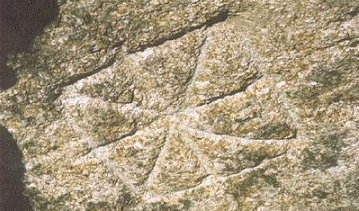
TerniLapilli01Outside of young children, you don’t see too many people playing Tic-Tac-Toe. Most folks discover that two evenly matched players, playing their best, usually tie each or other, or the cat gets the game. But despite Tic-Tac-Toe’s limited appeal to older players, it holds a special place in cultural history.

Game shows have used its game mechanics numerous times, Connect Four is a reimagined Tic-Tac-Toe played on a larger grid, and one of the first – if not the first – known video game was a Tic-Tac-Toe derivative OXO.
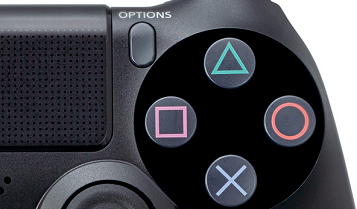
TicTacToe01Still, the most endearing legacy Tic-Tac-Toe has left behind has to be the logic behind most video games. While you think you’re fighting a dragon in a fantasy land, the computer-controlled dragon you’re playing against is playing a complicated game of Tic-Tac-Toe. If they do this, I’ll do this. It’s no coincidence that the most commonly used buttons on a Playstation controller are X and O.
PSController012) Checkers (3000 BCE)
King me.

Also known as Droughts, Checkers almost tops our list as the Before Common Era tabletop game king. It derives from the Middle Eastern game Alquerque (the oldest copy of the game was found in the city of Ur and was dated around 3000 BCE) and has become one of the best – if not the best – known abstract strategy games of all time.

Checkers01Checkers has influenced countless games that came after it, including the ubiquitous Chess which uses a similar game board. Players sit opposite each other and move their pieces diagonally, capturing their opponent’s pieces. If a piece makes it to an opponent’s side of the board, they become a king and can move backwards or forwards.

Checkers02In most non-English languages, Draughts is called Dame, Dames, Damas, or another term that has ties to ladies. Even so, the pieces are still called men or stones, but when they’re promoted to kings, they’re called dames or ladies which are the terms for the queen in Chess for these same areas.

1) Go (1st Millennium BCE)

The only game that can circle the wagons against Checkers is the game of Go.

Originating in ancient China between 1046-256 BCE, Go was so revered that it was considered one of the four essential arts of a cultured Chinese scholar. I don’t think anyone would say that of my mad Catan skills.
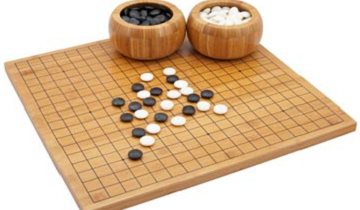
Go01The rules are simple: place your playing pieces (or stones) so they encircle your opponent’s stones in order to occupy more area on the board. Despite these simple rules, a game of Go can take numerous hours to play, but that doesn’t stop it from being one of the most played games in the world today. As of 2009, there are well over 40 million Go players worldwide – most of which live in Eastern Asia – and 74 countries are part of the International Go Federation.

Go02Like many other games on this list, Go has influenced many games and game designers. Othello (or Reversi) uses game mechanics similar to Go, and Go has joined Chess and Backgammon as the three oldest games that enjoy worldwide popularity. Backgammon is billed as a “Man vs. Fate” contest with its strong reliance on chance. Chess embodies “Man vs. Man.” But even the best Go players will only win half of their games, so you have to play the best way you know how, learning as you go, leading to Go as the embodiment of “Man vs. Self.”

Very few games match Go’s emphasis on self-improvement and that makes Go our top game from Before the Common Era.

Did we get the list right? Let us know which games you’d include in this Top Five or suggest ideas for new Top Fives.