The Problem with Preacher

Preacher

Jim’s Thoughts

It’s Wednesday now, and some of you may be wondering why I haven’t reviewed episode 3 of Preacher yet. I watched it on Sunday, and for a brevity’s sake I’ll say I felt pretty much the same about it as the first two episodes. It wasn’t exactly bad, but I’m losing interest in the show. With that said, I thought I’d poke a stick at some of the things that have put me off from the series in the early going.

To reiterate, I have read the comics, and yes, the show is quite different from them. That’s not a problem in and of itself, however. I’m all for saying this is a different medium, so it should tell at least a slightly different story. So long as the characters are there, I can not only forgive, but applaud it. I’ll also double-down on what I said last week. Preacher does offer recognizable versions of the characters we know from the comics. So, what’s the problem? It’s that the story AMC is trying to tell with this series is shapeless.

Kyle and I were talking about this just a couple days ago. He was surprised to hear I’m not particularly enjoying Preacher, and he asked why. I told him the show is sort of “wallowing in itself,” and that may be the best way I can describe it. Things have happened so far. Jesse has received his mysterious gift of persuasion, and some shadowy figures have come knocking in search of it, but is there really any urgency to the story right now? I don’t feel it. Every week we see Jesse mope, wrestle with his faith, revisit one of the town’s lost causes, or meet a new one, but he’s still there. He doesn’t know anyone is looking for him yet, and it’s not entirely clear what threat those figures pose. Tulip comes by at least twice an episode to try talking him back into his old life. It’s wash, rinse, repeat.

Those who’ve studied creative writing will know about “The Hero’s Journey.” For those who haven’t and don’t, it’s a sort of formula on which most western narratives are built. Part of that formula deals with the refusal of the call to action. Essentially, our hero is too afraid/filled with doubt/ambivalent to take up the cause. You see it in Star Wars when Luke Skywalker says he can’t go with Obi Wan, then changes his mind when his aunt and uncle die. It’s extremely common in western storytelling, and maybe that’s what Preacher is going for in Jesse’s refusal to join up with Tulip, but we’re three episodes in now. Not only has he rebuffed her several times, but it’s almost as though they’ve had the exact same conversation each time. At this point, it doesn’t matter whether Jesse leaves with Tulip or not. I, as a member of the audience, can’t help but stare at the screen and yell, “Just do something!” It’s as though Jesse is fighting against the start of the story, and that’s simply dull.

Maybe AMC wants to tell the story of the town. That could be fine, but what’s happening there? We’ve met some characters. Jesse’s had run-ins with one, roughed a couple of them up a bit, but to what end? What purpose has Eugene served but to show up on screen, make the most of their SFX makeup department, and generate some pathos? He can still be a solid character. He’s there, but he’s not doing anything. That’s the big issue with the show. It’s a bit like watching someone set up a chess board only to stare at it. We think we know who the bad guys are, and what they want, but it’s been ambiguous to the point of being coy. I may stick around for the next episode, but I’m not looking forward to it, and for a show this highly anticipated to have me at apathy three episodes into its first season is a poor omen.

Kyle’s Disclaimer

As of this write-up I haven’t seen Preacher. I had asked Jim a couple of days ago if I should invest my time in the series and his answer was a resounding no. I wouldn’t say that I was particularly “shocked” when Jim told me that he didn’t enjoy the show either. From the sound of it I won’t be sinking any hours, minutes, or seconds into the Preacher.
Geekly Games: June 11, 2016

Three weeks of Geekly Games. Count ‘em, three consecutive weeks and climbing. This week’s game is another one that I’ve been meaning to cover for a while and haven’t gotten around to doing so. I’m not sure if this game is great or if it’s very good but it offers one of the most unique tabletop gaming experiences. Either way, there’s no other game like it on the market (as of this write-up, of course). This week’s tabletop game is another game that focuses on narrative: TIME Stories.

TIME_StoriesBanner

TIME Stories

This game has you traveling through time and space, occupying someone’s consciousness—kind of like Assassin’s Creed or Quantum Leap. You’re tasked with correcting an issue within the world and your actions and interactions with other characters in the game can rewrite history. You’re trying to accomplish your goal with as few attempts as possible, but it’s okay if you fail. You’ll just pull a Bill Murray in Groundhog Day and relive the events. Just make sure you make better decisions the next time.

To say TIME Stories is a beautiful game is a huge understatement. I love the graphic design and artwork. The focus on narrative is another strong point—you feel like you’re in the world—and the gameplay is simple and straightforward. Even though there’s a lot going on in a given turn, TIME Stories presents the options afforded the player in an easily digestible manner.

The players work together to correct the timeline—it will most likely take more than one sitting to do that—and they travel together as a group to do so. While this can be constricting, TIME Stories avoids the sloppiness and unruliness of each player wandering into various rooms each turn. There’s also plenty to do when you’re in an area, room, or region. Players divide and conquer. In the kitchen one player may talk to the cook, while another attempts to steal a key from a dishwasher, and a third spies on two lovebirds necking in the corner. After everyone has a chance of doing something, you may share what you learned or encountered and once you believe you’ve done all you can do in an area, you can move onto the next one. Everything you do costs time and when you run out of time, you get sucked back into the here and now, and the gaming session ends.

TIME_Stories_Overview

I can’t get into too much detail—and I may have already given away too much—or else we’ll get into spoiler territory. But the fact that you can have “spoilers” for a tabletop game is unique. I’ll cover that, along with Narratilogy versus Ludology in “Behind the Game” later on, but I like how a tabletop game can be consumable. Games that you play once are trending.

TIME Stories’ sticky points reside in the interaction between players (that’s living players, not the in-game characters). You can share what you learned with other players but you can’t show them the card you picked up to complete the action. You even have to paraphrase or put what’s on the card in your own words; you can’t read verbatim from the card. All of this is an effort to keep gamers in the world, and I dig that, even if members of my gaming group think it’s dumb.

I’m not sure if you are allowed to take notes or not either. TIME Stories doesn’t explicitly say one way or the other (this game needs a better rule book), so we took notes, despite the game’s vibe telling us not to do so. Taking notes helps. You’ll learn which paths are dead ends and avoid them, and the gaming experience improves. I’d like a more definitive answer because I played a different scenario (or mission) of TIME Stories with a different gaming group, and the lack of notes hurt.

The Asylum, the mission that comes in the base game, is okay. It’s more of a puzzle, while other mission expansions have different moods and ways the game plays out. I enjoyed playing TIME Stories. Even the members of my group who didn’t like a particular puzzle near the end still had fun before and after that moment. Who cares if you can only play TIME Stories once, when the gaming experience is top notch?

BehindTheGame

Behind the Game

Let’s start with Narritology versus Ludology. These are two different camps of game designers. Narritologists believe that the story, characters, or theme of a game trumps stellar or unique gameplay, while Ludologists argue that gameplay is most important. Video games have fought between these two camps for years, so it makes sense that tabletop games have had their struggles with defining which camp is more correct.

In video games’ early stages Ludology reigned supreme, and it had to. Designers had to push the boundaries of what made up a game and challenge preconceived notions. As the industry grew and matured as a medium, designers turned their attention to Narritology. Game mechanisms are still crucial, but the story and its characters became more important. Tabletop games have gone through similar growing pains.

I don’t subscribe to either camp. You need both sides working together to form a great product, but as more games like TIME Stories and Pandemic Legacy continue to give tabletop gamers characters they can root for or relate to, the industry—like video games—will start being seen as an art form.

Consumable Tabletop Games

You may not think that a consumable tabletop game is worth it. You play each scenario once until you beat it and never play it again, but since most tabletop games are ones you can play repeatedly, how can you gauge the quality of TIME Stories or Pandemic Legacy?

Compare them to other forms of consumable media.

Many people only watch a movie once and they’re done with it. The same could be true of certain books or video games. So how does TIME Stories stack up against those forms of consumable media? Well, books are solo endeavors—unless you’re in a book club—so let’s stick with video games and movies.

TIME Stories is cheaper than a new video game, and it runs about five or six hours, which is about the length of most video games. TIME Stories is also less expensive than a night at the movies and you get more interaction.

So TIME Stories stacks up pretty well when put up against other consumable media in terms of value, but there are tabletop gamers who still like a game they can replay, and that’s fair. You don’t have to play TIME Stories or Pandemic Legacy. On a different note, most people who complain about TIME Stories and Pandemic Legacy only do so because they have limited replay value. They’re stellar games and they offer a unique gaming experience. You shouldn’t gripe about a tabletop game that makes you question how a game should function—that lead us back to our aforementioned Ludologists. I want some insanity from my game designers. They shouldn’t be afraid to try something radical. Give us something we haven’t seen. So is a tabletop game that has limited replay value worth it? To that, I say, yes. Maybe even a heck yeah.

Thanks for reading.

Geekly Comics for the Week of 6/8/16

WonderWomanRebirth

I only got two books this week, so this should be pretty short. I probably should have gotten Action Comics and Detective Comics but they weren’t in my pull file for some reason. I assume there was a mix-up with the decision to go back to the pre-New 52 numbering for those titles. I’ll hope to pick them up as back issues and get caught up soon. So, in the absence of those two, I only had Wonder Woman: Rebirth #1 and Daredevil this week.

Wonder Woman‘s rebirth issue followed the trend I’ve seen in DC by using Rebirth as a way to voice a lot of the grievances fans have had with The New 52. In fact, that’s pretty much what this issue does. It talks about the contrasting continuities, makes Diana frustrated with the “changing story” of her own past, and it appears as though that’s going to be made a storyline. The bad news is that’s a pretty thin premise to build a good comic issue on, and it shows here. This issue doesn’t have much actually happening in it at all, and that’s been another common thing with the Rebirth titles. They’re almost meant to be “optional” reads for fans, and in general, I like that for any event, but I wish there were more of a payoff for “opting” in. This is a decently written book, even if it leans on a lot of cliches, and the artwork is solid. I’ve been really hoping for a return to quality for Wonder Woman as it feels like the book has floundered since Brian Azzarello’s run (which was excellent). This wasn’t a groundbreaking start, but it was enough to give me some hope for what’s ahead.

Daredevil put out what I would call its first throw-away issue in recent memory. It’s been one of Marvel’s most consistently solid books, and issue #8 had potential to be interesting. The problem is that it took a premise that could have made a good scene, and it tried to make a book of it. Daredevil is trying to bluff his way through a poker game. He can’t read his cards (because he’s blind), but he can sense his opponent’s reaction to their hand. It’s an interesting idea, sort of a re-imagined take on James Bond at Casino Royale, but it wears thin only a few pages into the story. What real action there is comes a bit late in the story, and the payoff doesn’t feel quite worthwhile when measured against the buildup. I’m not so much worried about the book going forward as this really just comes off as an experiment that didn’t pan out, a forgettable chapter in what can still be a good story.

Preacher Review

Preacher

We had to wait a week for the follow-up to Preacher’s pilot episode. I can’t understand why AMC would decide to debut a new series, then skip a week before giving us the next episode, but for better or worse, it’s here. Maybe the week off bothers me extra because Preacher has been slow to start. It was my main critique of the pilot, and I’ll say I was hoping for a bit more momentum building than this episode gave us, so pacing is a concern for me with the series.

The show is still doing well with capturing the tone of the comics. It’s getting the characters right, and for fans of the books, it’s exciting to see these characters being brought to life. Cassidy is stealing the show so far. He’s been a steady source of brighter moments, and his interactions with Jesse help us get to know the preacher as something other than a spiritually burdened shepherd.

Speaking of Cassidy, his fight in the church came off as one of the few instances in the first couple of episodes that gives the season some kind of narrative shape. We now know a little something about the threat facing our protagonists, and we need more of that in this show.

Tulip is still in need of some development. It’s not clear to the audience yet why we’re supposed to care about her, or how she will fit in with the parts of the plot that are in motion. So far, she’s just the miniature devil on Jesse’s shoulder, and Cassidy is more fun in that role anyway.

This episode spent some more time with locals in need of spiritual guidance, but none of these characters are established enough to carry much of the show, and Jesse’s time with them is contributing to the disjointed vibe of the story. Ultimately, the townsfolk are serving to establish the preacher’s new-found power of suggestion. It’s not an awful plot device, but it’s taken us two full episodes to get there. Here’s hoping next week’s episode steps on the proverbial gas.

Geekly Games: June 4, 2016

Hello again. This is two Geekly Games posts in as many weeks. We’ve also had two Geekly Comics posts in a row (here’s a link to Jim’s week in comics this week if you missed it; he tackles DC’s Rebirth, The Punisher, and The Amazing Spider-Man). Getting back to games, I haven’t played as many tabletop games as I would’ve liked this past week—it’s difficult to corral interest in a board game night sometimes—but I have replayed a great one that I’ve mentioned in the past and have been meaning to cover for some time: Dead of Winter.

DeadOfWinter

Dead of Winter: A Crossroads Game

This game hits our table a lot because my wife and kids are huge fans. Dead of Winter is The Walking Dead in a box. It’s a semi-cooperative game in that there’s an overall goal for the colony of survivors—players control a group of survivors who are part of the greater colony—and each player has a secret objective they are trying to achieve.

The secret objectives create an interesting dynamic that I’ll discuss in greater detail with the “Behind the Game” segment but for now let’s say that players help the colony thrive, while satisfying their secret objectives, which may be at odds with what must be done for the colony’s success. Ah. That’s a beautiful game mechanism.

There’s a lot going on in Dead of Winter, but the individual parts are simple to understand. Fortunately, each player gets a cheat sheet showing how a round plays out. You draw a crisis card, denoting what minor crisis your group will have to deal with for the round—you’ll be drawing a new crisis for each round. All players roll their action dice (the number of dice a player rolls depends on how many characters are in your clique—or group—they control), and then players take turns performing actions with their dice. And that’s one of the many other interesting design choices in Dead of Winter.

DeadOfWinterInAction

Yes. You want to roll high most of the time. High rolls usually let you search for supplies in an area or kill a zombie (depending on your characters’ stats), but a low roll is not the end of the world. You can still build a barricade to keep zombies out of an area, coax a zombie to your location to give freedom of movement to another character, and clean out the colony’s waste. If you’re like me (or my brother-in-law Tim–Who does number two work for, Tim?), you’ll end up with terrible rolls. But you can overcome a bad roll with the right strategy and that’s fun and rewarding.

Another great addition to Dead of Winter is the Crossroads Cards. The player to the right of the active player draws a Crossroads Card and this card depicts an event that could occur; there’s a trigger for each event. These random events do wonders for building the story. Most Crossroads Cards reveal something about the characters you’re playing or the world they inhabit, and they do a great job of setting the tone. Players could decide whether or not to let an elderly couple into the colony for shelter or leave them to their fate. If it sounds like a choice of that nature’s a no-brainer, think again. There are pros and cons to any choice you make. Depending on the state of your colony, you may decide not to help the less fortunate or infirm. Dead of Winter captures the feel of a group fighting for survival in a zombie apocalypse. The game is about the interaction among the players rather than the zombies.

I like Dead of Winter’s concept and love how it’s executed. If you like zombies or humans fighting for survival, Dead of Winter is a must play.

BehindTheGame

As promised, we’ll dig deeper into Dead of Winter’s secret objectives. Some of the objectives are betrayal goals, where you’re actively wanting the colony to fail, but the betrayer objectives only work because someone else might have a glutton or hoarder objective, which are non-betrayal objectives that tempt non-traitors to refuse to donate food (or other items) to the colony, sewing suspicion of whether or not they’re a traitor.

Let’s put the betrayal secret objectives aside—they’re fun to play with, even if my family disagrees—and focus on the non-betrayal secret objectives. These secret objectives bring up the question of who really wins a game of Dead of Winter. Do you win the game if you fail to reach your secret objective, but the colony succeeds and other people finished their secret objectives? Is it considered a tie if everyone loses? Will a player sabotage the colony if they can’t accomplish their secret objective? I’ve played Dead of Winter with various groups and I get multiple answers to these questions.

My family views a colony win as a win for everyone and themselves, so we play Dead of Winter in that fashion, but I’ve played several games of Dead of Winter at local gaming conventions and seen people have the attitude of if I can’t win, no one wins. I’ve even seen someone flip the board–I thought that was a joke among tabletop gamers–after they knew they couldn’t finish their secret objective. You almost need to ask people at the table, before playing Dead of Winter, how they view victory and play to that end.

Honestly, I strive to complete my secret objective—I feel a sense of accomplishment if the group wins and I win—but I won’t sabotage the collective’s chances of winning so I can finish my secret objective. My family has trained me to dial down my competitiveness. I won’t begrudge anyone playing to complete their secret objective at all cost or viewing a group loss as a tie either, just don’t flip the board or table.

Thanks for reading.

Geekly Comics: Week of 6/1/2016

Superman-Rebirth

It might sound a little bit like I’m picking on Marvel this week, but for what it’s worth, I assure you I don’t mean to. Last month, Punisher got a new #1. In short, it was pretty awful. The plot followed a couple of cops who didn’t really matter, but served to dump exposition by the page-load. The art was stiff, and even in the few action sequences seemed static. I try not to be too hard on any #1. As much like nails on a chalkboard as exposition can be, when it comes to comics, some writers just like to pour it out in the first issue, then get to the meat of the story. If the story picks up, I can overlook the wasted first issue. Well, the second issue of Punisher came out this week, and I’m sorry to say it hasn’t improved at all. The story revolves around a new drug that turns users into a sort of super-soldier, but the only people we’ve seen use it are a guy who gets his head caved in with a cinderblock courtesy of Frank Castle, and a guy who ends up failing to get the drop on Castle and running away. I’m not saying The Punisher needs to get his head handed to him right from the start of his own book, but so far the effect of this wonder drug doesn’t seem all that great beyond turning people’s eyes red. The dialogue is also pretty cringeworthy. It’s loaded with exposition, and ranges from generic goon-speak, to that of a goon using a word-of-the-day calendar. I’m sorry to say I’ve picked up the first two issues of Punisher now, and it won’t be making my pull list.

Amazing Spider-man was a much better entry for Marvel. It’s been one of the stronger titles, and while this issue didn’t do much beyond setting the stage for the arc, it was mostly effective. Peter Parker’s feud with Tony Stark escalated a bit quickly, and I found it hard to watch it come to blows without feeling like Parker is coming off a bit childish, but the story is well aware of that sentiment, and Miles Morales voices that very viewpoint. If I have one big gripe about the book as a whole it’s that it’s feeling a little crowded. I like my Spider-man stories smaller, but the Zodiac arc defied that and managed to keep me entertained, so I’m still happy to be on board here.

Rebirth gave us a couple of #1’s for Batman and Superman this week. Batman: Rebirth #1 was a decent read, though I question how essential it, or any of the “Rebirth” branded solo books will be moving forward. The artwork was compelling enough, and that’s actually saying something considering it’s following Greg Capullo’s work on the title. Scott Snyder is credited as a writer on the issue, and I can see his influence especially where Calendar Man’s new status quo comes in. I’ll admit I’m probably a purist to a fault when it comes to introducing new status quos, but I’m usually only that way with core characters. I don’t think Calendar Man is on the level that other members of Gotham City’s rogues gallery have reached, so I don’t feel too averse to making changes to him. With that said, I don’t care for the new status quo. Having him molt and rejuvenate with the seasons is very paranormal/horror, and that screams Scott Snyder all over, but it doesn’t sit well with, or interest me. I got the impression I was meant to be more excited to learn Duke Thomas’ new role than I am. Part of that is that I don’t know or care much about Duke Thomas. I never got into We are Robin, and Batman: Rebirth doesn’t do much for an introduction. The creators here might have expected us to have done a little more homework than they should have, and that hurts the book. Ultimately, it’s not a bad read, but I’m not convinced I couldn’t have skipped it.

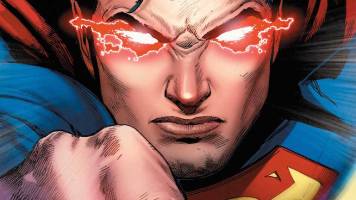
Superman: Rebirth #1 feels like a tighter book, and I’ve been waiting for several years to say that about  Superman book. Mostly, it’s a long narrative path toward telling us The New 52 Superman is dead, and the pre-New 52 Superman is going to fill the void. The effect here is a little weird. It tries to eulogize Clark Kent and convince us he’s dead, even while the previous reality’s Clark Kent is standing over his grave. I see how they wanted this to have en emotional appeal. They remind us that although we still have Clark Kent, who will be Superman again, the version we’ve known the last five years is dead. It’s hard to make that feel real, and though they try to with Lana, and showing the different relationships each Clark had with her, it’s a little too much focus on a gray area in comics. This issue was light on action, and tried to make up for it in sentiment with some mixed results. I do, however, feel like the things that happened in Superman’s rebirth issue have a better chance of mattering down the road, and that’s where the pay-off for having picked up this book came in.

For those worried about such things, I do read a few indie books, and from time to time, I’ll cover them. If I’m being honest, though, I read comics for superheroes, and that usually brings me to the big two (Marvel and DC). I don’t mean to neglect smaller publishers, and there’s a ton of high quality work floating around out there, so when something gets on my radar and I’m really into it, I’ll write about it, but more often than not, my comics involve capes and masks.

X-Men: Apocalypse

X-MenApocalypse

Jim’s Thoughts

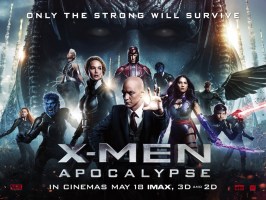
I went into X-Men: Apocalypse with the expectation for it to be “baseline good,” and I wasn’t disappointed. It didn’t exceed that expectation but it met it.

One problem I have with the X-Men comics is that they have an unwieldy roster and a deeply murky continuity. The films (or at least most of them) do a pretty good job of whittling that down and presenting a more manageable story, but Apocalypse stumbled there a bit. They try and have a lot of subplots moving at once; Quicksilver being Magneto’s son, Magneto’s attempt to have a normal life in Poland, Cyclops coming to terms with his power, Jean wrestling with hers, and Xavier meeting back up with Moira after having taken her memories of him. There’s a lot going on there, and it’s a bit too much for every component to give us a satisfying resolution.

The visuals, and the action sequences don’t disappoint. What I particularly appreciated was Bryan Singer seems to have found a nice balance between action on a massive scale and mindless “destruction porn.” By that, I mean he shows us landmarks being destroyed, cities crumbling, but it seems to have been woven more into scenes that move the plot forward.

Most of the performances were solid in Apocalypse. Sophie Turner’s British accent kept leaking through, and Kodi Smit-McPhee’s German accent came out a little cartoonish at times, and there were some quieter moments in the film where that got distracting.

Without spoiling the ending of the movie, I’ll say my biggest, non-nitpicky critique of the film was how easily things are wrapped up. Certain characters’ motivations change very suddenly, and in the end, Apocalypse’s undoing undermined the character.

As you can see, there’s plenty to pick on with this movie, but for all its faults, it held my attention, and it was genuinely fun.

Kyle’s Take

X-Men: Apocalypse worked for a big, dumb action movie, but for a kid like me, who grew up in the Deep South, undersized, of mixed heritage, and who got his ass kicked every day for being different, these newer X-Men movies don’t live up to the promise of the comic. This probably makes me sound like a social justice warrior, and I don’t care. The X-Men are the social justice warriors of the comic book world. They’re an allegory for the civil rights movement. And these were chief reasons why I was drawn to the X-Men.

Professor X and Magneto are fictional stand-ins for Martin Luther King Jr. and Malcolm X, respectively, and yet the X-Men films have done increasingly less for characters of color. Storm, Psylocke, and Jubilee are nothing more than window dressing. Alexandra Shipp (the new Storm) had more lines, screen time, and did more in her thank you speech before the movie than she did in the actual movie. Jubilee was the quirky Asian friend, going to the mall with the white kids. And while Psylocke kept her comic book look, it’s a look that objectifies women: a svelte Asian woman in a purple dominatrix suit. How can you trivialize two minorities at once when you’re supposed to be the comic book champion for minorities?

Alright. I’m done ranting for now. I agree with Jim, the comic book X-Men do have an unwieldy roster, but it’s not as much the size (hundreds of characters versus the Avengers’ thousands) as much as it is characters changing allegiance at the slightest provocation. It’s common (in the comics) to have one moment with Magneto ripping the adamantium from Wolverine’s skeleton through his pores, and have the next one showing Erik washing Beast’s jockeys and cutting the crust off of Jubilee’s PB&J. Okay. That was an exaggeration, but I did watch Magneto do laundry at the X-Mansion once. Often, these shifts are arbitrary, sudden, and/or have little pretext.

The X-Men films (with the new cast) have done a decent job of explaining and building up to these changes of heart, but X-Men: Apocalypse crowds more mutants into 150 minutes than Avengers films slap men and women into tights. Apocalypse shoves Mystique as the hero of all mutant-kind down our throats. This doesn’t do as well of a job of character development—or explaining motivation changes—as the film thinks it does. It comes off as X-Men cashing in on Jennifer Lawrence’s star-making turn as Katniss Everdeen (The Hunger Games). Mystique even hides her true blue-skinned self for most of the movie, not because she’s ashamed of who she is or she’s trying to hide but because we have to see Lawrence’s face. It’s pandering. And this doesn’t even scratch the surface of the continuity issues Jim mentioned.

I had forgotten that Days of Future Past changed the course of the X-Men storyline, but the previous X-Men movie did more than erase the awful X-Men: The Last Stand, it killed off some characters, changed the relationships of others, and warped the sequence of events for everyone. This yielded a lot of questions in Apocalypse like hey, wasn’t he/she supposed to be in a different country or be a different age or behave in a completely different manner? And that’s before we come back to the X-Men and their history with the civil rights movement.

The newer X-Men films give lip service to the group being outcasts but anyone who has had to live through any discrimination of that type can tell you that what’s in the movies is false. It’s still a joy seeing these characters on the big screen, but the X-Men films need to rediscover their roots.

Geekly Games: May 28, 2016

Geekly Comics made a triumphant return a few days ago, so I figured what the heck, let’s do a Geekly Games. But I’m not doing a full review for a while. Full reviews take a lot of time and I’d like to get a heap of plays with a game before committing to any thoughts—that’s even if my brain yields any thoughts—and my poor camera could use a break, too, so no pictures.

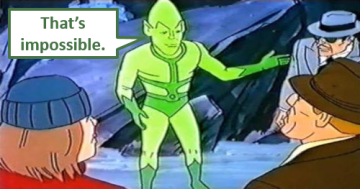
That'sImpossibleMeme

Okay. Some pictures.

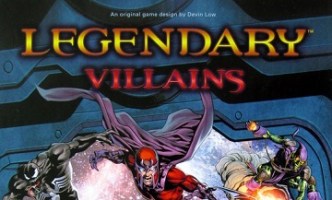
Let’s get to a game I’ve played since the last time we talked: Marvel Legendary Villains.

MarvelLegendaryVillains

Marvel Legendary Villains is a sequel to Upper Deck’s Marvel Legendary deck building game. I call it a sequel because it does more than add a few new characters; it’s a complete game that uses the same game system. I like Marvel Legendary a lot. It edges out the DC Deck Building Game because it’s more thematic, as in it captures the feel of a superhero beating down a specific villain, the mechanisms are easier to understand, and the game plays in a snap.

Marvel Legendary is also a cooperative game. With a few exceptions—like Deadpool whose cards make you question whether or not they help or hinder the group—most of the hero cards work in concert to defeat the villain. Marvel Legendary Villains may be faithful to the theme to a fault. Villains don’t work well together.

If you’re lucky, you’ll get a set of villain cards similar to Deadpool’s mild annoyances. If you’re not, you’ll end up with Loki or Ultron whose cards wreck their “teammates’” decks. Since you can pick and choose which villains you add to your game, my gaming group instituted a no Loki or Ultron rule. I’m afraid that I’m the reason for such a rule. Just because a card that can screw your “teammates” is available, doesn’t mean you have to buy it and add it to your deck.

But I keep using quotes for “teammates” because Loki and Ultron own some of the most powerful cards. It’s tempting to add their awesome power to your deck at the expense of pissing off everyone else at the table and yet, often times the only way to defeat the target hero (the roles are reversed) is to unleash an attack that hurts your “teammates” as well as the hero. There’s this delicate tightrope walk of teamwork versus your “teammates” holding you back in Marvel Legendary Villains. I love playing as the heroes, but that balancing act is intriguing.

If you want to win at least 50% of the time, don’t get Marvel Legendary Villains. The villains fail—a lot. If you want a more nuanced version of Marvel Legendary, then Marvel Legendary Villains may be the game for you.

That is if you like deck building games, so let’s look at what makes a deck building game special and what makes them tick.

BehindTheGame

Deck Building Games

Video games have it all over tabletop games when it comes to explaining rules. You have to spend a good ten to twenty minutes—if you’re lucky—going over the rules of a tabletop game to newcomers before you can start to play it, while video games have you play a tutorial or learn the game as you go. Deck builders are one of the few tabletop game types that can give video games a run for their money.

You start with a simple deck and slowly add cards that possess various abilities to your deck as you go. You still have to learn the baseline rules of the game, but deck builders use a scaffolding approach toward teaching the more advanced rules, kind of like a video game’s tutorial. I’d be remiss to not mention Fluxx here. For all the vitriol some gamers sling at Fluxx (for being too chaotic and random), it starts with two basic rules—draw a card and play a card—and builds up from there. I’d love to see more tabletop games use a scaffolding approach for teaching all of its rules, but let’s get back to deck builders.

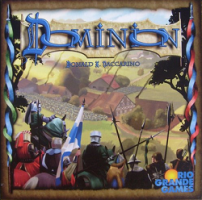
Dominion01

Even though deck building existed in tabletop games for decades, Dominion is credited with starting the deck builder genre of games because no game prior to Dominion used deck building as the game’s focal point. Dominion—like Fluxx—gets a lot of flak but this time it’s because it has little to no theme. It didn’t need one. By laying the groundwork for others, Dominion ushered in a flood of deck building games, each of which added their own wrinkle to the original idea.

Deck builders capture the strategy of building a deck—like Magic: The Gathering and other collectible card games—without forcing their players to drop hundreds–if not thousands–of dollars. The wave of deck builders has waned a bit, but deck building games is an interesting design space. A Study in Emerald added some board game elements to the genre, while cooperative deck builders, like the aforementioned Marvel Legendary, have been gaining steam. There’s even a solo deck builder Friday where you help Robinson Crusoe survive. With so many great titles already using this game type, it’ll be interesting to see what’s on the deck builder horizon.

I’ll try to keep this a weekly–or geekly–post. Thanks for reading.

Justice League: Flashpoint Paradox

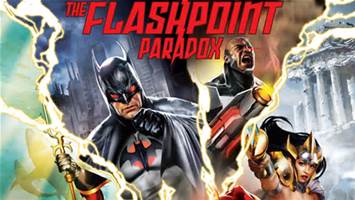
FlashpointParadox

Kyle and I have talked a bit about covering some movies from DC’s Animated Universe (DCAU). Now, with Arrow and The Flash finishing up with their respective seasons, I figure there’s no time like the present. If you haven’t checked out any of these movies in the past, you’re missing out. We’ve been hard on DC’s live action work, but the DCAU has given us some really high quality material. In the spirit of getting back to the positive things we like within our fandoms, let’s celebrate that.

Since we mentioned the Flashpoint event with this week’s write-up on The Flash season 2 finale, I decided to start with Justice League: The Flashpoint Paradox (2013). As with a lot of the DCAU, it’s sort of a repackaged, slightly condensed version of the comic book event. Just so it’s said, I won’t necessarily cover these in any specific order, so if I take some time to get to one of your favorites, don’t worry.

Ordinarily, I’m not crazy about “elseworlds” stories. By that, I mean stories that depict an alternate reality, but Flashpoint Paradox does it well. The story envisions what would happen if Barry Allen were to go back in time and prevent his mother’s murder. The answer is sort of a classic butterfly effect that sees Barry wake up in a dystopian future where not only does The Justice League not exist, but some of its members are at war.

If I were to hit the story with anything negative, it’d be to mention that the fates of members of the league are very drastically changed, but for unclear reasons. Actually, the characters themselves are entirely different, and there’s no real explanation for how Barry’s interference in his mother’s murder caused those changes. It’s addressed in a peripheral sort of way, but there isn’t much of an effort to sell the audience on that. In the end, its for the best, because it allows the story to move quicker and focus on the more interesting plot points.

The animation here reminds me a little more of the anime style. Now, let me say I’m not really an “anime guy.” I’m extremely far from being an authority on any of it. All I mean to say is the action and movements remind me of that style. It’s something I’ve seen the DCAU lean more toward in the last few years. It’s not a negative exactly, it’s just a slight change from what I’m accustomed to with earlier titles like Justice League: Doom, or Under the Red Hood (both of which I’ll cover in time).

If there’s anything else to dock this movie for, it’s that the voice acting falls flat in parts, not so much with the central characters, but in the supporting cast. There are moments, both in the buildup to the final confrontation and during it, that it got a little distracting.

This isn’t the ideal movie if you’re looking to dive into a typical Justice League story. The focus, and most of the run-time is on the alternate universe. Except for the very beginning, and a scene with Bruce Wayne toward the end, the only traditional Justice League-er you spend time with is Barry Allen, but it’s an entertaining movie, and worth your time on Netflix.

Arrow Review: “Schism”

ArrowSeason4

Jim’s Thoughts

Remember last week, when I said I didn’t have a single positive point to make about the episode? Yeah, well, Arrow decided to serve up a second helping of that. I actually mean that almost literally. Darhk got hold of Rubicon again and relaunched the nukes. Yep. It’s wash, rinse, and repeat now.

The one thing I can say for this episode is at least Oliver got to fight Darhk this time. He didn’t just guard the door while Felicity tapped at a keyboard. That was a huge part of the episode, don’t get me wrong, but it wasn’t all of it.

I think the actors got a bonus every time they used the word “darkness” in this episode, but that’s a nitpick among so many serious issues.

This episode would have felt like a mercy flush if it hadn’t ended with Felicity saying she wasn’t going anywhere. I should be sorry to see the show end, and excited for the next season, but at this point, Arrow has to start strong in the next season. They need to win me back.

Kyle’s Take

What does a guy have to do to end the world in peace?

I could pile on to what Jim has already said, but “Schism” has been universally panned. IGN, who had been giving Arrow an average score of 7.8, gave “Schism” a 3.8. Ouch! IMDB had an average score of 8.6 for most Arrow episodes, and “Schism’s” score as of this review is a 5.9. “Schism” is awful. Let’s bask in its horrendous, third grade writing level dialogue.
Felicity: Go to Hell.
Damien: Why bother? I’m going to bring it to us.

Damien: Fifteen minutes ‘til the end of the world and you want to spend them with me. I am touched.

Damien: Oh, you brought friends. That’s okay, so did I. (Cue a goofy looking action scene.)

Felicity: I’m saying that there’s a man who killed Darhk in cold blood, and that same man stood on top of a car and gave the city its hope back. What you’re feeling isn’t darkness, it’s a schism. You’re at war with two sides of yourself.

Way to work the episode’s title “Schism” into dialogue, Arrow. Perhaps you should’ve looked up the word in a dictionary before using it. Ollie may be at odds with himself but he isn’t splitting up with himself, and Team Arrow may be splitting up but it’s not because they disagree on something; they all agree that they need a break.

I need this break from Arrow, too. Hopefully, things get on the right track next season, but Arrow is on the shortest of leashes.

Thanks for reading.