Marvel’s Luke Cage

lukecagebanner

Jim’s Thoughts

Luke Cage continues the streak of solid Marvel programming on Netflix. The show manages to capture the same tone that made Daredevil and Jessica Jones so successful, but like those shows, finds enough of its own style to let it breathe and flesh out its corner of the city. There’s also plenty in the series to satisfy fans of the comics.

As was the case with Jessica Jones, the efforts to tie Luke Cage in with the rest of the Marvel Cinematic Universe are a stumbling point in the writing. The references to Loki’s attack on New York in the first Avengers movie as “the incident” feel weird, especially as its been referred to on shows like Agents of SHIELD as The Battle of New York. The constant references to “the guy with the magic hammer,” and “the big green monster” come off as coy because Thor and Hulk are household names elsewhere in Marvel stories.

Halfway through the season, Diamondback replaces Cottonmouth as the central villain, and that’s where the show loses some steam. Diamondback is referenced in conversation early on, and he looms over the events of the first half of the season, but it’s Cottonmouth who feels more developed as a character. When Cottonmouth is murdered, it almost feels like an aside to the narrative, and it’s a waste of character development. What’s worse, Diamondback, who should have come with a massive payoff, never lives up to his promise. Some of that is due to the fact that his character is motivated by “daddy issues,” and that’s disappointing, but that’s not all of it. I’d also say Erik LaRay’s performance is over the top. As Cottonmouth, Mahershala Ali has charisma, and LaRay doesn’t match it.

As a plot device, the “Judas bullets” could have worked better. Since Hammer was shown in the Iron Man movies to be an incompetent version of Tony Stark, it’s hard to take Hammer Tech too seriously. The show did need something to threaten Luke and raise the stakes, so it’s hard to get too upset about it, but they’d have done well to remain ambiguous about the manufacturer of the bullets.

Shades’ loyalty to Mariah isn’t given much context. It becomes somewhat easier to understand toward the end, when they’re both at odds with Diamondback, but in the closing moments, when they share a kiss, it became weird. I would add Claire and Luke’s budding romance to the weird factor, but it’s more forced than weird. Maybe it’s enough to say the romances on this show are not its strong point.

Mike Colter’s performance is outstanding on the show, and with only a couple of exceptions, it’s well acted all around. The ending is somewhat unsatisfying, and it didn’t do as much to set up The Defenders as it could have, but the series hit all the marks it really needed to.

Comics Update

I had quite a few books in my pull file this week, but there isn’t a whole lot to talk about in them. In the cases of most of the titles, that’s not to say they were bad, but that that a lot of the issues are somewhere in the middle of their story arcs, and didn’t see a ton of plot progression.

When it comes to Marvel, I’ve made no secret that their books are letting me down, almost across the board. Neither version of Captain America (Sam Wilson or Steve Rogers) is any good right now. The reasons are a mixture of cataclysmic stupidity in character direction, ham-fisted storytelling, and the fact they’re hamstrung by Civil War II, which is a trainwreck on its own. Both versions of Cap were in my pull this week, and I don’t have much energy for discussing either.

Star Wars has been one of the few Marvel titles I still look forward to, and #23 did a good job of maintaining the “baseline good” performance of the book. The story is being paced a little better here than some of the recent issues, though I’m beginning to wonder about the scope of some of the arcs. Remember these books are now part of Star Wars canon, and there’s only so much that can be worked in between the story beats we know. Still, it’s entertaining enough to hold my interest. While the art in these books has been a strong point in the past, it’s slipping here, particularly in the depiction of character faces. In a few panels, it’s bad enough to be distracting, but this is still one of few Marvel titles I have patience for these days.

Continuing the trend of good movies to bad books/bad movies to good books, DC put out some solid issues this week. Wonder Woman #7 saw some significant plot progress, and while it was a little oddly paced, meaning it seemed to wrap up very suddenly, it wasn’t unsatisfying. The big development comes with Cheetah in the end, and it’ll be interesting to see where they’re going with that.

Action Comics #964 continued to explore the new/old Superman’s experience in delving back into the world, and specifically, we saw him dig deeper into the mysterious, non-superpowered version of Clark Kent. They’re clearly doubling down on the mystery as Superman confirmed this version of Clark is genetically human, and beleives his version of his past, but there’s clearly something at work here, and it feels like this issue dragged its feet a bit. There needed to be something more to their trip to the Fortress of Solitude, as we didn’t really learn anything from it.

Detective Comics #941 built on the attack of “The Monster Men,” and the hurricane hitting Gotham. It did a nice job of reminding us that the team is still shaken from Tim’s apparent death, but that the attack is keeping them from grieving properly. Because we as the audience know Tim isn’t actually dead, it’s really for the best that it’s handled this way because I can’t imagine it hitting the emotional mark it would want to. Where there is a nice bit of emotion in this issue is in the depiction of Gotham Girl. She’s become a very sympathetic character, and her breakdown leading toward the big ending works well here. As with Action Comics, and maybe the other Batman and Superman books, the twice monthly schedule may be causing the stories to drag a little. This issue of Detective Comics was pretty much strictly action, and while that can be a lot of fun, it can be numbing if it happens too often. They’re not there yet, but it’s something to consider moving forward.

Bob’s Burgers: “Flu-ouise”

bobsburgersseason7

Kyle’s Thoughts

I missed the season premiere of Bob’s Burgers. I’ve got to accustomed to having cable again; I’m trying to get caught up. Sorry for the late write-up.

Anyway, “Flu-ouise” gave us another very good musical episode of Bob’s Burgers. This show has a knack for switching to the musical format and keeping the focus on its characters. Fox cartoons have a history of doing this with Simpsons and Family Guy. Family Guy has done the best job of the musical episode form, but Bob’s Burgers—with Linda and Gene who naturally lend themselves to sung dialogue—gives the Seth MacFarlane cartoon a run for its money.

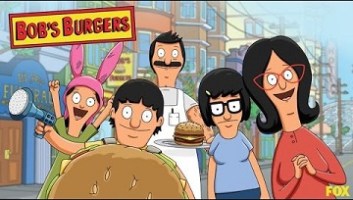
The musical form may be used as a gimmick in Bob’s Burgers, not unlike Family Guy, but the focus of the episode is rooted in its characters. In “Flu-ouise,” the titular Louise suffers from a nasty flu. When her family tries to tend to her needs and wants, they accidentally drop her favorite toy Kuchi Kopi in the toilet. As the family races to fix—or buy her a new—Kuchi Kopi (glow worm-like cuddle buddy), Louise goes on a fever dream journey, and cue the musical. Stuffed animal versions of the Belchers sing their way to Louise forgiving them, and when “Flu-ouise” ends, Louise learns that she has to let the small stuff go.

We’ve seen Bob’s Burgers use this narrative structure before, but it works. “Flu-ouise” offers a strong start to Bob’s Burgers seventh season. Its sixth season showed a few cracks but finished strong. I’m hopeful for another great year. Thanks for reading.

Comics Update

Now that I’m more-or-less caught up on comics, I’ll try to go into a little more detail about some of the specific books I’m reading. That may get tricky with DC’s more aggressive publishing schedule, but we’ll cross bridges as we trip over them.

I’ve been down on Marvel’s books lately. I’m not sorry for it. I stand by my criticism, but I’d like to point out the good things where I see them. Two bright spots in my Marvel reading have been Daredevil and Amazing Spider-man. Amazing Spider-man #18 saw a little more development on Doc Ock’s efforts to return to human form. It’s been teased from issue to issue, and now it looks like they’re getting ready to make it happen. For an issue that featured so little actual Spider-man, this one really worked for me. It was light on action, but the focus was tight, and it set up the next bend in the story arc well.

Superman #7 was one of the better issues of Superman I’ve read in some time. As with a lot of his stories since Rebirth, the story dealt mostly with the new/old Clark finding his place in this new version of the world. The setting was small, and again, it went light on action, but this issue was heavy with character, and that character was extremely recognizable as the Clark and Lois that fans know and love. Clark is burdened, but he never broods. He’s the optimist he’s always been, and it’s done without making the story cheesy. This is exactly how reading a Superman comic should be.

Batman #7 set up the Monster Men event that’s been teased since Gotham and Gotham Girl first cropped up. The focus on the Bat Family, and reference to Tim Drake’s stand against The Colony made this feel a bit like Detective Comics, so some of that distinct feel that has existed between the two books is blurred, but it’s not a bad story, and there’s no reason there can’t be overlap. Like everyone else reading comics these days, I’m tired of “Event” story arcs, but this one shows a little potential.

Trinity seems to be DC’s effort to cover Batman, Superman, and Wonder Woman in one book. Normally, I stay away from titles where the artist does the writing as well. I hate to generalize, but I usually find a considerable lack in the art, the writing, or both. I like Francis Manapul, though, and I gave this one a shot. It was entertaining enough, though it didn’t do a lot to set up a future story for the title. Until the book’s last couple pages, it really just catches readers up on the status of each character, so if you’re reading Batman, Superman, and Wonder Woman individually, as I am, there isn’t a lot here for you.

Comics Update

Well, as you may have noticed, I fell behind on my comic book posts again. Part of that is because of my personal schedule, and part of that is due to DC’s publishing schedule. DC has been publishing all of their top tier books twice a month instead of monthly. Ordinarily, that would be a terrible sign, especially on a couple of books that have had multiple artists, but I’ve found the results to be shockingly good so far.

For me, the big winner has been Wonder Woman. Since the end of Brian Azzarello’s run, the character has suffered, but Rebirth, and the work of Rucka and Finch has made it one of the better books going right now. The artwork is phenomenal, and Rucka’s writing is exploring Diana’s character and fleshing her out in ways she hasn’t been since much earlier in The New 52.

Both Superman and Action Comics have also revitalized the man of steel, and that’s refreshing after what the movie by that name did to the character. Both books have put a lot of emphasis on Clark’s family, and making young Johnathan the new Superboy. I’m more interested in seeing the new/old Superman find his place in the Justice League, but the family material hasn’t been so oppressive as to drag the story down.

Detective Comics and Batman have done an incredible job of offering distinctive looks at Batman and the Bat family. Detective Comics has put its focus on the wider Bat family, and that’s been great for recapturing the relationships between Bruce, Tim Drake, Stephanie Brown, and other characters The New 52 wasn’t overly kind to. For more of a straightforward dose of Bruce Wayne, Batman has filled the void. It’s a different feel from Scott Snyder’s run with Greg Capullo, and while I miss Capullo’s take on Gotham City, I like the story moving away from the horror-esque vibe of Snyder’s work.

On the Marvel side of things, there isn’t a lot to report. Daredevil has been solid, as has Amazing Spider-man. Those are two of the books least impacted by the events of Civil War II (which I’ve ignored as much as possible), and also two books that haven’t had massive status quo shifts that either replace or betray their characters. Blindspot’s dynamic with Matt in Daredevil has been compelling, and in my opinion, a far less ham-fisted attempt to explore social issues, specifically immigration.

I’ll try to keep more current on comics as they come out, but in the meantime, that’s more or less the state of things. It seems DC and Marvel are in different positions. Marvel is making brilliant movies and poor comics while DC makes terrible movies and solid books.

Suicide Squad

SuicideSquad

Kyle’s Thoughts

Seen in a vacuum, Suicide Squad is a flawed action movie. Add the context of Suicide Squad as part of the DC Comics Cinematic Universe and you get a watchable—even enjoyable at times—movie. Suicide Squad is painful at moments, but unfortunately, it’s zero-gravity, moon leaps better than Batman v Superman and Man of Steel. I guess we can be thankful for small favors.

There are things I liked about Suicide Squad. Will Smith made a good Deadshot, and the incomparable Viola Davis made a near-perfect Amanda Waller. Jai Courtney’s Boomerang and Adewale Akinnuoye-Agbaje’s Killer Croc were good performances too, despite the fact that we saw little of them. I even liked some of the moments with El Diablo (Jay Hernandez), even though his character’s dialogue and backstory were heavy-handed at times. See, it’s a flawed movie, even in the parts that were working in the film, but the worst parts of the movie were Joker (Jared Leto) and Enchantress (Cara Delevingne). They were awful.

Enchantress was hokey and didn’t work well as the main threat, but Leto’s Joker is easily the worst portrayal of the character to date. There’s no humor to him. Now Joker’s not supposed to be funny to the audience/reader per se, but he should find his own sociopathic antics funny. There was none of that in Suicide Squad. In fact, Leto’s Joker created a twisted family and frankly, he was too kind to Harley Quinn. I know fans like to romanticize Joker and Harley, but Joker’s abusive to her. He sees her as an object, not a person. So, why would Joker go to the hassle of trying to rescue her? There could be reasons—she could have something he wants/needs—but Suicide Squad chose love, and that’s just wrong.

Suicide Squad also had the prerequisite action and special effects for a film of its nature. With the exception of Joker’s appearance—I still think he looks like a Juggalo—and Enchantress’s Cabbage Patch the demons to do her bidding, Suicide Squad is a slick-looking movie. And yet we can find another problem with the movie in this arena. The editing made little to no sense. Flashbacks were fit into the film at odd times (near the end was the most jarring), and that detracted from the experience.

This was a fun experience, but it lacked the same level of fun you could find in Deadpool. I think that’s because Deadpool had no desire to fit into a cinematic universe, while Suicide Squad tried to resuscitate hope in DC Comics films. To be fair if DC Comics movies continue with Suicide Squad’s upward trend, we could have a good movie by Wonder Woman or Justice League.

Jim’s Take

Kyle thought I should do the spoiler-y take on Suicide Squad. There’s not a ton to spoil here, but just for the hell of it, the butler did it! Okay, there’s no butler, but you get the idea. Some spoilers may follow.

If you go into Suicide Squad hoping the critics are wrong, you may be a little bit disappointed. The critics are not wrong, but they are, in my humble opinion, drastically overstating their cases against the movie.

Suicide Squad is not as good as you hoped it would be, but it’s not nearly as bad as the critics are saying. It held my attention for two hours. Unlike Batman v Superman, it wasn’t just a long, unrelenting effort to bum us out, and I was entertained.

The worst parts of the movie are Enchantress and Joker. Enchantress is an undercooked villain whose motives are never explained beyond a generic desire to rule and/or destroy the world. The performance is over-the-top, and once it becomes a CGI fest during the final showdown, it gets pretty awkward to watch.

If you follow me on twitter (@JimPlath), you probably know I haven’t been a fan of the Joker’s new look. The movie did nothing to win me over. Part of that is still the look. Leto explained the character is highly influenced by cartel kingpins, and that shows in the worst ways possible. In short, he looks too much like something we’ve seen before, too much like something we can wrap our minds around. Cartel kingpins are motivated by all the things we expect, and as far as we can tell, so is this version of the Joker. When done right, it should be shown that everything the Joker does and says, is done and said because he thinks it’s funny. There’s really none of that here, and Leto’s performance as well as the writing are to blame. Watching Leto reminded me of being at a party and seeing someone do their best impression of the Joker to improvised lines. It was off-putting in all the wrong ways.

Kyle’s point about the relationship between Harley and Joker is spot on. This movie shows the Joker pining for Harley, a wreck while she’s missing, driven to find her. It feels like pandering to the shippers online who somehow believe anything about Harley and Joker’s relationship is romantic. It probably wouldn’t bother me so much if it weren’t such a very toxic message to send. In the end, they needed to give Joker an ulterior motive for wanting to find Harley, because in truth, Joker does not love her.

Harley herself is well done, and she shines when Joker isn’t on screen. In these moments, the film cracks some jokes and lets itself have a little personality.

Deadshot is also a bright spot in the film, and while I think the movie goes a little too far in trying to make him “not such a bad guy deep down,” it works more than it doesn’t.

With the possible exception of El Diablo, whose story is spoon-fed to us, the rest of the squad mostly disappears, Actually, Slipknot’s sole purpose for being in the movie is to have the bomb in his neck detonated to show Amanda Waller isn’t bluffing.

In the end, I think Suicide Squad succeeds because it doesn’t take itself too seriously. Seeing a film like Batman v Superman is something like listening to someone spout bullet-points from Philosophy 101, boast about their IQ of 160, then smack their head attempting to push open a pull door. Suicide Squad hits its head on plenty of doors, but it gets up, takes a bow, and says “I also do Bar Mitzvahs, folks.” It’s easier to forgive that way.

Suicide Squad makes me hopeful for the future of the DC film universe. It also reminds me of how much I hated Batman v Superman. Seriously, Batman killing people? If Batman were ever willing to kill, I assure you the Joker would be dead, but let’s not open that can of worms again. When Batman v Superman opened, and received the backlash, Suicide Squad was mostly finished. Yes, the editing was baffling. Yes, Joker was horrendous. Yes, Enchantress was awful, but it’s a step in the right direction.

Stranger Things

StrangerThings

Kyle’s Thoughts

Remember the Eighties? He-Man, Rubik’s Cubes, Trapper Keepers, MTV playing music videos, and Toto’s “Africa”—“I bless the rains down in Africa”—were totally rad in the Eighties, and they can be found in Stranger Things. Do you also remember those Staples commercials where someone presses the “Easy” button? That’s what Stranger Things does when it evokes Eighties nostalgia. Stranger Things is baseline good; it’s not great.

Warning: there may be spoilers ahead.

Stranger Things is difficult to review. It is good and received overwhelmingly positive reviews. One reviewer even likened it to David Lynch’s Twin Peaks. I started the series with high expectations, but Stranger Things is definitely not Twin Peaks.

It’s as if the Duffer Brothers (Matt and Ross Duffer) took several beloved Eighties properties, cut them up, and pasted them back together in different ways to form Stranger Things. The young girl with powers is ripped out of Firestarter—right down to her narrative arc. The beast/antagonist is a Sci-Fi version of the spirit in Poltergeist—right down to it keeping its victims in an alternate plane of existence. The group of boys borrows traits from the group of boys in Goonies and Stand by Me; there’s even a scene that’s close to a one-for-one recreation of a Stand by Me scene. And that’s before you include scenes that would’ve been at home in any Brat Pack movie, Back to the Future, or ET.

Stranger Things hits its easy nostalgia button so often that there may not be much in terms of character or plot development besides “remember the Eighties?” cropping up every five or ten minutes through most of its first season. When one of the characters isn’t a cardboard version of an Eighties property, they’re purchased from Costco’s stock movie character aisle. Winona Ryder’s mother is a generic, single mother worried about her son. Then there’s the social outcast teen, the popular kids, and just about every other stock Eighties character you could want. Sure, they’re Eighties characters, but they’re still stock characters.

Okay. I could go on about how Stranger Things’ plotlines are thin and how it pads its story with Eighties nostalgia, but I’m done ranting. Besides, there might be something more going on with these characters beneath the show’s layers of Eighties references, but mimicking Stand by Me and the like should at least make you wonder if Stranger Things spent enough time developing these characters, or if Stand by Me (and the rest) developed their kids, and Stranger Things is hitching a ride on the Stand by Me Express.

Regardless, Stranger Things is a well-executed show. It does a good job of pacing, the special effects are top-notch, and viewers can find a character they can relate to in the show and root for them.

During season one’s final ten minutes, Stranger Things fast-forwarded time a month—something you’ve heard me say that I don’t like in the past—but I think the skip worked here. We’re left with some interesting choices made by a couple of characters, namely the ingénue and the Judd Nelson replicon, that could be expanded on in a second season. These choices run counter to how you’d think an Eighties movie/TV show would take its characters.

Stranger Things does a great job of recreating the Eighties. Heck. They painstakingly recreated the Eighties. If you search Google for “80s references,” Stranger Things will dominate the first ten search pages. I’ll admit that I smiled when I caught an Eighties reference in Stranger Things, but I wanted the show to do more than ape the Eighties.

If you love Eighties nostalgia, you’ll love Stranger Things. If you like Eighties nostalgia but want something that will push narrative and characterization boundaries, you may be disappointed.

This Week in Comics 8/3/2016

I’ve been traveling recently, so I’m a little behind on my comics this week. I haven’t read everything from my pull file yet, but I’ve got at least a few titles that are worth mentioning.

Superman #4 gave us a pretty interesting showdown with Eradicator. It was a really action-heavy issue, and the artwork carried it off nicely. Issues like that often lack for story and characterization, and while there’s truth to that here, the inclusion of the “ghosts of Krypton” kept things from being a bland punch-fest. It’s an interesting enough installment that caps off what was started in the last issue, and maybe hints at what’s next. I enjoyed it, but I’m starting to wonder if the twice monthly publishing format is causing some of these books to drag their feet a little.

Batman #4 inched things forward this week too, though it’s a little disorienting at the start. The confusion lies in the fact that this issue doesn’t really pick up where #3 ended. It gets there, but it took me some time before I was sure I hadn’t somehow skipped an issue. When I got settled into it, I was happy with what I read. Gotham and Gotham Girl continue to be interesting characters for me, and Hugo Strange can be a great character when he’s well-written, so I’m excited to see what this creative team will do here. After Scott Snyder’s Robo-Bat-Gordon sendoff, it feels really good to get back to a more recognizable Gotham City. That’s what this arc is achieving so far.

Kill or Be Killed #1 is the latest Image project from Brubaker/Phillips/Breitweiser. This is a creative dreamteam in my estimation, so it was a definite read this week, even if I have been critical of Brubaker’s last couple issues of Velvet. What’s strange for me about this book is that its premise is so much more interesting than its characters. At the beginning it reads like the script to a bad indie film. Guy struggles with depression, his roommate starts sleeping with his best friend/secret crush, and he tries to kill himself. The main character is beacon of angst, and he’s quite dull to read. It isn’t until the plot turns supernatural that I cared about any of it. After his failed suicide attempt, he’s visited by a demon who tells him he must kill one (supposedly bad) person every month in payment for the second chance he was given. That’s how the title of the book becomes literal, and what mostly saves it for me. In the longrun, I’m going to need some significant character development to keep me interested, but for now I’m at least curious enough to give it some time.

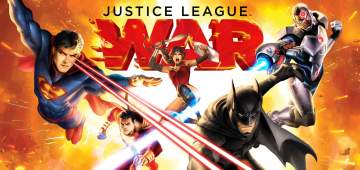
Justice League: War

JusticeLeagueWar

Kyle’s Thoughts

DC’s animated movies are far better than their cinematic universe, but Justice League: War doesn’t live up to the quality of other DC animated films. I liked how most of the Justice League are already doing their super hero thing—we were spared watching Batman’s origin story for the trillionth time—but there isn’t much to like in Justice League: War beyond a good cast, who were miscast for the most part.

These versions of Superman, Batman, Wonder Woman and the rest come from DC’s the New 52, and Justice League: War gets its story from Geoff Johns’ Justice League: Origin. I guess “war” sounds tougher than “origin.” Too bad they didn’t change the story to go along with the name change; this is not one of Johns’ better stories. The plot is thinner than vaper.

There may be spoilers so consider yourself warned.

DC Comics’ favorite—and over-used—villain Darkseid invades Earth because he wants to invade Earth. If you want a more complex reason for his invasion, you’ll have to invent one yourself because it’s not there. Justice League: War transforms Darkseid from the intelligent, conniving overlord he is to a mind-less brute, and the Justice League tasked to defeat him are snot-nosed, unlikeable variants of the characters fans have grown to love.

This Superman doesn’t fight for truth and justice; he wants to break stuff and smack people. This Wonder Woman is a dumb, petulant child who’d rather hack and slash through her enemies, instead of the Wonder Woman who’d learn from them. Plus, the scene where Wonder Woman freaks out over tasting ice cream for the first time wasn’t fun, cute, or funny; it was painful. This Green Lantern continues DC’s cinematic trend of copycatting Marvel’s Iron Man, but his sarcasm comes off as mean and stupid instead of smart and cocky. Shazam, the hero who was formerly known as Captain Marvel, and his alter ego Billy Batson is a strange case. Billy Batson is a brat who calls his foster family stupid, even though it’s clear they care for him, but Shazam (voiced by Sean Astin) manages to eke out some likability; I’m putting that on Astin’s voice acting instead of the writing. The remaining three Justice Leaguers fair better but they’re far from perfect.

The Flash was serviceable but forgettable. Cyborg was done well enough, but his origin story was squeezed into the half-baked invasion plot. Jason O’Mara did an okay job with Batman—an animated Batman sounds odd when he’s not voiced by Kevin Conroy—but Batman was portrayed as a video game player who set their game on very easy or cupcake, had infinite ammo, and could do no wrong.

As for the rest of the voice acting, Alan Tudyk’s voice couldn’t pull off this Superman design—Supes was too bulky. Michelle Monaghan doesn’t sound like the Wonder Woman who just came from Themyscira; she sounded more like Lois Lane. And Justin Kirk’s high-pitched frat boy could fit Guy Gardner, but doesn’t come close to Hal Jordan’s Green Lantern. I like a lot of these actors, but I kept wondering if this cast had done another DC animated film, and they stayed in the recording studio for Justice League: War.

Getting back to the story—or lack thereof—the misrepresentation of these iconic characters wasn’t the only thing against the script. The writers decided to age up the story by including casual swearing. I’m okay with casual swearing—hell, I add in some swears for good measure from time to time—but adding in “whore,” “douche bag,” and the like to a script is a teenager’s or pre-teen’s idea of making something more “grown-up.”

Give us complex characters. Even the bit characters like the guy protesting Wonder Woman could’ve used more development. He could cross-dress as Wonder Woman in private (Wonder Woman finds out about this when she uses her Lasso of Truth on him), but that shouldn’t be the reason why he’s protesting her. Could he be afraid of someone with too much power and he wants to emulate her? Throwing in a reference to cross-dressing without using it as pretext to why you’re doing what you’re doing (Wonder Woman did use the Lasso of Truth, not the Lasso of Half-truth) or adding context is just another way to pander to the audience and add artificial shock value. Give us more complex characters like the characters in this film, only how they’ve been portrayed in the comics not named Justice League: Origin. And don’t make Darkseid an intergalactic Solomon Grundy.

I can see why Jim skipped this one. You should too. Thanks for reading.