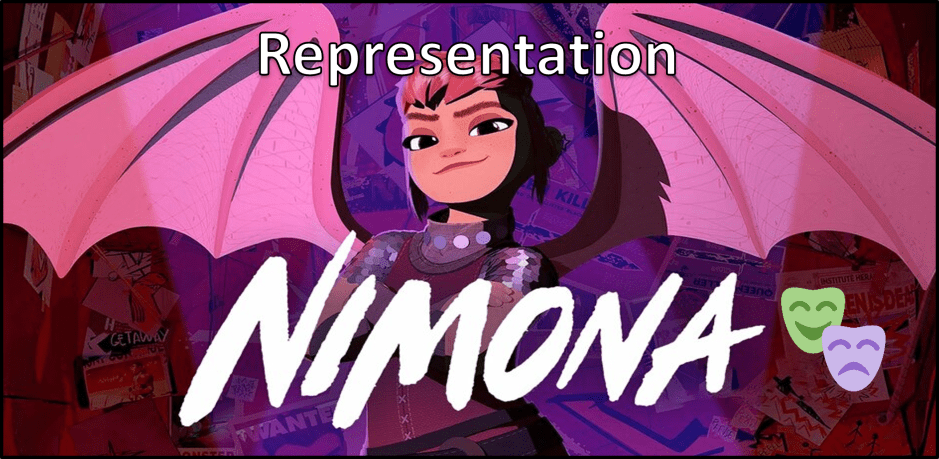
Transgender Representation: Nimona

Hey, hey, Geekly Gang! Kyra Kyle here. Today, we continue our deep dive series on transgender representation in media. Dead End: Paranormal Park was our last deep dive in this series. We’re in the middle of the holidays, so I figured we’d cover a movie instead of a series. Nimona began as a 2015 graphic novel of the same name. Nimona highlights queer themes and fluidity of identity and how they oppose and subvert traditional controlling institutions and exclusionary systems. Wow! That sounded clinical. On a personal note, I identify as gender queer, something akin to nonbinary, so I can see myself in Nimona.

Nimona features a lot of great storytelling. Most main characters go through a satisfying arc that fits in the film’s overall theme. Early on, Nimona includes details that take on new meaning during a second viewing. This is always welcome. Specifically, dialogue like “Go back to the shadows from whence you came” hits differently each time in Nimona. In short, I haven’t seen an animated film this refreshing since Shrek and early Pixar movies. I could continue with how much I love Nimona’s story, but that’s not the purpose of this post. It’s time to break down Nimona’s transgender–and more specifically gender queer/nonbinary–representation.
Spoiler Warning

There’s no way I can cover this subject without major spoilers. Nimona is a Netflix original film; feel free to watch Nimona before reading. With that said, you’ve been warned.

Gender Non-Conformity and Other Queer Themes

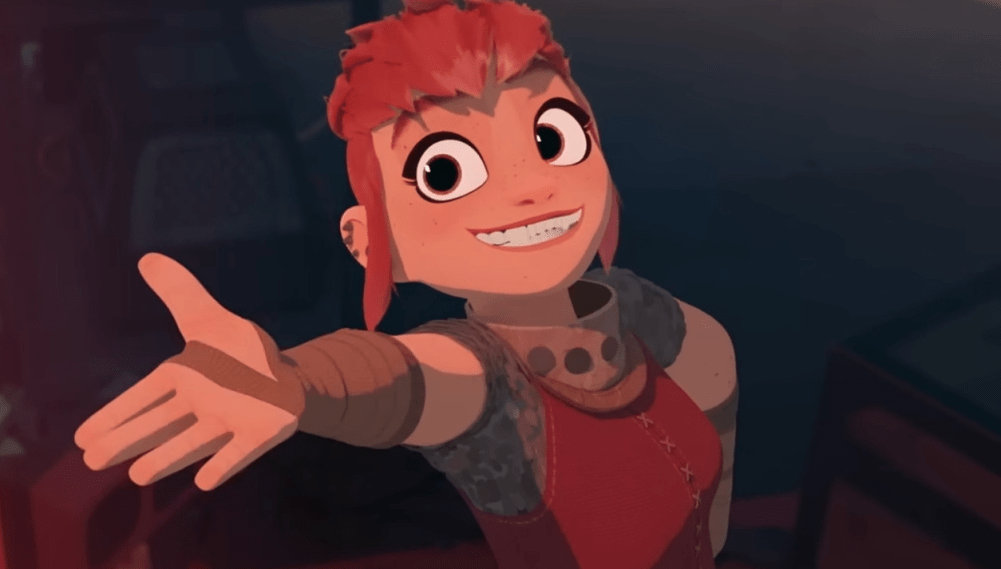
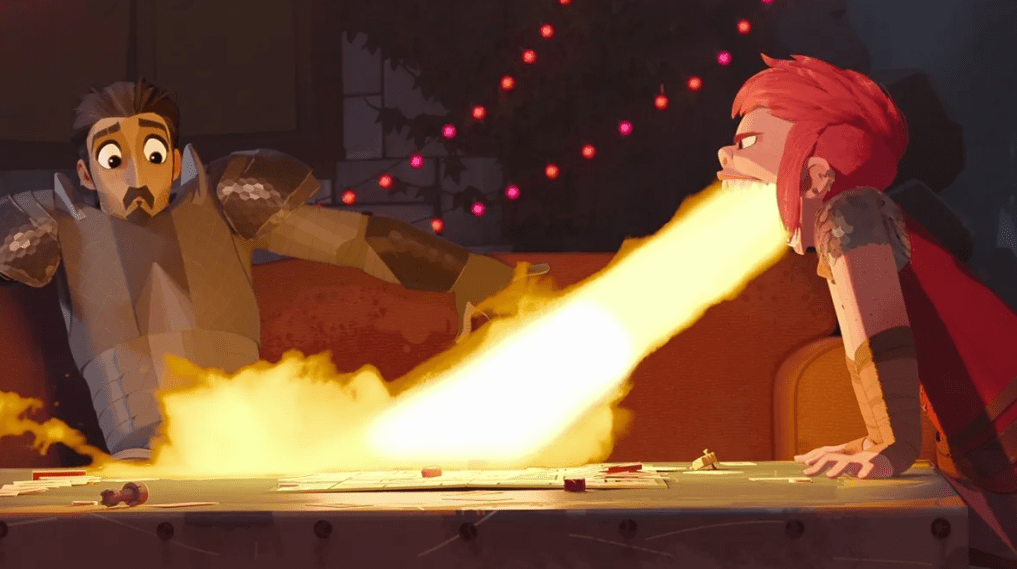
We’ll view Nimona through various lenses, but before we get into how others view the title character Nimona, we need to discuss who Nimona is. Nimona is a shapeshifter.
Gender and Pronouns

Nimona doesn’t identify as any one gender, and because of that, I’ll be using they/them pronouns for Nimona. To be fair, Nimona avoids using pronouns at all. They’d probably say their pronouns are Nimona/Nimona. Perhaps Nimona’s pronouns are Ni/Nem. I’ll use Nimona instead of pronouns as often as I can. I wouldn’t want Nimona breathing fire on my scalp.

Nimona definitely doesn’t identify as a “girl.” Ballister constantly tries to dub Nimona as a girl. Most people who interact with Nimona use she/her pronouns if they want to be nice, but there are a few people who use the pronoun it for Nimona. The main antagonist, The Director, almost exclusively uses it for Nimona.

But I do like how Nimona seems unfazed by anyone misgendering them. Sorry if I used the wrong pronoun, Nimona. Not the scalp. Nimona goes with the flow, no matter which pronouns Nimona hears. Not even it/its upsets Nimona in an overt way. Even so, the pronoun it suggests the person using the pronoun sees Nimona as the one word Nimona hates to be called most: monster.
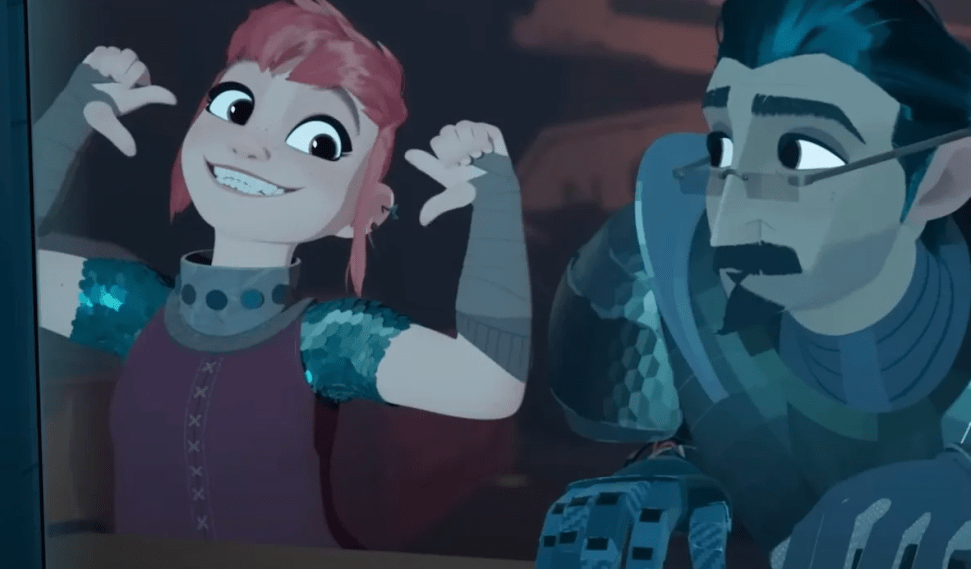
“Who has four thumbs and is great at distractions?”

Gender Fluid

I always loved Ranma’s ability (from Ranma 1/2) to switch from a masculine form to a feminine form with the touch of cool or warm water. This ability to change gender on a whim spoke to me when I was younger. I think it does for most gender queer people. In fact, Maia Kobabe (ey/em pronouns, pronounced like they/them with the “th” taken off) in eir graphic novel Gender Queer, mentions Ranma 1/2 by name when ey mentioned the media that inspired em to find emselves.

Ranma 1/2 was one of the stories Kobabe read when ey were still an egg. Note: “Egg” or “Egg Mode” is LGBTQ+ slang to describe transgender individuals who do not realize they are a transgender person yet, or are in denial about being a transgender individual. Extra Note: Gender Queer: A Memoir by Maia Kobabe is a must-read for gender non-conformity; Ranma 1/2 is a fun read in its own right.
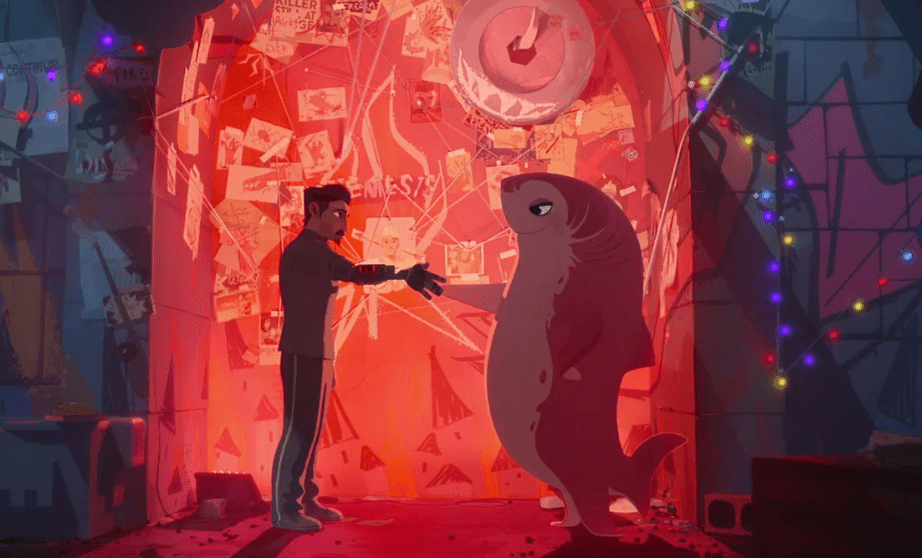
Nimona’s ability to shapeshift into almost any living being taps into a similar primal desire for a gender queer egg. I like how Nimona uses its title character’s ability as an allegory. The entire film does a great job of tackling difficult issues through a fantasy setting. That’s the power of fantasy. Since Nimona can shift into almost living being, the film gives Nimona plausible deniability. In short, Nimona is gender queer coded.

And yet, there is one moment Nimona outright drops pretense, and I love it. When Nimona and Ballister go to the market to kidnap the Squire, Ballister chastises Nimona for shapeshifting. Nimona shifts to a gorilla. Ballister scolds Nimona. Then, Nimona shifts into Nimona’s typical form. Again, Ballister scolds Nimona. Nimona blows up. “You want me to shift, then you don’t want me to shift. Pick a lane.” Then, Nimona transforms into a little boy, and Ballister laments, “And now you’re a boy.” Nimona says, “I am today.” That’s a perfect moment for certain gender queer, gender fluid, or nonbinary people. Heck, I feel like that often. Too bad I can’t morph into a gorilla or dragon. I pick dragon.
Wouldn’t It Be Easier if You Were a Girl

Nimona has plenty of relatable moments. Nestled between a few action sequences, you’ll find two quieter moments: one on the subway train and the other in a shady part of town after Nimona and Ballister kidnap the Squire. The subway train scene is the first time Nimona and Ballister slow down to get to know each other.

Ballister: Can you please be normal for a second?

Nimona: Normal?

Ballister: I think it would be easier if you were a girl.

(I skipped a few lines) Nimona: Easier for who?

Ballister: Easier for you. A lot of people aren’t as accepting as me.

I’ve heard what Ballister said more than once. Wouldn’t it be easier if you picked one of the pre-approved genders? It would be easier for you. Translation: it would be easier for the person asking me the question, not easier for me. I know who I am, just like Nimona in this scene. Ballister would continue questioning how Nimona became Nimona. He wants to–in his words–know “what” he’s dealing with. Nimona feeds Ballister a story that turns out to be rooted in truth. The Kingdom’s ultimate hero, Gloreth, rejected Nimona when they were children.

Nimona could’ve always had their powers and doesn’t know where these powers originate. We never see anyone else with Nimona’s shapeshifting ability during the film. Others with Nimona’s abilities may also be in hiding. Or Nimona could be an original.
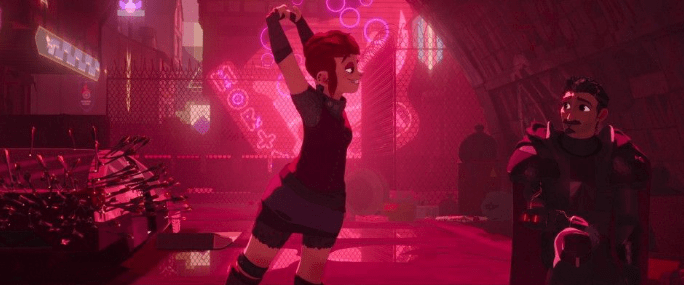
What is original is how Nimona describes their need to shapeshift. I’m sure I’ll mention this scene again, you’ve been warned. I love how Nimona describes shapeshifting. It comes close to how it can feel for a gender fluid person. “I feel worse when I don’t do it (shapeshift), like my insides are itchy. You know that second right before you sneeze? That’s close to it. Then I shapeshift, and I’m free.”

Nimona adds that they could not shapeshift, but they wouldn’t be living. This is why it isn’t easier if Nimona was a girl. Nimona is Nimona. Nimona needs to shift. It’s like asking someone not to sneeze when they have the urge. It hurts.

Nimona wears its queer identity on its sleeve, but it does so in subtle ways. This works to give Nimona a wider potential audience. Nimona does an incredible job of depicting life as a gender queer/gender fluid/nonbinary person. But Nimona explores more of the LGBT+ community.

Goldenloin and Boldheart

Nimona doesn’t shy away from Ballister Boldheart and Ambrosius Goldenloin’s homosexual relationship, and that’s great. Ballister and Ambrosius’s relationship is front and center. This works, especially after Ballister becomes a fugitive. The Kingdom views Ballister as a villain. Even though this role change is due to Ballister being framed for the Queen’s murder, it works on another level because of Ballister’s sexual orientation. Modern society isn’t that far removed from viewing homosexuality as deviant or even a mental illness. And many countries and religious/political zealots still view homosexuality as against the natural order.

Nimona drives this point home after Ballister defends the Kingdom. He claims that certain people are to blame for his getting ostracized, while Nimona insists the entire system needs to change. According to Nimona, the controlling institutions that run a Kingdom that would hunt a “villain” like Ballister and a “monster” like Nimona should be challenged. Amen, Nimona, amen.

Ballister is Still Repressed

Despite Ballister fully embracing his sexual identity, he’s still repressed. Nimona mentions how brainwashed Ballister has become after his knight training. Ballister seldom lets himself go until he’s spent plenty of time with Nimona. Nimona helps Ballister break out of his shell. Nimona affords Ballister the means to take a critical look at society and question everything. In short, Nimona lets Ballister “Unclench his mustache.”

We’ll talk about the wall and how no one, not even Ballister, has seen what’s on the other side of the wall. The people of the Kingdom as a whole are repressed.

Other Queer Representation

Nimona includes so much queer representation. Here are a few short segments. During the closing credits, Nimona literally breathes a rainbow flag of fire. The film’s color scheme tends to lean toward the colors of the transgender flag: pink, white, and light blue. RuPaul is one of the news anchors. RuPaul for the win. “Sashay away” turns into “A knight who might not be right.” I’m probably missing dozens more queer references. Feel free to add any you found in the comments.
Fluid Identities Versus Controlling Institutions

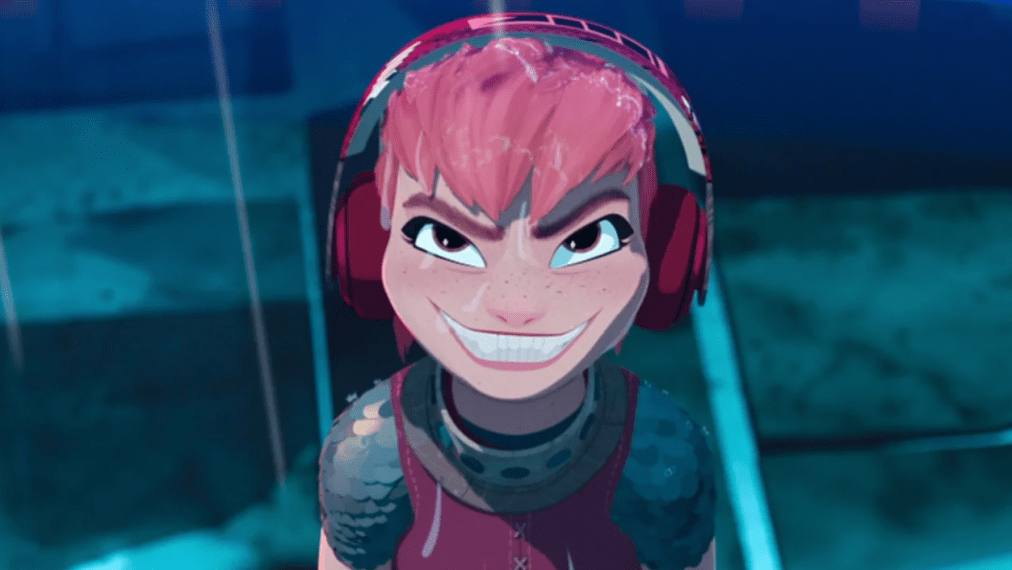
Our next lens returns to that clinical definition I spewed in the opening: controlling institutions. Nimona shows how controlling institutions quell fluid gender identities in many ways. We’ll begin with the piece of dialogue I also mentioned near the beginning of this post. “Go back to the shadows from whence you came.” During Nimona’s opening, this line is given like a storybook. Think classic Disney animated films. Nimona’s opening has Warrior Queen Gloreth–or rather Nimona reading the story–heroically deliver this line. Eventually, we learn this line is what a child Gloreth says to her friend Nimona. This story thread shows how fear of someone with a fluid gender (or gender queer) is a learned behavior.
Learning to hate differences

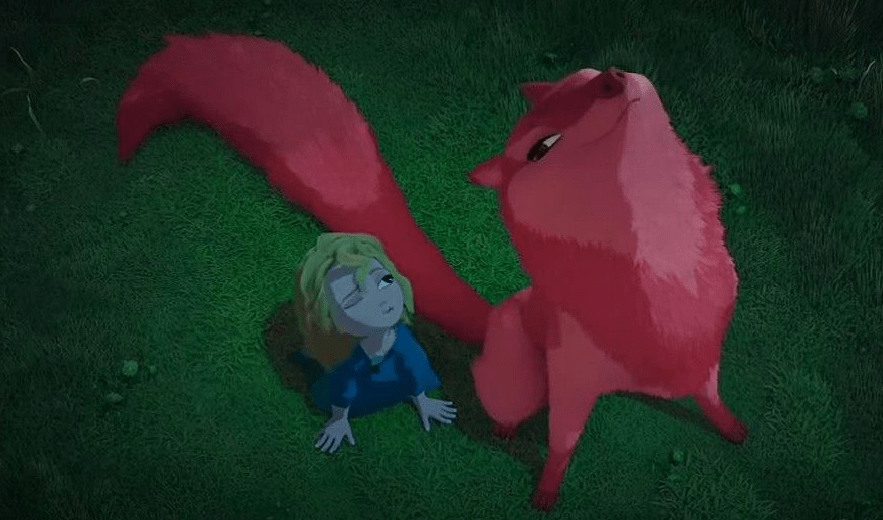
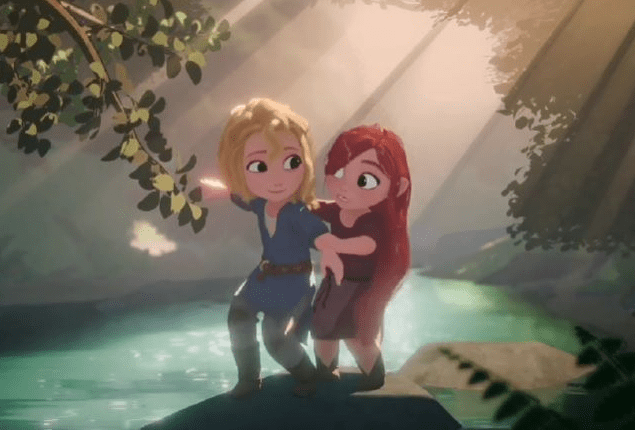
Gloreth and Nimona begin as friends. Gloreth doesn’t think it’s weird or dangerous that Nimona can transform into other creatures. In fact, Gloreth thinks it’s fun riding Nimona as a horse and swinging from tree to tree with gorilla Nimona. Gloreth doesn’t view Nimona as dangerous until her parents teach her to fear Nimona.

Society has a nasty way of perpetuating stereotypes and demonizing people who differ from societal norms. The fear of going against societal norms keeps people in check. Societal norms (or peer pressure on an institutional level) keep people under control. Nimona does a great job of showing how society can demonize others, while also shining a light on a Kingdom ready for change. Sure, Nimona tells us and Ballister (Nimona’s “boss”) that once someone sees you one way, they’ll never see you as anything else, but Nimona shows us how Ballister changes how he views Nimona. And I like how Ballister is the first commoner turned knight, a position historically held by nobility in the world of Nimona. This shows the Kingdom is ready for change.
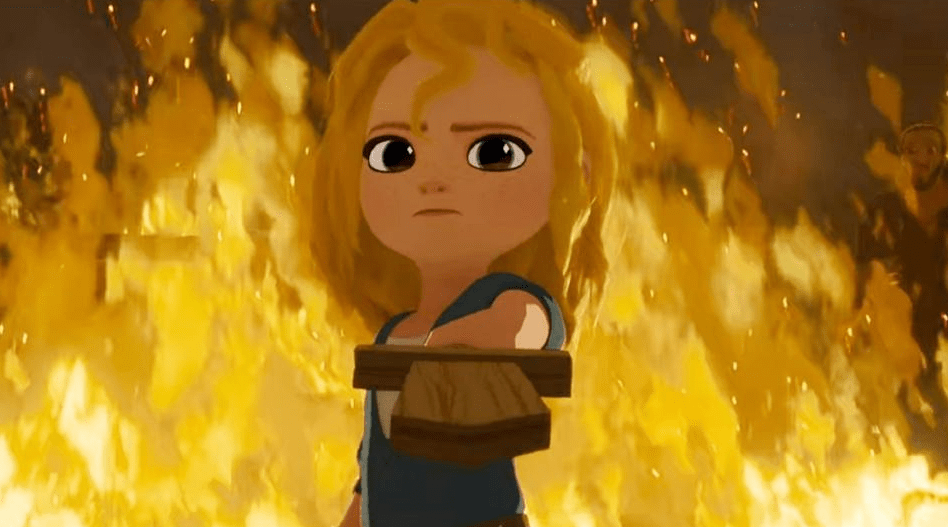
People have a habit of hating people who are different. Divorced from outsider influence, Gloreth accepts Nimona. She even revels in the two’s differences. Gloreth’s parents fear Nimona because of their differences. Gloreth attempts to stand up for her friend, but she can’t prevent the village from attacking Nimona. The mob inadvertently sets their own village on fire. I like the imagery of attacking Nimona, resulting in attacking oneself. Humanity grows the more we allow individuals to be themselves. We all have our differences; we should revel in them. As the village burns, Gloreth picks up a toy sword and utters the line, “Go back to the shadows from whence you came.” This line hits differently each time it shows up in Nimona. During the opening, the line is told like a warm and familiar fairy tale. Here, the line is cold and heartbreaking. Relegating queerness to the shadows is one of the ruling institutions’ insidious methods of control.
Life in the Shadows

When they targeted the Institute for Sexual Research (Institut für Sexualwissenschaft), Nazis burned decades–if not over a century–of books on transgender studies in 1933. Modern radical religious groups and far-right political zealots view transgender people as a fad, something that hasn’t existed for long, even though transgender and gender queer people predate Nazis by at least several decades. Even today, governments sign executive orders, legally limiting the number of genders to only two. Thank you, Trump.

In truth, gender non-conforming people pre-existed the current era. Society and the ruling factions have a knack for forcing gender non-conforming people into the shadows. Ancient Egypt recognized three genders. Pharaoh Akhenaten (either 1353-1336 BCE or 1351-1334 BCE) is depicted with feminine and masculine features. Gender non-conforming people have always existed.

Going back to Nimona’s opening cinematic, after Nimona finishes the storybook introduction, the movie fades to black, and text reads, 1,000 Years Later. Yep. We’ve been here for over a thousand years. That tracks.
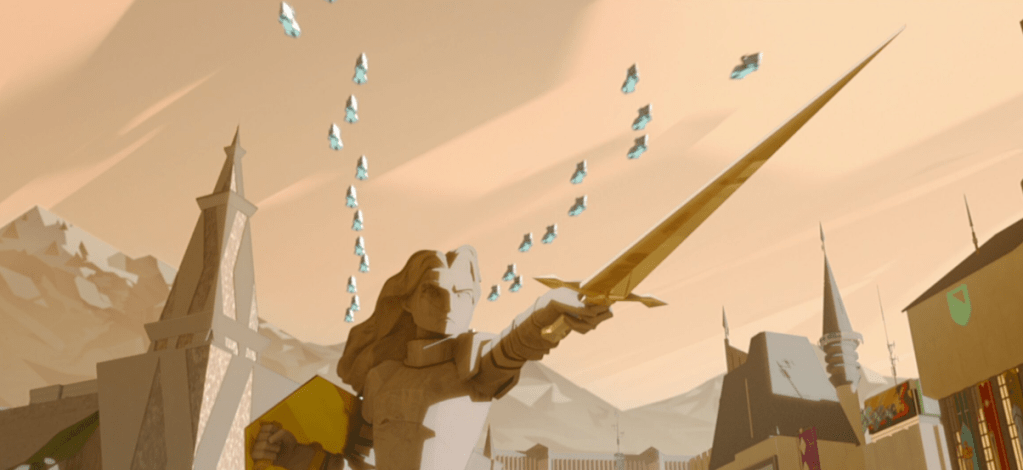
Obviously, it stinks for gender non-conforming people to be relegated to the shadows, but by doing so, society hurts itself. Refusing to recognize gender non-conforming people narrows one’s worldview. This line of thinking traps people into small boxes. Society withers when it doesn’t recognize more of its citizens. The world is a less colorful–or, as Nimona would phrase it, metal–place. And that’s why I love the image of the thousand-year-old village attacking Nimona and, in turn, attacking themselves. Such a great scene.

Nimona and Ballister outside the Wall.

A Life of Confinement

When Ballister asks what it feels like to shapeshift, Nimona shares that they feel worse when they don’t shapeshift, like their insides feel itchy. They liken the itch to the second before a sneeze. Shapeshifting makes them feel free. Shapeshifting is part of who they are. When asked what would happen if they held in the shapeshifting itch, Nimona says, they’d die. Nimona clarifies they wouldn’t “die” die, but they sure wouldn’t be living. I love this allegory for what it feels like to be gender non-conforming. Nimona’s way of living contradicts the Kingdom.

The Kingdom has built a wall from the outside world. The people of the Kingdom view everyone who’s different as a monster, especially Nimona. Everyone in the Kingdom is scared of what lies on the other side of the wall, even Ballister. When Nimona asks Ballister if he’s been beyond the wall, Ballister sarcastically says, Yes, I have, because I have a death wish. Nimona suggests that there may be nothing beyond the wall, and in the context of “nothing,” Nimona means to say nothing scary or threatening exists beyond the wall. Gloreth’s old village rests beyond the wall, as does a beautiful mountain scape and lake. The Kingdom sees none of this. The people of the Kingdom are trapped inside their fear.

I love the ending, where Nimona takes out a cannon aimed at the Kingdom (more on this in the next section), and the resulting explosion reveals what lies beyond the wall. Absolute beauty. The world is a better place when we accept others’ differences.
Tradition Is Greater than Life

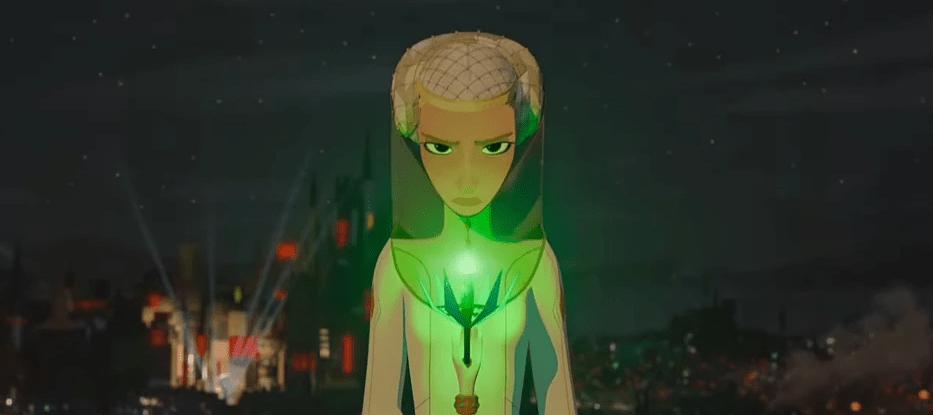
The Director, Nimona’s main antagonist, illustrates a group of people who love tradition above life. The Director is a stand-in for religious and/or political zealots. She murders the Queen and frames Ballister for the Queen’s murder. This act sets the events of Nimona in motion. The Director blamed the Queen for knighting a commoner (Ballister). The Queen sullied the Kingdom’s good name for inviting anyone to become a knight (instituting a meritocracy instead of an aristocracy or plutocracy). In the Director’s mind, ridding the Kingdom of the Queen and Ballister could restore the “natural order.”
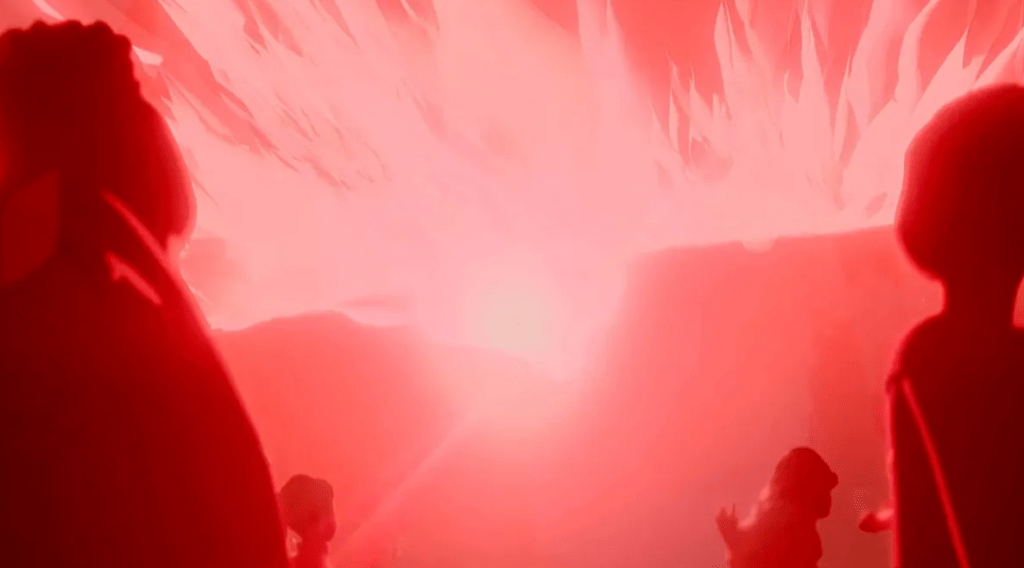
During Nimona’s final fight scene, the Director aims a cannon at Nimona. At this point, everyone in the Kingdom ceases to view Nimona as a threat, everyone except the Director. She repeatedly shows disregard for human life. By aiming a cannon at Nimona in this moment, the Director is aiming a cannon at the Kingdom itself. Thousands of people will die. To the Director, that sacrifice is worth it to maintain tradition. Only tradition matters. And this is where religious and political zealots turn deadly. It’s okay to have traditions, but placing tradition above life is an error we see humanity make throughout history. Funny how stories that feature a monstrous main character like Nimona reveal humanity to be the true monsters.
Subtle Discrimination

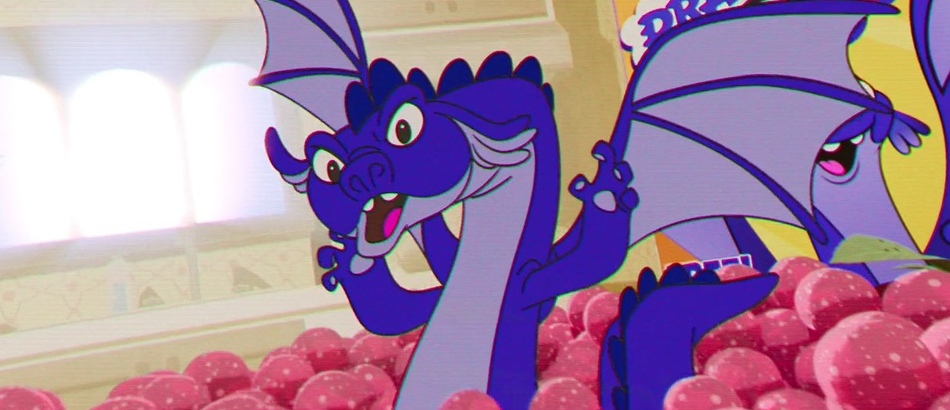
Throughout Nimona, we see children slaying monsters like Nimona: cereal commercials featuring dragons, robotic horse rides outside stores where children can slay various augmented reality monsters, and random slogans like “slay your thirst.” Sure, the Kingdom has plenty of overt discrimination against monsters, but the insidious examples prove more damaging. As Nimona says, children grow up to hate monsters. Hate is in the Kingdom’s DNA.

But Nimona also shows hope. It takes most of Nimona’s runtime, but Ballister learns to see Nimona for who Nimona’s true self.

Nimona even explores self-discrimination. Ballister struggles to accept parts of himself. He views the Kingdom as above reproach. Even after Ambrosius severs Ballister’s arm, Ballister defends Ambrosius’s action. We even catch a glimpse inside Ambrosius’s head as he tries to logic his way through cutting off his lover’s arm, because it was his training. Nimona marvels at how well The Institute brainwashed Ballister, but Nimona isn’t immune to self-discrimination.
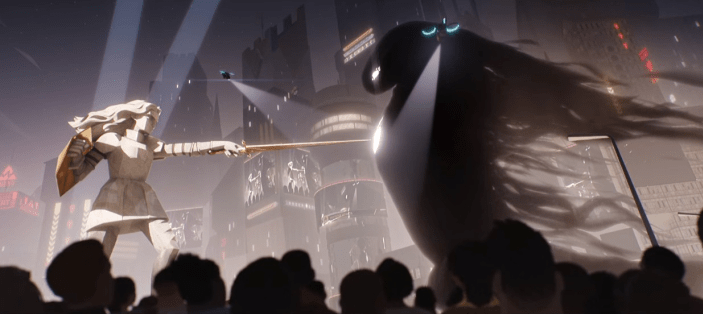
Nimona attempts to take their life, a far too common occurrence for gender non-conforming people. Nimona mentions the subtle and casual discrimination against “monsters” earlier in the film’s runtime. I love how Nimona phrases their conflicted feelings.

Nimona: I don’t know what’s scarier. The fact that everyone in this kingdom wants to run a sword through my heart… or that sometimes, I just wanna let ’em.

Ballister stops Nimona from plunging a sword through their heart. Sometimes it only takes one person’s acceptance. Ballister is the one person for Nimona. Let’s end this segment with what Ballister says to Nimona in Nimona’s moment of crisis.

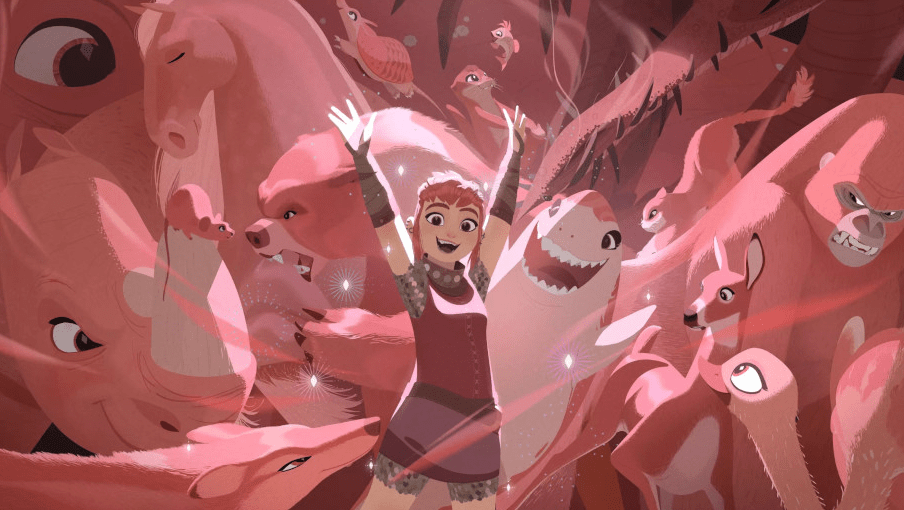
Ballister Boldheart: I’m sorry. I see you, Nimona. And you’re not alone.
Closing Thoughts

Nimona is a great watch. I didn’t mind rewatching it dozens of times for this write-up. I even shared it with my family on Parents’ Day (the last Sunday in July, which can be used to celebrate gender non-conforming parents). I don’t believe Nimona did too well when it first released on Netflix in 2023. The film struggled to reach the Top 10, but Nimona offers a singular experience on the streaming giant. If you missed it during its original release, you should give Nimona a watch. Even though it packs a ton of LGBT representation–transgender representation in particular–Nimona never gets preachy. It’s a fun movie.

This was another long, deep dive. I appreciate you reading this far. Let us know if there are any other great and maybe even not-so-great transgender representations in media you’d like to see us cover in the future. Thank you again for reading, and wherever you are, I hope you’re having a great day.

Transgender Representation: Dead End: Paranormal Park

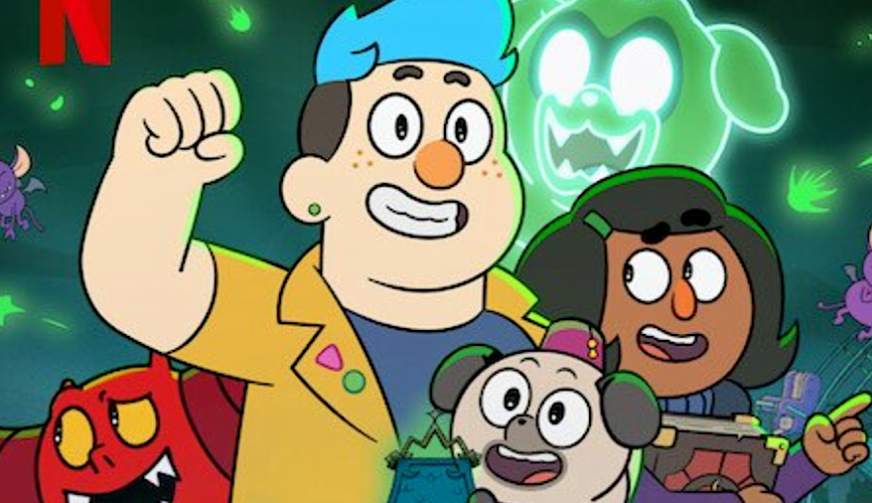
Hey, hey, Geekly Gang! Kyra Kyle here. As promised, this post is the companion piece to our Dead End: Paranormal Park Autism Representation post earlier today. Dead End: Paranormal Park is unique in that it has two main characters, one an autistic Pakistani-American girl, and the other a transgender Jewish-American boy, so we’re writing two posts about the same Netflix show. This is great news for me. If you didn’t catch our previous post, I’m a late-diagnosed autistic person and ADHDer, but I’m also trans and gender queer. Let’s dig into both sides of Dead End: Paranormal Park’s representation.

Since Netflix cancelled Dead End: Paranormal Park after 20 episodes, this post will break down each pertinent 20-minute episode regarding Barney Guttman, a 17-year-old gay and transgender Jewish-American boy who runs away to the theme park because of his complicated relationship with his family. Barney is another great example of intersectionality. Dead End: Paranormal Park is off to a great start. We’ll begin with the first episode, “The Job.”

Season 1, Episode 1, “The Job”

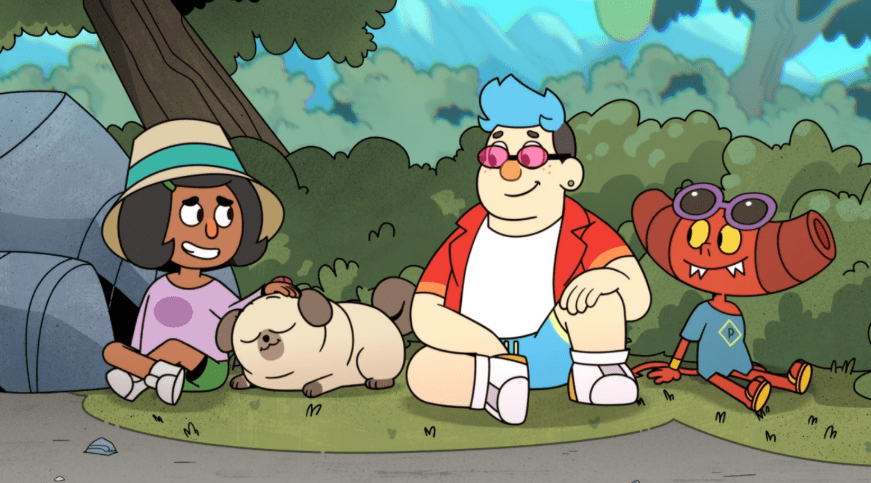
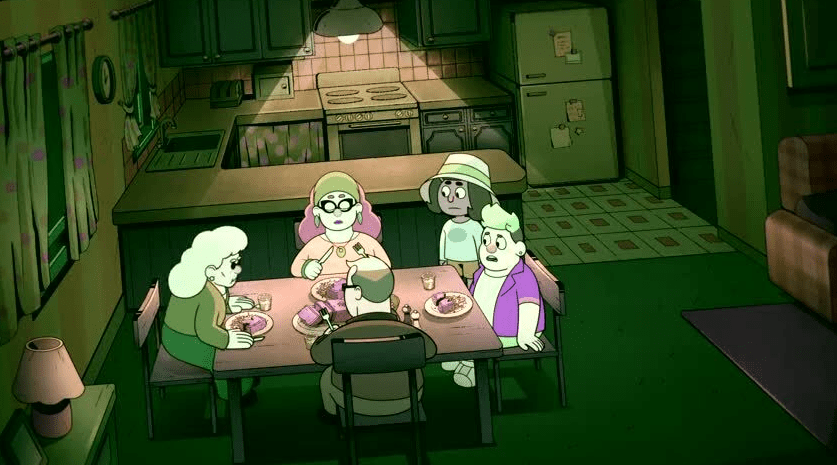
Dead End: Paranormal Park drops some subtle hints about Barney’s identity. We’re first introduced to him when he colors his hair light blue with a pink hair dye spray can. Members of the community see this as an obvious nod to the transgender flag, which features light blue, pink, and white stripes. Great nod. After he’s ready for the day, Barney heads downstairs from his bedroom, and this is when we get an exchange that hints at Barney’s troubled family life. First, his mother doesn’t know that he has a job interview that day. Second, Grammy-Gram (Barney’s grandmother) doesn’t approve of his trans identity.
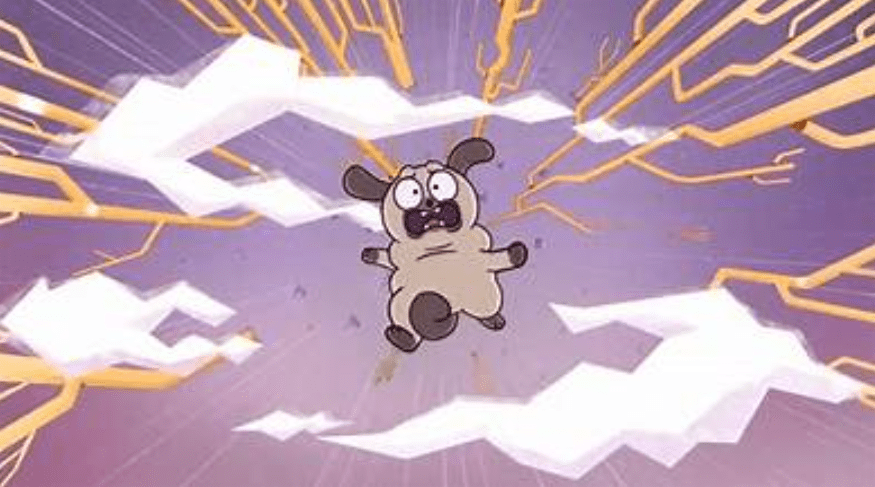
Again, Dead End: Paranormal Park subtly conveys this. Barney’s mother asks if he’ll be back (from his job interview at the titular park) for dinner, and Barney asks who will be at dinner. When Barney’s mother lists Grammy-Gram as a participant, Barney asks his mother if Grammy-Gram knows he’ll be there. After his mother says yes, Barney clarifies if Grammy-Gram knows “Barney” will be there, suggesting that Grammy-Gram dead names Barney. Dead End: Paranormal Park does a great job of showing this family tension while not beating non-community members over the head with it, and the show also respects the viewer’s intelligence.

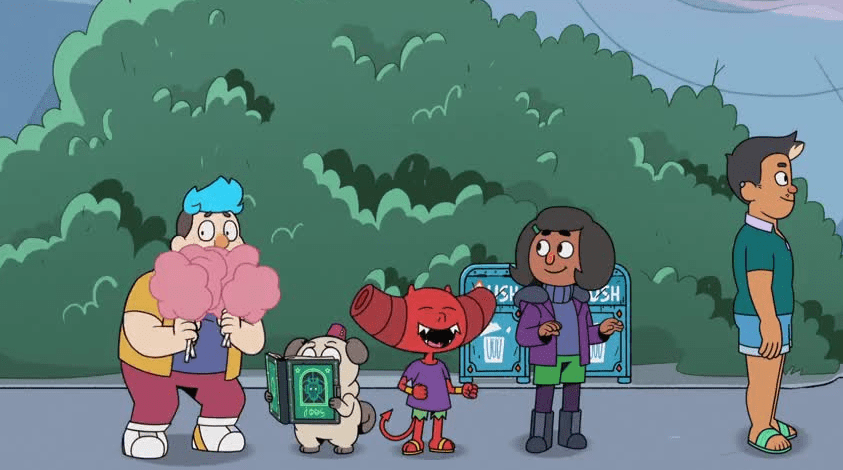
So far, so good. Dead End: Paranormal Park has more subtle hints about Barney’s identity. When he and Norma (the autistic Pakistani-American co-main character) meet in the bus, she doesn’t recognize him at first and claims that she’s bad at names. By the end of “The Job,” she calls him Barney. During the duo’s exploits, Barney insists that he won’t leave his dog (Pugsley) behind. Pugsley’s family. He’s the only family member who accepts him. Pets are great because they don’t care what your gender identity or sexual orientation is. They love unconditionally. Barney needs this, and he isn’t receiving it at home, so he runs away to live at Phoenix Park (Paranormal Park).

Unfortunately, trans kids running away from home happens far too often, especially when their family doesn’t accept them for who they are. At this point, we don’t know how Barney’s family, outside of Grammy-Gram, feels about his identity. Dead End: Paranormal Park is just getting started. And it’s a great start.

Random point one: I love that Pauline Phoenix, the purveyor of Phoenix (Paranormal) Park, is a drag queen. I would totally visit a drag queen amusement park.

Random point two: Courtney (the demon) is non-binary/gender queer in the comics and uses they/them pronouns, but Netflix insisted on the show using she/her pronouns instead. I still claim Courtney as part of the gender queer tribe. I’ll teach them the secret handshake. Thanks for the erasure, Netflix.

Season 1, Episode 2, “The Tunnel”

Most of “The Tunnel’s” opening minutes revolve around Norma, her obsession with Pauline Phoenix, and that Pugsley can talk. Pugsley even tells Norma what she had for breakfast two days ago (eggs with avocado and chili flakes). Yuck! That yuck was directed at a dog sniffing people’s behinds and then telling them what they ate; those eggs sound pretty good.

Anyway, Barney’s first big moment in “The Tunnel” comes when Logan Nguyen (the park’s health and safety officer) enters the staff meeting. Barney falls for Logan at first sight. I love Dead End: Paranormal Park’s decision here. Gender identity and sexual orientation are separate things. Groups like the LGB Alliance (they erase the T for transgender on purpose) often promote ideas that the world is losing its lesbians because they’re transitioning to men, especially when those trans men are attracted to women. Barney is a gay, trans boy. He’s transitioning and is still attracted to men. Representation like this debunks ideas that gender identity and sexual orientation are linked. They aren’t. Kudos to Dead End: Paranormal Park.

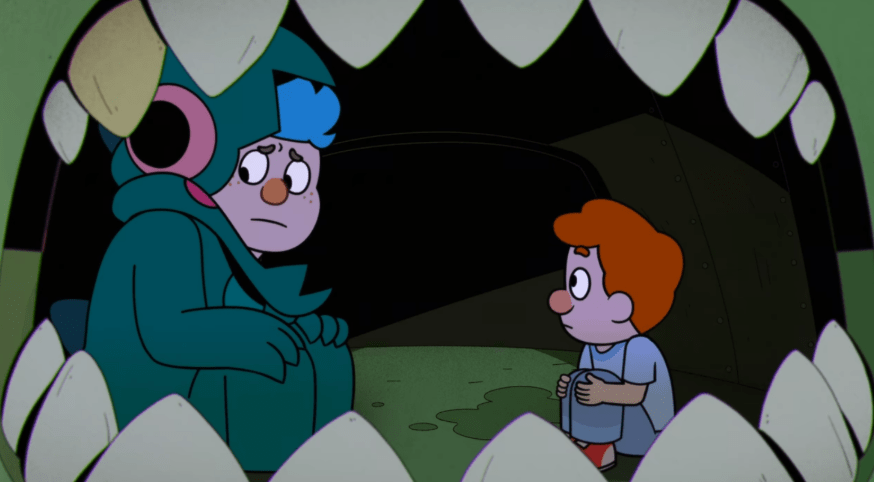
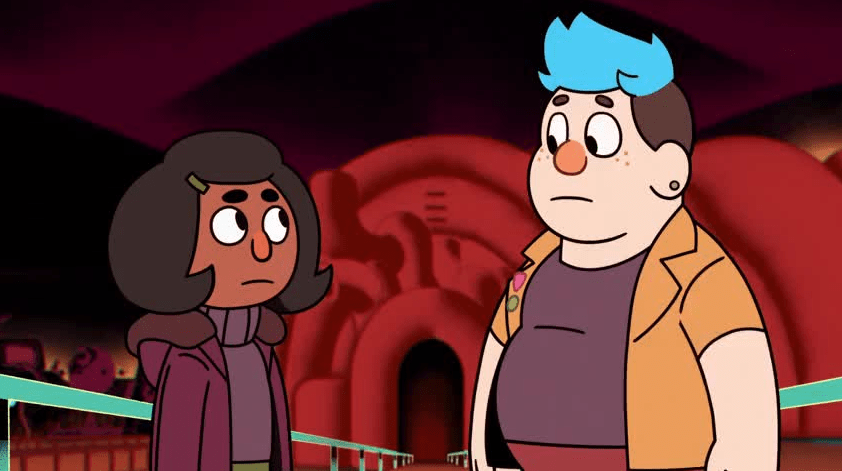
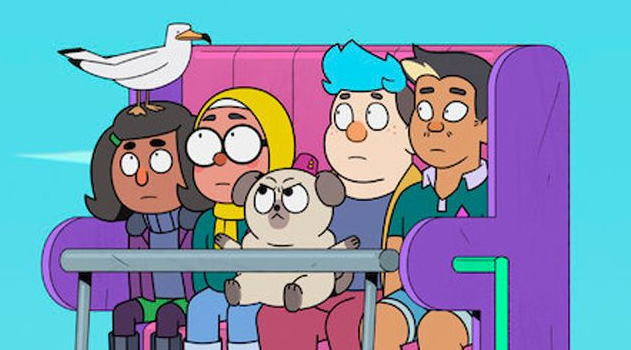
But the crux of “The Tunnel’s” narrative is Barney trying to hide the talking Pugsley from the world to protect him. Toward the end of this episode, Norma questions Barney’s “protecting” Pugsley by locking him away. The scene (picture above) where Barney and Pugsley call each other “bad” ends with Barney asking why Pugsley can’t go back to being his old self, and Pugsley saying that Barney is just as bad as Grammy-Gram. This is another lovely scene by Dead End: Paranormal Park. Most trans people have heard the “Why can’t you be like you were?” question before. We get another glimpse into Barney’s home life before the show, and I love how Barney is allowed to internalize Grammy-Gram’s refusal to see the real him by giving Barney and Pugsley this moment.

“The Tunnel” ends with Barney saying he’s trans. The park gives him the space to be himself. Everyone outside the park has the Barney he was before he started transitioning. This is a genuine occurrence for trans people. It’s easier to be around people who didn’t know you before you transitioned because they’re more likely to accept you as you are now. This scene is true and hits close to home.

Season 1, Episode 3, “Trust Me”

Barney’s story takes a backseat to Norma’s during “Trust Me.” We see him flirt with Logan during a team-building exercise. Most of this episode occurs through Norma’s point of view, and she envies Barney’s socialability, but Barney only has this ability because he’s on his own and allowed to live as his true self. The next bit is a spoiler, but we’ve talked about Dead End: Paranormal Park enough at this point that spoilers are to be expected. The team-building guru is a fear demon in disguise. He tricks the park staff into touching a bejeweled skull that forces each person to face their greatest fear.

Barney’s nightmare sequence gives us the first glimpse of his family. Grammy-Gram says horrible, unintelligible things about Barney, while his parents sit at the table and say nothing. This is a common and chilling scene. It drives home the point that remaining silent while others (even other loved ones) berate a trans person is just as bad as being the one who spouts the hate. Barney pleads with his parents to say something, to stand up for him, and they don’t.

Fortunately, Norma slipped into Barney’s nightmare and rescued him. Even though this is a nightmare sequence, it hits home. A 2019 report by The Trevor Project (a trans youth support group) states that one supportive parent can reduce the risk of a trans youth from committing suicide by 40%. Barney’s nightmare sequence serves as a good reminder to be a supportive parent.

Season 1, Episode 4, “Night of the Living Kids”

When Barney left home, he didn’t just leave his parents. His younger brother Patrick, reaches out to Barney by texting. Barney can’t find the words to say and doesn’t text back. But it turns out that Barney doesn’t need to. The Phoenix Parks gang is hosting an overnight kids’ birthday party, and the birthday boy is none other than Barney’s brother Patrick. I like the inclusion of Patrick. He never deadnames Barney. I found it easier for younger people, like my kids, to adapt to name changes. Heck, Patrick even adapts quickly to Pugsley’s ability to talk.

Naturally, Patrick feels abandoned by Barney. He still sleeps with the stuffed animal (a lion named Max) that Barney gave him. Patrick proves that Barney had people in his corner back at home. Patrick understands why Barney left, but he insists that Barney at least let their parents know that he’s okay. A tender moment happens near the end of “Night of the Living Kids.” Barney’s parents stop by to pick up Patrick, but Barney refuses to take off his dinosaur costume. His mother asks if Barney happened to stop by, and Barney says no. Barney’s mom looks crestfallen for a moment and then shrugs it off. She shares with Barney that the family is having issues.

Barney’s mother, claiming that Barney is “doing one of his disappearing acts again,” suggests that this isn’t the first time Barney has run away from home. Perhaps this is true. It could also be Barney’s mother trying not to reveal too much of the family’s personal business to who she thinks is a stranger. All of this adds layers to Barney’s family life. His family has obvious communication problems, and they could find closure as Patrick tells their mother a secret at the end of “Night of the Living Kids.” At this point, we don’t know what Patrick tells his mother, but it’s probably that Barney lives at Phoenix Parks.

Dead End: Paranormal Park is playing the particulars of this storyline close to the vest. We don’t yet know how Barney’s parents feel about his gender identity. We know that Grammy-Gram disapproves, and his parents refuse or somehow feel unable to stand up for him. While we don’t dive too deeply into these waters in this episode, “Night of the Living Kids” is setting up a fantabulous foundation.

Season 1, Episode 5, “The Nightmare Before Christmas in July”

“The Nightmare Before Christmas in July” breaks away from Barney and Norma’s storylines and focuses on their new demon friend, Courtney. Courtney is stuck in the mortal realm, so Barney and Norma go on a devilish game show to snag them (Courtney) a ticket home. We’ll be using Courtney’s preferred pronouns of they/them. I wanted to take another moment and ask why Netflix decided to gender Courtney. They’re a demon. Gender doesn’t make sense for them. If you want to see the original Courtney, check out the show runner, Hamish Steele’s, DeadEndia comic series.

Season 1, Episode 6, “Wait Time: 22 Minutes”

“Wait Time: 22 Minutes” gets its name from the supposed wait time for the Dr. Love Ride, a Phoenix Parks attraction that’s been shut down since before Barney was born. The park reopened the line, and a crowd gathered to hop on the ride. Barney has no interest in riding Dr. Love, but changes his mind when he spots his family walking out of the ride’s exit. Barney’s family doesn’t frequent the park often. It’s a fair bet that Patrick told his parents where Barney is, but it’s not confirmed. This keeps the tension simmering, but it doesn’t overpower this episode. Barney rejoins Norma and the gang, unaware that his crush, Logan Nguyen, is in front of them. Logan lets the gang know that he’s riding Dr. Love to make sure the sign’s wait time is correct.

Barney changes his mind, of course, and stays. The group splinters when Norma finds out there’s an employee express lane. Desperate to ride Dr. Love before spoilers flood her timeline, she bolts for the second line, leaving Barney and Logan alone. And here’s where “Wait Time: 22 Minutes” gets juicy. Barney flirts poorly, and an older lesbian couple, who rode Dr. Love when they first got together, try to help Barney. Oh. It’s awkward. Barney is so awkward, and it’s great. Again, I’ll give Dead End: Paranormal Park props for making Barney a gay trans boy. These scenes would play out much differently if he were flirting with a girl.

The remainder of this episode’s runtime, in reality, revolves around Norma, Courtney, and Pugsley possessing Barney to woo Logan. Things get interesting when Norma and Barney enter a spirit realm called the in-between. You’re not dead. You’re not alive. You’re just sort of backstage. While in the in-between, Barney curses that he didn’t say goodbye to his parents. This moves his story along, but it also shows that awkward “in-between” where you, as a trans person, can still love people who don’t accept you, but you keep your distance for your protection, and while you find yourself. Most trans people experience this. Great job, Dead End: Paranormal Park.

But there comes a time after you find yourself and gain your strength that you must stop running, and this can result in tense conversations. Barney’s journey is short. It often takes some of us years to get there. My journey took me a while because I got diagnosed as autistic shortly after coming out, so there were multiple Celtic knots I needed to untangle. While I think this journey happens a little fast for Barney, it does match one that many trans people face. Rewatching Dead End: Paranormal Park has given me a greater appreciation for it. I can see this representation helping someone on their journey.

Season 1, Episode 7, “Norma Khan: Paranormal Detective”

While the “Norma Khan: Paranormal Detective” title suggests that Norma is this episode’s central character, the scene Dead End: Paranormal Park has been building between Barney and his family occurs, and it doesn’t disappoint. Barney and his family put everything on the line. Wires get crossed when they use nacho chips and chili cheese fries as metaphors. Patrick and Pugsley don’t get the metaphor, but I do like Patrick saying we can always order more nachos, which I believe is a subtle hint at the frequently used metaphor for trans that claims rights aren’t pie, and even if they are, there’s enough to go around. But I could be reading too much into this. That last point was conjecture.

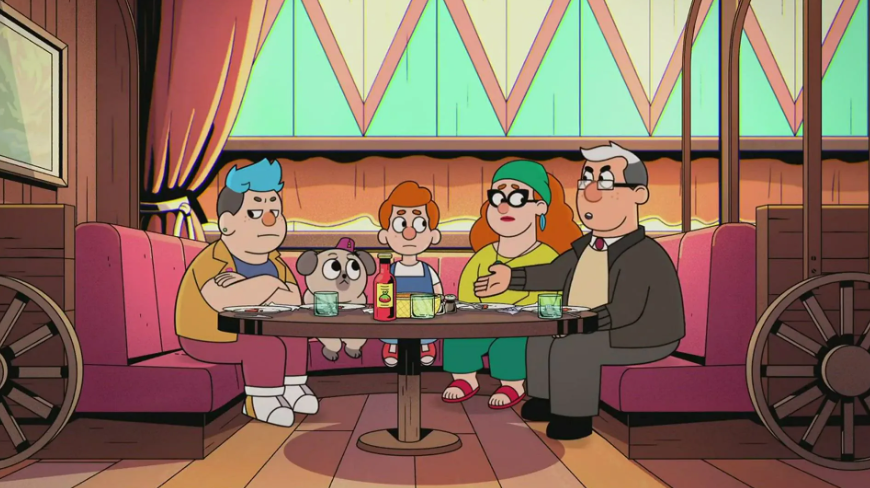
What isn’t conjecture is that Pugsley and Patrick find themselves literally and figuratively stuck in the middle of a heated argument. Barney’s parents say that they accept him. Barney claims that they don’t do enough to show that they accept him. Dead End: Paranormal Park frames Barney’s claim as the valid one, and I agree. Acceptance isn’t a passive thing. One needs to show that they accept someone. Barney’s parents had a chance when Grammy-Gram berated Barney and didn’t take the opportunity. Dead End: Paranormal Park lays out this argument in an entertaining and less preachy manner than I do. I love Barney’s response when his parents ask him to come home. You’ve got to make it one first.

This episode ends with the ghost of Pauline Phoenix escaping a television screen. This has more to do with Norma’s side of this episode’s story, but I think we’ll be discussing Pauline in the next episode.

Season 1, Episode 8, “The Pauline Phoenix Experience”

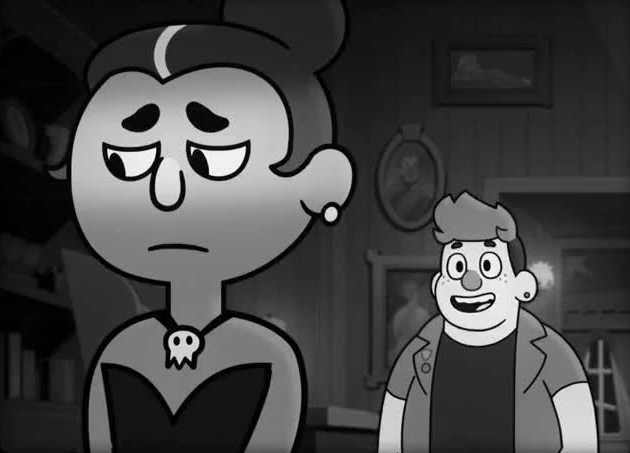
“The Pauline Phoenix Experience” casts the gang in Pauline’s former roles, hence the black and white picture above. This episode doesn’t delve deeper into Barney’s story or expand him as a character, so we’ll keep this one short. Still, “The Pauline Phoenix Experience” is an excellent episode and does a lot to progress Dead End: Paranormal Park’s overarching story. I don’t want to spoil anything here, so I’m keeping things vague.

Season 1, Episode 9, “The Phantom of the Theme Park”

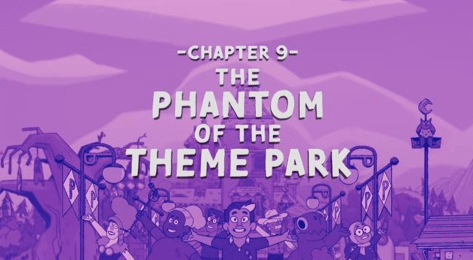
Dead End: Paranormal Park is a queer show that takes place in a drag queen theme park. Of course, there’s going to be a musical episode. “The Phantom of the Theme Park” takes inspiration from several musicals, but its main influence is The Phantom of the Opera. I love this episode. The music is spot on, and the musical does a great job of forwarding the action to season one’s conclusion. But “The Phantoms of the Theme Park” does little to explore Barney’s story, except that demons have swarmed the park, and his parents are turned to stone. Things just got real.

Season 1, Episode 10, “Into the Fire”

Demon lords Zagan and Temeluchus battle it out for the surface world. Demonic mayhem ensues, but all’s well that ends well. The humans are no longer turned to stone. After Phoenix Parks returns to normal (relatively speaking), Barney’s parents commit to having his back. They won’t have him over for Friday night dinners with Grammy-Gram until Grammy-Gram learns to accept him. Instead, Barney’s invited to Saturday night dinners. A simple gesture like this can make all the difference in a trans kid’s life. Barney’s parents have taken an active role in supporting their son.

I love the growth these characters made during the season. Even Courtney learned a thing or two. Dead End: Paranormal Park ends its first season with a cliffhanger. We’ve seen plenty of demons during the first season, but we catch our first glimpse of a citizen from heaven.

Quick Break and Thank You

Thank you for reading up to this point. You’re amazing. Since the Dead End: Paranormal Park’s first season set up its characters well, the second season explores the other planes of existence, specifically heaven, so each individual episode’s write-up should be shorter. Thanks again for reading, and let’s get back to the show.

Season 2, Episode 1, “Take the Angels Bowling”

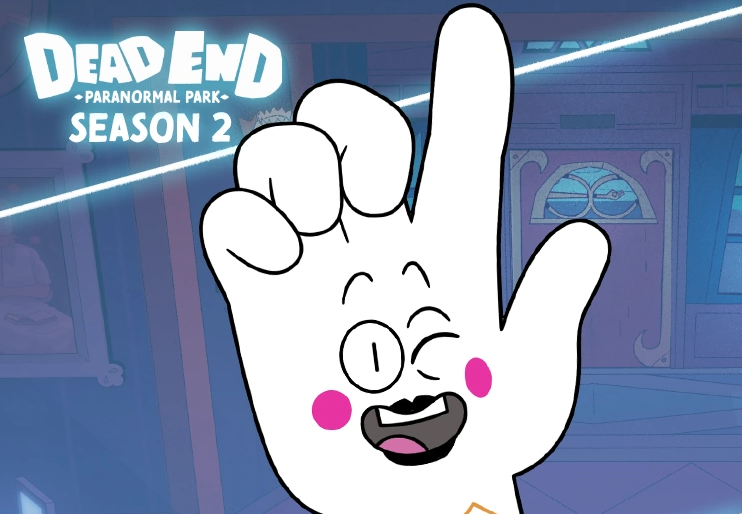
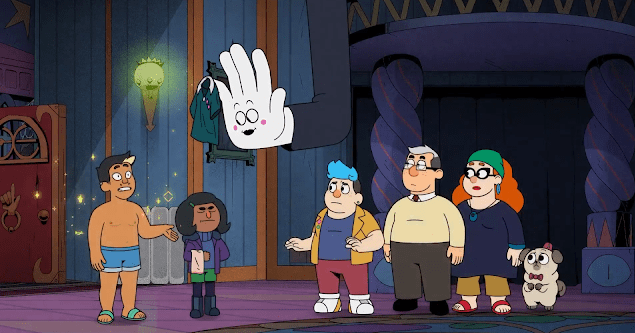
“Take the Angels Bowling” introduces Fingers, an angel with a face inside its massive hand. When Fingers extends its body (a long arm stretching from heaven), it resembles Gord’s, the red-skinned demon, who looks like a worm. It’s like the two species (angels and demons) aren’t that different. Hmm.

Barney’s story takes a backseat in this episode, but we see some great moments with him and Logan. At the tail end of the last season, Logan and Barney share their first kiss. “Take the Angels Bowling” shows Logan’s patience with Barney. At this stage of Barney’s transition, he’s still unsure of himself, and I like how Logan gives him the space to be awkward. When someone transitions (even socially), it acts as a second puberty. Whether this was Dead End: Paranormal Park’s intention or not, this is great representation.

Season 2, Episode 2, “Evil Twins Are People Too”

“Evil Twins Are People Too” may prove my hunch correct. Barney’s misadventures with demons and evil twins are a metaphor for a trans person’s second puberty. Barney lets it slip that he loves Logan. This is a common television trope. Someone says “I Love You” first, and the other person doesn’t immediately say it afterwards. What makes Dead End: Paranormal Park’s take on this trope different is the added complication of the paranormal (or the fact that Barney is trans). By the end of this episode, Barney lays it out on the line, telling Logan he loves him again and admitting that life with him could get complicated.

Fortunately, Logan doesn’t mind the complication. He entered this relationship knowing that there could be uncommon issues, but Barney is his person. I love this. It proves that there’s someone for everyone, even a trans boy with an evil twin.

Season 2, Episode 3, “The Trials of Barney”

As the episode’s title implies, “The Trials of Barney” has a Barney-centric story. I like how this episode goes back into Barney’s childhood. Dead End: Paranormal Park does a great job of showing that Barney was always a boy. He’s always been into pro wrestling and created the moniker, B-Rex, because he likes dinosaurs. Initially, B-Rex is the wrestling name Barney uses when he joins the Demon Wrestling Federation. During the perfect moment, Barney embraces his inner heel and comes out as a human. He then becomes The Living Human.

Early on, Barney hides his human identity. He finds it easier to be a lizard boy (B-Rex) instead of a human boy. Throughout “The Trials of Barney,” Barney lives as his authentic gender, and when he reveals himself to be a human, he accepts the final part of himself. And the crowd loves him for it. This is another subtle point Dead End: Paranormal Park makes. Many trans people begin by showing parts of themselves to others, and some of those parts are their gender identity, while holding back other aspects of themselves to fit in. Sure, Barney was always treated as a boy in the demonic gym, but he needed to find himself as a human boy.

Transgender people aren’t a monolith. There’s no one way to be trans, and it’s up to each person to find what their gender identity means for them.

Season 2, Episode 4, “Eat the Parents”

“Eat the Parents” features Logan meeting Barney’s parents, so we get plenty of situational comedy sprinkled throughout this episode. Everyone puts on airs, especially Norma, as they try to impress Barney’s parents. The standout scene for Barney is the one where everyone eats the soup Courtney prepared from the mysterious book she found. This soup induces mind-reading, and when Barney takes a sip, he complains (in his head) that no one will be good enough for his parents.

This comment suggests that Barney had suitors before he came out to his parents. Or perhaps not. Either way, the demon behind the cursed soup is none other than the team-building guru from season one. Lovely callback. We find that despite his confident exterior, Logan is just as insecure as Barney, maybe even more so. I like that Barney isn’t the only one worried about this relationship.

Season 2, Episode 5, “The Ride of a Lifetime”

Hurt feelings and a lover’s spat abound in “The Ride of a Lifetime.” Barney misinterprets Logan texting Josh as the two of them dating, when it’s actually about Josh getting an acting role that Logan had also auditioned for. Pugsley spends the entire episode’s runtime trying to avoid calamity of all kinds, physical and emotional harm, but you can’t rewind time to execute the perfect world.

All of this is Fingers grooming Pugsley for Dead End: Paranormal Park’s season two finale. “The Ride of a Lifetime” doesn’t unearth anything new and exciting with Barney’s trans experience, but the show’s done a fantabulous job doing that throughout its run.

Season 2, Episode 6, “My Super Sweet 1600”

Barney doesn’t have much to do in “My Super Sweet 1600.” Fingers sends the gang to bust up a demon’s (Zagan’s) birthday party, but Barney ends up becoming the life of the party. What begins with Zagan trying to kill the humans (or at least maim them) becomes a love fest with the friends Barney made while he wrestled in the Demon Wrestling Federation. Even though this moment doesn’t progress the story, I love how it shows the demons accepting Barney for who he is, for all he is (including a Living Human). Not only do the demons accept Barney, but they also praise his differences. That’s great to see.

Season 2, Episode 7, “All Dolled Up”

Barney doesn’t make an appearance in “All Dolled Up.” Well, technically, he does show up at the very end, teasing the following episode. Even so, we see a lot of Barney through Logan, who encourages Norma to come out as bisexual to her mother. I love the representation of various gender identities and sexual orientations in Dead End: Paranormal Park.

Season 2, Episode 8, “The Other Side”

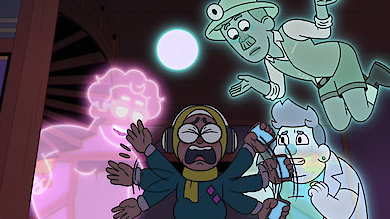
We find out what Barney and the rest of the gang were doing in the previous episode with “The Other Side.” Barney dies from a falling chandelier. The rest of the gang attempts to join Barney’s soul with his body. I love the Reverso-Romero Spell that naturally turns Barney’s corpse into a zombie. Barney runs into a few “friendly” ghosts. Basically, they’re trying to trick Barney into crossing over to the other side so they can hitch a ride. I like the pink-hued ghost Jules’ inclusion of their pronouns: they/them/and the late. Nice. Why couldn’t Netflix allow this for Courtney?

Speaking of Courtney, they’re involved in the funniest scene during this episode. Barney turns full ghost. No one can see him, so he writes on the wall with charcoal. Here’s a quick recreation:

Courtney: Barney, is that you?

Barney (writing in charcoal on the wall): Yes.

Courtney: You turned yourself into a piece of charcoal?

Barney: No.

Courtney: You turned Pugsley into a piece of charcoal?

Barney writes several paragraphs on the wall. Not one inch is left uncovered by charcoal. Courtney’s eyes widen. She gasps, and then says, “Barney…there’s no way I’m reading all of that.”

This scene had me rolling a year ago when I first watched Dead End: Paranormal Park, and I rewatched it multiple times during this rewatch. It’s so good. It’s official. Courtney is my spirit animal.

Anyway, “The Other Side” ends with Barney about to cross over, succumbing to the ghost “friends” negative self-talk. This is such a great representation of one’s battle with mental health, and according to Pugsley, this isn’t the first time Barney has felt this way. Barney’s found family (Pugsley, Logan, Badyah, and Norma) helps him through this rough patch and saves him from crossing over. I love found families in media. We all have found families. They’re our communities. They can be our significant other. Often, our found families know us better than our birth families.

“The Other Side” ends with Fingers revealing his dastardly plan. Fingers, the angel, was the one who dropped the chandelier on Barney. Since he gives Pugsley the power to save Barney, Pugsley willingly goes to heaven. We’re on our way to heaven, floor 4.

Season 2, Episode 9, “Going Up”

Barney’s story in “Going Up” centers on rescuing Pugsley, so we get little trans representation in this episode. Or do we? We’ll discuss how Courtney’s story plays into Dead End: Paranormal Park’s greater trans narrative in a minute, but first, let’s discuss some quick Barney points. That almost sounds like brownie points. Tee hee! Asmodeus (Barney’s wrestling sparring partner) in any episode offers great acceptance for Barney’s identity. Those two have a wonderful bromance. You love to see it.

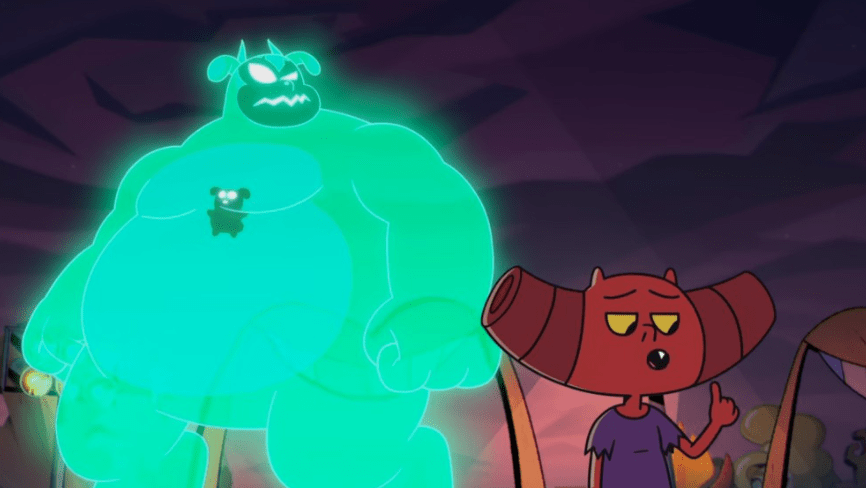
Before we get into Courtney’s story, I’ll begin by citing a spoiler warning. There’s little chance for us to discuss “Going Up” and Courtney’s part of the story without major spoilers. You’ve been warned. Courtney learns they’re a fallen angel. Their “horns” are a broken halo, and they’re doomed to prune the universe’s timeline of all “unwanted” branches. While bleak, this storyline profoundly plays into Dead End: Paranormal Park’s main characters. Fallen angels (angels whose halos are broken) no longer fit what it means to be an angel, so Courtney has more in common with Barney than they may have first thought.

As a trans person, Barney doesn’t fit in with cispeople. The same can be said of Norma as well, but we’ll go more into her side with the autism representation post, but Courtney’s subjugation in heaven rings true for a lot of trans people. Courtney isn’t allowed to be Courtney. Their personality–or any personality–runs counter to what the heavenly society accepts. One could rewatch Dead End: Paranormal Park multiple times and find new angles. This is the mark of a great show.

One more major spoiler: Pugsley becomes The Watcher. The Watcher is the all-powerful heavenly sorcerer who serves as watchdog for anyone who steps out of line. There’s so much to unpack here. The onion-head mask Pugsley wears to become The Watcher takes away his identity. It functions similarly to conversion therapy. The Pugsley who wears The Watcher’s mask must conform. Dead End: Paranormal Park may be geared for kids, but it has many layers.

Season 2, Episode 10, “The Watcher’s Test”

“The Watcher’s Test” does for Pugsley what “Going Up” did for Courtney. Barney and Norma’s journey can be seen through Pugsley’s. Since this is our transgender representation post, we’ll focus on how Pugsley’s journey mirrors Barney’s. Again, we’ll be going through some major spoilers, but if you’ve made it this far, spoilers won’t be that big of an issue.

First, Pugsley is Barney’s dog, so a direct link exists between these two characters. Second, Pugsley has been told by heaven (not sure if the character commanding Fingers is God, but they’re certainly from heaven) that he must fight demons at all costs, and that’s what happens. Pugsley, as The Watcher, has destroyed the Earth. Evidently, Earth ceasing to exist is better than a single demon out of place, and a demon’s place is in prison. This extremist, black-and-white thinking has been used against trans people. Someone living outside the gender binary embraces the gray, and ironically, Netflix chose to stick Courtney inside the gender binary. You don’t need the creators to tell you this was not their decision; Courtney’s new pronouns go against the show’s message.

I loved “The Watcher’s Test” callbacks to previous episodes. In fact, Dead End: Paranormal Park did a better job of weaving in these callbacks than the MCU with Avengers: Endgame. Time travel mayhem occurs during this episode, and Dead End: Paranormal Park drops Barney into the perfect scenes where he could’ve attempted to persuade Pugsley not to become The Watcher. Fight heaven’s grooming. But my favorite must be the scene that wasn’t altered. Eagle-eyed viewers may figure that something was different about Barney during an earlier episode. I won’t spoil it here, but if you’ve seen “The Watcher’s Test,” watching this same scene through a new lens is chef’s kiss superb.

Random Thought: The dedication to Leon Fechner (one of the show’s animators) during Dead End: Paranormal Park’s closing credits is touching. We leave season two with Pugsley wandering a plane that isn’t heaven, hell, or Earth. This pays homage to Fechner, who had slipped into a coma and died before the show was completed. Rest in peace, Leon Fechner.

Closing Thoughts

Yowza! This was long. It’s even longer if you read the companion piece, Dead End: Paranormal Park’s Autism Representation. While this show’s geared toward children, Dead End: Paranormal Park does a stellar job with transgender representation. Barney Guttman tops many lists of great trans characters. The show presents Barney as a complicated character. He isn’t always in the right, but his heart is usually in the right place. I love Dead End: Paranormal Park’s intersectionality. Each character is thoughtfully layered.

If you have any other movies or television shows that depict transgender people that you’d like us to cover, let us know in the comments. If you’ve made it this far, you’re amazing. We all know it. Thank you for reading, and wherever you are, I hope you’re having a great day.