Dark Walking Simulators

Hey, hey, Geekly Gang! Kyra Kyle here. We’re keeping the theme of Spooky Season alive with today’s post, but we’ll be taking horror or dark themes in a different direction. I’ll be up front, this post may meander more than usual. I didn’t know what to call these types of video games at first. Some of these video games could fall under the term “empathy games.” I mentioned some of these games in a previous post, but the prevailing term for the type of video game we’ll cover today is Walking Simulator. That name doesn’t do these games justice.

In fact, the Walking Simulator term is beyond reductive. It’s demeaning. All you’re doing is walking. This pejorative name reminds me of the terms Euro-Trash or Ameri-Trash board game from a decade or two ago. We’ll use the modern, friendlier terms for these board game types. Euro board games focus on mechanisms and balanced gameplay, while Amerithrash–they’re totally metal and they “thrash”–board games place more emphasis on theme. If you used the negative terms, you’re thumbing your nose at the other board game type. Many “hardcore” video gamers despise “Walking Simulators.”

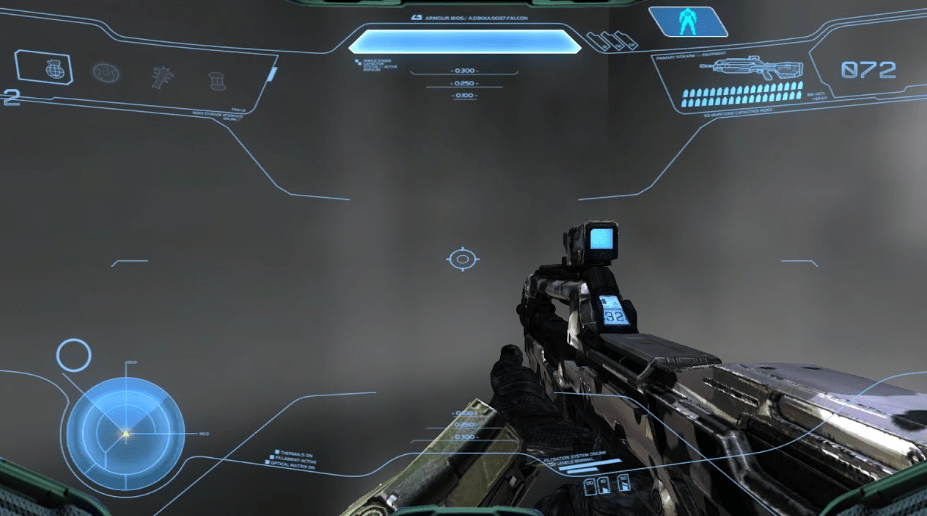
“Hardcore” video gamers not liking “Walking Simulators” makes sense. Video games sprang from the Military Industrial Complex. The first video games came from military facilities. Many “hardcore” video games promote wanton violence where the player kills countless enemies, feature “heads-up displays” one might find in a fighter jet, and some video games are even military recruitment tools. Of course, something quieter and geared toward empathy would ruffle the feathers of “hardcore” video gamers.
Getting back to Euro and Amerithrash board games, modern board games often blur the lines between these two game types. I reviewed Cretaceous Rails a couple of months ago, and it’s equal parts interlocking mechanisms and heavy on theme. Death Stranding notwithstanding, I don’t know if AAA video games have adopted enough from indie Walking Simulators, but that’s another topic. I told you I would meander. Despite the negative connotation (all you’re doing is walking), Walking Simulator is the term most people use. We’ll use that one. Since we’ll be dealing with psychological horror and/or darker themes, let’s call these games Dark Walking Simulators. Let’s cover a brief history with some of my favorite Dark Walking Simulators.

Prior to 2012: [domestic]

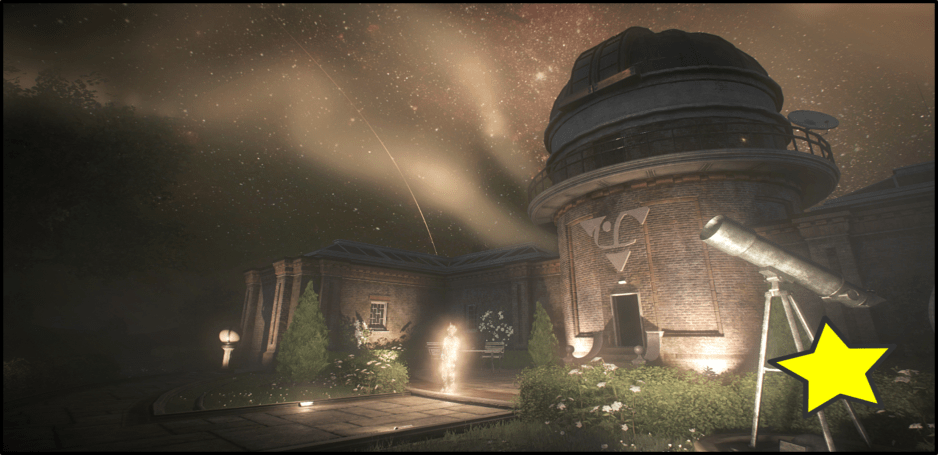
Point and click games could and sometimes do fall under the heading of a Walking Simulator, because they involve movement and interacting with the game world’s environment (which are hallmarks of Walking Simulators), and point and click games have been around since the early 80s. But we’ll begin this quick history with 2003’s [domestic] by Mary Flanagan. Flanagan repurposed the Unreal gaming engine to recreate a childhood memory of a house fire. One look at [domestic], and you can see why many consider it the first modern Walking Simulator.

In fact, the term Walking Simulator gained prominence in the late 2000s, perhaps as a direct result of [domestic]’s release. When you have the chance, you should check out Mary Flanagan’s website. She discusses at length her artistic choices while designing [domestic]. While she doesn’t have a link for a playable version of the game, Flanagan provides a two and a half minute video of [domestic]’s gameplay. There are so many innovative choices, like family photos and text constructing the walls of this 3D space, that we’ll see in future Walking Sims.
Dear Esther (February 2012)

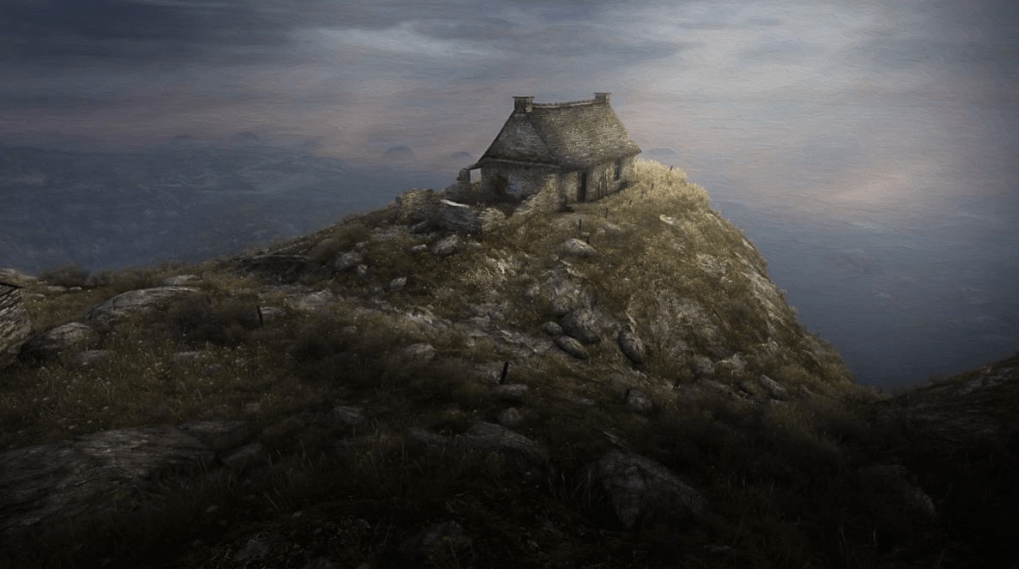
First, Dear Esther is gorgeous. Look at that uninhabited Hebridean island. My partner and I made our way to one of the Inner Hebridean islands in Scotland, and this looks close. I could smell the salt air and the heather on the wind. Second, Dear Esther’s gameplay is minimal. I would almost classify this game as a Walking Simulator, but in the best possible way. An anonymous man reads a series of letter fragments to his deceased wife, Esther. Each location on the island reveals a new letter fragment. Players can unlock different audio fragments with each playthrough of the game, leading to a different narrative each time you play Dear Esther.

So, you’re literally walking from one area of the island to the next and listening to various letters, but the letters reveal more about the titular Esther’s life. Esther has passed under mysterious circumstances, and her husband is looking for answers. Dear Esther has a gripping narrative, but the tension comes from internal struggles. The Chinese Room developed this Walking Simulation classic, and this won’t be the last time we’ll see one of their games on this list.
The Unfinished Swan (October 2012)

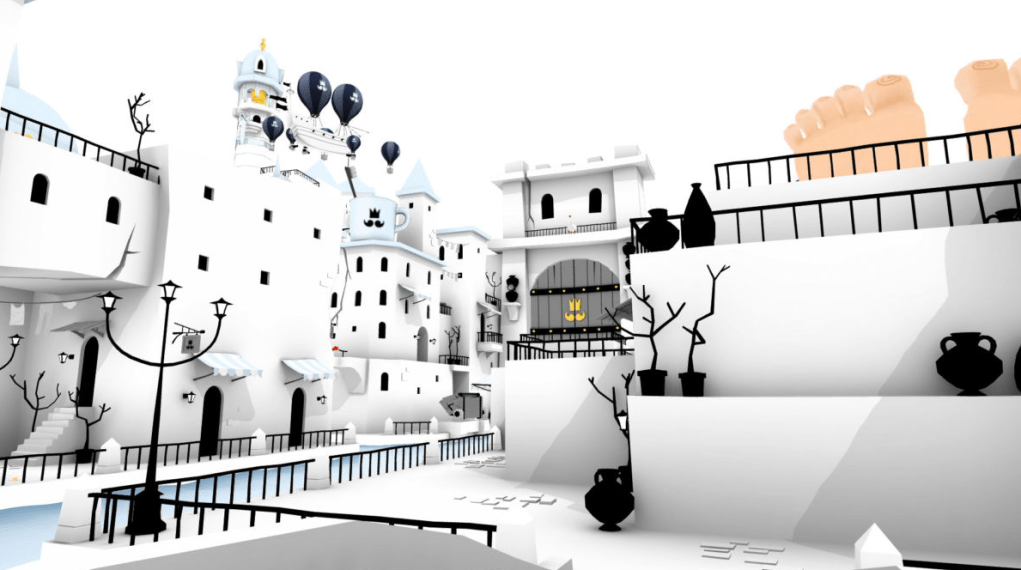
The Unfinished Swan marks Giant Sparrow’s first major release. It has a simple premise. Monroe is a young boy whose mother recently died. Monroe’s mother was a painter famous for never finishing a painting. Over 300 paintings and not one of them complete. The orphanage tells Monroe he can keep only one of his mother’s paintings, so he chooses his favorite, a swan missing its neck. The swan escapes, and Monroe follows it. Armed with his mother’s silver paintbrush, Monroe explores the painted world.

As you can guess, The Unfinished Swan ventures into magical realism. It tackles themes of loss. It puts players into the shoes of a young child, making sense of the world without their parents. The Unfinished Swan is the first of Giant Sparrow’s games to make this list. It showcases the studio’s knack for eclectic settings and its flair for the dramatic.

Gone Home (August 2013)

Gone Home puts the player in the role of a young woman returning from overseas to her rural Oregon family home to find her family absent and the house empty. She must piece together recent events to determine why her family’s home is empty. Gone Home is similar to the previous year’s Dear Esther, but the anonymous protagonist in Dear Esther knew that his wife had died. Katie, Gone Home’s protagonist, has no clue why her family is missing.

Dark Walking Simulators do a great job of presenting mysteries. In fact, I’d wager most great video game mysteries have large elements of Walking Simulators. Even the AAA titles that lean more into the mystery genre borrow heavily from Walking Simulators. Traveling in someone else’s shoes and interacting with your environment can make for a great mystery premise.
The Stanley Parable (October 2013)

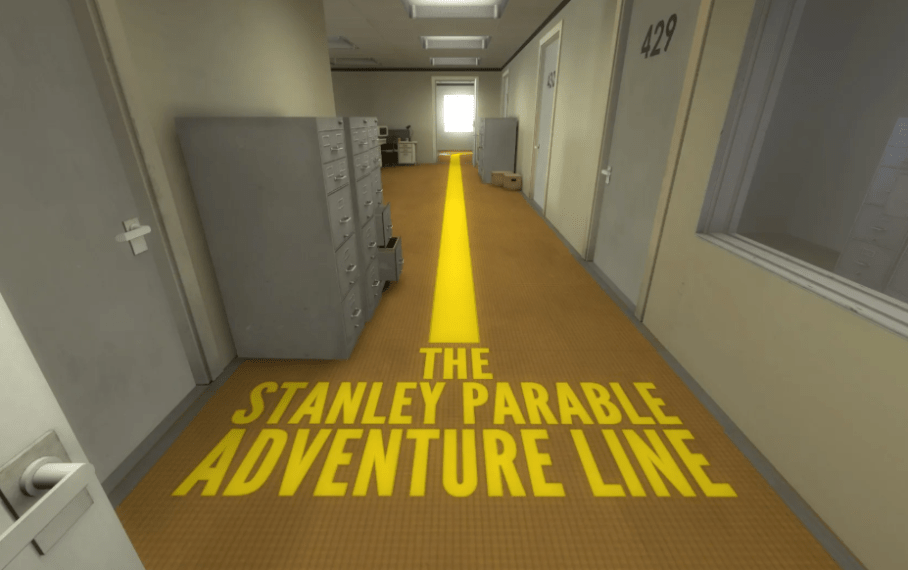
The Stanley Parable stands out in a group of video games that stand out. This Walking Simulator challenges preconceived notions about video games with a thick coat of sarcasm. Developed by Davey Wreden and William Pugh, The Stanley Parable tackles themes like choice in video games and fate/pre-destination. British actor Kevan Brighting narrates while the silent protagonist (Stanley) conducts a day at the office. As you can see in the image above, Stanley may follow the adventure’s line, or he may contradict The Narrator’s directions, which, if disobeyed, will be incorporated into the story. Depending on the choices made, the player will encounter different endings before the game resets to the beginning.

The Stanley Parable proves that Walking Simulators can strike a chord with “hardcore” gamers. The Stanley Parable crossed over into mainstream video game culture. Developer Davey Wreden has gained a following, and his follow-up game, The Beginner’s Guide, actually deals (in part) with Wreden’s struggles with success. Showrunner Dan Erickson cited The Stanley Parable as an inspiration for Apple+’s Severance.

The Static Speaks My Name (August 10, 2015)

While the previous games on this list have dark themes, The Static Speaks My Name is the first true horror video game.

Quick trigger warning: The Static Speaks My Name includes self-harm. If you’re sensitive to the subject of self-harm, feel free to skip this entry to our next one.

In The Static Speaks My Name, players assume the role of Jacob Ernholtz, a man who has committed suicide by hanging at the age of 31. We start as an amorphous blob in a dark void until we inhabit Ernholtz during his last day. We awake in his dimly-lit apartment with boarded-up windows and doors as he performs a series of menial tasks, including using the restroom, eating breakfast, and chatting with online friends. Exploring Ernholtz’s apartment reveals that he’s obsessed with a painting of two palm trees and its painter, Jason Malone. Locked behind a bookcase, we find Malone in a cage. The player has the option to unlock the cage or electrocute Malone. We’re finally presented with the task to go to a small closet with a noose.

Yowza! The Static Speaks My Name is trippy in every sense of the word. Jesse Barksdale developed The Static Speaks My Name in a 48-hour game jam. I’ve participated in a few board game jams, and you can encounter some messed-up concepts during one of these events. I would’ve liked to have seen Barksdale’s creative process for The Static Speaks My Name during these 48 hours. This is a haunting game. I’ve only chosen the electrocute option once, and Malone’s blood-curdling screams invaded my dreams for a few days. Yikes!

We included the exact date The Static Speaks My Name was first released because our next entry in this list was released the next day. This week in August was a great week for Walking Simulators.
Everybody’s Gone to the Rapture (August 11, 2015)

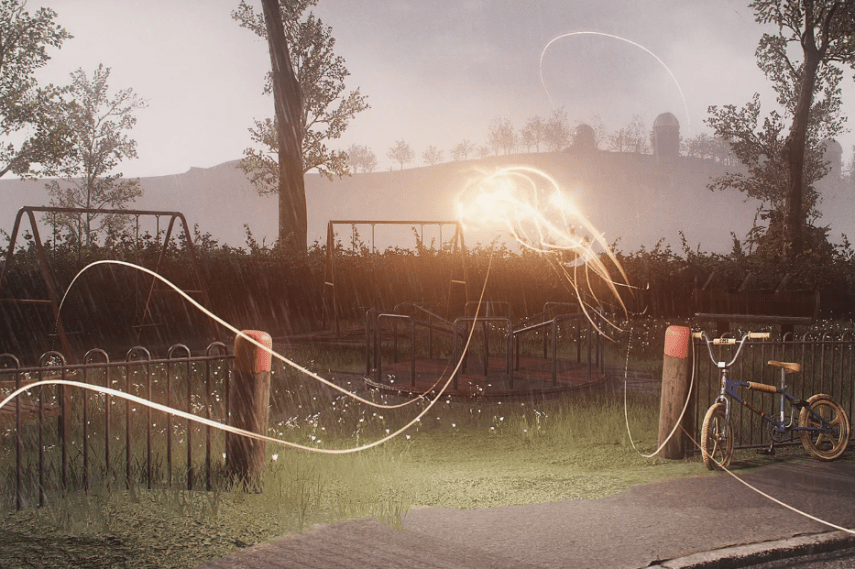
Fresh off their hit Dear Esther, The Chinese Room takes the mysterious disappearance of people from the scope of a family in Gone Home to that of an entire English village’s citizens in Everybody’s Gone to the Rapture. Players assume the role of Katherine “Kate” Collins, which is funny because Gone Home’s protagonist was named Katie. Set in 1984, Dr. Kate Collins and her husband travel to the fictional Shropshire village of Yaughton. Players can interact with floating lights throughout the world, most of which reveal parts of the story.

Feel free to turn on radios, answer the phone, and test the power switches as you unearth why an entire English village’s people vanished. Could this be the beginning of the Rapture and the end of days? Or has some mysterious fate only affected this one village? You’ll have to play Everybody’s Gone to the Rapture to find out.
That Dragon, Cancer (January 2016)

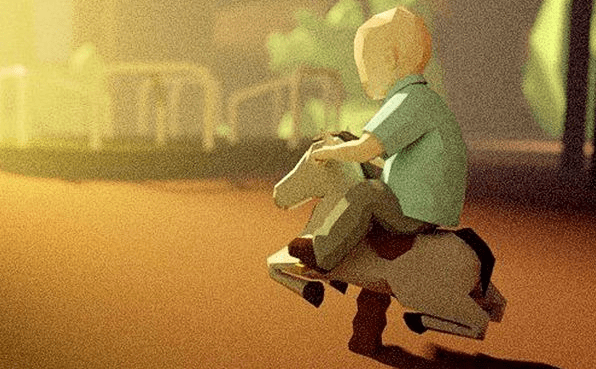
Get ready to reach for the tissues. This next entry is a tear-jerker. Created by Ryan and Amy Green, Josh Larson, and a small team under the name Numinous Games, That Dragon, Cancer is an autobiography based on the Greens’ experience raising their son Joel, who was diagnosed with terminal cancer at twelve months old. Though given a short time to live (four months tops), Joel survived for four more years before succumbing to cancer in March 2014. That Dragon, Cancer harkens to the age of point and click games–see, point and click games are closely related to Walking Simulators–and uses the medium of pointing and clicking to experience the Greens’ lives through interactive storytelling.

That Dragon, Cancer illustrates a video game’s storytelling potential. At first, Ryan and Amy developed the game to relay their personal experience with Joel while they were uncertain of his health, but following his death, the Greens reworked much of That Dragon, Cancer to memorialize and personalize their time and interactions with Joel for the player. Joel Green may have had a short life, but That Dragon, Cancer ensures he won’t be forgotten.

it’s always monday (November 2016)

I’ll start this write-up by commenting on it’s always monday’s title. I love its use of all lowercase letters. Yes, Monday is supposed to be capitalized, but the lack of capital letters gives the impression of words in the middle of a sentence. Brilliant. I debated including it’s always monday on this list. To put it mildly, it’s always monday is surreal.

Players assume the role of an office worker who, as the game’s title implies, is stuck in a loop of perpetual Mondays. My bad…mondays. Frequently, you’ll find moments where a coworker is cut into slices. The player character will freak out–naturally–and then notice a pizza on the conference table and comment, Today’s a pizza day. Score! What? I often wonder what it’s always monday’s overall message is supposed to be. Perhaps we’re supposed to feel trapped in a malaise where we want the character to feel something. Anything. But it’s always monday’s workplace offers plenty of bizarre occurrences that run counter to the mundane.
What Remains of Edith Finch (April 2017)

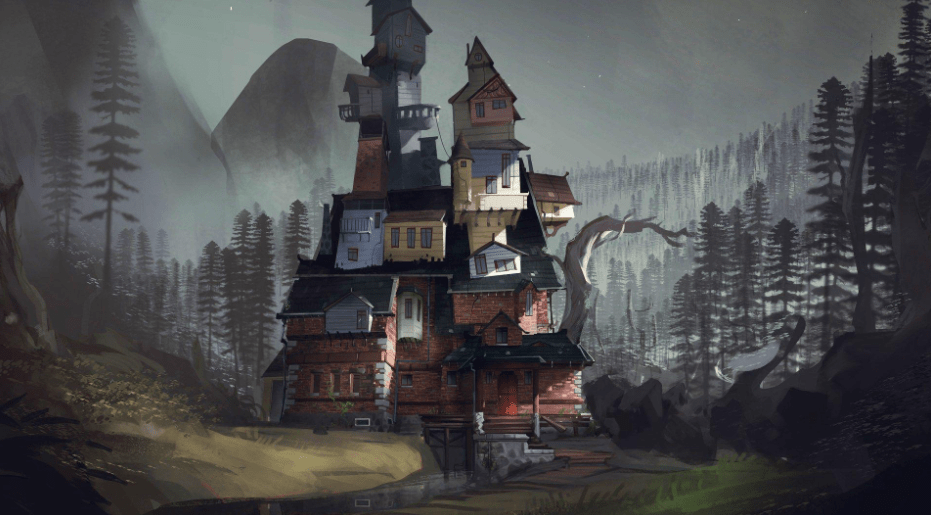
What Remains of Edith Finch borrows concepts from Gabriel Garcia Marquez’s One Hundred Years of Solitude and applies them to an interactive video game where we follow the titular Edith Finch explores her family home. Like Marquez’s work, What Remains of Edith Finch ventures into magical realism. The game’s narrative works as an interconnected anthology series, and it’s all the better for it. I don’t know which member of the Finch family’s stories I like best. What Remains of Edith Finch is a triumph of video game storytelling. Giant Sparrow took everything they learned from The Unfinished Swan to create a singular gaming experience.

I could go on about What Remains of Edith Finch, but I’ve discussed it in the past. Giant Sparrow even made our 3 List of 3: Video Games as Art post. That was another shameless plug for one of our previous lists. You should check it out.
Walking Simulators in the 2020s: Exit 8

Walking Simulators fizzled out after 2017. I don’t know if the backlash of these games reached a fevered pitch or if the designers who make these games needed time to create something new. Death Stranding was released in 2019. To date, it may be the closest a AAA game has come to a Walking Simulator. It certainly incorporates a lot of Walking Simulator concepts into its gameplay. But our lack of Walking Simulators in the early 2020s can be attributed to the pandemic.

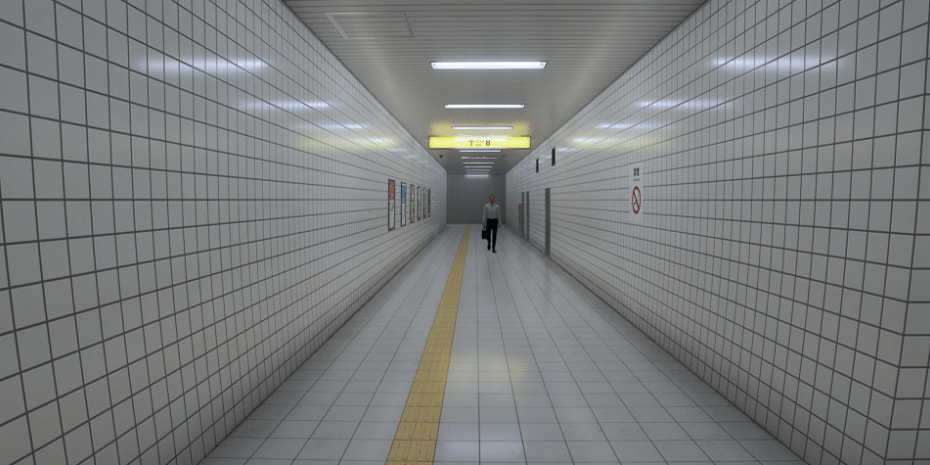
All video game struggles in the early 2020s, but we’ve seen a resurgence of Walking Simulators since 2022. Exit 8 has a premise similar to the Backrooms. Players explore the liminal space of Japanese subways. I’m writing this post in June, but by the time this post goes live, a live-action film based on Exit 8 should have been released. Walking Simulators have gripping stories and an avid fan base. I can’t wait to see what this video game genre has in store over the next decade.

If you’ve made it this far, you’re awesome. We all know it. Be sure to comment on your favorite Walking Simulator or an idea of a better name for this video game type. Thank you for reading, and wherever you are, I hope you’re having a nice day.

3 Lists of 3: Video Games as Art

This 3 Lists of 3 article was written years ago and never posted. I’m unsure why. I decided to edit it a bit before posting. There’s even a link to an old Flash game I included that I had to check and see if it still works. It does. Yay!

Younger Kyra may sound a little different than current day Kyra. Hopefully, this still holds up. If it doesn’t, new content is on its way. Take it away, younger Kyra.

The argument of video games as art has raged for a few decades now, and I’m not sure it’ll end any time soon. Many of you have your own opinion and can’t be swayed one way or another and a little writeup won’t change your mind. Others don’t care if video games are art. But it is something that’s found its way in higher courts of the United States because of video games’ status as freedom of speech, so maybe video games as art is a valid discussion.

I’m unsure. To be fair, I’m unsure of most things but let’s break down the argument against video games as art (to show a counter point) with the first list before going into the next two lists that’ll suggest video games are art. I’ll try to be as fair as I can, but I do stand with one side. Oh well, let’s get to the lists.


1) Arguments Against Video Games as Art


Roger Ebert

Bear with me, folks. This first one will be a long one. Video games as art never had a more adamant opponent than Roger Ebert. Ebert became an unlikely adversary and may never have voiced his opinions on the topic if he wasn’t asked about his thoughts on the video game Doom after he gave the film Doom one star. When asked if Doom received that low of a score because it was based on a video game, Ebert fired back.

“To my knowledge, no one in or out of the field has ever been able to cite a (video) game worthy of comparison with the dramatists, poets, filmmakers, novelists and composers. That a game can aspire to artistic importance as a visual experience, I accept. But for most gamers, video games represent a loss of those precious hours we have available to make ourselves more cultured, civilized, and empathetic.”

The above statement by Ebert doesn’t make any specific points against video games as art. Essentially, it claims that video games aren’t art because they’re a waste of time. It’s telling that Ebert sandwiched filmmakers in the middle of his group of valid artists, so that the medium he dedicated most of his life to wouldn’t be put under the microscope again (there were plenty of people who pushed back against films as art), but Ebert did say once that “hardly any movies are art,” so his reluctance to add video games to art’s canon is consistent. Regardless, Ebert’s major point during a panel discussion a year later in 2006’s “An Epic Debate: Are Video Games an Art Form?” was salient.

Too Malleable to be Art

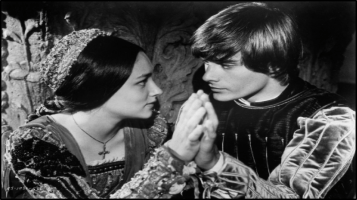
In a 2006 debate, Ebert claimed that video games were too malleable to be considered art. He posed the idea of a video game version of Romeo and Juliet where players could pick a happy ending. That would ruin the original artist’s vision. For art to exist, an artist’s vision must remain intact, so I’d agree with this. He made an obvious choice with Romeo and Juliet. A happy ending would be terrible. But there are a couple of issues with this point.

First, nothing prevents a movie company from making a Romeo and Juliet film with a happy ending; one may already exist. Second, changing a Shakespeare tragedy so that it has a happy ending is an extreme example and one based on a story that exists outside of video games. Video game stories provide options for players and there’s a case for any of those options as the original artist’s vision.

Like Black Mirror’s Bandersnatch, video game directors can create multiple endings, each as valid as the next (which may be debatable at times). Games have player choice, but many of the better ones have the illusion of choice like Life is Strange or Telltale’s The Walking Dead Season One. There are ways to eschew Ebert’s claim that video games can’t retain a director’s original vision. Still, it’s an interesting position and one with merit.

They’re Objective Based

Ebert’s next thought-provoking claim came in a 2010 essay. “One obvious difference between art and games is that you can win a game. It has rules, points, objectives, and an outcome.” This one is more difficult to call into question. Plenty of people in the video game industry reject the idea of video games as art because they’re objective based. The next year, Brian Moriarty (of “Wishbringer” and “Loom” fame) gave a lecture entitled “An Apology for Roger Ebert.” Moriarty agreed with Ebert and expanded Ebert’s argument with making video games an extension of traditional rule-based games and that there has been no call to declare games like Chess and Go to be art.

Phew! Again, that point is difficult to argue. There must be some objective that drive art, even if it’s subconscious. To paraphrase Ebert, art makes us more cultured, civilized, and empathetic. Perhaps one of these, specifically the one that fosters empathy or seeing the world from another’s perspective, is an objective.

There are even some video games that try and promote empathy, and not all video games have clearly defined objectives. Thatgamecompany, which will show up again, has produced a few games that fit in this category.

I’ll paraphrase Ebert once more and say that hardly any video games that I play are art; most of the games I play are just fun. But some of the following games might qualify as art.

2) Games

Braid

 It’s difficult to cover any of these games without getting into major spoilers, so consider this your first of many spoiler warnings.

Braid has been out for some time, so a few of you may already know what’s in the offing. Braid begins like a typical Super Mario Bros. game. The princess is captured by a monster, and you must rescue her, but Braid uses this trope to throw off gamers. Once you rescue the princess, you realize that she’s been running away from you the entire game and that you were the monster. Braid does a great job of showing that perspective is everything. A villain never believes they’re in the wrong. Everyone is the hero of their own story, but others may not view you as heroic.

Shadow of the Colossus could’ve taken this spot for similar reasons, but so many people include Shadow of the Colossus on lists like this, and I wanted to be different. How long do you think it took me to realize that I just included it on this list anyway? Drat. Everyone thinks they’re the hero of their own writeup.

Brothers: A Tale of Two Sons

Shock: more spoilers. Huge spoilers!

Brothers: A Tale of Two Sons centers on two brothers. Players control the younger brother with the left analog stick and the older brother with the right analog stick. That distinction comes in handy when at some point the older brother dies. Players have spent plenty of time using both analog sticks and suddenly the right one does nothing. It’s gone.

Just like the younger brother losing his sibling, the physical reminder that the right analog stick doesn’t work haunts gamers. There are plenty of moments when gamers want to use the right stick but can’t. It’s a visceral feeling of loss, but that changes when the younger brother encounters a flooding river. The younger brother can’t swim and then he hears the voice of his older brother urging him to try. At this point, the right stick becomes active again and the younger brother can continue. It’s a beautiful moment, and I’m sorry if I ruined it for you by spoiling it, but I said spoilers twice. I’ll take partial blame.

Loneliness

This next one, Loneliness, is short—really short, like five minutes to play the entire thing short—and you can play it right now because it’s a web game.

https://www.necessarygames.com/my-games/loneliness/flash

I’ll wait for you to play it, because I know some of you just skipped right over the link. Here’s the link again. It’s well worth the less than five minutes to play. Trust me.

https://www.necessarygames.com/my-games/loneliness/flash

Alright. That’s long enough. Loneliness does an excellent job of portraying its namesake. It reveals as much about the player as it does the subject matter. Some players will move their square toward the other ones entering the screen. Others like me will move their square away from the other ones, thinking they’ll harm them. At some point, I began moving my square toward the others just to see what might happen if the squares touch. It doesn’t take long to see that the other squares will move away and disappear from the player’s square, leaving them alone. Isolated.

Older Kyra here. This is the Flash game I mentioned at the beginning of this write-up. Years ago (circa 2017 or so), the designer left players who finished the game with the following statement:

“Children and adolescents in Korea are the least satisfied with their lives among 26 member countries of the OECD (Organization for Economic Cooperation and Development). Many report loneliness as a major factor. I taught those kids for a year. This notgame was made for them. And for anyone who has ever felt lonely.”

The squares are inanimate objects and the game simple, but few who play this game will leave it without a sense of loneliness. Loneliness is one of many empathy games, and the empathy video game subgenre is a great argument for video games as art.

 3) Game Companies

Thatgamecompany

Kellee Santiago challenged Roger Ebert’s 2010 essay on multiple occasions and for good reason. Her company, Thatgamecompany, has several games that could be viewed as art. Each one grows on the ideas set by the previous one. Gameplay and creative vision leap from Flow to Flower to Journey. We’re headed for major spoilers for all three games, especially Journey. You’ve been warned.

Flow has players guide a small, multi-segmented worm through an aquatic environment. The game doesn’t have menus. As soon as you load the game, it goes straight to a top-down world where multiple planes are stacked atop each other. The player may choose to have their worm-like creature eat other organisms to go down a plane, but it isn’t necessary. Most creatures one’s worm encounters are non-confrontational, so like Loneliness, the way a player chooses to play Flow reveals something about them.

Flower does something similar with flower petals. Each of Flower’s six main levels focuses on one of the flower’s dream. The player controls the wind as it sends the petals off a city apartment windowsill and across the countryside. There are no enemies, hit points, or time limits. Flower plays like a video game version of Fantasia, where the music and visuals tell a story with speaking no words. It does what designer Jenova Chen intended: create a game that’s intended to arouse positive emotions.

Journey is the perfect name for Thatgamecompany’s third outing. It’s a journey of sound (with its brilliant score). It’s a journey of discovery. It’s a journey of emotions. Players begin the game by flying with their magical scarves until they land abruptly. The gamer may believe they’ve done something wrong. The game doesn’t take you by the hand and tell you what to do, but that’s the way the designer intended the story to go. The world turns dark, then cold, until your magic scarf shrivels. You’re alone, but you’re not alone. Others are there if you need them and that uplifting message—again, without saying much of anything—leads Journey toward the empathy game subgenre and on several critic’s lists for greatest video games of all time.

Giant Sparrow

Giant Sparrow hasn’t been around as long as Thatgamecompany, but their two major releases are just as worthy for inclusion on this list: The Unfinished Swan and What Remains of Edith Finch. Again, there will be spoilers.

The Unfinished Swan centers on a young boy Monroe whose mother has recently died. Monroe’s mother was a painter who was known for never finishing a painting and having over 300 incomplete works. Monroe’s orphanage tells him he can only keep one of his mother’s paintings; he chooses her favorite, a painting of a swan missing its neck. One night, the swan escapes its painting, and Monroe chases it across a mysterious painted world. The Unfinished Swan deals with acceptance. Monroe chases the memory of his mother until he sees his mother in himself and knows that she carries on through him. Eventually, Monroe earns his mother’s magical silver paintbrush and he finishes his mother’s painting and adds a pair of baby swans.

What Remains of Edith Finch also deals with loss and acceptance of that loss, but it tackles the subject in a very different manner. In the present, the player-character, which (spoilers) turns out to be Christopher Finch who is Edith Finch’s son, takes a ferry to Orcas Island off the coast of Washington state with the journal of Edith Finch in tow. The journal reveals that the Finch family is under a curse going back at least five generations with all but one child of each generation dying from unusual causes, leaving a sole child to continue the family. The Finch homestead never repurposes any one room. When a family member dies, their bedroom becomes a shrine. Each room builds or plays off the other in an anthology of remembered catastrophes, resulting in a tale that’s equal parts Twilight Zone and One Hundred Years of Solitude and neither at the same time. What Remains of Edith Finch, like many other games on these lists, isn’t long, but the images and story last much longer than its playtime.

Dontnod

Dontnod—or Don’t Nod or even DONTИOD—owes its inclusion on this list for its Life is Strange series of games. It’s yet to be seen if they’ll build more franchises off the success of this title, but Life is Strange is a great character-driven game that does multiple endings well.

Life is Strange is set in the fictional town of Arcadia Bay, Oregon and follows Maxine “Max” Caulfield as she navigates the twelfth grade at Blackwell Academy (an art-centric high school). The town of Arcadia Bay is doomed to experience a tornado in the future, which Max catches a glimpse of in photography class, but Max can use her newly developed ability of rewinding time to change the future. Life is Strange delves into bullying, abuse, memory, and identity. Unlike many other triple A video games, the bulk of Life is Strange’s budget went toward writing and voice actors, and it shows.

There are only two possible endings and the best way to describe them is choosing the least objectionable option of the two, but like most things in life, that choice is subjective and whichever one the player chooses reveals something about the player. Both end-game choices are valid and stay true to the designer’s vision.

Conclusion?


Older Kyra is here again. While revisiting this article, I may have unearthed the three reasons why I never posted this 3 Lists of 3 several years ago. One, it’s a long post. Two, young Kyra even said that this article wouldn’t change people’s perspectives; you’re in one camp or the other. Three, some could say that it paints Roger Ebert in a bad light. Perhaps. I have a lot of respect for Ebert. Was he perfect? No. No one is. I’m sure many of you spotted plenty of flaws in my arguments and the occasional typo or three or nine thousand. They’re over nine thousand!

Ultimately, art is subjective. Art changes over time. Some of these games weren’t available during Ebert’s lifetime. Others were ones Ebert wouldn’t have known. I’m still tickled that he placed “filmmakers” in the middle of his “real artists” list. I see what you did there, Ebert. Tee hee!


I’m sure I missed more than a few things, or you’ll see things differently. Let me know your thoughts in the comments.