Quirky Video Game Review: Papers, Please

Papers, Please by indie game developer Lucas Pope has received widespread acclaim. Who knew that working as an immigration officer in a fictional Eastern Bloc country named Arstotzka would strike a chord with so many people? I’m not sure if any empathy game (a type of role-playing game that asks players to inhabit someone else’s emotional world) has ever received this much attention.

Hey, hey! Kyra Kyle here. Today’s post returns to a much older review I did for a now-defunct website. Unlike most of the video games I cover on Geekly, Papers, Please is a paid game. You can get a good deal on the game through sites like Steam or GOG (Good Old Games). Usually, Papers, Please sells for around $10, even without a sale. I’m reuploading my almost six-year-old review of Papers, Please to Geekly with a few tweaks to tighten the review and match our criteria. Six years is a long time. Let’s see how well Papers, Please stands the test of time.

Mechanisms

Mechanisms: 10/10

I have never seen a game as immersive and nerve-racking than Papers, Please. It wasn’t just Papers, Please’s ethical choices. There were plenty of those that made me nervous. The frenetic pace of checking people and their documentation as they crossed Arstotzka’s border took a lot out of a person.

If one divorces its setting (good luck with that), players gain an appreciation for the long lines one may encounter at an airport or the DMV. Papers, Please functions as an “empathy game,” or as Papers, Please’s designer Lucas Pope would say, an “other people simulator.” There aren’t too many games that ask players to inhabit another person’s life.

Papers, Please is one of those games. There’s a reason why Papers, Please is cited as a video game that suggests that the medium be treated as an art form.

(Note: Geekly posted a “3 Lists of 3” for Video Games as Art, check out that post with this link.)
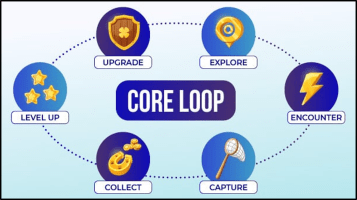
Gameplay Loop

Above Image from GameDesigning.Org

Gameplay Loop: 8/10

It doesn’t matter how well Papers, Please embodies government paperwork, it’s gameplay centers around government paperwork. “I wish someone would make DMV: The Video Game,” said no one ever. You know, I might just play DMV: The Video Game. Don’t @ me. The tedium of checking passports and other supporting documents is mind-numbing at times. Fortunately, there’s the threat of death and supporting one’s family to spice up the act of checking IDs.
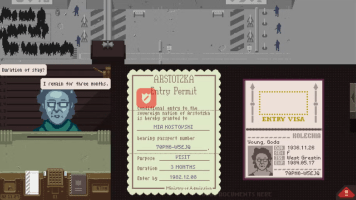
The choices the player makes between each day are a large part (if not the largest part) of Papers, Please’s narrative, and by extension its gameplay. The inspector may be given choices like adopting his niece, but his family goes without food or heat for one day. Do you help EZIC and risk being found out by the government? Do you do what you’re told and uphold Arstotzkian law? Glory to Arstotzka! But these are overarching choices, Papers, Please also gives the player plenty of choices and moral dilemmas within their job and daily routine.

An immigrant could ask to be let into the country so they can reunite with their children, but any violation of protocol results in a citation. Too many citations and the player character could be charged fines and possibly thrown in jail—or even executed. The choice to grant leniency to someone could negatively impact the player or the player’s family and that creates plenty of tension with which choices the player makes.

Story or Narrative

Narrative: 8/10

Whew. There’s a lot going on with Papers, Please’s gameplay and I may have covered some narrative structure in the previous section because gameplay and narrative are so intrinsically linked in Papers, Please. But narrative is where this game shines like an eagle, or some other mixed, cliched metaphor.

Papers, Please paints its narrative in the game’s blank space. Sure, there’s the tedium of checking government documents (and much of the game is centered around that), but the story of the inspector and his family comes in between the inspector’s daily chores. Do you uncheck the expenses for “food” or “heat” to purchase something else, knowing that your family will suffer? Do you confiscate passports, accruing warnings, or even financial penalties, so that you can doctor those passports for your family and escape? Do you keep your head down out of fear of being caught? All of these are valid choices. All these choices, or illusion of choices, puts the player in the role of the inspector.

Much like the gameplay, I can’t tell where the “story” for Papers, Please ends and the storytelling begins. It’s difficult to separate the two and that’s a wonderful thing. So many games we cover on Geekly are easy enough to separately grade a game’s narrative and storytelling. I’m still going to try to separate the two.

Papers, Please has a compelling story because its premise is compelling. But the game’s storytelling is where it truly shines.

Storytelling

Storytelling: 10/10

I mentioned earlier about Papers, Please telling its story in the game’s blank space. I’ve never seen a video game do this is such dramatic fashion. Papers, Please doesn’t just go for large moments and big decisions. It sprinkles in some nice character moments like after the first time the inspector tranquilizes a terrorist and his son hands him a drawing with the text “Arstotzka’s Hero.” Papers, Please’s character building and story come out in ways that only a video game could tell a story or build characters and that’s why it’s received several awards.

I don’t want to get too far into Papers, Please’s storylines, wading deep in spoiler waters, I may have said too much already, but Papers, Please not only challenges preconceived notions of right and wrong and what someone may or may not do if put in an untenable situation, but it also challenges video games to branch out with new forms of storytelling.

Sure, there are some moments where characters feed the player exposition and some of the world-building comes from newspaper headlines or clippings, but they aren’t used in excess. Papers, Please does a good job of showing instead of telling. It does an even better job of immersing players in its world, so much so that an indie film based on the game exists.

It’s difficult to separate Papers, Please’s narrative form from how it builds its characters, world, and story, but that may be the point. It receives high storytelling marks if only with innovation.
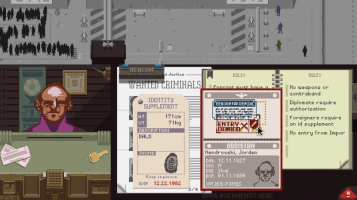
User Interface: 5/10

While Papers, Please takes things slowly and raises the temperature of its difficulty a little over time, it doesn’t hand-feed players. The inspection booth can be difficult to navigate at times and chat rooms and question-and-answer sites are littered with places where gamers get stuck. Papers, Please could use more of a tutorial, especially in later rounds of the game. The rulebook does point out changes to the ruleset, but it’s too easy to mess up and restart over a day or two or thirty.

Graphics: 8/10

Papers, Please mirrors the era in which its narrative is set: the early 1980s. Its 8-bit sprites add to the overall vibe of the game, but the gameplay suffers at times as a result.

Pixelated portraits can make cross-referencing passport photos, and other supporting documents, to a person a chore. On the other hand, the graphics amplify the game’s difficulty and provide a double dose of meta-gaming. Government documents often get damaged and become illegible, even for people whose job it is to deal with them, so the graphics are in keeping with the era and the simulation it’s trying to achieve.
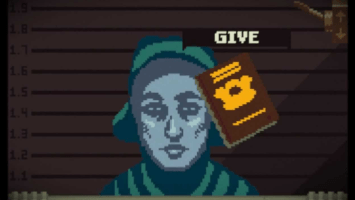
The cruder graphics also grant Papers, Please a touch of abstraction. Sometimes players must fill in the gaps when something awful befalls a would-be immigrant. Other times the player is spared a gruesome scene. Either way, the player is actively engaged in this world and anything one creates in their imagination is worse than what a visual medium can show. Horror films have known this for decades.

Still, I must dock Papers, Please a couple of points for its graphics. That’s her face? She looks nothing like that, and I just wasted a few seconds clicking buttons and waiting for results. There are limits to the copious number of times I erroneously scanned people’s faces.
Audio: 7/10

Papers, Please doesn’t use that much music, but the music it employs drives home the point that Arstotzka is an Eastern Bloc country. The main theme, which plays at the beginning of each day, feels like the protagonist inspector is high stepping his way to work each morning.

That’s fantastic. I can, and have, listened to that song on a loop. That’s not a good sign, but at least I didn’t dance the Mamushka, “the dance of brotherly love.” Mamushka!

While the rest of the music is mostly forgettable, character voices and other sound effects come from public sources—one could download midis or wave files from sites like Soundcloud and create one’s own government document thriller—but Papers, Please’s usage of these sound clips is well done. Garbled voices conjure the idea that what immigrants or superiors or peers say to the protagonist doesn’t matter like much adult dialogue in a Peanuts television special. Heck, even what the protagonist says doesn’t matter to him. He’s going through the motions.

The main theme elevates the rest of the soundtrack, but I’m counting off a few points here. Papers, Please’s soundtrack is largely functional.

Replay Factor: 8/10

This is a difficult category to grade. On one hand, Papers, Please has plenty of replay value and even demands players to repay it at least a handful of times. But once one achieves a dozen or so of Papers, Please’s twenty possible endings, I’m not sure if there’s a lot of replay value after doing so. Lucas Pope included an endless mode once a player finished the game at least once, but the game loses something with that game mode.

With twenty endings there’s still plenty of replay value. One can finish Papers, Please in under an hour. Heck, one could deliberately fail as an inspector and end the game in less than five minutes. I put in over 20 hours for this review and still found avenues I could navigate the story.

Aggregated Score: 8

Even after reexamining Papers, Please, I ended up with the same score of eight. I wasn’t anticipating that. I said that I tweaked the scoring criteria to match our modern reviews, but I revisited the game, trying to see if I spotted anything different. Our new scoring criteria could’ve changed Papers, Please overall score, but it didn’t. Papers, Please is the best game (to date) of the ones we’ve covered on JK Geekly. Even after a decade past its original release, Papers, Please is worth your time.

Tabletop Game Review: Comic Hunters

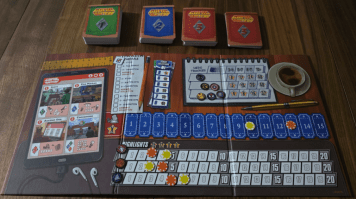
Comic Hunters casts players as comic book collectors trying to collect the most impressive comic book collection over a single weekend. Comic Hunters also marks the first of several games I picked up over Christmas. I’ve had enough time to play these games for a review so be on the lookout for more games I picked up over the holidays.

Hey, hey! Kyra Kyle here. We’re taking a break from playing as superheroes to collecting the works in which they appear. Comic Hunters has an intriguing premise. It also features a heap of iconic Marvel comic book covers. I can’t want to get into the review, but before we get any further, let’s look at Comic Hunters’ fine print.

The Fiddly Bits

Designer: Robert Coelho
Publisher: Arcane Wonders and Spin Master Ltd.
Date Released: 2020
Number of Players: 1-4
Age Range: 10 and up
Setup Time: 5-10 minutes
Play Time: 45 minutes

Game Mechanisms

Auction: Turn Order Until Pass
Closed Drafting
Hand Management
Open Drafting
Set Collection

Game Setup

Comic Hunters has special setup rules for games with fewer than four players. It even has a solo game variant. These rules aren’t too difficult (mostly removing cards and other bits from play that relate to the removed cards). We won’t include those special rules here. We’ll continue the game setup section as if you’re playing with four players.

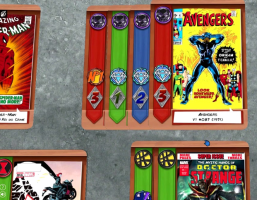
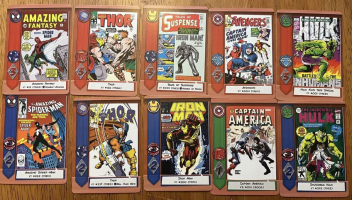
Comic Hunters has three card types that represent different comic book eras: level 1 (2000-present), level 2 (1980s and 1990s), and level 3 (1960s and 1970s). Each of these card types (with unique card backings) also represents locations: level 1 (comic book stores), level 2 (flea markets), and level 3 (auction websites). Shuffle each one of these three decks separately. Without looking at the cards, take ten cards from each of these decks to make a fourth deck. Shuffle this fourth deck. This will be the convention deck.

Place the checkmark token in the first Schedule box of the first round. You will play rounds according to the Schedule.

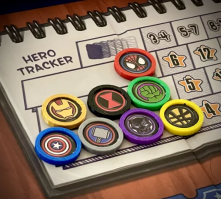
Assemble and organize the 8 Hero Tokens on the Hero Tracker Table. In a 4-player game, draw and place 1 Hero token for the first row, 3 Hero Tokens for the second row, and 4 Hero Tokens for the third row. The value of these heroes’ comic books will vary with the top row being the most valuable and the bottom the least valuable.

Each player takes their Player Token of their chosen color and places it on the “15” space of the Secret Stash track. This will be your money with which to buy lots during auctions. Any of your remaining stash becomes victory points at the end of the game.

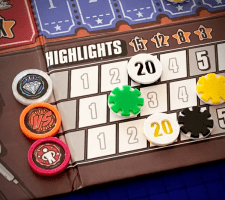
Next, setup the Highlights section. Draw one of the Highlight Tokens and place it on the leftmost space of the top row. Do the same for the next two rows. Each of these Highlight Tokens denotes something special about a comic book. They can be a character’s first appearance, the first issue of a series, an epic battle, a new look (for a character), or a special edition. Players will score points depending on who has the most comic books that match the in-play highlights. Since there are five tokens and you’ll only play with three Highlight tokens, scoring changes from game to game.

Finally, hand one player the First-Player Token. The rules suggest that the player who’s last seen a Marvel Movie or read a Marvel Comic should go first, but you can choose the first player randomly.

Game Flow

Comic Hunters is divided into 3 rounds. Each round has 2 stages: Treasure Hunting and Assemble Your Collections. During the Treasure Hunting stage, players will visit 3 of the 4 possible locations to acquire comic book cards. All you must do is follow the rules of the location indicated by the schedule. Once the first location is played move the schedule to the next location. Each location plays differently from the next.

Treasure Hunting

Comic Book Store

The comic book store plays with classic closed drafting rules (like Sushi Go). Players get dealt four cards from the level 1 deck. They select one card and pass the cards they didn’t choose to the player to their left. This continues until there are no more cards left to pass.

Flea Market

In this location, players take turns, clockwise, starting with the player holding the “First-Player” token. To set up the Flea Market, make a column from the level 2 deck equal to the number of players. Reveal a card from the level 2 deck to place in the first position of each Row. When it’s your turn, you must perform one of two possible actions: reveal a card from the deck and place it to the right of the rightmost, available space in one of the rows, or pick up all the cards from one Row of your choice. Rows can have up to four cards.

Auction Website

To set up the auction website, lay out four rows of the level 3 cards. The first row must contain 5 cards. The last row must contain 3 cards. The middle two rows contain 4 cards. These rows are Lots up for auction. The player with the First Player Token selects which Lot to bid during the round. They open the bidding with at least 1 (of their secret stash). The auction website plays like a traditional “bid or pass auction.” On their turn, a player either bids higher than the current bid or passes (and they’re out for the rest of the auction). Highest bid wins. Whenever one lot remains, the player who hasn’t obtained a lot gains the last lot. They must spend three of their secret stash if they can.

Convention

To set up the Convention, take 24 cards from the top of the Convention deck and arrange them into a grid with 5 columns and 5 rows, leaving the center position empty. Starting with the first player and then going clockwise, each player will take turns doing the following in order: slide one card left, right, up, or down in the grid, moving it through the empty spaces to a new position, and then select all the cards in a column or row that contain the same hero you name. So, you could select all the Spider-Man comics in a row or all the Black Panther comics in a column and so forth. Each player will have two opportunities to perform this action. The catch is that the player who selects last will select twice in a row and the second selection will occur in reverse turn order.

Assemble Your Collections

In this selection, player put cards from their hands down on the table, starting comic book collections for a specific hero or adding comic book cards to existing collections. Player will pay the market value for each card (1 for level 1 cards, 2 for level 2 cards, etc.) with an equal number of cards of that same value. So, you could pay for 3 level 1 cards by discarding 1 level 3 cards. Any cards that you discard or choose not to buy will be added and then shuffled into the Convention deck. Cards in your hand do not carry over to the next round, only cards in collections remain.

Final Scoring

After the final “Assemble Your Collections” action on the schedule, players score their collections. There are several ways to score: collection size (and value of specific heroes), varied collections (collections of different heroes), highlights, and secret stash. I won’t go into detail for each of these here, but there are plenty of ways to score a bucket of points. The person with the most buckets of points wins.

Review

Comic Hunters uses a lot of ways to accrue cards and just as many ways to score those cards after you obtain them. For the most part, the various locations work well enough to simulate the experience of their locations. An auction mechanism is a no-brainer for an auction website. The flea market feels right. And comic book conventions can be the wild, wild west when it comes to what kind of comics are on offer. So, the random comic book cards found during the Convention phases track. I enjoy all of that, but it comes at a cost. The various ways of acquiring cards can get clunky.

I struggle to shift from one mode to the next. While I like the variety, I focused means of acquiring cards could’ve worked better. I would’ve gotten into a better flow state faster with Comic Hunters. These various means with which to obtain cards also made setup and explaining the rules more difficult. Each ruleset is easy enough to explain, but the best way I found for teaching the game was giving a quick rules explanation before each location like I’m the “about the game” page before a Mario Party minigame. And these disparate mechanisms made Comic Hunters feel like a collection of minigames instead of a cohesive experience.

You may have gathered by how I explained the rules above, but the comic book store and auction website locations are lackluster. I like them from the standpoint that I could point to other games that use those same mechanisms, but those mechanisms are old hat. The flea market and convention locations are a lot more interesting and fun. I would’ve loved to play those two locations multiple times (lowering the number of minigames from four to two). I also like the idea that you must spend card values to play cards into a collection. This was a clever touch and lowers the number of bits needed. Despite any of its shortcomings, I enjoyed Comic Hunters. When it tries new things, those new things are fun.

But I can’t move to the verdict without mentioning the quality, or lack of quality, of Comic Hunters’ components. I’ve seen board game manufacturers’ sample products, and most of these companies don’t offer punch board as thin as the tokens found in Comic Hunters. Furthermore, the cards are off-center so you can see the white space between cards, and they slant at odd angles. The card material feels cheap. I don’t usually care about component quality, I’ve played my fair share of prototypes with ripped pieces of paper as chits, but I was shocked by the shoddiness of Comic Hunters’ production value.

Too Long; Didn’t Read

Comic Hunters has a fun premise and contains some interesting game mechanisms. Unfortunately, the game also deploys some tired game mechanisms that feel clunky, and the production value leaves much to be desired. Still, its low price point ($20-$25) means that Comic Hunters packs a lot of game per penny.

The State of Video Game Reviews and Free-to-Play Games

Hey, hey! Kyra Kyle here. I haven’t shared a video game review in quite a while. I started by covering a bunch of Gacha games and intended on including them all in this post, but I pared that down to one gacha Genshin Impact, which will post tomorrow. I found that most video game reviews aren’t effective when discussing free-to-play video games. So, let’s give video game reviews the enema it needs.

Video game reviews often cover things that are easy to spot. Visuals? You can see screenshots: unnecessary. Audio? I guess that’s helpful, but again there are video shorts, and one can get the feel of a game’s audio before purchasing. Gameplay might be the most useful and some sites will even include a video game’s replayability. But we’re living in a free-to-play video game world, and there are video game review categories that get overlooked.

Respectful of a Player's Time

Respecting a player’s time may be the biggest omission. Replayability is fine and all, but video gamers are getting older. So many of us are parents and grandparents and even the ones who don’t have kids have other real-world obligations.

Respecting a player’s time has become more important than replayability. I said it. Whenever I see a game boast that it has 100s of hours of replayability, I lose interest. I don’t need another part-time job playing a video game for certain unlockables or item upgrades. That’s good for someone whose job is video games or someone still in grade school. The rest of us have other things we could be doing or other things we need to do.

Video Game's True Cost

True cost. Free-to-play games need a true cost category. Can players effectively play a game without buying the battle pass every patch? Yes. Battle passes should also have their own category, because most free-to-play games include one. Heck! Several paid games include a battle pass in today’s climate.

But Gacha games, which have gained popularity in recent years because of their monetization system, find ways to price-gouge players with drop rates for characters and items. But Kyra, you could play 40 hours a week to—see respecting a player’s time. I guess this one could also be called respecting a player’s money.

Mechanisms

I’d take it further with splitting gameplay into mechanisms and gameplay loop. Mechanisms are what you’re mechanically doing in a game, but what one does in a game only matters if the game mechanisms are unique. And gameplay loop is how satisfying and engaging the mechanisms work together as a whole.

Gameplay combines the two ideas. I guess the combo works, but separate categories may attract different gamers. Some like playing a unique game even if the combination of elements gets clunky. Other gamers look for a cohesive whole.

Storytelling

I’d do a similar thing with story or narrative. Storytelling and a story are not the same thing. John Updike’s A&P has a simple premise, but Updike’s storytelling elevates the story into a classic. On the flip side, Genshin Impact has a great story if you can follow it, but Hoyoverse has done a piss pour job at storytelling. Oops! That may have spoiled the Genshin Impact review.

With all of that said, let’s see if we can pin down a good set of video game review criteria before covering the first of a few larger gacha games. But before we do that, we’ll need to discuss what makes a gacha game for the folks who may not know. For those of you who know what a gacha game is, feel free to scroll past this next section. I’ll try and keep it short.

Gacha Games

Gacha Games

Gacha games have been around for decades. One of the first, MapleStory released in 2003. Yikes! It has been decades. But the polish and larger budget and success of 2020’s Genshin Impact launched gacha games into mainstream popularity.

Gachas have always been popular, especially in eastern Asia, but Genshin’s blend of Zelda: Breath of the Wild’s gameplay and the gacha monetization system brought in new fans. Let’s be real. Genshin is a Breath of the Wild clone. So, the only new thing Genshin really introduced to that formula was the gacha system. So, let’s discuss what makes a Gacha game.

Gacha Machines

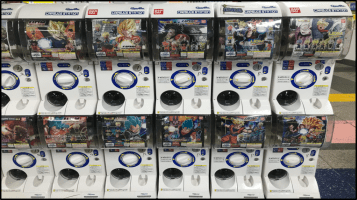
Gachas work like collectible card games or like the gacha machines the game type borrows the word. Gacha machines are the machines one can find at the front of a grocery store. Insert a coin (quarter) into the machine, turn the crank, and a plastic ball with a toy inside spits out from a spout. Gacha originates in Japan. The Japanese call it that because they believe that’s the sound a gacha machine makes as one turns the crank. Gacha. Gacha! Gacha!!!

In gacha games, players wish or warp or convene—each game has its own word for what you’re doing, so let’s come up with a universal term “turn”—or takes a turn on a banner. Each banner will feature a character.

Usually, but not always, players take a certain number of turns on the banner before they can receive the featured character (usually about 80-100 turns). I say “can receive” because gachas typically employ a percentage chance of gaining the featured character or item. Often, one needs to lose their percentage chance of gaining a featured item before receiving a guaranteed character/item.

As you can guess, this monetization system is how gacha games make most of their money. And they make a LOT of money. Despite most gacha games using a free-to-play model, one will often find gacha games at the top of the most money earned over any given month. This fact is also why gachas became popular. Video game companies like money.

With those new ways of earning—or syphoning—money from customers, we may need new video game review criteria. So, let’s pin down some free-to-play/gacha video game categories.

Mechanisms

Mechanisms

This will be a category for the folks who like interesting mechanisms in their game. Games that push what can be done with video games from a technical gameplay standpoint will earn good scores.

Gameplay Loop

Above image from GameDesigning.org

Gameplay Loop

This is how the mechanisms work together to make a cohesive product. A formulaic game can score a high Gameplay Loop score, but that doesn’t mean that it doesn’t anything unique.

Respectful of a Player's Time

Respecting Time

This applies more to free-to-play games, but I’ve seen plenty of other games waste a players time. Games that don’t waste a player’s time with busy work will score high in this category.

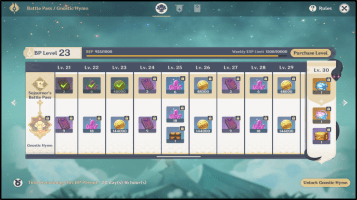
Genshin Impact Battle Pass

Battle Pass

If a game has a battle pass, it will receive a score in this category. Who are we kidding? Most, if not every, gacha game has a battle pass. Even some paid games boast battle passes. I’ll split this score between the necessity of buying the pass and what one gets for completing it, giving difference to the latter.

Video Game's True Cost

True Cost

How much does the game actually cost? Again, this is more a question for free-to-play games, but players can be asked to purchase add-ons. How much does everything cost?

Story or Narrative

Narrative

I mentioned this prior. This is the story, not the storytelling. Gachas have a nasty habit of chopping up their narratives and tossing them into the wind. I’ll be leaning on YouTubers and other people to help me piecemeal these stories together.

Storytelling

Storytelling

Again, this I mentioned this prior. How well does the game tell its story? These are two very different concepts, especially for gacha games.

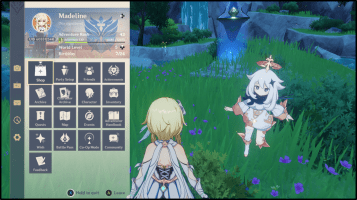
Genshin Impact User Interface

User Interface

Gachas are also notorious for having difficult to manage menus. This wouldn’t be that big of an issue for most video games, but free-to-play games have a knack for hiding things within sub-sub-sub-sub menus so gamers can’t find them.

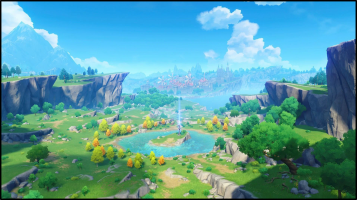
Genshin Impact's Graphics

Presentation

Yes. It’s obvious but still a necessary category. I’ll use this as a catch all for graphics and audio, giving an internal score for both within the segment.

Final Thoughts

And with that, I think we have a good set of parameters. I’ll see you tomorrow. And wherever you are, I hope you’re having a nice day.