Hey, hey! Kyra Kyle here. I adapted this post from a scrapped video script. Who knows? This could still become a video at some point in the future. Let’s find out which fantasy creatures are the most common. Or another way of phrasing it, which fantasy creatures are the most popular?
By knowing the most common fantasy creatures, we can avoid using them or at least tweak them in interesting ways. I may even sprinkle in some trends that I’ve found along the way.
A short video a friend of mine shared on Facebook inspired this post. That would’ve been at least two years ago by now. I have a good idea of who posted the video, but I don’t want to get their identity wrong. Sorry about that. Anyway, he proposed that fantasy has been trapped in amber post Lord of the Rings. He argued that fantasy still uses Tolkien’s creatures, and I agreed with him.
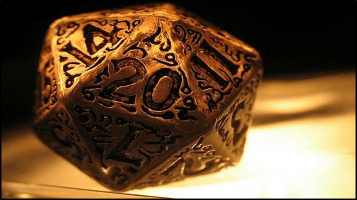
As someone who has played plenty of Dungeons and Dragons (which ripped their character classes from Lord of the Rings and perpetuated the hierarchy of elves, dwarves, orcs, and even hobbits, modern D&D refers to them as halflings), why would I not? But then I wondered which creatures appear the most in fantasy?
Fantasy is a broad genre. A lot broader than I originally thought. I researched—as best I could—for fantasy novels and movies (and other media) and the kinds of creatures, monsters, and species they use. I’ll have to get a major disclaimer or two out of the way and show how I compiled the data before we get into the list.
But if you don’t care for the background info, feel free to scroll down to the creatures which will begin in reverse order from nine to one. There are a ton of ties and near ties that swell the list to a top twelve, but you’ll see in just a bit.
Disclaimers and Compilation
I searched for the top selling and rated fantasy novels and movies on various sites like Goodreads, Rotten Tomatoes, Amazon, and Penguin/Random House. Immediately, I found that epic fantasy, like the ones Tolkien wrote, may have been what my friend referenced. Perhaps epic fantasy uses most of Tolkien’s creatures.
The Twilight series is classified as fantasy. In my opinion vampires, werewolves, ghosts, and zombies or ghouls belong more to horror, but these creatures make up a large chunk of urban fantasy, which is fantasy set in a cityscape.
I can break down the various types of fantasy if anyone is interested (I still have the data) but for now, let’s stick with fantasy as an overall genre. As you can guess, I ended up with hundreds—if not tens of thousands—of books. I wasn’t going to read all of them, even if there were some interesting ones like the Meowing Medium Books that features a cat who solves crimes by communicating with ghosts. That sounds super cute. You can find that series on Amazon.
As a result, I narrowed my search to novels, movies, and series that had synopses. That still left me with over a hundred synopses and that’s still a lot of reading. I could have easily missed something. And we’ll quickly see that writers don’t classify or name their fantasy creatures or species consistently.
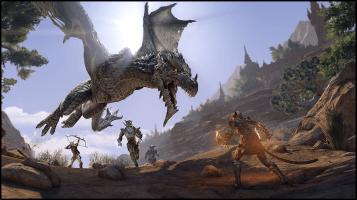
Finally, I didn’t include games. D&D alone has countless titles, and plenty of other video game and tabletop role playing game franchises borrow heavily from D&D—here’s looking at you, Elder Scrolls—so the data would become D&D skewed. Games also deserve their own post.
Needless to say, I got lost down several rabbit holes. Seriously, you may have to send a search party. I easily get lost.
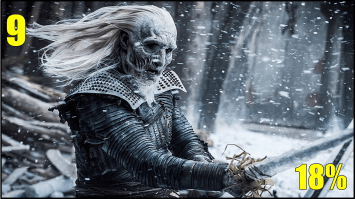
9) Zombies/Ghouls
Zombies and ghouls are the only creatures that straddle the horror and fantasy genres that scored high enough to make the list. They’re tied with three other fantasy creatures; I classified ties as anything within a half of a percentage point.
Why zombies?
There’s a lot of zombie fiction and a lot of that can be classified as urban fantasy. Consider this a Walking Dead boost. Their inclusion isn’t surprising. What is surprising is that zombie/ghouls show up more in epic fantasy than non-epic fantasy, such as urban fantasy.
And before you say, Kyra, you misclassified some of these stories, which I undoubtedly did to some degree, remember that A Song of Ice and Fire has White Walkers. Technically, White Walkers aren’t zombies or ghouls, but they may as well be. So, there may also be a Game of Thrones bump for zombies, too.
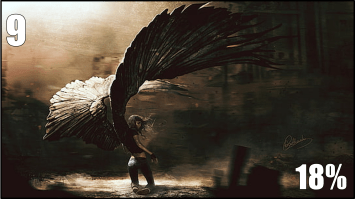
9) Harpies
Harpies?
Did centaurs make the list? No. Did minotaurs? Nope. Of all the half-animal, half-human fantasy species, I didn’t expect harpies to have the largest footprint. They show up slightly more often in epic fantasy than they do in non-epic fantasy and that makes sense.
Why harpies?
While centaurs and minotaurs can be viewed as good, evil or neutral, harpies tend to be antagonists and usually evil. And they also happen to look like women most of the time. Yeah. Fantasy has a type. We’ll see a lot more evil feminine types on this list.
But harpies? The only reason I can think why harpies are more prevalent than other half-human fantasy species is that flying beings dominate this list, especially when they’re cast as antagonists. We’ll see more flying creatures and beings soon enough.
If you have any other suggestions as to why harpies made the top ten, feel free to leave them in the comments.
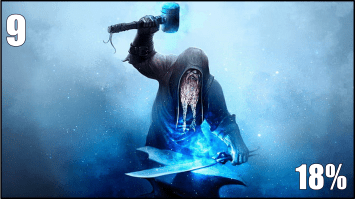
9) Dwarves
Dwarves don’t surprise me. They aren’t as common as elves, so I would have guessed that they were tied for a few spots below elves. Spoiler alert, we’ll see elves on this list. But you already knew that. Don’t act like you didn’t scroll down to see the entire list.
Like harpies, dwarves show up more in epic fantasy than non-epic fantasy. That’s also to be expected. But the two fantasy types are closer than I would’ve thought. I didn’t know dwarves showed up that often in urban fantasy.
Why dwarves?
It’s the Tolkien/D&D boost. Did you need someone to gulp ale? Dwarf. Do you want to explore a cave? Dwarf. Do you want to try your hand at an Irish brogue or Scottish accent? Dwarf.
Yeah. Dwarves may be overdone, but fantasy fans may want to see dwarves in their fantasy. Sometimes one has to give the people what they want. By that logic, shouldn’t dwarves be higher on this list?
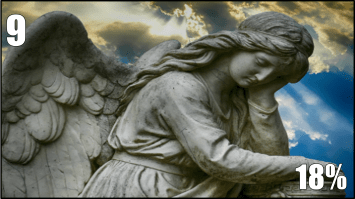
9) Angels
This is the last creature/being tied at the ninth spot. From what I’ve seen angels can be nerfed (or powered down) and recast as fairies. Another spoiler: fairies are on this list, too.
Because the line between angel and fairy or fae gets blurred, they show up at similar rates in epic and non-epic fantasies.
Why angels?
I expected angels to show up more in non-epic fantasy because of urban fantasy. Consider this the Neil Gaiman boost (American Gods and Good Omens). The ratio was a lot closer than I originally thought but again, that could be because stories can recast fairies as angels and vice versa.
The power sets between angels and fairies tend to overlap. Fairies can often heal. So can angels. Fairies often wield powerful balls of light. I may be showing my video gamer here, but that’s often classified as holy damage. And angels are holy beings.
The only physical difference between these two beings would be their wings. Angels have bird wings, while fairies have insect wings. But most fantasy stories that include angels and fairies don’t depict them with wings at all. So, without the distinction of wings, the only thing separating these two beings is one is a spiritual being (angel) while the other is a mythical being (fairy).
If you’re writing a spiritually or religiously based fantasy, you’ll often feature angels. If you’re not writing that type of fantasy, you’ll most likely use fairies. Context matters.
5) Elves
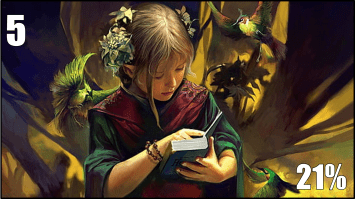
Wait. We jumped from 9 to 5. What happened? Yes. We have another four-way tie for the fifth spot. These creature types were within a few tenths or even hundredths of a percentage point from each other. I promised elves and here are the elves.
Elves, like their dwarf counterparts, show up more in epic fantasy than they do in non-epic fantasy.
Why Elves?
Again, this is the Tolkien/D&D boost. Many fantasy fans expect elves, so fantasy writers include them in their stories.
Before I dive deeper into why I believe elves made this list, I must include that Tolkien deserves credit for popularizing elves and dwarves and maybe a few more fantasy creatures/beings on this list. But Tolkien didn’t invent dwarves or elves. His interpretation of dwarves and elves is what matters in this context. Plenty of fantasy stories have taken elves and dwarves to their folklore roots and put their own spin on these beings. There’s nothing saying that a prospective fantasy writer can’t do that too.
Getting back to elves, they’re human enough for readers to see more of themselves within the characters, yet they aren’t human. But it goes a little deeper. Dwarves and elves can represent either bygone days of humanity or what humanity could’ve become had we taken another path. The two species are a fun way to speculate what humanity would look like if it developed underground or in a forest’s canopy.
That and pointy ears and magic.
5) Spiders
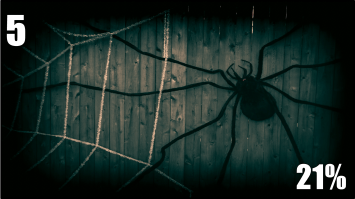
How many fantasy themed video games must one slay a giant spider or rat as their first opponent?
Fantasy movies, TV shows, and novels pit their protagonists against similar beasties in the early going. There have been plenty of prominent fantasy spiders: Aragog in Harry Potter, A Song of Ice and Fire’s Manticore which was described as a venomous species of spider, and Shelob from Lord of the Rings, who was also a demon, so that’s a two for one beast.
That’s another Tolkien sighting, but I don’t think Tolkien fans can claim that he defined spiders as fantasy antagonists because spiders have been folklore antagonists for centuries. Spiders appear in just over 21 percent of both epic and non-epic fantasy stories.
Why Spiders?
Simple: arachnophobia is one of the most common animal-based fears. Snakes are the only other creature that strikes a similar chord, and we will see a snake-like creature later in this list. Surprise!
If a character says that they have arachnophobia, you can bet the story will include spiders. A spider’s inclusion can be shorthand for a character overcoming a fear. We all need character growth.
5) Trolls
Goblins and Orcs and Trolls, oh my.
These three were difficult to differentiate. While the modern look of orcs can be attributed to Tolkien, he repopularized the term with The Lord of the Rings, goblins and trolls can vary in shape and size and appearance, and they don’t have a clear vision of what they look like, like orcs. You’re letting me down, Tolkien. You were supposed to define all three of these creatures. You gave fantasy writers work.
Anyway, I decided to take each writer at their word with these creatures. If a writer called something a goblin, I marked it down as a goblin. The same went with orcs and trolls.
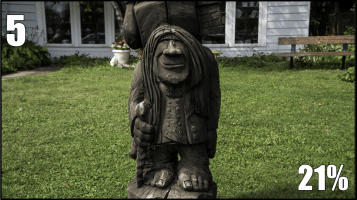
As a result, the trolls came out on top. It wasn’t that close. It may be the troll’s versatility that makes them the clear winner of these three, but we’ll get to that in a bit. Trolls appear far more frequently in epic fantasy as opposed to non-epic fantasy and that isn’t a surprise.
Why Trolls?
Like I said, Trolls are versatile. While goblins and orcs are always grotesque (mostly varying in size: goblins shorter; orcs taller), trolls can look like humans. Just like those internet trolls who’ll make some snide comment below. You know who you are.
I’m kidding about internet trolls (kind of, be gentle), but internet trolls may be closer to the original Nordic myth of trolls than one might think. Several stories—including original Nordic myths—describe trolls as larger humans or humans with exaggerated features. So, much like elves and dwarves, trolls show up more often because readers/viewers can see more of themselves in trolls than they can in goblins and orcs.
Perhaps it’s because a troll looks more human that caused us to call them internet trolls and not internet orcs. One wouldn’t want to dehumanize someone too much, even if they’re being a goblin.
5) Unicorns
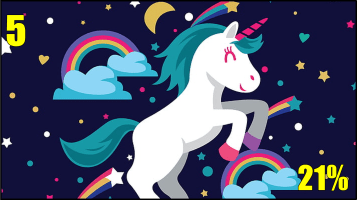
This must be the biggest shock of the bunch. I like unicorns a lot, but I didn’t realize that they showed up in this many fantasy stories. Unicorns appear far more often in epic fantasy than non-epic fantasy.
Why Unicorns?
Unicorns have seen a resurgence through themed food and drinks. Starbucks had a viral Unicorn Frappuccino in 2017. Since then, unicorns have shown up in countless edible and inedible products like cakes, bath bombs, and cereal. Anything rainbow could fall under the unicorn label. Some writers wanted to capitalize on the unicorn craze. I noticed an uptick in unicorn usage since 2017. What have you done, Starbucks?
Even with the upswing, unicorns have always been somewhat popular. That could be because of The Last Unicorn. That began my love of the mythical creature. It’s also one of the first books my wife and I gave to our kids. My Little Pony also features quite a few unicorns, and Friendship is Magic predates the Unicorn Frappuccino by seven years. Perhaps, Bronies pushed unicorns to the forefront.
But not exactly. Very few fantasy stories, epic or non-epic, cast unicorns as prominent characters. They’re typically part of a hunt or are hunted by a villain (like in the Harry Potter series) and as such, they tend to be used as a McGuffin. So, despite being present in a lot of stories, unicorns tend to get overused as narrative devices. I’d like to read more unicorn stories that don’t use them as plot devices. #FreeUnicorns

4) Gods and Demons
I considered making gods and demons separate entries, but let’s be real, they showed up in the same titles. If one has gods, one includes demons. I did a similar thing with another creature/character type later in the list. More on them in a few spots.
Gods and demons appear in just over 30 percent of all fantasy reviewed; they almost have an even split between epic and non-epic fantasies.
Why Gods and Demons?
It’s the Neil Gaiman effect for urban fantasy. American Gods, Good Omens, and the like have inspired a lot of writers. Mythological gods show up in other titles like the Percy Jackson series. Mythology itself has inspired countless storytellers. Even comic books have drawn inspiration from mythology. Thor, Wonder Woman, Hawkgirl, and Moon Knight all have origins based in mythology. They’d also be considered urban fantasy for the most part.
But epic fantasy isn’t devoid of its own gods. So much of Dungeons and Dragons is creating one’s own pantheon of gods. That may be one of the first things a dungeon master does. What new god or demon can I add to this world?
Like I said before, demons tend to follow gods. Sometimes demons take the form of a devil. They can also take the form of evil or fallen angels. Others can even be destructive gods. Like so many of the other terms on this list, the lines get blurred between gods and demons. For fantasy, it tends to be a matter of motivation or the being’s purpose.
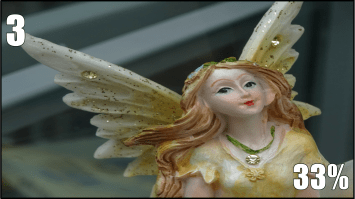
3) Fairies
Yes! Finally, we’ve reached fairies. They show up in non-epic fantasy far more frequently than epic fantasy, but they still appear in epic fantasy often enough. That’s why they’re third on this list.
Why Fairies?
I mentioned before that sometimes in folklore, fairies can be demoted angels or demons. I’ll try not to repeat what I said in the Angels write-up here. Everything I said in the Angels write-up still applies.
Instead, let’s go a different route with fairies. I saw a small uptick in fairy usage after Pan’s Labyrinth, but that’s nowhere near as severe as unicorns after their Frappuccino release. No. Fae and fairies show up far more often in urban fantasies and other non-epic fantasies as sex symbols. In short, fae are hot.
Highlanders? They’re akin to fairies. The wildly popular erotic fantasy series A Court of Thorns and Roses has a faerie love interest and is set in the world of faerie. Even Sookie Stackhouse from The Southern Vampire Mysteries series is a half-human, half-fairy, and that series gets more than a little steamy.
If you want a little romance or erotica with your fantasy, you’re probably going to include fairies. And plenty of fantasy writers add a dash of erotica and romance. Romantasies are very popular.
Just Missed the List
I’m prolonging the reveal of the not-so-surprising top spots with honorable mentions. Quick! Comment which creatures/character types you think will be in the top two.
The following creatures or character types didn’t quite make the list. There was almost an eight-way tie for the ninth spot, but I had to cut off the list somewhere.
13) Gnomes
14) Werewolves
15) Vampires
16) Centaurs
17) Big Cats
18) Goblins
19) Basilisks
20) Giants
21) Chimeras
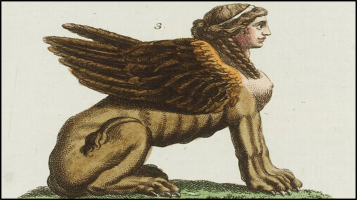
22) Sphinxes
I had to keep going until I reached the sphinx, because that’s the name of one of my daughter’s cats. Okay. I’ve delayed the inevitable. Here are the final two entries.
1) Wizards and Witches
We have another tie. This time for the top spot. Both creature/character types at the top of this list show up in 42% of all fantasy stories. 42 is the answer to everything.
Let’s begin with another two character types that are too difficult to differentiate: wizards and witches. It should come as no surprise that wizards and witches make the list. Wizards and witches show up far more in non-epic fantasy than they do in epic fantasy. The inverse will be true with the next entry, but first…
Why Wizards and Witches?
I’ve mentioned a few times before this entry that people like to see creatures and character types with which they can relate. People want to see themselves in the characters they read or watch. What’s more relatable than a human? Well, humans with magic.
Most writers—there are exceptions to everything—cast wizards and witches as similar character types, so I ended up lumping them together. These two character types are often treated as two sides of the same coin such as wizards are men, and witches are women. Or wizards are good, and witches are evil. Or what The Magicians series did and categorized wizards as college trained magic users, while hedge witches dropped out of school or never attended.
What did I say about fantasy writers and evil women? Fantasy writers may be expressing some unconscious sentiment by linking women with witches and then witches with evil or uneducated. Women tend to get thrown into the less flattering side of this dyad. I’m not going to dig too much deeper into this issue, that could be another post unto itself. But if you’re interested, you could argue in the comments.
Who wouldn’t want magical powers? It’s no wonder wizards and witches dominate fantasy stories. Stories with magical humans is a power fantasy. It’s the same draw with superhero fiction.
With a few exceptions where there were wizards and no witches and vice versa, the two were similar enough to include as a single entry, so they both can claim the tie at number one. But we have another number one, so this may be a tie within a tie.
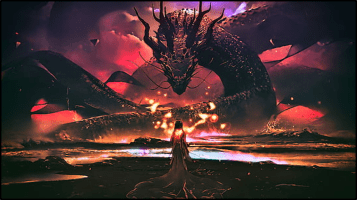
1) Dragons
How many of you were waiting for dragons? How many of you would’ve fought me if dragons didn’t make the list? I should’ve said something else here and watched the deluge of angry comments.
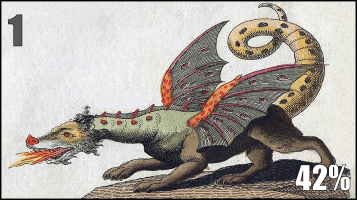
Of course, dragons share the top spot with wizards and witches. Dragons dominate epic fantasy, but they’re less common in non-epic fantasy stories.
Why Dragons?
Dragons are the snake-like creature I mentioned earlier in the Spiders entry, but they’re more than just snakes. Multiple cultures have created their own version of dragons, and they did so separate from each other. Ancient civilizations didn’t share dragon notes, yet we can find dragons from Asian, Native American, and European traditions. Why is that?
A human’s first predators would’ve been serpents, big cats, and raptors. Dragons are an amalgam of all three. While several people have a fear of spiders, dragons are fear personified. They are one of the most powerful creatures a human can conjure. We can see that throughout history.
You can learn a lot about a culture or a writer by how they describe their dragons. Will you enhance the serpentine, feline, or avian features? Why did you choose that feature? Do you fear that animal the most? Would you like to experience what it’s like as that animal? Is that animal friend or foe?
Dragons will always pervade fantasy stories. So many fantasy readers expect to see dragons. Can a fantasy be called epic if it doesn’t contain a dragon? Apparently not. Dragons show up in 63% of epic fantasies. Yikes!
Final Thoughts
That’s the list. Phew! That was a lot. I could’ve included more—a lot more. But what does this tell us?
My friend might be right, epic fantasy may be trapped in Tolkien amber. Non-epic fantasy differs quite a bit, but they have their own preferences like hot fairies. Perhaps, aspiring fantasy writers should think about shaking up this hierarchy of characters and creatures. Don’t be afraid to take a creature type back to its folklore or mythological roots and take them in a different direction.
If you see a creature that you like that’s further down the list (or not on the list at all) and you’d like to see them climb up in popularity, write a story about them.
It might be time to end the wizard and witch binary. Or at least stop placing women in the less desirable side of a binary. That’s cliché.
Speaking of cliché, if you’re writing about unicorns, maybe you don’t make them a narrative device.
I hope you found something useful in this post. And I hope that wherever you are you’re having a great day.
~ Kyra








 jkgeekly.com