Toboggans of Doom

Sometimes you just want to blow people and things up while taking a ride on the most pimped out toboggan time will ever know. Artic blasts will slap you in the face as you negotiate a psychotic obstacle course.

We’ll slide into the fun bits after a while but let’s look at the fine print first.

Fiddly Bits:

Designer: Jeremy Holcomb, Joseph Huber, Stephen McLaughlin, and Dan Tibbles
Publisher: Bucephalus Games
Date Released: 2008
Number of Players: 2 – 4
Age Range: 8 and up
Setup Time: less than 5 minutes
Play Time: around 30 minutes
Game Mechanics:
Dice Rolling
Tile Placement

ToboggansOfDoomBanner

Game Flow:

Shuffle the upgrade tiles and lay out twelve of them. These tiles are the gadgets you can use to pimp your ride.

Each player then rolls all but the percentile die in a set of polyhedral dice (D20 or Dungeons and Dragons dice). Toboggans of Doom comes with a set of two but if you’re playing with more than two players, you’ll have to bring more. A set of polyhedral dice—minus the percentile die—is a four-sided die, a six-sided die, an eight-sided die, a ten-sided die, a twelve-sided die, and a twenty-sided die.

You use the dice as currency. If the upgrade has a dollar sign with a number, you’ll have to use any combination of dice to pay for the upgrade. But let’s say that the cost says something like $d4. You’ll then spend a four-sided die (d4) with any number rolled in order pick up that item. Players take turns purchasing upgrades until they run out of dice.

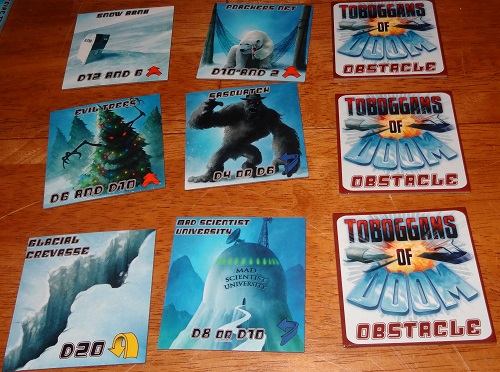
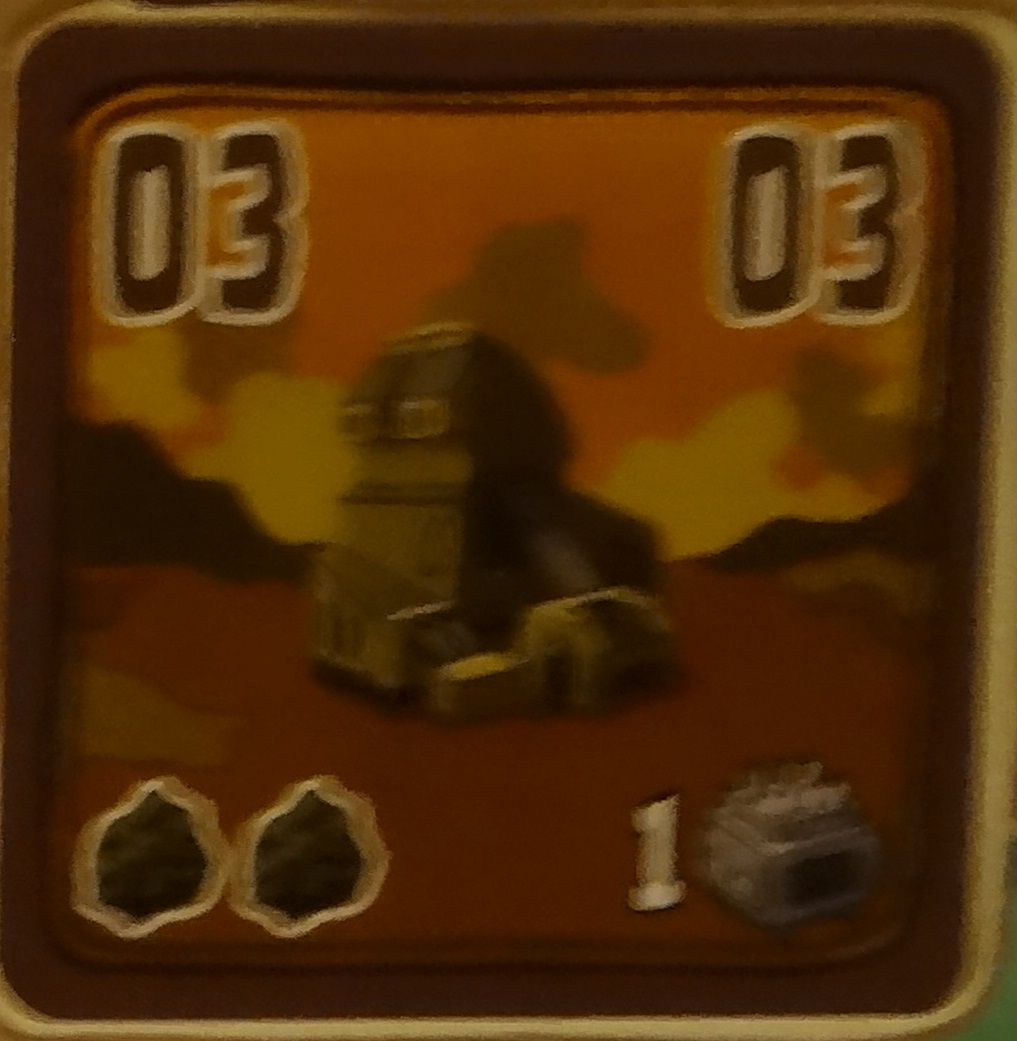
ToboggansOfDoomSampleUpgrades

Sample Upgrade Tiles

There’s one main thing you’re looking for in upgrades: avoiding the obstacles in your toboggan’s run. All obstacles either have you go “over,” “around,” or “through.” You have to roll over a target number for “over” obstacles, under a target number for “around,” and between two sets of numbers for “through.”

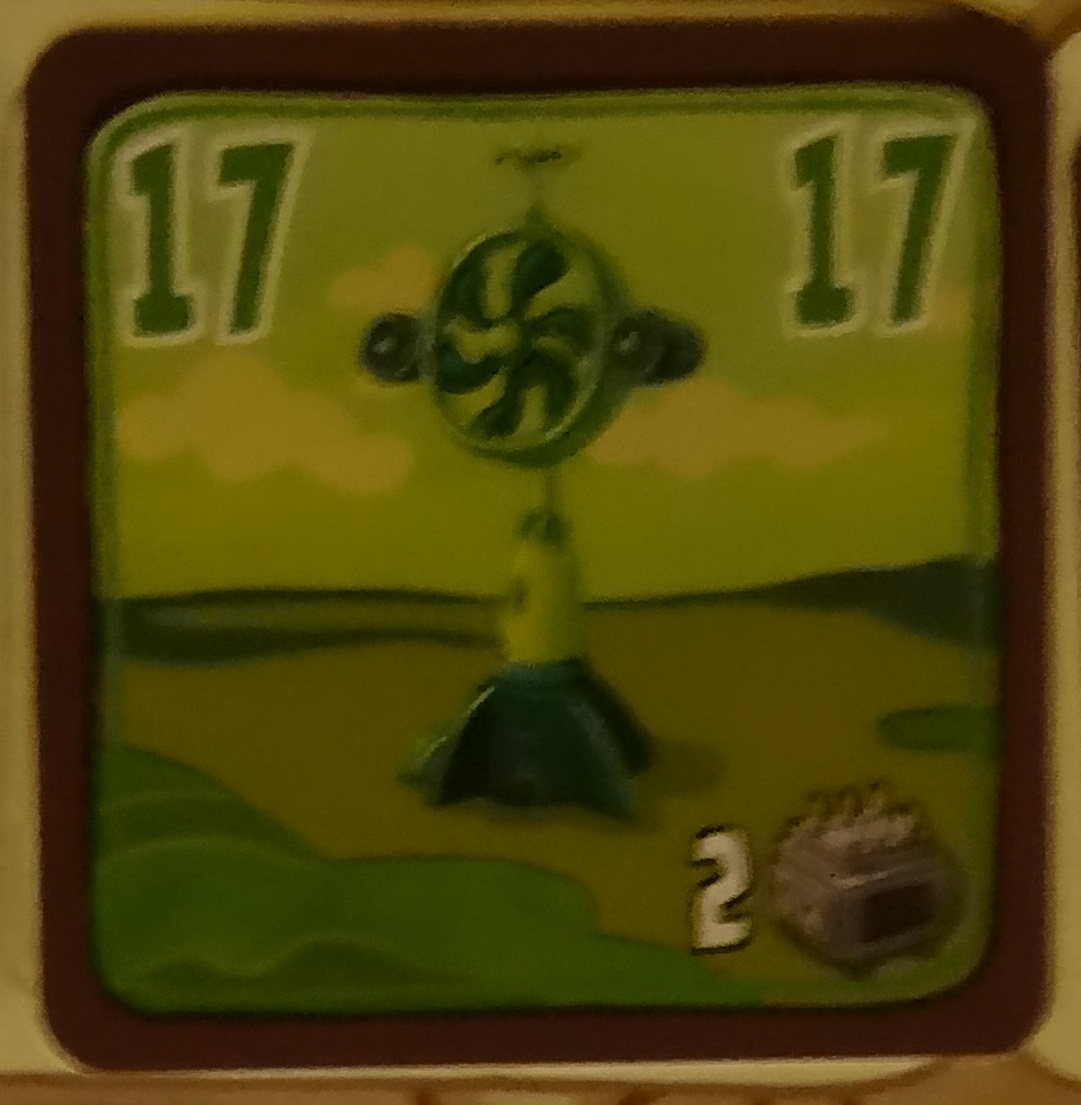
TobogansOfDoomSampleUpgrades2

More Sample Upgrade Tiles

Big dice, like a twenty-sided die, work best with “over,” while small dice, like the aforementioned four-sided die, work best for “around” obstacles. “Through” obstacles throw a wrench in the works as the target numbers can vary.

Once everyone has spent their dice, the run begins. The mountain is three columns of tiles by ten with gaps at the third and sixth row. This is what it should look like.

ToboggansOfDoomSetUp

The mountain with two check points

Each player takes turns trying to make it down the mountain. You only get three tries (rounds) with a chance to buy more upgrades, but if no one finishes the course, players count up victory points earned by reaching the gaps (checkpoints) in the race.

Game Review:

Toboggans of Doom plays like a snowy version of Mad Max: Fury Road, and it’s about as deep as the movie, too. If you like mindless dice chucking with little strategy, you might like Toboggans of Doom.

There are some upgrades that beat the pants off the other ones; you’ll always want to roll a d20 (twenty-sided die) for “over” rolls and d4s are great for “around” rolls. Whoever manages to snag those upgrades will usually win but with dice chucking, you get a lot of luck, too.

TobogansOfDoomFirstCheckPoint

Example of the mountain before the first checkpoint

I enjoy the idea of this game. I have plenty of polyhedral dice in my arsenal and they get a lot of love with Toboggans. I also like how the designers used the dice as currency. You’d bid on the various upgrades and if the upgrades had a dollar amount (instead of a flat die for the cost), you’ll have to add some dice together in order to purchase an upgrade. I think Toboggans should’ve stuck with a variable dollar amount and not use single dice as the cost for any upgrade. Most of the over-powered upgrades use a single die as the cost, so whoever picks first will get the best gear.

ToboggansOfDoomSecondCheckPoint

Example of the mountain before the second checkpoint

I played this game when it first came out and my kids enjoyed it. That was six or seven years ago and after dusting it off recently, they were less pleased with the game. Toboggans is one of those games that look clever at first glance, but wear thin real fast.

Verdict:

Toboggans of Doom is fun if you want to shut off your brain and chuck some dice. If you yearn for something a little more than that, you should look elsewhere.

Dino Race Review

DinoRaceLogo

Save your pair of dinosaurs from extinction by running as quickly as you can through all types of terrain and making it to the finish line before the volcano erupts. Only the fastest dinosaurs survive in Dino Race.

We’ll get to the race in a little while but first, we’ll rush through some technical stuff.

The Fiddly Bits
Designer: Roberto Grasso
Publisher: Ares Games, Devir, and Intrafin Games
Date Released: 2014
Number of Players: 2-4
Age Range: 6 and up
Setup Time: less than 5 minutes
Play Time: about 20 minutes
Game Mechanisms:
Dice Rolling
Hand Management
Modular Board
Take That

Game Flow:

The object of the game is for your two dinosaurs to make it to the end of the racetrack before any other player’s dinosaurs and try to cross the finish line with the dinosaur egg in tow.

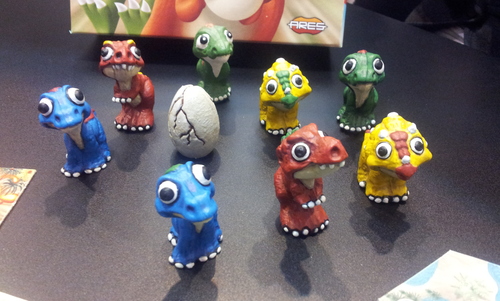
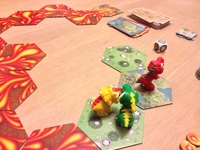
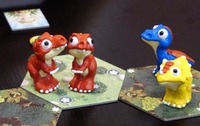
Dino-Race-Miniatures

Every track begins with the volcano tile at its beginning. All other tiles are shuffled and placed randomly in a pattern of the players’ choosing. I like a U shape because it’s the most economical in terms of space but you’re okay so long as there is a clear and single path with which to run.

DinoRaceOverview

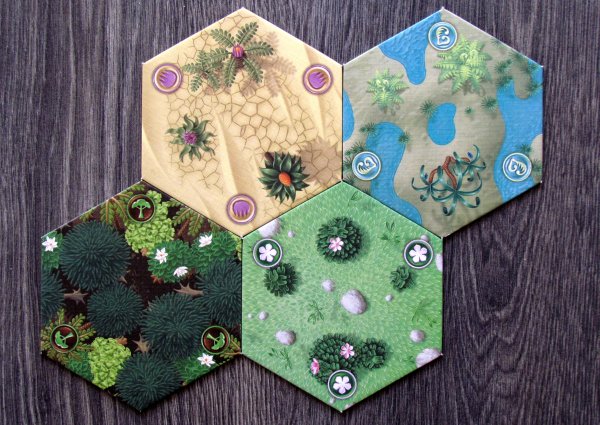
The tiles, besides the volcano tile, are double-sided. Each tile has a lava side and a terrain side. There are four types of terrain: swamps, plains, deserts, and forests. Here’s a sample of the four terrains.

DinoRaceSampleOfTerrainTiles

Both of your dinos will have to make it through each of the tiles on the track. More on that later but first, let’s finish getting the game set up.

All dinos (two per player) start on the volcano space. Players get dealt a hand of five cards each and then they decide who goes first. The player who goes first holds onto the egg—more on the egg later. On a turn, a player can play as many cards as they want so long as a card is a legal play and there are eight possible cards you can have in your hand.

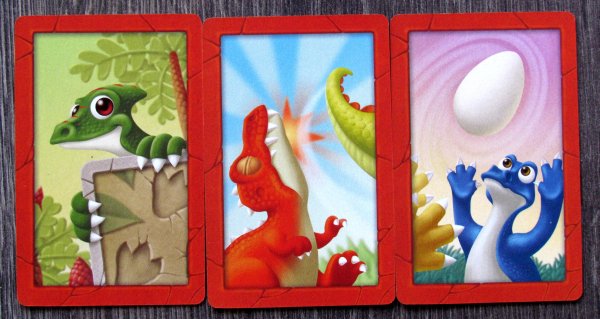
The terrain cards allow you to move into a terrain tile that shares the same symbol as the card. There’s an even number of cards for each terrain and two wild terrain cards that count as any terrain. You can also pick up the following three specialty cards.

DinoRaceSpecialtyCards

The first one lets you steal a card from another player, the second allows you to knock over another player’s dino who’s on the same space as one of your dinos (they’ll have to use a terrain card of the same type tile they’re on to stand upright), and the third lets you steal the egg from the player with the egg. Once a player’s done with their turn, they roll the event die.

The event die is a six-sided die with different faces. Four sides have the four terrain symbols on them. When any of the terrain faces are rolled, players draw cards from the draw pile for every dinosaur they control that’s on the terrain shown. The fifth side has a picture of two cards and every player draws two cards, regardless of where they’re dinosaurs are. The sixth side has a picture of lava. When a player rolls this die face, the volcano just erupted and bad things happen.

DinoRaceLavaFlowing

Flip over the terrain tile closest to the volcano that isn’t already showing its lava side; the lava spread to the next space. If any dinos are on that space, they receive one wound token worth one negative point. If any dinos are on the spaces before that space, whenever they enter the new space, they receive one wound token. Finally, the player with the egg takes one wound token and they hand the egg to the player to their left. About the only thing good that happens with lava is that they count as any terrain. All you have to do to enter a lava space is discard any card from your hand–this makes for a great catch-up mechanism.

When your first dino reaches the finish line, you grab a scoring token at random. When your second dino crosses the finish line, you choose which scoring token you want. As soon as both of one player’s dinos finish the race, the game ends. You score the number value on your scoring tiles. If the scoring tile’s number matches the color of your dinos, you get double points. And if you have the egg when you cross the finish line with your second dino, you get bonus points.

The player with the most points wins.

Game Review:

Dino Race is an excellent kid’s game. I like the modular board – that’s always a great thing to introduce to young gamers – and the game pieces are fantastic. There’s a splash of strategy to Dino Race that hints at other games in the industry but most games of Dino Race come down to luck. And that’s where Dino Race shows its kid’s game stripes.

Most good kid games have a healthy dose of luck so it evens the playing field for younger gamers; they must have a good chance at beating Mom and Dad. The subject matter is lighter, easier to get into, and the design is more colorful. Check, check, and check.

DinoRaceTwoDinosPerSpace

Sure, older gamers won’t give this game a chance, but Dino Race isn’t designed for older gamers. Yet it has a level of complexity that you won’t find in other kid games. This isn’t Candyland. The modular board, rudimentary hand management, and basic strategies found in Dino Race give young gamers the skills to tackle more challenging games in the future.

Verdict:

Dino Race is an excellent kid’s game that will have limited appeal to older gamers. As such, I don’t plan to buy it for my kids (teenagers) but I do intend to purchase Dino Race for my young niece and nephews. And Uncle Kyle has dibs on the green dinosaurs.

Telestrations

telestrations_logo

What would the offspring between Pictionary and the Telephone game look like? It’d look something like Telestrations. This hilarious party game gets you asking how did you get that from this, and what were you trying to draw here?

We’ll get back to the drawing board in a bit but first, let’s sketch up some tech speak.

Designer: Uncredited
Publisher: Magellan and USAopoly
Date Released: 2009
Number of Players: 4-8
Age Range: 13 and up
Setup Time: little to none
Play Time: 30 minutes or so
Game Mechanics:
Line Drawing
Paper-and-Pencil
Real-time

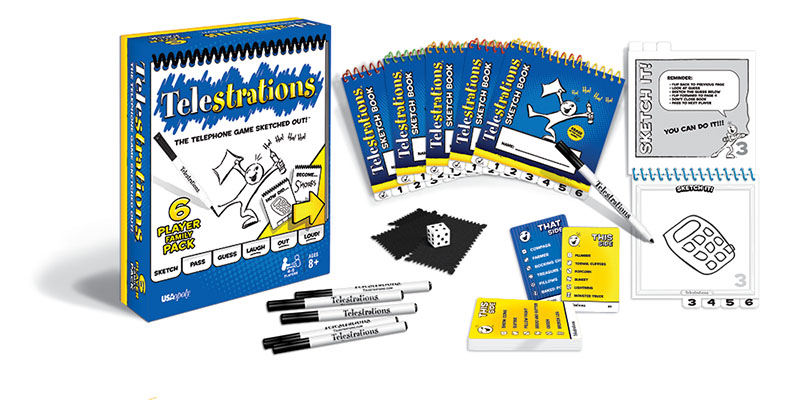
TelestrationsOverview

Game Flow:

Each player receives a dry-erase sketch pad and a dry-erase marker. Players begin each round by selecting a key word that they’ll have to draw in their sketch pad. (The main game suggests that you use a card and die system to select the word but I like picking a theme like movie or book titles and having players choose their own key words.) Once everyone writes their key word in the front of their books, you flip over the 90-second sand-timer and you’re on the clock with trying to draw your key word.

When players are done, they pass their sketch pads to the next player and it’s these players’ jobs to guess what the first player was trying to draw. The second player writes down their answer and passes the sketch pad to the next player and these players must draw what the second player guessed was the answer. Play continues in this manner (with players alternating between drawing and guessing) until every player gets their original sketch pad back and they can see what happened to their key words.

Here’s an example of a round of Telestrations.

ExampleOfTelestrationsRound

Game Review:

Telestrations is a fun game but you need at least four players—and it’s better with more than that. I played the four-eight player version several times and I think the twelve player version would be even more fun. There’s a scoring mechanism (that I didn’t add to the Game Flow) to the game but it’s a subjective scoring system, which I don’t like, and it doesn’t matter who wins. The people who laugh the most win.

TelestrationsBook

This is certainly not a game to play with certain people. You know the type. Those folks who don’t have a funny bone in their body, so Telestrations isn’t a game for everyone but with the right group of people, it’s a blast.

As mentioned in the Game Flow, I prefer key word selection by means of theme (you use a single theme for a game round like song titles or famous sayings) instead of using the cards, but that’s because the older versions of Telestrations had boring key words. Oh, your cat became a dog or your chair morphed into a table. (Yawn.) The newer Telestrations cards have phrases on them, so they might play better but I’ve gotten used to playing with themes.

No matter how you play Telestrations, you’ll have fun with a goofy set of gamers.

Captain’s Wager

Captain'sWager

Take the steampunk genre, add a pirate theme to it and sprinkle a modern take on Poker for good measure and you get Captain’s Wager. If you like any of these three things, this game is a good fit. If you like all three things, Captain’s Wager may be the perfect game for you.

We’ll sail off to the review after the tide rolls in but first, we must make preparations and cover the technical speak.

The Fiddly Bits
Designer: Jonathan Hager
Publisher: Grey Fox Games
Date Released: 2014
Number of Players: 2-5
Age Range: 12 and up
Setup Time: Less than a minute
Play Time: Around 30 minutes
Game Mechanics:
Betting/Wagering
Hand Management

Game Flow:

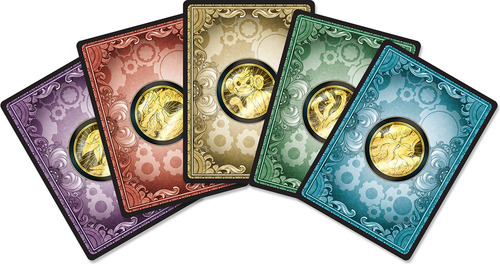
Captain’s Wager, at its core, is a betting and wager card game but it has plenty of twists and turns. Players start the game with a deck of treasure cards. All of these treasure decks are the same (they consist of the same cards) and each of these decks has the color and symbol of your pirate clan on its backing.

Captain'sWagerFiveClanTypes

All five pirate clans card backings

The cards in your treasure deck are kept face down and act like your currency with which to ante for a hand and bet with during a hand—but Captain’s Wager calls hands encounters. There are three encounters per round and whoever wins the most encounters in a round, takes treasure cards from the treasure pile (that folks anted and betted with), looks at these cards, and can either place them face up in their captured treasure pile (for points printed on the cards) or add them to their hand (if they have a neat ability). In order to win an encounter, you’re dealt four crew cards at the beginning of every round.

Captain'sWagerCrewCards


Example of Crew Cards

Each of these crew cards has a number in the top left-hand corner, ranging from 1-20, and most of them have a special effect that can improve their value. Players take turns playing one of their crew cards from their hand face up – some of these cards allow you to play extra cards from your hand during an encounter – and the player who ends the turn with the highest crew card value wins the encounter.

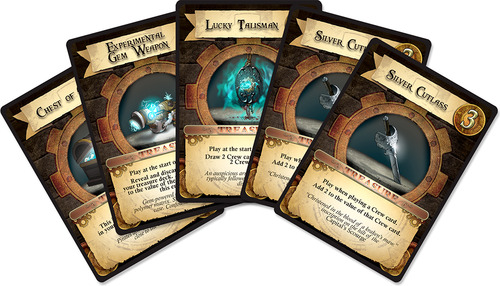
Captain'sWagerTreasureCards


Example of Treasure Cards (Point Value in Top-Right Corner)

The game ends when one player runs out of cards in their (face down) treasure deck, which essentially means that they got cleaned out of all their money. After this happens, players tally up their score. You get a point for each card left in your treasure deck, count up the point values for the treasure in your captured treasure pile, and there are some treasure cards in your hand that can earn you points. The player with the most points wins.

The above game flow has a few things omitted – and we’ll get to those things in just a bit – but that’s pretty much the gist of Captain’s Wager.

Game Review:

Captain’s Wager, just like Poker, is mostly about betting and how well you can read other players. You can get dealt a great hand but other players can overcome your great hand if they play their cards better than you. The game does this well enough that pure luck can be overcome with skilled play. That must have taken the designer Jonathan Hager quite some time to get balanced.

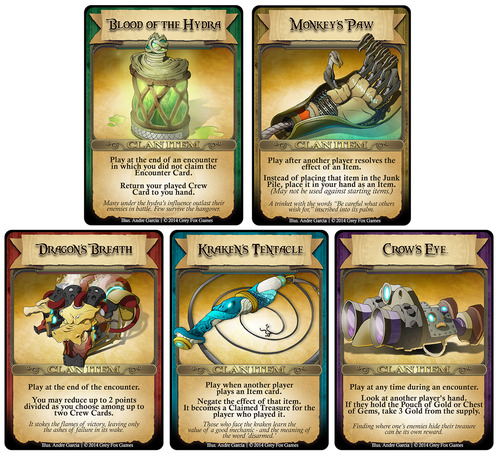
Captain'sWagerUniqueClanItems

One unique treasure per pirate clan

You can also borrow gold or even fold (Captain’s Wager calls it stealing) instead of paying for a hand. These two options add even more strategy to the base game flow. There are some crew members that allow you to pawn some of your negative point, loan tokens on another player and folding, and not wasting your cards and treasure, may be the optimal choice in certain situations.

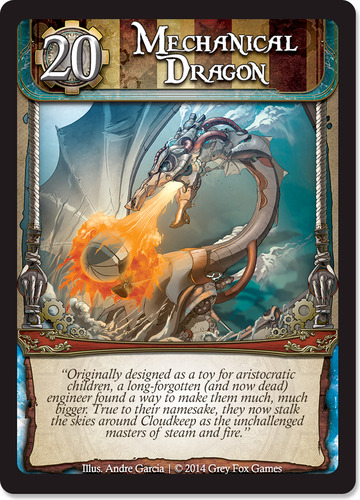
Captain'sWagerMechanicalDragon

Mechanical Dragon: he doesn’t have effect text but he’s big and nasty

Captain’s Wager is easy to pick up but it takes time to know when to hold ‘em and when to fold ‘em. It takes 30 minutes to play Captain’s Wager but that doesn’t refer to your first time playing the game. Most rookies will view folding as losing and that’ll lead to them playing more cards, betting more treasure, and ending the game sooner because they’ll run out of treasure but Captain’s Wager has another barrier for new players. Fortunately, it’s a small one.

While most betting/wager games earn you points/money at the end of each hand, you don’t take from the Captain’s Wager treasure pile until a round (three hands or encounters) are finished. This sounds like it’s not that big of a deal but it takes time – about one play through – for you to wrap your brain around this odd rule.

I could also see some folks say that Captain’s Wager doesn’t have enough theme but I think that’s an unfair assessment. The name lets you know that it’s a betting/wager game—wager’s in the title. You assume the role of a steampunk captain and the crew cards mimic the types of characters you’d encounter in such a world and occupation. The art and graphics are phenomenal, the gameplay is quick and fun, but I’d say that it plays better with more players.

With more players, you’ll end up with more difficult choices in terms of which crew cards you’ll play, more treasure cards enter play, and there’s less of a chance of one player winning two rounds and that makes the game out of reach for everyone else at the table.

Verdict:

This game just finished its Kickstarter campaign and won’t be out until the July-August timeframe (around GenCon), so I can’t give a definite verdict for it yet, but I can’t wait for its release.

Power Grid Deluxe: Europe/North America

Power Grid celebrated its 10th anniversary with a deluxe, standalone game and the deluxe version of the game is what we’re covering today. The game isn’t a Ticket to Ride clone. Sure, it uses the route/network building mechanism and you’re connecting cities with your power grid, but the auction and resource management in Power Grid separates it from the Days of Wonder game that came out the same year.

It doesn’t hurt that Friedemann Friese is a guy after my own heart. He loves the color green, incorporates it in his company’s logo, his game designs, chooses green whenever he plays (we might have to leg wrestle if we ever played a game together), and he dyes his hair green. No fooling. Here’s a picture of Friese.

FriedemannFrieseInFrontOfHisGames

That’s hardcore, even for me.

We’ll turn the lights on this review in a bit but let’s cover some game specs.

The Fiddly Bits
Designer: Friedemann Friese
Publisher: Rio Grande Games and 2F-Spiele
Date Released: 2014
Number of Players: 2-6
Age Range: 12 and up
Setup Time: Around 10 minutes
Play Time: Around 120 minutes
Game Mechanisms:
Auction/Bidding
Route/Network Building

Game Flow:

Here’s fair warning. Power Grid has a lot of moving parts: 5 phases to each turn and 3 steps to the game. This will be a lengthy Game Flow but Power Grid’s parts aren’t that difficult—they just take a while to explain.

The goal of Power Grid Deluxe is to supply the most cities with electricity by the time someone’s network reaches a predetermined size. The size varies by how many people are playing the game. We’ll talk more about winning the game but let’s get to the game’s setup and its different phases.

Setup

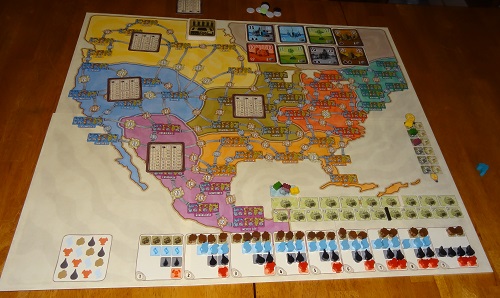
We’ll concentrate on the North American map (there’s a Europe map and it plays differently but stick with the “Murrica” for now) and this is how it should look at the beginning of the game if you have three players.

PowerGridDeluxeOverview

Overview of Power Grid Deluxe

As you can guess, the map and setup change a little with the number of players just like the winning conditions. We’ll discuss the different areas in detail but let’s break down this map—trust me, it’s not as complicated as it appears.
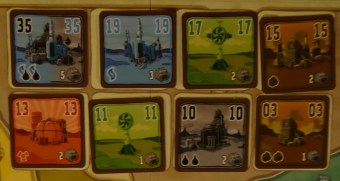
PowerGridDeluxeCloseUpOfPowerPlantOfferings

Close Up of Power Plant Auction House

The stack of cards in the top center of the board is the power plant draw pile. To the right of the draw pile is the current power plant auction house (those are the plants available for purchase).

The map itself consists of seven areas. Since we have three players (purple, green, and yellow), we have to eliminate four areas of the map—that’s why there is a card on top of the brown, blue, yellow, and purple areas to the west. You can choose which areas to block off so long as the areas left in play are connected. When I play with my kids, I open up at least one or two more regions (sometimes all of them), so there’s more room to place your generators.

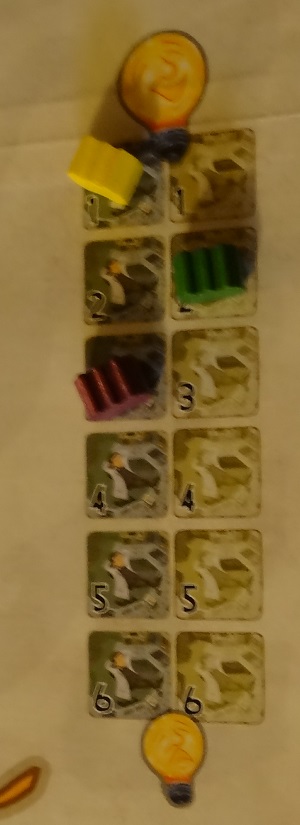
TurnTracker

Close Up of the Player Order Track

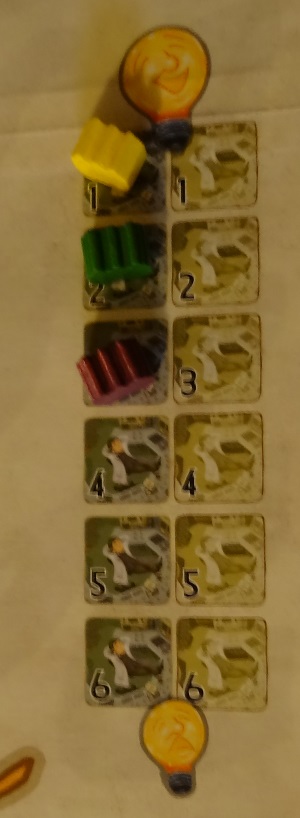
Off to the right is the Player Order Track. This section determines who gets to do what when. The track of squares invading Mexico – right around the Yucatan…mmm, Yucatan – is the indicator of how many generators each player has.
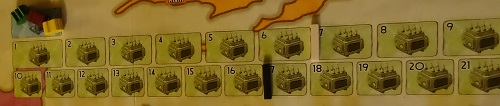
PowerGridDeluxeGeneratorCloseUp

Close Up of Number of Generator Track

As soon as a player reaches one of the benchmarks, all players enter a new step. Various things happen during each step: the number step dictates how many generators can be placed in a city, the power plant auction house changes how it does things, and even the number of resources you get per turn changes.
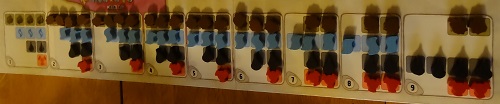
PowerGridDeluxeResourceCloseUp

Close Up of the Resource Market

At the very bottom of board rests the discard pile – that’s the solo square off to the left – and to the right of that is the resource market.

Fortunately, most of these sections are used during the different phases of a turn, so we’ll cover these areas and the phase in which they’re used at the same time.

Power Plant Auction House/Auction Phase

Technically, there’s another phase before this one but that’s the “Determine Player Order Phase.” If you’re just starting out, you’ll have to do this at random. I like grabbing one of each of the players’ generators, shake ‘em up in my hand and drop a generator one at a time on the board. No matter how you determine who goes first, the first player goes on the top of the Player Order Track.
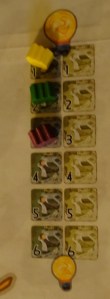
TurnTracker

Close Up of Player Order Track

After the first turn, the number of generators a player has in play determines the turn order, most to least, and if you have any ties, the player with the bigger power plant goes first.
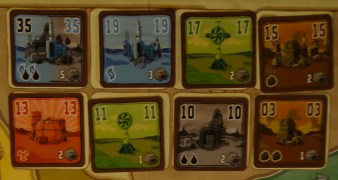
PowerGridDeluxeCloseUpOfPowerPlantOfferings

Close Up of Power Plant Auction House

The size of the power plant is in the top corners of the power plant cards. The power plant auction house is set up with the largest to smallest power plants filling the board from left to right, starting with the top row and then the bottom. The top row is the future’s market. You can’t purchase any power plants on this row in the first two steps – you’ll have to wait until the third and final step – but you can decide to auction any plant in the bottom row. The player who is first on the Player Order Track picks which plant to auction. Before we get to the auction portion, let’s take a closer look at the plants we’ll be auctioning.

PowerGridDeluxeCoalPlant

Close Up of a Coal-Fired Plant

This is a coal-fired plant. The top is how big the plant is and how much the minimum bid is for the plant. The bottom left indicates how many units of coal you need to run the plant. The bottom right shows you how many generators this plant can power. So, you must have two units of coal and that will power one generator. As you can see, there are a lot more energy efficient plants on the market.

PowerGridDeluxeOilPlant

Close Up of Petroleum Plant

This is a petroleum plant. It costs a minimum of 10, uses two oil, and can generate enough power for two cities.

PowerGridDeluxeNuclearPlant

Close Up of a Nuclear Plant

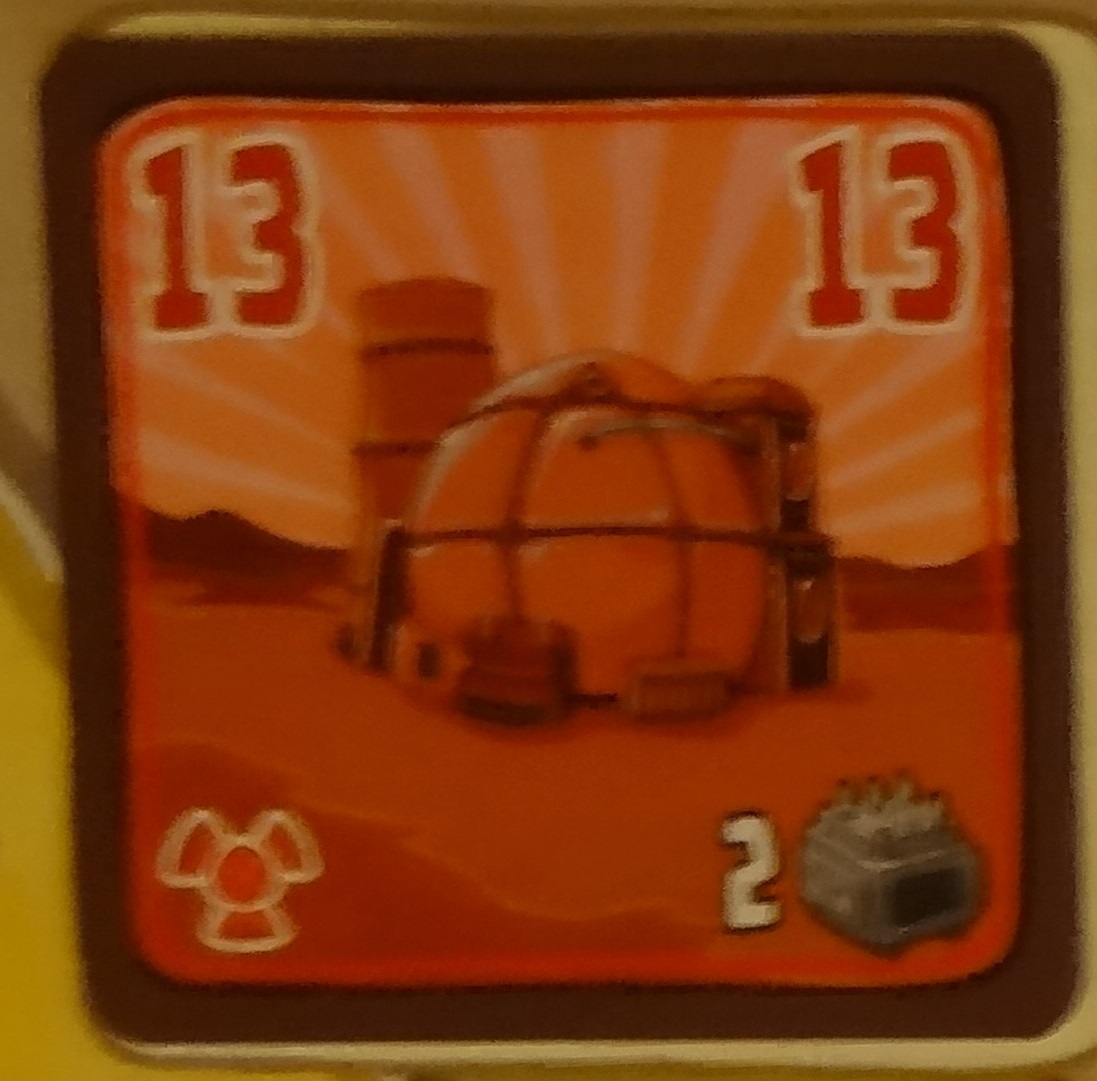
This is a nuclear power plant. You only need one uranium to power two generators and it costs 13.

PowerGridDeluxeGasPlant

Close Up of Gas Plant

This is a natural gas plant. One unit of gas can make enough power for three cities and it costs 19.
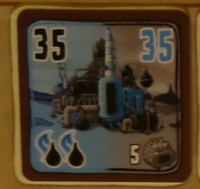
PowerGridDeluxeHybridPlant

Close Up of a Hybrid Plant

This is an odd duck; it’s a hybrid plant. It uses any combination of two natural gas or petroleum, costs 35, and powers a whopping 5 generators.

PowerGridDeluxeAlternativeEnergyPlant

Close Up of Green Energy Plant

This last one is a green energy plant—yay, green. It doesn’t require any fossil fuel and can power two cities. Let’s get back to our auction example.

PowerGridDeluxePickingANuclearPlantFromTheOffering

Choosing a Nuclear Plant for Auction

Let’s say that the first player chooses the nuclear plant because they want more efficient energy, even though the plant costs a little more. They’d place the hammer piece on the nuclear plant and the starting bid they use must be at least 13 coin (Power Grid calls it Electro but that reminds me of the Spider-Man villain, so I call it coin). The player to that player’s left decides whether they’ll increase the bid or pass. If you pass, you can’t jump back into the auction. The auction ends when only one player’s left.
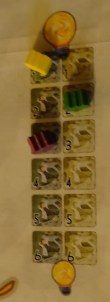
TrackerCloseUpOneBidDone

Green Won the First Power Plant Auction

When a player gains a plant, they move their marker to the right side of the Player Order Track. You can only purchase one plant per turn. In this case, green picked up the nuclear plant, so yellow starts another auction because they don’t have a plant yet and they’re still the first player.
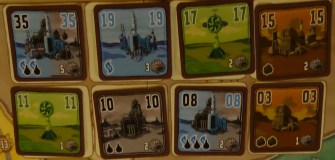
PowerGridDeluxeOneNewPowerPlant

Draw a New Plant and Adjust the Auction House

But before the next auction, you must refill the auction house with a new plant and adjust the rows accordingly. (Looks like green missed out on a hybrid plant that costs 8.) The auction phase continues until everyone has either purchased a plant or passed on buying a plant for the turn. If you’re the last player standing, you have your pick of any plant available. You pay the base price with pesky auction.

PowerGridDeluxeAfterTheFirstRound

Auction House after One Turn of Auctions

Another thing that occurs after all the auctions is that the plant with the lowest cost gets the “One” token placed on it. On the next turn, you may open an auction for that plant with one coin instead of the card’s true cost, so that 8 hybrid plant just became a 1 hybrid plant.

One last note: you can only have three power plants at one time. If you would have more plants than three, you must discard one of your plants and replace it with the new one.

Resource Market/Buying Resources

Mmmm…who doesn’t like the smell of new resources? I know I do and Power Grid has one of the most interesting resource markets in the business.

PowerGridDeluxeResourceCloseUp

Close Up of Resource Market

The resources fill from right to left. The far right side costs 9 coin per resource unit, while the far left side costs 1 coin per resource unit, so you want to purchase resources before other folks. It just so happens that players buy resources in reverse Player Order Track. So it hurts to have the most generators on the board during this phase because player 3 goes first, driving up the cost of the resources he/she picked up.

But you can’t just pick up any old resource. You must have a plant that uses the resource you purchase but you can store up to twice the number of resources needed to power you plant on your plant’s card.

Fortunately for green, purple bought coal, so uranium’s price didn’t go up.

The Map/Building Generators

Like the buying resources phase, the building generators phase also goes in reverse Player Order Track, so sorry, yellow, you’re going last again. Because Friedemann Friese loves green, let’s use green as the example for building generators.
PowerGridDeluxePlacingGenerators

Building Your First Generator

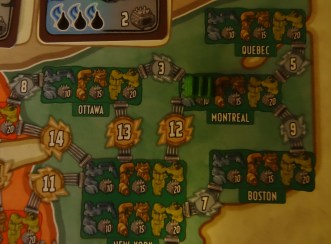
To build your first generator, you need to pay 10 coin and then you can place a generator in any city that doesn’t already have a generator in it. (There’s a 10 on the left-hand side of each city space and it has a ten on it.) The 15 and 20 spaces of each city do get used but in the second and third steps of the game. We’re still in the beginning, so you must find an empty city.

PowerGridDeluxePlacingGenerators3

Green Building a Second Generator

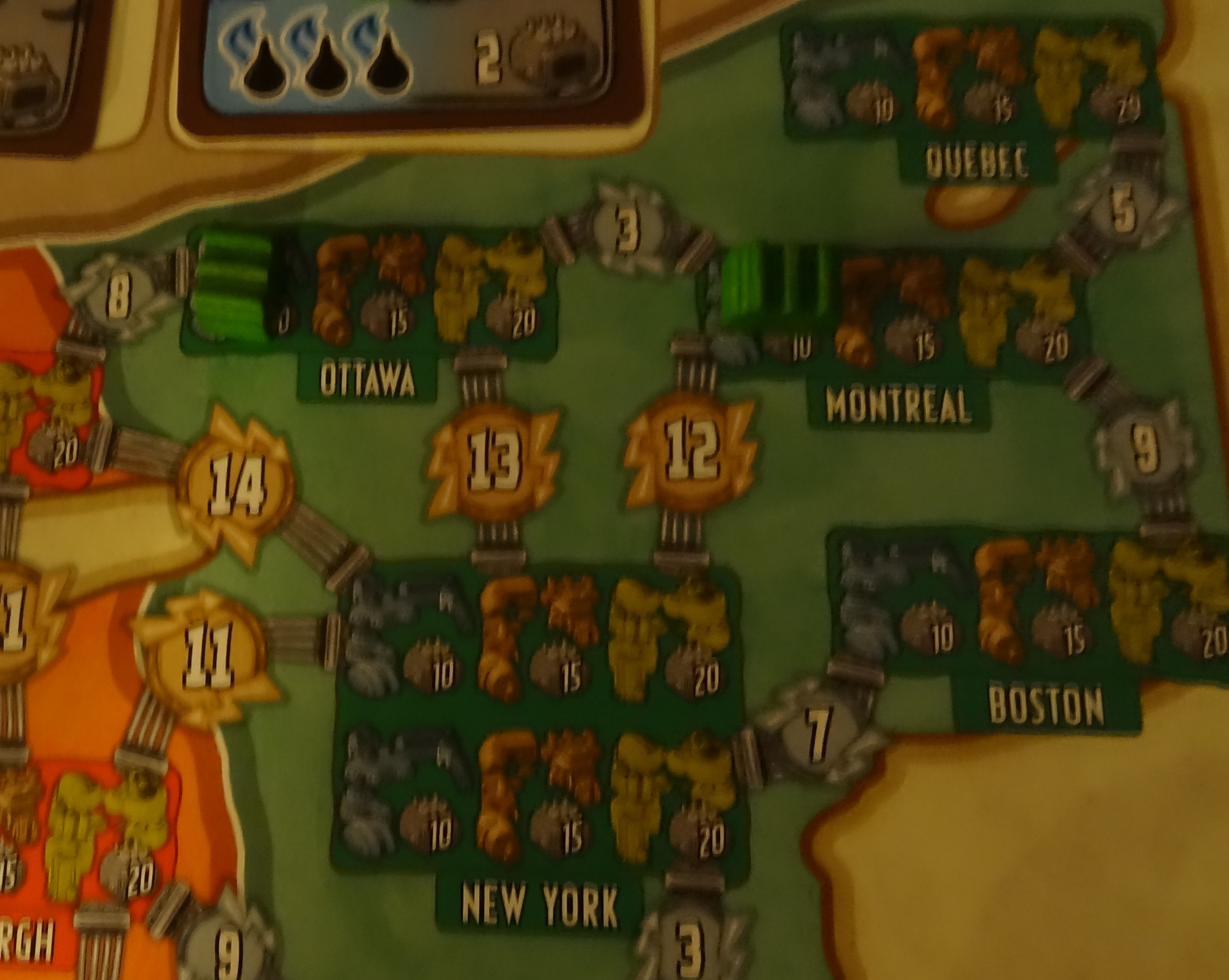
In order to build a second generator, you must place your new generator in an available space and then pay the connection fee. Green chose Ottawa, so they had to pay the 3 coin to connect Montreal to Ottawa and then pay the 10 for the new generator. The grand total for green’s second generator is 13 coin.

Now, green has several options. He can purchase a third generator and place it in New York for 22 coin, go to Boston for 19 coins, or Quebec for 15. But he’s tapped out on coin at the moment, so he passes his turn to yellow.

Once everyone has had the chance to build generators, you move to the final phase.

Bureaucracy

Several things happen in this phase. First, you earn money. You look at the number of generators you have on the map and see how many generators you can power with your plants.

Earn Money

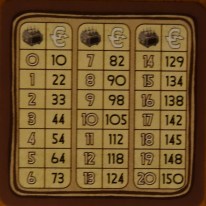
Green picked up the nuclear plant that can charge two generators and he has two generators on the board in Montreal and Ottawa, so he can power both cities by spending one uranium on his power plant. Note: you can only use your power plants once per turn, so you can’t use two uranium to power four generators.
PowerGridDeluxePoweringGenerators

Payment for Powering Generators

If green chooses to fire both generators, he earns 33 coin. He can also choose to power only one or no generators. (Powering no generators in a turn is a viable option and could be strategic as you can horde resources on your plant.) Each player chooses how many of their generators they can power and they turn in resources to the bank and then earn the corresponding number of coin to how many generators they used.

Resupply the Resource Market

Based on the number of players, you’ll place more resources in resource market but there’s a finite supply of resources. If someone has a lot of resources on their power plants, you may end up with very expensive resources the next round.

Update the Power Plant Auction House

During Step 1 and Step 2, place the highest numbered power plant from the future’s market face down below the power plant draw pile and draw a new power plant. Adjust the auction house as usual.

During Step 3, discard the cheapest power plant.

How do you get to Step 2 and 3?

PowerGridDeluxeGeneratorCloseUp

Close Up of Number of Generator Track

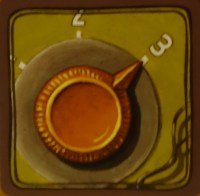
You reach step 2 when one player passes the white stick on the generator indicator. You reach step 3 when a player passes the black stick (on the generator indicator), or you unearth the following card in the power plant draw pile.
PowerGridDeluxeCloseUpOfTimer

Close Up of Timer Card

I didn’t mention this card before because it didn’t come into play until now but when you first setup the game, you place this card face up on the bottom of the power plant draw pile, so that all those high-priced power plant cards go underneath this card. You can skip step 2 and go straight to step 3 if this card shows up.

However, if a player does pass the black stick, everyone finishes the turn they’re on and then the end game occurs.

End Game

Players fire up their generators as normal but the player who can charge the most cities, wins.

Game Review:

As you can tell by the length of the game flow, there’s a lot going on in Power Grid, but I like it. It’s the gamer version of Ticket to Ride. Or is Ticket to Ride the simplified version of Power Grid? They did come out the same year.

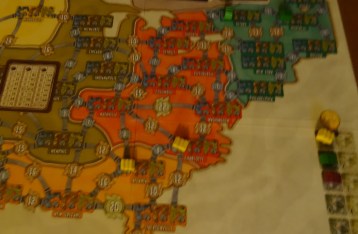
Each map has its own character. You get more options for nuclear power in North America, while Europe gives you more power plant options as a whole and there’s a lot of power plant discard. And if you’re wondering how Friese came up with the numbers between the different cities, you answered that question during an interview by saying, “I measured the distance between the cities and came up with a formula to determine the amount of Electro needed to connect the cities.” That’s why the western United States has large numbers connecting its cities, while the eastern United States has smaller numbers.
PowerGridDeluxeGeneratorsOnTheBoard


Overview of Map with Generators

There are so many strategies and options to this game that you could spend hours and days trying to make each one work. You’re not just battling for power plants, resources, and spots on the map. You have to manage where you land in the Player Order Track. You’ll want to be close to first (because that means you have a lot of generators on the board) but there’s too much of a drawback to being the first player.
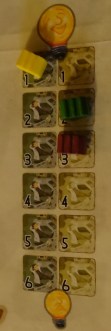
TrackerCloseUpTwoBidsDone


Yellow Goes Last during Resource and Generator Phases

You’ll also want to diversify your power plants. My son likes to play with nothing but green energy plants but that limits the number of cities he can power. You also don’t want to use the same energy everyone else uses because those resources get real expensive after a few purchases.

Friedemann Friese developed an elegant and layered resource management system with Power Grid and Power Grid Deluxe continues that tradition. I just hope he’s planning an Asia and Africa expansion. I think the full title of this game suggests that we should see one soon.

Verdict:

Power Grid Deluxe is an in-depth resource management/network building game that gamers should play once if not own. It does take a healthy chunk of time but it’s time well spent.

Boss Monster: The Dungeon Building Card Game

You are the Boss Monster at the end of an 8-pixel video game dungeon. You must construct enough defensive structures to defend yourself and your fortress against those pesky heroes. If you’re successful, you gain the souls of the fallen adventurers. If you aren’t, you’re another Bowser trophy for Mario’s wall.

We’ll get back to the daring do and nefarious plots in a while but here is some bothersome rulebook-like technical jargon first.

The Fiddly Bits
Designer: Johnny O’Neal and Chris O’Neal
Publisher: Brotherwise Games
Date Released: 2013
Number of Players: 2-4
Age Range: 8 and up
Setup Time: Less than 5 minutes
Play Time: 15 minutes or less
Game Mechanisms:
Auction/Bidding
Hand Management
Player Elimination

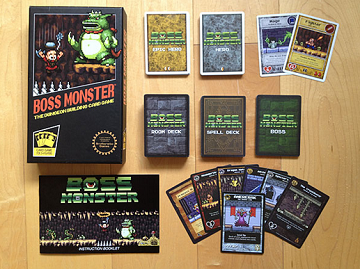
BossMonster04

Game Flow:

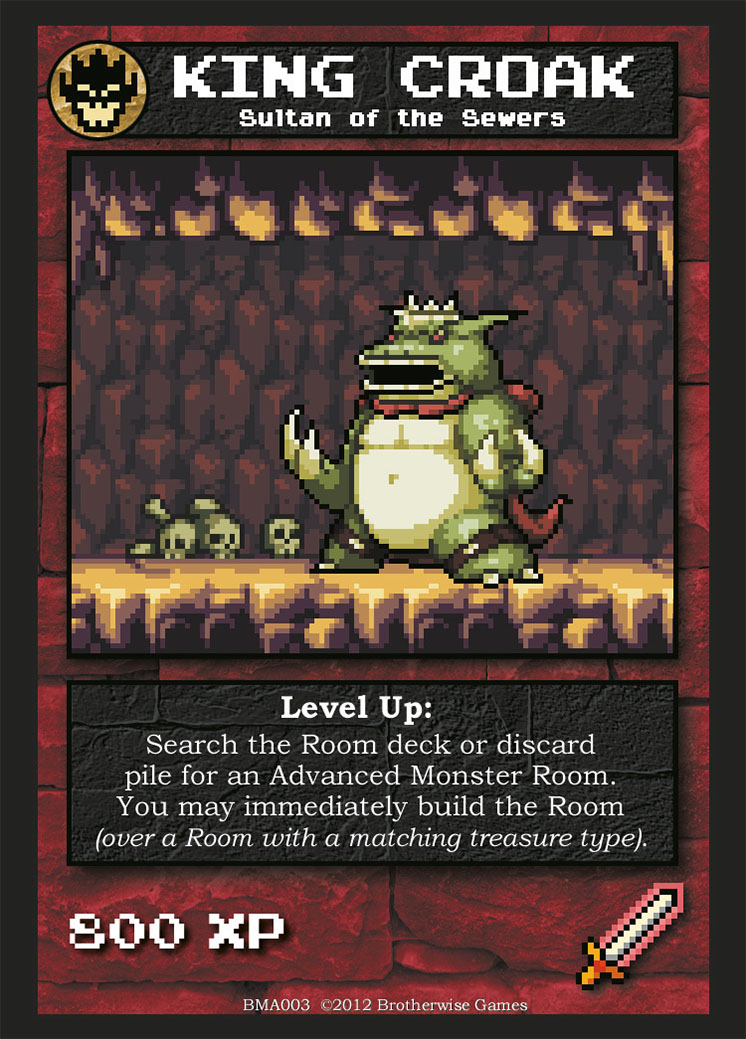
Let’s give the Bosses their much needed close-up. Who better to star with than the Bowser-inspired King Croak?

BossMonster_King_Croak

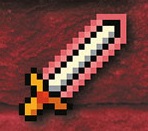
King Croak’s name is at the top. All Boss “Level Up” effects come into play when their dungeon has five rooms: the max number of visible rooms a dungeon can have (you’ll have to upgrade your Rooms over time). The bottom left figure is King Croak’s experience points or XP, XP determines turn order. And the icon in the bottom right is the type of lure King Croak uses to attract unsuspecting heroes to his dungeon. Since King Croak has a sword, he has one treasure type for the Fighter class of Hero.

BossMonster_FighterTreasureIcon

Fighter Treasure Type Icon

We’ll get to a turn’s anatomy and the other card types in a bit but next, we’ll cover how to set up a game.

Game Set-up

Shuffle all five decks: Boss, Heroes, Epic Heroes, Rooms, and Spells. Before you shuffle the Hero decks, you must adjust the Heroes and Epic Heroes to match your game type. Use all Hero cards for a four-player game, remove all Heroes with a four player icon from the game for a three player game, and remove Heroes with three and four player icons from the game for a two player game.

Once the decks are ready, randomly deal each player one Boss card—that’s your Boss Monster for the game.

Draw five Room cards and two Spell cards, then you discard two cards (any combination of Rooms and Spells): this constitutes your opening hand.

After that’s done, choose one ordinary Room (there are advanced rooms, too, but you can’t use those at this time) and place the Room face-down next to your Boss.

Once all players have placed their Room, simultaneously reveal (“build”) Rooms. So after the game’s all set up, your table should look something like this.

BossMonsterOverviewOfGameSetUp

Anatomy of a Turn

1) Heroes Come to Town

Reveal Heroes from the top of the Hero deck equal to the number of players in the game. (Note: you don’t play Heroes from the Epic Hero deck until all the Heroes from the normal Hero deck are played.) These heroes are placed in a central location and this makes up the “town.” You reveal Heroes every turn, even if other Heroes are still in town. After Heroes come to town, each player draws a new Room card.

2) Build Phase

In XP order, each player may place one Room face-down in his/her dungeon. Ordinary Rooms can be placed to the left of your left-most Room, or on top of any Room.

Advanced Rooms can only be played on a Room with at least one matching Treasure icon.

You can play Build Phase Spells at any point during the Build Phase before Rooms are revealed.

At the end of the Build phase, simultaneously reveal all face-down Room cards. If one or more Bosses would “Level Up” this turn, apply these effects in XP order.

3) Bait Phase

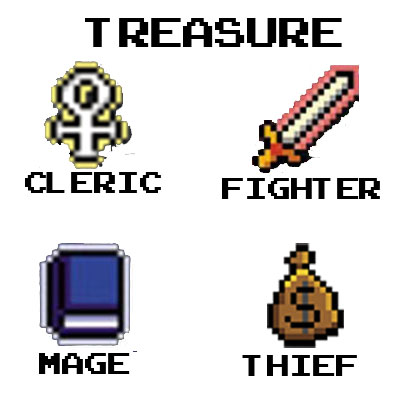
Each Hero moves to the dungeon with the most relevant Treasure icons.

BossMonsterTreasureTypes


Treasure Icons and their Heroes

So, the Boss with the most Mage icons will get all the Mage Heroes and so on for the other three types. If there’s a tie for a treasure type, all the Heroes of the type stay in town. Note: the Bait Phase is the only phase that you can’t play a Spell or use an ability, so you can’t interrupt this process.

4) Adventure Phase

In XP order, Bosses must contend with the Heroes in their dungeons. Each Hero enters the dungeon alone and the effects of each Room are applied in the order the Hero walked in the Room. Each Room has a damage value:

BossMonster_DamageIcon

This damage depletes the Hero’s Health value:

BossMonsterHeroHealth

Once a Hero’s Health reaches zero, place it face-down in your scoring area. If a Hero survives a Room, they enter the next Room. If the Hero survives your entire dungeon, place it face-up in your scorekeeping area.

After the highest-XP Boss processes all Heroes, the next highest-XP Boss becomes the active player. The Adventure Phase doesn’t end until all Bosses have dealt with the Heroes in their dungeon. If you don’t have any Heroes in your dungeon, you won’t have anything to do this phase.

5) End of Turn

Reactivate any Rooms that were deactivated. Check each player’s scorekeeping area. A player with 10 Soul icons wins the game. A player with 5 Wound icons loses the game.

Keep playing until a player has 10 Souls or if there’s only one Boss Monster remaining.

Room Cards

Like Boss cards, Room cards have their names at the top and they have their card type beneath their name.

BossMonsterCentipede-TunnelRoomCard

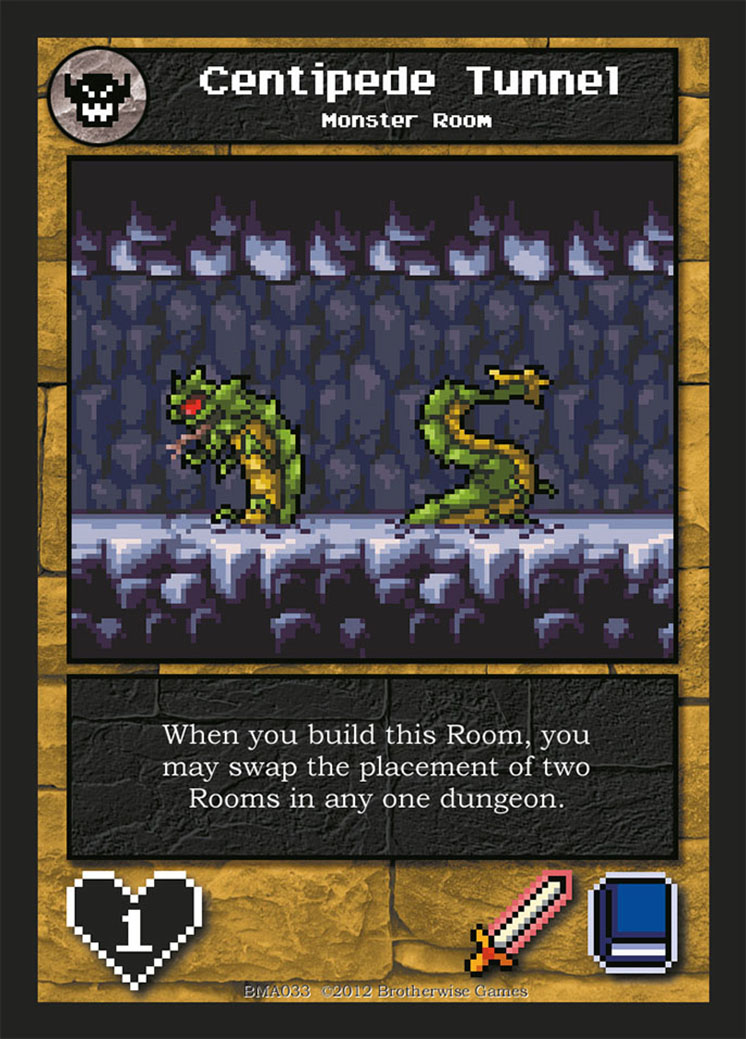
Centipede Tunnel is an ordinary, Monster Room. There’s no difference between a Monster Room like Centipede Tunnel and a Trap Room like Dark Alter.

BossMonster_DarkAlterTrapRoomCard

But there are certain spells and abilities that target one of the two types.

BossMonster_Dracolich_LairRoomCard

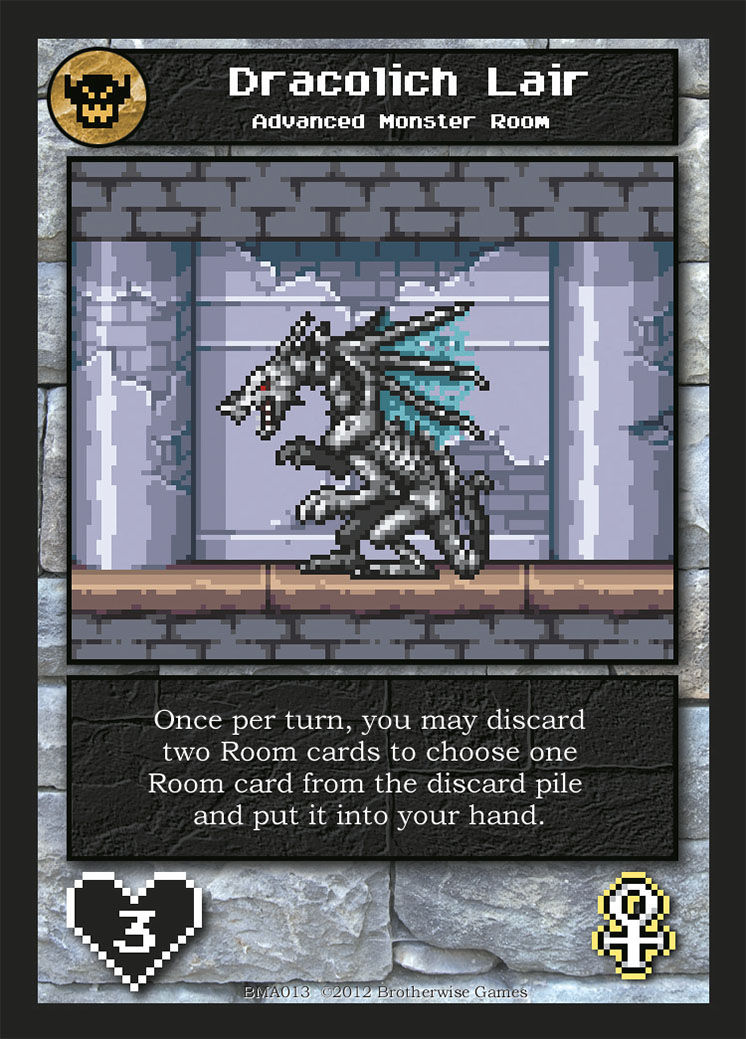
If a Room is “advanced,” it’ll say so beneath its name like this guy, Dracolich Lair.

Advanced Rooms are more powerful than ordinary Rooms, but they must be placed on top of a Room that shares at least one Treasure type with them.

Spell Cards

Spell cards are even less complex than Room cards. They have their name at the top and the only other thing you have to worry about is the icon in the bottom left corner.

BossMonster_Kobold_StrikeSpell

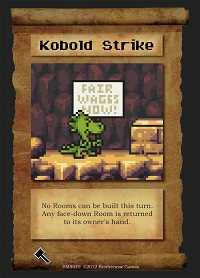
Kobold Strike has a hammer icon and can only be played during the build phase.

BossMonster_TeleportationSampleSpellCard

Teleportation has an axe icon and can only be played during the adventure phase. I have two pictures of this Spell because the game has alternate art for the multiple copies of this card and I like the effect they were going for here.

BossMonsterFreezeSpell

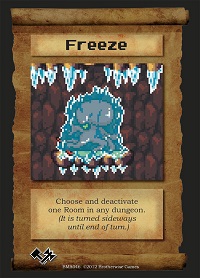
The Freeze Spell has both a hammer and an axe icon and it can be played during the build or adventure phase. Pretty nifty.

Hero Cards

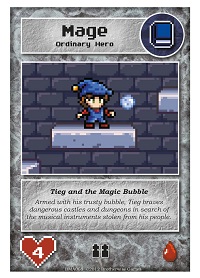
Hero Cards have their name and type at the top with whether or not they’re epic or ordinary and if that wasn’t enough, they have their Hero type icons in the top right, too. The text beneath the picture doesn’t do anything but my kids and I have a soft spot for Tieg and his Magic Bubble.

BossMonster_Tieg_and_the_Magic_BubbleHero

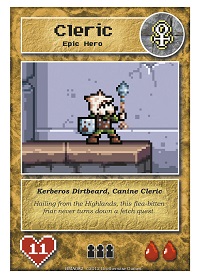
Isn’t he adorable? Anyway, the bottom left corner shows how much damage Tieg can take before he’s defeated. The icon at the bottom center shows the minimum number of players needed to add him to the Hero deck (the fewest number of players needed for Boss Monster is two, so Tieg will always be in the deck). And the icon at the bottom right denotes the number of wounds Tieg deals you if he makes it through your dungeon. Tieg isn’t so strong but Kerberos Dirtbeard is.

BossMonster_Kerberos_Dirtbeard,_Canine_ClericHero

Epic Heroes deal two wounds but if you can defeat them, you earn two souls. It’s all about risk management, baby.

Game Review:

I have to be honest. Boss Monster tugs at my heart strings. The 8-pixel art and inside video game jokes are priceless. A card by the name of Cheat Codes (part of the first expansion Tools of the Heroes) had arrows in the background with the old Konami game cheat—that’s up, up, down, down, left, right, left, right, B, A, start for younger video gamers—and as the Cheat Code card attests, Boss Monster respects classic video game tropes.

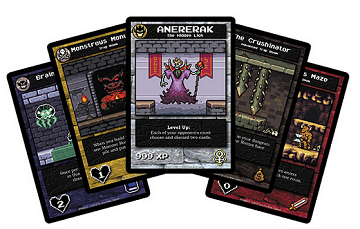
BossMonster03


Sample of Cards

The gameplay might look daunting but it’s real easy to pick up and play. The downside to Boss Monster is that it can be unforgiving. Some of the cards are overpowered and unbalanced. There’s a basic room card that deals three damage. You can’t upgrade this room, but why would you want to? Many of the spell cards turn the tide of the game in a blink of an eye. Fortunately, you have more room card draw than spell card draw, but you can generate spell card draw through boss abilities, and these abilities make these bosses more desirable than the others.

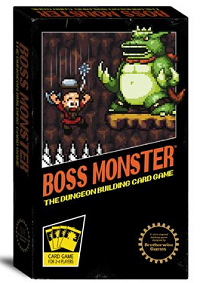
BossMonster02


The Boss Monster Box

Speaking of desirable, during the game’s opening stages, you’ll want to attract fewer heroes as your dungeon won’t be that strong. This makes a two player game almost unplayable. Picking a monster that shares a treasure icon similar with the only heroes on the board will have you scrambling to improve your fledgling dungeon.

Verdict:

Boss Monster is a great—and unbalanced—8-pixel romp. While you can play this game with two players, it works best with three or four.

Ghost Stories

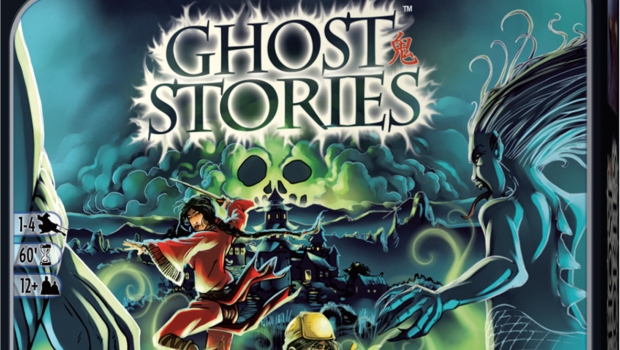
Uh-oh! Wu-Feng, the Lord of the Nine Hells, knows where to find the funeral urn that contains his ashes and he’s sending his demonic minions to retrieve them. It’s your job as a Taoist priest, armed with your own unique ability, to defend the village from Wu-Feng’s army of shadows but you’ll have to use teamwork to rid the world of these malevolent ghosts.

We’ll get back to the haunting after a while, but first, we have to exorcise the game’s technical details.

The Fiddly Bits
Designer: Antoine Bauza
Publisher: Asmodee and Repos Production
Date Released: 2008
Number of Players: 1-4
Age Range: 12 and up
Setup Time: about 10 minutes
Play Time: less than 60 minutes
Game Mechanisms:
Area Movement
Cooperative Play
Dice Rolling
Modular Board
Variable Player Powers

Ghost-Stories-Logo

Game Flow:

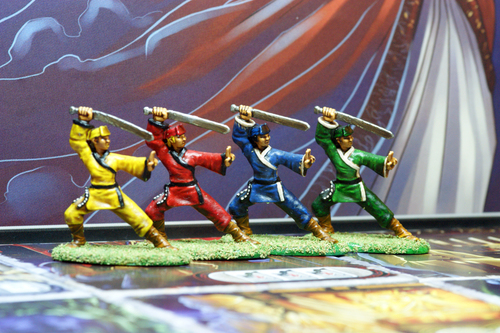
Players select their priests (red, yellow, blue, and green) and everyone starts in the village’s center. The eldest priest at the table (the oldest player) takes their turn first.

TaoistMonkClose-ups
Close Up of Painted Taoist Priests

Before each priest’s turn, the player brings a ghost (from the ghost draw pile) into play and places it on a free spot. (There can be actions and/or abilities that bring more than one ghost in play per turn.) Every priest has their side of the board (color-coded to their priest) and can accept up to three ghost cards.

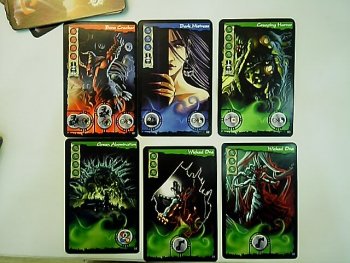
GhostStoriesGhostCardCloseUp
Sample of Ghost Cards with Different Colors

Each ghost has its own color (just like the priest), and they get placed on the priest’s area who matches their color, if possible. If there’s no space available in that priest’s area, the player bringing the ghost into play puts the ghost on any other priest’s area who has space available. If it’s your turn and you have no space available to accept a new ghost, you take one point of damage instead of placing a new ghost.

We’ll talk more about ghosts and get to player areas in a bit too, but let’s finish with what happens on a player’s turn.

OLYMPUS DIGITAL CAMERA
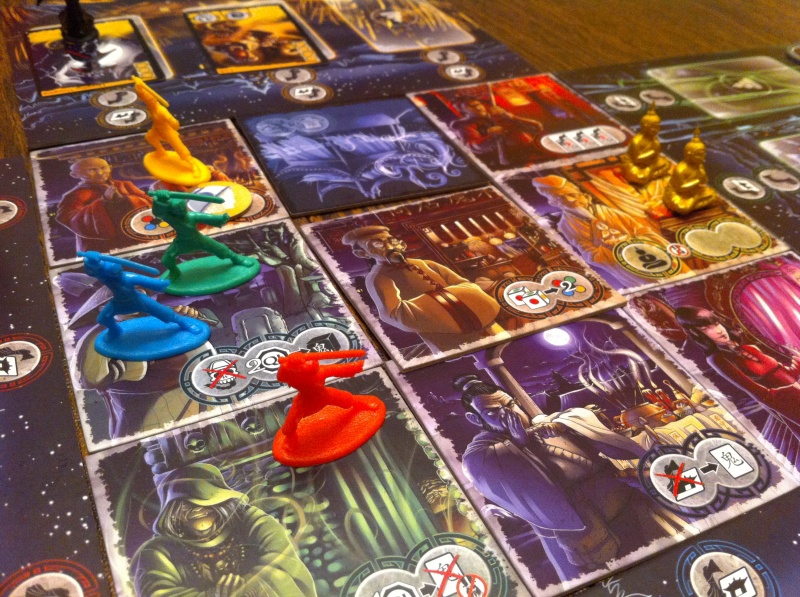
Overview of a Ghost Stories game in progress

On their turn, a priest can move once to any adjacent space on the board and gets one action. The priest has two options for an action. They can choose to exorcise a ghost (located next to the priest’s space) or claim the ability granted by the villager on their space. There are a lot of villager abilities, so I won’t discuss them at length here, but you can do things like place a Buddha statue that will automatically kill a ghost entering a priest’s area or resurrect a fallen priest from the underworld’s embrace.

But usually, you’ll choose to exorcise a ghost by rolling three dice with different colored circles on each side. You have to roll a certain number of a particular color to defeat a ghost and you can add color tokens—that you’ll gain through abilities—to your roll. Once a priest has taken their move and action for their turn, play passes to the priest on their left.

Ghost Spawning and Priest Play Areas

Here’s the red priest’s play area.

GhostStoriesPlayerBoardCloseUp

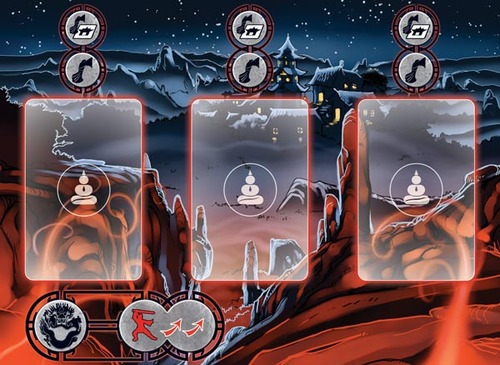
The glowing spaces in the shape of cards are where you can place a ghost card. The circles above the card spaces are where you place ghost pawns and denote how close a ghost is from haunting a village space. The space in the bottom left-hand corner of each priest’s play area holds a dragon space for your yin-yang token, which allows you to exorcise a haunted village space, and to the right of that has a graphic representation of the priest’s special power.

Priest Powers

GhostStoriesYinYangTokenSpaceAndPriestPowerCloseUp

The red priest doesn’t just move one space (as you could guess from his ability icon above), he flies to any movable location on the board. The blue priest moves normally but gets two actions; these actions have to be the same, so no using a villager ability and then exorcising. The green priest doesn’t ever have to roll the curse die (a die that shows up at times that doesn’t have a good outcome) and gets an extra exorcism die, while the yellow priest collects one free color token at the beginning of their turn.

Ghosts

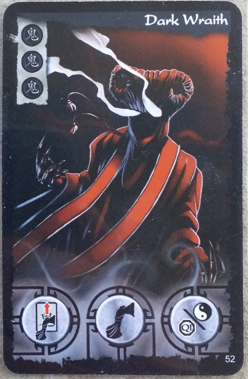
Here’s Dark Wraith for an example of a ghost card.

DarkWraith2GhostStories

The icons in the top, left-hand corner tell you what you need to beat him. You either need to roll three black circles on three dice or hand in some black tokens to supplement your roll. I’m thinking you’re going to turn in at least one token.

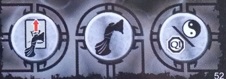
The three icons on the bottom of the card show Dark Wraith’s abilities.

CloseUpOfGhostAbilities

The icon on the far left happens when Dark Wrath comes into play. With this particular icon, you draw another ghost card and any ghost pawns on the board move forward one in their areas.

InitialGhostAbility

The icon in the middle triggers before each priest’s turn who has the ghost in their area. In this case, Dark Wraith spawns a ghost pawn on his space on the turn he’s played and then moves farther down the track in his area each subsequent turn until he haunts a village space or gets exorcised. Come on, priests. Do your stuff.

PerTurnGhostAbility

The icon on the far right happens when you defeat Dark Wraith. This particular icon allows you to gain one Qi (health token) or replenishes your yin-yang token—everybody gets one.

DefeatGhostAbility

If there are ever three haunted village spaces, you lose.

Losing the Game

You lose the game in three ways: three haunted village spaces, all priests are dead at the same time, and you don’t beat Wu-Feng in time. Remember Wu-Feng, the big, bad ugly from the introduction? Yeah, he’s placed ten cards from the bottom of the ghost draw deck and you have to defeat him before all the cards in the draw deck are gone. Good luck with that.

Winning the Game

You win the game if you survive the ghost deck—and I do mean survive—and defeat Wu-Feng before time runs out.

Game Review:

Ghost Stories is fun but brutal. I enjoyed the first five or six plays until I realized that I didn’t get any closer to defeating Wu-Feng. Most of the time, I didn’t even see Wu-Feng. It says something when your gaming group starts betting to see how long you’ll last instead of whether or not you’ll win. Still, Antoine Bauza gave this game rock solid mechanics, the art is gorgeous and thematic but creepy, and you feel the anxiety of this pressure cooker.

GhostStoriesCloseUp
Close Up of the three by three game board

I like this game a lot but it’s a bit misleading on a couple of accounts. It has a spooky vibe to it but it’s not scary. When you think Ghost Stories, you expect something to frighten you but your monks are so strong that you can’t possibly be scared. The title is a misnomer for another reason. You’re playing the same story several times. Shouldn’t it be called Ghost Story? The expansions build on this story and could add more options, so I guess that’s where the plural “stories” comes from but not all expansions are created equal.

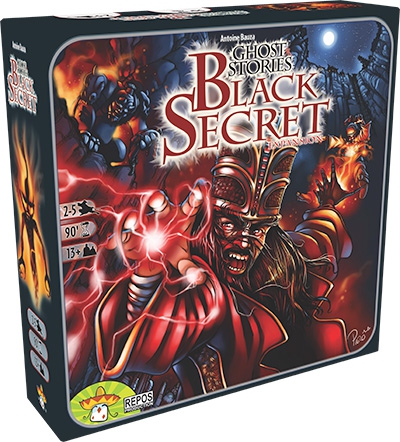
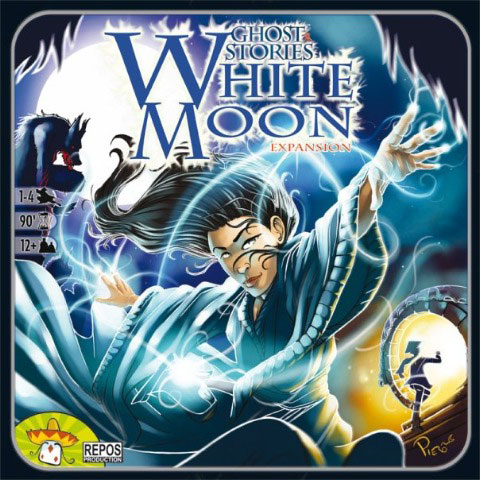
GhostStoriesBlackSecret GhostStoriesTheWhiteMoon
The two Ghost Stories expansions

The Black Secret expansion makes the game more difficult—like it needs to be more difficult—while the White Moon expansion makes Ghost Stories easier. I’m all for easier. Give me the max number of Qi (health) and I’ll still lose. You get five Qi on easy, four on normal difficulty, and only three Qi on hard mode. Hard mode? Are you crazy? I guess if you only want to play for five or ten minutes, you can play on hard mode. See you at your funeral.

Cooperative games have the lion’s share of the tabletop industry. They’re easy to teach and get into because everyone’s working together. You want to help the newbie play well. You also take out the sting of losing; if I lose, we all lose. Ghost Stories captures most of what makes a co-op game fun. I just wish it was a little more forgiving.

Verdict:

If you don’t mind losing (a lot), Ghost Stories is a fun, intense game. If you ever do win (and I’ve played dozens of times without winning), you’ll remember it for months—if not years—to come. Yes, I remember the last time we won Ghost Stories. It was a cold, stormy day last May…

Neuroshima Hex

Vie for control of a war-torn, post-apocalyptic world. Use your armies, composed of human and/or machine forces, to dominate the landscape, food, and other resources with this quick, strategy-heavy game. Neuroshima Hex combines the tactics of a classic 50’s or 60’s war game with the speed and accessibility of an abstract game like Chess.

We’ll get back to the wasteland in a bit but first, let’s go over some technical details.

The Fiddly Bits
Designer: Michal Oracz
Publisher: IELLO, Z-Man Games, and Heidelberger Spieleverlag
Date Released: 2006
Number of Players: 2-4
Age Range: 12 and up (10 and up on the box)
Setup Time: less than 5 minutes
Play Time: less than 30 minutes
Game Mechanisms:
Hand Management
Hex-and-Counter

Player Elimination
Tile Placement

Variable Player Powers

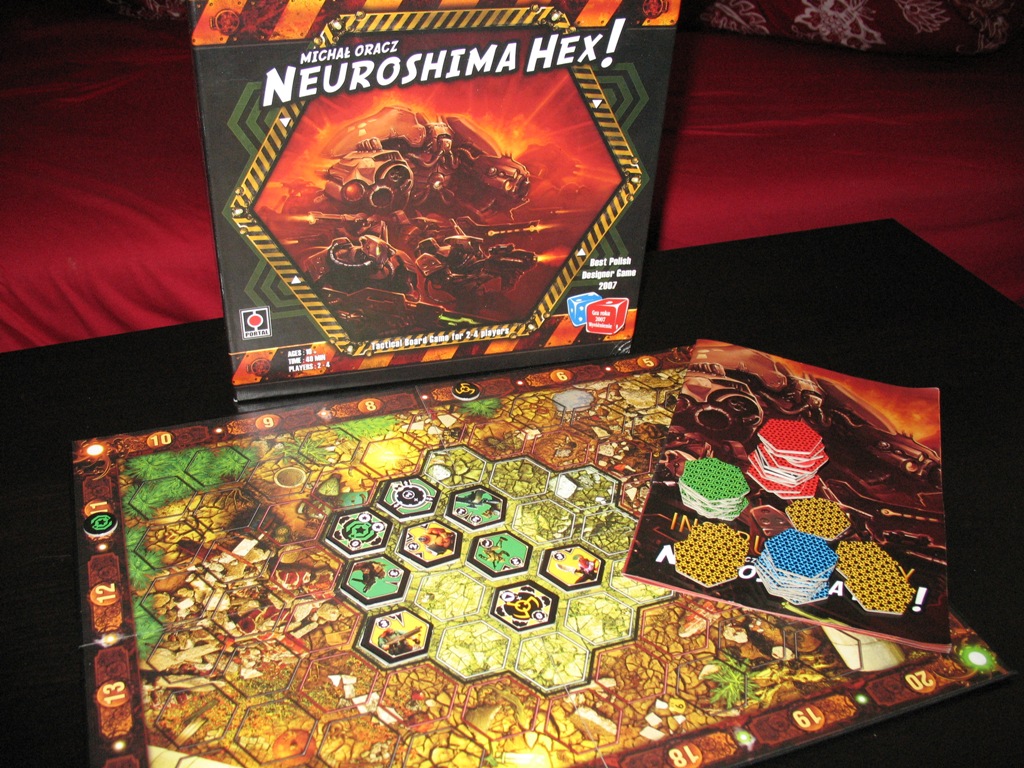
NeruoshimaHexOverview

Game Flow:

Players select a faction. Each faction has its own advantages/disadvantages and headquarters. On their first turn, players must play their faction’s headquarters tile. Your headquarters has 20 health or hit points and if you reduce your opponent(s) headquarters to zero, you win.

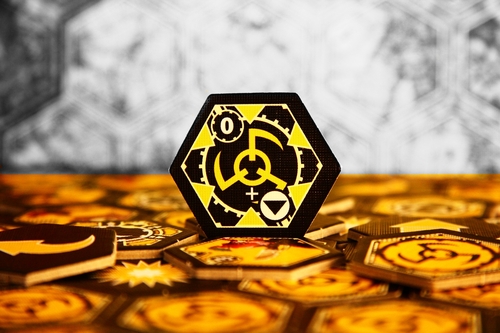
SampleNeuroshimaHexHeadquartersTile2
Example of a faction’s headquarters

After each player has played their headquarters, players take turns and on their turn, players draw at random from their faction’s pool of tiles. There are two main types of tiles: instant actions and board tiles.

The most common board tile is a unit. Here are some examples.

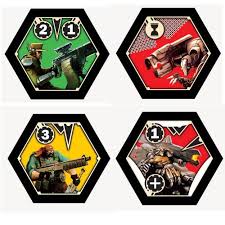
NeuroshimaHexSampleTiles
Unit tile examples

You’ll notice that some of the tiles have long and skinny triangles (ranged attacks) and others have short and squat triangles (close-range attacks). Most of these examples have both. Ranged attacks deal one damage to the first enemy tile in the triangle’s direction, while close-range attacks deal one damage to an enemy tile adjacent to the triangle’s direction.

The numbers denote initiative. When battle begins, tiles with a higher number attack before tiles with a lower number. In the case of this one ranged unit, it attacks twice: once when the two-speed units attack and again when the one speed units attack.

NeuroshimaHexRangedUnit
Ranged unit

If you have more than one triangle on a side, you attack that many times on the tile’s initiative number, so this guy attacks once for a ranged attack and once for a close-range attack on the three speed units’ turn.

NeuroshimaHexFastUnit
Fast unit with both ranged and close-range attacks

The plus in the lower-left-hand corner of this tile means that it has more than one hit point of damage it can take before it gets discarded. It also has attacks going in more than one direction.

NeuroshimaHexToughUnit
Tough unit

And this curious fellow has two mesh triangles pointed in different directions with no number at all. The nets (mesh triangles) nullify an enemy tile’s attack, so no damage for you.

NeuroshimaHexNetUnit
Net unit

You’ll want to place your tiles in a way that they can deal damage to your opponent, while protecting your own HQ. But fortunately, unit tiles aren’t the only ones at your disposal.

Instant action tiles can do things like push one of your opponent’s tiles away from your HQ.

BumpAnEnemyUnitNeuroshimaHex
Push an enemy’s tile

Or move one of your tiles to an adjacent, empty space.

TurnAFriendlyUnitNeuroshimaHex
Move one of your tiles

With those quick introductions of tiles out of the way, let’s get to combat. Players place their tiles on the board, trying to get the best use of their units, until the board is full or a player plays a battle tile.

StartCombatNeuroshimaHex
A battle tile

Resolve combat by initiative number and then play continues until one player’s HQ is left standing or if someone runs out of tiles. If the latter occurs, one final battle ensues, and the player with the healthiest HQ wins.

Game Review:

I like this game (a lot), but that wasn’t always the case. You need to take your lumps, and as you get better as a player, the game gets more fun.

Neuroshima Hex sounds simple—in theory. The reality is that there are so many strategies to win the game that I’ve seen even the most self-assured gamer take minutes, lost in analysis paralysis (the condition in a tabletop game where you don’t know which play to make, which looks like a computer loading screen on a human face). Try as you might, you can’t predict all of the triggers that can happen during a battle, once the board gets more than half full.

NeuroshimaHexHallFullBoard

A Neuroshima Hex board that’s half full

This triggers that, that triggers this and so forth.

What’s worse is that you like your units and how you placed them and you want to keep them, but a battle’s mayhem will usually wipe out everything you built up in the game up to that point. That makes the game interesting for countless plays.

I wouldn’t suggest a seasoned veteran of Neuroshima Hex to teach a rookie how to play the game. The rook will get their butt handed to them. Instead, download the free app for your smart device and play a few rounds with the computer and you can curse at it as much as you want. I don’t know how many times I’ve restarted a duel.
The game’s short playtime allows for multiple plays. You can learn the basics of the game in no time but it takes a long time to master. I highly recommend Neuroshima Hex if you’d like a streamlined war game (like the classic World War II and Civil War games of the 50’s and 60’s) or if you want a beefed up gamer’s Chess.

I’ve found that Neuroshima Hex plays best with two players. More players than that rewards turtling (players building up strong defenses, so they won’t lose their pieces).

Verdict:

Neuroshima Hex is a great title that delivers a lot of game and strategy in a small amount of time and space.

Here’s a link to download this fun game: http://www.neuroshimahex.com/

Ticket to Ride: Heart of Africa

Forge a path across Africa by means of rail. Days of Wonder’s at it again with its map expansion Ticket to Ride: Heart of Africa.

We’ll get to the review in a bit, but first, here are some board game specifications.

The Fiddly Bits
Designer: Alan R. Moon
Publisher: Days of Wonder
Date Released: 2012
Number of Players: 2-5
Age Range: 8 and up
Setup Time: 5-10 minutes
Play Time: 45 minutes to an hour
Game Mechanics:
Card Drafting
Hand Management
Route/Network Building
Set Collection

TicketToRideAfrica

Game Flow:

We won’t go into too much detail with the basic Ticket to Ride game flow, since we covered the base game earlier. If you missed it, here’s a link to our review. Basically, you form a long route across the African continent using trains. Players collect colored train cards in order to place their colored, plastic train cars on the board from location to location, which in turn, completes destination ticket cards. With that brief synopsis out of the way, we’ll focus on what makes Ticket to Ride: Heart of Africa different from any other Ticket to Ride game—in a word, terrain.

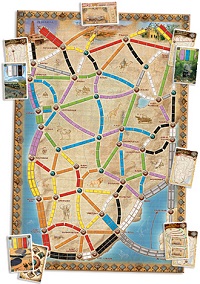
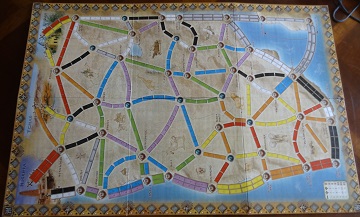
TicketToRideAfricaOverview
Overview of Ticket To Ride: Africa Board

Days of Wonder color-coded Africa by terrain. Red, orange, and yellow routes are in the desert. The two masses of hot colors on the board represent the Sahara and Namibian Deserts, respectively. Blue, purple, and green are jungle, so you’ll find a lot of those colors around the Congo, while black, white, and grey are mountainous regions. Mount Kilimanjaro, anyone? These terrains are not only represented on the board; they find their way on Ticket to Ride: Africa’s terrain cards.

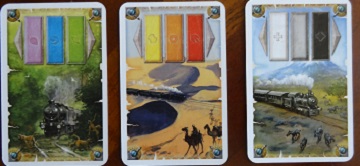
TicketToRideAfricaDestinationCards
Close-up of Terrain Cards

A player can collect and use train cards as normal, but they may also use terrain cards, if the route they’re trying to claim is of that terrain. If a player uses terrain cards, they get double points for the route. Sound too good to be true? Are you thinking what the catch is? The catch is simple. A player’s hand of train cards are hidden from view of other players, but players must keep their terrain cards face up and that is because if a player wants to use a terrain card on a route, they must have the most cards of that type than any other player. So, let’s see how this affects the gameplay in our review.

Game Review:

Ticket to Ride: Africa reminds me a lot of Ticket to Ride: Asia: the tweaks they made to the core gameplay were worthy attempts, but they didn’t fare as well as I would have liked.

If you mess up with tallying any other Ticket to Ride score, you can always look at the board and the tickets you own to see where you erred, but with Ticket to Ride: Africa, if you don’t take note of the routes you scored that were double points, you’ll never get the correct score. This doesn’t happen often but when it does, arguments ensue. This phenomenon also causes anxiety with score keeping that doesn’t exist in any other Ticket to Ride title.

TicketToRideAfricaDaysOfWonder
Overview of Ticket to Ride: Africa

Additionally, the terrain cards slow down the speed of the game. Ticket to Ride is known as a quick game, but the terrain cards force players to compete with each other to see who can grab the most of those cards, which in turn, drags out the game’s length.

I will say that Ticket to Ride: Africa does add some strategy to the series and if you can handle a slightly longer playtime and the need to keep accurate score as you go, it is fun to play. And that’s why we play games in the first place.

Verdict:

Not my favorite title in the franchise, but Ticket to Ride: Africa can add a nice changeup to Ticket to Ride’s core gameplay, and I am a fan of the board. It’s gorgeous—as always—but the colored routes depicting terrain is a nice touch.

Samurai Spirit

Great news: Samurai Spirit converts Seven Samurai into board game form. Not-so-great news: Samurai Spirit converts Seven Samurai into board game form. If you’ve ever watched the Kurosawa classic, you know that things don’t end well for the samurai in question.

We’ll get back to katana wielding in a minute but first, here’s some info about the game.

The Fiddly Bits
Designer: Antoine Bauza
Publisher: Funforge
Date Released: 2014
Number of Players: 1-7
Age Range: 10 and up (9 and up on the box)
Setup Time: About 10 minutes
Play Time: About 30 minutes
Game Mechanisms:
Cooperative Play
Partnerships
Variable Player Powers

SamuraiSpirit04

Game Flow:

There are multiple ways to lose Samurai Spirit and only one way to win.

Each player takes on the role of a samurai sworn to defend a village. The village consists of three family members, six shelters, and barricades. You win by fighting off three days of marauders. You lose the game if all family members die, or if you lose all the shelters (barricades help to defend those), or if any one of the samurai perish.

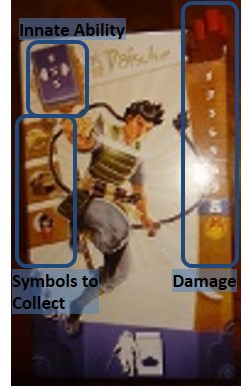
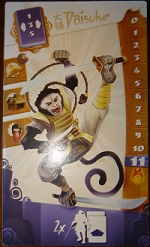
SamuraiSpiritOverviewOfDaisuke


Overview of a Samurai (Daisuke)

You have four options on your turn: fight a marauder, use your innate ability, share your innate ability with a teammate or pass, which I don’t recommend since you’re a samurai and samurai wouldn’t leave a fight.

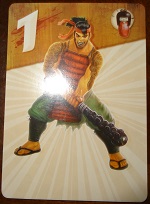
If you choose to fight a marauder (and most turns will have you fighting a marauder), flip a marauder card from the draw deck and once revealed, you may choose to fight the marauder and accept the damage he deals, placing him on the right of your samurai, or you may add him to the left of your samurai (placing him in either the hat, family member, or shelter slot) to prove that you defended those sections of your village that day.

You can only take a certain amount of damage (based on your samurai’s health) before you get knocked out. It also behooves you to collect all of the left side’s symbols as you will accrue penalties for not doing so.

Fight a Marauder

For example: Let’s say that you draw a marauder card with a damage level of 2 and a family member symbol.

SamuraiSpiritLevel2Marauder


Overview of Marauder Card

You have the option of accepting two points of damage. If you choose to do this, you place the marauder card to your samurai’s right and move your damage marker down two.

SamuraiSpiritCloseUpOf2Damage


Deal two damage to your samurai

You can also add the marauder card to your family member symbol slot, depicting that you saved a family member that day.

SamuraiSpiritCloseUpOfFamilyMember


Match like symbols

Note: The penalty for not having a marauder card with a family member symbol to the left of your samurai is that a family member dies. Remember that there are only three family members and everyone in your samurai team has to collect these symbols or face the consequences, so it’s important to save those family members.

Once you deal with your marauder card, play continues with the samurai to your left. Your teammates have the same options as you and they deal with their marauders in turn. Play continues in a clockwise manner and when it’s your turn you’ll have the same options.

Use your Innate Ability

But let’s say that you want to use your innate ability. Using this same samurai as an example, Daisuke has the ability to move a marauder card that he draws to the samurai on his left or right so long as the marauder has a damage rating of 1, 3, or 5.

SamuraiSpiritCloseUpOfLevel1Marauder


Overview of Level 1 Marauder

In this case, Daisuke drew into a level one marauder who also has a family member symbol. We know that your teammates have to collect family members too, so Daisuke passes his marauder to the player on his left or right, and his teammate adds the marauder card to their family member slot.

Share your Innate Ability

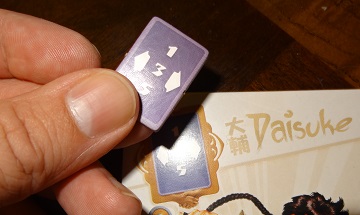
You can also skip the drawing of a marauder card by passing your innate ability to another player. There are countless reasons why you might want to do this—not the least of which is manipulating damage to you or your teammate(s). If you choose to do this, you hand your ability token to any of your teammates and your turn ends.

SamuraiSpiritCloseUpOfSharingInnateAbility


Sharing your Innate Ability

One more Ability—Kiai!

If you manage your damage well, you can reach your samurai’s max health points by exact count. When this happens, he goes Super Saiyan. You discard the topmost card in your damage count, reduce the damage your samurai has by the amount on the card, and unleash a powerful attack or ability, a Kiai. Some Kiai discard cards from the marauder draw pile, others construct barricades, and still others can heal you or your teammates.

This is how it could look before you release your Kiai.

SamuraiSpiritCloseUpOfKiai


Reaching your samurai’s max health by exact count: Kiai!

Ending the Round/Day and Winning

The round ends when you run out of marauder cards in the marauder draw pile. If this is the third round and you survived, congrats, you won. If this isn’t the end of third round/day, you’ll have to tally up who has which symbols.

The Symbols to Your Samurai’s Left and their Penalties

Various things happen if you don’t collect a particular symbol. Here’s a chart that depicts what happens.

SamuraiSpiritSymbolsAndPenalties

Samurai’s Spirit Animals

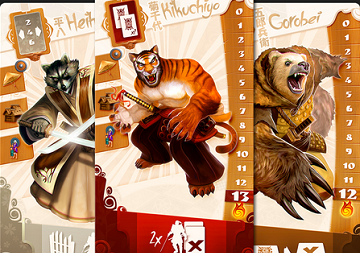
Finally, we come to the samurais’ spirit animals. If your samurai receives two wounds, your samurai flips over and becomes their spirit animal. This trumps up your samurai’s Kiai power and gives them more damage they can take. But be careful as two more wounds will kill your samurai.

SamuraiSpiritOverviewOfDaisukeAnimalSpirit


Overview of Daisuke’s Animal Spirit

Game Review:

Samurai Spirit is unbalanced. It plays two-seven players, but the experience is a lot different for a game with few players than it is for a game with a lot.
It plays too easy for two or three players, and it’s close to impossible for six or seven. You’d think four or five players is the game’s sweet spot, but Samurai Spirit could beat you down (and it plays like a six or seven player game) or the game could take it easy on you. The game devolves into simple chance.
SamuraiSpirit03


More Samurai Cards

Then you have the possibility of an alpha gamer. Alpha gamers are those people who take over a cooperative game because they think they know what’s best. I’ve had more games of Samurai Spirit with alphas than games without them. This could be because of the makeup of my various gaming groups, but I think Samurai Spirit lends itself to this phenomenon.

“If you want to be an alpha,” I say, “go ahead. It’s on you if we lose.” I don’t blame these people actually. I’ve had to assume the alpha gamer role a few times, when my kids couldn’t decide what to do. You can only watch their heads spin like Linda Blair for so long before helping them out.

All the Seven Samurai in Kurosawa’s classic film die. If you have six or seven samurai at the table with this game, you will die.

Samurai Spirit captures the theme, but it’s frustrating.

Verdict:

A rare, uneven game by Antoine Bauza, Samurai Spirit can be fun when you don’t want to pull out your hair, and it’s a lot of game for $25.