
Deck/Pool building games have been around for about six or seven years now but there are plenty of titles that use the game mechanic. Can you name these deck/pool building games in the order in which they were released?
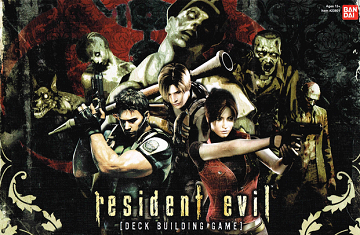
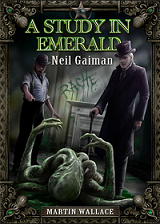

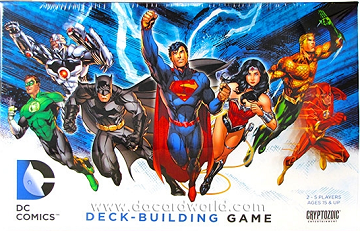
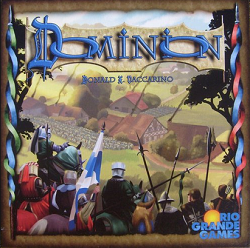
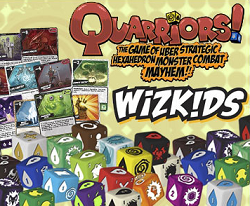

Deck/Pool building games have been around for about six or seven years now but there are plenty of titles that use the game mechanic. Can you name these deck/pool building games in the order in which they were released?


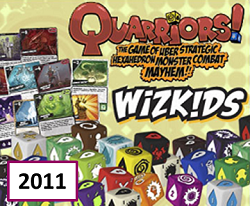
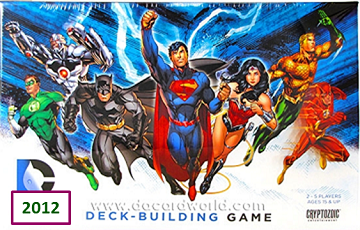


How well did you know these games that used one of the hottest mechanics going. Let’s see how we did.
All 6 correct) You’re the one lord or lady to rule them all.
4-5 correct) A heroic effort that fell a little short.
2-3 correct) Perhaps you should reexamine the clues.
0-1 correct) Quell, quell, quell. Queep fighting the good fight and quarrior on.

Designer: Albert Lamorisse and Michael I. Levin
Publisher: Parker Brothers
Date Released: 1959
Number of Players: 2-6
Age Range: 10 and up
Setup Time: 10-15 minutes
Play Time: Up to 120 minutes
Game Mechanics:
Area Control/Area Influence
Area Movement
Dice Rolling
Partnerships
Player Elimination
Set Collection
Game flow:
The goal is simple. Conquer the world.
A game of Risk begins with all the territory cards getting shuffled and then dealt evenly to each player. The cards in your hand will match regions on the board, and these are the regions you control at the beginning of the game. Each player then places at least one military unit on each region they control and they have spare units to deploy where ever they see fit.
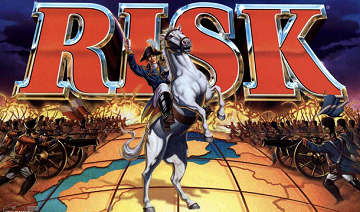 During a player’s turn, they begin by gaining reinforcements through the number of regions they hold, the number of continents they own, and turning in sets of cards (one card is earned each turn if the player whose turn it is conquers a land). Then, the player has the option to attack another player.
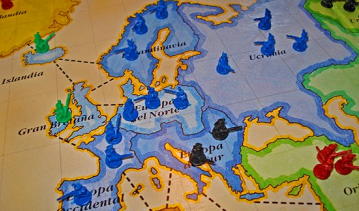 You can only attack a region from an adjacent region, and combat is resolved by a simple roll of standard six-sided dice. Whoever rolls the highest number wins. Defenders win all ties. A player can attack several times on their turn, and once they’re done attacking, they can move any number of military units (in excess of one unit) from one region the player owns to another region they own so long as there is a continuous route of regions the player owns from the starting location to the end location.
 Play continues until all players are eliminated except for one. There can be only one.
Review:
Risk is another classic modern tabletop game that has aged pretty well. Even though the combat mechanics are not as sophisticated or as nuanced as other area control games, it has enough strategy elements to remain relevant in today’s tabletop market.
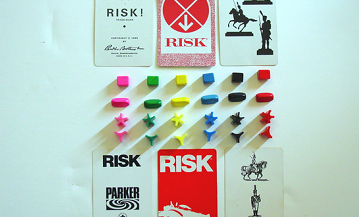 Still, there are some tried and true strategies that trump most others; so many games of Risk give you a feeling of déjà vu. That’s where the lack of gameplay nuance comes in. There just isn’t enough variety outside some unbelievable dice rolling that’ll leave you thinking that the game you played yesterday went a lot differently than the one you played today. Then, there’s the issue of player elimination. Not too many games practice this mechanic today, because today’s games have switched to a victory point mechanic in the hopes to engage every player, especially if it has a one to two hour playtime. The worst thing that can happen in a game of Risk is to get eliminated after one hour of play, but there’s another hour or two of gameplay left. Would you still be interested in who wins the game? I don’t think so.
 Risk – like so many other early tabletop games – has had plenty of tie-ins. Halo, Lord of the Rings, and even The Walking Dead have their own flavor of Risk. My personal favorite is Risk Legacy that allows for ongoing house rules that adapt to previous plays of the game, hence the name Legacy.
Verdict: Risk has left a lasting legacy on area control games that have endured today. It may have been surpassed by some of its offspring, but Risk remains an enjoyable game.
Designer: Cara Heacock and Marcus Ross
Publisher: Water Bear Games
Date Released: 2013
Number of Players: 2-6
Age Range: 8 and up
Setup Time: minimal
Play Time: Around 10 minutes
Game Mechanics:
Hand Management
Game flow:
Players take on the role of a fish monger. They must fish in the only water source at their disposal Lake Miasma. Unfortunately, the fish in Lake Miasma have something wrong with them. They could be dry, toxic, ugly, smell, or have any combination of ailments, but that doesn’t stop a fish monger.
 The player designated to go first flips over one of the fish cards of Lake Miasma (which are face down, scrambled in a pool). Then, all the players try to fix whatever’s wrong with the fish with the cards in their hand. If the fish is dry, rub lotion on it. If the fish stinks, spritz it with a little perfume. The first player to get the fish to a sellable fish (no ailments) keeps the fish – and all the other cards associated with the fish – in their score pile. Whoever won the last fish flips over the next fish in Lake Miasma.
 But what if you don’t have what will fix the fish in your hand? You can make the fish even more of a wreck. You may have a sun card in your hand that’ll make the fish dry. Or you can have a mustache that’ll make the fish ugly. A fish isn’t won until the fish has no more problems.
Play continues until you run out of fish in Lake Miasma. The player with the most fish wins.
Review:
Discount Salmon has a wonderful premise, more character than you can shake a dorsal fin at, easy-to-learn gameplay, and defies the classification of a trick-winning game. Clocking in at less than 10 minutes, it may be the fastest games we’ve ever reviewed, but it definitely is one of those games that one person may have the knack for it and others will bend to their will. Don’t be surprised if you get skunked.
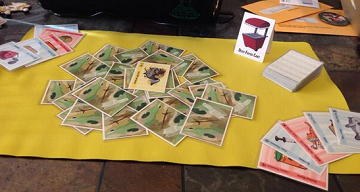 Reflexes play a huge role. Someone may play a card before you’ve realized that a fish has even been flipped. A common strategy is to have a negative card (with the corresponding cure) at the ready and slap the negative card on the fish no matter which fish shows. Then, after someone has fixed what was initially wrong with the fish, you fix the new problem.
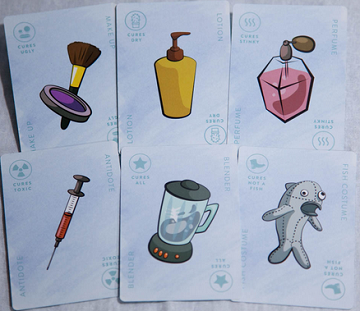 The problem with this strategy is that you’ll often play a negative card on a fish that already has the negative aspect you’re trying to play. A fish can’t be extra dry or extra toxic. Arguments will ensue, and with some gaming group, you may want to have an impartial judge.
Don’t expect your cards to make it without a few bends and tears. And don’t ever sleeve these cards. Fish will fly whenever you flip or play a card.
Despite these minor issues, Discount Salmon is a lot of fun, and it isn’t a large investment of your time. There isn’t a lot of strategy, but that makes it a great game for younger gamers.
Verdict: A fast and fun game with limited strategy that’s great for younger gamers or an amusing change-of-pace game between longer gaming engagements.

Our TV reviews are back on Mondays. We’re covering Constantine’s and Grimm’s return from their midseason break. Enjoy.

Constantine
Kyle’s Review
Constantine tied up its midseason cliffhangers a little too quick and neat for my taste. Zed’s excellent adventure turned into a bogus journey that lasted about two city blocks. She got kidnapped and then broke loose lickety split. I’m sure we haven’t seen the last of her tormentors, but Zed schooled them in this episode. While it was nice that Zed rejoined the team, it felt like the show’s creators made a cliffhanger for her just to have a cliffhanger.
A possessed John Constantine was a nice image that we’ve seen before in the pilot. It worked well with its reimplementation here. Matt Ryan gave a strong performance, but it can’t be a good thing that Constantine repeated a story thread in its first eight episodes. Oh, and the reason John consumed the demon was to save himself from his midseason cliffhanger. So both cliffhangers get resolved in fifteen minutes or your pizza’s free.
And we’re also free of any tension gained with the overarching Brujeria plot and the Rising Darkness, since this episode threw out that still warm pizza pie for John Constantine’s immediate need of an exorcism. Seriously, the most we get for the Brujeria is a glimpse of Vicente, who according to Constantine was the original tempter/snake in the Garden of Eden. I say that we catch a glimpse of Vicente because he announces himself and immediately gets dispatched by our ragtag team of anti-heroes. A ten second battle sounds about right for the snake that got Eve to eat the fruit of knowledge. Sure.
I know it sounds all negative, but the episode was entertaining. Like I said above, Matt Ryan was on his game. I just wish the cliffhangers meant more than a device to keep viewers.
Verdict: An entertaining episode with some strong acting performances, but the payoff from the midseason cliffhangers didn’t amount to much.
Here are some Constantine secrets. But beware, they contain spoilers.
Grimm
Kyle’s Review
Grimm had a lot of great developments this week. Unlike Constantine – which airs on NBC before it – Grimm made good on its midseason cliffhangers. Monroe’s abduction racketed up the tension. Juliette’s transformation into a hexenbiest blended well with Rosalee dealing with the loss of Monroe. Even Sergeant Wu’s indoctrination into the world of Grimm was handled with care. He may not have freaked out like he did before the break, but he doesn’t accept this new reality as easily as Hank.
The best part of this episode, “Wesenrein,” is that the storylines don’t get wrapped up in a neat bow and perhaps, the ending of this show has a better cliffhanger than the midseason finale. I wonder if Grimm plans to continue this trend and if so, how do they plan to do it. Grimm has me tuned in for next week.
Verdict: A solid episode that’s every bit a cliffhanger as the midseason finale.
Me and Julio down by the prison yard
The first time I saw the prisoner named Julio I thought that he was Efren Ramirez of Napoleon Dynamite fame. Then I thought, Nah. When I saw him again, I knew it was Ramirez. Maybe someone will vote for him as Prison President.
What do you call a lot of Invunches?
Is it an Invunchi or Invunchen? I don’t know, but Vicente had a lot of them at his disposal, and John couldn’t handle one without getting himself possessed. We’ll have to see what’ll happen when he’s faced with an army of Invunchi. Yeah, I’ll go with Invunchi.
Jason Momoa/Aquaman

Ezra Miller/The Flash

Gal Gadot/Wonder Woman

Jesse Eisenberg/Lex Luthor

Amy Adams/Lois Lane

We’ll probably know more about the Justice League movie once we get to the other side of Batman V Superman, but until then, we’ll have to settle for the casting of some movies leading up to the big team movie.
Can you match the following actors with the roles they’ll play?
Actors:





Roles:





You might have noticed that we grouped the 1940s and 1950s together in this list, while giving the 1930s their separate list. That’s because a little thing called World War II occurred during the 1940s. There weren’t that many board games produced during this time frame, and it took a while for folks to want to play games after the war’s conclusion. But the games that did see a publisher during these two decades are among some of the best of all time.
Let’s set some ground rules before we get started.
1: Cultural relevance plays as much of a factor as overall quality. A game might make the list that doesn’t hold up to others of its type, but you have to admit the game is everywhere.
2: Only one game from a franchise makes the list. Sorry, but you won’t see Simpsonopoly.
3: Longevity plays a role, too. A game doesn’t have to fly off the shelves today, but it had to have some widespread appeal for a decent time period.
5) Careers (1955)
Careers may look like a Monopoly derivative, but it’s a lot more than that. Developed by the sociologist James Cooke Brown, Careers uses a secret “Success Formula” that consists of a minimum amount of fame, happiness and money that a player must gain to become fulfilled.
 Players set their own victory conditions (split between the aforementioned three areas) before the game begins. You can glean a lot about a person by how they divvy up fame, happiness and money and that’s the point of Careers.
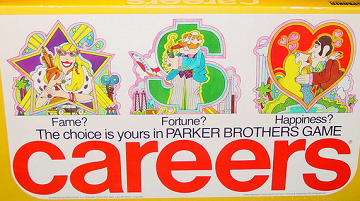 Parker Brothers may have been the first to produce Careers in 1955, but the game has bounced from publisher to publisher in the decades that followed. You don’t see this game in stores as much, but it left a mark in the tabletop game industry as being one of the first games to implement win condition choice.
 4) Stratego (1947)
Who doesn’t like a good game of capture the flag? Players of the 1940s’ Stratego sure do.
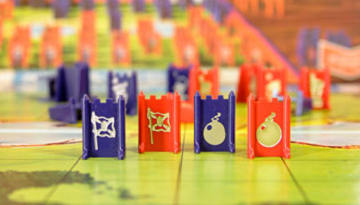 But as with a lot of games in our series of Best Tabletop games, Stratego as a 1940s game is a bit of a misnomer. It’s based off the traditional Chinese board game “Jungle,” and there’s even a similar European game called L’attaque that cropped up around World War I. It wasn’t until 1947 where the Napoleonic imagery we know today was first deployed.
 Stratego caught fire in Europe and sold well for over a decade before it crossed the pond. Milton Bradley first distributed the game in the United States in 1961. The game may have changed through the years that followed – first printed cardboard pieces, then painted wood pieces, and finally the plastic pieces of today – but the core game mechanics have remained.
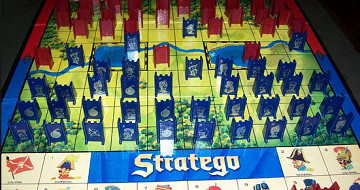 Battleship may have instituted the secret unit deployment game mechanic, but Stratego brought the mechanic to a whole new level of bluffing and strategy.
3) Candy Land (1945)
Eleanor Hallowell Abbott may have been a successful author and frequent contributor to The Ladies’ Home Journal, but perhaps her most enduring work is Candy Land.
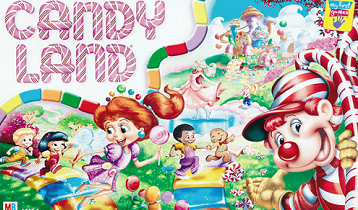 She created this simple children’s racing game while recovering from Polio in San Diego. Milton Bradley – why is it always Milton Bradley? – quickly gobbled up the game most likely because of Abbott’s notoriety. I guess it pays to be a well-known author.
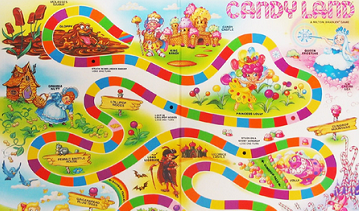 The characters and locations have lived in the hearts of children for decades. Who doesn’t know Candy Cane Forest, Gum Drop Mountain, Queen Frostine and Gramma Nutt? And the game’s notoriety earned it the top spot as the American Toy Industry Association’s most popular toy of the 1940s.
 On a side note, Candy Land was involved in one of the first disputes over internet domain names. An adult web content provider registered candyland.com, and Hasbro objected. Fortunately, the site’s rights have reverted to Hasbro, so don’t worry if your kids login to see who fell into the Cherry Pitfalls.
2) Risk or La Conquete du Monde (1957)
French film director Albert Lamorisse invented La Conquete du Monde (The Conquest of the World) and originally released it in 1957. Imagine me using my best Troy McClure voice with this next part. “You may remember Albert Lamorisse from such films as Palme d’Or (White Mane) and Le Ballon Rouge (The Red Balloon).” The latter of which earned Lamorisse an Academy Award, and it predated La Conquete du Monde by one year.
So Lamorisse earned an Academy Award and then created a beloved board game in consecutive years. Parker Brothers bought, tweaked and then released La Conquete du Monde as Risk in 1959. The game took off and has grossed more money than you can shake a Rockefeller at.
1) Cluedo or Clue (1944)
Colonel Mustard did it with the candlestick in the dining room. Why do people go to Colonel Mustard and the candlestick first? Cluedo, or Clue to North Americans, was created by Anthony E. Pratt, an English musician.
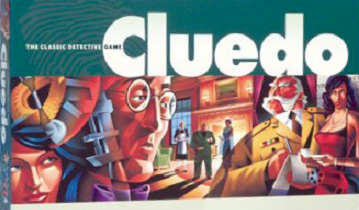 Originally named Murder!, Cluedo found not one, but two publishers. Waddingtons (now part of Hasbro) first published the game as Cluedo in Europe, while Parker Brothers simultaneously licensed the game in the United States five years later as Clue with some minor changes. Nurse White became Mrs. White and thankfully Colonel Yellow changed colors to Mustard. There were some rooms like the gun room and the cellar that got dumped and the weapons got whittled down. No bomb, syringe, shillelagh, or fireplace poker for North Americans.
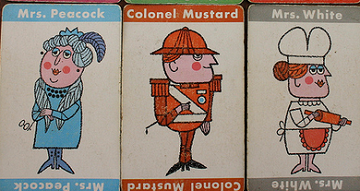 But despite these minor changes, the core gameplay stayed the same to the delight of players on both sides of the Atlantic.
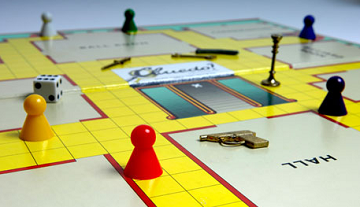 Did we get the list right? Let us know which games you’d include in this Top Five or suggest ideas for new Top Fives.
Check out the other games from this series:
Top 5 Games prior to the 1930s
Top 5 Games from the 1930s
Top 5 Games from the Early 1960s
Top 5 Games from the Late 1960s
Top 5 Games from the Early 1970s
Top 5 Games from the Late 1970s
Top 5 Games from 1980-1981
Top 5 Games from 1982-1983
Top 5 Games from 1984-1985
Top 5 Games from 1986-1987
Top 5 Games from 1988-1989
Top 5 Games from 1990-1991
We’ve covered the top ancient tabletop games and now we’ve reached tabletop games’ modern era. The 1930s may not have introduced a lot of tabletop games, but the decade did see some tabletop game giants.
Let’s set some ground rules before we get started.
1: Cultural relevance plays as much of a factor as overall quality. A game might make the list that doesn’t hold up to others of its type, but you can’t escape or ignore the game.
2: Only one game from a franchise makes the list. We’ll save our Fifty Shades of Monopoly for another list.
3: Longevity plays a role, too. A game doesn’t have to fly off the shelves today, but it had to have some widespread appeal for a decent time period.
5) Wahoo (1930)
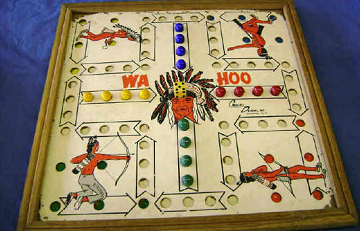
Originating in the Appalachian hills, Wahoo took the cross and circle game mechanics of Pachisi and converted the playing pieces to marbles. While Parker Brothers sold a variant of Wahoo, marketing it for decades as Aggravation, Wahoo maintains a cult following as many people create custom-made boards.
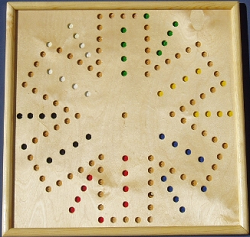 Many of these home-made boards feature a Native-American theme. I don’t know if this is an attempt to give the game American roots, a play on the word Wahoo’s origins, a rebranding of an Indian board game to an American Indian theme, or a mixture of all three. Whatever the reason for this theme Wahoo earns a place on this list as it sees plenty of play.
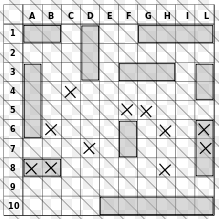
 4) Battleship (Early 1930s)
We had a sneaky addition to the games prior to the 1930s and now we get another sneaky inclusion to this list. Battleship started as a pencil and paper guessing game in the 1930s, but Milton Bradley – they were culprits for The Game of Life’s shifty inclusion in the last list – released the plastic board game we know today in 1967.
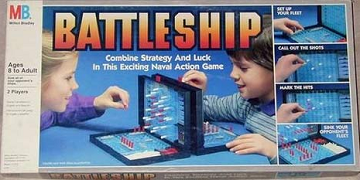 Still, the core game mechanics didn’t change much between the 1930s and 1967. Folks have been sinking battleships and referencing the game in movies and TV ever since. Battleship has seen its share of video games, spinoffs, and even its own sci-fi movie in 2012 starring Rihanna.
 3) Sorry! (1934)
Sorry! is another board game based on the ancient Indian cross and circle game of Pachisi. But unlike Wahoo – which also made this list – Sorry! trades the roll mechanic for a deck of cards.
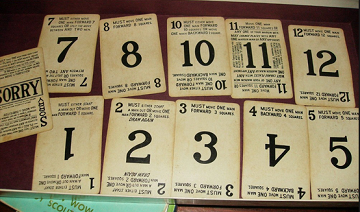 The most significant addition to the original Pachisi gameplay is the ability to move backwards on the board. This allows players to move from their starting position and move backwards toward their safe area.
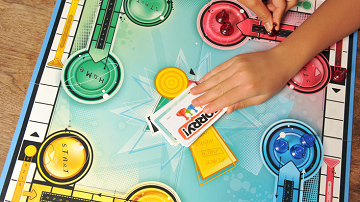 But I have to admit that this one’s a possible sneaky add to this list. The earliest additions of the game Sorry! can be traced back to England in 1929. The product first moved to Canada in 1933, and then Parker Brothers bought the rights, mass-marketing the product to the United States in 1934.
 Still, there isn’t much difference between the two dates, and Sorry! gained its popularity in the 30s, a popularity that has continued to this day as Sorry! has seen several incarnations and is one of the bestselling tabletop games of all time.
2) Scrabble (1938)
What’s in a name? Alfred Mosher Butts based Scrabble on a game he created earlier in the 1930s Lexiko. Lexiko didn’t sell well, but Scrabble (originally released in 1938) has dominated all word-based games. On a different note, I wonder if Alfred had the nickname “Big Al,” that way he’d be Big Al Butts.
 Anyway, Scrabble – like Lexiko – wasn’t an instant success. It took James Brunot purchasing a copy and then modifying the rules before a board game company would even look at the game. And still no board game company – including the two giants Milton Bradley and Parker Brothers – wanted anything to do with the game. Brunot had to produce the game by himself for years.
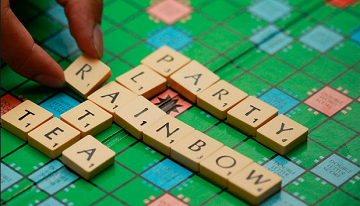 Fourteen years after its initial release, Scrabble hit the big time when Jack Straus, the president of Macy’s, played the game on vacation. Straus placed a huge order of the game in early 1952, and Brunot couldn’t meet the production demand.
 Brunot had to sell the manufacturing rights to Selchow and Righter – another one of the manufacturers who originally passed on the game – to keep up with the production and to say “I told you so” and “Neener-neener-neener, you should’ve bought my game.”
The rest is history. Numerous game shows, video games, and cultural references have kept Scrabble at the forefront of the American lexicon.
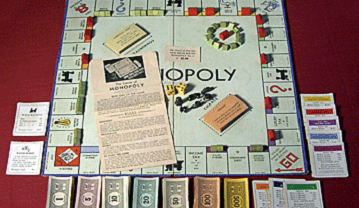
1) Monopoly (1933)
I’m sure most of you saw this one coming. How can we possibly have a list of the best tabletop games of the 1930s and not include the juggernaut that is Monopoly?
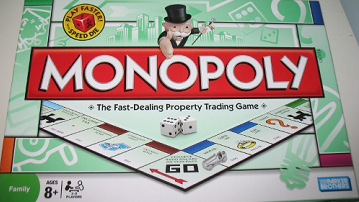 Monopoly is based on The Landlord’s Game by Elizabeth (Lizzie) J. Magie Phillips. She self-published her game as a means to illustrate the negative aspects of concentrating land in private monopolies. Her game didn’t sell well, but that wasn’t the point. She wanted folks to see the dangers of land grabbing and showcase its consequences. Though the game has changed immensely, you can see Phillips’ original goal through people going bankrupt and that there can only be one winner.
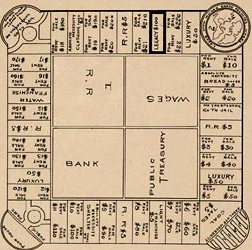 Getting back to Monopoly as we know it today, Charles Darrow gets credit for creating the game, even though the game’s concepts take more than a little bit from The Landlord’s Game, and players in the Midwest and East Coast during the 1930s and 1940s contributed to the game’s design and evolution. You could say it was a collaborative effort.
 Today, Monopoly is everywhere. It doesn’t matter if you’re looking for an easy merchandise tie-in, playing the McDonald’s game or a prisoner of war during World War II using the game box to hide maps, compasses, and real money. You can’t escape the pull of the ever present Monopoly. It deserves its place atop our list.
 Did we get the list right? Let us know which games you’d include in this Top Five or suggest ideas for new Top Fives.
Check out the other lists from this series:
Top 5 Games prior to the 1930s
Top 5 Games from the 1940s-50s
Top 5 Games from the early 1960s
Top 5 Games from the late 1960s
Top 5 Games from the early 1970s
Top 5 Games from the late 1970s
Top 5 Games from 1980-1981
Top 5 Games from 1982-1983
Top 5 Games from 1984-1985
Top 5 Games from 1986-1987
Top 5 Games from 1988-1989
Top 5 Games from 1990-1991
 jkgeekly.com