
Happy Monday, Geekly Gang! Kyra Kyle here with another installment of transgender representation in media. Today’s subject is Jules from Euphoria. Yes! I moved our previously scheduled autism representation to late June to take advantage of Euphoria season three’s upcoming April 12, 2026, release date. Woo hoo! We’re getting a third season soon. I binged Euphoria seasons one and two the past month. It got difficult. While Euphoria is an amazing show (great direction, acting, and writing), it tackles heavy subjects. Seriously, Euphoria holds back few punches.
Jules’s storyline, despite being compelling, can be a rough watch. She gets statutory R-word–don’t know if I can say the word that rhymes with grape in this post–and commits an act of self-harm. And that’s only during Euphoria’s pilot episode. Yikes! Oh. Now may be a great time to remind everyone reading that I can’t do one of these representation posts without spoiling some plot points. I wouldn’t consider what I’ve said thus far as major spoilers, but you’ve been warned. I’ll also try to handle Jules’s story with care. I don’t want to sensationalize lurid details, but as you can see, Jules’s story packs a lot of drama.
Gender Expression May Not Match Gender Identity
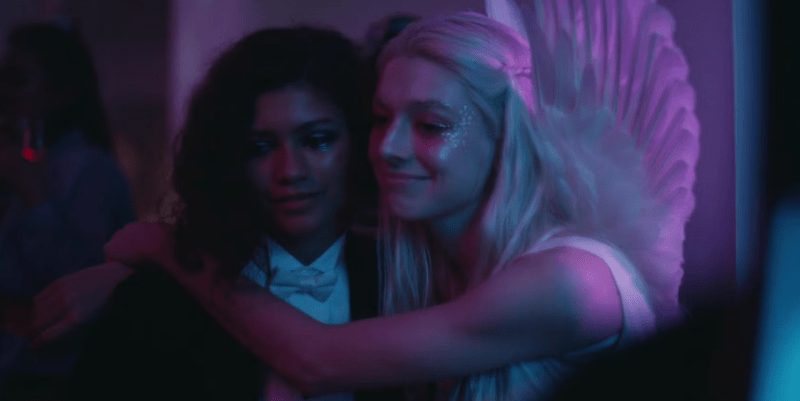
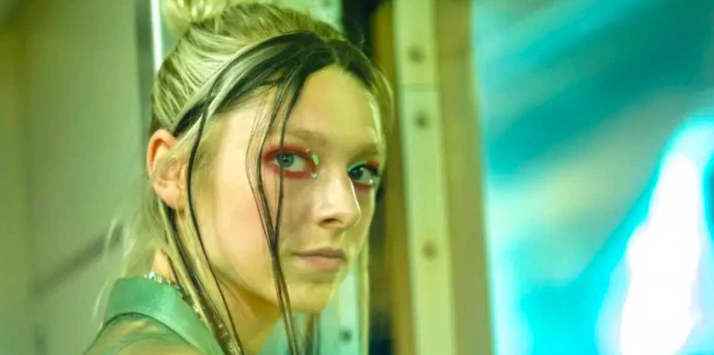
We’ll begin with lighter topics concerning Euphoria’s transgender representation. As you can tell by the picture above, gender expression and gender identity don’t have to match. Sure. Jules is wearing an angel outfit, hyper feminine. Jules is a woman, and her gender expression matches her gender identity. But Jules’s partner, Rue, wears a tuxedo, and Rue is a cisgender woman. I love it when Jules teases Rue’s look as a dead ringer for Seth Rogen. Lol. Jules isn’t far off with that characterization. Rue’s tuxedo is the only time in Euphoria’s first two seasons when she doesn’t wear Seth Rogen-chic.
Off topic a little bit, but I love Jules’s makeup in Euphoria’s first two seasons. She looks stunning.
Euphoria is on point with breaking gender norms and suggesting that gender expression and gender identity don’t need to match. Heck, an episode even includes dialogue expressing this sentiment. Great job.

Gender Identity Doesn’t Inform Sexual Orientation
Okay. The following may contradict this segment’s title. Jules has been with a lot of men. A lot. We never know how many. That’s a secret she only shares with her friend Elliot (pictured above), but during a moment of self-reflection, Jules shares why she felt the need to sleep with so many men. She needed to conquer femininity. No. She needed to obliterate it. And I believe that’s a poignant line. By the time Jules shares her need to obliterate femininity, she’s in a loving relationship with Rue. Jules admits that she felt more like a woman when she slept with men, as many men as she can bed, and upholding a gender stereotype, but in this moment, Jules no longer feels like she has to sleep with as many men to feel like a woman. Euphoria’s inclusion of this scene puts a fine point on how gender identity does not have to inform one’s sexual orientation.
Quick Note: All bets are off for Euphoria season three in two weeks. This write-up is only for seasons one and two.
I do have to give a brief mention to Jules feeling less like a woman when she admits, again to Elliot, that she doesn’t know how to orally stimulate another woman. Yeah. The scene suggests that Jules may have held off coupling with another woman because she didn’t want to admit this shortcoming. It just takes practice.
We won’t discuss the following tutor scene. Eek!
Featured Episode Placement Mattered
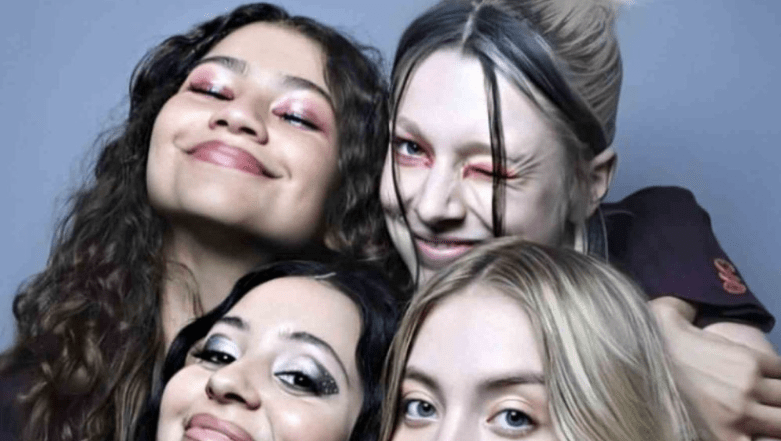
I may be reading too much into Euphoria and its creator, Sam Levinson’s, intentions with this next segment, but I don’t think so. Euphoria’s first season played like a collection of interconnected short stories. Sure, there was an overarching narrative, but that first season had short story vibes. Each of Euphoria’s first season’s episodes featured a character. The pilot featured Rue. That makes sense; she’s the main character. The second episode centered on the show’s main antagonist, Nate. This also makes sense. And then, we get three episodes featuring woman characters (Kat, Jules, and Maddy, in that order) before shifting back to another man. This may not seem like much, but it links Jules with Euphoria’s other woman characters. If this was Euphoria’s intent, it’s huge.
And I choose to interpret Euphoria’s feature episode placement (in season one) as intentional. It could’ve made sense to place Jules’s featured episode immediately after Nate’s. Nate does harass her. But Euphoria doesn’t do that. Perhaps the show could’ve put Jules’s story at the end of those three episodes, but no. Euphoria sandwiches Jules’s episode between two other women’s. She belongs there. Jules is treated like any other woman in the cast, because again, she is a woman. I love it. She suffers through a lot of the same issues as Euphoria’s other women, only she has a handful of additional issues. We’ll get to those other issues soon enough, but kudos to Euphoria for what I’m interpreting as subtle inclusion.

Jules Began Transitioning at 13
Jules started transitioning at age 13. Fortunately, her father supported her, and by the time we see her in season one, she’s been on hormone replacement therapy (HRT) for at least a couple of years and has had breast augmentation. More on that last item in the next section. Thanks in large part to her father’s support, Jules is far along in her transition. Having a supportive parent is a fantastic thing and helps with a transgender child’s mental health and well-being. Jules’s father supported her as soon as she began socially transitioning (wearing girls’ clothes), and this is another detail Euphoria gets right. Doctors don’t immediately jump to HRT. Social transitioning is the usual first step. And we don’t see Jules on HRT until after she’s been seeing a therapist. This also tracks. Typically, transgender people gain access to medically transition after speaking with a mental health professional. Or two.
All of this is great transgender representation. The Euphoria team has done their homework, and they lean on Jules’s actress, Hunter Schafer’s lived experience. During therapy, Jules shares poetry Hunter Schafer had written when she was at a similar age and stage in her transition. I love some of the imagery. Puberty is an irreversible metamorphosis. It’s a deepening, a thickening. Beautiful. These moments grant authenticity to Euphoria’s depiction of a transgender person.
But not every parent can or will support their child. During Jules’s featured episode, her mother drives her across state lines. I thought she was dumping her daughter at conversion therapy. Turns out, Jules’s mother dumped her at a psych ward. Unfortunately, this happens. The Diagnostic and Statistical Manual of Mental Disorders (DSM) removed gender identity disorder (being transgender) as a mental health condition in 2013. This episode aired in 2019. That may be too real. In one powerful episode, Euphoria showed multiple angles of a transgender experience.
Jules Wears a Binder
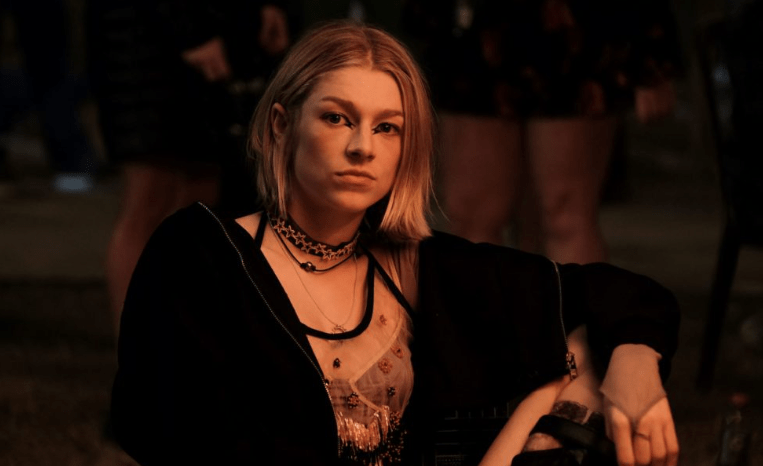
When Jules and Elliot first meet, Jules interrogates Elliot (Rue’s mysterious new friend). Jules doesn’t trust Elliot at first because she knows her girlfriend is hiding something. Spoiler: Rue’s an addict, and she and Elliot are using. So, Jules’s suspicions are well-founded. During Jules’s interrogation of Elliot, Elliot questions why she’s a trans woman, wearing a binder. Note: A binder is a device used to compress one’s chest, typically used by transgender men to hide their breasts. But Jules is a transgender woman. Why does she wear a binder?
Euphoria never gives us a straight (pun intended) answer, but I do have some theories. Jules could want to thumb her nose at gender norms. That would track within Euphoria’s narrative. At times, Jules distances herself from conventional women’s norms. But she could wear a binder to fit in better at school. While Jules has no issue with who she is and the shape of her body, she may wear a binder to avoid freaking out the normies. Euphoria takes place in a small town. Jules ditches the binder when she returns to the city. I love that transformation. She suppresses a lot of who she is for the sake of Euphoria’s small town.
Gender Euphoria
Gender dysphoria (feeling distressed because one’s gender identity differs from their sex assigned at birth) hits differently for each trans person, but gender euphoria (positive feeling of comfort, confidence, and joy in response to gender affirming experiences) is universal. I’m quoting an unknown source. I remember the quote, but can’t remember who said it. Euphoria’s title may derive from the euphoria one feels while high (Rue and her addiction), but Euphoria does a great job of showing gender euphoria through Jules. She is comfortable in her skin, even when others dare her to pee in the middle of the road. Yes. That happens, and it’s hilarious.
During the scene, Jules mentions Elliot (here he is again), attempting to question her gender. She doesn’t give him the satisfaction.

Closing Thoughts
Euphoria features strong transgender representation. Jules is a fantastic, layered character. Her journey is unique and yet emblematic of a lived transgender experience. Hunter Schafer’s lived experience gives her performance authenticity. And I love Euphoria’s sense of inclusion. Few people care she’s transgender. I even like how Euphoria doesn’t spell out that Jules is transgender at first. She’s one of the girls.
At the same time, Jules experiences many ups and downs that a transgender person may experience. She has doubted her gender. At times, she has modeled her life to appease cisgender men because she internalized that women–all women–must appease cisgender men. Ah! That makes her more real.
Euphoria is not an easy watch. It delivers an unflinching look at drugs, sex, and self-harm. Jules has an amazing but harrowing journey. And we’re getting a third season soon. I don’t know what to expect. The trailer has me a little nervous. And I’m going to miss Angus Cloud as Fezco. Fezco was one of Jules’s staunchest supporters, and he had a cute romance with Lexi. Rest in peace, Angus Cloud.
I would’ve been okay with Euphoria ending after two seasons, but I’m not complaining about a third. I trust the creative team to do a great job.
Geekly’s next two representation posts should center on autism representation. But would anyone like to see a show or movie that has poor representation? Let us know in the comments. And let us know what you think of Euphoria’s Jules. Thank you for reading, and wherever you are, I hope you’re having a great day.
 jkgeekly.com