6 Things to be careful of in free-to-play games

I’ve downloaded a lot of free-to-play games this past week and started tapping my way through them. Free-to-play games can be a minefield with how they coax players into paying for content or bonuses, so let’s set some guidelines of what to be careful of when picking a free-to-play game.

1) Two or three forms of in-game currency

Any more than three forms of in-game currency usually means that players will get nickeled and dimed with micro-transactions. If you have five or six forms of currency, you’ll always be short with at least half of these currencies and you’ll be goaded into using real-world money to purchase virtual money.

Of course not all currency is created the same. Last week’s AdVenture Capialist has far more than three forms of in-game currency, but realistically, there’s only one form of currency that matters: bucks. If you can ignore—or mostly ignore—all but one or two forms of in-game currency, you’ll do fine.

2) Few videos

Watching videos for power ups is okay, so long as you spend more time playing the game than watching videos. If you’ve played free-to-play games, you’re used to seeing in-game ads for other games, products, or services. This should be optional. Videos shouldn’t interrupt the game flow, rendering the game unplayable.

3) Continues without spending in-game currency

Energy that you gain over time doesn’t count when I say continuing without spending in-game currency. There are some games that make you pay for power-ups, boosts, and continues with the same currency, and most of them have an in-game store that allows you to buy this virtual currency with your real-world cash.

4) A fair and balanced reward system

There are free-to-play games that award moderate rewards for success, while doling out brutal punishment for failure. You’ll never get ahead unless you spend money, and that defeats the purpose of a free-to-play game—from a consumer’s standpoint.

5) Competitive without spending

You don’t have to win every match—what’s the challenge in that—but you should be competitive without having to spend money in a game. There are a lot of free-to-play games that insist you spend money just to win a match, and that’s unnecessary.

6) Spend time not money

This guideline plays off of guidelines three through five, and it’s really the golden rule for free-to-play games. You should always have the option to spend time away from the game rather than spend money when accomplishing something.

I get that developers want—or need—to get paid but they should tempt players with bonuses that they want rather than force them to buy bonuses they need in order to play the game. Time instead of money is usually a good route. Impatient gamers may spend the occasional dollar, but you don’t penalize patience.

Thanks for your patience. With that out of the way, let’s get to some game reviews.

Geekly’s Free Video Game Summer: July 1, 2016

FreeVideoGame4

This edition of Geekly’s Free Video Game Summer includes nothing but free-to-play games. (If you missed our “6 Things to be careful of in free-to-play games,” here’s a link.) We’ve got a lot of games to cover, so let’s get cracking.

RodeoStampede

Rodeo Stampede

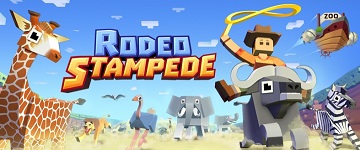
This game is a lot of fun. Players rustle up new zoo animals by lassoing and taming them. Rodeo Stampede’s game play is simple but elegant. You hold your finger on your touch screen to stay on your animal buddy and slide you finger left and right to avoid obstacles. You can switch animals by lining up a new animal in front of you, removing your finger from the screen, and placing it back on the screen once the new animal is highlighted.

You’ll want to catch new animals but eventually, the animal buddy you’re riding will grow tired of you and buck, kick you off, or in the case of ostriches, run so fast you can’t see what’s on the horizon. Zoo upgrades are fair. The game play is easy to learn but difficult to master and filled with variety. Rodeo Stampede will stay in my rotation. It earns a strong recommendation.

NinjAwesome

Ninjawesome

I liked Ninjawesome well enough but it was off in a few places. The theme was appealing—Ninjawesome’s classic Ninja Gaiden vibe was a great touch—but the controls were difficult to nail down. I’d forget which tap or swipe did what or that I even possessed a particular ability. The character’s constant movement didn’t help either. Ninjawesome plays like a side-scrolling Temple Run. That’s fine, but you don’t have as many options in Temple Run as you do in Ninjawesome, and yet Ninjawesome’s worst offense is treasure chest management.

Each mission takes twenty seconds to a couple of minutes. You earn a treasure chest with each successful mission, and you have four slots for treasure chests in your inventory. That’s fine too, until you factor in that you have to wait ten to fifteen minutes to open a chest. Either you wait to open up a chest—and not play the game because no matter how long you wait only allows you to open one chest at a time—or you can spend in-game gems to open chests early. You earn gems at a decent rate but you won’t earn them as quickly as spending them in order to open chests—and of course there’s the option of purchasing gems with real world money.

Despite these flaws, Ninjawesome is still a fun and solid game. I can see how some folks could love it, but it won’t stay in my collection. The treasure chest scam is a deal breaker.

Re Dungeon

Re Dungeon

Re Dungeon is a top-down, platforming dungeon crawl. Players have to avoid the various traps and enemies the dungeon has to offer. It’s a simple concept and Re Dungeon executes it well. I enjoyed the mazes and how the pieces fit together. The game has plenty of variety, and unlockable adventures you can add to your party lead to greater depth of play. Re Dungeon’s classic game play leave me wanting more. It’s not an easy game. The perils build on each other and it takes cunning to make it through a level. I could play Re Dungeon for hours and would highly recommend it if it wasn’t for one thing: videos.

Re Dungeon crams so many promotional videos down its players’ throats that you’ll forget that you’re playing a game. If you don’t mind a heap of videos, Re Dungeon can be a rewarding experience. I hope the developers tone down this issue, but until then I’m on the fence with whether or not I can overlook Re Dungeon’s video mountain.

AdventureCompany

Adventure Company

I’ll go on record as saying that I don’t care for touch screen mobile games that try to mimic 3D console game controls; the controls get buggy or cause game glitches. Knowing this might clue you in on the following review. Adventure Company does an above average job of porting 3D console game controls to a touch screen device and still, the controls are a bit clunky. It doesn’t help that enemies often come from the bottom left of the screen and that’s where the game wants you to place your finger to move your characters. More about this in a bit but let’s cover Adventure Company’s story or lack thereof.

The theme is uninspired: adventures seek fortune in a bland fantasy land. The enemies are generic: goblin #241695. The previous games on this list didn’t have a lot of story either but at least they had character. Adventure Company has decent graphics but limited appeal. I’ve seen this type of game before and it was better constructed.

There are three forms of in-game currency—right on the cusp of too many—but one currency concerns me the most: stars. You only get stars if you complete a mission with accomplishing the bonus goal, and the bonus goal is typically one where you’re not supposed to take any damage. That’s where we get back to Adventure Company’s controls. Most levels have archers or some ranged units, and the bulk of your enemies are coming from the left of the screen. Your characters can’t move quickly in first place but with how the enemies are placed, you could get hit with a phantom arrow because your finger’s in the way. This breeds nothing but frustration.

Is it necessary to get stars? No but it’d be nice to get one every once and a while. I guess I could overlook this if I cared for this type of touch screen controls. If you do, Adventure Company could be worth a look. But the game’s banality forces me to pass on it.

We’re just getting started with our run of free-to-play games. I hope you enjoyed these reviews, and until next we meet, thanks for reading.

Free Video Game Summer: June 24, 2016

FreeVideoGameSummer2

Our game guy Kyle is still short on cash, so we’re continuing JK Geekly’s Free Video Game Summer. Last week’s games didn’t have too much in the way of story, but this week’s games will make up for that shortcoming. Let’s get to it.

BarkleyShutUpAndJamGaiden

Barkley, Shut Up and Jam: Gaiden
(Chapter 1 of the Hoopz Barkley Saga)

Um. It took me a week to figure out what I downloaded with this game. I have to give it to Tales of Game’s Studios (that’s their spelling, not mine), they went with an unlikely hero and a bizarre story.

The year is 2053, 12 years after the Great B-Ball Purge, also known as “B-Ballnaught,” and the world is still out of sorts after the first Chaos Dunk, a jam so powerful its mere existence threatens the balance of chaos and order, when it suffers a second Chaos Dunk. You play as one of the last basketball greats, Charles Barkley, who fights for basketball freedom. Yeah, the story’s that silly, and I love the warning that pops up on the screen when you first start a game. “Warning: this game is canon.” What?

Barkley, Shut Up and Jam: Gaiden plays like a classic Super Nintendo JRPG, from its graphic style, game play, and even its broken English. The story is so weird, engaging, and set in a post-apocalyptic world, where folks may not speak or write correctly, that I can forgive a lot of the poor grammar. The story itself may be nonsensical, but Tales of Game’s put a lot of work into it, and it shows. They’ve built one of the most unique gaming worlds you’ll find.

The game play is also surprisingly deep. Barkley Gaiden—I’ll just call this game Barkley Gaiden for now—does a great job of aping Chrono Trigger and JRPGs of that ilk. You can see potential enemies, and sometimes they may run at the player and attack if the player moves into their line of sight. Once combat’s initiated, each player has special attacks or abilities they can use. Many of these actions require timed button presses, like the Mario RPG series, and some are accuracy-based, gaining more power for better accuracy, similar to Legend of Dragoon. From a game play aspect, Barkley Gaiden is a hodge-podge of JRPG goodness.

BarkleyShutUpAndJamGaiden_Vinceborg

Getting back to the story, Barkley Gaiden makes little to no sense and the characters’ dialogue is so over-the-top gritty that it reads like an angst-ridden teen wrote it, but you can’t beat a cybernetic Vince Carter: Vinceborg. Barkley, Shut Up and Jam: Gaiden is the game a foul mouthed Mel Brooks might make if he wanted to parody a JRPG and basketball. If that odd premise appeals to you, or if you love classic JRPG play, Barkley, Shut Up and Jam: Gaiden is worth a look. Just be prepared for zany things like a heartless, post-apocalyptic Barkley to sing, “get a job” to a homeless man.

You can’t find Barkley Gaiden on Steam, Origin, or any app store. Here’s a link to the game’s page:

http://www.talesofgames.com/related_game/barkley-shut-up-jam-gaiden/

Remember, “if you can’t slam with the best, jam with the rest.” Oh, man, that’s cornier than Nebraskan summers.

TheWayOfLife

The Way of Life: Free Edition

I was interested in The Way of Life when I downloaded it off of Steam. The premise intrigued me. You play groupings of three mini-games with the same character as a child, adult, and elder. Unfortunately, the game’s execution leaves a lot to be desired.

Even with overlooking the poor English translation, bugs and glitches, and the fact that I played the free (limited) edition as opposed to the definitive (paid and expanded) edition, you’re left with The Way of Life pigeon holing you into playing the game a certain way and using clichéd life experiences.

The child games were okay and varied—as varied as much as The Way of Life gets—but the adult games were The Way of Life preaching what’s wrong with the world (living to make money instead of living your life for your loved ones), while the elder games depicted an old guy afraid of death. I like video games that send a clear message but I don’t like playing a sermon, so the adult games left me miffed. I’ve also met plenty of elders who had made their peace with death, so the elder games don’t ring true.

TheWayOfLifeThreePhasesOfLife

I can forgive a lot in a video game—I can even forgive most of what I’ve mentioned so far—but The Way of Life’s worst offense rests with basic game design. You need to know four things in a game: who you are, what you’re doing, why you’re doing what you’re doing, and how do you win? The Way of Life fails to provide feedback on all four accounts.

There was a moment, in one of the child games, when a game bug sent me through a building, and I didn’t care enough about the character or what I was doing to be frustrated. It was an “oh, well” moment. That’s not a good sign, and The Way of Life is my first hard pass.

SuperCrateBox

Super Crate Box

Super Crate Box is another game that doesn’t give every shred of information about its scenario as you play, but it doesn’t matter as much. Monsters are falling from the sky. I don’t know if they’re demons, aliens, or failed government experiments, but you’re a dude fighting for his life, picking up every box of weaponry you can find, and ripping the monsters a new one. This is a gun totting, adrenaline pumping, platform game. Think the original Mario Brothers meets Contra. Yeah, this game provides some dumb fun.

I stink at Super Crate Box, but I like the game. Each weapon behaves differently. Shotguns spray rounds. Revolvers fire single, powerful shots. Bazookas take time to charge and explode on impact. Disc guns ricochet once and can kill you or your enemies if the munition hits on the bounce. The mini-gun fires copious amounts of bullets, but it yields kickback. And so on and so forth. The trick is that you don’t know which weapon you’ll get with each box and picking up a new box can be deadly if you get accustomed to using a specific weapon. Before you think that you’ll stick with your favorite weapon the entire time, think again. You only progress in level after you collect enough crates, so you have to collect as many super crate boxes as you can. Did I mention that Super Crate Box is tough?

SuperCrateBoxMini-Gun

The monsters also gain speed and strength with each box you collect, and that makes the gameplay even more difficult, but what makes Super Crate Box stand out is the game’s intuitive nature. You can trick the game into thinking you’re a novice by dying several times in quick succession. Super Crate Box will ease up and that’s how you can progress to the next level. But something tells me you won’t have to intentionally die. Super Crate Box is so difficult that you’ll die whether you want to or not. I don’t know how many times I dodged a monster just to fall into a fire pit. If you like old school platforming games with punishing difficulty, you should give Super Crate Box a try.

That’s all I have for this week of JK Geekly’s Free Video Game Summer. I may have some more gaming to do in the next week, so until we meet again, thanks for reading.

Geekly’s Quirky Video Games: June 10, 2016

QuirkyVideoGame2

I’m not sure if last week’s quirky video game post worked or not but let’s try it again. The video games on this list may or may not be good, some might not even be “games,” but something about them is interesting.

We had some esoteric games last week, so let’s go with a more common theme this week: fantasy.

Recettear - An Item Shop's Tale

Recettear: An Item Shop’s Tale

This game puts you in the high stress life of a JRPG item shop owner. The story is at time hard to follow, trite, or non-existent, and other times it’s two out of those three, but running your own item shop is fun.

The customers behave more like non-American shoppers; the base price is a starting point, and they’ll haggle over most times. Don’t believe the in-game tutorial when it says that most consumers buy a product that’s marked at 30% above the base; it lies. You could go to wholesale warehouses to obtain your items, but the game coaxes players to venture into the larger world and discover rare, more expensive wares.

This extra gameplay wrinkle (of outfitting a friendly adventurer and exploring a dungeon) adds some much needed variety. Recettear wouldn’t be much of a game if all you did was set retail prices to products you bought wholesale, but it’s the item shop portion of the game that sets it apart.

There’s no better feeling than fleecing someone with a 50% markup, but failing to make a sale stinks—except if it’s a young girl shopper: damn cheapskates. Recettear is a great resource for learning math that doesn’t feel like a stuffy math game, and gamers can learn shop running and entrepreneur basics, just in case they wanted to start their own game store.

My only other gripe, besides the story, is something more specific about the story: the pixie landlord. I get that Recettear needs something to motivate the player and give them concrete goals, but I could’ve done without the tired, overbearing landlord who price gouges the player. Despite its flaws, Recettear is worth a quick look if you ever wanted to live a day in the shoes of a JRPG item shop owner.

Pox Nora

Pox Nora

Pox Nora is one of the many free games I’ve covered—I think I’ll start reviewing nothing but free games, sort of a free gaming summer—but you get a lot with this free game. And I don’t mean that Pox Nora is a “free to play” game; it’s a free game with a mountain of content to unpack.

I’ve played hours of Pox Nora and only scratched the surface. At its core Pox Nora is a tactical RPG, in the tradition of Final Fantasy Tactics, Tactics Ogre, and Disgaea, with strong ties to Dungeons and Dragons and gentle nod to collectible card games like Magic: The Gathering.

Players take control of a fantasy faction. Each faction has its strengths and weaknesses, but savvy gamers can play up their strengths, while downplaying their weaknesses. This is easier said than done, and it makes Pox Nora a difficult game and that’s one of its biggest selling points—besides the attractive free price tag.

It also deploys an odd tournament system. Sure, you could battle players head-to-head but Pox Nora has indirect scoring. You can play campaigns for your favorite faction and Pox Nora keeps score on how well you played the campaign. The score gets added to the community’s score—which is reset every so often—and a faction is deemed the winner when the tournament ends.

If you keep playing your favorite faction, and play them well, you can aid your chosen heroes to victory. I’m sure that head-to-head combat counts more toward the team totals, but you don’t see solo campaigns factor into community scoring at this level, and that’s intriguing.

Pox Nora’s difficulty and depth of play also presents new challenges you can overcome and that, in turn, leads to countless game hours for a free game. Did I mention it was free? Anyway, if Pox Nora has one sticky point, it’d be its non-user friendly menu and game interface. I’m not sure which buttons I need to press to start a game, and that’s intimidating. But once you crack Pox Nora’s code, you’ll find a deep and rewarding game.

LootAndLegends

Card Hunter and Loot and Legends

This is a two-for-one game. Card Hunter and Loot and Legends are the same game but for different operating systems. Card Hunter is PC-based. Loot and Legends is for mobile phones and tablets. Both versions are free to play, but one is more “free to play” than the other. We’ll get into the differences, but first, let’s cover the similarities.

Both Card Hunter and Loot and Legends borrow from D&D and collectible card games, much like Pox Nora above, but these two games have a light-hearted tone, as opposed to Pox Nora’s dark, Diablo-esque demeanor. These games are also much easier to get into and understand. The story for these games is more coherent too, but it’s about a Dungeon Master (DM) whose older brother picks on him and demands that he be a tougher DM for the player. It’s an okay story, but that’s not Card Hunter or Loot and Legends’ strongpoint. Both of these games simplify D&D and make it accessible.

I enjoy the colorful creatures and backgrounds—the graphics are similar with both games—and I guess Card Hunter has a little more going on as far as story’s concerned, but I don’t care for the story as much as I do the characters. It’s fun to play in their world.

But which one feels more “free to play”? It’s Loots and Legends. While you have some things you can unlock with Card Hunter’s in-game purchases, Loots and Legends shows you what you would’ve gotten as item drops if you had a game membership. You can only be a member for a set time (hours) before you have to renew your membership, and that’s an ugly look for a “free to play” game, but I don’t buy into Loots and Legends’ ploy and look past this obvious shake down. I prefer Loots and Legends to Card Hunter.

Card Hunter

Card Hunter has more instances of die rolling in the game—I believe Loots and Legends omitted die rolling all together but there might be some instances that I haven’t experienced that contain die rolling. I seldom like die rolling in video games because I always feel cheated with the outcomes, and Card Hunter made it too easy for me to determine that the computer was cheating.

All rolls in Card Hunter use one die. High rolls are better than low rolls and they allow you to pull off a feat of daring do, so I kept track of 50 of the game’s scenarios. I rolled a “1” or a “2” 75% of the time and a “5” or “6” less than 10% of the time. The computer’s stats were a little more spread out between the numbers but it was close to a complete flip to the likelihood of numbers I rolled. Each number should’ve shown up around 16.67% of the time for both players, but Card Hunter cheats. It unabashedly cheats.

Still, I like both games. They’re fun, and you can’t beat a free price tag.

That’s all I have for Geekly’s quirky video games. Perhaps next week will be nothing but free video games. Thanks for reading.