Bob’s Burgers: “They Serve Horses, Don’t They”

bobsburgersseason7

Kyle’s Thoughts

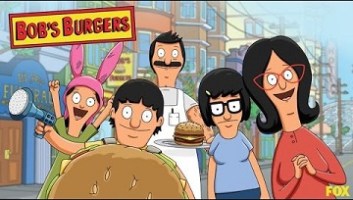
“They Serve Horses, Don’t They” is a more character-driven version of the Bob’s Burgers pilot “Human Flesh.” It offers a cohesive story built on years of the show and a lot of laughs. It’s difficult for me to discuss “They Serve Horses, Don’t They” without revealing some of the plot—although you can guess what the show’s about based on the episode’s title—and comparing it to “Human Flesh,” so you’ve been forewarned.

While “Human Flesh” presented a ridiculous premise of Bob serving human meat instead of beef (a lie Louise started to make her family’s business more interesting in show-and-tell), “They Serve Horses, Don’t They” has Bob serve actual horse meat to his customers. Unlike “Human Flesh,” “They Serve Horses, Don’t They” grounds its situation in the show’s characters.

Tina loves horses and freaks out when she discovers that the restaurant’s butcher is giving them horse. Bob orders from a shady butcher because he wants to make money and compete with Jimmy Pesto. Jimmy goads Bob into using a backdoor butcher. Throw in a Teddy who grows accustomed to the horse meat and Hugo who wants to make a name for himself as a food inspector, and you get one satisfying episode.

The situation gets out of control, but “They Serve Horses, Don’t They” earns its laughs. I’m glad Bob’s Burgers has given us an episode that doesn’t focus on one character. While I like the show’s single character episodes, we need to see shows that engage multiple characters.

Thanks for reading.

Doctor Strange

doctorstrange

Jim’s Thoughts

I went into Doctor Strange cautiously optimistic, but like a few other people, I do keep, in the back of my mind, a clock that ticks down to when Marvel’s run of hits will end. I hope it never does, but that’s just not realistic, so I’m enjoying the run while it’s going. The first thing I can say about Doctor Strange is that this is not the movie that ends Marvel’s string of successes. It’s not one of the better films in the MCU, but it’s solidly “good.”

The big thing I’ll hit the movie for is its lack of rules for the world of inter-dimensional magic. Without having any clearly stated limitations on what can be done, or how, it’s hard to gauge what represents a threat, and the main story in the movie felt flat for that reason. What’s the threat in this movie? Why, magic is, of course. What’s the answer to the threat? Why, magic is, of course. In the end, Strange wins the big battle with the aid of a conveniently placed item, the full power and/or limitations of which the film never explains. That makes for an ending that doesn’t really satisfy.

A much smaller gripe came in the form of Strange’s life in the mundane world. We needed to spend time there to get a full sense of who Strange was before he became a sorcerer, so the film’s first act wasn’t wasted. My problem came from being dragged back there later. It slowed the move down, and on a smaller level, annoyed me because in a world where the Avengers have existed for some time, people should be more numb to seeing weird things in big cities.

The movie offers you everything you expect from Marvel at this point. There were some good, genuine laughs, and its true enough to the source material that fans of the comics should recognize key points. The visual effects were right out of the film Inception, so there’s nothing really groundbreaking, but they’re well executed.

Cumberbatch did well in the lead, because Cumberbatch usually does, but I was more interested in Chiwetel Ejiofor’s depiction of Mordo. Ejiofor is a terrific actor, and you’ll want to stick around for the second post-credits-scene to get a look at what will be next for his character. I won’t spoil anything, and those who are familiar with Mordo from the comics should see it coming, but I’d argue it gives Mordo a more interesting arc than Strange’s.

In the long term, I’m a little concerned that Strange’s role in the MCU will be to reset reality or reboot things when the time comes, and I’d hate to see the character reduced to that. There was a lot of multiverse talk in the film. In the short term, Doctor Strange was fun, and I’d put it about on the level of the Thor films in the MCU; definitely not the best movies, but not dull.

Kyle’s Take

I agree with Jim that Doctor Strange is true enough to the source material on a surface level, but the film betrays one of the character’s co-creators Steve Ditko and what drives the character.

I’ll start with Ditko. Steve Ditko is also a co-creator of Spider-man and the one responsible for building Spidey’s guilt of his Uncle Ben’s death. He also changed the Hulk from a man who transforms into a monster at night to one driven by anger and controlled by his inner demons. Ditko even reworked Tony Stark’s backstory so he’d feel compelled to atone for his and his family’s war profiteering. Doctor Strange included Jack Kirby’s larger than life visuals and Stan Lee’s sense of humor, but Ditko’s complex character is absent.

Doctor Strange couldn’t—or shouldn’t—include Ditko’s (and Lee’s) origin of Strange operating on patients after his accident, killing them with shaky fingers, and fleeing malpractice suits, but there needed to be something tragic—or just something—that would motivate Strange to become a hero.

What we’re given is an arrogant man who’s good at the arcane arts because he’s good at studying, and he saves our existence because that’s where he keeps all his stuff. Yes, even the heroic act of facing off with Dormammu at the end is self-serving, and Strange would be okay with the “pain” because he gets to outsmart a god-like being. That’s a win-win, baby. The lack of a story element to tie Strange to this plane made the scenes where Strange returns to the real-world drag.

I agree with Jim’s assessment of magic. Magic’s fuzzy logic makes a lot of things unclear.

I don’t like white-washing. I especially don’t like white-washing of Asian roles. I’m part Indonesian and would like to see more Asians on screen, but I was willing to let The Ancient One thing slide if Doctor Strange gave a good reason why it chose Tilda Swinton to play the role. It didn’t.

Marvel, Robert Cargill (screenwriter), and Scott Derrickson (director) lose all creditability with their defense of not wanting to further stereotypes by casting a white woman in the role, when they still show us the stereotypical, comic book version of The Ancient One. What’s worse is that they don’t give him a speaking role and make fun of the fact that they showed us the stereotype (when Strange first enters Kamar-Taj). That’s not clever, Marvel, and you’re treating your audience like they’re stupid.

I don’t know what Marvel’s issue is with Asians in their cinematic universe but the only other major role an Asian could’ve played up to this point was The Mandarin, and he turned out to be a fraud, a punch-line, a joke.

I know it sounds like I hated Doctor Strange, but I enjoyed it. The actors did a good to great job with what they were given, and Ejiofor was fantastic. I didn’t know it was possible for an after credits scene to trump a movie without including the movie’s titular character, but it happened.

Doctor Strange is a fun ride; I’d place it above Thor: Dark World and Iron Man 3—for obvious Mandarin reasons—but below the first Thor. I’m sure I’ll watch it again in theaters. Thanks for reading.

Black Mirror Season 3

blackmirrorseason3

Kyle’s Thoughts

Charlie Brooker’s thought-provoking series Black Mirror is now a Netflix original series, and the show didn’t miss a beat with its transition from the BBC. Black Mirror, similar to Sherlock, runs in hour to an hour and half episodes—or mini-movies. Each episode presents a possible near future that, in turn, provides social commentary.

Okay, the term near future might be a misnomer. The landscape of each episode can vary from five minutes from now to a century into the future. Regardless of how far into the future an episode places us, Black Mirror will show us a world that’s just a bit off from our own and involves advanced technology of some kind. Taking its cues from the technology in question, these self-contained worlds within each episode will take varied shapes and forms, and the characters who inhabit these worlds and interact within the world’s rules will pose a question or questions about the human condition.

How much will social media control our lives in the next few years? What happens when the virtual world is indistinguishable from the real one? It doesn’t matter which question an episode asks, you can expect a twist and a potential debate.

You don’t have to watch each episode in order—these are disparate worlds—but I’ll cover the third season in episode number order. With that said, the first three episodes build off each other in an interesting way, so you may want to watch them in episode number order.

Before we get to my quick thoughts on each episode, a spoiler alert may be in order.

Nosedive

Bryce Dallas Howard delivers a brilliant performance in “Nosedive”; she plays a woman living in a future that grades every social interaction. Anyone can view anyone else’s wall (similar to Facebook but changed due to copyright infringement) by using an ocular interface that’s always connected. “Nosedive” isn’t as grim a future as Super Sad True Love Stories, but it’s not as chipper as Community’s MeowMeowBeenz app episode. It serves as a warning of social media run amok and of a community that forces everyone to have “happy thoughts” all the time. Yeah, the happy thoughts angle gives “Nosedive” a Twilight Zone “It’s a Good Life” touch.

All the dread “Nosedive” builds is undercut by Howard’s freedom from the internet and euphoric—and obscenity-filled—outburst at the end, but that’s a great thing. This ending provides release which is something viewers won’t get from Black Mirror’s next two entries.

Playtest

“Playtest,” directed by 10 Cloverfield Lane’s Dan Trachtenberg, unfolds like a pure horror flick. We get just enough of the main character (Wyatt Russell) to know why he’s running away from his past, but we aren’t given too many details. Russell becomes a VR video game tester, but the virtual reality’s artificial intelligence learns from its subject, the player. The game feeds off Russell’s fears and personal baggage and we’re treated to a Matryoshka Doll (Russian nesting doll) of an ending.

You won’t be disappointed when the final doll is revealed. I don’t want to spoil it, but let’s say it’s a gut punch.

Shut Up and Dance

Forget the near future, “Shut Up and Dance” could happen now and that feeds into the blood-thumping pace of the episode. Some unknown internet terrorist hacks into the personal, on-line lives of various people and blackmails them into progressively reprehensible things. We see this unfurl through the eyes of a teenage boy protagonist who was caught masturbating with his own webcam.

If “Shut Up and Dance’s” premise doesn’t leave you shaken, the episode’s ending will. Again, I don’t want to spoil it.

San Junipero

“San Junipero” could be viewed as a simple love story, but it asks existential questions. If you haven’t seen the episode yet and don’t want a huge spoiler, skip the next paragraph because it’s going to be hard to discuss “San Junipero” without getting into the weeds.

The two main protagonists are elderly women on their death beds. The titular San Junipero is an online community where people can upload their consciousness to the cloud and live forever in a digital heaven. We begin with the viewpoint of Mackenzie Davis’ character as we discover San Junipero’s secret, but it’s the shift to Gugu Mbatha-Raw’s character’s point of view that poses ethical questions. She shared her real-life with her husband (49 years), they raised a child together who died before them (her husband chose not to be uploaded because their daughter wouldn’t be there), and Mbatha-Raw must choose between an afterlife that’s unknown or one steeped in 80s nostalgia, never getting old, and parties every night.

Honestly, I’m conflicted with “San Junipero.” I understand why the characters would make their choices but I could see why they’d choose a different path. I’m left hopeful with a twinge of sadness; this episode of Black Mirror does the best job (in the series) of questioning human existence. Simply put, it’s beautiful.

Men Against Fire

“San Junipero” is a tough act to follow. Unfortunately, “Men Against Fire” is perhaps the weakest episode in Black Mirror’s third season. It tackles too much at once. The story is at its best when it focused on soldiers who were implanted with battle-enhancement mind/sight technology that made them literally dehumanize their enemy—they viewed them as monsters (or roaches)—and the personal trauma associated with this type of brainwashing. It lost me when it added that global DNA screenings could have dire consequences—the invention of a “master race”—and a Michael Kelly (of House of Cards fame) guest appearance that was an obvious ploy to mask a weaker episode.

Even though “Men Against Fire” pales in comparison to the other episodes of Black Mirror this season, it still has plenty of merit, and it ends in a satisfying way.

Hated in the Nation

“Hated in the Nation” is a sci-fi thriller and has little in common with the rest of the Black Mirror crop this season, except that it tackles social media like “Nosedive.” Kelly MacDonald (No Country for Old Men and Trainspotting) and Fay Marsay (Game of Thrones) are detectives investigating the mysterious deaths of people who died after being targeted by internet hate messages and a trending hashtag “#DeathTo.” This one’s a by-the-numbers sci-fi/detective show and it suffers from one of the same things in which “Men Against Fire” struggled: the scope is too big.

When “Hated in the Nation” dug down into its characters, it delivered strong moments. I also like how this episode expands Black Mirror’s range. “Hated in the Nation” flexes the show’s larger budget and it could be a sign of more divergent episodes. I just hope the show doesn’t lose its focus on characters and asking difficult questions.

Overall, Black Mirror’s third season is must see TV, and fortunately, the previous two seasons are also available on Netflix. You’re bound to find something to get your blood boiling and your mind moving.

Thanks for reading.

Arrow: “Human Target”

arrowseason5

Jim’s Thoughts

“Human Target” wrapped up the Tobias Church story arc. It would have been much more satisfying if the focus hadn’t been scattered, but I came away feeling like this season may finally be taking shape.

Church was never really built up as a character. It’s not the actor’s fault. His portrayal was sound, but the writers didn’t give him much to work with beyond establishing him as a drug lord with ambition. All the wasted screentime this season could have gone to flesh out his story, and if it had, Church’s fall would have had much more of a payoff.

Wild Dog’s story with Diggle was poorly handled. Having him suddenly recall a key fact is lazy writing, and does nothing to develop his character.

Elsewhere with the team, we really need to see some sort of weakness in Ragman. Right now, he appears to be invincible, and his presence in the field makes everyone else superfluous.

I’m tired of griping about Felicity. It’s the same every week with her, and so this week, I’ll mix it up a little. The only way for Felicity to become a compelling character again is for her to somehow transform into a villain. That sounds ridiculous, I’m sure, but I stand by it. All of her lectures to Oliver about honesty and secrets, and she looked her new beau in eyes and lied about a fairly significant thing, something that affected him personally and professionally, since he’s working with Oliver as the mayor. It wasn’t for his safety, or to protect a mission. She lied because she thought it was easier. Now, on top of every other thing that makes her insufferable, she’s also a hypocrite. I could take her screen time if I wasn’t expected by the show to root for her in any way.

I liked the nod to Chance, and the possibility of using The Question, but this show doesn’t need more characters to juggle. That makes it hard to get too excited for him. While I’m harping on Felicity, let me also add that Oliver sneaking out after faking his own death to talk to Felicity about her new hump-buddy was pure cringeworthy nonsense. He couldn’t even let his sister know he wasn’t really dead, but he can’t wait to talk to Felicity about her love life?

I know it sounds like I hated this episode. Kyle and I write these up right after we watch the episodes, so there’s a lot of raw reaction in these comments, and Felicity draws my ire, but all things considered, this may have been the best episode of the season. I like that we’re getting back to Prometheus, that Diggle isn’t just isolated from events in his own storyline, and that they’re building for a larger conflict.

Kyle’s Take

When asked by The People’s Choice Awards this past summer if Flashpoint will have a huge impact on Arrow Stephen Amell answered, “You bet.”

Pair this answer with Prometheus outclassing Green Arrow (and his band of merry men and women) on an ability level and you have Arrow having to ask Flash and perhaps Supergirl for help at the obligatory, mid-season, crossover episode, and we’ll have a convergence of pratfalls I’ve been warning folks about for weeks. Both Arrow and Flash will reboot their shows.

The mid-season break can’t come soon enough, because I can’t take anything Arrow or Flash does seriously until after Barry works his time warp magic. I can’t trust Church’s fall. I can’t trust that Prometheus is this season’s main villain. I can’t trust that Arrow won’t merge the cast from the past several seasons with this new cast to form a cast the size of which has never been seen. I can’t trust anything.

I agree with Jim that “Human Target” is, in many ways, a step in the right direction. I also agree that Felicity is a hypocrite, Ollie’s priorities have always been skewed toward his genitals, even when he’s playing the role of a hero, and Diggle needed to return to the Arrowcave. Sprinkle in some characters I still don’t care a lick about, and you still get an unfocused mess, even after wrapping up Church’s story arc.

Don’t gripe, Kyle. Turn off your brain and enjoy the pretty colors. No. I won’t. “Human Target” might’ve been more enjoyable if I knew that it righted the show for the full season, instead of giving the show a speck of focus for three or four episodes before Flashpoint renders most of what we’ve seen on Arrow this season meaningless.

I want to like Arrow more than I have and I hope that once the real season five begins, the show will gain momentum. Until then, I’ll try to sit back and enjoy the final few episodes before we get Costco-sized, wholesale changes. Thanks for reading.

The Flash: “Monster”

flashseason3

Jim’s Thoughts

“Monster” benefited from a little tighter focus, and that being on the core characters. We know Snow, we care about her at this point, so while her relationship with her mom isn’t interesting, at least we see some direction being taken with her development of powers.

The romance angle was also mercifully kept in the background this week. Yes, Iris was there, and another lunch date with Barry was cut short, but it wasn’t the point of the episode. That also helped.

Outside the core characters we’ve known and loved, Julian has actually been a substantive addition. Tom Felton’s performance has been solid, and while his character progress was rushed, to say the least, it didn’t put me to sleep. Glossing over him trying to shoot a 15-year-old was tough to see. It stretches the tolerances of disbelief, both in the sense that it would happen, and that the department wouldn’t fire and/or arrest him over it. That being said, I can let it go if for no other reason than that it isn’t the same thing we’ve seen week in and week out.

This week also stretched the villain of the week formula to its limit. We didn’t actually get a real villain at all this time, and that was an anticlimax.

The duplicitous Harrison Wells angle is also exhausted. What’s worse is that it felt like they dragged the conclusion that this Wells is fraud to the point of absurdity.

Once again, we get nothing from Alchemy. By the time he reappears, they’re going to need to remind us of who he’s supposed to be, and the fact that he’s not even being talked about makes it hard to believe anyone really sees him as a threat.

This episode was more entertaining than the last few have been, but as we’ve said, the threat of Barry going back and undoing Flashpoint looms over everything. It hasn’t been a bad season, but if everything we’ve seen is undone one more time, it’ll be hard to keep caring about the show.

Kyle’s Take

Flash should return to Alchemy soon—next week’s episode features Wally West and visions of Kid Flash dancing in his head—but I agree with Jim that we’ll need a refresher for who Alchemy is and why we should care. Doctor Alchemy is supposed to be working behind the scenes, but why hasn’t Flash shown him awakening metahumans? Why haven’t we seen more metahuman husks? Why haven’t we seen Alchemy working behind the scenes?

By dumping Julian Albert’s backstory and his desire to do good in a ten-minute monologue, “Monster” doused ice water on my idea of Albert (Tom Felton) as Alchemy. But did it really? We don’t know what drives Alchemy to do what he’s doing. Sure, Alchemy gave the Rival his powers, but he also killed the Rival. Did Alchemy kill the Rival because he failed to stop The Flash or did Alchemy kill the Rival because he used his abilities for selfish ends? Does Doctor Alchemy view himself as a hero and the Flash as the villain because the Flash ended Flashpoint or does he have this world view—or a similar one—for some other reason? I’m not sure. Neither Flash nor Arrow have left us this far in the dark with regards to a main villain’s motivation.

We do have a good idea of when Flash will hit the reset button, should it hit reset: Killer Frost. Sure, we know Caitlin and care about her. It’s suspicious that Flash will have two episodes until its mid-season break after she comes out of the metahuman closet (two weeks from this week). That’ll give the Flash enough time to realize that his only option to save her is to go back in time. I’m still hoping the consequences from this (probable) upcoming time travel, set up in the first episode this season by Jay Garrick, will force Barry to stop hitting the same, easy button.

I’m also hoping that Flash will cease to hit the same plot device buttons: a duplicitous Harrison Wells, and a child in trouble as a pseudo villain-of-the-week. Jim covered Wells. I kind of liked this Wells’ backstory—also dumped on us through an expositional monologue—and its tip of the hat to Booster Gold. But this Wells’ story makes less sense than Booster’s. Wells is from an alternate earth, not the future. As for the child in trouble, we’ve already seen this with Magenta a few weeks ago, and it was just as rushed then. Yawn.

This hasn’t been a bad season for the Flash. I’ve enjoyed Felton as Albert and agree with Jim that his story ventures from the norm–if nothing else. This season just lacks focus and covers lot of familiar ground. The one time Flash has given us focus this season is for the plot device that will most likely lead to Barry hitting rewind. I’m still waiting for this season to get started.

Thanks for reading.

Supergirl: “Survivors”

supergirlseason2

Kyle’s Thoughts

“Survivors” may have ventured from the season’s big bad Cadmus, but this week’s Supergirl delivered a solid villain-of-the-week episode because of its auxiliary character development.

Agent Danvers’ new partner Maggie Sawyer and their intergalactic buddy cop routine could have legs and keeps Kara’s adopted sis relevant. Winn going out with Mon-El could be a welcome dynamic, although I fear that win leaving the CatCo News Group has made his character little more than a Cisco-Felicity type rather than a fully fleshed out character. Snapper Carr continues to shine as the tough as nails editor. He pours water on Kara’s ideas and forces her to do her job correctly. It’s refreshing to see CatCo function like a legitimate news outlet. Arrow has merged the jobs of mayor and vigilante, and Flash has—for the most part—forgotten that Barry’s a crime scene investigator, but Supergirl shows Kara’s struggles to be a competent reporter.

Love mists Supergirl’s air but doesn’t dominate the storylines and episodes, and “Survivors” is no exception. I like how Supergirl doesn’t saturate its episodes in relationship drama like the other Arrowverse shows. “Survivors” pumped in a few potential love interests and they were handled with a gentle hand. Even so, I could do with a little less near miss romances. Every one of the crushes has an obstacle, most real, some imagined. It’s not a big issue now, but could become one should Supergirl enter a rut of unrequited love.

The villain-of-the-week was less of a fully formed character and more of a vehicle with which to drive recurring characters’ relationships with the main cast. Roulette didn’t have much time or space to be more than a fight club coordinator, but her story thread complicated Miss Martial and Martian Manhunter’s relationship, Lena Luthor got to weigh in on her feelings about aliens and aliens’ rights, and the intergalactic buddy cops had a case to crack. Roulette was a by-the-numbers weekly villain, except that she was freed after capture. She may have a future with Cadmus or could already have ties with them. Even if Roulette is nothing more than a weekly villain, she served a purpose beyond filling the villain role for one week and that’s a step in the right direction.

“Survivors” is a step in the right direction for Supergirl—not that it fell too far last week—and the show continues to outshine Flash and Arrow so far this season. I could see Cadmus bringing characters back to life as another issue further down the line, but until it becomes an issue, I trust that the consequences presented in Supergirl to carry more weight.

I’ve avoided spoilers—for the most part—so I’ll end with a spoiler. If you haven’t seen “Survivors,” avert your eyes. You’ve been warned.

Miss Martian is a white Martian in disguise as a green Martian. I’m not sure if I buy that a white Martian would take a delicate approach to hunting a green Martian, but this big reveal could have as long and interesting complications as Lynda Carter’s big reveal last week: the president isn’t all she appears. This thread also affords J’onn J’onzz a meaty story, and that’s a good thing.

I remain pleasantly surprised with Supergirl. I never followed the character as much as Flash but the show is holding my interest. Thanks for reading.

Arrow: “Penance”

arrowseason5

Jim’s Thoughts

It was more of the same from Arrow this week. I don’t want to go through and pick out all the same things I’ve harped on the last few weeks, so instead I’ll try to take a broader angle on why I think the show is spinning its wheels in mediocrity

The new recruits are weighing the show down. I was most optimistic in the season debut when it brought us back to just Ollie patrolling the streets. Now we’re dealing with a bunch of new faces that we’re supposed to care about, and I just don’t. Ragman wouldn’t be a bad character, but funneling his tension through Felicity is a tiresome way to keep her character relevant. Artemis disappears on screen. She’s trying to serve as the good angel on Wild Dog’s shoulder, telling him to play by the rules and listen to Oliver, and it’s reduced her to an annoying Jiminy Cricket type. Wild Dog himself is annoying because he’s constantly running ahead of everyone and mucking things up. We get it. He’s too much like Oliver, too stubborn for his own good. That’s not new, and it’s not interesting because we’ve heard that argument for weeks now. When they try to show progress, like the message is sinking in with him, he runs off and gets himself captured this week. That’ll lead to more lectures about teamwork, and angry stares between Oliver and him. I understand. Message received. If Wild Dog were any more of a Maverick, they’d be ripping off conversations from Top Gun. Can we move on now?

Tobias Church is back. Okay, I guess so. Where’s Prometheus again? I’m sure he’ll show up right around the time Church starts gaining momentum as a villain again. How can the tension ever build with all this stuttering between the sources of it?

Another hammer we’ve been bludgeoned with is Oliver’s decision to kill. That’s been going on for a while now. First he was a killer, then he was a vigilante with a no-kill code, like Batman. Now, I guess they’ve settled on him killing sometimes, sorta? Okay, too hard, too soft, just right. They’re being Goldie Locks about it. I can live with that, but here’s the thing that’s cropped up for me. In the flashback sequences, Oliver has been killing pretty gratuitously. I realize it’s nothing the show hasn’t established before, but as the body count goes up in Oliver’s past flashbacks, it makes him a different character in the present. It’s one thing to know he’s killed before, and will again if he needs to, but seeing him snap some guys neck in a holding cell in Russia seems particularly icy. It makes it hard to believe killing would ever be a moral difficulty for him again.

There’s plenty more to talk about, but I’ll leave it at that. Again, this isn’t a terrible show. It’s much better than last season so far, but it isn’t the course correction I wanted.

Kyle’s Take

Arrow this season has suffered from the same major issue as Flash: taking several steps back and slow development.

We’ve seen Arrow use the plot devices of training new recruits, flashbacks that show Ollie’s sordid past and mirror what’s happening now, and breaking a falsely accused person out of prison (but the prisoner in question has guilt about a crime they did commit). “Penance” is lather, rinse, repeat.

Before I get into detail with Arrow’s déjà vu, I’ll take a moment with Felicity. How did she know how Diggle reacted to Lyla’s escape plan without Ollie telling her? How did Diggle know Felicity would’ve had a problem with Ollie breaking him out of jail without the knowledge that Ollie even told her? These two moments were so rushed that they didn’t make sense and they were two more examples of injecting Felicity into a story thread she had no reason being a part of. I get that she’s a fan favorite (for some), but the writers’ insistence of shoehorning Felicity into everything Arrow makes me want to rip out my hair and with little hair on the top of my head, I’ve had to start pulling from other areas. It hurts. Stop it.

The flashbacks have been undercutting what’s happening now for the reason Jim mentioned, but the ones in “Penance” undercut the present for a different reason; dialogue and scenarios were copy and pasted from the flashbacks. The new DA spouted the same lines as Ollie. At one point, I shut my eyes and didn’t need to see a scene to know what would happen and how the characters would behave. It’s as if “Penance” wasn’t long enough, so Arrow padded the episode.

Speaking of the new DA, his character serves as a stand-in for a young Captain Lance. Remember when Lance viewed the Hood as a menace? Yeah. That’s this new DA. Both Flash and Arrow are covering too much familiar ground.

I’d also be okay if Ollied patrolled the streets on his own. It’d be a great throwback if Arrow could do that, but I’m sure we’re too far along with the concept of Team Arrow that Ollie will always have a bevy of sidekicks. Enter the ubiquitous new recruits. Ollie has taken a new vigilante under his wing every season and this year he’s got four. These new characters don’t hold my interest.

This season doesn’t hold my interest as much as I would like. The reason Arrow hasn’t settled on an arch villain may be that it’s planning on shaking up everything after the midseason break; Flashpoint could have a huge ripple effect. Everything Arrow has done to this point feels like it’s probationary. Whatever sticks, sticks and they’ll scrap items they don’t like on a whim. The fifth season of Arrow has been a lot better than last season, but that’s not saying much. Let’s see what happens at the break.

Thanks for reading.

The Flash: “The New Rogues”

flashseason3

Jim’s Thoughts

Flash spent the first half of “The New Rogues” tap-dancing all over everything Kyle and I have been trashing it for. There was training the new speedster, awkward suckface featuring Barry and Iris, and a visit to the multi-dimensional parts store.

The gang went shopping for a new Harrison Wells because the old one was just a lease, and the new one comes with free oil changes and a hundred-thousand-mile warranty.

Doubling down on their plan to reduce the DC Comics Multiverse to a revival of The Dating Game, we also got some awkward romance moments with Wally and Jessie. The problems here are twofold. First, Wally not wanting to pursue Jessie because they’re literally from separate worlds only sounds like it makes sense. Seriously, hopping over between earths is shown to be simpler than switching planes at Laguardia. Secondarily, neither Wally nor Jessie are well developed characters, so I’m not invested in their romance. I’m not rooting for them.

The plot with Mirror Master was just another weekly villain plot. It wasn’t awful, just forgettable. Hey, remember Alchemy? That seemed promising. What’s going on with him? We don’t really know? Well, at least we know Iris thinks talking to someone in a mirror is weird. It’s not like she could think of it as a screen or anything. Skype must creep her out. See what you’ve done, Flash? You’ve reduced me to sarcasm, the lowest form of wit.

It’s more of the same this week. It isn’t bad. It’s just dull.

Kyle’s Take

This season of Flash has taken five or six iceberg sized steps back and the story’s troding along at a glacial pace. That’s why the opening to this season is lifeless.

Sure. We didn’t get time travel in “The New Rogues,” but we did get reintroduced to The Rogues, which were dropped after Captain Cold made the switch to Legends of Tomorrow, Killer Frost reared her platinum blonde extensions and she only had powers on Earth-Two, so we stay tethered to Harry’s Earth, even though Harry and Jessie exit, stage right, and the Barry-Iris love saga returned from season one, when it was dropped the last season—for the most part. Is it too soon to hit the reset button–again?

Not to beleaguer the point I’ve made in the past, but there might be a reason why Barry and Iris ended up together in almost every other timeline or alternate earth; the main storyline is the only reality and Earth in which Barry and Iris are siblings. I’m not sure why this season insists on retreading this and other story arcs that haven’t worked in the past.

“Love” permeated every fiber of “The New Rogues.” Barry and Iris, Wally and Jessie, Top and Mirror Master, and Detective West and Cecile Horton (potentially) were all twitterpated with one another. Too bad Bambi had more interesting romances.

I agree with Jim that Wally and Jessie haven’t been developed—that could be due to Flash’s tendency to reboot their story arc every other episode or “develop” its characters with expositional dialogue—and Top and Mirror Master were nothing but villains of the week with rushed back stories—I’m sure we’ll see them again sometime this season. The West-Horton love connection could have the best chance of working, but it’s the newest coupling (by half a second over Wally-Jessie), Flash has only hinted at a romance between these two, and the show has a horrendous, romantic track record. Let’s not forget Jatlin and Cisco Glider from last year. I’m sure most of these relationships will crash and burn, and we’ll get back to Doctor Alchemy, but at this point, I wouldn’t mind fast-forwarding to the inevitable.

Barry will go back in time, resetting each character once more, and he’ll suffer larger consequences—hopefully—for doing so. I can’t wait for season 3 of the Flash to start in earnest.

Supergirl: “Welcome to Earth”

supergirlseason2

Kyle’s Thoughts

“Welcome to Earth” tackled three items at once: aliens’ rights, a growing Supergirl universe, and the 2016 election. Sprinkle in the Arrowverse’s customary fan service and that’s a lot for one episode.

This week’s Supergirl did an adequate job of incorporating most of these elements. If there was one point Supergirl could’ve dropped, it would’ve been the 2016 election. While I get why the creative team would want to include the upcoming election (it’s omnipresent), the direct references “Welcome to Earth” makes aren’t handled with the gentlest of hands, and the issue of aliens’ rights—in Supergirl’s case it’s aliens from outer space and their interstellar immigration—does a fine job of alluding to the upcoming election and it’s an issue that should have legs if someone were to watch the show years in the future and the vivid nature of the show’s 2016 election references fade.

Overt political messages aside, “Welcome to Earth” was a bumpy ride. It gets a little too preachy; that wasn’t so good. Aliens, specifically Scorcher, fighting against a president who would grant them amnesty was clumsy. When these malcontent aliens explained why they would rebel against such a president, they force-fed us a lot of exposition. A growing Supergirl universe was nice to see; it’s good when Lynda Carter’s turn as an alien-friendly president is more than just a cameo (I’ll dive more into this with conjecture). And Supergirl has learned a thing or two from Arrow and Flash in terms of fan service—some of it was fantastic.

Most older fans know Lynda Carter as Wonder Woman. She gets the royal treatment in “Welcome to Earth.” I liked it for the most part, but it did go over the top on more than one occasion. Supergirl spinning around (looking like Carter transforming into Wonder Woman) put a smile on my face, but the presidential addresses were too staid and contrived. This played into the overt political messages that didn’t always pan out. The private moments Carter’s president shared with Martian Manhunter and Supergirl were more impactful.

Scorcher was another villain of the week and since there was more of a focus on message instead of character building, she was more of a stereotype than a fully developed character. The true villain may be Lynda Carter’s president—but of course that’s conjecture on my part. Overall, “Welcome to Earth” was the weakest of the Supergirl episodes so far this season, but it’s still a solid episode and the show has a clear and intriguing direction.

Conjecture

I’ve been doing this for a few weeks, but just in case you’re new to this segment, conjecture is where I look at the tea leaves and divine what might happen in the coming weeks of a show. Since this section is about a possible future, a potential spoiler alert is in order. You’ve been warned.

Lynda Carter’s President Olivia Marsdin could be Supergirl’s Cyborg Superman in disguise.

The original Cyborg Superman was Hank Henshaw. Hank is Martian Manhunter on Supergirl, but how Jonn Jonn’z takes on the guise of the DEO commander Henshaw, plays into why Supergirl may be introducing Cyborg Superman. In the comics, Henshaw was an astronaut. In a storyline inspired by Marvel’s Fantastic four, he and his crew were exposed to solar radiation and began to mutate. The rest of the crew died, but Henshaw survived by bonding with Superman’s Kryptonian Birthing Matrix—it’s a Kryptonian incubator of sorts—and he eventually turned into Cyborg Superman, a cybernetic villain who half-way mimicked the appearance of Superman. Cyborg Superman battled Supes several times, but Supes could never fully defeat him because his digitized consciousness can create new bodies. In fact, Cyborg Superman wants to die and can’t.

cyborgsuperman

These same bodies can shape-shift to look like anyone, and Cyborg Superman is also able to transfer—or download—his consciousness into someone else and temporarily take control of their bodies.

Enter Supergirl’s President Marsdin (Carter). Her eyes flickered red at the end of “Welcome to Earth,” and there’s the distinct possibility that she’s either Cyborg Superman in disguise or her mind is under the control of the cybernetic villain. We’ll have to see if Hank Henshaw is still alive. He presumably died years ago, but so did Jeremiah Danvers and we know that Danvers survived through Cadmus’s science-magic. Of course, Danvers (Dean Cain) could also be Cyborg Superman or the real Henshaw could take Danvers’ appearance, since Jonn’z is standing in for him. We’ll have to see what happens, but I’d be down with watching a half robotic Dean Cain.

That’s all I have this week. Thanks for reading.

Bob’s Burgers: “Teen-A-Witch”

bobsburgersseason7

Kyle’s Thoughts

“Teen-A-Witch” covers old and new ground. We’ve seen Tina become obsessed with something, especially around Halloween. Remember when she had a ghost boyfriend she kept in a box? This year, she’s all about the dark arts, but since Tina wanders into the dark side, she gains something we haven’t seen from her: an edge.

Okay. We’ve seen Bad Tina and Dina before but this witchy Tina has a nasty streak that we haven’t seen. “Teen-A-Witch” is a lot like “Flu-ouise” earlier this season. It’s focused entirely on the titular character. In fact, “Teen-A-Witch” takes this focus to a whole new level. We at least caught a whisper of other characters during “Flu-ouise;” “Teen-A-Witch” shuns most other Bob’s Burgers characters. Fortunately, Tina’s one of the better characters and I don’t mind the tunnel vision.

We don’t learn anything new about Tina (she still like-likes Jimmy Junior, is obsessed with butts and butt touching, and suffers from the occasional panic attack). The only thing truly new about Tina is her mean streak, but perhaps that’s all we need. Bob’s Burgers has a knack for adding to their characters. This may not be the last we’ve seen of a Tina who would put spells on her classmates, talk sass to her parents and teachers, and strut the school halls. I wouldn’t mind it if witchy Tina makes another appearance or two.