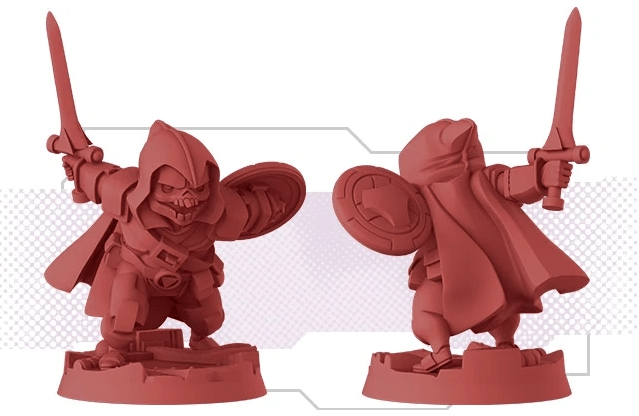
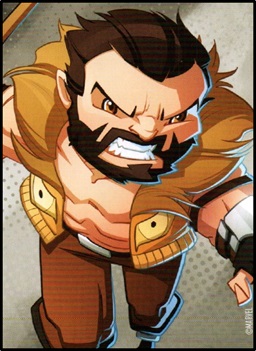
Guide: Kraven

Real Name: Sergei Nikolaevich Kravinoff
First Comic Book Appearance: The Amazing Spider-Man (August 1964)
Affiliations in Comic Books: Legion Accursed, Sinister Six

Marvel United Appearance: Marvel United: Return of the Sinister Six (July 2020)
Marvel United Team Decks: Sinister Six

Movement

Villain Movement Marvel United

BAM!

5 BAM Marvel United

Civilians

4 Civilians Marvel United

Thugs

3 Thugs Marvel United

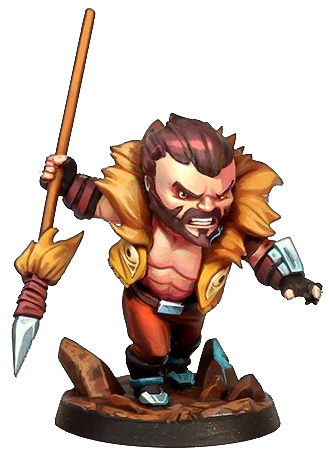
How Kraven Plays: Kraven actively hunts the Heroes. A third of his Master Deck cards have the “Obstinate Hunt” effect which will lead Kraven to a Location with Heroes. He deals damage to every Hero at his Location whenever he uses his BAM! effect. Even though you may think his Villainous Plot would be difficult to achieve, Kraven’s damage output could easily KO every Hero at the same time. Still, it’s much more likely that a Hero runs out of cards because they’ve been KO’d too often. And Kraven’s Special Rules allow him to play multiple cards from his deck, which will speed up the game clock. Kraven becomes a race against the clock.

Villainous Plot: The Heroes lose if they are all KO’d at the same time.

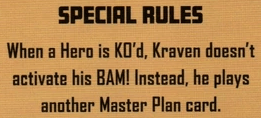
Special Rules: When a Hero is KO’d, Kraven doesn’t activate his BAM!. Instead, he plays another Master Plan card.

BAM!: Deal 1 damage to each Hero in Kraven’s Location. Plus, any 1 Hero with Crisis tokens takes 1 damage per Crisis Token they have.

Kraven’s base damage is strong enough. 1 damage to each Hero in Kraven’s Location can result in multiple heroes receiving damage. But his second effect ups the ante. Heroes will receive one damage for each Crisis Token they have. Fortunately, Kraven only has one way of adding Crisis Tokens: his “Obstinate Hunt” ability within his Master Plan deck.

Overflow: If a civilian or thug token can’t be added to a Location, 1 Hero must take 1 damage (Heroes choose).

Kraven’s Overflow ability adds to his total damage. His BAM! effect coupled with his “Obstinate Hunt” and Overflow effect make him deadly.

It doesn’t matter how many tokens can’t be placed due to Overflow, Kraven will only damage 1 Hero one time for each Location that Overflows.

Threats

Kraven has 3 copies of 2 different Threat Cards.

Decoys (Threat)
Clear:
3 Heroics
Constant Effect: Every time Kraven takes damage in this Location, he ignores the first damage received.

“Decoys” only come into play in the late game. As a result, “Decoys” have a slightly lower clear priority when compared with Kraven’s other Threat card “Traps.” But “Traps” can be situational. If players tempt a Location filling up with Thugs/Civilians, they can render “Traps” ineffective. They also risk Overflow effects.

If you plan to finish the Clear Threats mission, I advise splitting the difference between “Decoys” and “Traps.” One copy of “Decoys” on the board means that Kraven has a 16.7% chance of ignoring the first damage. Note: This won’t matter much at all if you’re playing Heroes with a lot of Attack.

Traps (Threat)
Clear:
3 Heroics
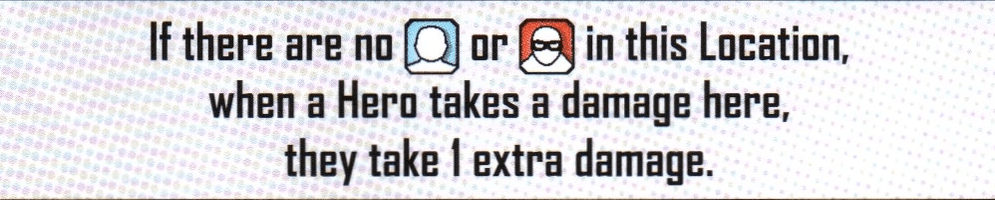
Constant Effect: If there are no Civilian tokens or Thug tokens in this Location, when a Hero takes a damage here, they take 1 extra damage.

“Traps” is the obvious Threat to clear in the early game. You never want to take extra damage. But this Threat can be situational; heroes must clear the Location of all tokens (Civilians and Thugs) before “Traps” activate. You could risk an Overflow by keeping Thugs and Civilians on a Location.

Note: The most tokens Kraven adds in a single turn is 2 to a single Location. You only need to keep two empty spots on each Location.

Master Plan Deck

Movement:

Kraven has an average of 1.5 Movement per turn, which is the same as the core set villains. But this number is deceptive. A third of his cards have Kraven move to the next clockwise Location with a Hero and then he uses his BAM! effect. Effectively, Kraven does his namesake and hunts the Heroes.
Civilians:
Kraven places Civilians at a similar rate to Doctor Octopus and Electro, so the Rescue Civilians mission shouldn’t be an issue. Two of his cards will add a whopping 6 Civilians and another will add 3 Civilians and 3 Thugs, so be careful that you don’t get overflows. If these four cards have already been played, you won’t need to worry as much about Overflow.

Thugs:
Kraven sports a little less with Thugs. When he does add Thugs, he always adds 1 Thug in three locations. This includes the two cards where he also adds 1 Civilian in three locations. You’re less likely to complete the Defeat Thugs mission as a result.

BAM!:
With the help of his one special effect “Obstinate Hunt,” Kraven has a BAM! effect on all but three of his cards. Coincidentally, the three cards with no BAM! effects will add 6 Civilian/Thug tokens in total. Kraven is usually on the hunt.

Special Effects on Cards

Obstinate Hunt: 1 Hero in Kraven’s Location takes 1 Crisis Token. Then BAM!.

Kraven only has one card with an effect text. He only needs one. Each copy of “Obstinate Hunt” will have a Special Movement that will lead Kraven to a Location with Heroes. That means that each “Obstinate Hunt” will result in a Hero gaining 1 Crisis Token and receiving at least 1 Damage. More if the Hero has any number of Crisis Tokens.

“Obstinate Hunt” comprises a third of Kraven’s deck. He will chase the Heroes often. The only way to counter this will be with abilities like Miles Morales’s where he delays the villain’s turn by one card or Black Widow’s ability that allows players to move the top card of the Master Plan deck to the bottom of the deck. Neither of these options eliminates this threat; they only postpone “Obstinate Hunt.” But Kraven’s battle is a race against the clock and an extra turn can make all the difference.
Special Movement: “Obstinate Hunt” also has the special movement text that reads, Move clockwise to the next Location with any Heroes. This will guarantee that Kraven will damage at least one Hero this turn.

General Strategy

“Obstinate Hunt” is Kraven’s ace in the hole. To minimize this card’s effectiveness, make sure to split up the Heroes. Kraven is a villain you don’t want the Heroes to group up on Locations.

You’ll want to keep Locations free of Thugs and Civilians or at least leave two open spots on each Location to accept the Thugs/Civilians Kraven will add.  Overflow can get ugly fast. How to defeat Kraven depends on which Heroes you choose. Kraven favors adding Civilians over adding Thugs, so you may want to favor the missions Clear Threats and Rescue Civilians.

If you choose to finish the Clear Threats mission, “Traps” have more priority early game, but “Decoys” will help later game. I advise splitting the difference between these two Threat types: clear 2 “Traps” and then clear 2 “Decoys.” This gives Kraven less coverage after he becomes vulnerable to damage, and it minimizes the damage the Heroes can receive in the early game.

Heroes have a few options for dealing with “Obstinate Hunt.” You could use an ability like Black Widow’s to manipulate the villain deck. You could also delay the villain’s turn by one card with an ability like Miles Morales’s. Or you can play damage control after the fact with abilities that discard Crisis Tokens. Locations like S.H.I.E.L.D. Headquarters and The Great Mound (from the Rise of the Black Panther expansion) have “End of Turn” abilities that can help. Several Heroes from the X-Men Marvel United releases have Crisis Token discard abilities, too.

Fortunately, Kraven has average Health. So, after he becomes vulnerable to damage, he won’t be too difficult to defeat. The problem comes from Kraven’s initial attacks. Kraven top-decking his “Obstinate Hunt” places the Heroes in a hole. But you can still turn around the battle. If this happens turn one, make sure the Heroes seldom occupy the same Location.

Remember to time completing the first and second missions as close together as possible to avoid the villain speeding up too soon.

Guide: Mysterio

Real Name: Quentin Beck
First Comic Book Appearance: The Amazing Spider-Man (June 1964)
Affiliations in Comic Books: Maggia, Sinister Six

Marvel United Appearance: Marvel United: Return of the Sinister Six (July 2020)
Marvel United Team Decks: Sinister Six

Movement

2 Movement Marvel United

BAM!

3 BAM Effects Marvel United

Civilians

4 Civilians Marvel United

Thugs

4 Thugs Marvel United

How Mysterio Plays: Mysterio delays the Heroes and speeds up the play of his deck to run out of cards before the Heroes can win. He does this through various means, even before the game begins. Mysterio’s Special Setup places all Threats facedown on their Locations. The Heroes must spend an action to flip the Threat faceup with one of the Threats necessary to be flipped faceup even to deal damage to Mysterio.

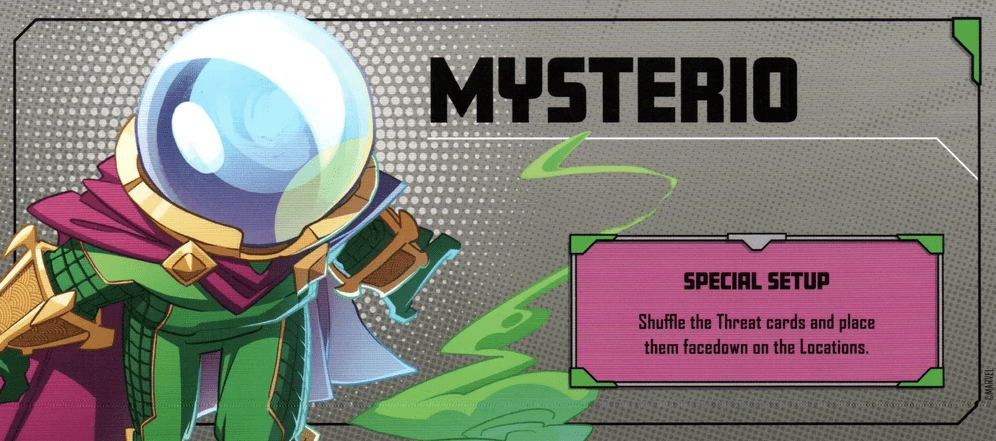
Special Setup: Shuffle the Threat cards and place them facedown on the Locations.

Villainous Plot: Mysterio has no Villainous Plot. Instead, he has a Special Setup and Special Rules.

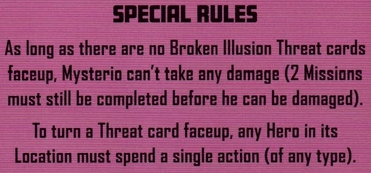
Special Rules: As long as there are no “Broken Illusion” Threat cards faceup, Mysterio can’t take any damage (2 Missions must still be completed before he can be damaged).

To turn a Threat card faceup, any Hero in its Location must spend a single action (of any type).

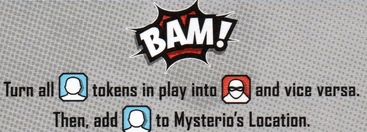
BAM!: Turn all Civilian tokens in play into Thug tokens and vice versa. Then, add a Civilian token to Mysterio’s Location.

Mysterio has one of the most bizarre BAM! effects in Marvel United’s original release, but it fits in with his desire to upset the game’s flow. While flipping over all Thug and Civilian tokens may not seem like much, it can disrupt the Heroes’ turn from round to round. You may not be able to clear the Rescue Civilians or Defeat Thugs missions when you expect to clear them. Adding a Civilian token also doesn’t seem like much, but Mysterio can add a lot of tokens per turn; an additional Token could cause another Overflow, which can further speed up his deck.

Overflow: If a civilian or thug token can’t be added to a Location, draw another Master Plan card and add it facedown in the Storyline.


Mysterio’s Overflow is yet another effect that doesn’t seem like much but it’s his main way to run out of cards in his deck before the Heroes can win. Mysterio can play as many as three or four cards (a fourth with a BAM! effect) per turn. The Master Plan deck only has 12 cards. That can be a whopping third of Mysterio’s deck.

Threats

Mysterio has 2 copies of 3 different Threat Cards.

Battle Drones (Threat)
Clear:
3 Attack
Constant Effect: When this Threat is revealed, the Hero revealing it takes 1 damage.

“Battle Drones” works differently than most other Threats. It only damages Heroes when it’s revealed. While the damage isn’t much, “Battle Drones” poses a different challenge. Mysterio only has four Threats that can be cleared (2 copies of “Battle Drones” and 2 copies of “Smoke and Mirrors”), so finishing the Clear Threats mission can be a chore. “Broken Illusion” comprises the final two Threats. Players must have at least one copy of “Broken Illusion” facing up to be able to deal damage to Mysterio. Note: Mysterio has an effect in his Master Plan deck that can flip a Threat facedown again; every time “Battle Drones” is flipped face up, it will deal one damage to the Hero who revealed the Threat.

Smoke and Mirrors (Threat)
Clear:
3 Heroics
Constant Effect: When this Threat is revealed, add 1 Thug token to this Location.

“Smoke and Mirrors” has another seemingly non-threatening effect, but Mysterio adds a lot of tokens. An additional Thug could cause an Overflow, reducing the number of cards in Mysterio’s Master Plan Deck. Again, Mysterio only has four Threats that can be cleared, so finishing the Clear Threats mission can be a chore.

Note: Like “Battle Drones,” any time “Smoke and Mirrors” is revealed, it will add 1 Thug token to its Location.

Broken Illusion (Threat)
No Clear Requirement
Constant Effect: Mysterio can now be damaged (once 2 Missions have been completed).

“Broken Illusion” differs from most other Threat cards. It doesn’t have a clear requirement of any kind, but the Heroes must have one “Broken Illusion” faceup to damage Mysterio. Heroes cannot damage Mysterio if no “Broken Illusion” is showing, even if the Heroes have completed two missions.

Master Plan Deck

Movement: Mysterio averages 2 Movement each turn. He is 33% faster than any of the core set villains. His movement varies, only has 1 card with speeds of 4 and 5, 3 cards with speeds of 3 and 0, and 2 cards with speeds 1 and 2. Mysterio has two special Movement that accompanies his “Fake Heroics” effect text.

Civilians:
Mysterio adds a lot of Civilians each turn (with an average of just under 2 per card). One card places a whopping 9 tokens (5 Civilians and 4 Thugs). He almost always places at least 4 tokens of some persuasion.

Thugs:
Mysterio adds a lot of Thugs as well, but not nearly as many Thugs as Civilians. Again, he has one card that places a staggering 9 tokens (5 Civilians and 4 Thugs). The number of tokens Mysterio places can easily cause an Overflow to occur, which will speed up the game clock.

BAM!:
Mysterio has a BAM! effect on half of his cards. His BAM! effect flips over all in-play tokens (Civilians to Thugs and Thugs to Civilians). It’s one of the few BAM! effects that don’t deal damage and can make completing a mission difficult as the game state can rapidly change.

Special Effects on Cards

1) Holographic Technology: Shuffle all Threat cards in play (discarding any tokens on them). Then put them back facedown starting on Mysterio’s Location and going clockwise.


“Holographic Technology” can reset the board even more than Mysterio’s BAM! effect. Players won’t know where each Threat card is once they’re placed back in play, facedown because they get shuffled beforehand.

I advise clearing Threats in a single round (in between Mysterio’s turns) if you are going to clear Threats, so you don’t lose progress. Mysterio only has two copies of “Holographic Technology.” If you see two copies of “Holographic Technology” in play, you can finish clearing Threats at any pace you want. However, Mysterio can play cards facedown, so it could be difficult to ascertain how many “Holographic Technology” cards have been played.


2) Fake Heroics: Discard all Civilian and Thug Tokens in Mysterio’s Location. Then, draw another Master Plan card and add it facedown in the Storyline.
“Fake Heroics” is yet another effect that can reset the board. Mysterio will also move to the next Location with the most Civilian tokens, guaranteeing that he will wipe a substantial amount of Civilian tokens in a single turn, making it more difficult to clear the missions Rescue Civilians and Defeat Thugs.

Special Movement: Mysterio has one special movement that accompanies both copies of his “Fake Heroics” effect cards. The text reads, Move clockwise to the next Location with the most Civilian tokens. This special movement guarantees that Mysterio’s “Fake Heroics” deals a blow to the Heroes’ chances of finishing the missions Rescue Civilians and Defeat Thugs.

General Strategy

The board can and will change a lot with each of Mysterio’s turns, so I advise Heroes to complete Threats and clear as many Civilian and Thug tokens as they can in between each Mysterio turn. It doesn’t matter which missions you choose to clear to make Mysterio vulnerable to damage. He places an even number of Civilians and Thugs, and his Threats require an even amount of Attack and Heroics. Which missions you choose to clear depends on which Heroes you play. Heroes with high Heroics will want to Clear Threats and Rescue Civilians. Heroes with high Attack will want to Defeat Thugs and Clear Threats.

A Hero’s special abilities play more into who you may want to play as against Mysterio. A Hero who grants a bunch of tokens works. Captain America and Iron from the core set, Groot and Star-Lord from the Guardians of the Galaxy Remix expansion, and Spider-Man from the Enter the Spider-Verse expansion fit this bill. But you can play Heroes who affect the game’s flow. Black Widow from the core set, Ghost Spider and Miles Morales from the Enter the Spider-Verse expansion fall into this category. Or you can even play a Hero who can wipe out a bunch of tokens all at once like Hulk from the core set.

If you choose not to finish the Clear Threats mission, make sure you time your reveal of a “Broken Illusion” Threat to coincide with completing the Rescue Civilians and Defeat Thugs mission. You’ll want to reveal at least one “Broken Illusion” Threat as you finish your first and second missions as close together as possible to avoid Mysterio from speeding up too soon.

Guide: Sandman

Real Name: William Baker
First Comic Book Appearance: The Amazing Spider-Man (September 1963)
Affiliations in Comic Books: Frightful Four, Masters of Evil, The Outlaws, Sinister Six

Marvel United Appearance: Marvel United: Return of the Sinister Six (July 2020)
Marvel United Team Decks: Sinister Six

Movement

2 Movement Marvel United

BAM!

3 BAM Effects Marvel United

Civilians

Thugs

How Sandman Plays: Sandman gains health through a couple of methods (his BAM! and Overflow effects) and wins the game if his Health ever reaches 20. While this win condition (Villainous Plot) is more likely to occur with a higher player count, lower player counts may find Sandman difficult to defeat after he becomes vulnerable to damage.

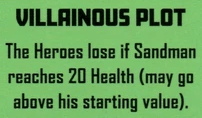
Villainous Plot: The Heroes lose if Sandman reaches 20 Health (may go above his starting value).

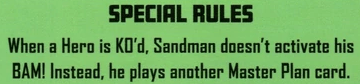
Special Rules: When a Hero is KO’d, Sandman doesn’t activate his BAM!. Instead, he plays another Master Plan card.

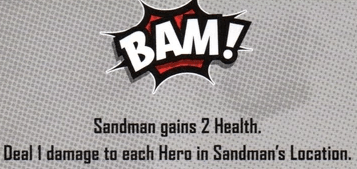
BAM!: Sandman gains 2 Health. Deal 1 damage to each Hero in Sandman’s Location.

Sandman’s damage isn’t too much. His second effect proves more problematic. Sandman’s BAM! effect is one of two ways Sandman can gain Health. The Health Sandman has, the more difficult it will be to defeat him.

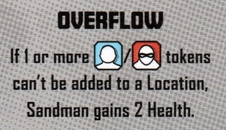
Overflow: If a civilian or thug token can’t be added to a Location, Sandman gains 2 Health.

Sandman’s Overflow effect will generate more Health since his Master Plan deck has fewer BAM! effects. Note: Sandman will gain 2 Health per Overflow, no matter how many Civilian or Thug tokens cannot be added to a Location.

Threats

Sandman has 2 copies of 2 different Threat Cards, and 1 copy of 2 different Threat cards (which are Henchmen).

Doctor Octopus (Henchman)
Health: 4

BAM!: Deal 1 Damage to 1 Hero in this Location.
“Doctor Octopus” has a standard “Deal 1 Damage to 1 Hero in this Location” effect text. Since this is the case, he has a lower priority than other Sandman Henchmen.

Electro (Henchman)
Health: 4

BAM!: Deal 1 Damage to each Hero in this Location. If there are no Heroes in this Location, deal 1 damage to each Hero in adjacent Locations.
“Electro” has a spicier “Deal 1 Damage to each Hero in this Location. If there are no Heroes in this Location, deal 1 damage to each Hero in adjacent Locations.” Electro has a higher priority than “Doctor Octopus” and a higher priority than “Sandstorm” in the early game. After Sandman becomes vulnerable to damage, “Sandstorm” can have higher priority. I advise defeating “Electro” early in the game if you choose to finish the Clear Threats mission.

Quicksand (Threat)
Clear:
3 Heroics
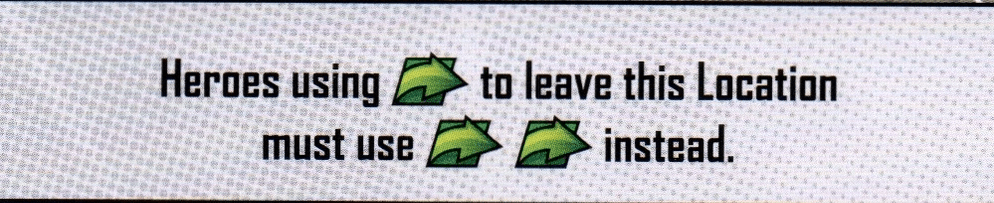
Constant Effect: Heroes using a Move to leave this Location must use 2 Move instead.

“Quicksand” has another standard Threat effect. It’s a Threat that reduces a Hero’s effectiveness. “Quicksand” has a lower priority than “Electro” in the early game and “Sandstorm” in the late game. You may consider removing one of the “Quicksand” Threats if you choose to finish the Clear Threats mission or if you have Heroes with plenty of Heroics.

Note: Sandman doesn’t place a lot of Civilians, so you may want to consolidate your Heroics to “Quicksand.”

Sandstorm (Threat)
Clear:
3 Move
Constant Effect: If the “Harder” Master Plan card is in the Storyline, Sandman cannot take damage.

“Sandstorm’s” effect only works late game and if Sandman manages to play his “Harder” Master Plan card. He only has one copy of “Harder,” so you may not have to deal with “Sandstorm” if you choose to rush Sandman.

But the smaller number of Civilians that Sandman places in his Master Plan deck makes finishing the Clear Threats mission a more viable option. You may be forced to Clear Threats and if you find yourself needing to clear Threats, “Sandstorm” should be a high priority, especially during the late game.

Master Plan Deck

Movement:

Sandman averages just over 2 Movement each turn. He is 35% faster than any of the core set villains. His movement varies, only has 1 card with speeds of 0, 1, and 4, and 2 cards with speeds of 2, 3, and 5. Sandman also has 3 cards with special movement.
Civilians:
Sandman adds significantly fewer Civilians per turn than most Villains. The Rescue Civilians mission may be difficult to complete.

Thugs:
Sandman adds slightly less than average Thugs. Players may be tempted to finish the Defeat Thugs mission, but Sandman begins the game with higher-than-average Health, and he can gain Health throughout the game with his BAM! and Overflow effects.

BAM!:
Sandman has a BAM! effect on less than half of his deck. With his Special Rules, a Hero getting KO’d doesn’t trigger another BAM! effect, so Sandman will use his BAM! effect far less than most Marvel United villains.

Special Effects on Cards

1) Harder: From now on, Sandman cannot take any damage until all Sandstorm Threat cards are cleared.

“Harder” is the only card of Sandman’s with a BAM! effect as well. The ability only takes effect during the late game, but if it is in play, the Heroes must clear both copies of the “Sandstorm” threat.

Sandman only has one copy of each card with a special effect. You may get lucky and “Harder” won’t see play.

2) Better: Deal 1 damage to each Hero in both adjacent Locations.

“Better” is accompanied by a special movement that ensures that Sandman will not land on a Location with a Hero, so his effect that deals 1 damage to each Hero in both adjacent Locations is more likely to trigger. “Better,” along with the following “Faster,” makes the Heroes question whether they should stick together or split up.

Again, Sandman only has one copy of each card with a special effect. If “Better” has already been played, the Heroes need not worry about splitting up. “Better” has some chance of not triggering. The same is not true of his other special effects.

Special Movement: Move clockwise to the next Location with NO Heroes.

3) Faster: 1 Hero in Sandman’s Location takes 1 damage for each Hero there.

“Faster” is accompanied by a special movement that guarantees that Sandman WILL land on a Location with a Hero, so this effect will trigger.

Furthermore, “Faster” entices Heroes to not stick together. Like the rest of his cards with special effects, Sandman only has one card with the effect text “Faster.” As soon as this card has been played, the Heroes don’t need to worry about splitting up.

Special Movement: Move clockwise to the next Location with any Heroes.

4) Stronger: Discard any Action tokens from the Threat card in Sandman’s Location. Then, each Hero there takes 1 damage for each token discarded.
“Stronger” is accompanied by a special movement that guarantees that Sandman WILL land on a Location with a Threat card. If the Heroes have started but haven’t finished clearing the Threat card, the Heroes can accept a lot of damage. I advise you to finish clearing any Threat card you have begun in between Sandman’s turns.

Like other special effect cards in his deck, Sandman only has one copy of “Stronger.” If the copy of “Stronger” has been played, feel free to leave started but not finished Threat cards in play before Sandman’s next card. Like “Better,” “Stronger” has a chance of not triggering. Sandman could land on a Location without any tokens. If that is the case, the Heroes wouldn’t receive any damage.

Special Movement: Move clockwise to the next Location with a Threat card.

General Strategy

Sandman is more likely to finish his Villainous Plot (having a total of 20 Health) at higher player counts, but lower player counts can find him difficult to defeat because he can heal beyond his staring Health. Sandman begins the game with above Health in the first place, so Heroes with a lot of Attack make sense.

Still, Sandman’s Overflow effect is the most likely way he can gain Health. And Sandman doesn’t add too many Civilian and Thug tokens throughout the game. The most he’ll ever add is two tokens per Location (and the adjacent Locations). This can be easy to mitigate, but you may need a lot of Move to get to disparate Locations. Sandman has more movement than most Marvel United villains.

The other way Sandman gains Health is through his BAM! effect. Sandman only has five cards in his Master Plan deck that have a BAM! effect. If you prevent ANY Overflow from happening and Sandman plays every card with a BAM! effect from his deck, the following shows the maximum Health Sandman can obtain:

2 Players: 14 Health
3 Players: 16 Health
4 Players: 18 Health

Even at a full complement of players, Sandman will not reach his Villainous Plot of 20 Health if the Heroes can prevent him from all Overflow effects. So, the focus will most likely be dealing enough damage to Sandman before time runs out. Again, lots of Attack can help. Heroes with a lot of Move also help.

After you lose a couple of times because Sandman adds a paltry number of Civilians and Thugs, I advise adding Locations that begin the game with a lot of tokens. This will make the Rescue Civilians and Defeat Thugs missions more viable. The following are Locations from the original Marvel United release that begin play with three or more tokens:

From the core set:
Stark Labs (3 Tokens; space for 4)

New York Police Headquarters (3 Tokens; space for 4)
Times Square (3 Tokens; space for 5)
S.H.I.E.L.D. Helicarrier (3 Tokens; space for 5)
Central Park (4 Tokens; space for 5)

From the Guardians of the Galaxy Remix expansion:
Knowhere (3 Tokens; space for 5)

From the Rise of the Black Panther expansion:
Warrior Falls (3 Tokens; space for 5)

If you add five or six of the above Locations (or other Locations that begin play with two Civilian tokens), you can save more of your Attack for Sandman.

The Clear Threats is an obvious choice to finish as well. The following is the priority list for all four Threats:

1) “Electro” especially during the early game
2) “Sandstorm” especially during the late game
3) “Quicksand” because you may need to use up extra Heroics and you’ll want to preserve your Move to mitigate Civilian/Thug tokens and deal damage to Sandman
4) “Doctor Octopus” can be ignored; don’t end your turn at his Location unless you intend to defeat him.

After Sandman becomes vulnerable to damage, unleash your damage on him. Remember to time completing the first and second missions as close together as possible to avoid the villain speeding up too soon.

Heroes from the original Marvel United release who could work with Sandman are as follows:

From the core set:
Black Widow (manipulate which card is on top of the Master Plan deck)
Iron Man (tokens and Attack)
Captain America (tokens)

From the Enter the Spider-Verse expansion:
Spider-Man (lots of Move and “Great Power” and “Great Responsibility” can clear a lot of Civilians and Thugs)
Miles Morales (delay the villain’s turn by one card)
Ghost Spider (move Threats from one Location to another)

From the Rise of the Black Panther expansion:
Black Panther (a ton of Move)
Winter Soldier (a lot of Attack)

From the Guardians of the Galaxy expansion:
Groot (teamwork and tokens)
Gamora (a ton of Attack)
Rocket (also a lot of Attack)

From the Tales of Asgard expansion:
Thor (a lot of Move and Attack)
Beta Ray Bill (same as Thor)

Guide: Vulture

Real Name: Adrian Toomes
First Comic Book Appearance: The Amazing Spider-Man (May 1963)
Affiliations in Comic Books: Sinister Six

Marvel United Appearance: Marvel United: Return of the Sinister Six (July 2020)
Marvel United Team Decks: Sinister Six

Movement

BAM!

3 BAM Effects Marvel United

Civilians

3 Civilians Marvel United

Thugs

3 Thugs Marvel United

How Vulture Plays: Vulture attempts to steal technology (Spoils) from the in-play Locations. Stolen Crisis Tokens (Spoils) go on Vulture’s dashboard. Every game begins with 18 Crisis Tokens total (3 per Location), so the fewer Tokens Vulture needs to achieve his Villainous Plot, the easier it is for Vulture to complete it. Vulture has many ways of “stealing” Crisis Tokens. He has a handful of cards with BAM! effects (5), his Overflow will trigger him to steal 1 Crisis Token, and his henchman Threat “Sandman” can be a nuisance.

Special Setup: Place 3 Crisis Tokens (Spoils) on each Location.

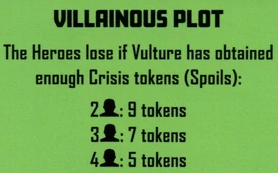
Villainous Plot: The Heroes lose if Vulture has obtained enough Crisis Tokens (Spoils):
2 Heroes: 9 Tokens
3 Heroes: 7 Tokens
4 Heroes: 5 Tokens

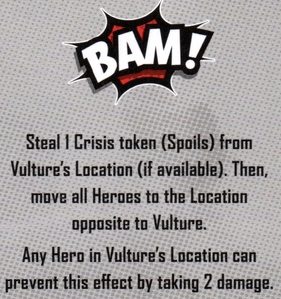
BAM!: Steal 1 Crisis Token (Spoils) from Vulture’s Location (if available). Then, move all Heroes to the Location opposite to Vulture. Any Hero in Vulture’s Location can prevent this effect by taking 2 damage.

It may seem odd, but players may want to take two damage to avoid Vulture stealing a Crisis Token, especially at higher player counts where it takes fewer Crisis Tokens for Vulture to win. Vulture can win at a 4 Hero count if all his cards with BAM! effects resolve without the heroes taking damage. Fewer Heroes have more wiggle room and can allow a BAM! effect or two to slip through.

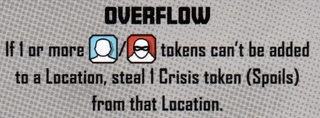
Overflow: If a civilian or thug token can’t be added to a Location, steal 1 Crisis Token (Spoils) from that Location.

It doesn’t matter how many tokens can’t be placed due to Overflow, Vulture will only steal 1 Crisis Token (Spoil) from each instance of Overflow. This gives the Heroes a fighting chance.

Threats

Vulture has 2 copies of 2 different Threat Cards, and 1 copy of 2 different Threat Cards.

Kraven (Henchman)
Health: 4

BAM!: Deal 2 Damage to 1 Hero in this Location.

“Kraven” deals a strong 2 Damage to Hero. Heroes may want to avoid his Location or clear him as a threat because they won’t be able to negate Vulture’s BAM! effect (by accepting 2 Damage) if they also received 2 Damage from “Kraven.”

I prefer avoiding “Kraven.” He’s not as menacing as some of Vulture’s other Threat cards.

Sandman (Henchman)
Health: 4

BAM!: Deal 1 damage to each Hero in this Location. If there are no Heroes in this Location, steal 1 Crisis Token here.
“Sandman” tempts the Heroes to split up. Vulture zooms around the board, and he has a special effect “Heist Plan” that also suggests that Heroes should split up. I would clear “Sandman” before I would clear “Kraven.” Sandman has a high priority because he plays into Vulture’s Villainous Plot.

Electromagnetic Wings (Threat)
Clear:
3 Heroics
Constant Effect: If Vulture is attacked here, he only takes 1 damage and immediately moves to the opposite Location.

“Electromagnetic Wings” doesn’t come into play until late game. This Threat does more to slow down the Heroes’ attacks. If the Heroes don’t use action(s) with a lot of Attack, “Electromagnetic Wings” won’t have as large of an effect. That said, “Electromagnetic Wings” has the second highest priority to “Sandman.” At least one copy of “Electromagnetic Wings” should be taken out before the Heroes begin attacking Vulture to minimize Vulture’s damage resistance.

Grenade Bombing (Threat)
Clear:
3 Heroics
Triggered Effect (Vulture ends his movement on this Location): Each Hero in this Location takes 2 damage.


“Grenade Bombing” requires two things to be true: Vulture needs to land at its Location, and one or more Heroes need to be at the Location. This specificity works against “Grenade Bombing.” Like “Kraven,” “Grenade Bombing” can dole out a bunch of damage, and that’s not good, but the Threat can be avoided. If you plan to finish the Clear Threats mission, I advise clearing “Sandman,” then both copies of “Electromagnetic Wings,” and one copy of “Grenade Bombing.”

“Grenade Bombing” has a higher priority than “Kraven” because it can affect more than one Hero a turn.

Master Plan Deck

Movement: Vulture averages 3 Movement each turn. He is twice as fast as any of the core set villains. His movement varies, he has 4 cards with speeds of 1, 2, 4, and 5 and 4 cards with speeds of 3. There’s a good chance that Vulture will lap the board five or six times in a single game.

Civilians:
Vulture adds a fair number of Civilian Tokens. Usually, he will only add two tokens (Civilian/Thug) to one Location at once, but he has one card that will add as many as three tokens to a single Location.

Thugs:
Vulture adds an even number of Civilian and Thug Tokens. Again, he usually adds two tokens to one Location at once, but he does have one card that will add as many as three tokens (two Thugs/one Civilian) to two Locations.

BAM!:
Fortunately, Vulture uses his BAM! effect on five of his twelve Master Plan cards. But he does have other ways to steal Crisis Tokens from a Location. His special effect “Heist Plan” is one of those methods.

Special Effects on Cards

Heist Plan: If this is not the first Heist Plan card in the Storyline, steal 1 Crisis Token from each Location without Heroes.


“Heist Plan” is the crux of Vulture’s Villainous Plot. The first copy of “Heist Plan” does nothing, but every subsequent copy of “Heist Plan” that gets played will steal 1 Crisis Token from every Location without a Hero. This can get deadly, and this is why the Heroes should consider splitting up. The more Locations the Heroes occupy, the fewer Tokens Vulture can steal.

Vulture has four copies of “Heist Plan” in his deck, so he can easily complete his Villainous Plot by playing two or three “Heist Plans.” But there is a way to minimize the “Heist Plan” further. If Vulture (or some other effect like Heroes discarding Crisis Tokens) reduces a Location’s Crisis Token to zero, the Heroes won’t need to guard that Location from “Heist Plan.” There’s nothing to steal.

General Strategy

Vulture’s abilities center around stealing Crisis Tokens. His ability to steal multiple Crisis Tokens in a single round makes quickly finishing missions important. We’ll cover how to deal with this ability later. First, let’s discuss which missions you should try and complete.

Vulture adds a modest number of Civilians and Thugs but never too many to worry about Overflow each round. Keep at least two spaces open on every Location. Rescuing Civilians and Defeating Thugs will get you closer to finishing these two missions and prevent Vulture from causing an Overflow that can result in a lot of stolen Crisis Tokens.

Since Vulture doesn’t add too many tokens, you may want to play with Locations that begin the game with plenty of Civilian/Thug tokens. This will give you options for finishing the Rescue Civilians and Defeat Thugs missions. The following are Locations from the original Marvel United release that start with three or more tokens:

From the core set:
Stark Labs (3 Tokens; space for 4)

New York Police Headquarters (3 Tokens; space for 4)
Times Square (3 Tokens; space for 5)
S.H.I.E.L.D. Helicarrier (3 Tokens; space for 5)
Central Park (4 Tokens; space for 5)

From the Guardians of the Galaxy Remix expansion:
Knowhere (3 Tokens; space for 5)

From the Rise of the Black Panther expansion:
Warrior Falls (3 Tokens; space for 5)

If you choose to finish the Clear Threats mission, the following is the order I suggest for clearing threats:

1) “Sandman”: His ability plays into stealing Crisis Tokens
2) Both copies of “Electromagnetic Wings”: You don’t want Vulture negating your Attack and zooming to another part of the board
3) One copy of “Grenade Bombing”: “Grenade Bombing” has the potential for dealing more damage than “Kraven.”
4) “Kraven”: He deals a lot of damage but can also be avoided.

So, how do you prevent Vulture from stealing Crisis Tokens? First, don’t allow any Overflow effects to occur. Second, get rid of “Sandman” whether you intend to finish the Clear Threats mission or not. Third, play with Heroes who can delay the Villain’s turn or rush Vulture before he can complete his Villainous Plot.

You can’t avoid Vulture’s “Heist Plan.” Its effects will go off as soon as it’s played. The first instance of “Heist Plan” doesn’t result in any stolen Crisis Tokens. Many other Marvel United villains own a card that can be deadly if played on turn one. Vulture needs at least a second turn for “Heist Plan” to get ugly. This is a small mercy.

Characters who can rush Vulture or delay him:

From the core set:
Black Widow (Manipulate the Villain deck)
Captain America (Wild Tokens for teammates)
Captain Marvel (Attack in adjacent Locations)
Iron Man (Extra Tokens)
Wasp (Extra Move and Team movements)

Staying on theme and from the Enter the Spider-Verse expansion:
Miles Morales (Delay Villain turn)
Spider-Man (“Great Power” and “Great Responsibility” are too good)

From the Rise of the Black Panther expansion:
Black Panther (a lot of Move and bonus symbols)
Shuri (Wild tokens and healing damage)

From the Tales of Asgard expansion:
Beta Ray Bill (“Stormbreaker’s” flexibility to use its extra attack on a single target or multiple targets)

I wouldn’t bother discarding Crisis Tokens; you most likely won’t be able to discard enough Crisis Tokens fast enough. You can still try discarding Crisis Tokens. Marvel United characters from the X-Men release and Multiverse release have this ability. I prefer character abilities. If you don’t have characters with discarding Crisis Tokens abilities, you can try using the Locations S.H.I.E.L.D. Headquarters (from the core set) and the Great Mound (from the Rise of the Black Panther expansion) and their “End of Turn” abilities. Both Locations result in a Hero damaging themselves to discard a Crisis Token. Not the best idea, considering that Vulture has ways of applying two damage to a Hero in a single turn. You’re best served trying to rush Vulture.

As with any Marvel United villain, remember to time completing the first and second missions as close together as possible to avoid Vulture from speeding up too soon. You want as few occasions of “Heist Plan” as possible.

Solo / Solitaire Game

Solo / Solitaire Games are intended for play by a single player, or they have a game mode intended for play by a single player.

This does not include games in which a player plays both (or multiple) factions in play to the best of their abilities (something that often happens to Wargame players or to Chess players).

Guide: Iron Man

Real Name: Anthony Edward Stark
First Comic Book Appearance: Tales of Suspense (December 1962)
Affiliations in Comic Books: Avengers, Force Works, Light Brigade, S.H.I.E.L.D., Ultimates

Marvel United Appearance: Marvel United Core Set (July 2020)
Marvel United Team Decks: Force Works, Illuminati, West Coast Avengers

Heroics

Attack

Move

Wild

Special Effects on Cards

1) Stark Resources: Distribute 2 Move tokens from the pool among any number of Heroes.

“Stark Resources” is versatile. Move is something you don’t think about until you desperately need it, and “Stark Resources” allows Iron Man to give Move tokens to any Heroes, including himself.

2) Advanced Combat Analysis: Distribute 2 Attack tokens from the pool among any number of Heroes.

Like “Stark Resources,” “Advanced Combat Analysis” distributes Attack tokens. It’s great for dealing out those final blows to the boss. Again, Iron Man can target himself and give himself Attack.

3) Power Recharge: You may draw cards until you have 3 in your hand.

“Power Recharge” comes in handy if you’ve taken any damage. Whenever a hero receives damage, they must discard a card from their hand and their hand size decreases by 1. “Power Recharge” does what it says. It recharges Iron Man to full strength. So, yes, even if you had taken two damage during the game and had discarded until you had a hand size of 1, “Power Recharge” can get you back to a hand size of 3.

Overview

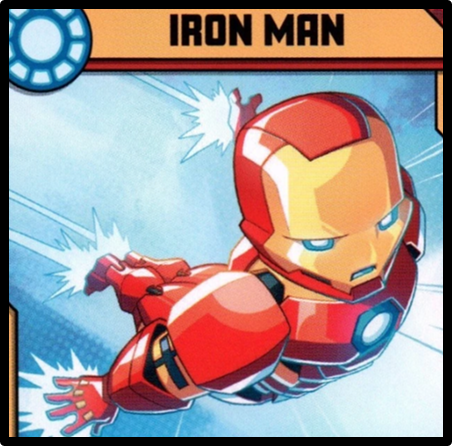
Iron Man is another balanced hero. But he does lean more toward Attack. So, villains with a lot of henchmen are a good choice of villain for Iron Man. Red Skull (from the core set) makes for a good opponent.

I value “Stark Resources” more than “Advanced Combat Analysis” because Move often gets overlooked. People tend to gravitate toward heroes with large damage numbers. Even so, the two are great cards and the flexibility of both abilities is welcome. Too often, heroes give tokens to teammates or to themselves. Tony has a choice.

“Power Recharge” is a great card, too. But you could end the game quicker by drawing extra cards. Players lose the game if any deck can’t draw cards at the beginning of their turn (villain or hero). If you use “Power Recharge” after being whittled down to a hand size of 1, you’ll be cutting time off the game clock by two turns. Still, you could draw into the card you need to defeat the boss.

Note: Remember to time completing the first and second missions as close together as possible to avoid the villain speeding up too soon.
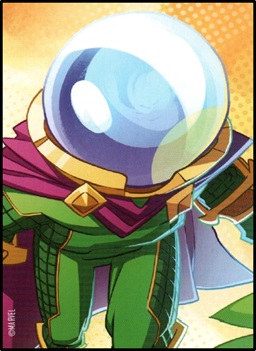
Good Teammates

Iron Man doesn’t need much. Since he leans toward Attack, characters with more Heroics make sense. Captain America, Ant-Man, and Captain Marvel from the core set work well.

Other Core Set Heroes

Ant-Man
Black Widow
Captain America
Captain Marvel
Hulk
Wasp

Core Set Villains

Red Skull
Taskmaster
Ultron

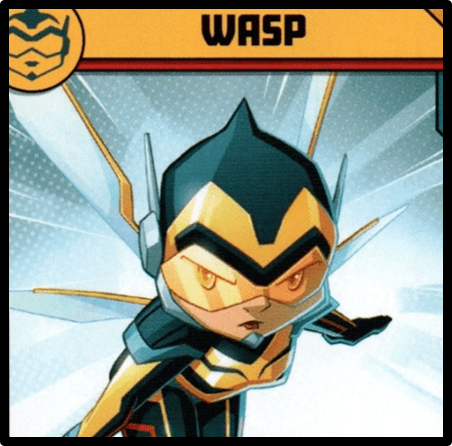
Guide: Wasp

Real Name: Hope van Dyne (Hope Pym in the comics)
First Comic Book Appearance: A-Next (April 1999)
Affiliations in Comic Books: Avengers, Defenders, Lady Liberators, Mighty Avengers, Superhero Squad, Ultimates, Uncanny Avengers

Marvel United Appearance: Marvel United Core Set (July 2020)
Marvel United Team Decks: None

Heroics

Attack

Move

Wild

Special Effects on Cards

1) Wings: You may move yourself and any number of Heroes from your Location to any other Location.

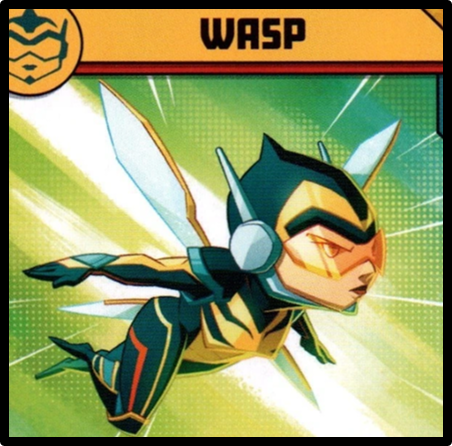
Wow! “Wings” (the first card of its kind) is a game changer. It potentially grants the whole team movement to anywhere. The only downside is that the players must stick together, and that doesn’t always happen. Still, “Wings” is a great card to play after the villain can be damaged (heroes complete two mission cards). Everyone warps to the villain’s location and wails on them.


2) Energy Projection: You can move to any Location and 1 Attack there.

“Energy Projection” isn’t bad. The Attack printed on the bottom of the card can be used before or after you move to any Location. Any card that provides flexibility is great.


3) Shrink: You cannot take any damage until the beginning of your next turn.

Like Ant-Man, Wasp’s “Shrink” makes it impossible for her to receive damage. Not bad. Damage can come from several sources: the boss, henchmen, and other effects. And the best way to heal damage is to not take damage in the first place.

Overview

Wasp skews toward Move and Attack, so henchmen heavy villains (like Red Skull in the core set) are a good choice for her. But Hope’s great Move score can allow for a lot of Heroics if she’s teamed up with the right characters. That said, I’ve found players sticking together more with Wasp than most other characters (in the core set) because she may have her “Wings” card in her hand. That’s not necessarily a bad thing, but some players may want to freelance and not like that playstyle.

“Energy Projection” offers a lot of utility. More than most cards that grant Attack from the core set. And “Shrink” is a strong card, but it could hurt more with Wasp than Ant-Man. Both heroes ignore damage with this ability, but Wasp is more likely to be at a Location with teammates. She’ll avoid damage; her teammates won’t.

Note: Remember to time completing the first and second missions as close together as possible to avoid the villain speeding up too soon.
Good Teammates

Wasp has plenty of Attack and Move, so teammates with a lot of Heroics work best. Captain America and Captain Marvel are good choices. But she was made to be paired with Ant-Man. It’s like they’re a couple or something.

Other Core Set Heroes

Ant-Man
Black Widow
Captain America
Captain Marvel
Hulk
Iron Man

Core Set Villains

Red Skull
Taskmaster
Ultron

Guide: Red Skull

Real Name: Johann Shmidt
First Comic Book Appearance: Captain America Comics (March 1941)
Affiliations in Comic Books: Cabal, Hydra, Third Reich

Marvel United Appearance: Marvel United Core Set (July 2020)
Marvel United Team Decks: None

Movement

BAM!

Civilians

Thugs

How Red Skull Plays: The Red Skull is recommended as your introduction to Marvel United. His gameplay provides a good overview of different rules while not introducing anything complicated.

Villainous Plot: Red Skull wins if his “Fear Track” reaches 20.

How he does this? Red Skull raises the “Fear Track” by using his BAM! Effect, Overflow effect, one of his Threat Cards (“Subversion”), and 2 special effects on 4 of his Masterplan cards (“Hail Hydra!” and “Hydra Insurgency”).

BAM!: Deal 1 damage to each Hero in Red Skull’s Location and increase the Fear Track by 2.

Red Skull always raises the Fear Track by 2; he doesn’t need to deal damage to a hero. There are only 7 BAMs in Red Skull’s deck, so the most he’ll raise the Fear Track by this means is 14. That alone is not enough for the heroes to lose, but Red Skull’s BAM! Effect teamed up with other effects (like his Overflow effect) can snowball.

Keep in mind that if a hero is KO’d, Red Skull can BAM! Again.

Overflow: If a civilian or thug token can’t be added to a Location, increase the Fear Track by 1 for each token you couldn’t add.

Red Skull adds the most civilians of any of the core set villains and he’s also tied for the most thugs. His Overflow effect can occur quite often. But the most civilians and thugs Red Skull adds to a single location at one time is 2.

Threats

Red Skull is the only core set villain with six unique Threat cards. Every other villain in the core set has at least one duplicate.

Crossbones (Henchman)
Health: 6
BAM!: Deal 2 damage to each Hero in this Location. Any Hero can prevent this effect by taking 2 Crisis tokens.

It may seem that preventing Crossbones’ damage is the wise move, but Red Skull has an ability in his deck that allows him to raise the Fear Track for each Crisis Token. The more Crisis Tokens are in play, the faster the Fear Track moves.

Madame Hydra (Henchman)
Health:
5
BAM! Deal 1 damage to each Hero in this Location. Any Hero can prevent this effect by taking 1 Crisis Token.

Madame Hydra is a weaker version of Crossbones. She can still be annoying, and the Crisis Tokens can still pile up.

Bob Agent of Hydra (Henchman)
Health:
4
BAM! Heroes starting their turn in this Location take 1 Crisis Token.

If you end your turn in Bob’s location, make sure your teammates can defeat him before your next turn. Otherwise, you’re adding more Crisis Tokens.

Brainwashing (Threat)
Clear: 3 Heroics
Triggered Effect (Red Skull finishes movement on this Location): Heroes in this and adjacent Locations take 1 Crisis Token each.

“Brainwashing” isn’t too bad by itself, but heroes risk increasing the Fear Track the more Crisis Tokens they have.

Subversion (Threat)
Clear: 3 Heroics
Triggered Effect (Red Skull finishes movement on this Location): Discard all thugs and civilians from this Location and advance the Fear Track by the number of tokens discarded this way.

Some locations have as few as 3 spots for thug/civilian tokens. Others can be as high as 5. Depending on the location “Subversion” is on, this can be a devastating card. I recommend clearing this card early in the game.

Hydra Elite Troops (Threat)
Clear:
3 Heroics
Constant Effect: Each thug in this Location requires 2 damage to be defeated.

This threat is mostly annoying. Increasing the amount of damage needed to defeat thugs will become a trend. As soon as this Threat is cleared, thugs can be defeated with 1 damage.

Master Plan Deck

Movement:
All the core set villains have the same total movement, their movement predominantly shows up in three cards. The rest of each villain’s movement is 1 and 0 with a couple of 2 thrown in. Since this is the case, Red Skull (like the rest of the core set villains) is predictable in terms of movement.

Civilians:
Red Skull adds civilians and thugs evenly and at one of the better rates for a core set villain. He’ll also discard civilians to raise the Fear Track.

Thugs:
Again, Red Skull adds thugs and civilians evenly. But players typically see more thugs in play than civilians, because Red Skull doesn’t have an effect that discards thugs.

BAM!:
Of the core set villains, Red Skull has the most BAM! Effects in his deck. Get ready to raise that Fear Track.

Special Effects on Cards

1) Hail Hydra!: Discard all civilians from Locations with Heroes and deal 1 damage to each of those Heroes. Advance the Fear Track by the number of civilians discarded this way.

This one can be brutal if you have 3 or 4 heroes spread across different locations. Wasp’s “Wings” ability may be warranted here. Or you can use Black Widow’s “Interrogate” to move the card if you haven’t kept up with rescuing civilians.

With or without Wasp or Black Widow, you’ll need to keep “Hail Hydra!” in mind when moving to locations with a lot of civilians. “Hail Hydra!” loses a lot of its bite the fewer civilian tokens are in play.

2) Hydra Insurgency: For each Crisis token the Heroes have, advance the Fear Track by 1.

There are two copies of “Hydra Insurgency” in Red Skull’s deck. Pay attention to how many of these cards you’ve seen. Crisis Tokens won’t matter if both copies of this card have been played. If neither card has been played, you may not want to take Crisis Tokens.

General Strategy

There’s a reason Marvel United suggests Red Skull as a player’s first villain. His mix of Henchmen and regular Threat cards are suitable for a wide range of heroes.

Again, I suggest clearing the “Subversion” Threat early in the game. This will require 3 Heroics. Rescuing civilians also requires Heroics, and the presence of “Hail Hydra!” makes that a good strategy. Clear civilians at any location a hero moves to and clear Threats. Depending on the Threat type, you can use Attack to clear henchmen or if you have an abundance of Heroics, go for the remaining Threats that require Heroics. The more Threats you clear, the more end-of-turn effects you’ll unlock and the more powerful your heroes become.

Be careful. Minimize the impact of “Hail Hydra!” and keep an eye out on how many “Hydra Insurgency” cards have been played. But don’t be too sluggish. Overflow (not being able to place thug/civilian tokens) can also cause the Fear Track to progress.

If a hero gets low on health, they should separate from the group. A hero KOing causing another BAM!. If the heroes are lumped together, they could receive multiple damage and KOs and trigger yet another BAM!. And another BAM!. And Another…and so forth.

Remember to time completing the first and second missions as close together as possible to avoid the villain speeding up too soon.

Core Set Heroes

Ant-Man
Black Widow
Captain America
Captain Marvel
Hulk
Iron Man
Wasp

Other Core Set Villains

Taskmaster
Ultron

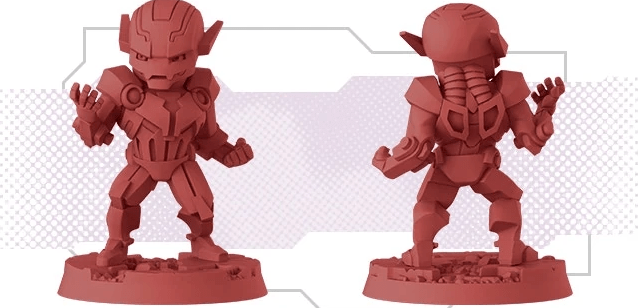
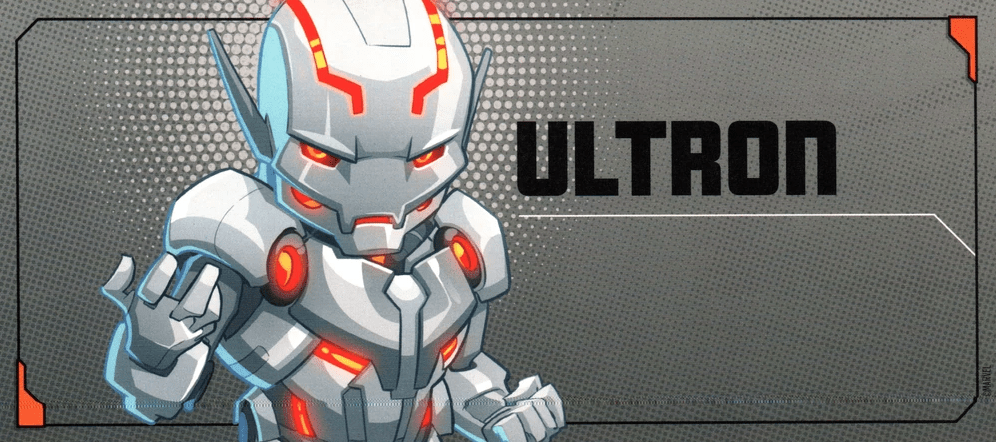
Guide: Ultron

Real Name: Ultron
First Comic Book Appearance (non-named cameo): The Avengers (July 1968)
First Comic Book Appearance (first named appearance): The Avengers (August 1968)
Affiliations in Comic Books: Lethal Legion, Masters of Evil

Marvel United Appearance: Marvel United Core Set (July 2020)
Marvel United Team Decks: None

Movement

BAM!

Civilians

Thugs

How Ultron Plays: Ultron races the heroes. Beat him before he floods the board with thugs and civilians.

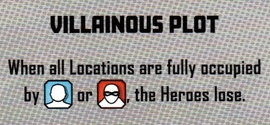
Villainous Plot: When all Locations are fully occupied by civilians and thugs, the Heroes lose.

BAM!: Add 3 thugs to Ultron’s Location and deal 1 damage to each Hero there.

When Ultron uses his BAM! effect, it isn’t accompanied by adding any additional thugs and civilians. But 3 thugs at Ultron’s location is no joke. Ultron adds these thugs even if he doesn’t deal any damage to heroes.

The damage isn’t too bad, but a KO will cause Ultron to BAM! again and add another 3 thugs. Ultron also has Clone Henchmen who will also add thugs whenever Ultron uses his BAM!.

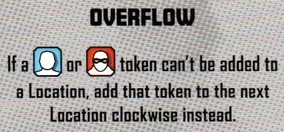
Overflow: If a civilian or thug token can’t be added to a Location, add that token to the next Location clockwise instead.

Note: Unlike Taskmaster’s Overflow (and its adding of a Crisis Token), Ultron’s Overflow effect triggers each time a civilian/thug token cannot be added. You will always add the number of tokens. If you can’t, the heroes lose

You need to keep an eye on the locations. One or two Locations filling up will cause Ultron’s Overflow to occur and then you could have four or five filled Locations. Ultron specializes in thugs. Only two of Ultron’s cards add civilians for a total of 7. Keep this in mind when looking at your starting civilians. If you need all (or even most) of Ultron’s 7 additional civilians and the starting civilians, you may consider defeating thugs instead.

Threats

Ultron has 2 copies of 3 different Threat Cards

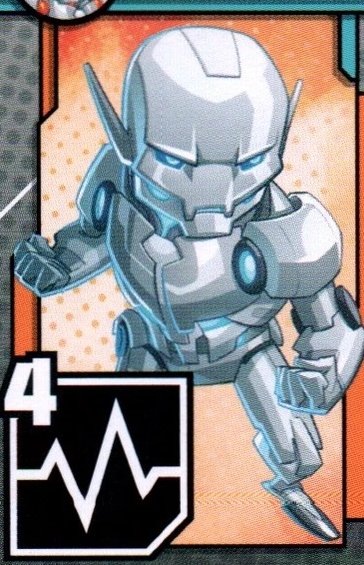
Ultron Clone (Henchman)
Health: 4
BAM!: Add a thug to this Location. Heroes in this Location may prevent this effect if each of them takes 1 damage.

Of the core set villains, Ultron has the fewest BAM! effects in his deck (5). But if both “Ultron Clones” are in play, they’ll be adding 5 thugs each time Ultron does BAM!.

Duplication (Threat)
Clear: 3 Heroics
Triggered Effect (Ultron finishes movement on this Location): Heroes Add a thug in this Location

This only occurs if Ultron finishes his movement at a Location with this Threat card, but this effect triggers in addition to any other effect that adds thugs. “Duplication” continues Ultron’s theme of adding thugs.

Ultron Virus (Threat)
Clear:
3 Heroics
Constant Effect:
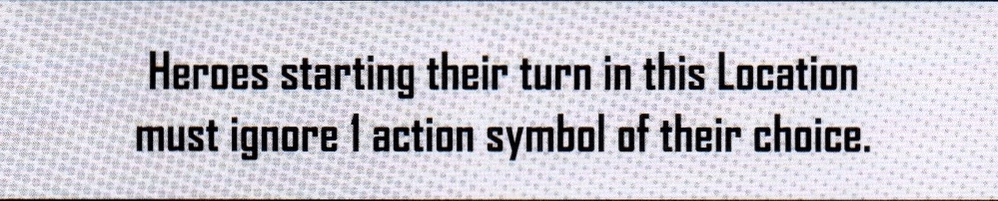
Heroes starting their turn in this Location must ignore 1 action symbol of their choice.

Unlike other cards of this type (Threats that negate an action or require an extra action), “Ultron Virus” doesn’t specify an action. You could ignore a Move, Heroics, Attack, or even a Wild symbol. Don’t choose a Wild. “Ultron Virus” makes players consider whether they want to finish their turn on its Location or not.
Master Plan Deck

Movement:
All the core set villains have the same total movement, their movement predominantly shows up in three cards. The rest of each villain’s movement is 1 and 0 with a couple of 2 thrown in. Since this is the case, Ultron (like the rest of the core set villains) is predictable in terms of movement.

Civilians:
Of the core set villains, Ultron adds the fewest civilians.

Thugs:
Ultron can add a crazy amount of thugs, not so much with the physical symbols that show up on his cards, but with his BAM! effect.

BAM!:
Of the core set villains, Ultron has the fewest amount of BAM! effects in his deck.

Special Effects on Cards

1) Mesmerize: Give 1 Crisis Token to each Hero in Ultron’s Location and adjacent ones. Place a thug in each Location without Heroes.

Placing thugs is nothing new; it keeps with Ultron’s theme. But Ultron’s two special effects (“Mesmerize” and “Encephalo-Ray”) are a 1-2 combo. “Mesmerize” is most effective when Ultron plays it first. Crisis Tokens only have an effect when “Encephalo-Ray” enters play.

2) Encephalo-Ray: Deal 1 damage to each Hero for each Crisis Token they have. Then, 1 Hero of your choice takes 1 Crisis Token.

Yikes! Depending on how many Crisis Tokens a Hero has on them, “Encephalo-Ray” can deal 3 damage to one hero and instantly KO them (reminder, Heroes discard cards whenever they receive damage and a Hero’s staring hand is 3). Keep in mind that villains BAM! every time a Hero gets KO’d, and this can cause a cascading effect. But “Encephalo-Ray” can become less effective if both are played before “Mesmerize.”

Crisis Tokens will cease to mean anything if both copies of “Encephalo-Ray” have been played.

General Strategy

Ultron floods the field with thugs, so Heroes who are great at Attack are great options. But just being great at Attack may not be enough. Hulk’s “Hulk Smash!” (and other abilities like it) thrive against Ultron because they target every thug at a Location. This makes the Defeat Thugs mission easy to complete.

If there aren’t at least 9 civilians at the start of the game, you may want to skip the Rescuing Civilians mission. Ultron only has 2 cards in his deck that will add additional civilians.

So, clearing 4 Threats may be the better second mission to finish. Clearing these threats (specifically defeating the “Ultron Clones” and “Duplication”) can reduce the number of thugs Ultron adds each round.

Core Set Heroes

Ant-Man
Black Widow
Captain America
Captain Marvel
Hulk
Iron Man
Wasp

Other Core Set Villains

Red Skull
Taskmaster

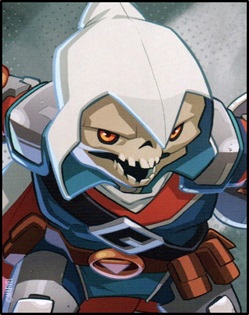
Guide: Taskmaster

Real Name: Tony Masters
First Comic Book Appearance: The Avengers (May 1980)
Affiliations in Comic Books: A.I.M., Assassin’s Guild, Hydra, Masters of Evil, Thunderbolts

Marvel United Appearance: Marvel United Core Set (July 2020)
Marvel United Team Decks: None

Movement

BAM!

Civilians

Thugs

How Taskmaster Plays: Despite his low health, Taskmaster is perhaps the most difficult (and easily most frustrating) villain in the core set. He delays the heroes until the game ends. Heroes cannot damage Taskmaster if there are any Crisis Tokens in play, and heroes cannot discard Crisis Tokens on a Location with thugs or civilians.

Villainous Plot: None. Instead, Taskmaster has Special Rules

Special Rules: Heroes cannot damage Taskmaster as long as there are any Crisis Tokens on any Locations. Heroes can discard a Crisis Token from a Location with no civilian or thug tokens by using Heroics or Attack there.

BAM!: Deal 1 damage to each Hero in Taskmaster’s Location and add 1 Crisis Token there.

Taskmaster’s only means of dealing damage is through his BAM! Ability. And only half of his Master Plan cards have BAM! Effects, so you’re less likely to be KO’d. Crisis Tokens are the big issue here. Regardless of if Taskmaster deals damage or not, he always adds a Crisis Token to a Location when he BAM!s.

Crisis Tokens plus civilian/thug tokens could mean the heroes waste several actions getting Taskmaster to a state where he can be damaged. And yes, even if you’ve dealt damage to Taskmaster before, if a Crisis Token is added in a future turn, you cannot deal damage to him unless you first deal with the Crisis Token and any civilians or thugs on the Location with the Crisis Token. Ugh!

Overflow: If a civilian or thug token can’t be added to a Location, add a Crisis Token instead.

No matter how many civilian/thug tokens you cannot place on a Location, you only place one Crisis Token with Taskmaster’s Overflow ability. That’s a good thing.

It’s also a good thing that Taskmaster adds fewer civilian/thug tokens than Red Skull, and most of his cards add 3 tokens total. He does have a single card that adds 6 tokens (2 at each location), but he doesn’t get a BAM! Action on this card.

Threats

Taskmaster has 2 copies of 3 different Threat Cards. Each of his threats require 3 Heroic actions to clear, and their effects make heroes less effective.

Explosive Trap (Threat)
Clear: 3 Heroics
Constant Effect: Each civilian in this Location requires 1 extra Heroics to be rescued.

Civilians are more difficult to rescue. As soon as this Threat is cleared, civilians can be rescued as normal.

Elite Troops (Threat)
Clear:
3 Heroics
Constant Effect:
Each thug in this Location requires 2 damage to be defeated.

Like Red Skull’s “Hydra Elite Troops,” “Elite Troops” makes thugs more difficult to defeat. As soon as this Threat is cleared, thugs can be defeated with 1 damage.

Entangling Trap (Threat)
Clear:
3 Heroics
Constant Effect: Heroes using Move to leave this Location must use 2 Move instead.

This one hurts the most. Move tends to be the least common symbol core set Heroes have and needing two Move to leave this Location can slow you down to a crawl. But as soon as this Threat is cleared, Move requirements revert to normal.

You can take another route to get to a Location, so there are ways around “Entangling Trap.” And “Entangling Trap” only affects a Hero if they leave the Location. If your goal is at the Location with “Entangling Trap,” you won’t need to leave.

Note: Special effects like Wasp’s “Wings” can move Wasp and any Hero at her Location to any other Location. Effects like this don’t use any Move symbols, so “Entangling Trap” doesn’t affect these cards’ abilities.

Master Plan Deck

Movement:

All the core set villains have the same total movement, their movement predominantly shows up in three cards. The rest of each villain’s movement is 1 and 0 with a couple of 2 thrown in. Since this is the case, Taskmaster (like the rest of the core set villains) is predictable in terms of movement.

Civilians:
Taskmaster adds civilians and thugs evenly and at a moderate rate. The bigger issue is Overflow, and Taskmaster’s ability to add Crisis Tokens.

Thugs:
Again, Taskmaster adds thugs and civilians evenly, and Crisis Tokens become a bigger issue.

BAM!:
Taskmaster has an equal number of cards with a BAM! and cards without a BAM!.

Special Effects on Cards

1) Dark Schemes: If there are no Heroes in Taskmaster’s Location, place 1 Crisis Token there.

Taskmaster has two copies of this Effect, and both cards are accompanied by a 0 move. Players could keep a hero at Taskmaster’s location. While Taskmaster could BAM! and deal this hero damage, you’ll need to clean up the Crisis Tokens Taskmaster places on Locations, so heroes are better served staying near Taskmaster or on the same Location with him.

2) Copycat: Add a civilian to Taskmaster’s Location for each Heroics at the bottom of the last 2 Hero cards in the Storyline.

There’s a second copy of this card that replaces civilian with thug and Heroics with Attack. What these effects are saying is that players must check the last two played Hero cards and place a civilian or thug (depending on which card is in play) to Taskmaster’s current Location. This is the easiest way for Taskmaster to cause Overflow. The most he’ll ever add is 4 tokens but the most any Location can hold is 5. Players can luck out and play the opposite symbol. I suggest keeping an eye on which “Copycat” has been played. If the one for Heroics has already been played, Heroes don’t need to fear using extra Heroics. The same goes for the Attack version of “Copycat.”

General Strategy

Taskmaster doesn’t have any Henchmen, and he doesn’t have a lot of health, so loading up on Heroes with a lot of Heroic actions would be a great idea. On the flip side, loading up on Heroes with a lot of Attack actions would be horrendous. You’ll waste a lot of your actions.

If you load up on Heroics, it should be easy to clear Threat cards and rescue enough civilians. Time this right and Taskmaster won’t have too many round where he’ll act every two hero turns (instead of three). You’ll want to stay close to Taskmaster throughout the game, clearing Threats, rescuing civilians, defeating thugs, and discarding Crisis Tokens. Bide your time until you can attack Taskmaster directly.

I recommend playing with the SHIELD Headquarters (or Great Mound from the Rise of Black Panther expansion) Location. This Location’s ability allows you to discard a card from your hand to the bottom of your deck to discard a Crisis Token. If you have either of these Locations in play, clear whichever Threat card is on top of this Location’s End of Turn space first. Then, you’ll have more options to discard Crisis Tokens.

Core Set Heroes

Ant-Man
Black Widow
Captain America
Captain Marvel
Hulk
Iron Man
Wasp

Other Core Set Villains

Red Skull
Ultron