
Closed Drafting (or “Card Drafting”) distributes cards or other game elements to players through an ordered, closed selection process. Typically players select one element and then pass the elements they didn’t choose to the next player.
Archives: Projects
Open Drafting
Open Drafting is used in games in which players pick (or purchase) cards (or tiles, resources, dice, etc.) from a common pool to gain an advantage or to assemble collections that are used to meet objectives within the game.
Auction: Turn Order Until Pass
Starting with one player and going in turn order, players may raise the current bid or pass. When all players but one have passed, the player remaining in the auction is the winner.
Normally players that pass may not re-enter the auction.
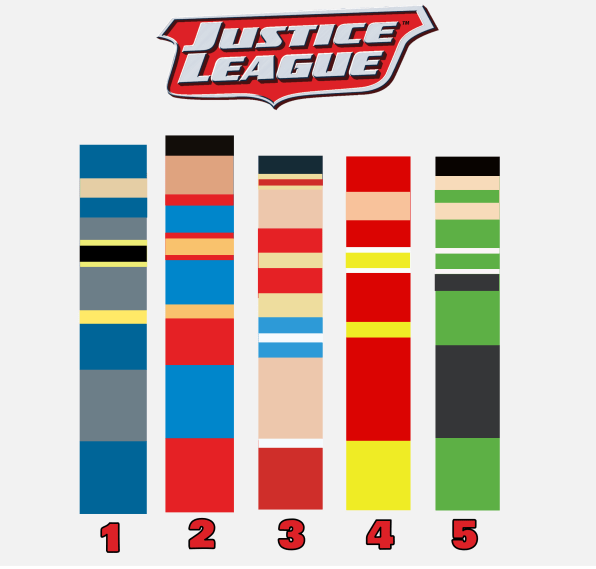
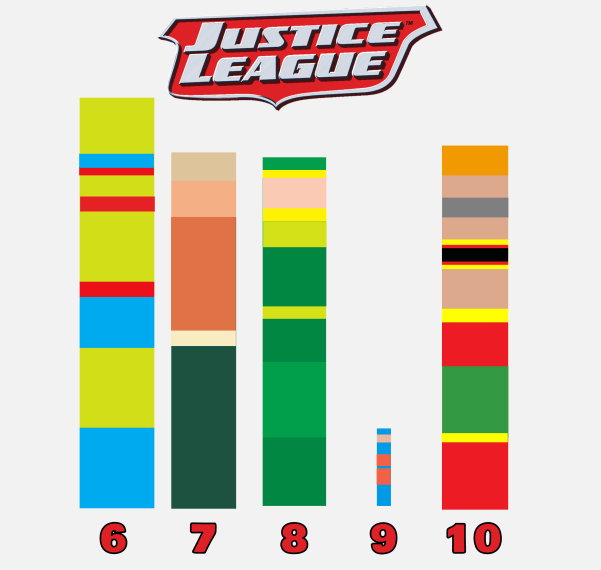
Justice League Color Palette Quiz


Negotiation
Negotiation games involve and encourage making deals and alliances with other players and backstabbing when appropriate. Unlike cooperative games, Negotiation games are still competitive, while granting players certain times to make mutual agreements.
Word Game
Word games often require players to competitively use their knowledge of language. Usually, this knowledge revolves around a word’s spelling and/or definition.
Party Game
Party games encourage social interaction. Generally, they have easy setups, simple rules, and can accommodate large groups of people and play in a short amount of time.
Card Games
Card Games use cards as its sole or central component. There are stand-alone card games, where all the cards necessary for gameplay are purchased at once and Collectible Card Games (CCGs), where players purchase starter, and “booster” packs in an effort to compile a more powerful deck.
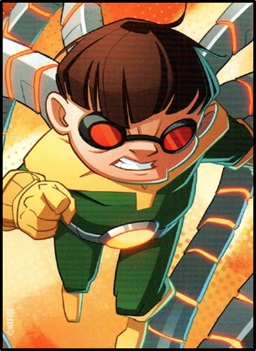
Guide: Doctor Octopus
Real Name: Otto Gunther Octavius
First Comic Book Appearance: The Amazing Spider-Man (July 1963)
Affiliations in Comic Books: Cosmic Champions, Hydra, Master of Evil, Roxxon, Sinister Six, Thunderbolts
Marvel United Appearance: Marvel United: Return of the Sinister Six (July 2020)
Marvel United Team Decks: Sinister Six
Movement

BAM!

Civilians

Thugs

How Doctor Octopus Plays: Doctor Octopus can win in a couple of manners: dealing damage to Heroes and destroying Locations, which plays into his Villainous Plot. He deals damage through his BAM! and card effects and by his Henchmen. He destroys Locations by adding enough Crisis Tokens, so he will add plenty of Crisis Tokens as well through effects like his Overflow.
Destroyed Locations are removed from play and every remaining Location is considered adjacent to the closest Locations on the board. Any Threats on a Location get discarded with the Location, so it is possible to not have enough Threats to finish the Clear Threats Mission.

Villainous Plot: The Heroes Lose if 4 or more Locations are destroyed.

Special Rules: When a Location has 3 Crisis tokens, it is destroyed. Remove it from play (if Doctor Octopus is there, he moves clockwise. Any Heroes there move to an adjacent Location of their choice). Locations adjacent to a destroyed one are considered adjacent to each other.

BAM!: Deal 1 damage to each Hero in Doctor Octopus’s Location and place 1 Crisis token there.
Doctor Octopus has average damage for a Villain, but his ability to add a Crisis Token gets him closer to victory. Destroyed Locations have a double effect. Not only is Doc Ock closer to his 4 destroyed Location goal, but any Threats and Civilian/Thug tokens on those Locations are discarded, which could make finishing Missions difficult.
Keep in mind, if a Hero becomes KO’d, Doctor Octopus will BAM! again. If that happens, make sure you resolve his first BAM! effect before activating the next one.

Overflow: If a civilian or thug token can’t be added to a Location, add 1 Crisis token to that Location.
It doesn’t matter how many tokens can’t be placed due to Overflow, Doctor Octopus will add 1 Crisis Token to a Location that Overflows. That’s one small mercy.
Threats
Doctor Octopus has 3 copies of 1 Threat Card and 1 copy of 3 different Threat Cards (Henchmen).

Mysterio (Henchman)
Health: 3
BAM!: Deal 1 Damage to 1 Hero in this Location. Add 1 Civilian and 1 Thug to this Location.
Mysterio’s effect may not seem like much. A henchman dealing 1 damage to a Hero in this Location is standard fair, but adding 1 Civilian and 1 Thug to this Location can induce Overflow. And Overflow can get deadly, especially when combined with other effects that can add Crisis Tokens. With these two effects, Mysterio has the highest priority of the henchmen when Clearing Threats.
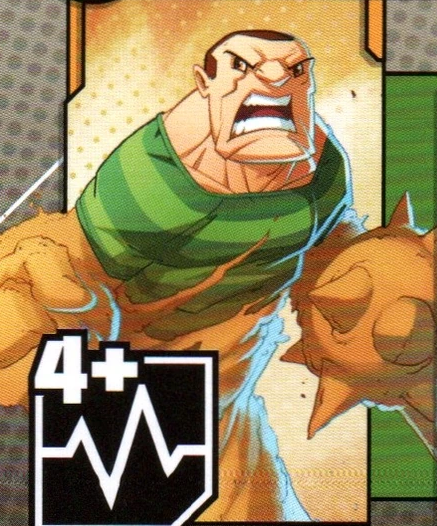
Sandman (Henchman)
Health: 4+
BAM!: Sandman gains 1 Health. Deal 1 damage to each Hero in this Location.
Sandman adds Health over time. Since his Health reads 4+, he can exceed his starting Health of 4. He deals a standard amount of damage. Sandman’s variable Health makes him another high-priority Threat to clear. If you do choose to defeat Sandman, do so as quickly as possible because he will heal whenever Doctor Octopus uses a BAM! effect which will be 75% of all turns. If Sandman’s Health reaches 6 or higher, I advise you to ignore him unless you’re playing Heroes with a lot of Attack.
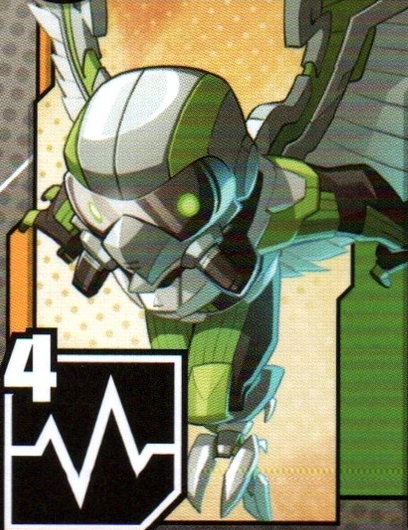
Vulture (Henchman)
Health: 4
BAM!: Deal 1 damage to 1 Hero in this Location. Then, move this card to the first clockwise Location without a threat (if possible).
Again, Vulture deals a standard 1 damage to 1 Hero in his Location. His second effect gets tricky. It’s rare, but it’s an effect that could benefit the Heroes. Players could clear a Threat at one Location only to have Vulture move toward them in a future turn. Since Doctor Octopus will destroy Locations over time, Vulture’s odd movement could come in handy. Despite his interesting second effect, Vulture has low priority when clearing Threats.

Endangered Civilians (Threat)
Clear: 3 Heroics
Constant Effect: Each Civilian in this Location requires 1 extra Heroics to be rescued.
“Endangered Civilians” makes Rescuing Civilians less effective at this Location. This is a standard Threat and has the lowest priority when clearing Threats. Unless of course, you’re trying to complete the Clear Threats Mission or you’re playing Heroes with a lot of Heroics.
Master Plan Deck
Movement:
Doctor Octopus averages 2 Movement each turn. He is 33% faster than any of the core set villains. His movement varies. He only has 1 card with speeds of 4 and 5, 3 cards with speeds of 3 and 0, and 2 cards with speeds of 1 and 2. Doctor Octopus also has a couple of cards that will move him toward the nearest Heroes. Doc Ock may be one of the most unpredictable villains in terms of movement, tending to head toward Heroes and apply pressure.
Civilians:
Doctor Octopus adds more civilians than the core set villains. And he does have a few nasty cards that can add 5 in a single turn.
Thugs:
Doctor Octopus adds as many Thugs as Civilians and has a few cards that will add 5 in a single turn.
BAM!:
Doctor Octopus has a BAM! effect on all but three of his cards. Two copies of a card that doesn’t include a BAM! effect “Master Planner” deals damage to a Hero and adds a Crisis Token to a Location, which improves Doc Ock’s chances to complete his Villainous Plot.

Special Effects on Cards
1) Master Planner: Deal 1 damage to each Hero in any Locations with any Crisis tokens. Then, place 1 Crisis token in Doctor Octopus’s Location.
Since Doctor Octopus can place Crisis Tokens quickly, “Master Planner’s” damage can add up because each Hero in any Location with any Crisis Tokens receives damage. The first effect is bad enough because a KO’d character could trigger a BAM! effect which could deal more damage and will add another Crisis Token, but “Master Planner’s” second effect makes certain that Doc Ock will add a Crisis Token this turn. The more Crisis Tokens in play, the easier it is for Doctor Octopus to win.
2) Tentacles Grasp: Move all Heroes 1 Location closer to Doctor Octopus. Then BAM!.
Special Movement accompanies both copies of “Tentacles Grasp,” which makes avoiding damage impossible this turn. Doctor Octopus will end his movement at a Hero’s Location. He will then move Heroes closer to him if they aren’t already at his Location, and then trigger a BAM! effect. If Doctor Octopus manages to draw more Heroes to his Location, “Tentacles Grasp” will deal extra damage, since every time Doc Ock uses a BAM! effect, he deals damage to each Hero at his Location. Yikes!
Special Movement: Doctor Octopus has one card in his deck, “Tentacles Grasp” that moves him to the next clockwise Location with any Heroes.

General Strategy
Doctor Octopus thrives the more Crisis Tokens exist on the board. If you choose to complete the Clear Threats Mission, you’ll want to do that before Doctor Octopus has a chance to destroy too many Locations. Mysterio has the highest priority, followed by Sandman for the Henchmen, while the “Endangered Civilians” Threat could be a good choice if you’re playing Heroes with a lot of Heroics.
You’ll want to keep the number of in-play Crisis Tokens to a minimum. The best way to do this is to prevent Overflow effects from occurring. Keep the Location cards as free from Civilian and Thug Tokens as you can. You may have to take a turn to mitigate the number of tokens at various Locations, but reducing the number of tokens will also get you closer to completing the Rescue Civilians and Defeat Thugs Missions. Doctor Octopus places a lot of Thugs and Civilians, so you’ll most likely be able to complete both Missions if you don’t let the board get too full of tokens which will result in Overflows.
A mixed team of Heroes who have good Attack and Heroics work well with Doctor Octopus because he places a similar number of Thugs and Civilians and has an equal number of Threat cards that require Heroics and Henchmen (which need Attack). Staying on theme with the heroes from Enter the Spider-Verse is a good choice. Miles Morales can delay the villain’s turn-one card, which can come in handy. Ghost Spider can manipulate where Threat cards are located. And Spidey can clear multiple Civilians and Thugs in a single turn. If you choose to go off-theme, the core set Heroes Captain America and Iron Man generate a lot of tokens, while Hulk can clear a Location in a single turn with “Hulk Smash!.”
I recommend playing with three Locations from the core set. S.H.I.E.L.D. Headquarters allows players to discard Crisis Tokens, which is very useful for a battle with Doc Ock. New York Police Headquarters and Times Square allow players to Defeat a Thug or Rescue a Civilian if the Heroes end their turn at those Locations. If you want to stay on theme, Enter the Spider-Verse has a few Locations that grant extra tokens at the end of a turn, and Brooklyn Bridge allows Heroes to add 1 Civilian and then rescue 1 Civilian from Brooklyn Bridge.
Remember to time completing the first and second missions as close together as possible to avoid the villain speeding up too soon.
Other Return of the Sinister Six Villains
Electro
Kraven
Mysterio
Sandman
Vulture
Sinister Six Team
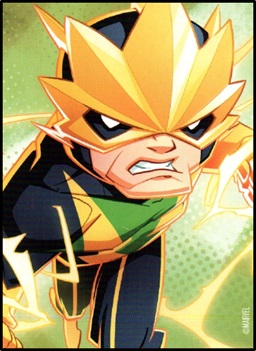
Guide: Electro
Real Name: Maxwell “Max” Dillon
First Comic Book Appearance: The Amazing Spider-Man (February 1964)
Affiliations in Comic Books: Black Cat’s Gang, Emissaries of Evil, Fake Defenders, Frightful Four, Sinister Six, Thunderbolts
Marvel United Appearance:Marvel United: Return of the Sinister Six (July 2020)
Marvel United Team Decks: Sinister Six
Movement
BAM!

Civilians

Thugs

How Electro Plays: Electro deals more damage than the usual villain. His BAM! effect coupled with a couple of his Threat cards could deal as much as eight damage in a single turn. But it’s his ability to add Crisis Tokens that make him a nuisance. He wins if every Location has a Crisis Token, and he adds Crisis Tokens whenever he triggers Overflow. The Heroes can’t risk too many Overflow effect.
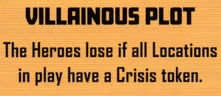
Villainous Plot: The Heroes lose if all Locations in play have a Crisis Token

Special Rules: If a Crisis Token should be placed on a Location that already has one, place the Crisis Token on the next clockwise Location instead. As long as a Location has a Crisis Token on it, Heroes cannot use its End of Turn effect.
When a Hero is KO’d, Electro doesn’t activate his BAM! Instead, he places 1 Crisis Token on that Hero’s Location.
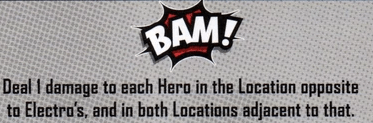
BAM!: Deal 1 damage to each Hero in the Location opposite to Electro’s, and in both Locations adjacent to that.
Electro forces players to think differently. Most villains damage Heroes at their Location; Electro is one of the few who deals damage in a different Location. Not only that, but he also deals damage to both adjacent Locations to the Location opposite himself. Couple his “High Voltage” Threat card and Electro may be one of the deadliest Marvel United villains.

Overflow: If a civilian or thug token can’t be added to a Location, add 1 Crisis Token to that Location.
It doesn’t matter how many tokens can’t be placed due to Overflow, Electro will add 1 Crisis Token to a Location that Overflows. That’s one small mercy.
Threats
Electro has 2 copies of 3 different Threat Cards.

High Voltage (Threat)
Clear: 3 Heroics
Constant Effect: When a Hero takes damage in this Location, they take 1 extra damage.
“High Voltage” super-charges all damage given to Heroes at its Location. I advise not beginning the game at a Location with “High Voltage” as its Threat. The game may not last long. That said, “High Voltage” is a high priority Threat for self-preservation alone.
Overpowered (Threat)
Clear: 3 Heroics
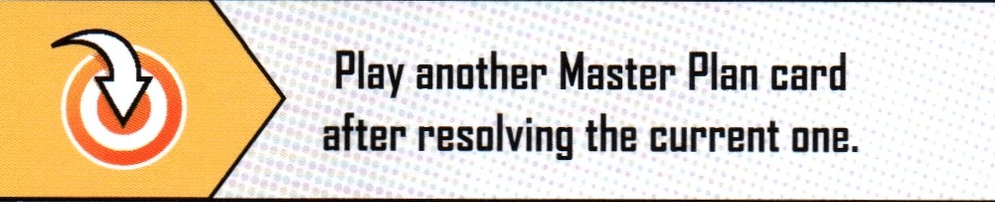
Triggered Effect (Electro finishes movement on this Location): Play another Master Plan card after resolving the current one.
“Overpowered” is yet another powerful Threat card. Essentially, it gives Electro another turn as he’ll play another Master Plan card after the current one resolves. Not only can Electro trigger more effects with an additional played card, but he also whittles through his deck which can lead to an early end game. You won’t want Electro to land on “Overpowered” too often, so it’s another high-priority Threat.
Fortunately, Electro needs to land on a Location with “Overpowered” as its Threat for the effect to trigger. Electro has three cards in his deck with “0” movement. Two of these cards will also add a Crisis Token, but more on that in the Master Plan Deck, Special Effects section.

Recharge (Threat)
Clear: 3 Heroics
Triggered Effect (Electro finishes movement on this Location): Electro gains 3 Health (may go above his starting value).
“Recharge” is yet another Threat card with a potentially devasting effect. Like “Overpowered,” Electro will need to land on a Location with “Recharge” as its Threat to trigger. Electro has less Health than several Marvel United villains, but it won’t take too many instances of “Recharge’s” effect until his Health becomes a problem.
By default, “Recharge” must be a low-priority Threat. That doesn’t mean it can’t be problematic. If you have a team with a lot of Attack, “Recharge” may not ever be that big of a threat. For teams with less Attack, you may consider clearing “Recharge” before it triggers too often.
Master Plan Deck
Movement:
Electro averages just over 2 Movement each turn. He is 50% faster than any of the core set villains. His movement varies. 1 card has a speed of 5 and another a speed of 1, but 2 cards have speeds of 2 and 5. A whopping 3 cards have speeds of 3, while 0s round out the rest of his deck. Two of the Zero Movement cards have the special effect “Blackout.”
Civilians:
Electro adds more Civilians than the villains in the core set. But he has one card that can add 4 Civilians and 4 Thugs in a single turn.
Thugs:
Electro adds the same number of Thugs, which is also higher than the villains in the core set. Again, he has one card that can add 4 Civilians and 4 Thugs in a single turn.
BAM!:
Electro has BAM! effects on slightly more than half of his cards. None of the cards with special effects have a BAM! effect, so that’s a plus.

Special Effects on Cards
1) Blackout: Place 1 Crisis Token on Electro’s Location.
“Blackout” has a simple but effective ability. Electro wins if a Crisis Token gets placed on every Location. “Blackout” helps Electro with his Villainous Plot.
2) Dematerialize: Electro can’t take any damage until each Hero has played a card to the Storyline after this Master Plan card.
“Dematerialize” only matters late game. Players can’t damage Electro until they finish their second Mission. So, you may want to delay putting Electro under pressure or making him vulnerable until after every player has had a chance to add a card to the Storyline. But if “Dematerialize” does get played after Electro can be damaged, it could delay the Heroes long enough, so they don’t win.
“Dematerialize” makes Electro an easier villain at lower player counts than higher player counts. In a two-player game, each Hero will always have a chance to play a card before Electro gets another turn. It could take two turns for the same thing to be true in a three or four-player game.

General Strategy
You need ways to mitigate Crisis Tokens. There aren’t too many characters with abilities that do this until the Marvel United X-Men releases. If you have them, use them. You may need to play with Locations that have Crisis Token discarding as their “End of Turn” ability. Unfortunately, Electro’s Special Rules negate the “End of Turn” effects of a Location if that Location has any Crisis Tokens. So, get lucky.
That doesn’t help, Kyra. Okay. You could try using two Locations with an ability that gets rid of Crisis Tokens. The core set has S.H.I.E.L.D. Headquarters while the Rise of the Black Panther expansion has The Great Mound. If you have access to these two Locations, use them. If you run out of options for getting rid of Crisis Tokens or never had options of getting rid of them, you must speed-run Electro.
If you’re going for speed, finish missions as quickly and as closely together as possible. Concentrate your Heroics on specific Threat cards, giving precedence to “Overpowered,” then “Recharge” (if you have ways to discard Crisis Tokens, “Recharge” would be the least important but we’re going with a speed run here), and finally “High Voltage.” If you’re playing Heroes with a lot of Attack, you can Defeat Thugs. If you have Heroics to burn with Clearing Threats, Rescue Civilians. Electro places as many Civilians as Thugs, so you shouldn’t have an issue clearing either or both missions.
After Electro becomes vulnerable to damage, let him have it. You may want to save cards that deal extra damage to single targets for Electro. But Electro’s ability to damage Heroes could make that difficult.
Again, if you have Heroes with abilities that discard Crisis Tokens, you use them. Otherwise, you could stick to the theme and play with any Hero from the Enter the Spider-Verse expansion, besides Spider-Ham. Miles can delay the villain’s turn by a card. Ghost Spider can move Threats around, handy for those “High Voltage” Threats. And Spidey’s “Great Power” and “Great Responsibility” generate a lot of tokens. Save up the Attack for your battle with Electro. If you want to go off-theme and don’t have Marvel United X-Men expansions, go with Captain America and Iron Man who generate a fair number of tokens. And Black Widow’s ability to manipulate the villain’s deck could come in handy.
Remember to time completing the first and second missions (Clear Threats, Rescue Civilians, and/or Defeat Thugs) as close together as possible to avoid the villain speeding up too soon. And Electro speeding up can be a huge problem.
 jkgeekly.com